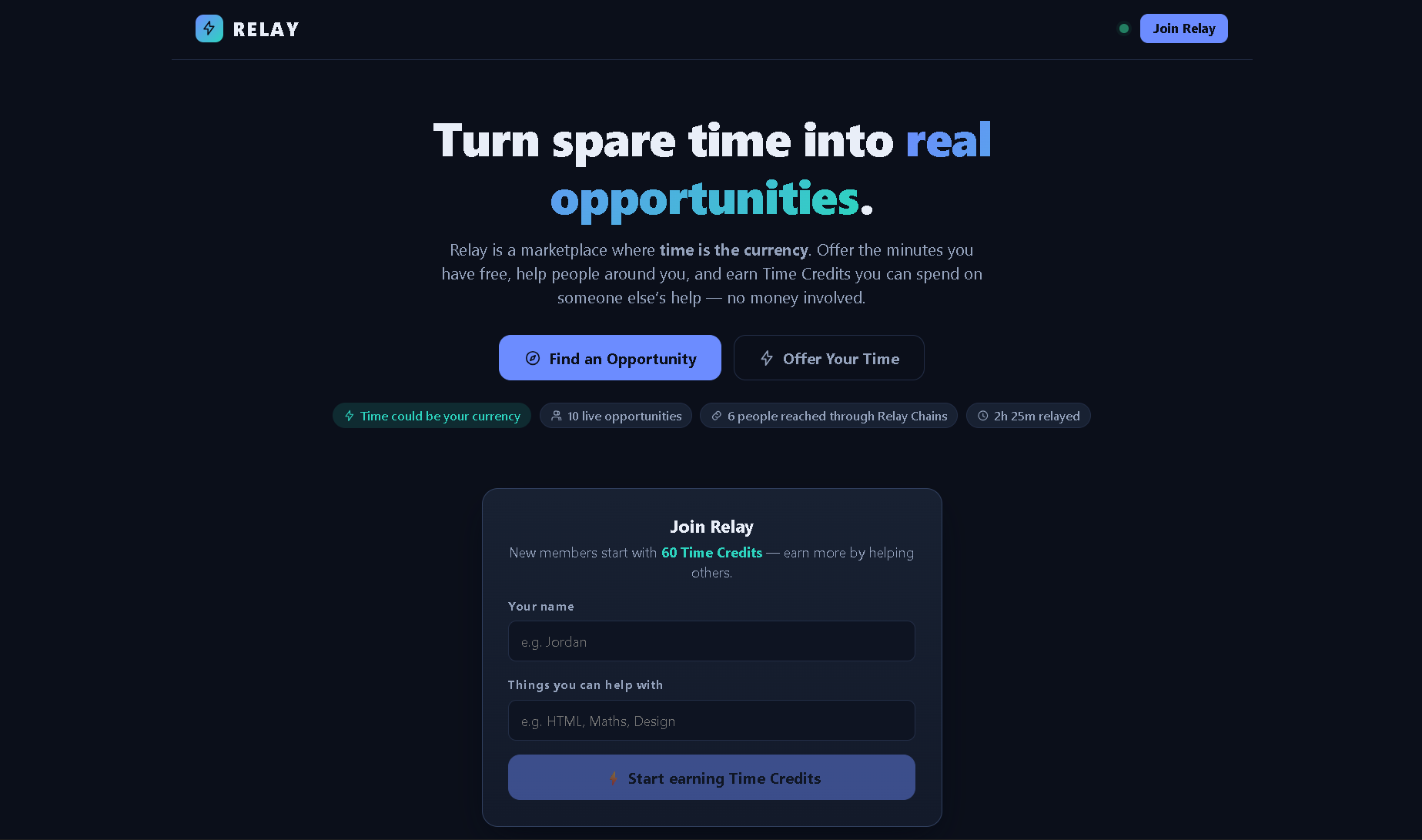
Inspiration I built Relay around a simple idea: people often have small amounts of free time that could be useful to someone else. Instead of letting that time go to waste, I wanted to create a platform where people could exchange their time and help one another.
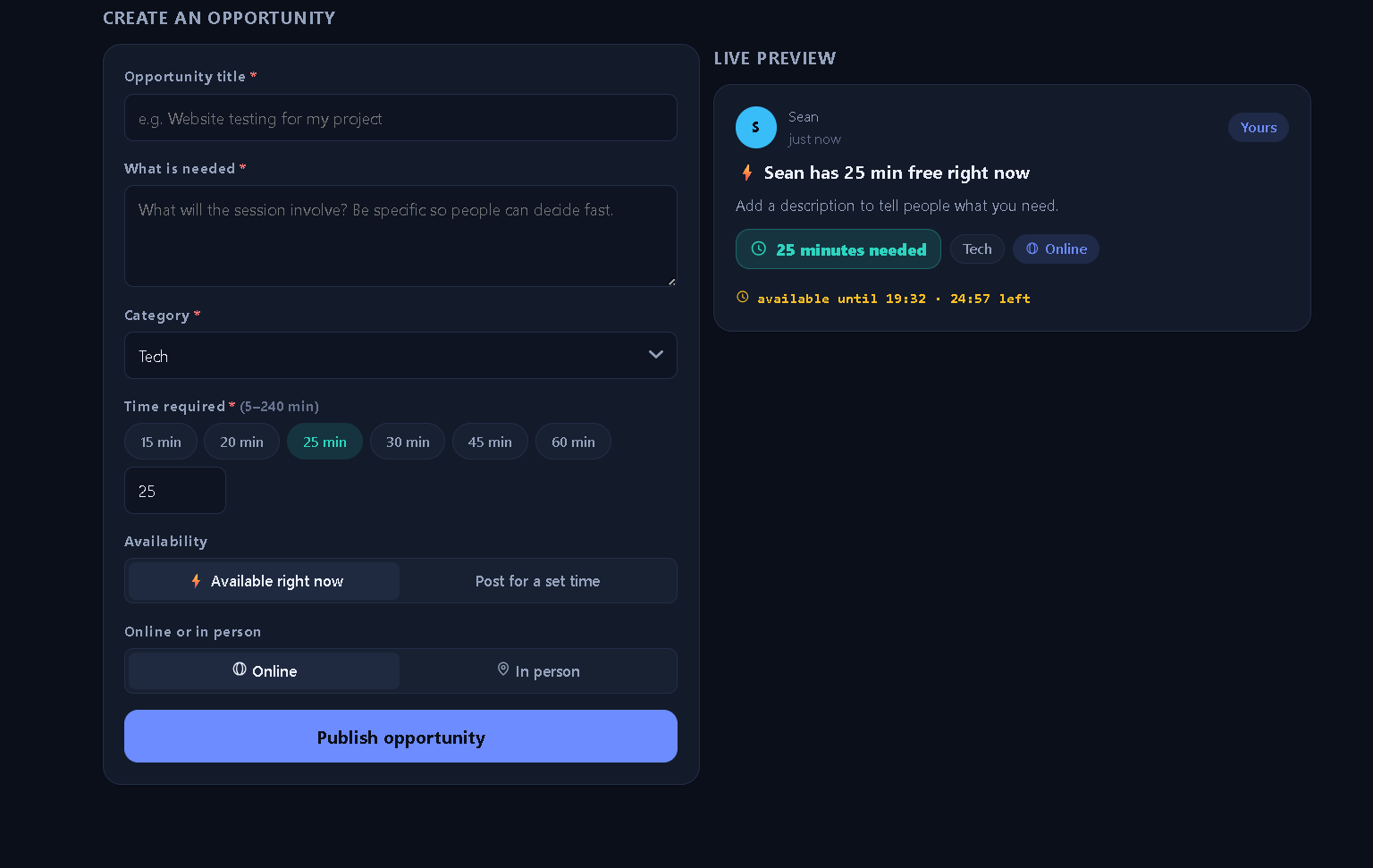
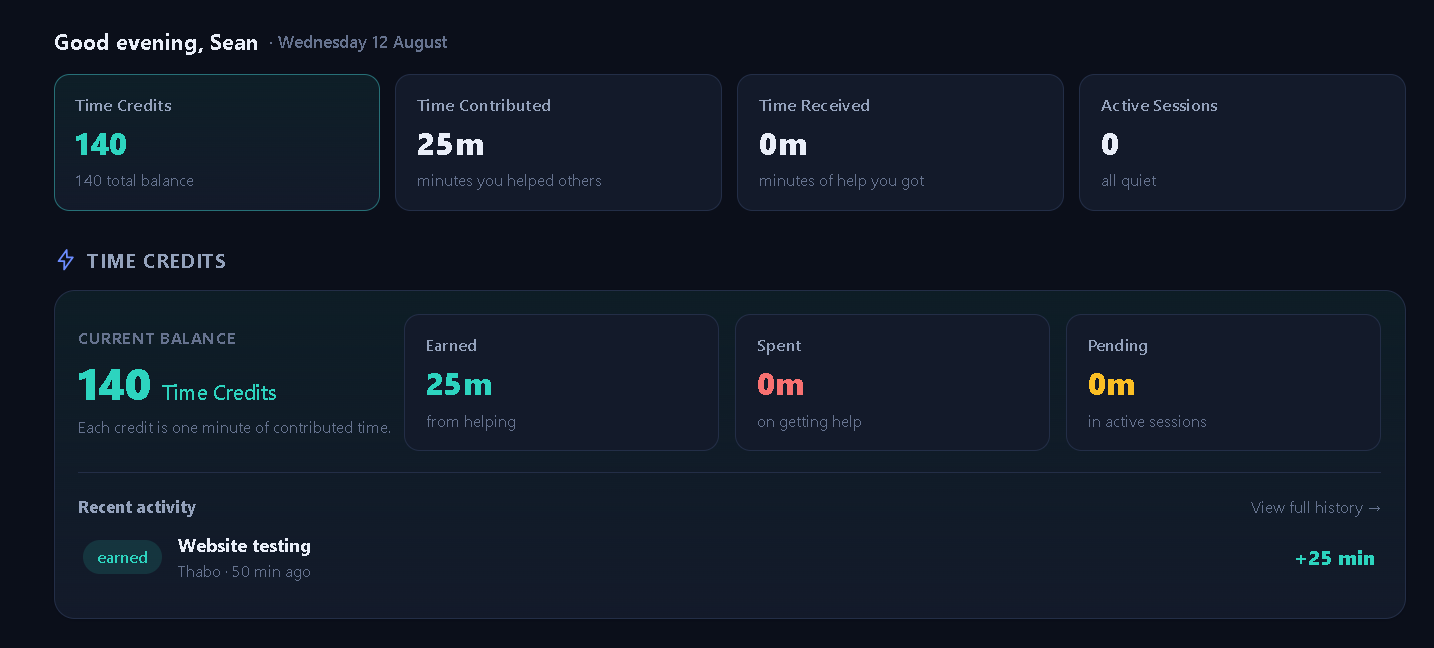
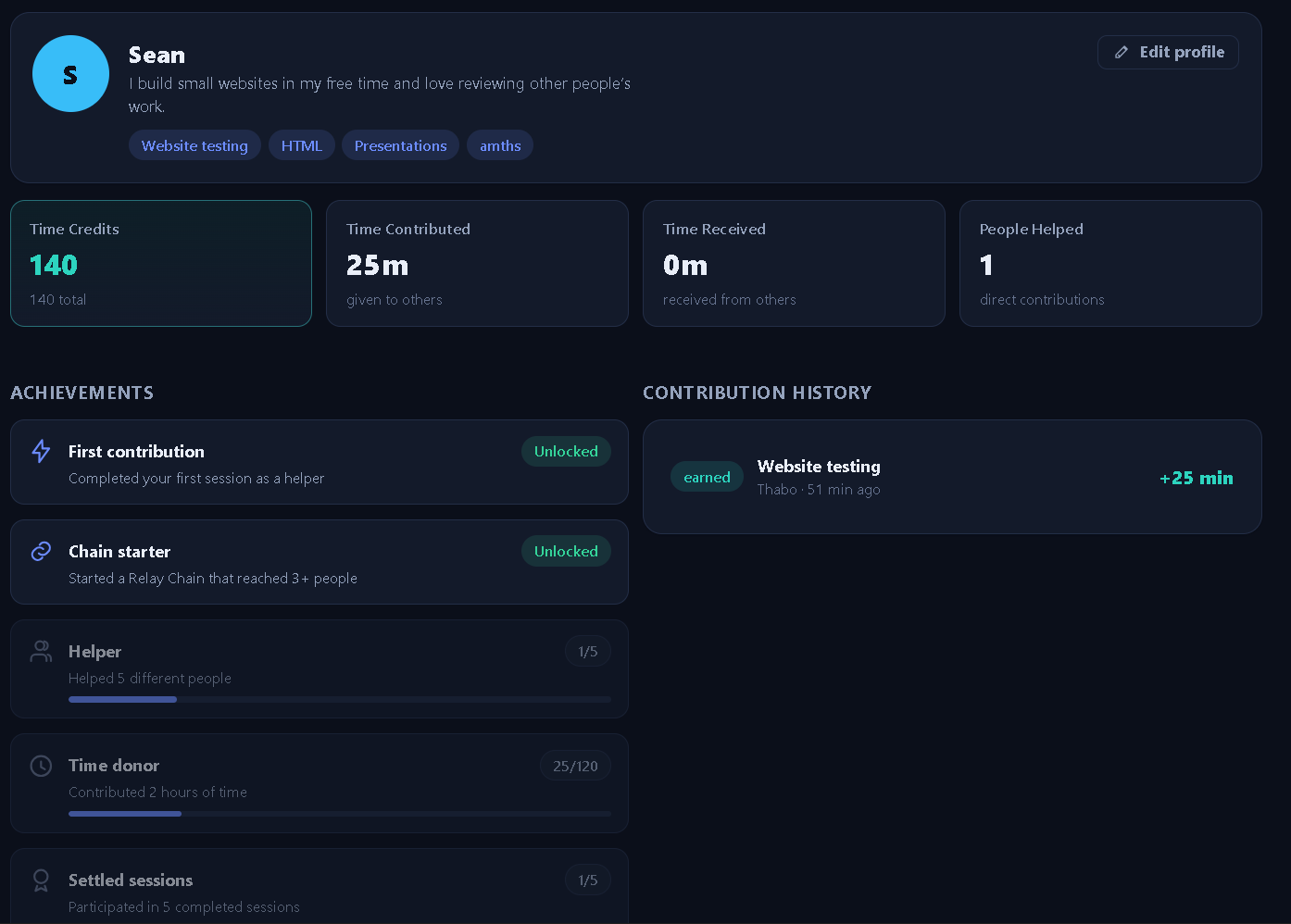
What I Built I designed and built Relay as a platform where users can offer their available time, discover opportunities, complete sessions, and earn Time Credits. The platform allows users to create opportunities, browse available opportunities, accept tasks, track sessions, and manage their Time Credits. I also built the Relay Chain concept, where one person's contribution can lead to another person's contribution.
How I Built It I developed the project independently, from the initial concept and user experience to the actual implementation. I designed the main user flows and built the core functionality around users, opportunities, sessions, time tracking, and Time Credits.
The main flow is:
Offer time → Find an opportunity → Complete a session → Earn Time Credits → Give back
Challenges Building the project alone meant handling the design, functionality, user experience, and development myself. One of the biggest challenges was creating a system that could make time exchanges simple and understandable while keeping the platform easy to use. I also had to design the Time Credit and session systems so that users could clearly track their contributions and activity.
What I Learned
Building Relay independently taught me how to take an idea from concept to a working product. I gained experience in planning features, designing user flows, solving development problems, and making decisions about what was most important to the final product.
Future Improvements I would like to expand Relay to support schools, communities, organizations, and local groups. Future improvements could include better opportunity discovery, improved scheduling, stronger community features, and additional ways to earn and use Time Credits.

Log in or sign up for Devpost to join the conversation.