Inspiration
I post on X almost every day — builds, breakdowns, lessons. Good content. But it dies the moment I publish it.
My LinkedIn audience never sees it. My Medium readers don't know it exists. Facebook gets nothing. Every platform has a different format, a different tone, a different audience — and reformatting manually for three platforms after already writing the post is friction nobody wants to pay. So most people don't. The content stays on X. The reach stays small.
That's not a content problem. That's a distribution problem. RELAY is my answer to it.
What it does
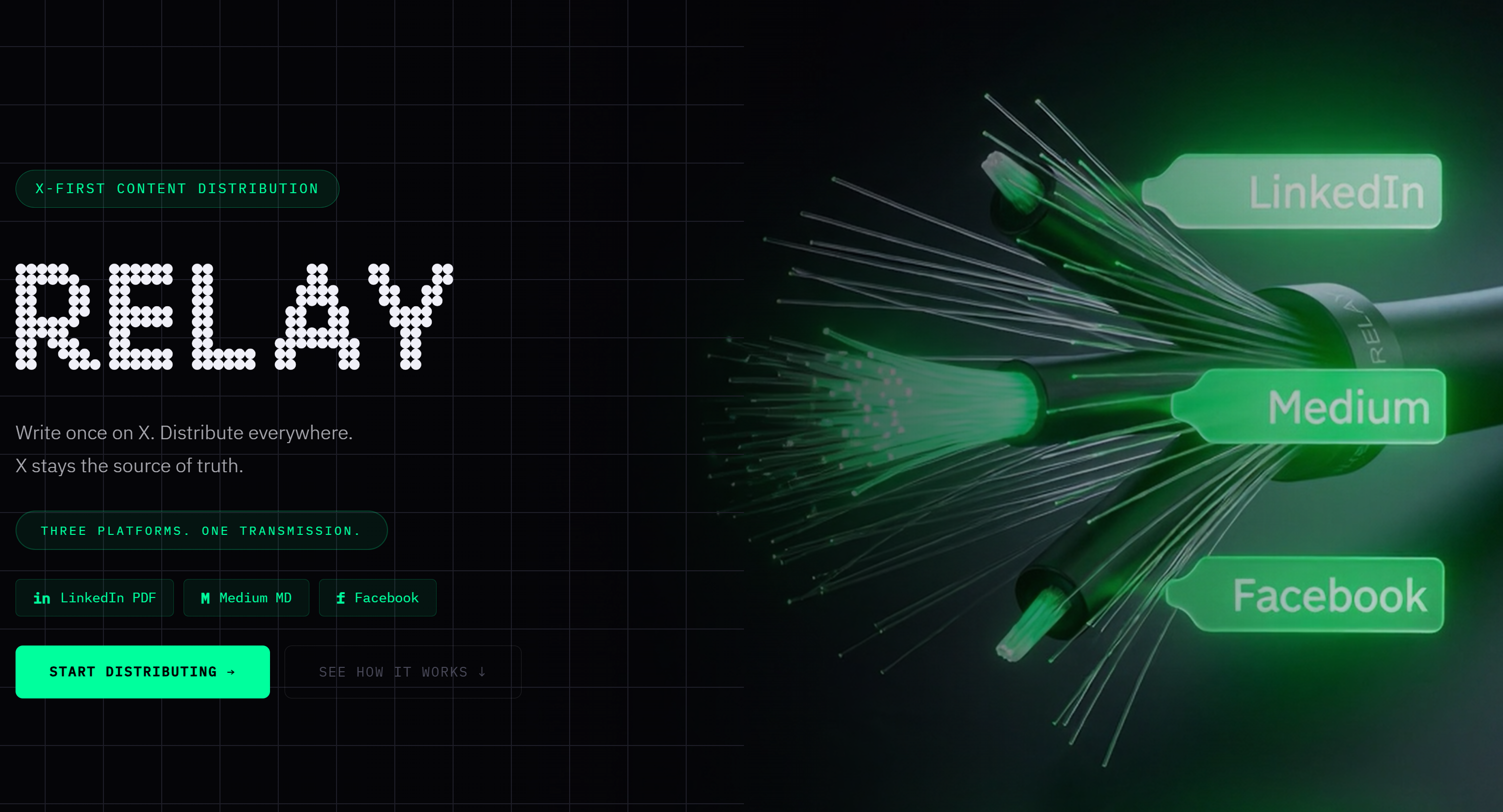
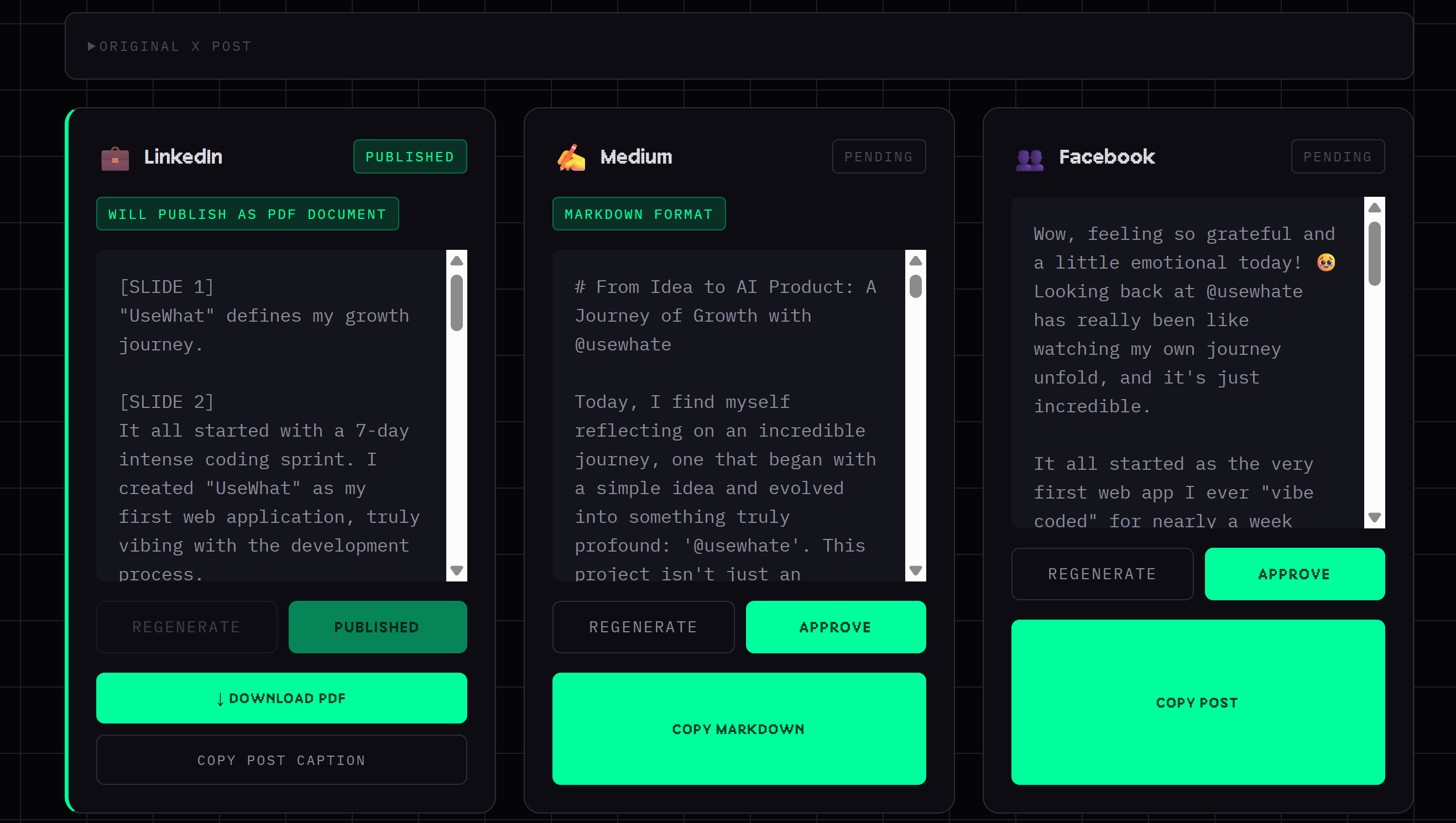
RELAY is an X-first content distribution tool. You paste what you already published on X, and RELAY's AI Content Reflow engine fires three parallel calls — one per platform — to rebuild it natively:
- LinkedIn → A carousel-ready script (hook, key points, CTA), exported as a downloadable PDF document post — a format that gets significantly higher organic reach than plain text on LinkedIn.
- Medium → Clean Markdown with an AI-generated title, copied straight to your clipboard, paste-ready into the editor.
- Facebook → A warm, conversational rewrite with a natural tone shift.
Every version automatically appends an attribution line: "First published on X — follow for more." X stays the source of truth across every platform you reach.
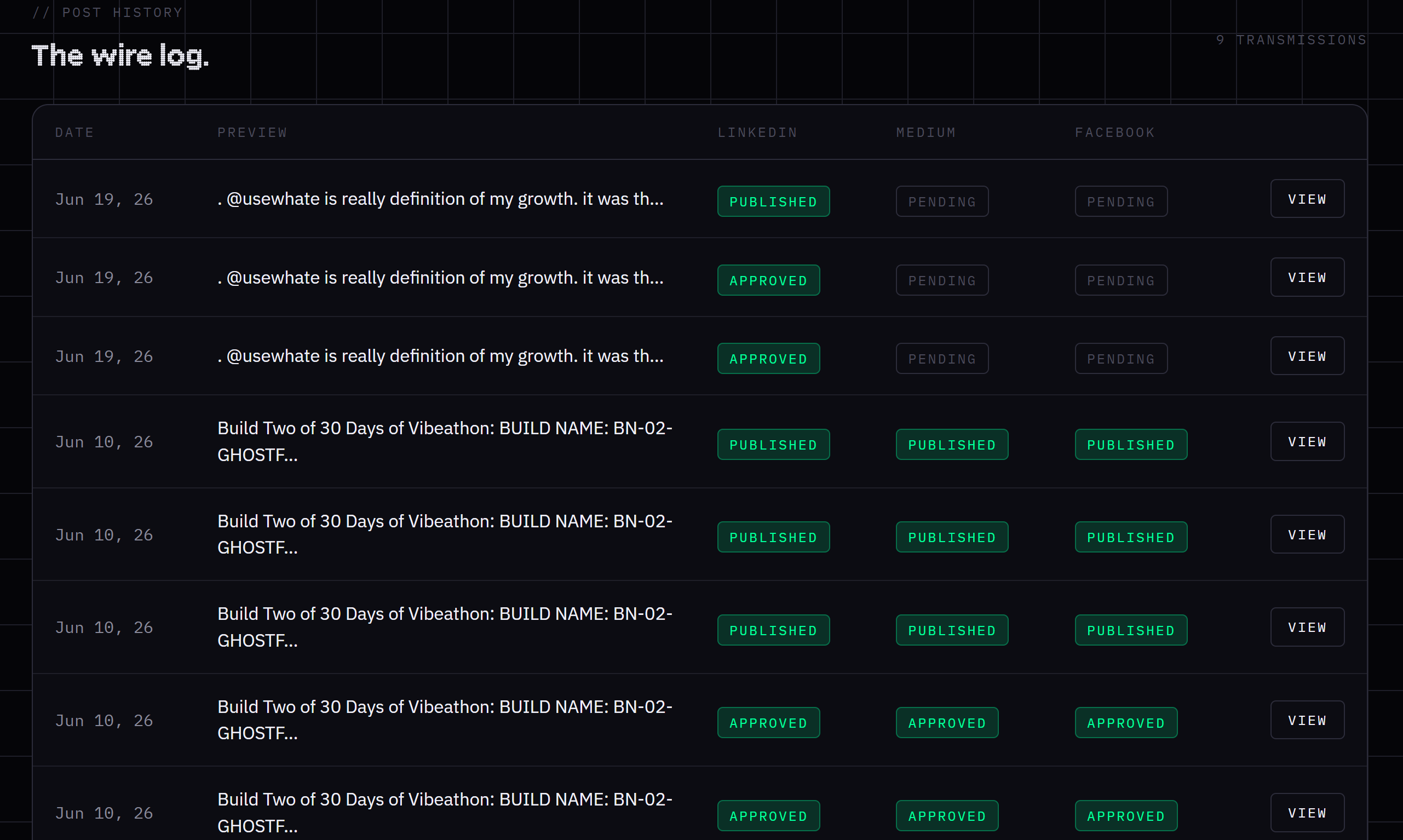
Nothing publishes without you. You review all three versions side by side and approve each one individually before it goes anywhere.
How I built it
I started in Lovable to scaffold the full-stack app fast — React, TypeScript, Tailwind, with Supabase wired in for auth and the post history database. The AI reformatting logic runs through the Lovable AI Gateway, firing three parallel platform-specific prompts rather than one generic rewrite — each prompt engineered for its platform's native structure, tone, and audience.
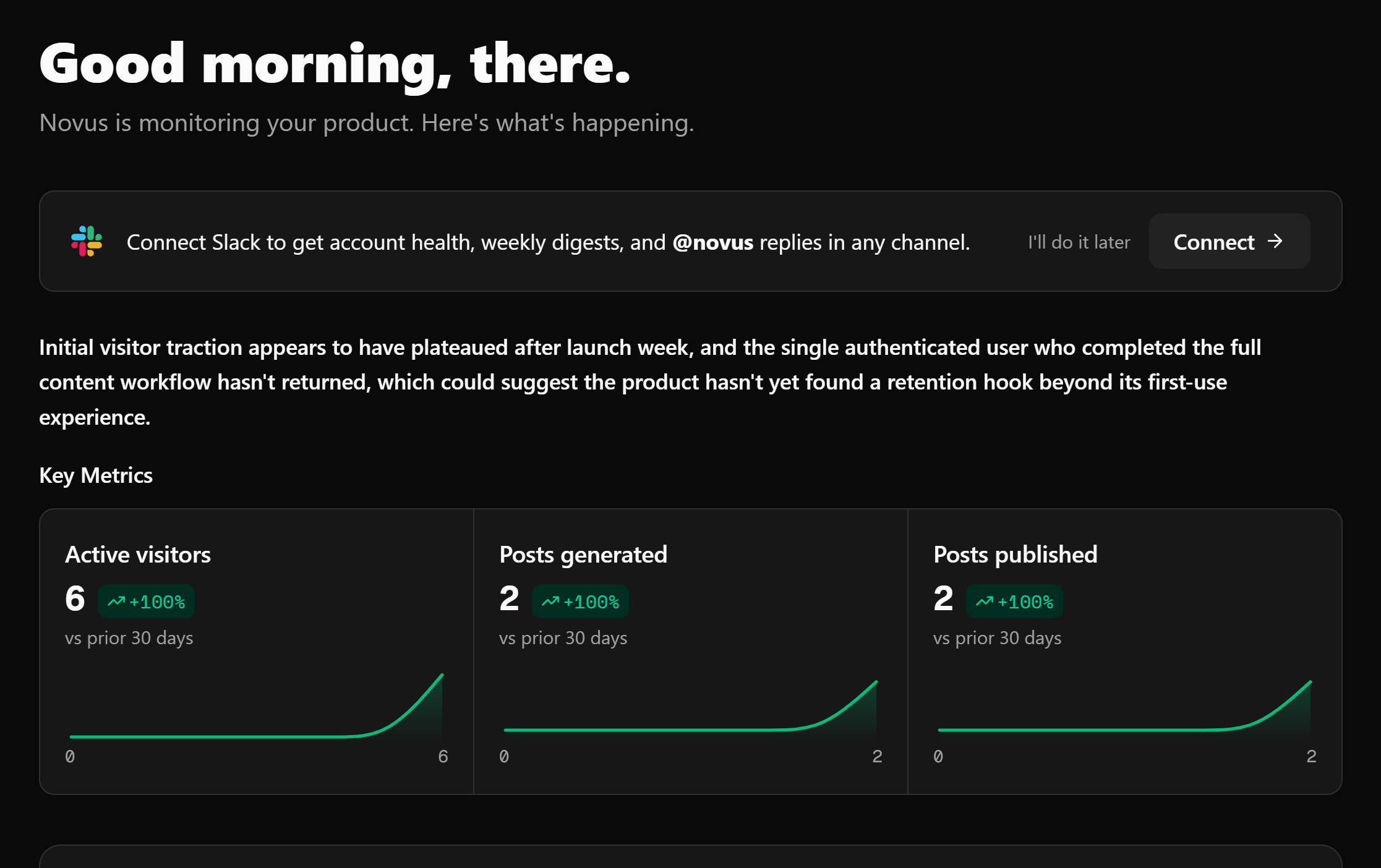
The LinkedIn PDF generation uses jsPDF to turn the carousel script into a downloadable document, styled to match RELAY's own dark void + protocol green design system. Novus.ai is wired in to track every meaningful action — post generated, platform approved, PDF downloaded — so the product is fully instrumented and measurable, not just a demo that disappears after the judging period.
Challenges I ran into
The biggest challenge wasn't the AI logic — it was production stability under deadline pressure. Mid-build, I discovered a .env file had been committed to GitHub by the Lovable bot. I rotated keys, untracked the file, and in the process broke production when the environment variables stopped resolving correctly after the git history was cleaned. Diagnosing that — figuring out it was a stale build bundle rather than a missing secret — cost real hours close to the deadline.
I also went back and forth several times trying to get a custom-animated fiber-optic hero video working as a full-bleed background without it fighting the page's z-index stack and swallowing the text content. In the final hours, I made the call to prioritize a clean, working, readable landing page over a more ambitious animated one — a real product decision under time pressure, which felt appropriate for a Mind the Product hackathon.
What I learned
Shippedness isn't a vibe, it's a discipline. Every hour spent chasing a more impressive visual is an hour not spent verifying the core flow works end to end for a stranger landing on the URL. I also got a much sharper sense of where AI Builder platforms like Lovable hand off control — and when it's time to take it back.
What's next for RELAY
Direct API publishing to LinkedIn, Medium, and Facebook so approval can trigger live posting, not just export. A scheduling layer so approved content drops at the right time per platform. And a "best line" detector that flags which fragment of your X post is the strongest hook before it even reaches the AI reformatter.
Built With
- array
- ibm-plex-mono
- ibm-plex-sans
- jspdf
- lovable-ai-gateway
- lovable-cloud
- novus.ai
- react
- supabase
- tailwind-css
- typescript


Log in or sign up for Devpost to join the conversation.