Relay was inspired by a familiar problem: project updates contain important decisions and action items, but they are often buried in long messages, meeting notes, and customer feedback. Teams leave with more information, but not always with a clear next move.
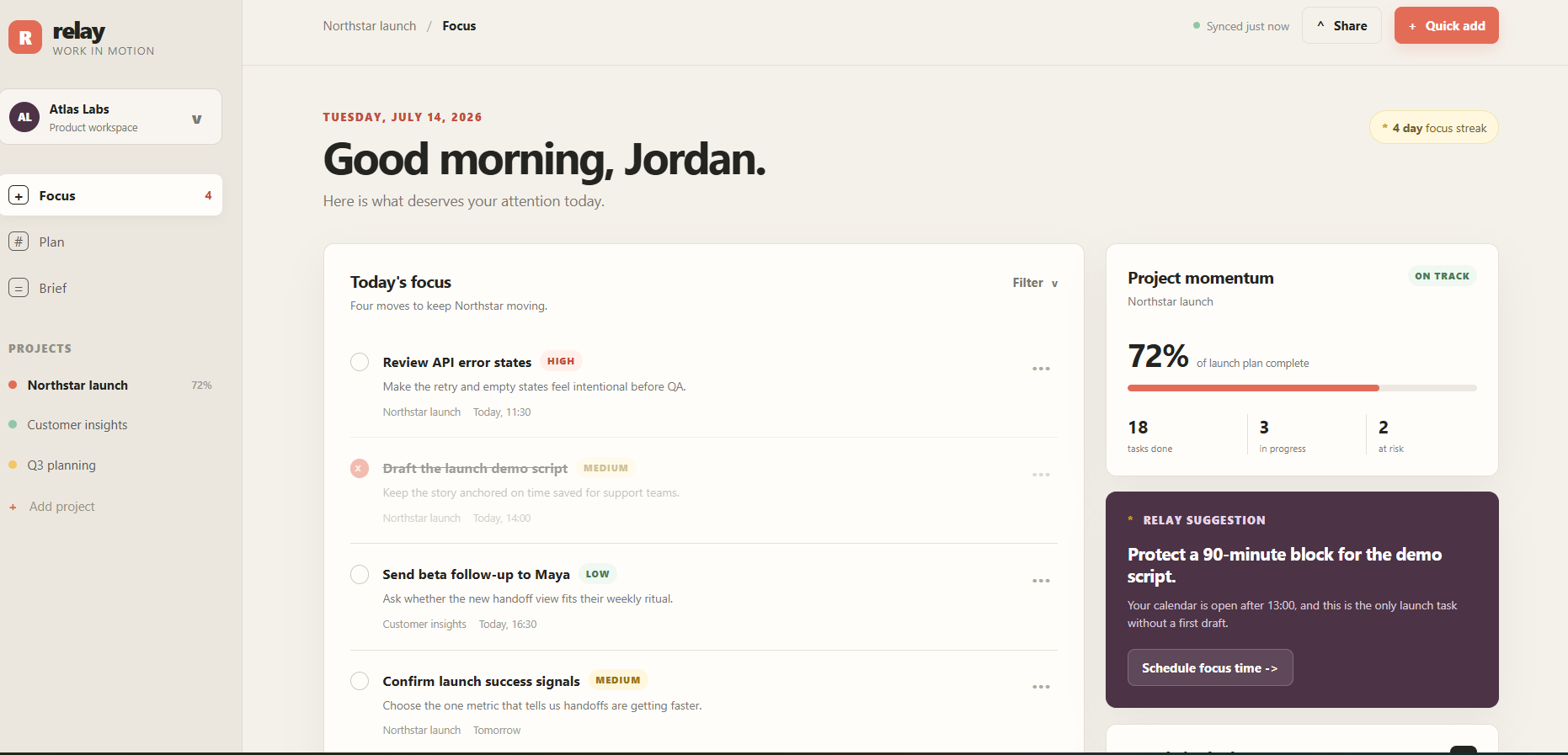
I built Relay as a focused productivity cockpit that turns unstructured updates into prioritized tasks, owners, timing, risks, and open decisions. The project includes a daily Focus view, an AI-assisted Plan view, and a shareable Brief view for handing work back to the team.
I built the product from an empty workspace using Codex. Codex helped me shape the workflow, design the interface, implement the responsive frontend, create the server-side API route, add structured output validation, and prepare the README and submission materials. GPT-5.6 powers the main product workflow through the OpenAI Responses API. It converts a raw project update into structured JSON that Relay can render consistently.
One of the biggest things I learned was that an AI productivity tool needs strong boundaries. Asking for a general summary is less useful than asking for a small, structured set of next moves. I also learned how important fallback behavior is: Relay remains usable in demo mode when an API key is not available, while live synthesis is available when the OpenAI key is configured.
The main challenge was balancing a polished product experience with a reliable hackathon demo. I wanted Relay to feel like a real tool rather than a simple AI text box, so I added momentum tracking, quick task capture, completion states, scheduling suggestions, and a shareable brief. The result is a focused workflow that helps teams move from messy communication to clear execution.

Log in or sign up for Devpost to join the conversation.