Somewhere
Most AI products ask users to write, learn, search, or create something. I wanted to make an AI experience where there was nothing to accomplish.
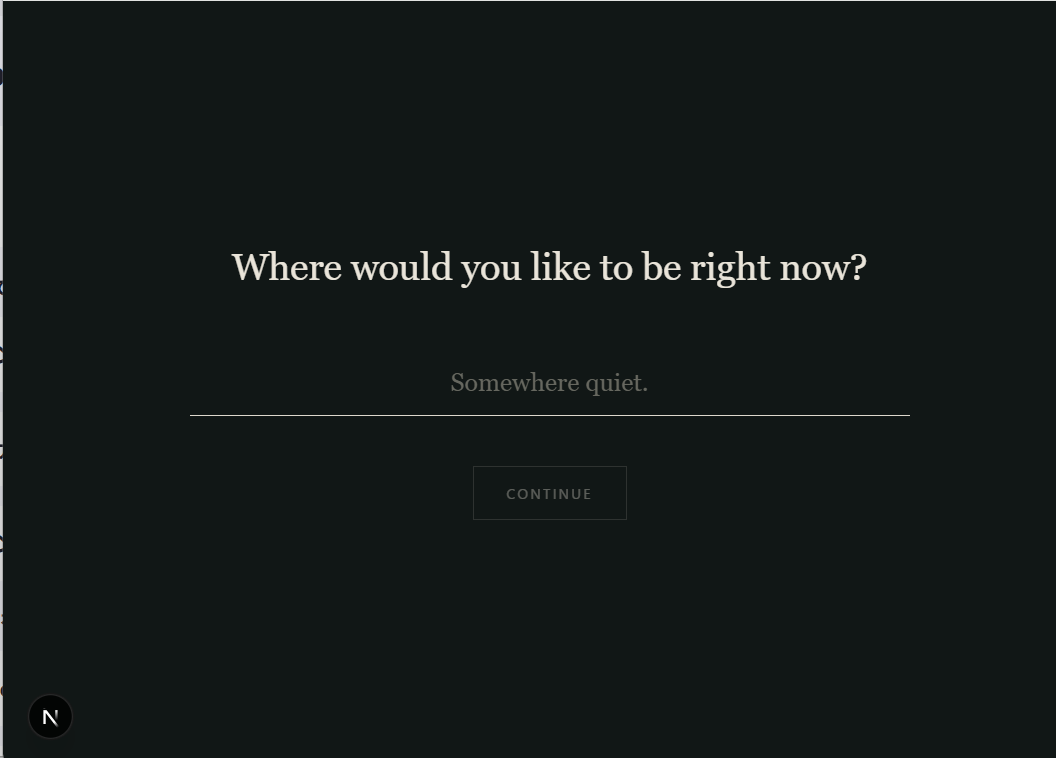
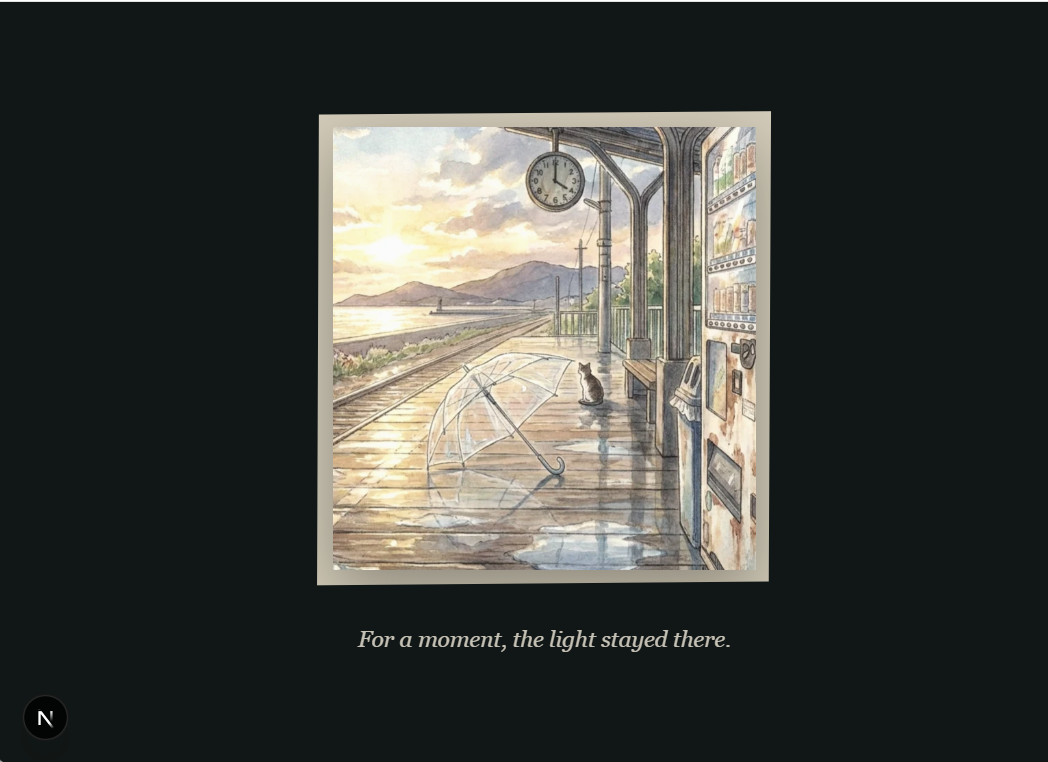
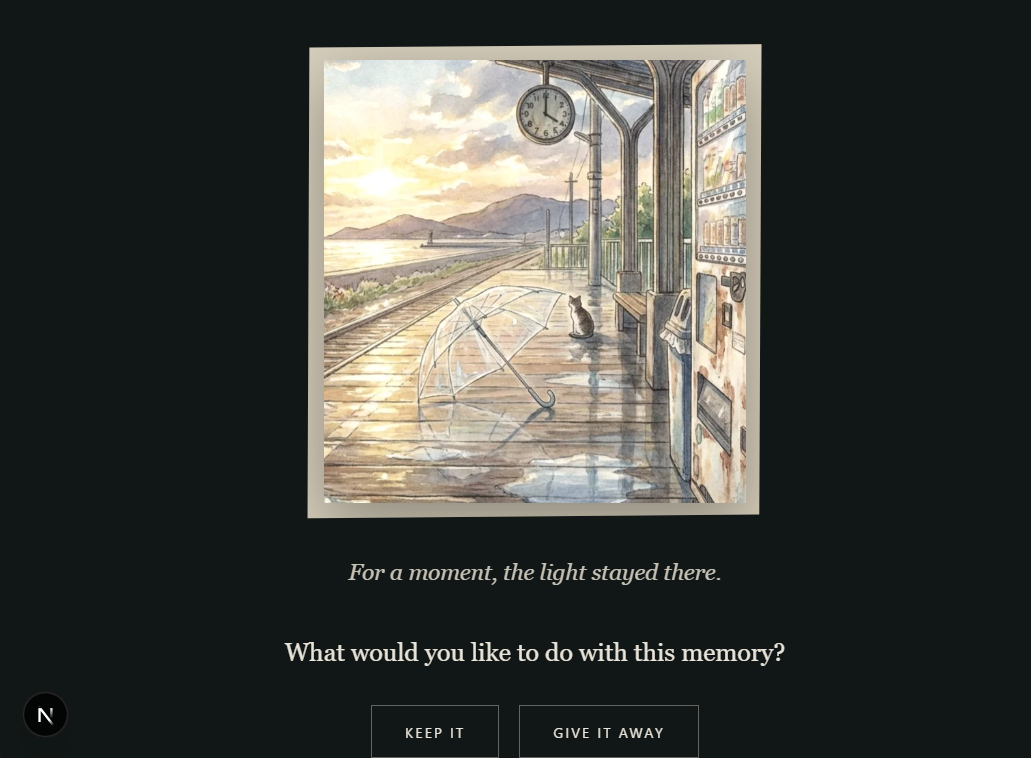
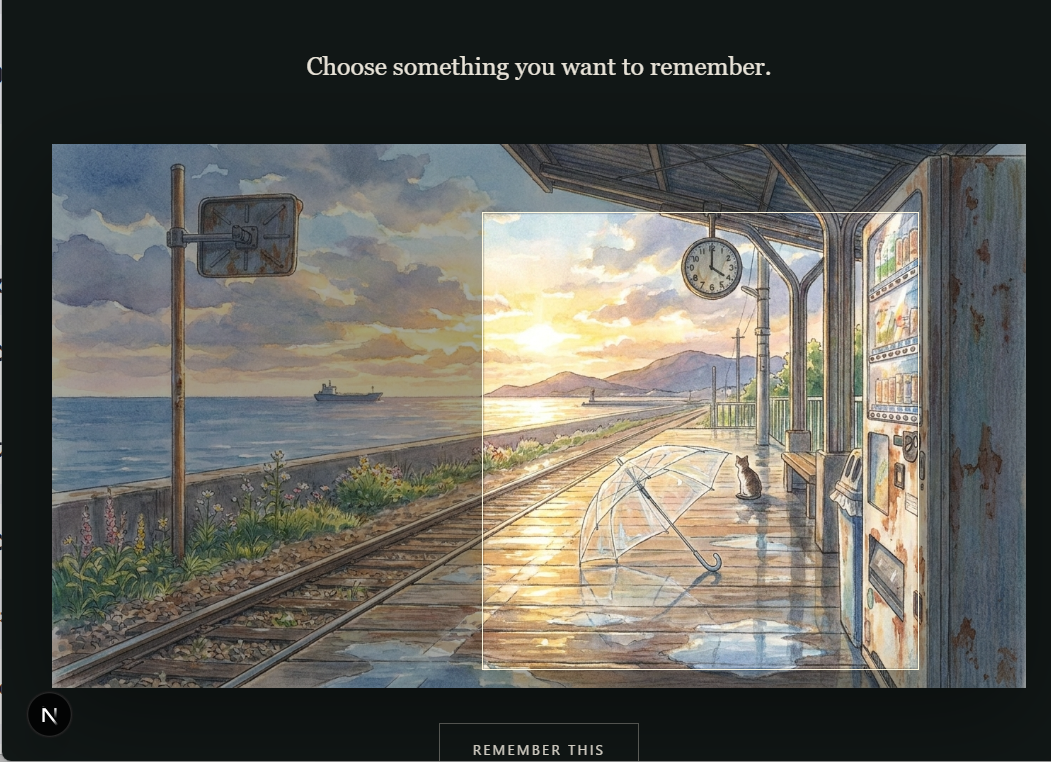
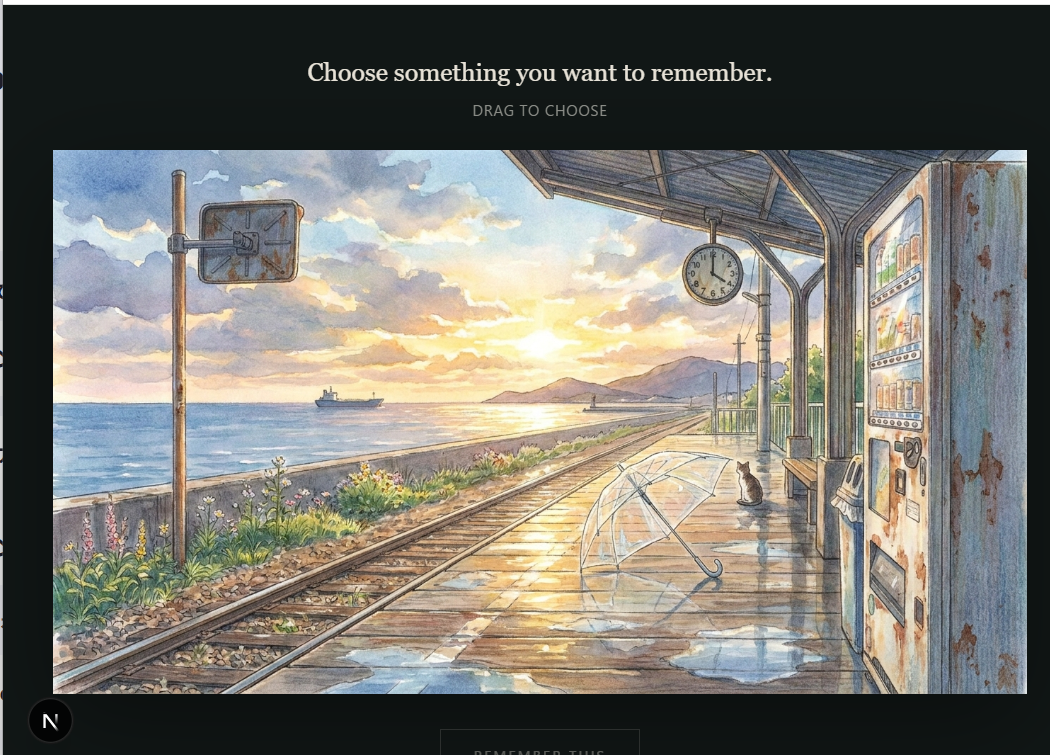
Somewhere is a short journey. The user enters a place they would like to be, and GPT-5.6 writes a quiet transition. They then choose part of a landscape by dragging over it. The selected area becomes a small travel sketch.
GPT-5.6 uses both the original input and the selected image to write one short sentence connecting the two moments. It does not analyze the user or give advice.
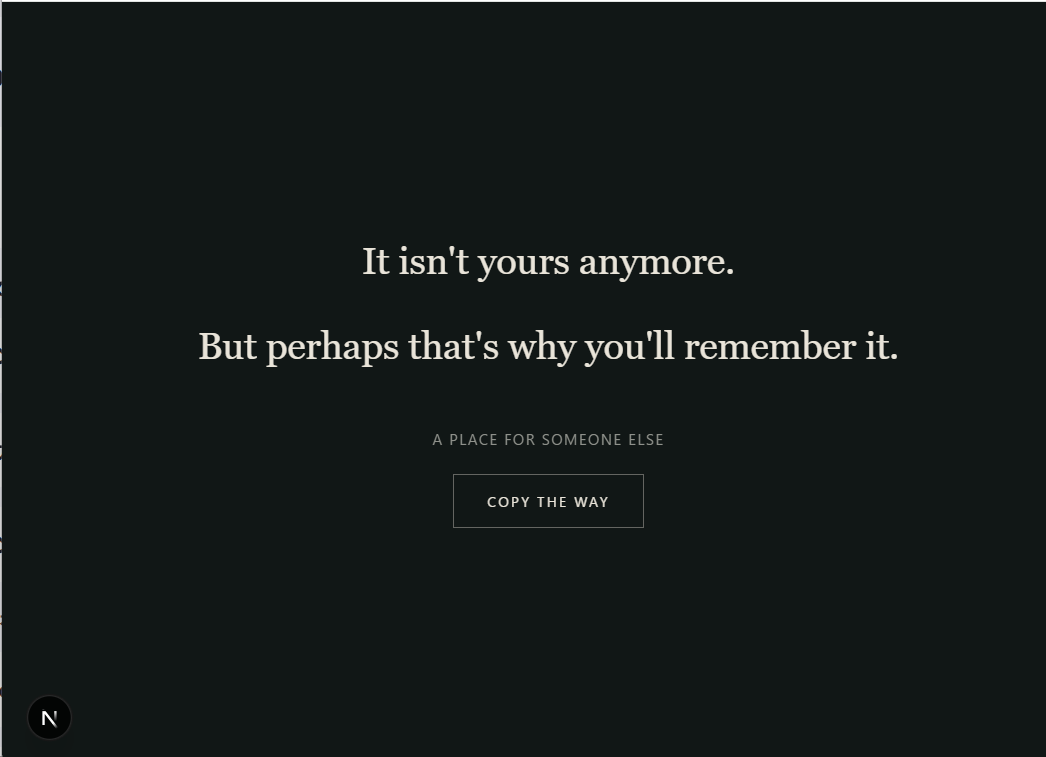
The user can keep the memory or give it away. If they give it away, they lose access and receive a link for another person. The recipient can open the link and receive the memory.
Inspiration
Generative AI can produce almost unlimited images and words. I wondered whether something generated by AI could still feel unique if giving it to someone meant losing it.
Normal digital sharing works like this:
$$A \rightarrow A + B$$
Somewhere works like this:
$$A \rightarrow B$$
The sender gives up access, and the recipient receives the memory.
How I Built It
I built Somewhere with Next.js, TypeScript, Tailwind CSS, the OpenAI Responses API, GPT-5.6, and the browser Canvas API.
Pointer Events handle mouse and touchscreen selection. Canvas crops the selected area and applies a subtle sketch-like treatment.
The recipient copy is saved before the sender’s access is removed. If saving fails, the memory remains with the sender.
I used Codex to build the application, review the ownership flow, find problems, test the main paths, and document the implementation.
Challenges
The main challenge was making “give it away” more than a visual effect.
I had to handle refreshing, browser navigation, direct recipient links, failed saves, and opening the link in another session. The original browser can no longer retrieve the memory after giving it away, while another browser can receive it.
This is experiential ownership rather than cryptographic ownership. Without accounts, it cannot stop someone from saving the image beforehand or clearing their browser data.
What I Learned
I learned that AI does not need to dominate an experience. GPT-5.6 only writes a few short sentences, but those sentences connect the beginning of the journey with the memory the user chooses.
I also learned that digital scarcity does not need scores, collectibles, or a marketplace. It can come from a simple rule: giving something to another person means letting it go.

Log in or sign up for Devpost to join the conversation.