About RelaxHands
Inspiration
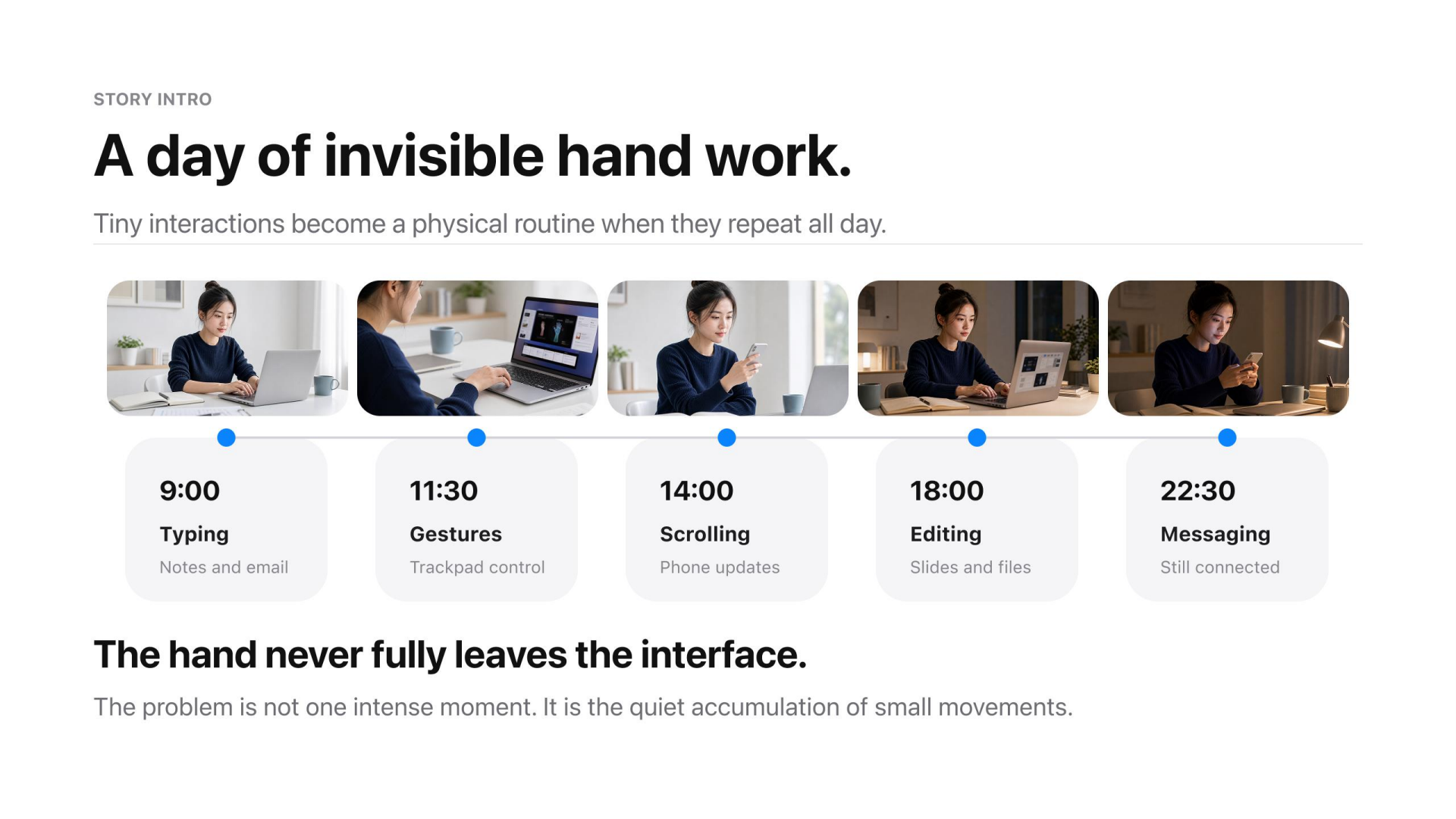
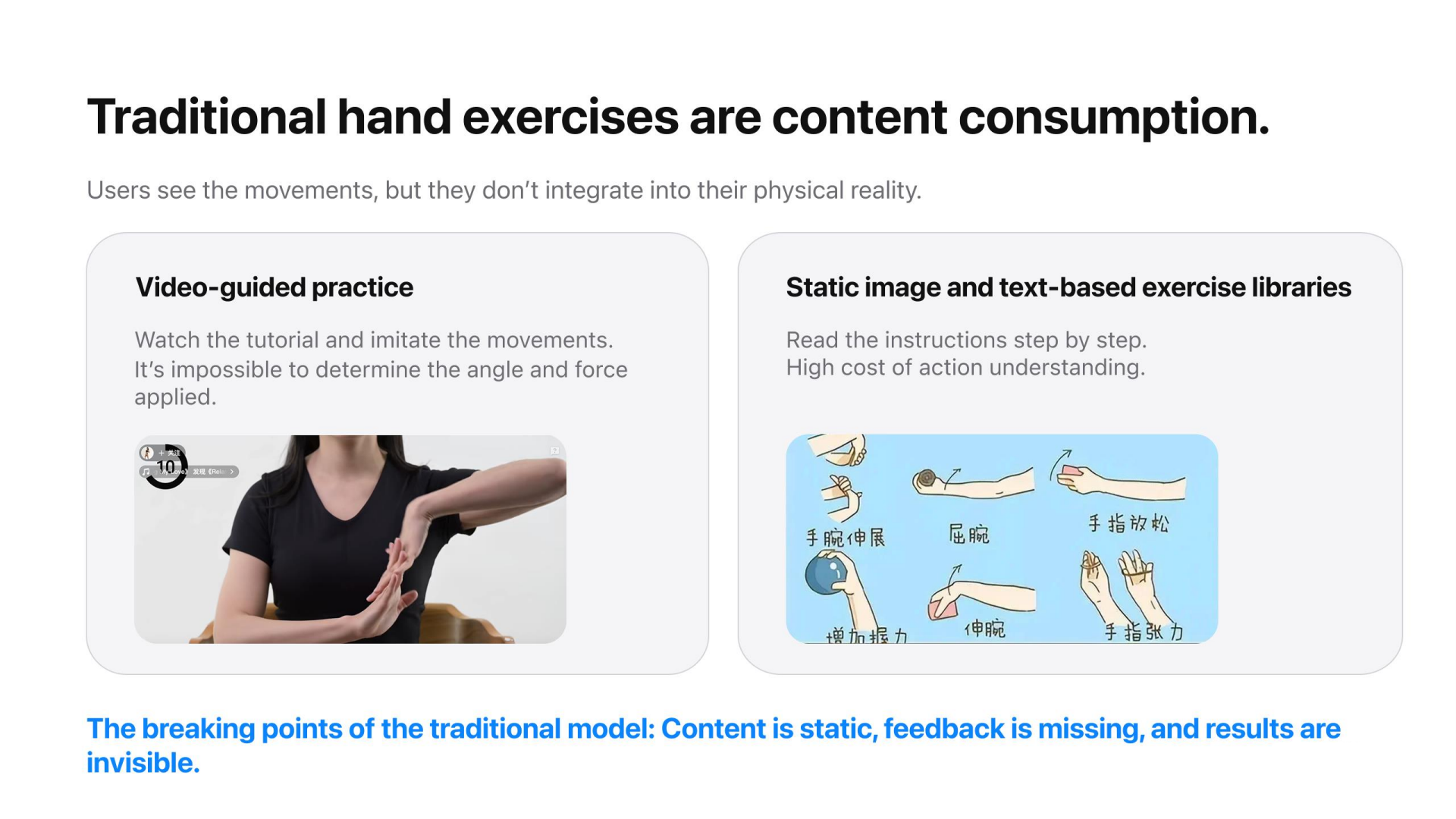
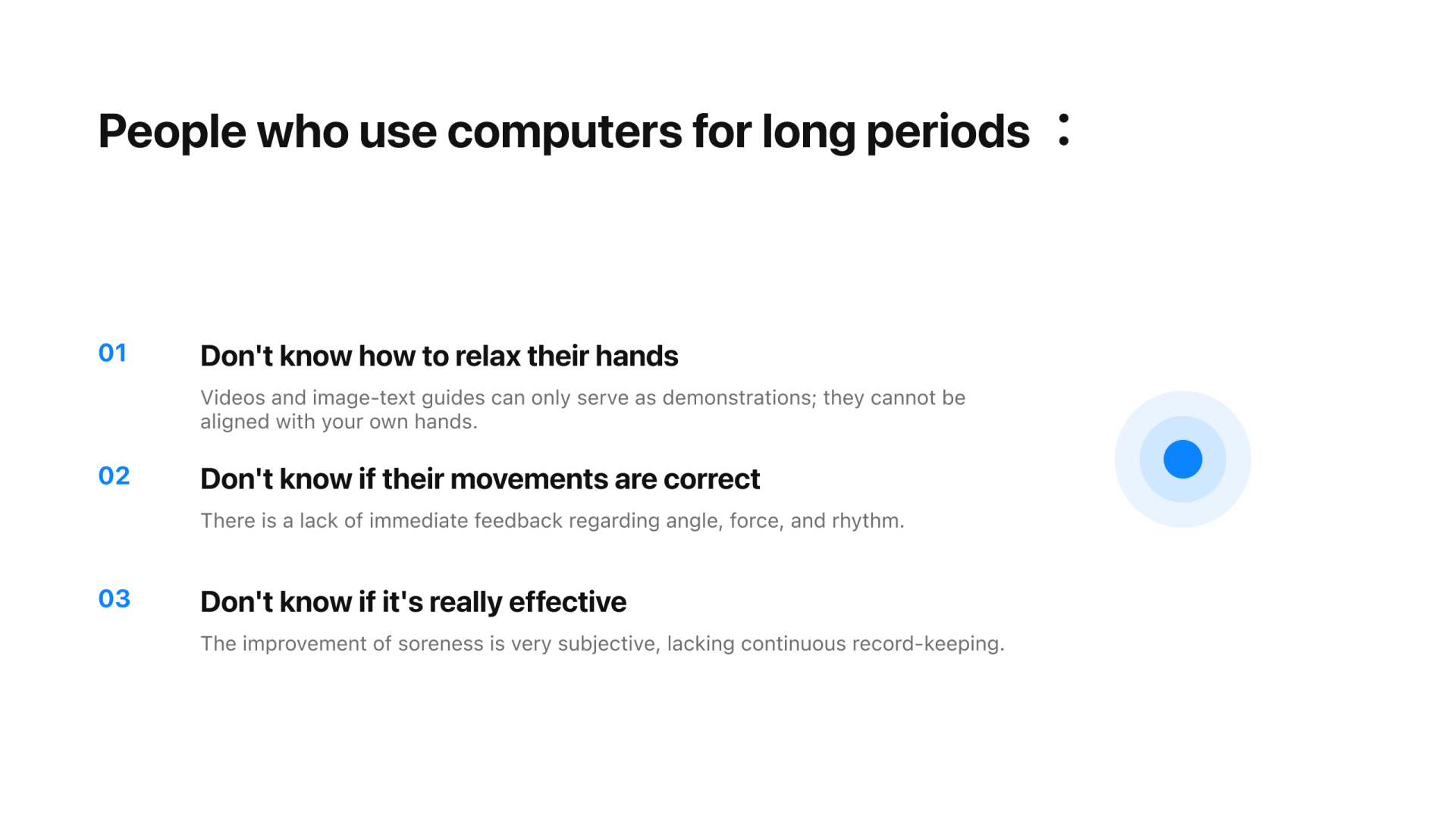
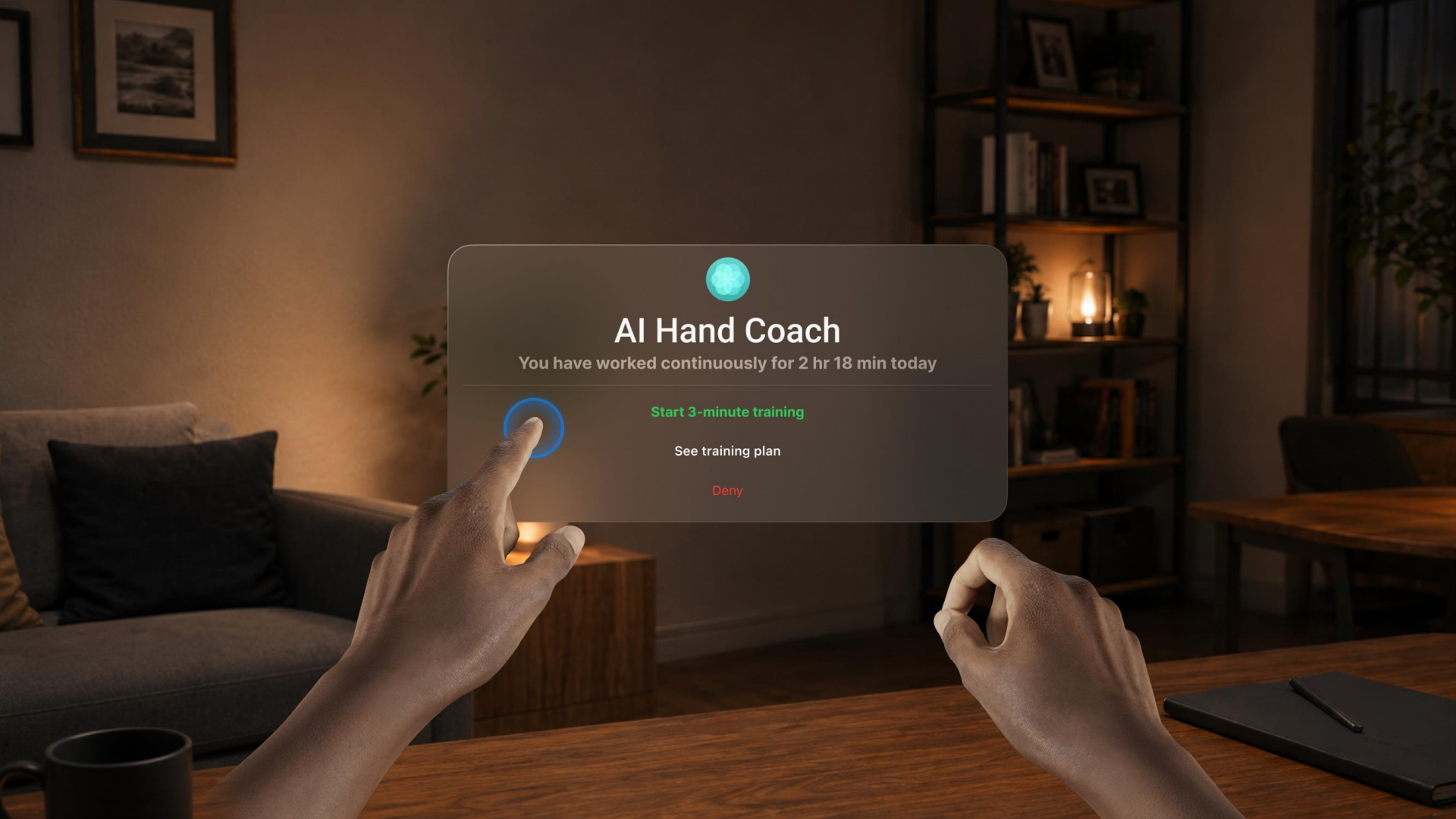
The inspiration for RelaxHands emerged from observing a ubiquitous yet overlooked problem: modern knowledge workers spend over 10,000 keyboard operations daily yet lack accessible tools for proper hand care. As team members who spend 8+ hours daily at computers, we experienced firsthand the wrist soreness and uncertainty about whether we were performing stretches correctly. Traditional resources—YouTube tutorials, static images, textual guides—failed to provide the immersive, personalized guidance that spatial computing enables. We asked: What if we could bring a professional hand therapist into your workspace, overlay guidance directly on your hands, and give you real-time feedback?
What We Learned
This project taught us several valuable lessons:
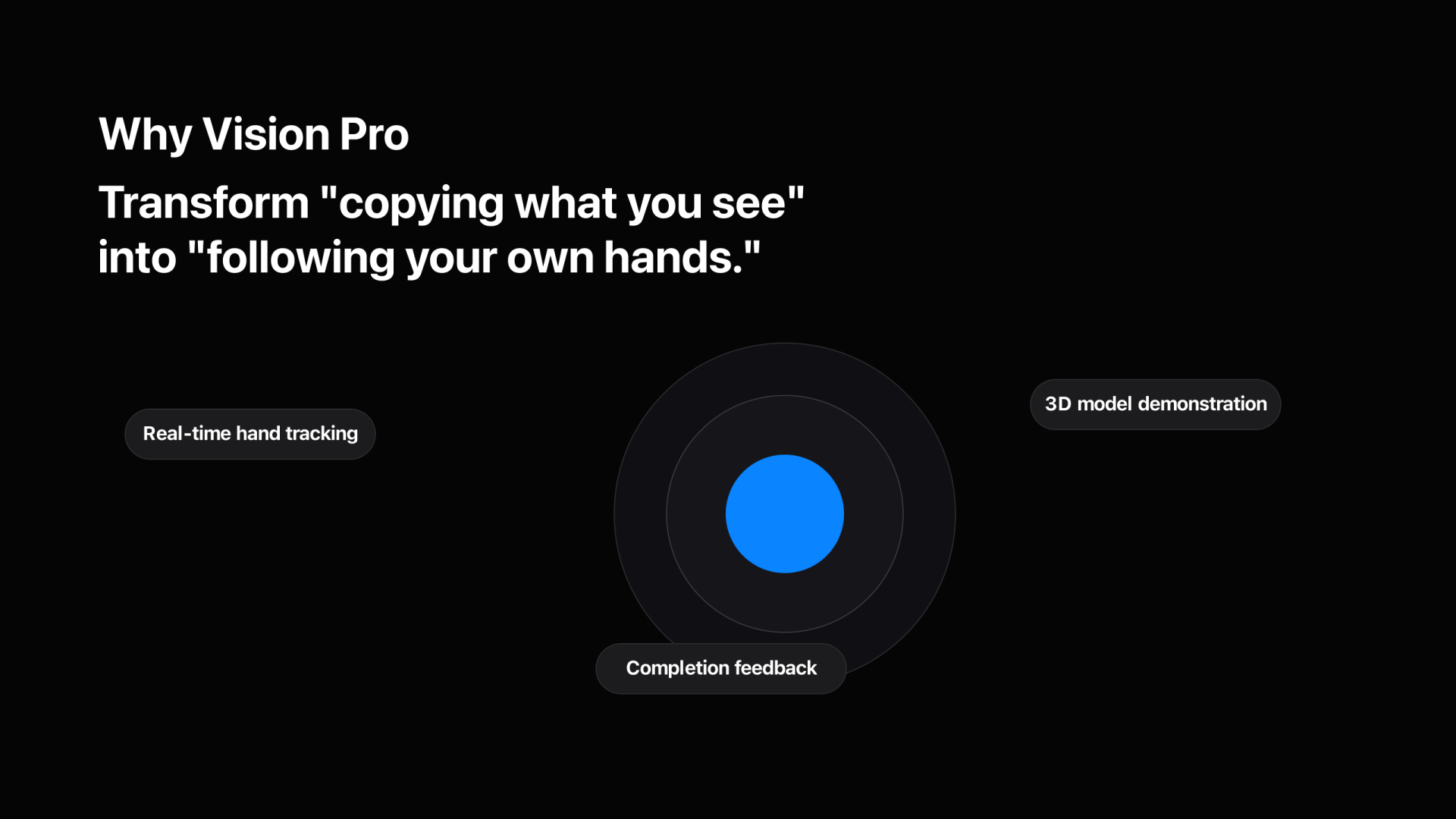
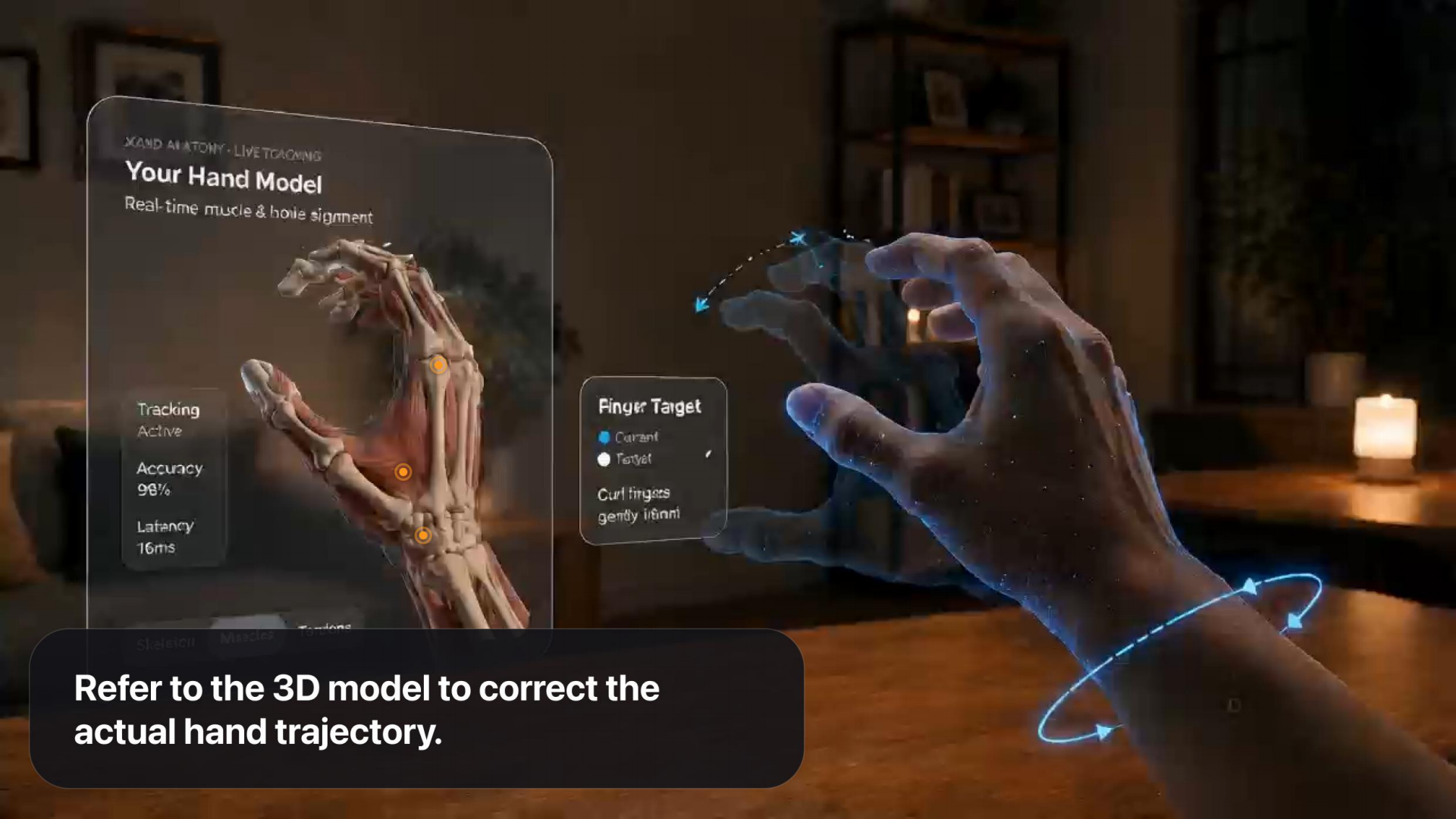
The power of spatial computing for health applications: Traditional 2D rehabilitation guides fail to convey the three-dimensional nature of hand anatomy and movement. By projecting 3D hand models directly onto users' real hands via Apple Vision Pro, we discovered how spatial anchoring transforms abstract instructions into embodied knowledge.
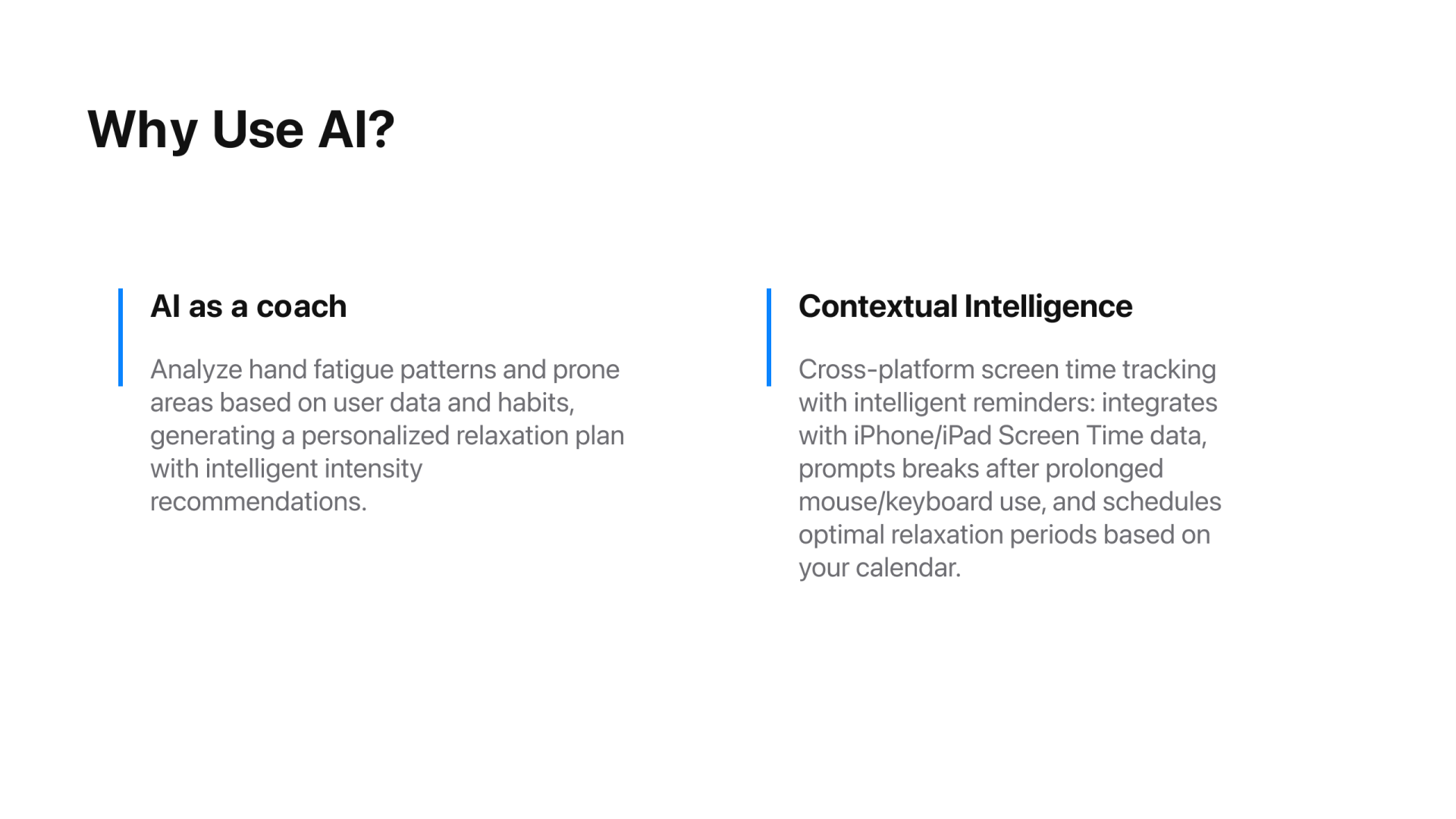
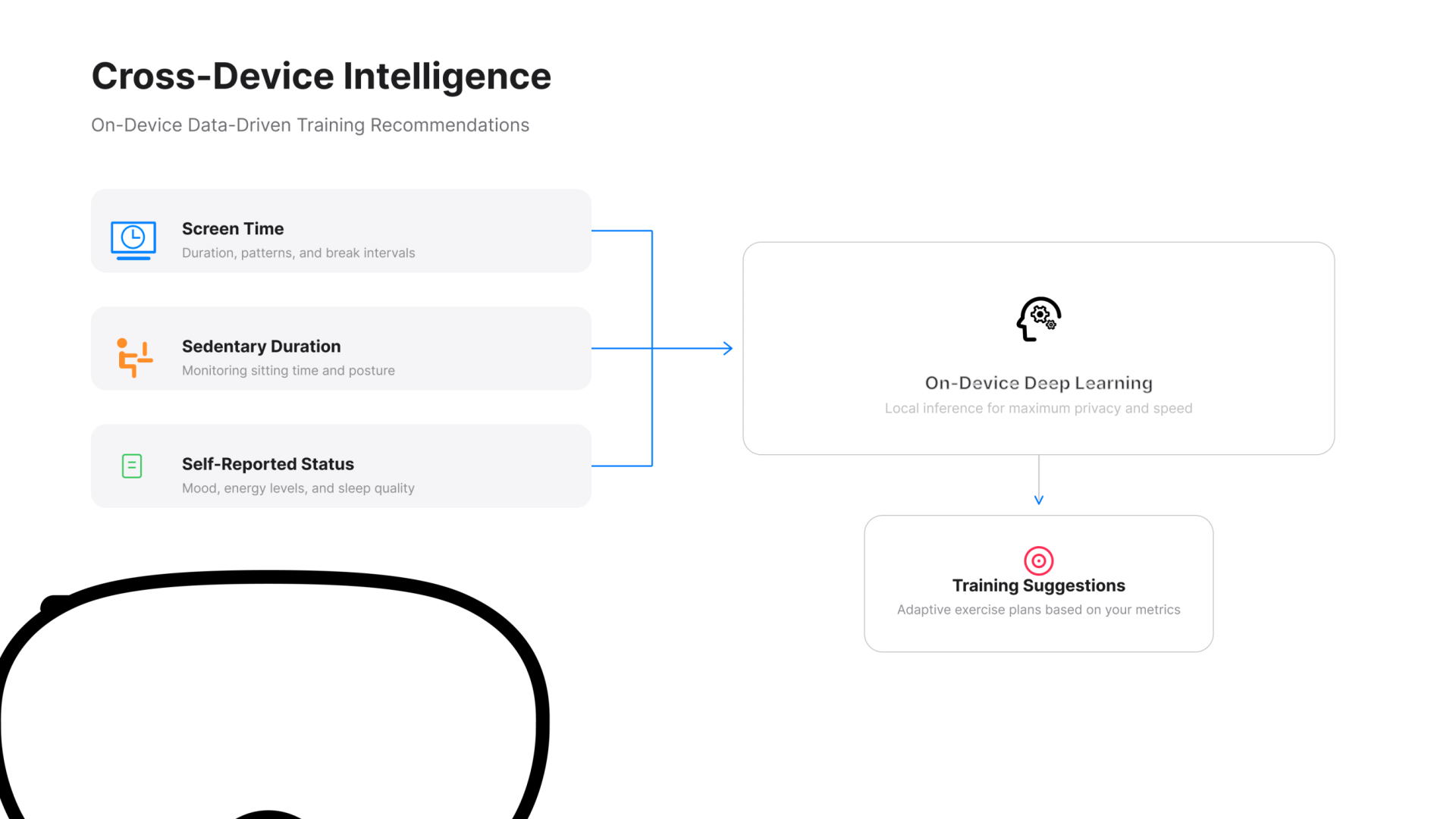
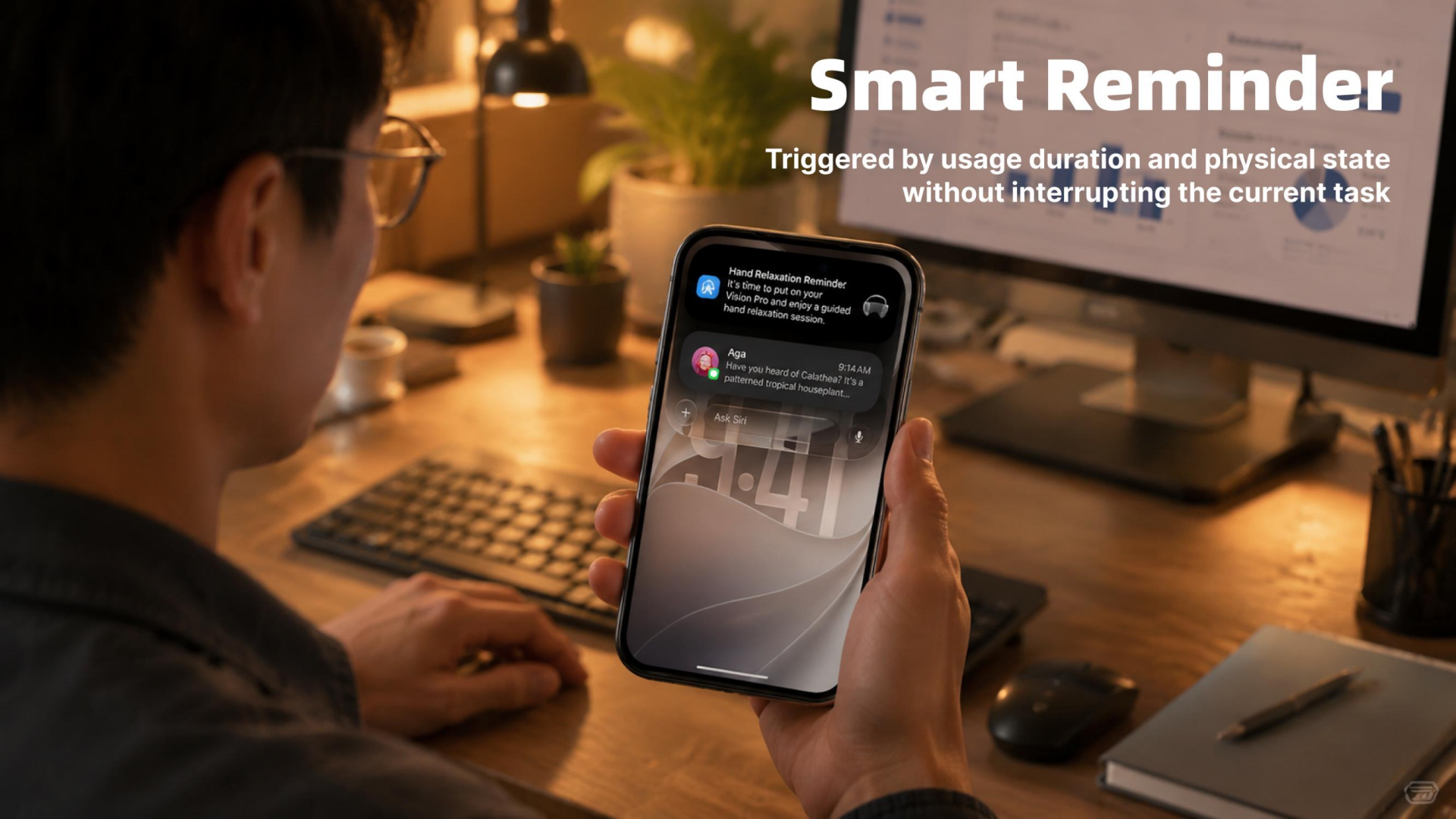
The value of contextual intelligence: Integrating data from Apple Watch (heart rate variability, wrist activity) and iOS Screen Time API allowed us to build a system that understands when users need breaks, not just how to perform exercises. This context-awareness significantly enhances adherence.
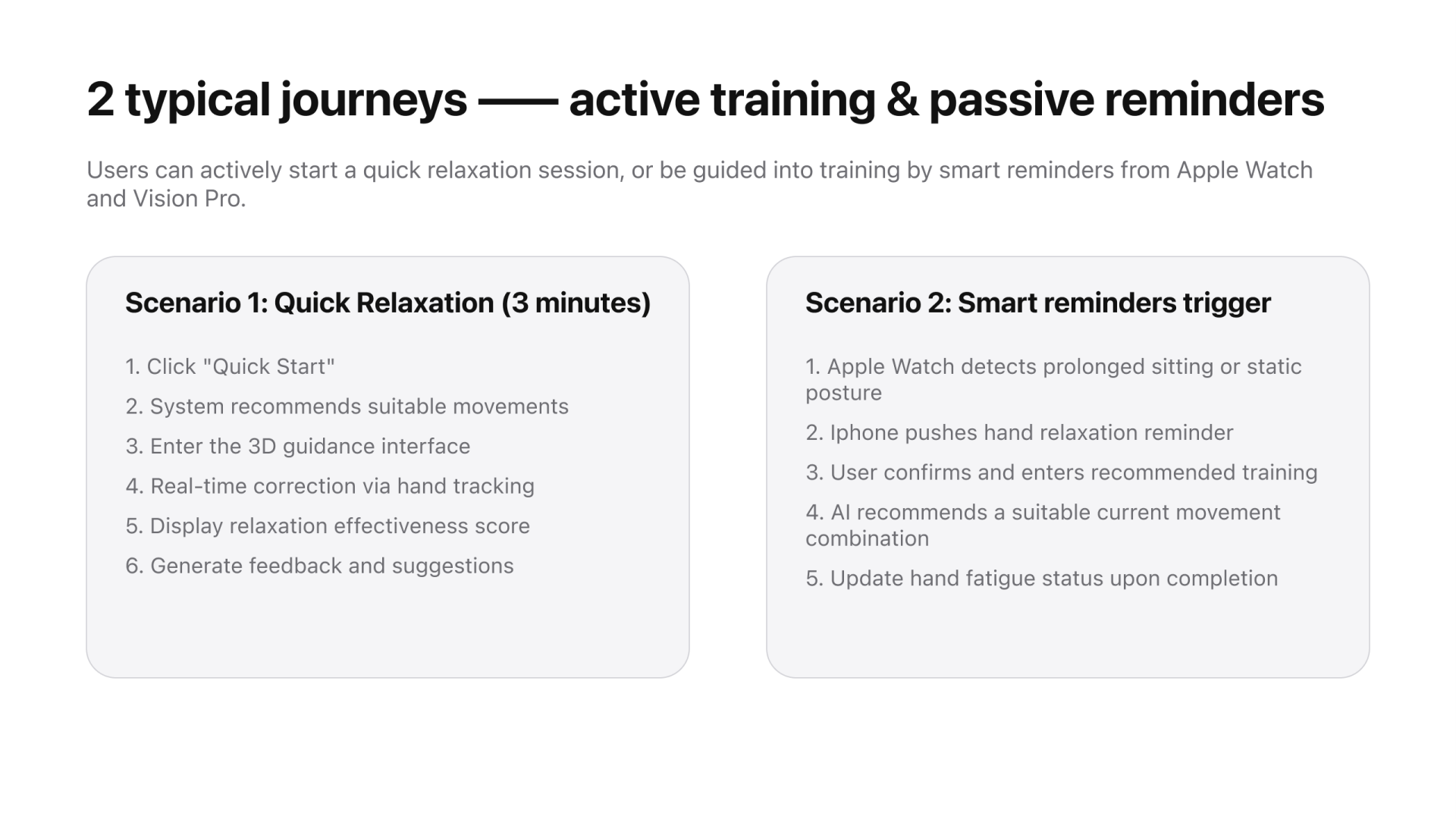
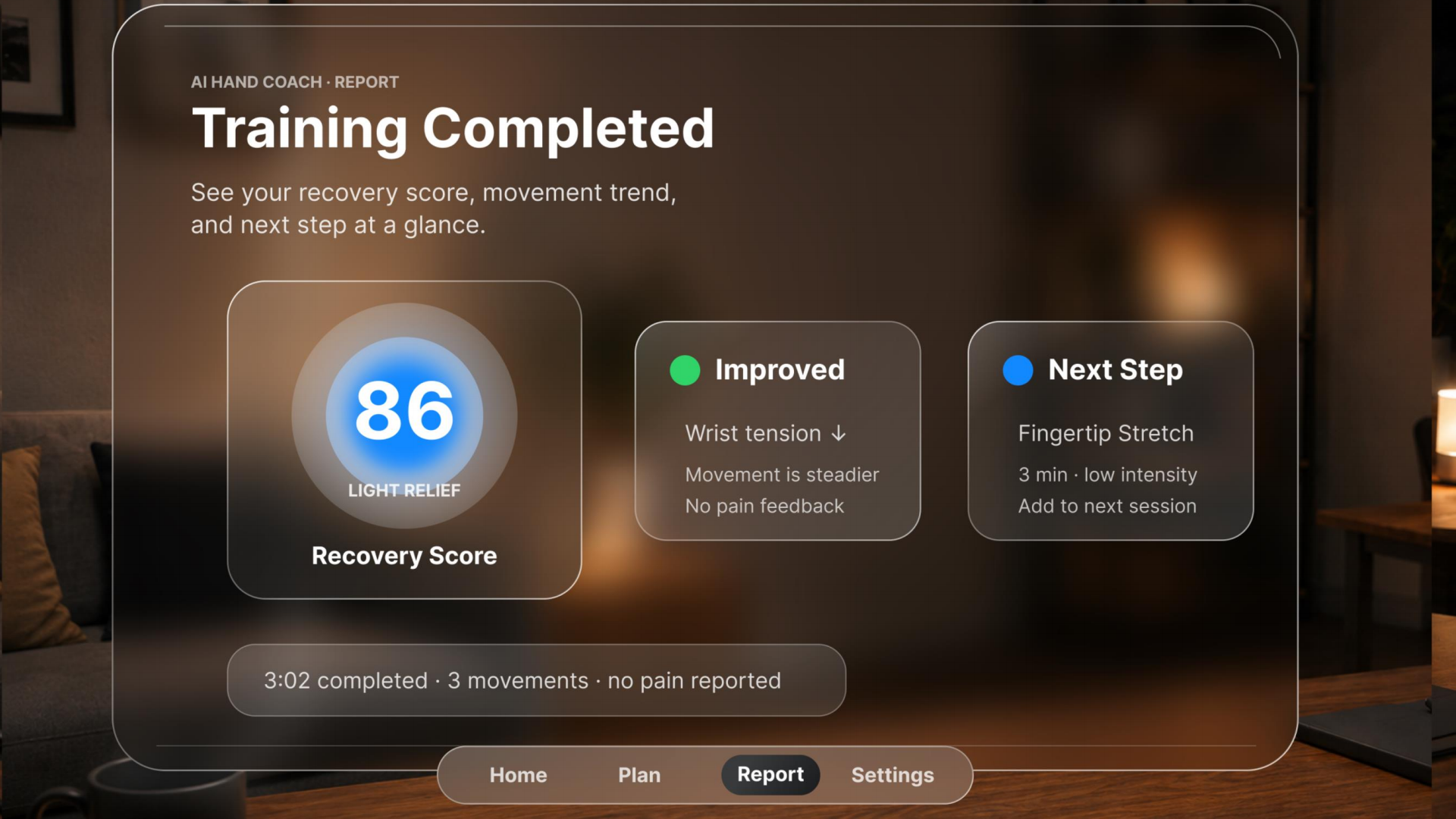
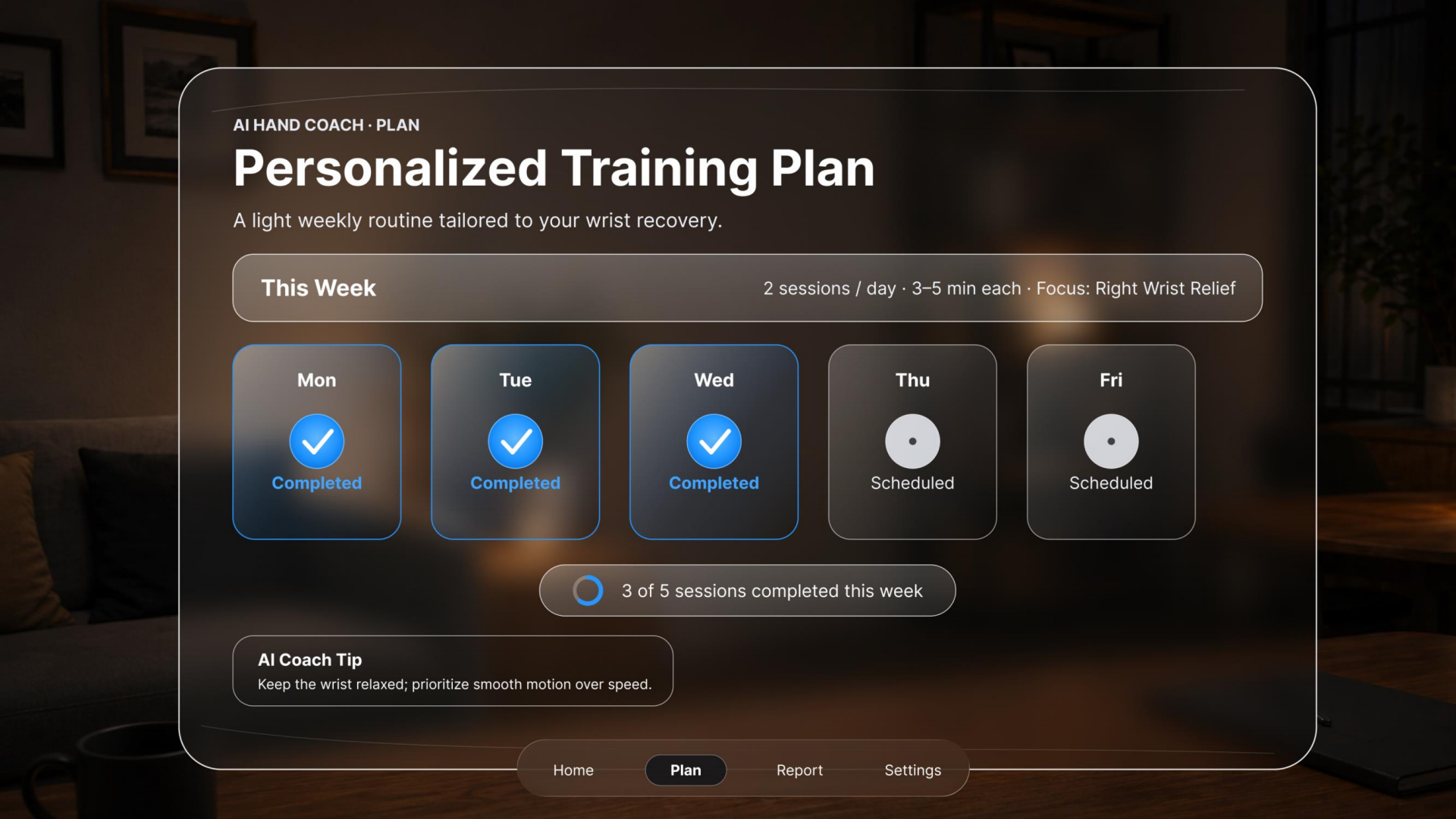
Minimal viable wellness: Users won't dedicate 30 minutes to hand care. Our research showed that 3-minute targeted sessions with immediate feedback deliver better compliance than longer, less feedback-rich alternatives.
How We Built It
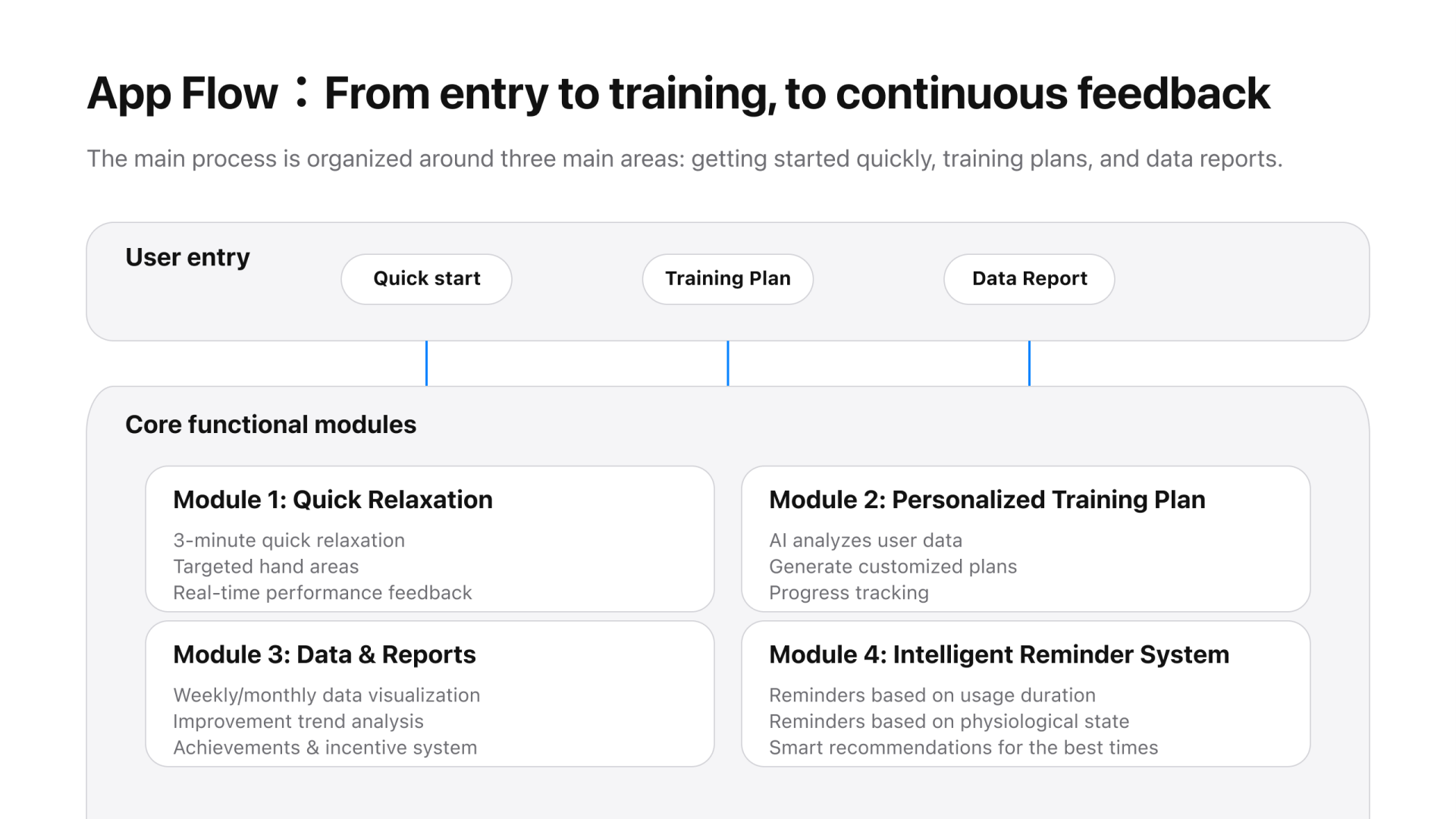
RelaxHands was designed as a comprehensive system comprising:
Spatial Interface Layer: Built on Apple Vision Pro's hand tracking APIs, enabling real-time 3D model overlay and pose detection
Context Integration Module: Connects to HealthKit and Screen Time APIs for physiological and behavioral context
Feedback System: Combines visual (color-coded corrections), haptic (Apple Watch), and audio modalities for comprehensive real-time guidance
Challenges
We encountered several significant challenges:
- Hand tracking latency: Achieving sub-50ms tracking response required optimizing our rendering pipeline to prevent motion sickness and maintain immersion
- Personalization without intrusive data collection: Balancing detailed fatigue profiling with privacy concerns demanded a lightweight, on-device ML approach rather than cloud-dependent analysis
- Motivating consistent use: Designing a gamification system that encourages daily practice without feeling intrusive remained an ongoing iteration
Despite these challenges, RelaxHands represents our vision of preventive healthcare through spatial intelligence—transforming routine discomfort into opportunities for guided, effective self-care.

Log in or sign up for Devpost to join the conversation.