-
-
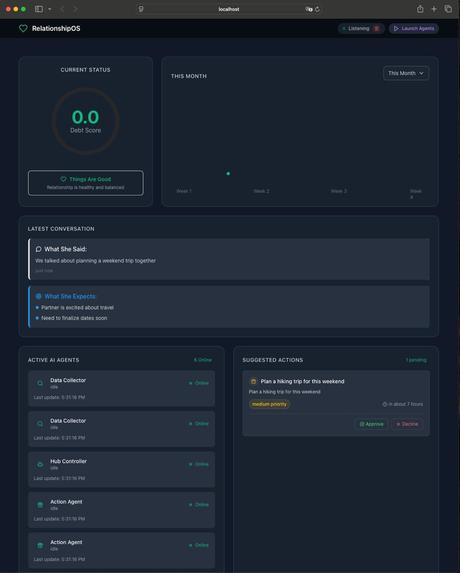
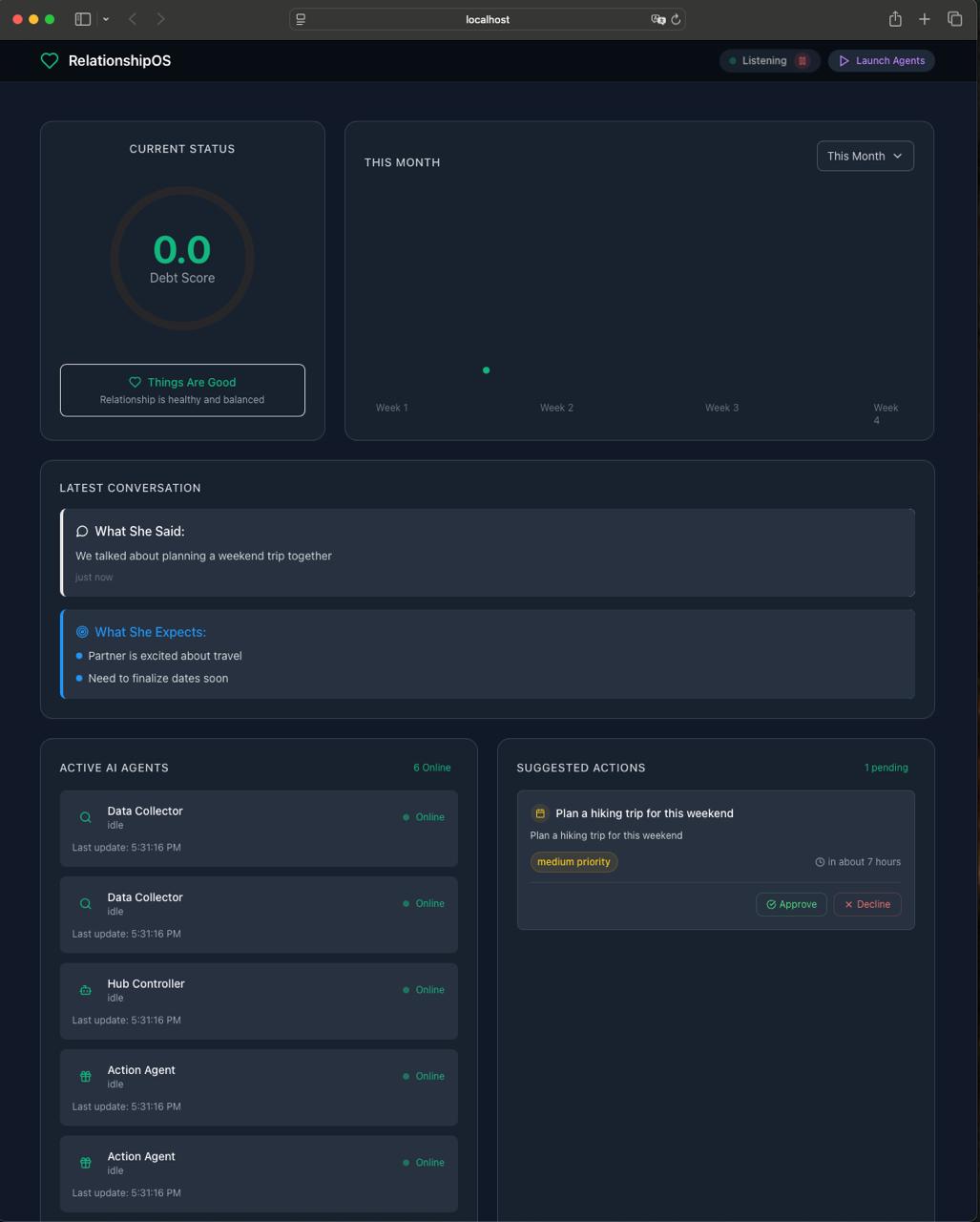
What She Said/What I'm supposed to do
-
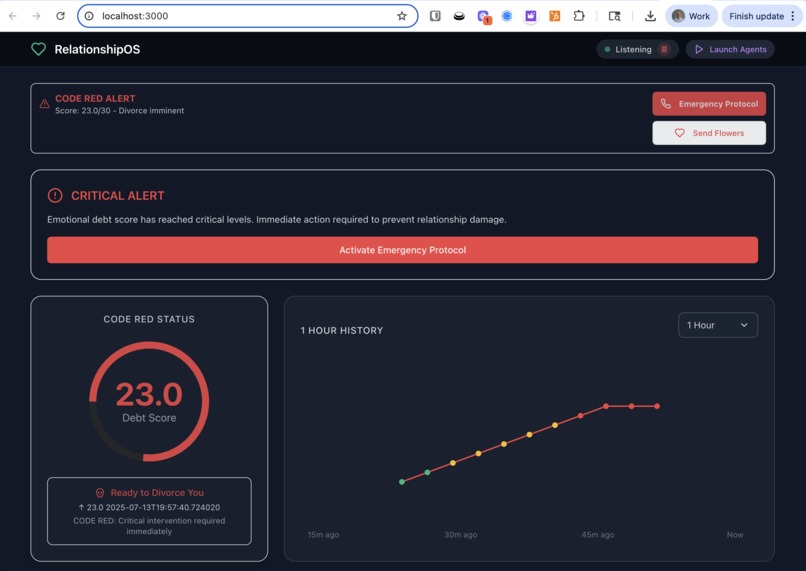
Code Red
-
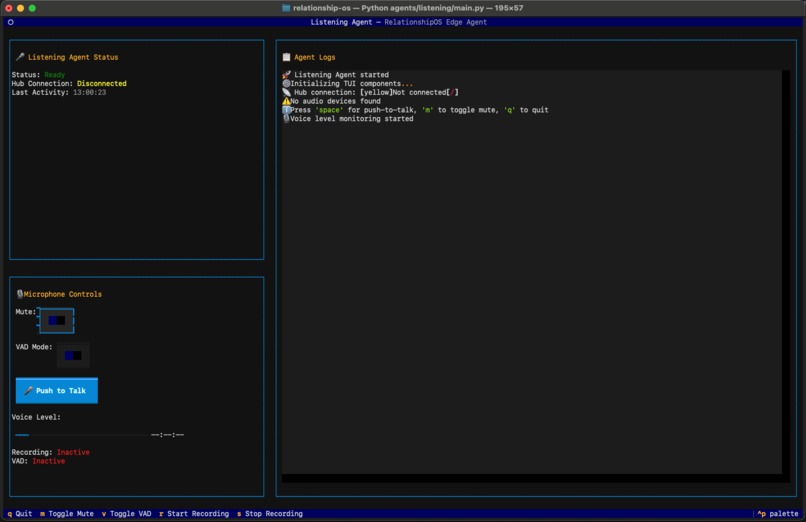
Listener Agent
Inspiration
We were inspired by the stories of spouses (partners) experiencing emotional hardship in relationships with software engineers.
Things went unsaid, frustration accumulated, and ultimately, relationships deteriorated.
An outcome that could be prevented with better awareness and communication.
We thought: why do software engineers have the best AI tools for writing code but not for relationships?
So we built one to help us improve our relationships with our spouses.
What it does
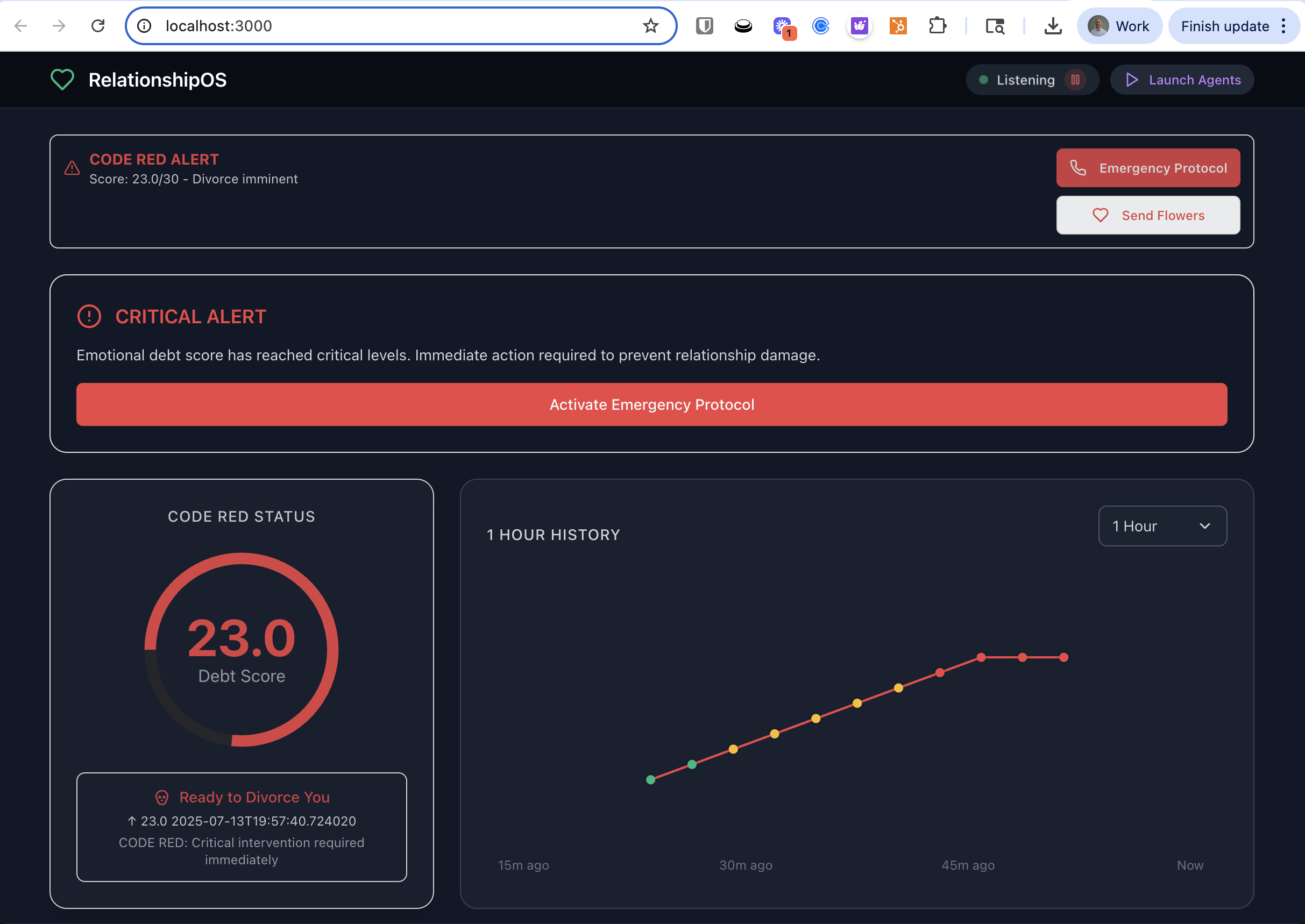
RelationshipOS is a practical tool designed to help busy individuals, particularly software engineers, maintain and improve their personal relationships.
The core problem it addresses is the tendency for such individuals to be so focused on their work that they become disconnected from the subtle emotional cues in their daily interactions.
The vision is to create a system that passively monitors conversations with a partner, analyzes them for emotional sentiment and specific needs, and provides actionable suggestions to mitigate "emotional debt." The system acts as a personal relationship assistant, helping users become more aware and proactive in their relationships, ultimately aiming to make them happier.
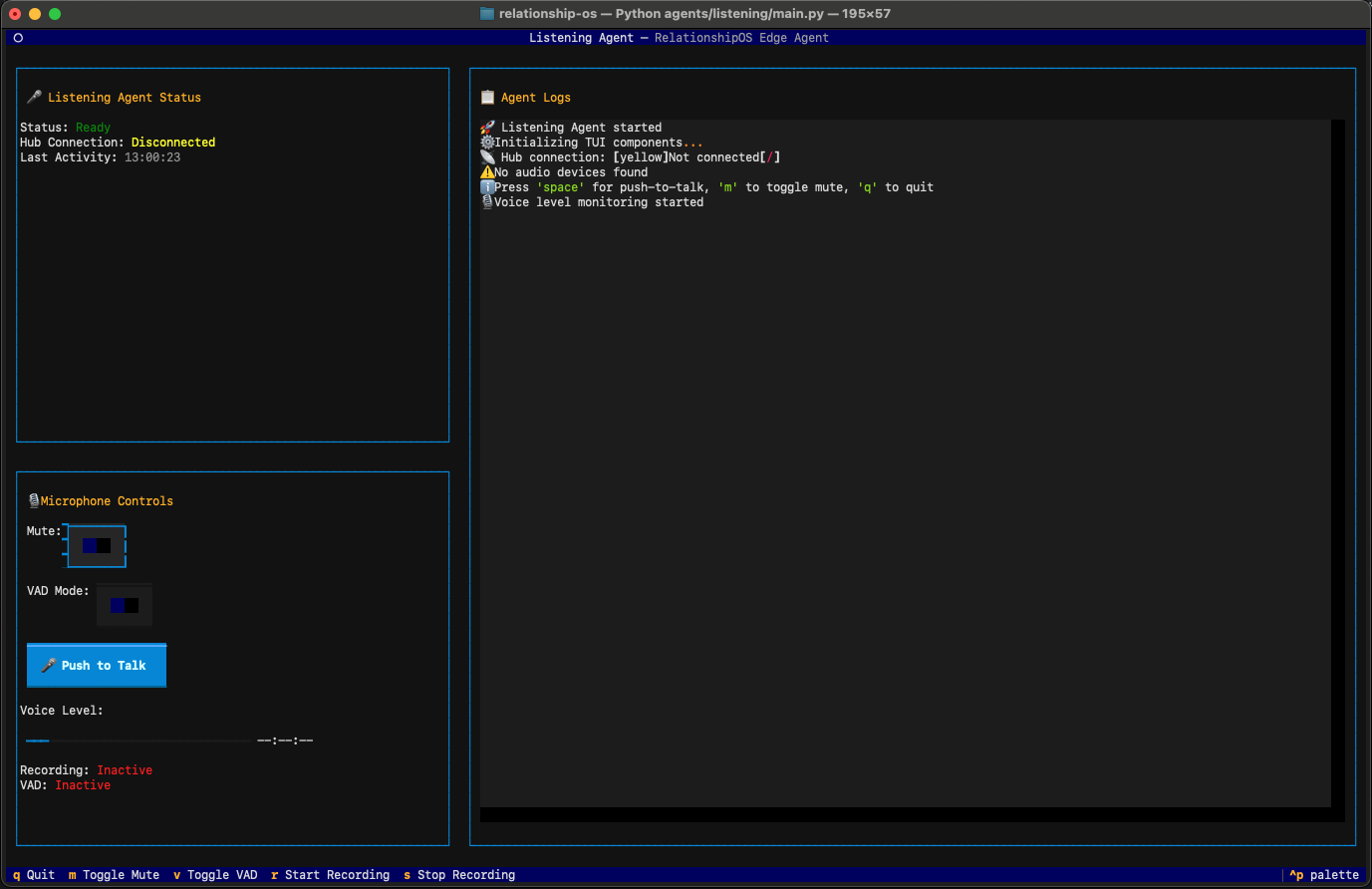
The unique thing about this tool is that it can run on the Edge like Raspberry Pi, Robot Dog, or any embodied device and store data on the Edge without leaving the physical data. It is like asking a person a question.
How we built it
We've built Relationship OS by first gathering requirements and creating a scalable architecture, followed by developing a project plan, backend, agent communication framework, defining data collection and sentiment analysis for speech and text, and creating a UI that would effectively help our users always be one step ahead in their relationships (instead of behind).
For requirements gathering, we spoke with software engineers and their partners to broadly understand the root cause of the problems that plagued their relationships.
We utilized a tool called https://nautex.ai/ to develop our project plan, architecture, and task breakdown, enabling Cursor to execute it through Nautex MCP for Cursor. We used Replit to generate an initial version of the front-end UX and then integrated it with the help of Cursor.
Challenges we ran into
Getting A2A to work reliably.
Deciding whether to use CrewAI for our use case and aligning the planned scope with a realistic timeframe.
Accomplishments that we're proud of
Planning a large project in a short amount of time.
What we learned
Focus on the end-to-end flow and don't over-optimize for edge cases on the first go around.
What's next for RelationshipOS
We plan to productize the current version of the RelationshipOS platform.
Next steps are:
- Add user authentication
- Add a landing page
- Add a short onboarding flow
- Launch on Product Hunt
Built With
- a2a
- deepgram
- mongodb
- python
- react
- typescript

Log in or sign up for Devpost to join the conversation.