-
-
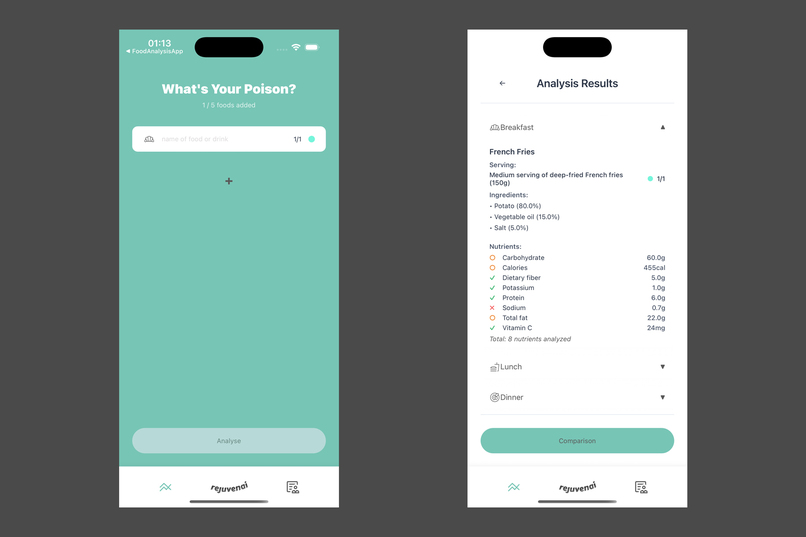
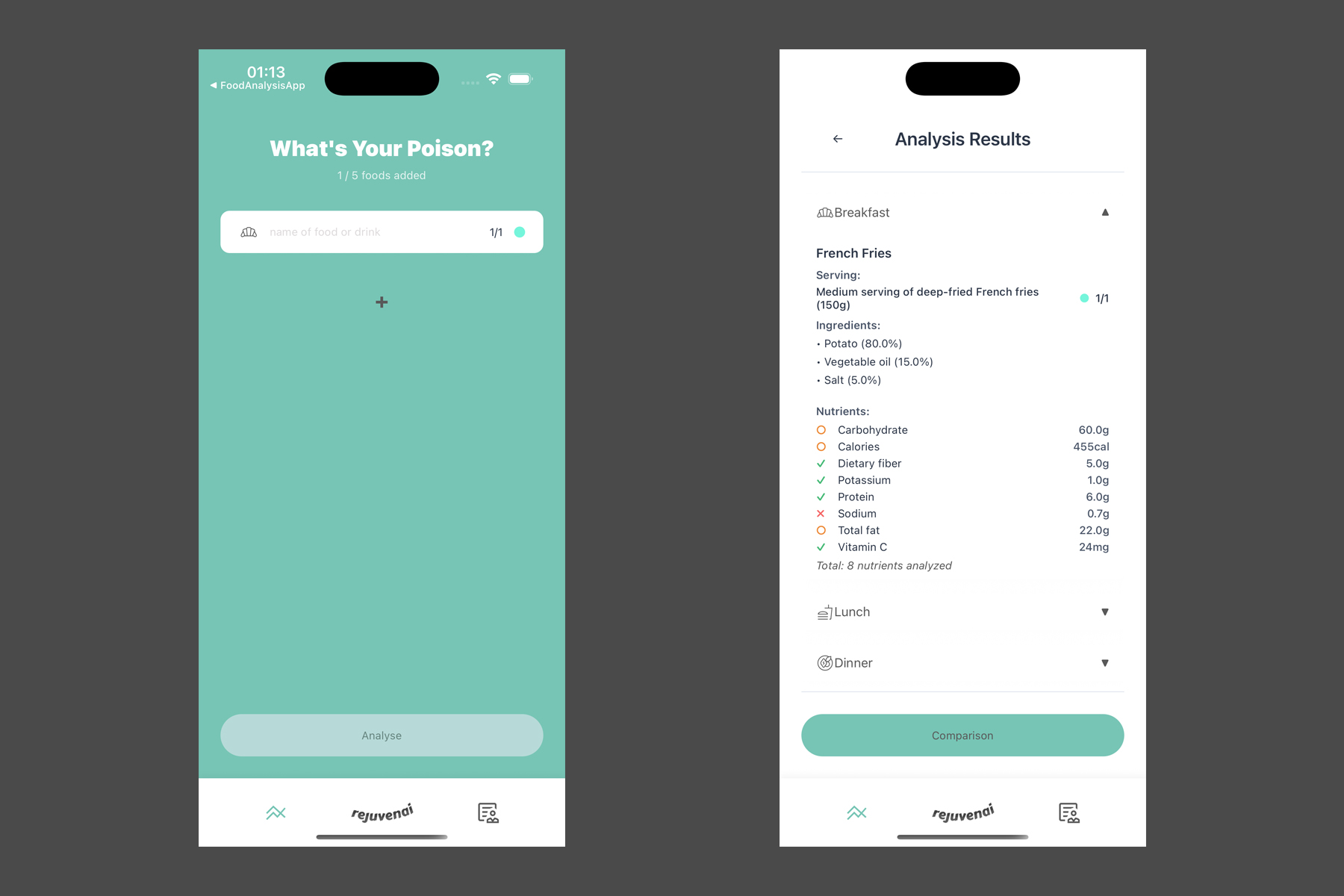
Food Entry + Analysis Results
-
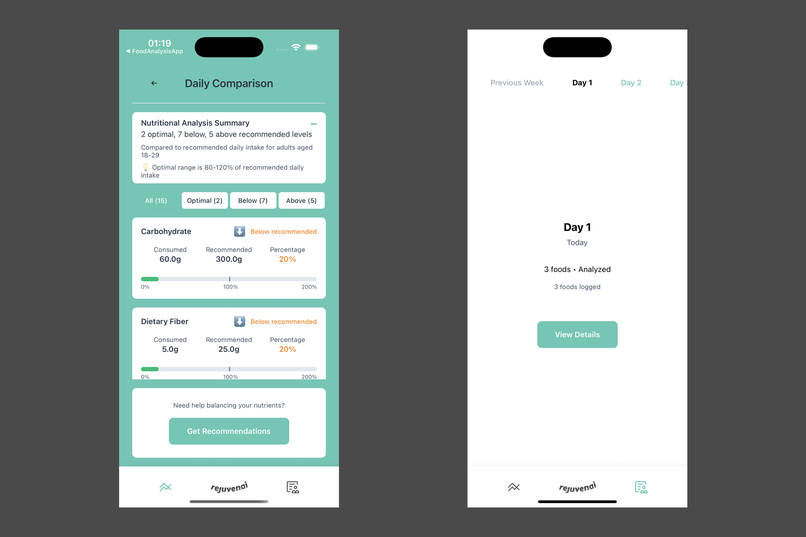
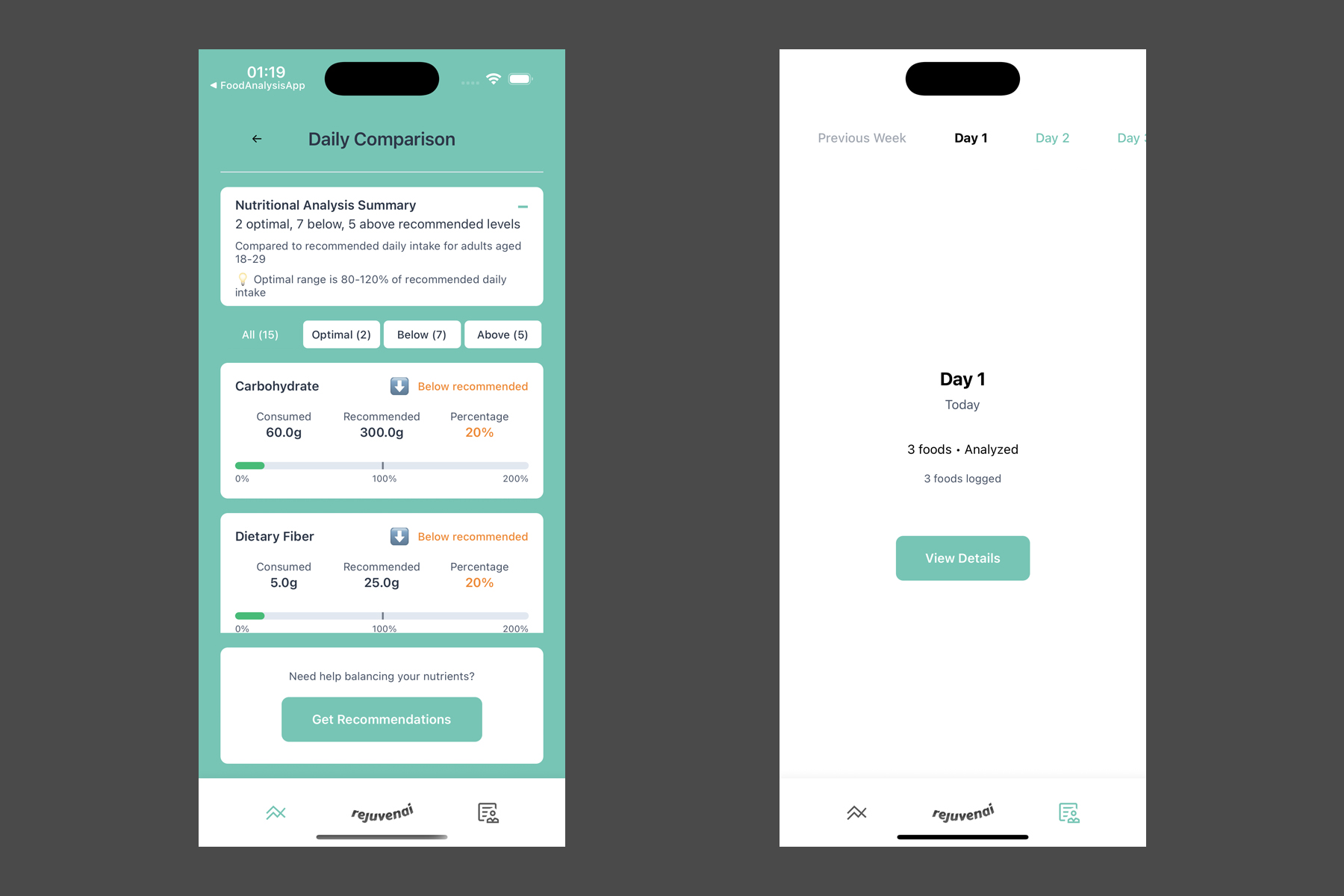
Daily Comparison + Day 1 log
-
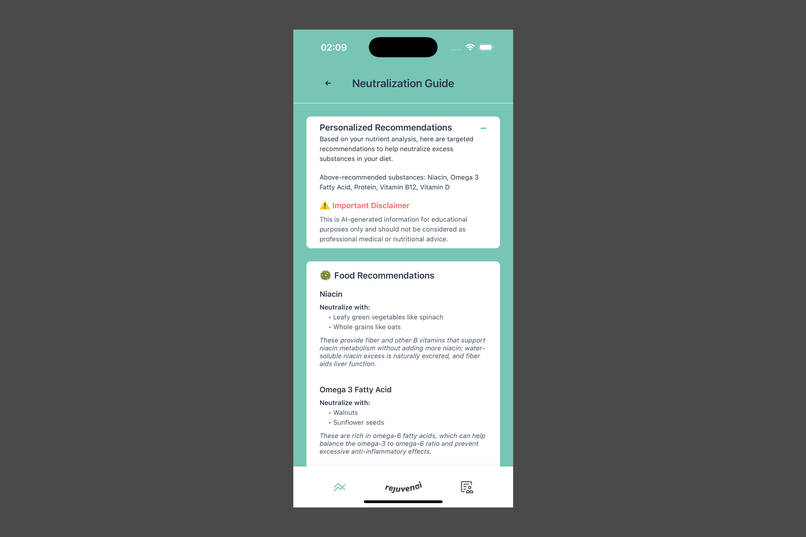
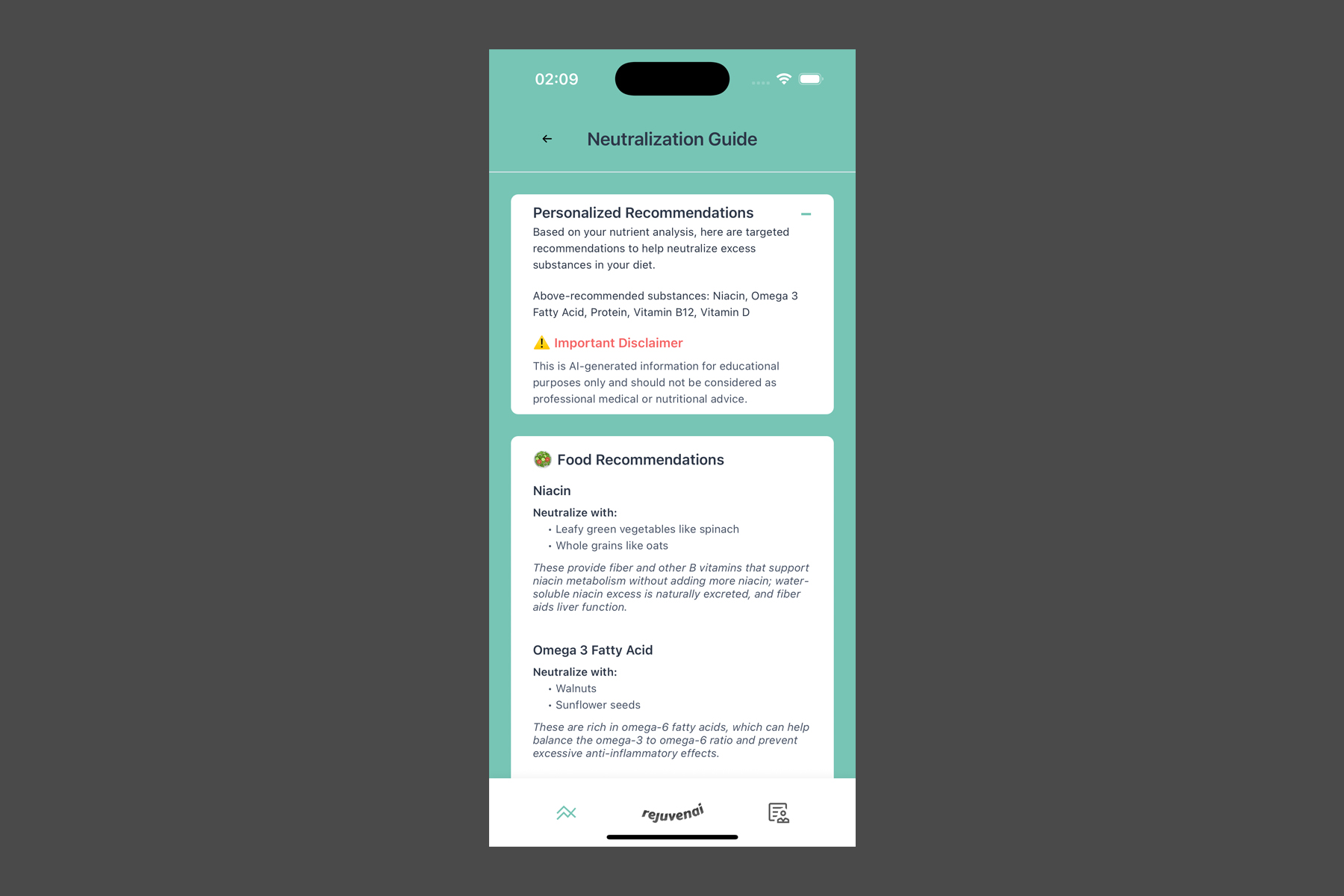
Neutralization Guide
rejuvenai
Inspiration
Hong Kong’s unique blend of food-related health challenges—rooted in fast-food consumption, long working hours, lifestyle stress, and a complex urban environment—make dietary choices confusing and often unhealthy. The core pain points include convenience-oriented eating, reliance on quick-service restaurants, limited time for balanced meals, and emotional eating driven by daily stress. This is compounded by dense marketing, incomplete ingredient transparency, and conflicting information about nutrition and food safety.
Beyond just calories, many people want to understand the impact of ingredients – fats, sugars, sodium, preservatives, and various additives on their bodies. Furthermore, they want actionable solutions. Just knowing something is "bad" isn't enough; they want to know how to counteract it.
Current food tracking apps focus heavily on calorie counting often overlooking in-depth ingredient scrutiny and tailored recommendations for mitigation. We envision rejuvenai as a vital conduit linking comprehensive food intake analysis with personalized guidance, enabling users to counteract adverse effects—defined here as neutralizing the overdose of substances or chemicals—through evidence-based interventions.
What It Does
rejuvenai offers a variety of features designed to enhance the user experience. Daily and weekly insights help users track what they consume in the morning, lunch, snacks, and dinner. It summarizes the nutrients and calories consumed, then provides exercise suggestions and supplement requirements.
Key Features
A. Ingredient Capture
i. Manual Input
Users can manually enter food items via a search bar and select a category (breakfast, lunch, dinner, snack). A "+" button enables adding up to five food items per analysis session. Portion sizes can also be specified (full portion, 1/2, 1/3, 1/4, 1/8) for accurate calculations.ii. Analysis
After input, users click "Analyze" to invoke LLM that generates a detailed breakdown. Results are shown across multiple tabs:- Analysis Tab: Ingredient list with nutritional details (calories, fat, sodium, vitamin C, vitamin D, caffeine, etc.) .
- Comparison Tab: Benchmarks against recommended daily values (ages 18–29).
- Progress Tracking: Logs daily intake for 7 days and produces a weekly consumption report.
- Chemical Summary Tab: Consolidated overview of chemicals with potential effects on the body.
- Analysis Tab: Ingredient list with nutritional details (calories, fat, sodium, vitamin C, vitamin D, caffeine, etc.) .
How We Built It
We distilled our core concept into a concise prompt and input it into KIRO's chat interface to kickstart development. For UI/UX, we designed in Figma and integrated generated code via KIRO.
The backend is powered by the OpenRouter API (supporting Grok 4, DeepSeekR3, Claude-3-Haiku, GPT-4o-mini, and GPT-4), which handles the retrieval and analysis of nutritional and chemical data. We used Grok 4 as the preferred LLM due to fast processing time.
Challenges We Ran Into
- Performance Bottlenecks: KIRO occasionally exhibited prolonged processing times, which extended iteration cycles and impacted development efficiency.
- Debugging Limitations: Although KIRO effectively identified application issues, it sometimes failed to provide resolutions. Compilation errors led to extended troubleshooting loops and the rapid depletion of allocated credits. Periodic manual code reviews and corrections were necessary, and upon exhausting our KIRO credits, we transitioned to Cursor to finalize the build.
- Ingredient Database Complexity: Managing variations and duplicates across foods, chemicals, and ingredients proved resource-intensive.
- LLM Timeouts: When the backend application is hosted on AWS lambda, API Gateway has a maximum timeout of 30 seconds for synchronous requests, but the food analysis operations were taking longer than this due to complex AI API calls to OpenRouter. (Switched to asynchronize processing patterns)
Accomplishments That We're Proud Of
- Successfully integrated an LLM to retrieve nutritional data and generate tailored workout suggestions, food or activities to neutralize overdose substance.
- App setup on TestFlight with public link (Pending Apple App store review)
- Used Kiro to import UI/UX design code from Figma
What We Learned
- The importance of evaluating multiple LLMs for improved accuracy and performance.
- The need for rigorous testing and structured user feedback with professionals.
- How tools like KIRO streamlined framework setup, architecture design, and MVP building.
What's Next
Features on Our Roadmap
- Android Release: Development and release on Google Playstore
- User Profiles: Age, gender, weight, height, allergies, religion, health goals.
- Image Recognition: Food label and meal photo scanning for automatic ingredient detection.
- Personalized Recommendations:
- Workout Suggestions
- Recipe Alternatives for healthier versions of similar meals.
- Multiple Language Support
- Activity Tracking: Integration with Apple Health, Google Fit, or manual logs.
- Progress Visualization: Charts and graphs showing dietary trends.
Ensuring Data Integrity
Strategic partnerships with certified nutritionists and experienced personal trainers will enhance the accuracy of our datasets and optimize the quality of AI-generated recommendations.
Built With
- adobe-creative-suite
- aws-lamdba
- aws-polly
- aws-sqs
- cloudwatch
- cursor
- dynamodb
- figma
- flask
- flipper
- grok
- kiro
- metro-bundler
- node.js
- open-router
- python
- react-native
- redux-toolkit
- sqlite
- type-script


Log in or sign up for Devpost to join the conversation.