-
-

APP_ICON_1024x1024
-
PRACTICE_SCREEN_1179x2556
-
confidence_rating_1179x2556
-
scenario_feedback_1179x2556
-
walk-in-card_1179x2556
-
lesson_snippet_1179x2556

Inspiration
New managers aren't short on frameworks. They learn SBI, COIN, Radical Candor and much more. On paper they know exactly what to say. Then the real conversation starts, the other person gets defensive, and the framework disappears.
The Leadership Heather brief described this perfectly: new managers rehearse difficult conversations over and over, in the shower or with family, then bottle it at work the next day. Many are now managing former peers, which makes feedback, boundaries and saying no even harder.
I realised the missing piece isn't just more practice or more frameworks. It's assertiveness: being direct without being aggressive, and kind without being a pushover. There are proven techniques for it, like broken record and fogging, but they're rarely taught, and new managers have no safe place to use them under pressure.
That became Rehearsd: not a script generator, but a flight simulator for difficult conversations, where you learn the assertiveness techniques, then hold them while someone pushes back.
What it does
Rehearsd is a flight simulator for the difficult conversations new managers dread. It teaches assertiveness, lets you practise out loud against someone who pushes back, and prepares you for the real conversation.
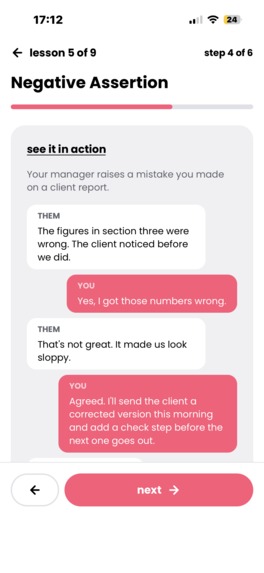
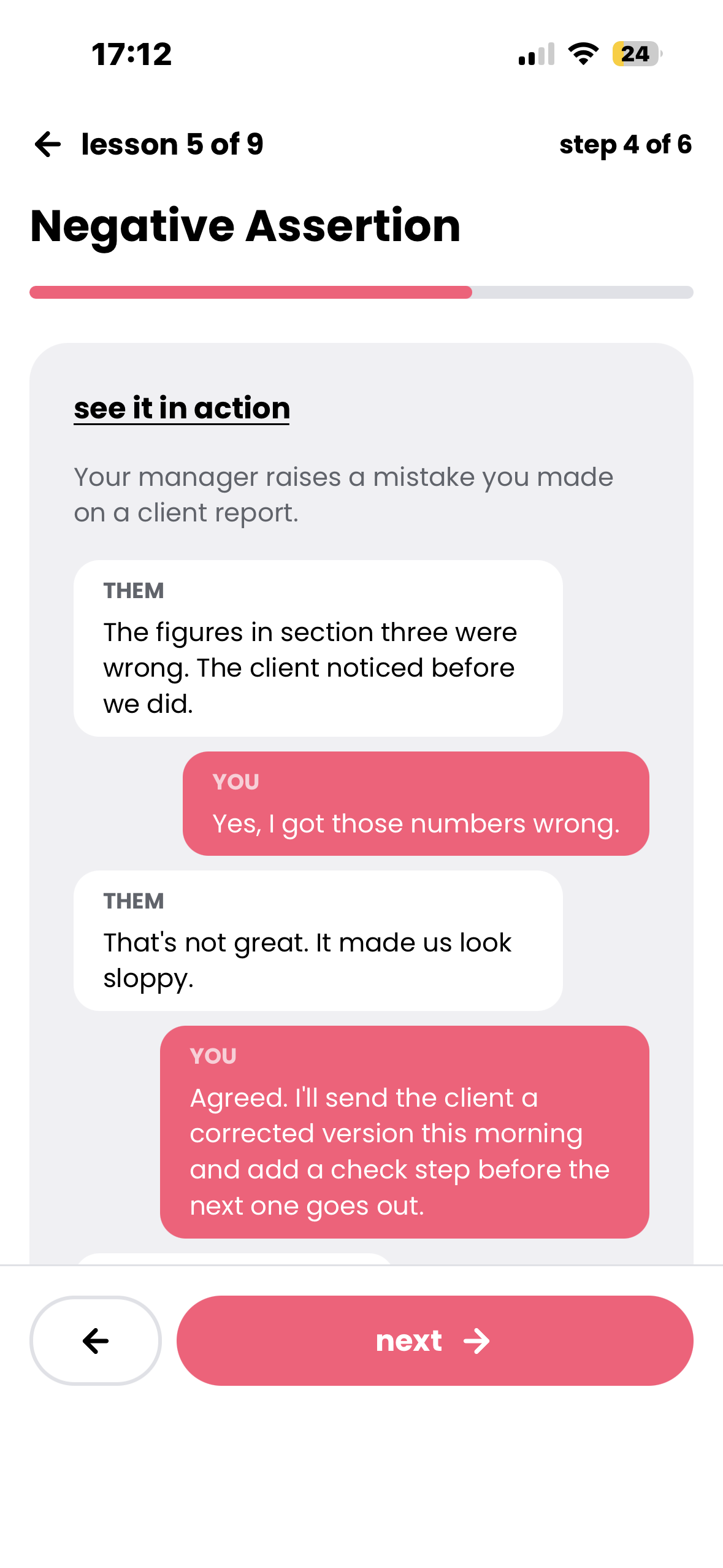
Learn the missing skill. Bite-sized lessons teach the seven assertiveness techniques, like broken record, fogging and negative assertion, so managers learn to be direct without being aggressive, and kind without being a pushover.
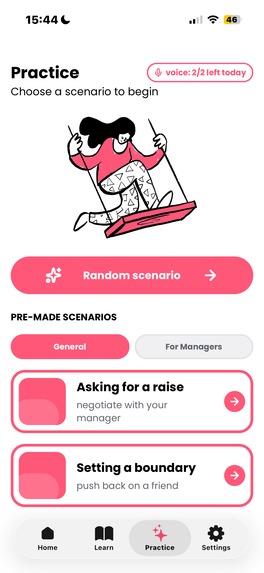
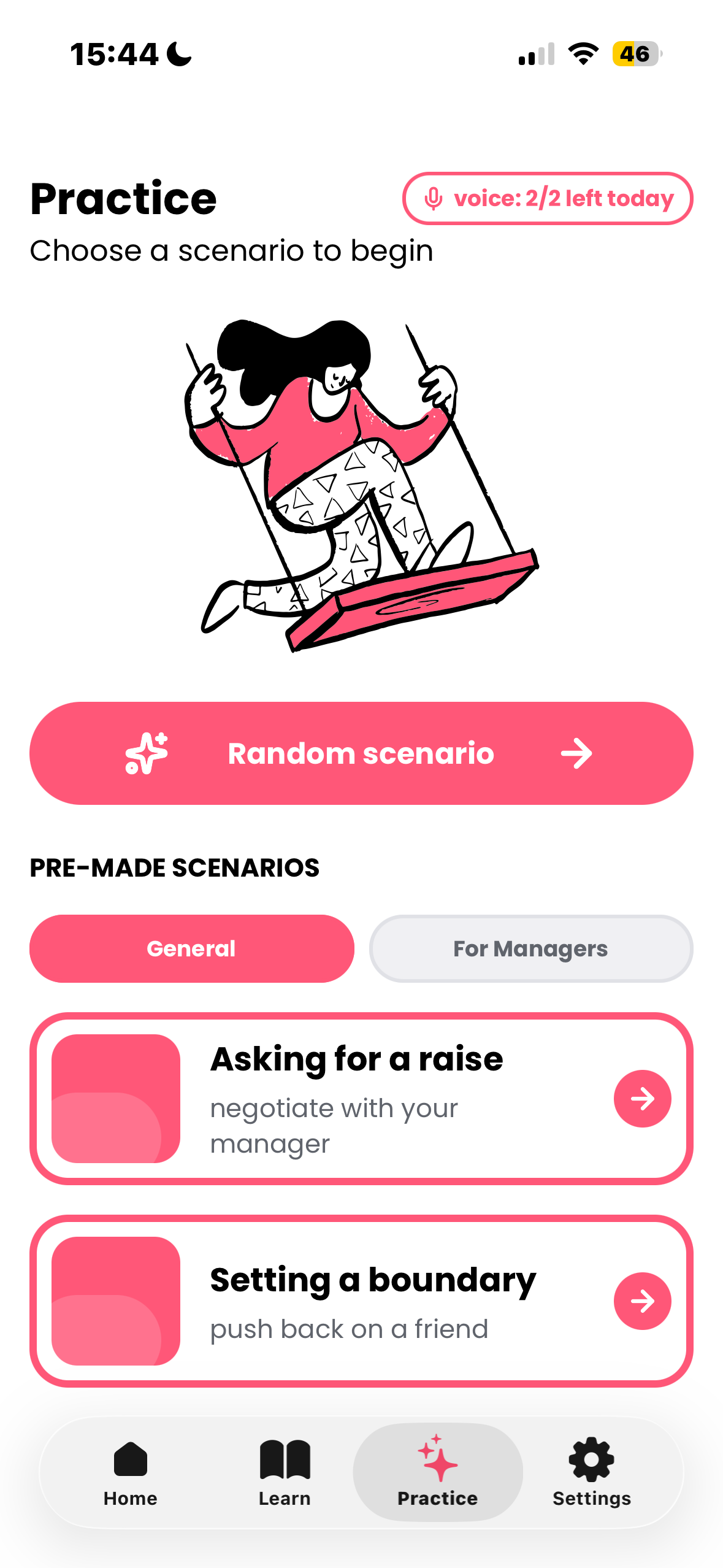
Realistic scenarios for new managers. Pre-made manager scenarios cover the three situations the Leadership Heather brief names: feedback, boundaries and saying no. They include addressing underperformance with a former peer, setting a boundary when someone goes over your head, and saying no to your own boss (plus much more). Every counterpart has their own goal that works against yours, and four difficulty levels, from Easy to Nightmare, set how hard they push back. If your situation isn't listed, describe it in your own words and Rehearsd builds a custom scenario.
Active practice. Speak the conversation out loud in a live voice call, use hold-to-talk, or type in text mode. You respond in the moment, with no time to script a reply. Retry as often as you like (2 cap daily limit for voice calls), at any difficulty, with no real stakes.
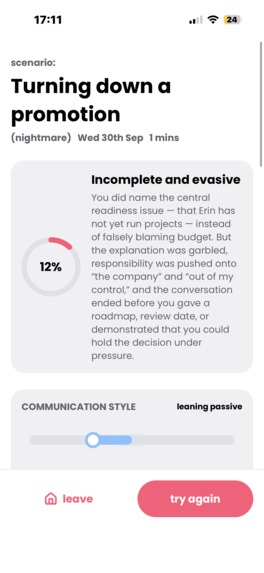
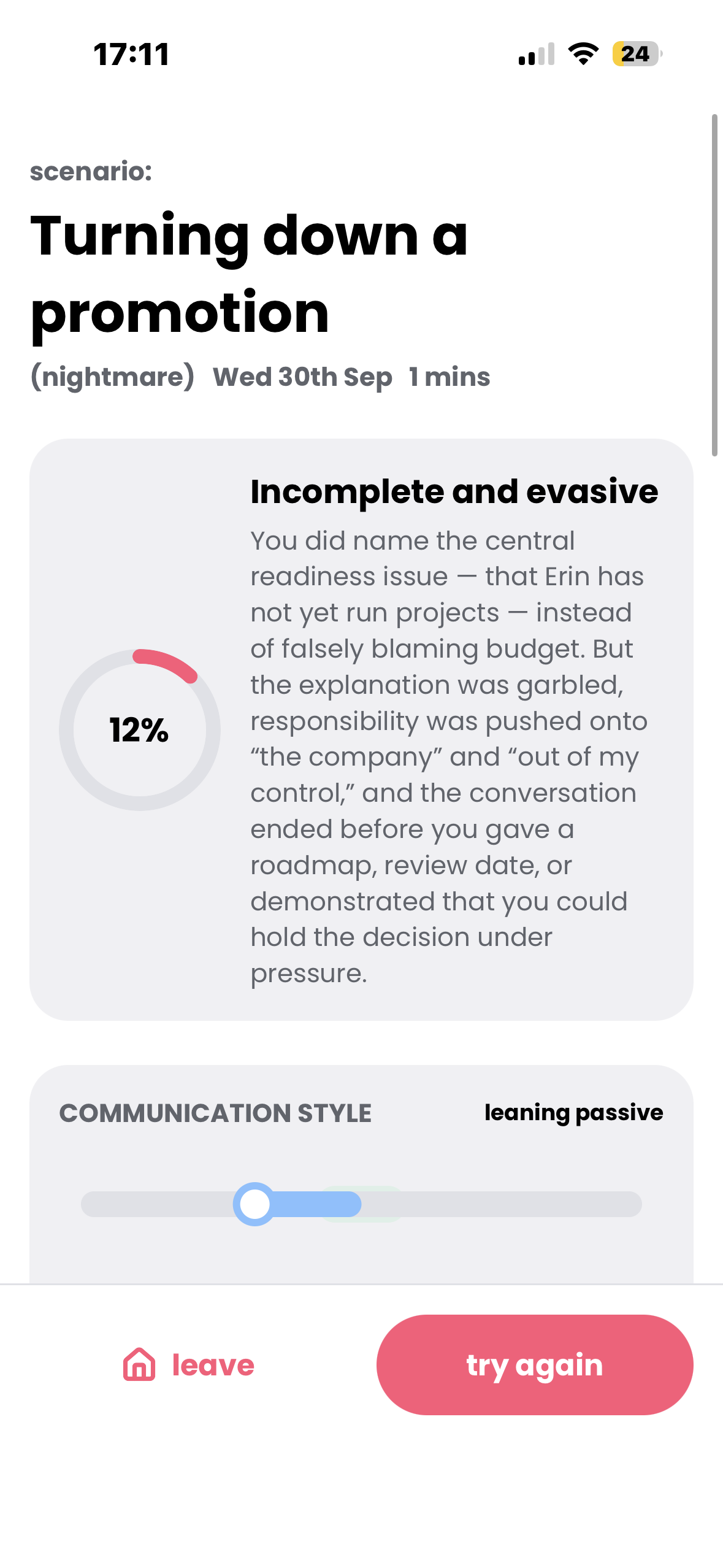
Useful feedback. After every attempt, you see where you landed between passive and aggressive, a score on each of the seven techniques, and a scorecard on manager frameworks. Each scorecard shows what went well, what to improve, and an ideal phrase written for the exact moment you struggled. The ideal phrase is a suggestion, not a script: the goal is a skill managers can use in their own words, in any conversation.
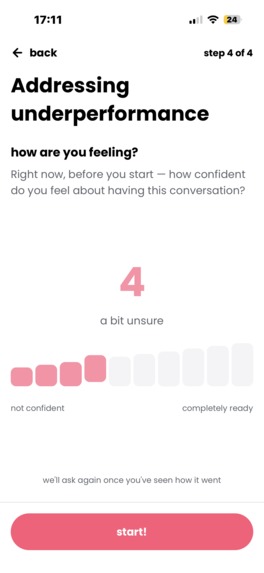
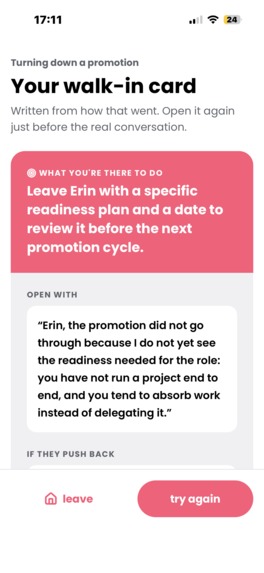
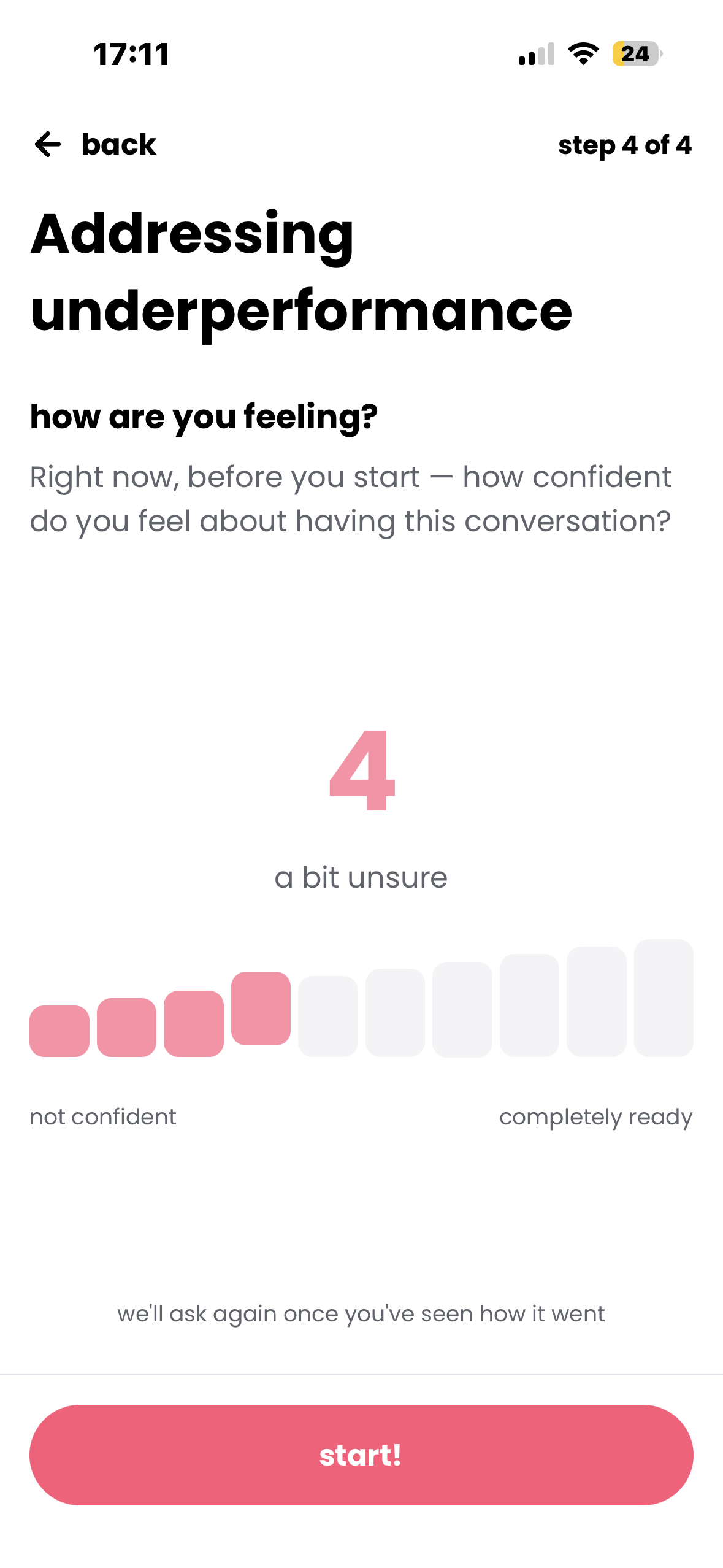
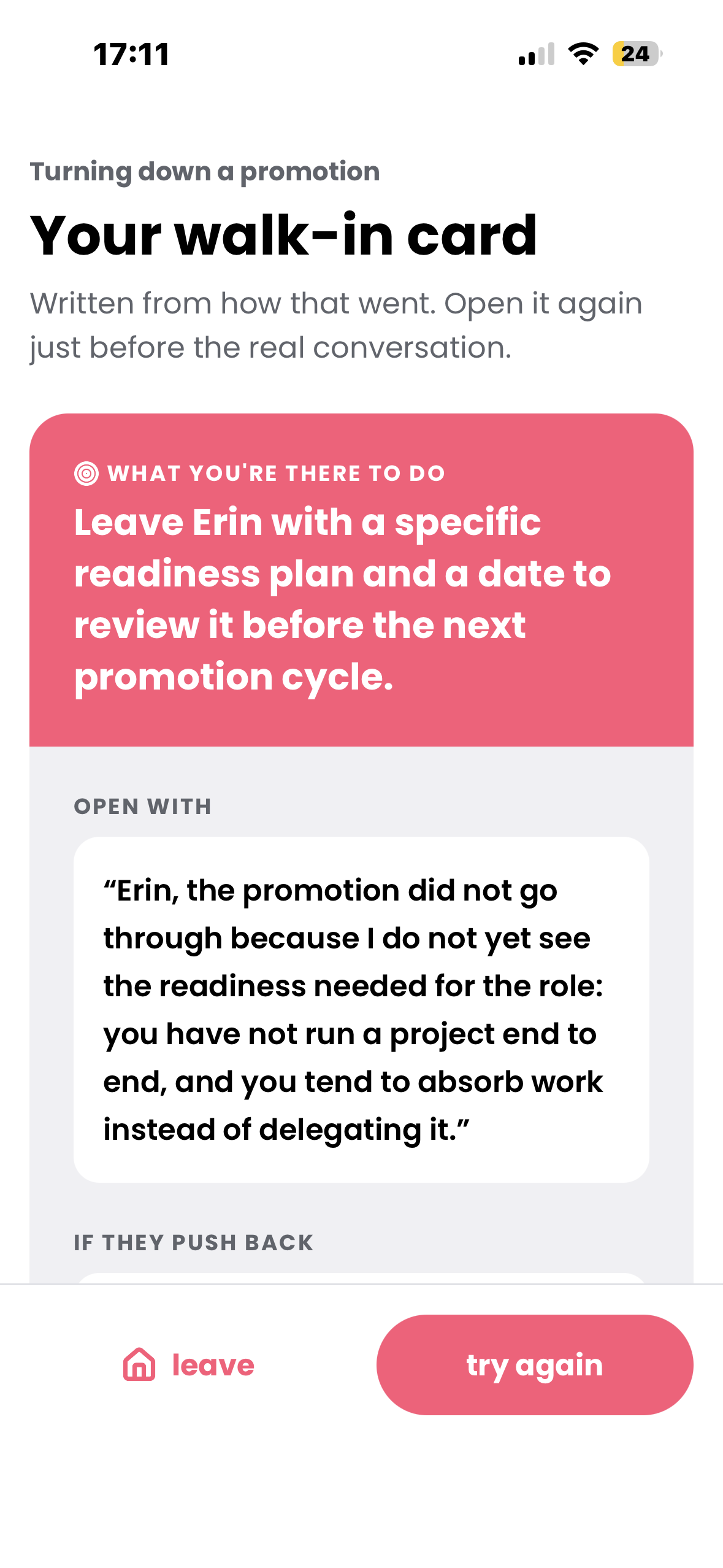
Confidence for the real conversation. You rate your confidence before and after each attempt, so you can see whether you actually feel more ready. You then get a walk-in card to take into the real meeting: your aim, your opening line, what to say when they push back, and the bad habit from your own attempt to watch for (and other useful info).
Practice timed to your real conversation. When you create a custom scenario, you can set the date the real conversation is happening. As that date gets closer, Rehearsd notifies you more often to practise it, so you're rehearsing most in the days that matter, not cramming the night before. It turns the Leadership Heather brief's goal of preparing "before handling the real situation" into a plan built around your own deadline.
Rehearsd uses a hard paywall powered by RevenueCat, with a three-day free trial so judges can test every feature.
How I built it
Rehearsd is built with Expo and React Native, from a single codebase, using Expo Router for navigation, NativeWind for styling, Reanimated for animations like the live call orb and confidence meter, and React Query for data.
Supabase handles authentication (Sign in with Apple and Google), the Postgres database for scenarios, attempts and progress, and edge functions that keep all AI calls server-side.
OpenAI powers the conversations. Live voice mode uses the OpenAI Realtime API over WebRTC, so managers speak and hear the counterpart push back in real time. Hold-to-talk uses on-device speech recognition with synthesized speech back, and text mode streams replies.
Every pre-made manager scenario was designed around the Leadership Heather brief. Each counterpart has a persona, a situation, and their own goal that works against the user's, so the pushback feels like a real person, not a cooperative chatbot. After each attempt, the transcript is scored against the seven assertiveness techniques and the manager frameworks, producing the passive to aggressive meter, the technique breakdown, the ideal phrase and the walk-in card.
RevenueCat powers the hard paywall and three-day free trial, with subscription status synced to the backend via webhooks so premium access stays consistent across devices.
Challenges I ran into
Making the AI push back instead of helping. AI models are trained to be agreeable, so early counterparts gave in almost immediately. That's useless for practice: a new manager confronting a former peer won't meet someone who instantly agrees. I fixed this by giving every counterpart their own goal that works against the user's, without ever telling them what the user is trying to achieve. I then built four difficulty levels, from a cooperative partner on Easy to someone who gives up nothing on Nightmare, so managers can build up to the hardest version of the conversation instead of being thrown straight into it.
The AI forgot who was who. Mid-conversation, the counterpart would sometimes switch sides, start arguing the manager's position, or deliver the manager's own line back to them and end the scene. A standard chat transcript only tracks "the AI" and "the person talking to it," so the model blurred the two roles. I fixed this by storing each conversation with clear speaker tags, then rewriting it from the counterpart's own point of view before every reply. Asking the model to check itself didn't work, as it confidently passed on the exact mistake it was meant to catch, so every line is now reviewed by a separate AI checker before the user hears it.
Getting custom scenarios right. When users describe their own situation, the same who-is-who confusion can creep in. So the builder decides the cast first, must quote the user's own words as evidence for each role, and flags anything it had to guess instead of inventing it.
These fixes matter most for the Leadership Heather brief: a flight simulator only works if the pushback feels real and the other person stays in character. Without them, the scenarios wouldn't be realistic, and the practice wouldn't transfer to the real conversation.
Accomplishments that I'm proud of
Shipping a real flight simulator, not a script generator. The Leadership Heather brief asked for exactly this, and the live voice mode delivers it. Managers speak out loud, hear the counterpart push back in real time, and have to respond in the moment, which is the closest thing to the real conversation without the real stakes.
Counterparts that stay in character and fight back. Getting the AI to stop being helpful and stop switching sides was the hardest problem I solved. The practice feels more realistic for managers practicing having difficult conversations.
Teaching assertiveness, not just roleplay. Rehearsd doesn't only let managers practise; it teaches the seven assertiveness techniques and then measures whether they used them under pressure. The passive to aggressive meter names the exact failure mode, so feedback is something managers can act on, not just a score.
An honest confidence measure. Managers rate their confidence before and after every attempt, and the app reports the result even when it goes down. A practice run that shows someone they need more work is a real result, and being honest about it is what makes improvements meaningful.
Bridging practice and the real conversation. The walk-in card and date-based reminders take Rehearsd beyond the app. Managers walk into the real meeting with their opening line, what to say when challenged, and the habit to avoid, which directly answers the brief's goal of feeling prepared before the real situation.
Launching on the App Store during Shipaton. Rehearsd: Talk With Confidence is live on iOS, with many pre-made scenarios, lessons, practice modes, and a RevenueCat-powered subscription with a free trial.
What I learned
The gap isn't knowledge, it's behaviour under pressure. New managers already know the frameworks. What they lack is a way to hold their position when the other person pushes back. That shaped the whole app: teach assertiveness as well as make managers use it while someone argues, which is exactly the "active practice rather than passive advice" the Leadership Heather brief asks for.
Realism has to be designed, not hoped for. AI is trained to be helpful and agreeable, which is the opposite of a defensive former peer. Realistic scenarios only came once each counterpart had their own goal working against the user's. A scenario is only useful if it feels like the real person.
AI can't reliably check its own work. When I asked the model whether it had stayed in character, it said yes even when it hadn't. A separate checker with fresh context caught what self-checking missed. It's a lesson that applies far beyond this app.
Useful feedback is specific feedback. A score alone doesn't help a manager improve. What makes feedback useful is showing them the exact moment they went passive or aggressive, and a better line for that moment. That's why every attempt ends with an ideal phrase and a walk-in card built from the user's own mistakes.
Confidence has to be measured honestly. It would be easy to design an app where confidence always goes up. But managers need to know whether they're actually ready, so Rehearsd reports the result even when it drops. Honest feedback is what makes the confidence gains mean something.
What's next for Rehearsd: Talk With Confidence
Reaching new managers where they already are. Heather's audience lives on Instagram and TikTok, so marketing will focus there, with short videos showing real practice moments, like a manager holding their ground against a defensive former peer, and the passive to aggressive meter revealing where they slipped. I'll also target LinkedIn, where newly promoted managers announce their promotions and look for leadership tools.
More lessons. New lessons will go deeper into each assertiveness technique, plus how to combine them in tougher moments, like when someone gets emotional, goes silent, or turns the conversation back on you.
More pre-made manager scenarios. I'll expand beyond feedback, boundaries and saying no into other conversations new managers dread, like performance reviews, handling conflict between two team members, and responding when someone asks for a pay rise you can't give.
A scenario marketplace. Every manager's hardest conversation is different, and many of those situations are shared by thousands of others. The marketplace will let users publish their custom scenarios and download ones other managers have created, building a growing library of realistic situations written by people who've actually faced them. Personal details like names will be removed before sharing, so managers can contribute safely.
The goal stays the same as the Leadership Heather brief: help every new manager walk into a difficult conversation feeling prepared, in their own voice.
Built With
- expo.io
- openai
- react-native
- supabase


Log in or sign up for Devpost to join the conversation.