-
-

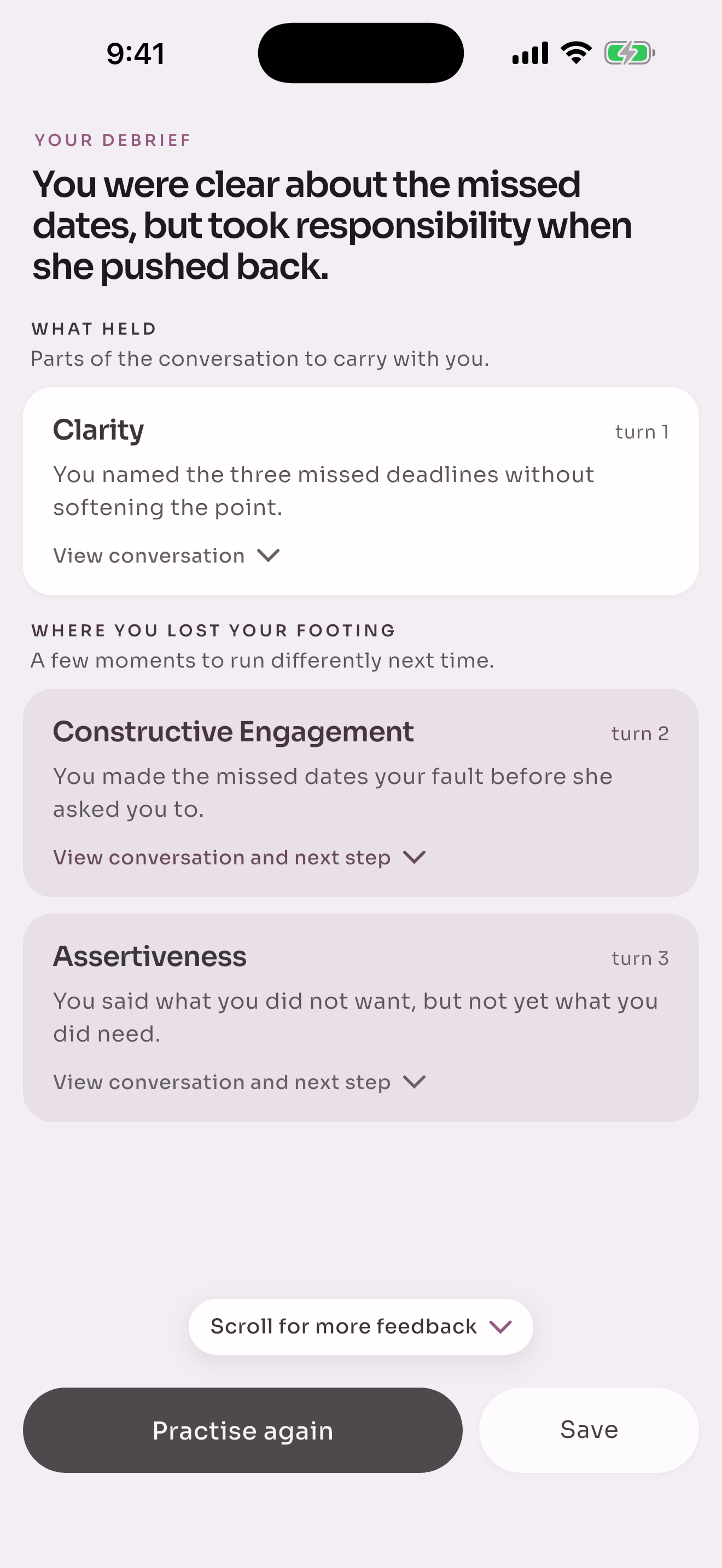
1. Ready: See feedback tied to your actual turns, then practice again before the real conversation.
-

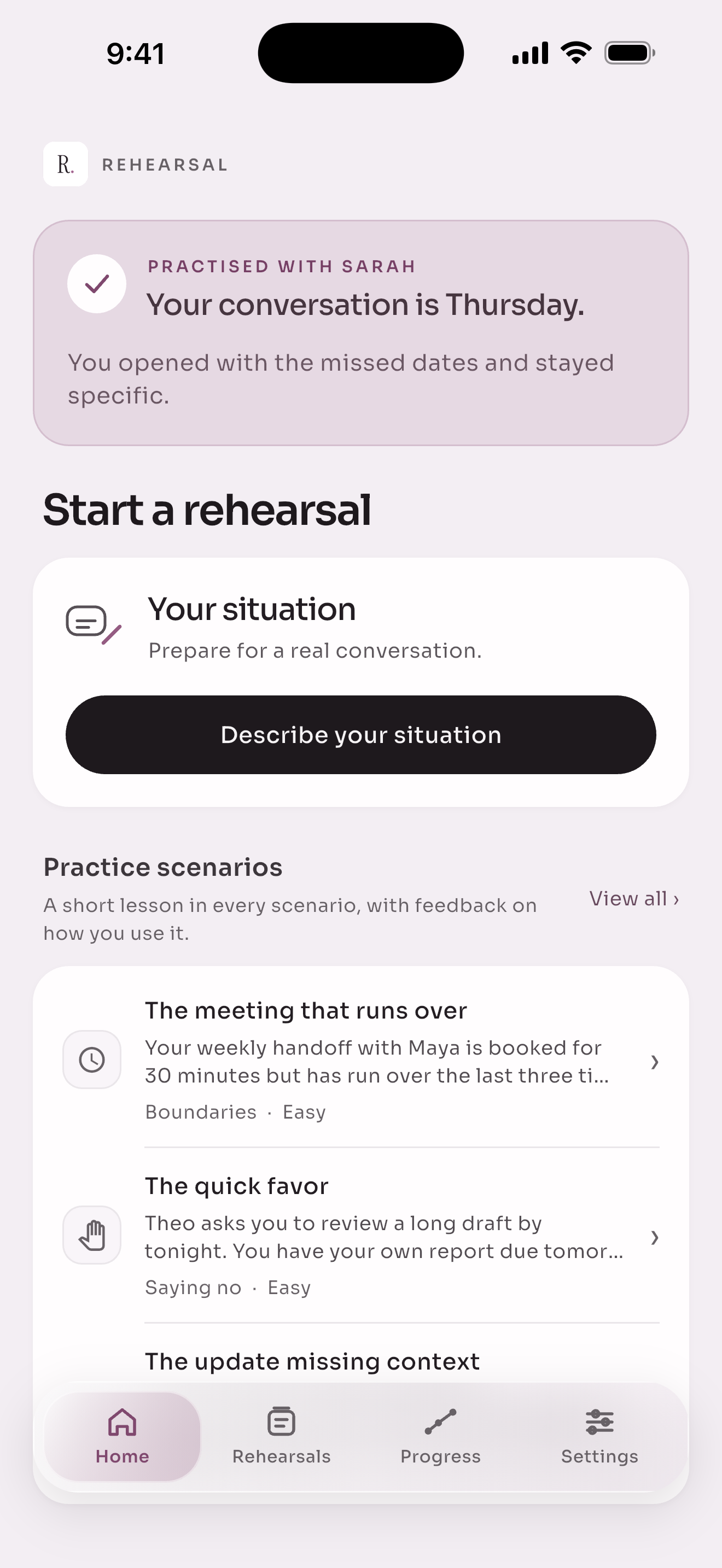
Start: Describe your real situation. Rehearsal uses those details to build the conversation you need to practice.
-

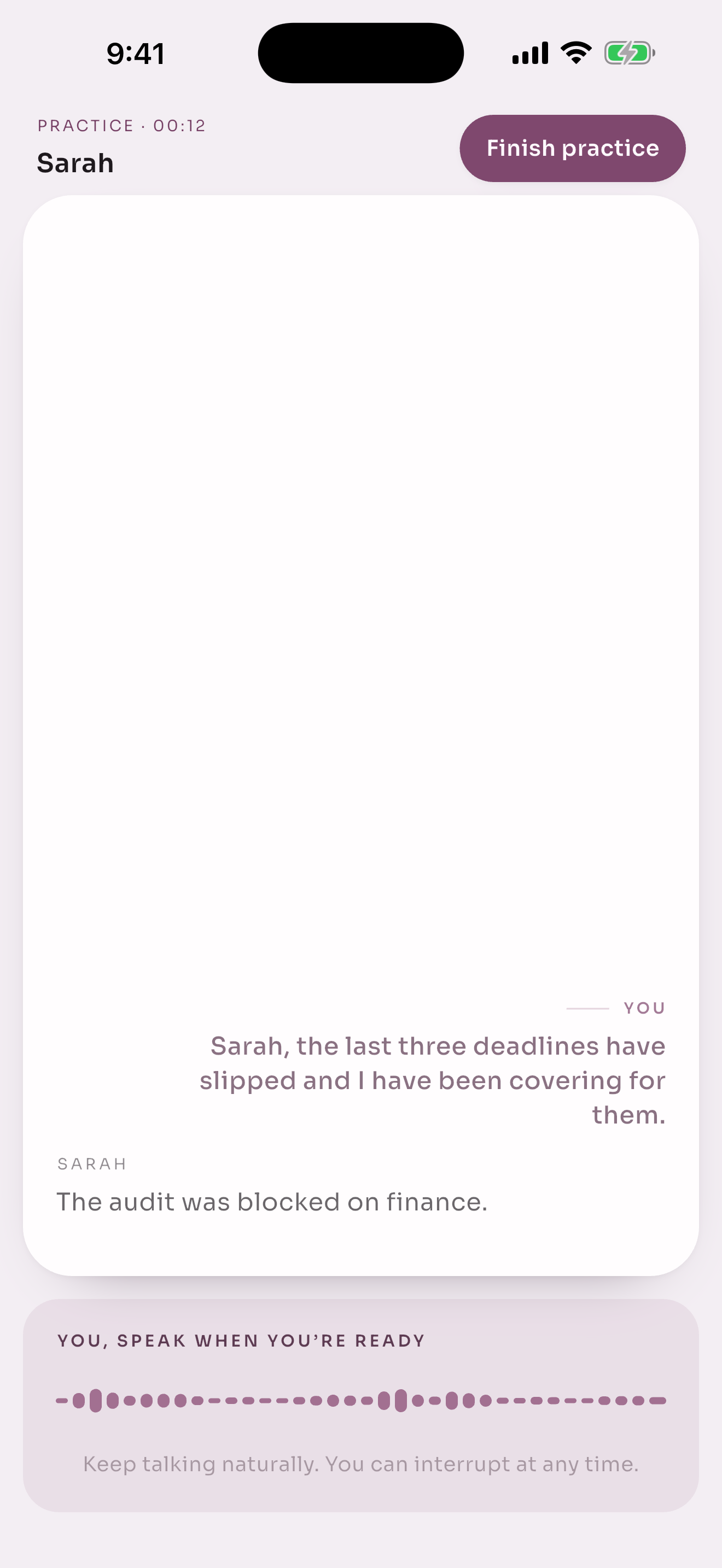
Practice: Speak naturally with an AI character who responds to your words and pushes back.
-

App Icon
-
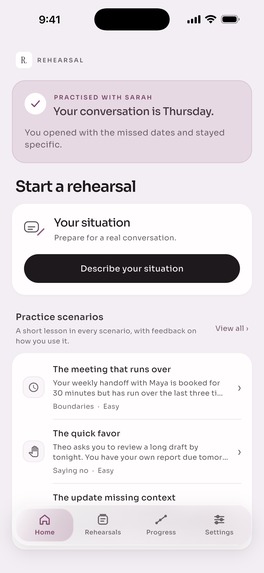
Home: Choose to start rehearsal with your own scenario or select from practice scenario with each of its lesson
-
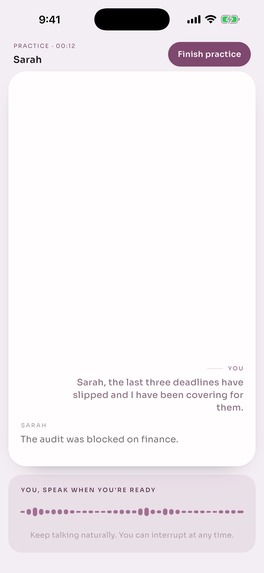
Live conversation: Speak naturally, respond in the moment, and interrupt when you need to, as you would in a real conversation.
-
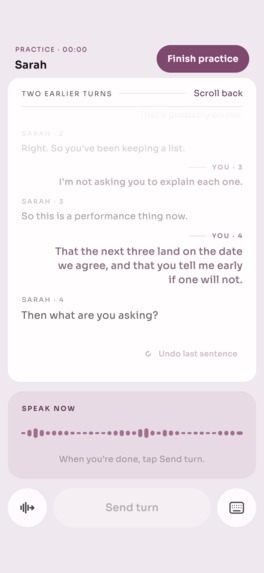
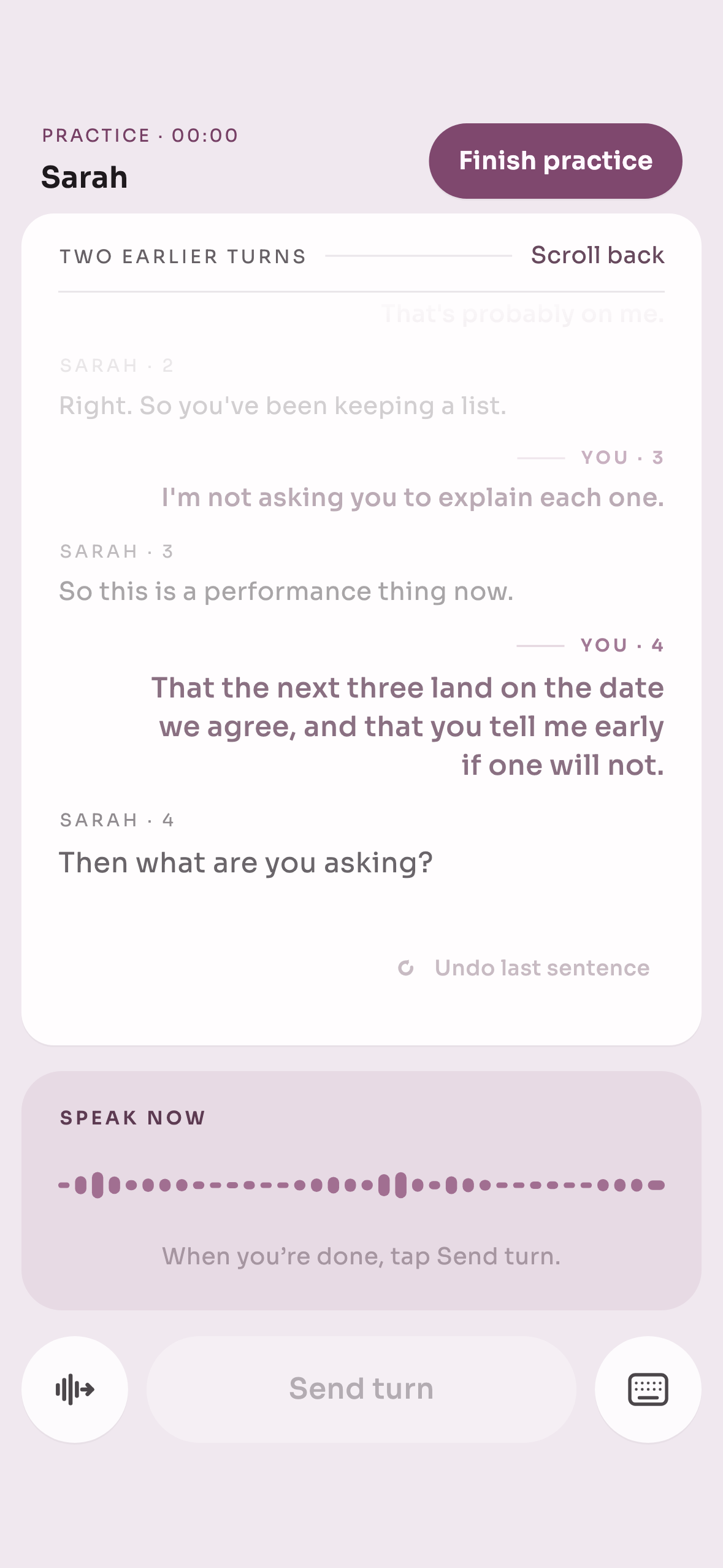
Turn-based: Take time to shape each reply. Speak or type, then send your turn when you’re ready.
-
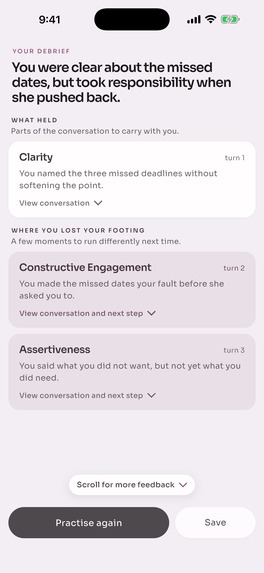
- Debrief: See feedback tied to your actual turns: what held, where you lost your footing, and what to try next.




Inspiration
Last year, I built Tranquai for Shipaton. It used voice AI to let people create guided meditations based on how they felt and what they needed in that moment. I wanted to build on that experience with something more interactive.
The Career Coaching challenge made me think about a familiar moment: knowing you need to have a difficult conversation, but running through it in your head without feeling ready. Rehearsal gives new managers a place to say the words out loud, hear how someone might respond, and try again before the real conversation.
What it does
Rehearsal helps new managers practise difficult workplace conversations, with guidance before, during, and after each attempt.
- Bring your own situation or choose a scenario. Describe a real conversation or choose from 15 scenarios covering feedback, boundaries, and saying no, with Easy, Medium, and Hard difficulty levels.
- Learn a specific skill before practising. Each preset scenario includes “What makes this difficult” and “Your move”: a short lesson explaining the challenge and a practical approach to try.
- Practise out loud at your own pace. Use turn-by-turn mode for time to think, or live mode for a natural spoken exchange. The character can question your approach and push back as the conversation develops.
- Get feedback connected to the lesson. The debrief highlights specific moments from your conversation and, for lesson-based practice, explains how you applied the skill and what to try next.
- Discuss your rehearsal with an AI coach. Ask about a difficult response, explore alternative wording, or challenge feedback you disagree with. The coach uses the conversation, scenario, lesson, and feedback as context. Discussions stay attached to that attempt, so you can return to them from history.
- Try a difficult moment again. Revisit a specific turn and practise a different response.
- See your practice progress. The Progress tab shows which scenario skills you have practised, what remains, and skills worth revisiting. It tracks practice coverage without treating one completed conversation as mastery.
How we built it
- Flutter powers the iOS and Android apps.
- Firebase handles sign-in and stored rehearsal data, while Cloud Run hosts the backend.
- OpenAI powers character responses, debriefs, and follow-up coaching.
- ElevenLabs provides speech recognition, spoken replies, and the live voice agent.
- RevenueCat handles purchases.
Each practice scenario defines the roles, context, aim, difficulty, and lesson. The lesson carries through into the debrief, connecting preparation to what the user actually said.
For follow-up coaching, the backend supplies the saved conversation and feedback. Where available, it also supplies the instructions that governed the character’s replies, helping the coach assess whether pushback was appropriate. Scope checks, answer checks, and a five-question limit keep the discussion focused on that rehearsal.
Challenges we ran into
- Finding the right pace. I initially built only a slower, turn-by-turn mode. Test users wanted a live exchange too. I tried my own turn-change detection, then a GPT Live implementation, before settling on an ElevenLabs agent. Listening, reply timing, and interruptions all needed careful testing.
- Making practice fair. The character needs to understand responsibilities, context, and the user’s aim. I refined scenarios and feedback to reduce role confusion and avoid judging people against goals they never chose.
- Connecting teaching to feedback. Adding a lesson before practice was only part of the job. The debrief needed to recognise evidence of that skill, explain what was missing, and offer a relevant retry.
- Building a coach that can question the simulator. The coach should help users examine the conversation, including unfair character responses or questionable feedback. It also needs to acknowledge uncertainty and avoid inventing explanations for why the AI behaved a certain way.
Accomplishments that we're proud of
- A complete voice practice experience. Rehearsal brings preparation, responsive conversation, feedback, discussion, and another attempt into one app.
- Lessons embedded in practice. Users can learn an approach, try it immediately, and review how it went.
- Support beyond the debrief. “Discuss this rehearsal” gives users somewhere to ask the questions a fixed feedback screen cannot anticipate.
- Paid users. Having people choose to pay for something I built is a meaningful milestone and a reason to keep improving it.
What we learned
- People need different practice speeds. Some want space to find their words; others want the pressure of a live exchange.
- Useful feedback starts with understanding the situation correctly.
- A lesson becomes more useful when users can connect it to their own words and try again.
- Feedback can start a conversation. Users may need clarification, disagree with an assessment, or want help finding wording that sounds like them.
- Testing complete journeys matters, including returning to older attempts and continuing a saved discussion.
What's next for Rehearsal: Prepare to talk
I built Rehearsal in less than a month and focused on making a complete experience for Shipaton. Next, I want to get it in front of more new managers and learn which conversations they need help with.
Their experiences will guide new scenarios, lesson improvements, and better coaching. Most of all, I want to understand whether practising helps them feel more prepared when the real conversation arrives.


Log in or sign up for Devpost to join the conversation.