-
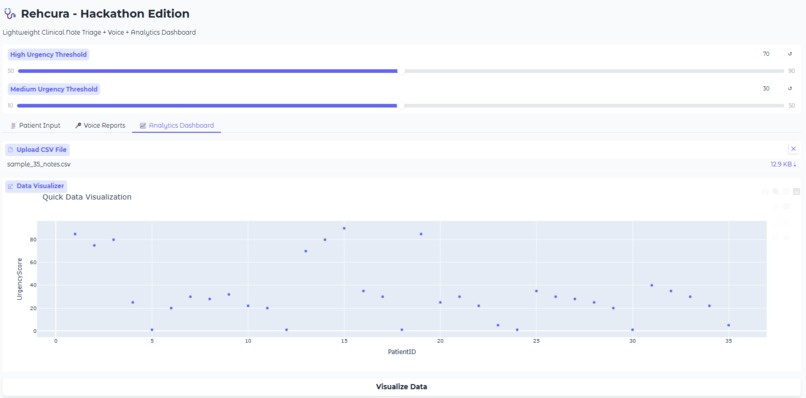
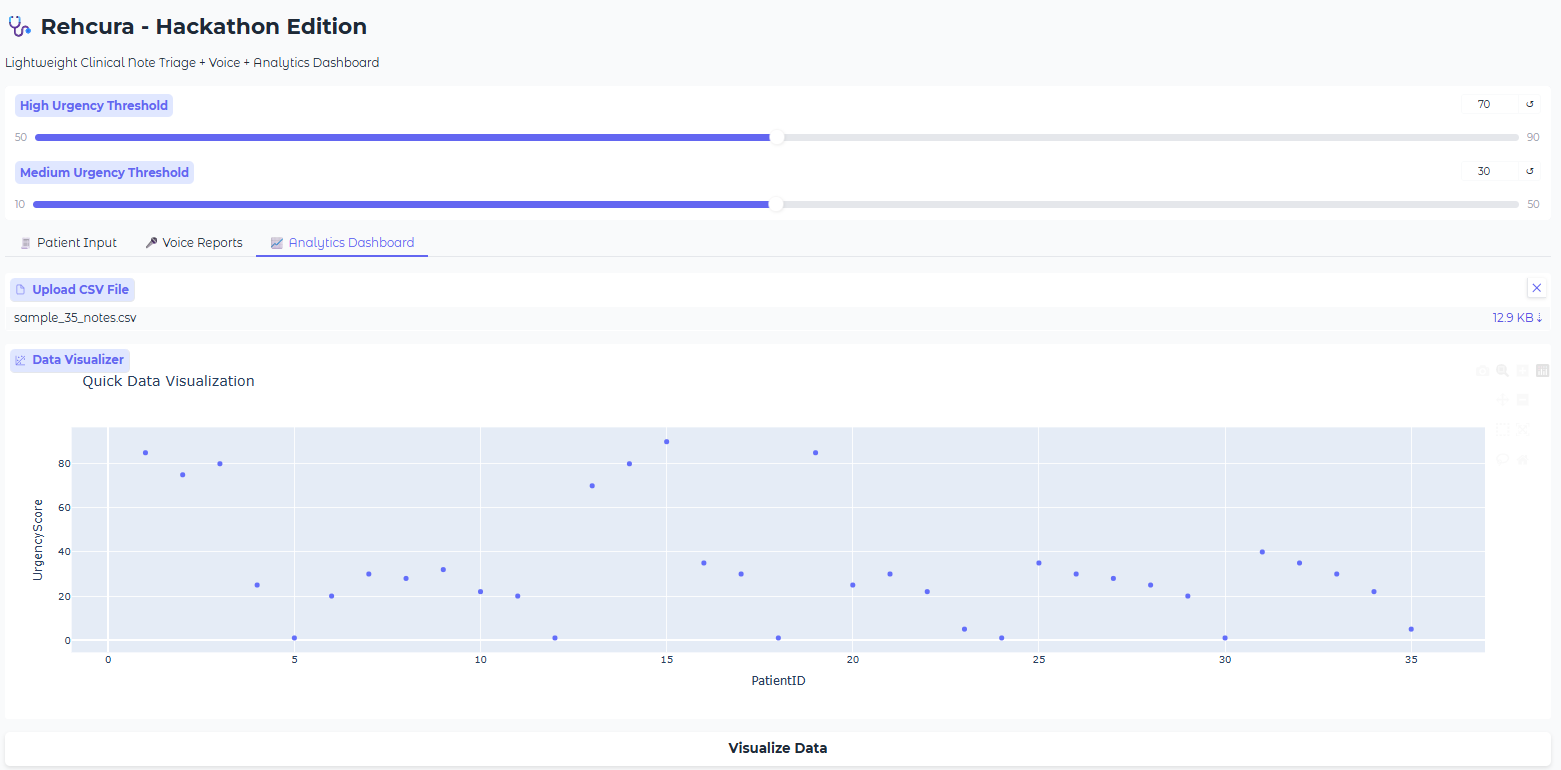
This is the visualized data from an upload of data of 35 patient notes summary
-
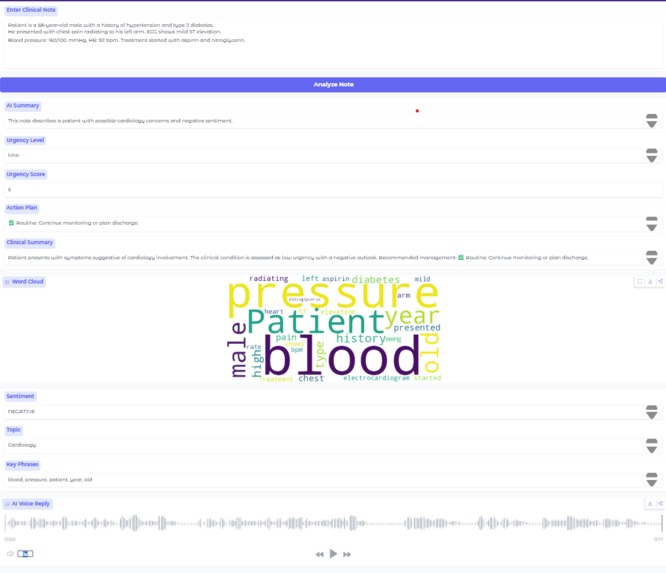
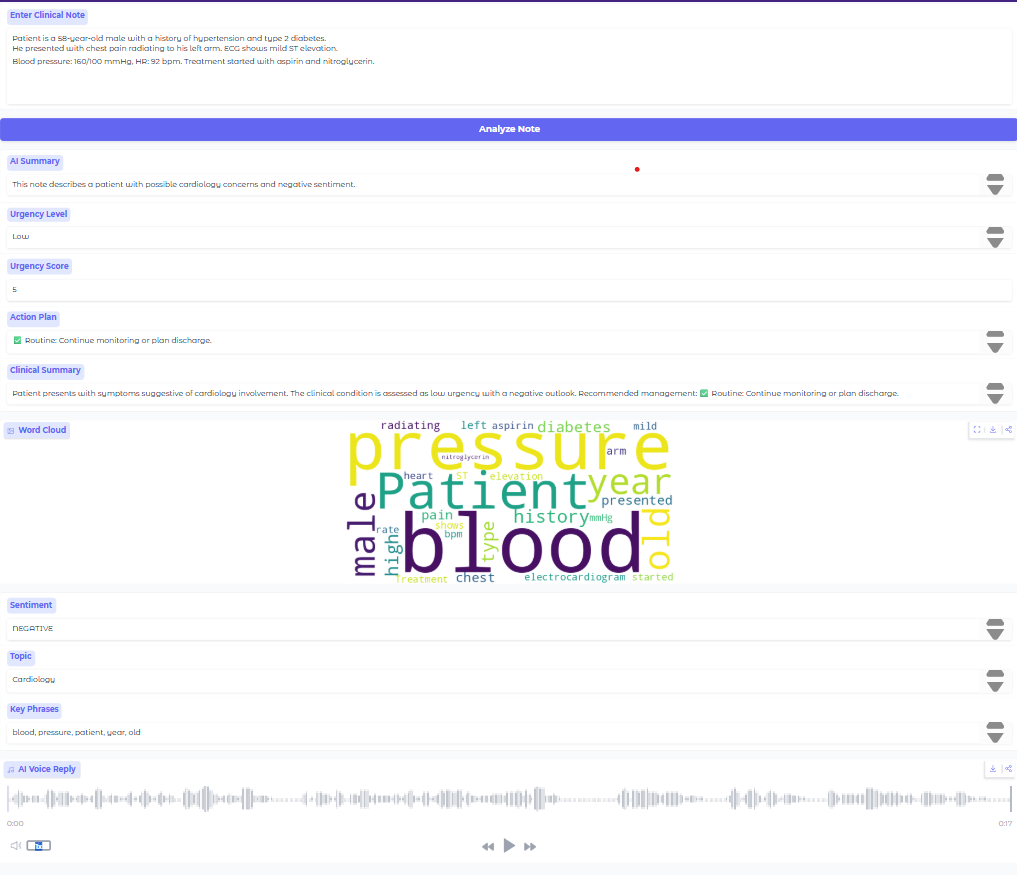
Example output of a command
I was inspired by the overwhelming administrative burden on healthcare professionals. I saw how systems like Epic and Cerner, while essential, create an information overload with a high volume of clinical notes. My goal was to use AI to automate the tedious task of triaging these notes, helping clinicians save time and prioritize urgent cases more efficiently.
Rehcura is a hackathon prototype that analyzes and triages clinical notes using AI. It can: -Triage Notes: Automatically classifies notes by urgency (Low, Medium, High) and medical topic. -Generate Summaries: Creates AI-generated audio and text summaries for quick, hands-free review. -Visualize Data: Produces word clouds and an interactive analytics dashboard for quick insights from patient data in a CSV file.
I built the project using Python, creating a pipeline that integrates several libraries. I used Natural Language Processing (NLP) to analyze the note text. For the user interface, I chose Gradio because it allowed me to quickly build an interactive, shareable web app. I used pandas to handle data and Plotly and WordCloud for visualization. The audio features were built using SpeechRecognition for input and gTTS (Google Text-to-Speech) for output.
The main challenge was the lack of a large, pre-labeled dataset for clinical notes. I had to combine a small labeled dataset with a rule-based system to make the AI model functional for the prototype. Another challenge was managing the project scope within a limited timeframe, which meant focusing on a core, demonstrable set of features rather than attempting full-scale EHR integration.
I am most proud of creating a working prototype that successfully demonstrates a clear, real-world application of AI in healthcare. It's a comprehensive solution, not just a single feature. I'm also proud that I was able to build the entire project on my own, from the backend logic to the front-end interface, all within the hackathon's time limit.
I learned a tremendous amount about the nuances of applying AI to a specialized field like medicine. I discovered that a simple, elegant UI is crucial for user adoption, especially in high-stress environments. Most importantly, I learned the value of effective scoping and rapid prototyping to turn a complex idea into a functional demo.
The next steps for Rehcura would be to move beyond the prototype phase. This includes: -Secure Integration: Developing secure, API-based integration with real EHR systems like Epic and Cerner. -Advanced Analytics: Building more robust analytics and predictive models for a deeper understanding of patient trends. -Clinical Validation: Collaborating with healthcare professionals to validate the urgency scoring and other AI outputs to ensure they are medically sound and reliable.
Built With
- datavisualization
- gradio
- gtts
- machine-learning
- natural-language-processing
- pandas
- plotly
- python
- scikit-learn
- speechrecognition
- wordcloud


Log in or sign up for Devpost to join the conversation.