-
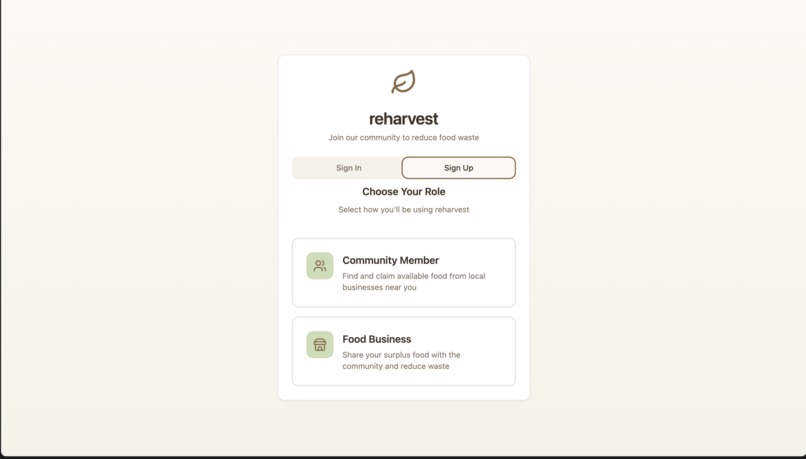
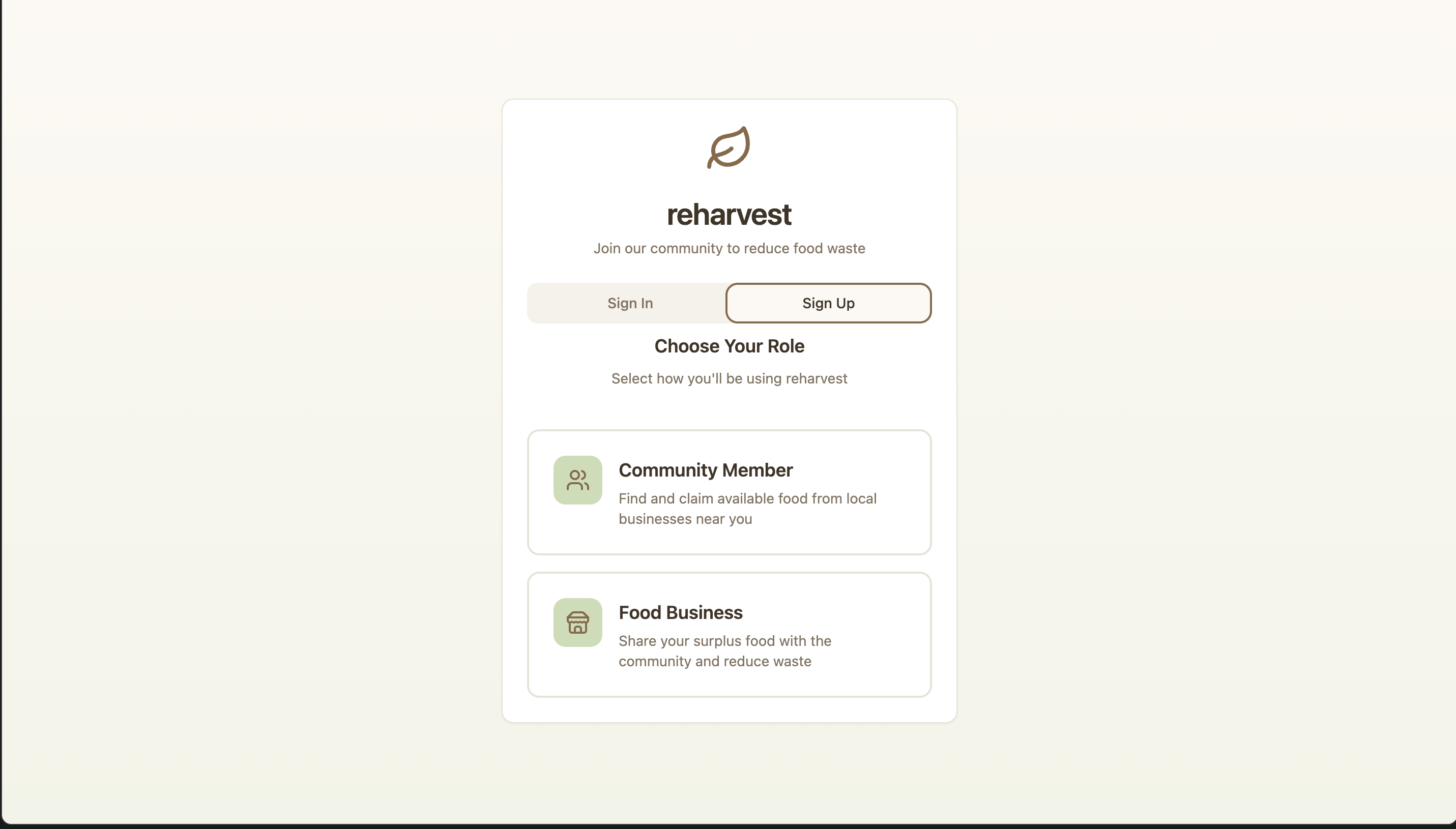
Create account
-
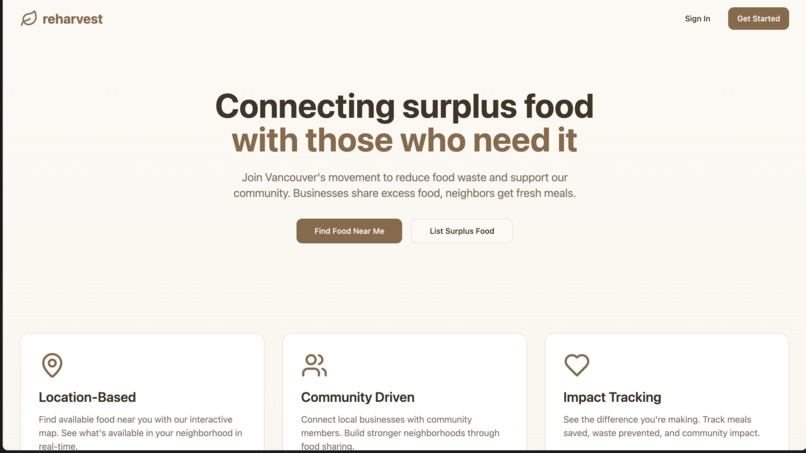
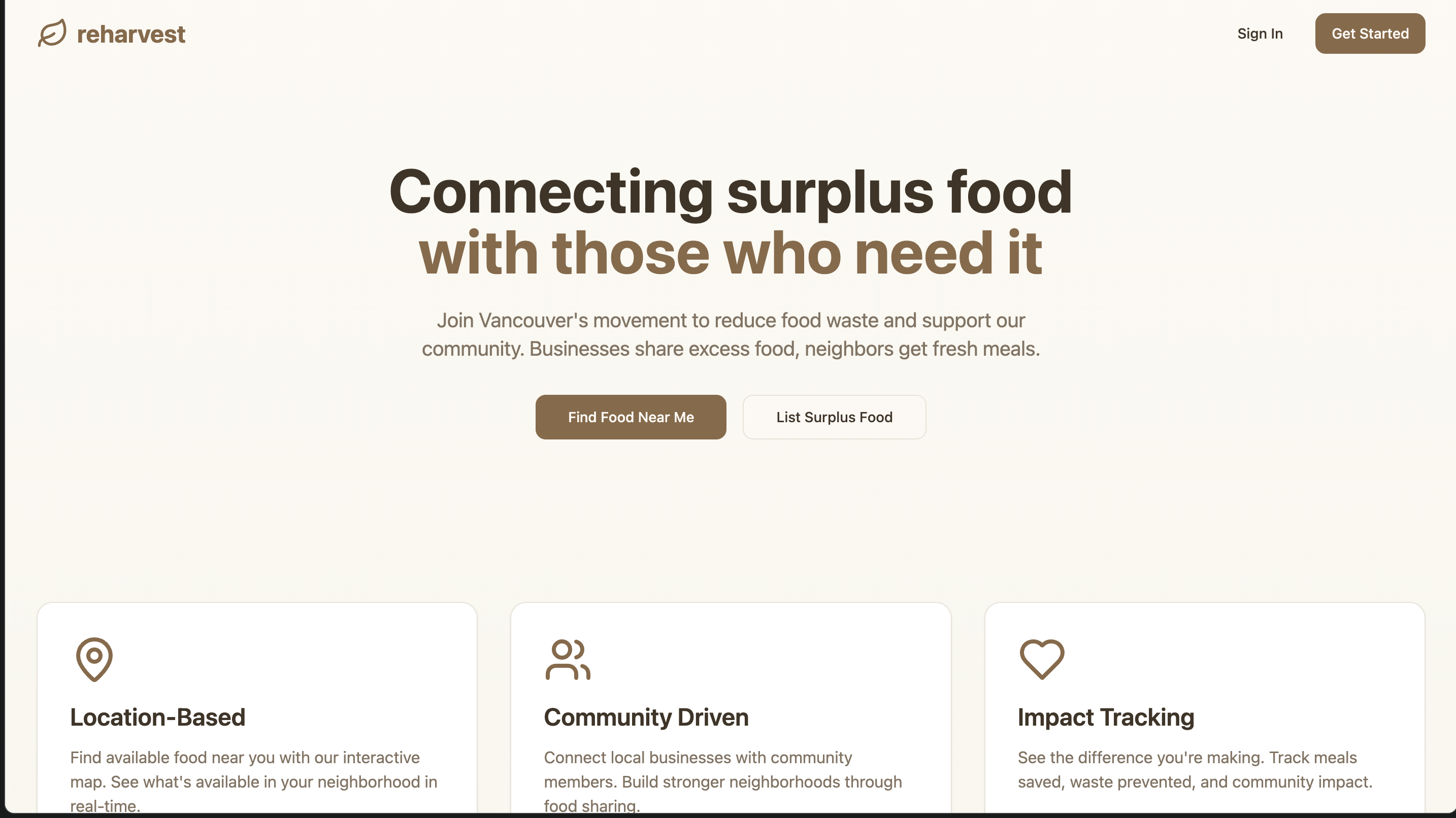
Landing page
-
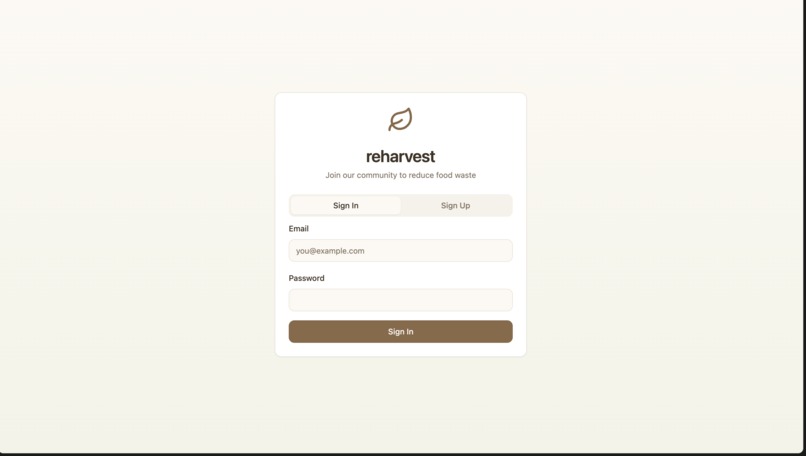
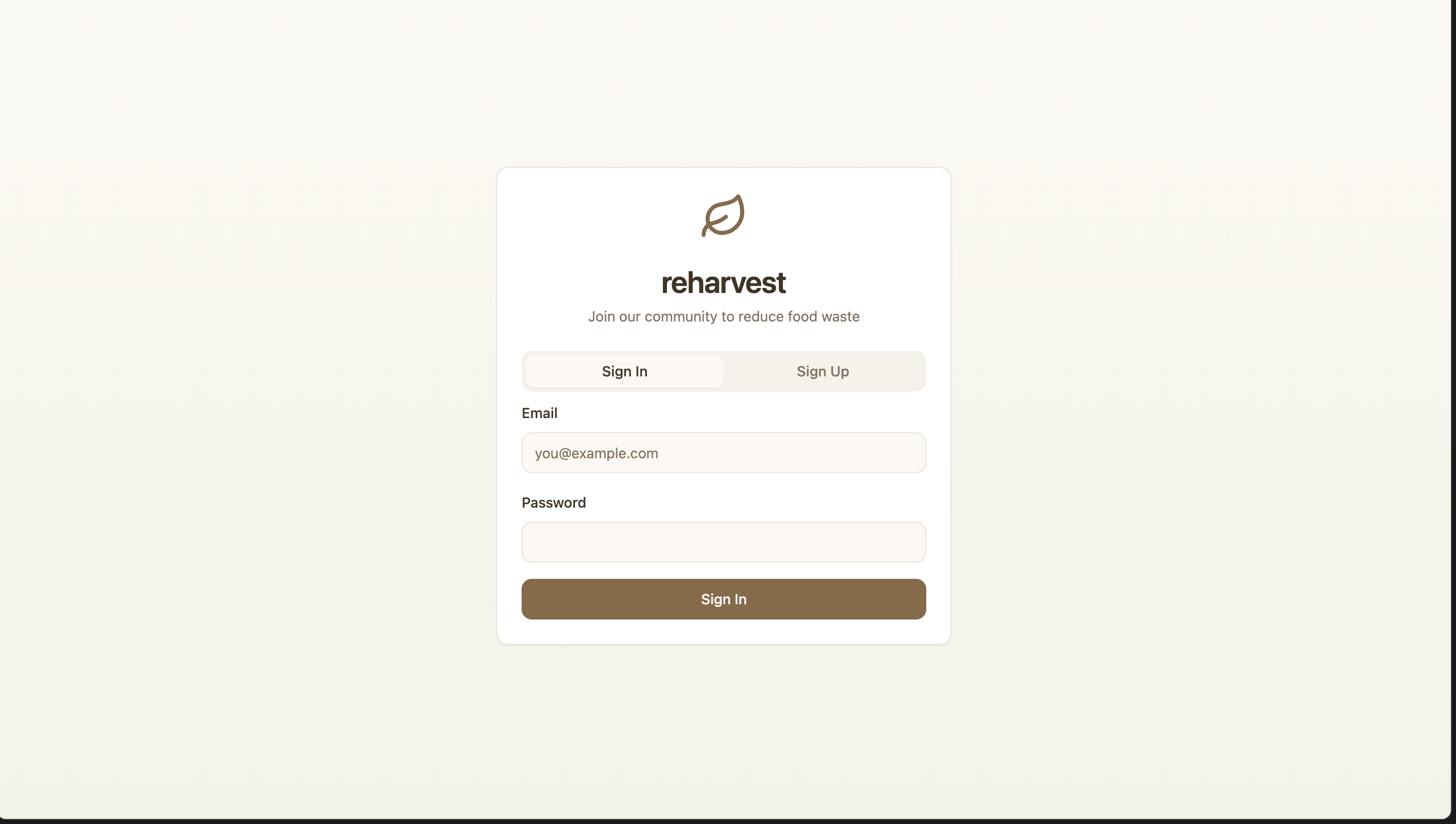
Sign in
-
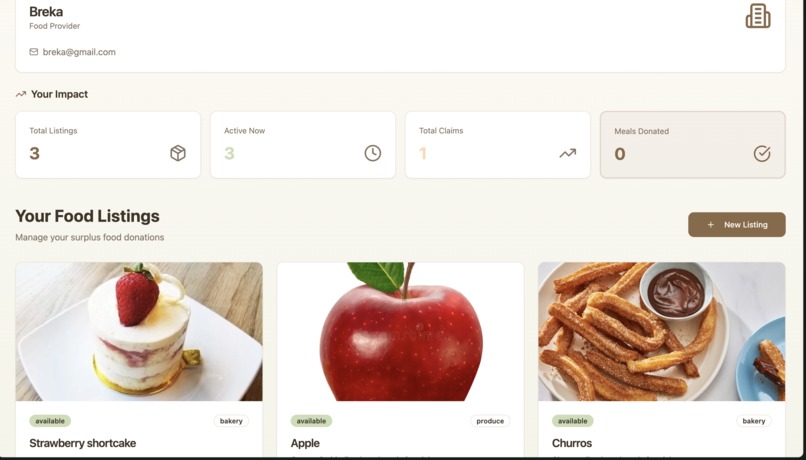
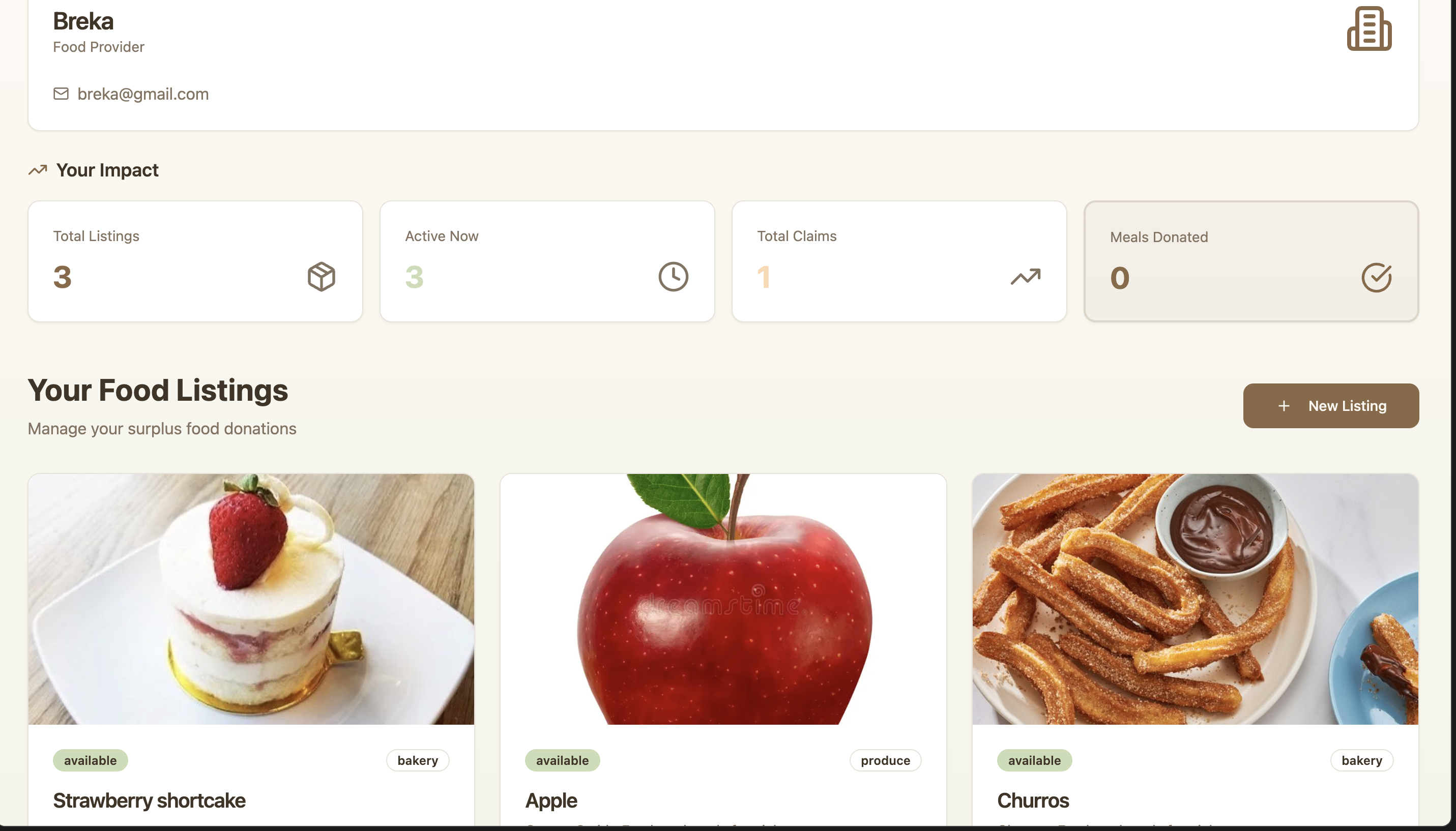
Business view
-
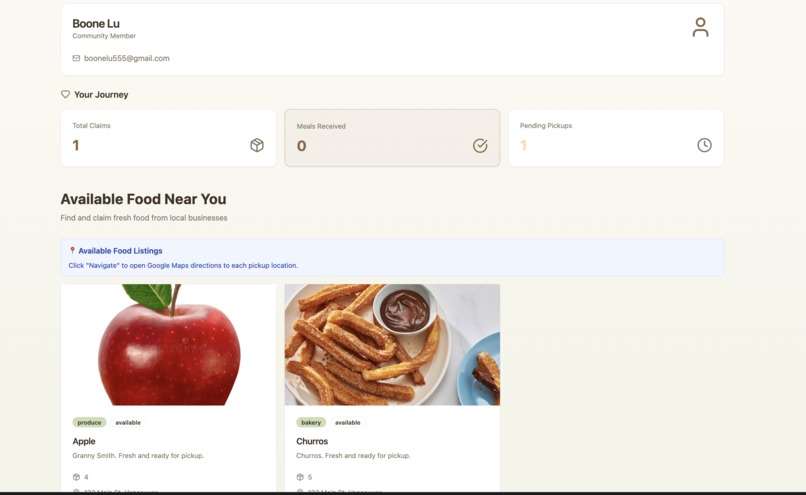
Consumer view

Inspiration
Food waste and food insecurity coexist in every city. We wanted a tool that makes donating and finding surplus food as effortless as tapping "navigate"
What it does
Providers snap/upload a food photo; TensorFlow.js auto-fills title, category, and a short menu-style description.
Consumers browse available items, see pickup details, open directions in Google Maps, and claim items.
How I built it
Frontend: React + Vite for a fast, modern UI.
AI: TensorFlow.js (MobileNet) runs in-browser for instant image classification; predictions map to our food categories and generate natural descriptions.
Data/Auth: Supabase for Postgres, auth, and storage; simple, secure CRUD with RLS. Maps: Deep link into Google Maps for directions (Geocoding/embedded map support planned).
UX: Clean card layout, confirmation dialogs, and clear states (active, claimed, expired).
Challenges I ran into
Handling login/signup edge cases with Supabase policies and triggers.
Avoiding blank screens from misconfigured Maps services; added graceful fallbacks and simplified navigation with links.
Balancing AI usefulness with reliability: building category mapping and natural descriptions without exposing raw confidence scores.
Accomplishments that I'm proud of
A “photo-to-listing” flow that genuinely reduces provider friction.
A demo-ready experience that still respects security and data integrity.
What I learned
Client-side AI (TensorFlow.js) can deliver great value within the project.
Supabase’s RLS is powerful, but requires careful schema and trigger design to avoid auth pitfalls.
Start simple for maps (links), then layer on geocoding/markers once keys and quotas are read
What's next for reharvest
Real embedded map with geocoding, clustering, and live user location.
Notifications (push/email/SMS) for nearby new items and expiring reservations.
Provider analytics dashboard (waste diverted, pickup rates, repeat consumers).
Reservation windows, QR/OTP pickup verification, and no-show protection.
In-app messaging between providers and consumers.
Bulk uploads, recurring schedules, and inventory integrations.
Fine-tuned food model and allergen/dietary tags.
Multilingual UI, accessibility upgrades, PWA + offline mode.
Partnerships with charities and municipalities to scale distribution.
Built With
- google-maps
- react
- supabase
- tensorflow
- vite

Log in or sign up for Devpost to join the conversation.