-
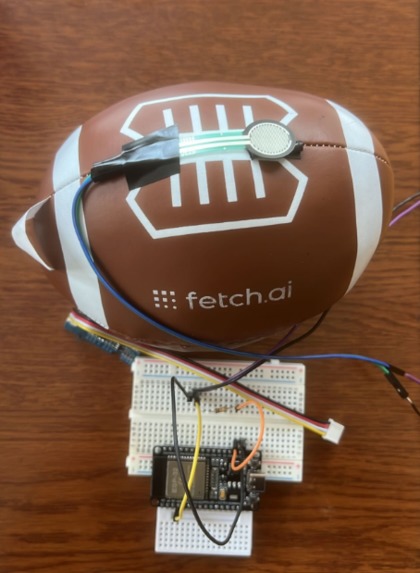
The hardware part of StrokeHub
-
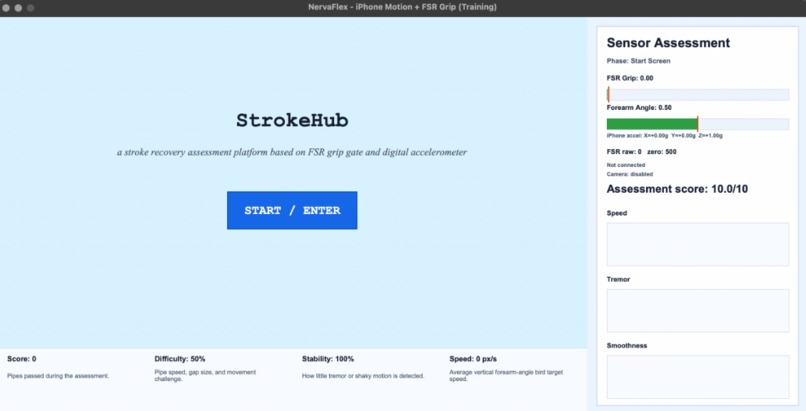
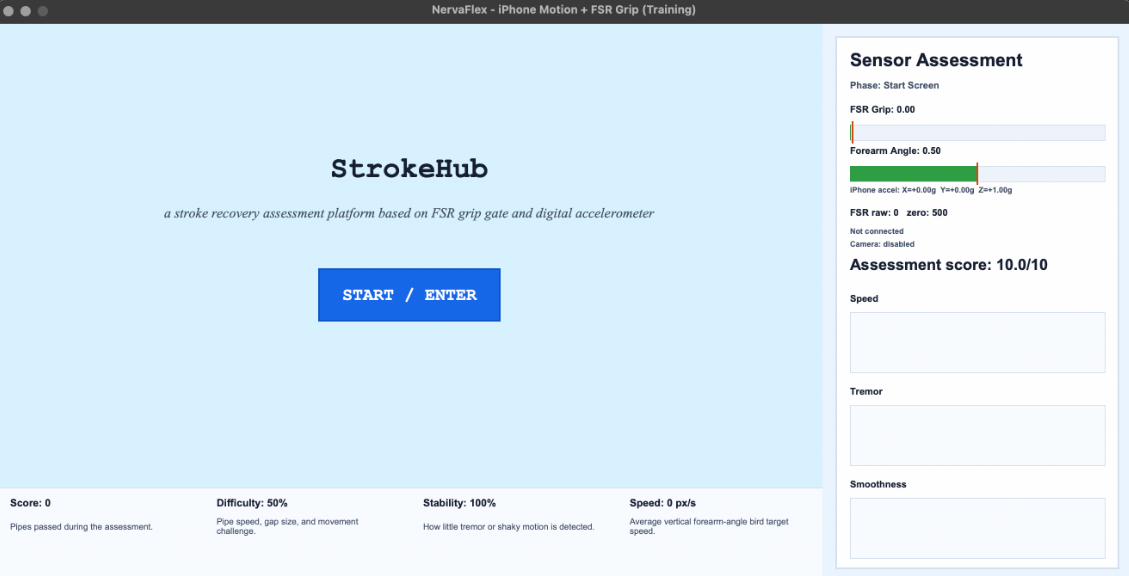
Starting page of StrokeHub
-
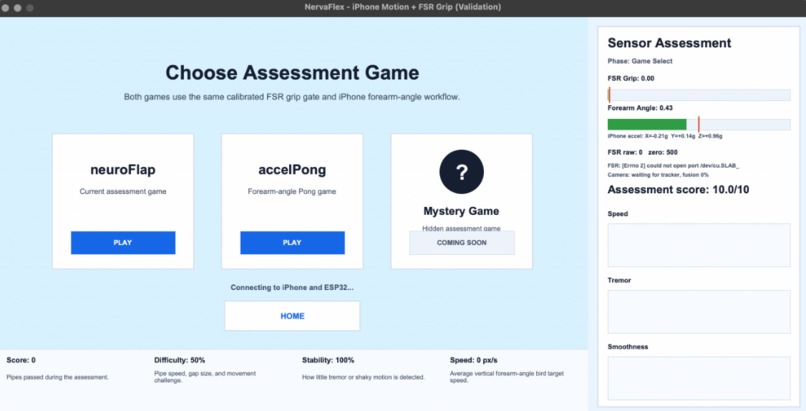
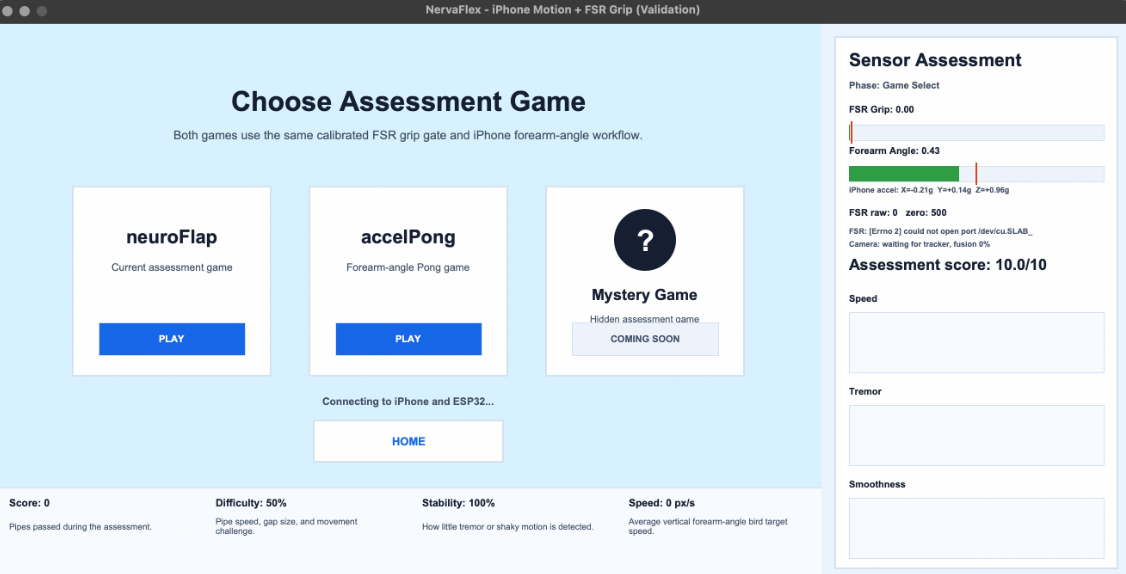
Game selection of StrokeHub
Inspiration
Our inspiration for StrokeHub came from a personal experience. Earlier this year, one of our family members suffered a stroke. Watching their recovery made us realize that rehabilitation is a long journey requiring patience, repetition, and determination. Many of the prescribed exercises were repetitive, and it was hard to stay motivated between therapy appointments. We wondered if rehabilitation could feel less like a chore and more like something patients would actually want to do every day.
That experience inspired us to create StrokeHub, combining AI, wearable sensors, and gamification to make upper-limb rehabilitation more engaging while providing objective data to track recovery.
What it does
Traditional motor assessments can feel repetitive, clinical, and difficult to track over time. StrokeHub explores a more interactive approach: using games to create structured movement tasks while collecting real-time sensor data.
During gameplay, the player controls the game using arm or forearm movement while maintaining grip on an FSR sensor. The system records movement, grip, game performance, stability, smoothness, camera-based motion agreement, and difficulty progression. After each trial, StrokeHub summarizes the session and uses machine learning to classify gameplay-based motor-control patterns.
StrokeHub combines skin-contact sensing and visual motion capture. The phone accelerometer provides direct movement data from the user’s arm, while the camera runs in shadow mode as a visual validation layer. This creates a sensor-fusion approach that improves confidence in the movement feedback without relying completely on one signal source.
How we built it
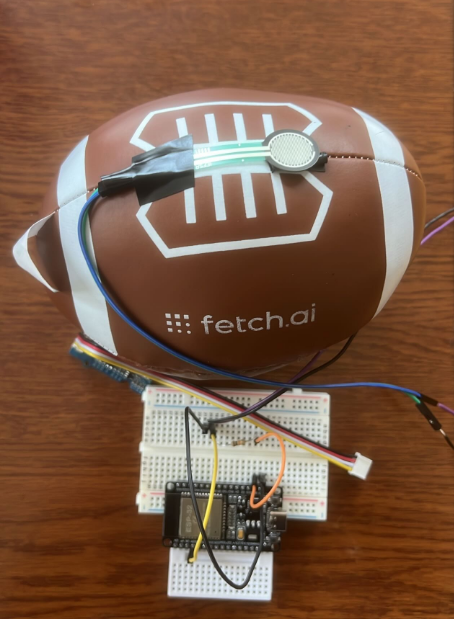
We built the hardware around an ESP32, which reads the grip sensor in real time and streams the data to a Python application. Movement dynamics are captured by a phone accelerometer worn on the arm.
Using Python and Pygame, we developed two rehabilitation games: accelPong and neuroFlap. We integrated MediaPipe Pose with a webcam to estimate upper-limb joint positions and analyze movement quality. Finally, we combined gameplay statistics, pose estimation, and sensor data into a dashboard that summarizes each rehabilitation session.
Our project brought together embedded systems, computer vision, AI, and game development into one unified rehabilitation platform.
Challenges we ran into
Hardware issues regarding the biosensors we utilized forced us to shift focus multiple times, hindering our progress and wasting multiple hours. Training a defensible model on limited data. With a small, prototype dataset we leaned on interpretable trial-level features and rule-based labels for a Random Forest, and were careful to treat it as a proof of concept rather than a validated classifier.
Accomplishments that we're proud of
- We integrated embedded sensors, computer vision, a trained machine-learning model, two playable games, and a session dashboard into one working end-to-end system within the hackathon.
- We turned repetitive rehab exercises into something genuinely playable, while still capturing objective movement data underneath the game.
What we learned
Throughout this project, we learned that building healthcare technology requires balancing technical innovation with real-world usability. A machine-learning model is only as useful as the quality of the data behind it, so we spent significant time understanding sensor reliability, signal processing, and how different movement metrics reflect motor function.
We also learned how valuable sensor fusion can be. Combining accelerometer data, grip-force measurements, and computer vision provided a more complete picture of upper-limb movement than any single sensor alone. Integrating embedded hardware, AI, computer vision, and game development into one system taught us the importance of communication between software and hardware components.
Most importantly, we gained a deeper appreciation for the challenges stroke survivors face during recovery. Rehabilitation is not only a physical challenge but also a motivational one. This experience reinforced our belief that thoughtful technology and engaging design can help make long-term therapy more accessible, measurable, and enjoyable.
What's next for SrokeHub
Our next goal is to transform StrokeHub from a prototype into a platform that can support long-term rehabilitation.
Future improvements include:
- Personalized AI coaching that adapts exercises based on patient progress.
- Cloud-based progress tracking for patients and therapists.
- Additional rehabilitation games targeting different motor skills.
- Clinician dashboards for remote monitoring.
- Clinical validation with rehabilitation professionals and stroke survivors.
- Integration with more wearable sensors to provide even richer movement analysis.
Ultimately, we hope StrokeHub can help make stroke rehabilitation more engaging, accessible, and data-driven while empowering patients to stay motivated while giving clinicians better tools to monitor recovery.


Log in or sign up for Devpost to join the conversation.