-
-
Rehabloom
Inspiration
Physical therapy is supposed to help people get better, but actually sticking to it can be difficult. Between appointments, patients are largely responsible for following their exercises on their own. Pain, busy schedules, low motivation, and the feeling that progress is taking forever can make it tempting to give up.
We started thinking about what could make that process a little less frustrating. What if completing exercises felt rewarding? What if friends and family could help keep someone motivated without constantly having to remind them? And what if patients had an easier way to show their physical therapists what they'd been doing between appointments?
Those questions eventually became Rehabloom. We wanted to create something that made recovery feel a little less lonely and a lot more manageable.
What it does
Rehabloom is a physical therapy companion that combines exercise tracking, gamification, and community support.
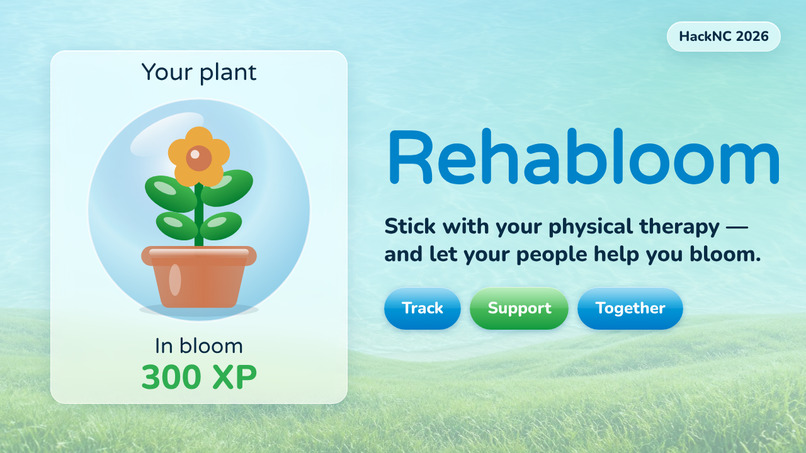
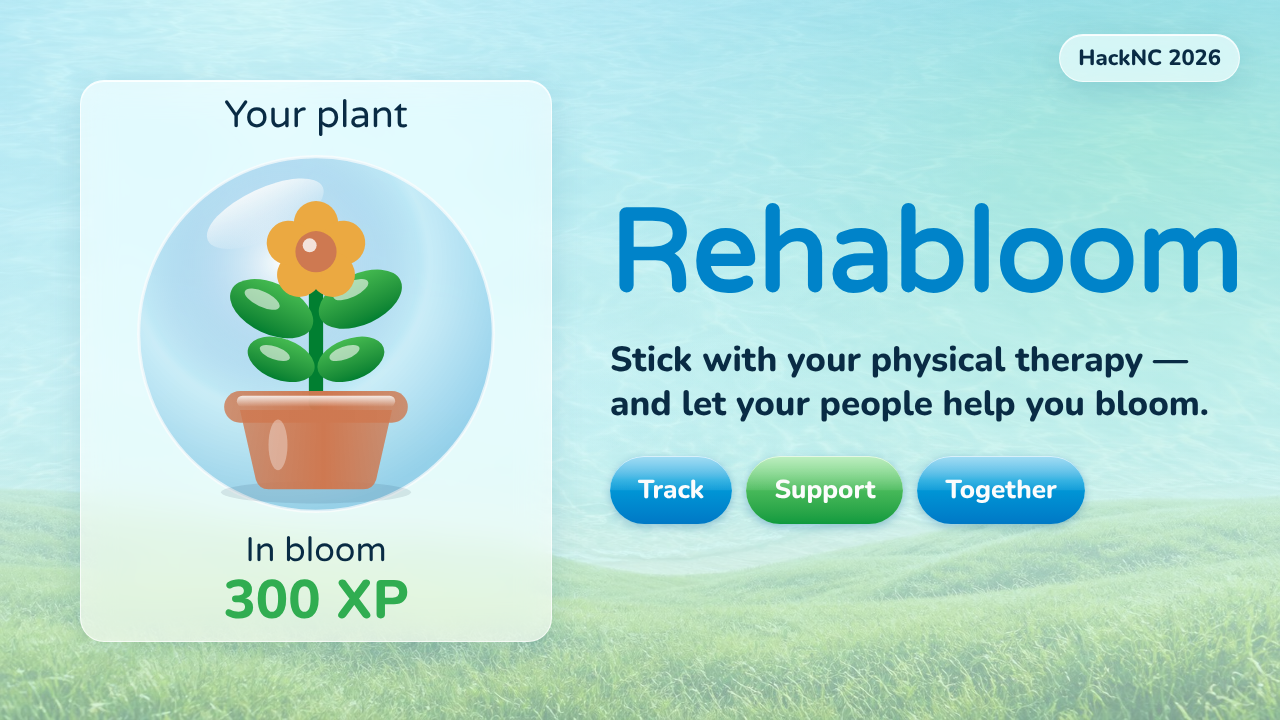
Users can enter exercises prescribed by their physical therapist, organize them into daily routines, and check them off as they go. Each completed exercise earns XP that contributes to the growth of a virtual plant. It's a small visual reminder that progress adds up, even when it doesn't feel particularly noticeable.
The app also has a social side. Users can connect with friends and family, find rehab buddies and mentors based on shared interests or recovery experiences, exchange messages, and plan sessions together. An accountability system helps supporters check in when someone falls behind on their scheduled exercises.
On the Progress page, users can review their exercise history and generate weekly or monthly summaries with Google Gemini. These summaries turn recorded activity into readable reports that can be shared with a physical therapist.
We also incorporated a Frutiger Aero-inspired design, with bright aquatic colors, glossy buttons, and nature-inspired visuals. We wanted Rehabloom to feel welcoming instead of clinical.
How we built it
We built Rehabloom primarily using Lovable, which helped us develop and refine the website's interface and functionality. We used Lovable Cloud for the application's database and user accounts, and connected our project to GitHub for collaboration and version control.
We integrated Google Gemini to generate progress summaries from recorded exercise activity. Instead of requiring users to interpret their own statistics, Gemini helps translate that information into a short paragraph that is easier to understand and share.
Much of our development process involved testing features, refining prompts, making changes, and testing again. We worked on connecting exercise completion to the XP system, developing the support network and messaging features, and making the different pages feel like parts of the same application.
The Frutiger Aero design was another major focus. We used translucent panels, blue-green gradients, fish animations, background music and sound effects, glossy elements, and a growing plant to make the site visually distinctive without distracting from its purpose.
Challenges we ran into
One of our biggest challenges was figuring out how much we could realistically fit into one hackathon. We started with a fairly simple exercise tracker and a growing plant, but the idea quickly expanded into social accountability, buddy matching, messaging, scheduling, and AI-generated reports.
The tricky part was making these features work together instead of feeling like a bunch of unrelated additions.
We also had to think carefully about how to make physical therapy motivating without making it feel like another obligation. We didn't want users to lose their progress for taking a rest day or feel pressured to exercise through pain. That meant reconsidering parts of our reward system and how we communicated missed sessions.
Working with AI-assisted development also came with a learning curve. Being able to generate code quickly is helpful, but it doesn't eliminate the need to understand what the application is doing, test its features, and catch things that don't work as expected.
Accomplishments that we're proud of
We're proud that Rehabloom grew from a simple idea about motivating patients into a working website with several connected features.
The support network is probably one of our favorite parts. Being able to connect two different accounts, send a message, and actually see that interaction happen makes the community aspect come to life. Recovery is personal, but that doesn't mean people should have to go through it alone.
We're also proud of the visual design. The Frutiger Aero theme gave Rehabloom a unique touch, and watching a little plant grow from completed exercises is surprisingly satisfying.
Finally, getting the AI progress summaries working was an exciting addition. It gave the app a practical use beyond tracking habits: helping patients communicate their experiences to the people responsible for their care.
As a team that has never done a hackathon, it was really rewarding to see something visually appealing, practical, and significant come together all in one weekend.
What we learned
This project taught us that building an application involves a lot more than creating a nice-looking interface. We had to think about user experience, how information is stored, how features interact, and what happens when someone uses the app differently than we expected.
We also learned a lot about developing with AI tools. Lovable made it possible to build features much faster, but we still had to make decisions about how those features should work and whether they actually solved the problem we started with.
One of our biggest takeaways was the importance of keeping the user in mind. A missed physical therapy session isn't necessarily a failure. Someone might be in pain, exhausted, or simply having a difficult day. Designing around that reality helped us make Rehabloom more supportive and less demanding.
Most importantly, we learned that even a relatively small idea can grow into something much more meaningful when different perspectives and skills come together.
What's next for Rehabloom
There's still a lot we'd like to do with Rehabloom.
One of our next priorities would be working with actual physical therapists and patients to better understand what they need. Their feedback could help us improve exercise scheduling, accessibility, progress tracking, and the ways supporters are involved.
We'd also like to build a dedicated therapist portal where professionals could assign exercise routines and review patient-approved progress reports. Eventually, we hope to make accountability reminders more customizable and explore better ways to match users with supportive recovery communities.
Before any real clinical use, we would also need to strengthen privacy protections, thoroughly test the platform, and make sure it meets the appropriate healthcare requirements.
For now, Rehabloom is a prototype of something we think could genuinely help people. Our goal was never to replace physical therapists or turn recovery into a competition. We just wanted to make the days between appointments a little easier.
Recovery grows with you!
Built With
- claude
- css
- gemini-api
- html
- javascript
- lovable


Log in or sign up for Devpost to join the conversation.