Inspiration
Rehabilitation processes often rely on predefined recovery plans that remain unchanged throughout the rehabilitation period.
In practice, patients may struggle to follow these plans consistently and lack clear feedback on whether they are progressing as expected.
RehabilitationAI was inspired by the idea that rehabilitation should be adaptive and trackable.
By combining AI-assisted rehabilitation program generation with daily progress reporting, the platform aims to support users throughout their recovery journey rather than offering one-time guidance.
What it does
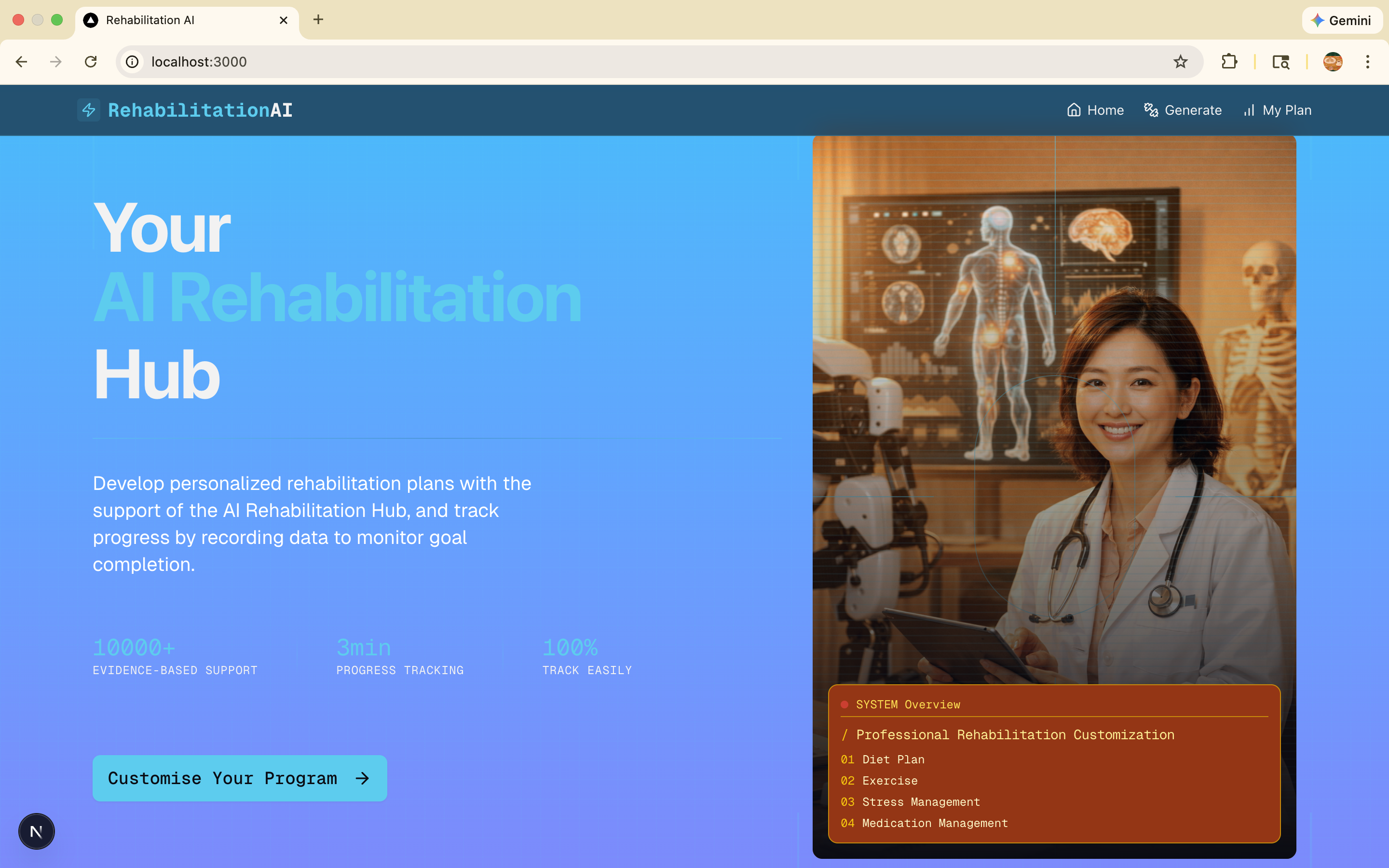
RehabilitationAI is an AI-powered rehabilitation support platform that helps users generate personalized recovery programs and evaluate their plan completion over time. The platform enables users to:
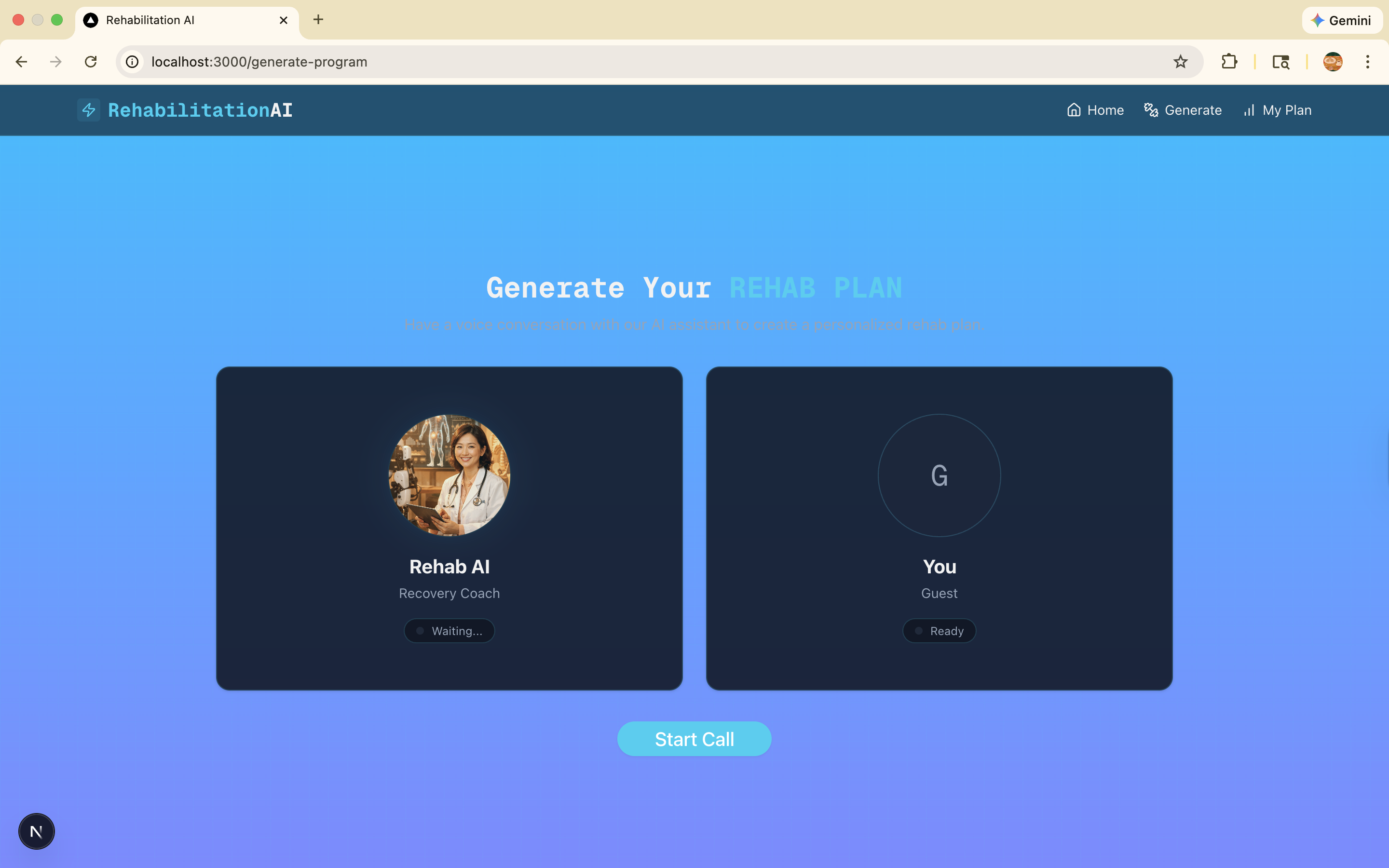
- Generate structured rehabilitation programs based on individual goals, physical limitations, and preferences
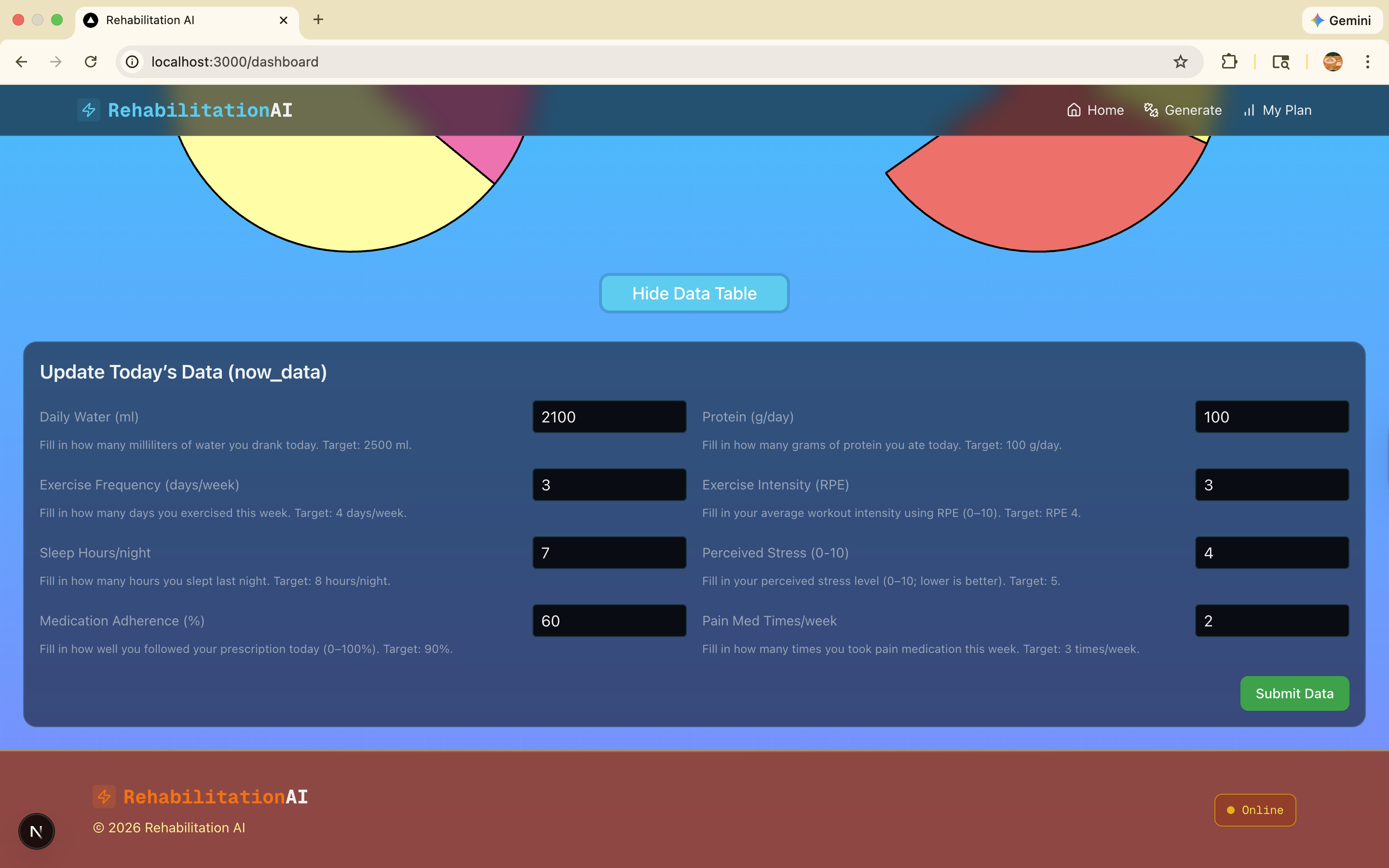
- Report daily rehabilitation activities and progress
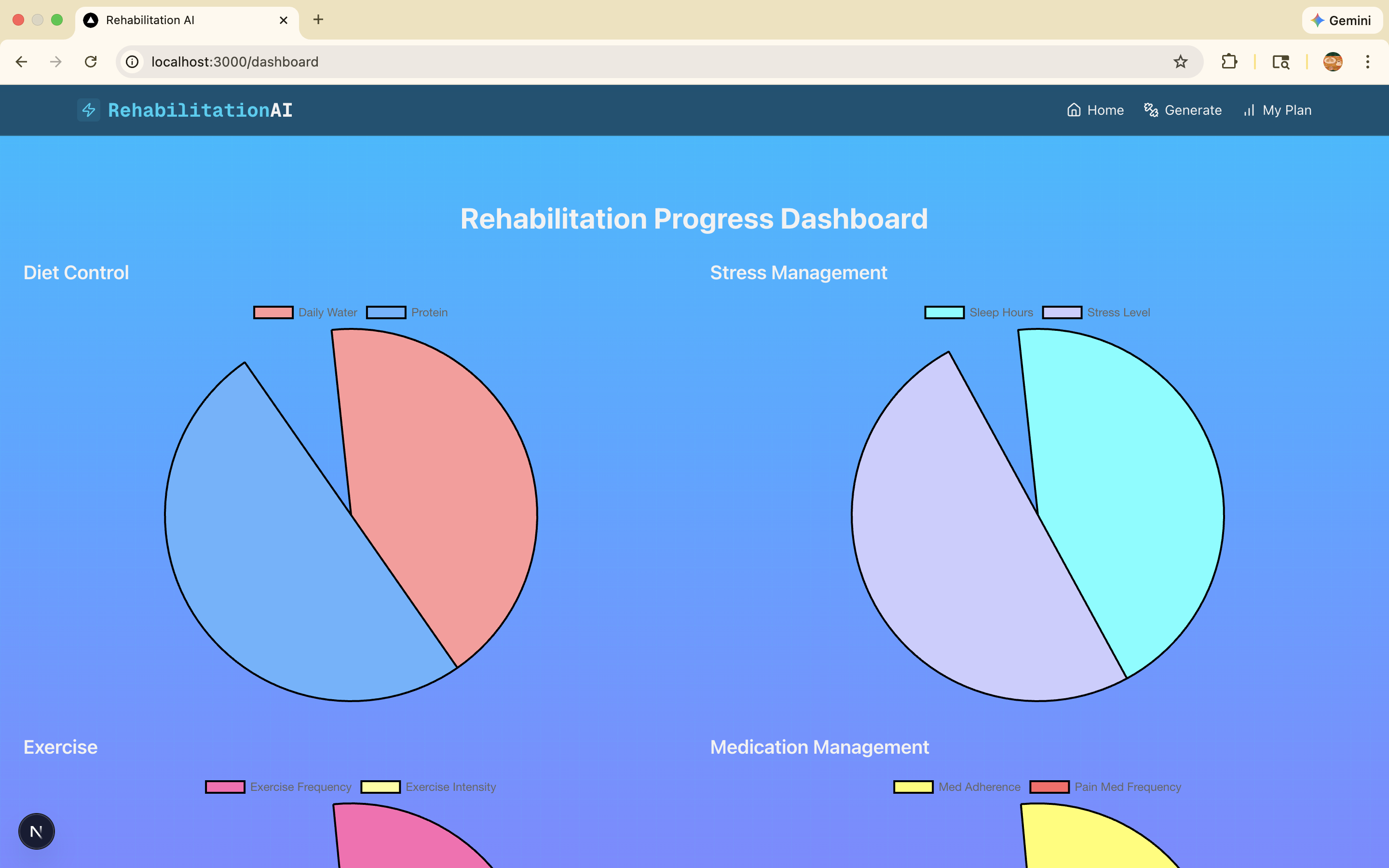
- Evaluate plan completion and adherence based on generated programs and user-reported data
- Gain clearer insight into their rehabilitation consistency and recovery status
How we built it
RehabilitationAI is built using Next.js with the App Router and React for component-based UI development.
The system consists of three core components:
- Rehabilitation Program Generation using AI-driven logic
- Daily Progress Reporting to capture user activity data
- Plan Completion and Adherence Evaluation, conceptually represented as: [ \text{Adherence Score} = \frac{\text{Completed Tasks}}{\text{Planned Tasks}} ] The platform is designed as a supportive tool, focusing on structured guidance and progress evaluation rather than medical diagnosis or treatment decisions.
Challenges we ran into
One major challenge was defining a realistic and responsible project scope.
Rehabilitation-related applications require careful wording and design choices to avoid overstating AI capabilities or crossing into medical decision-making.
Another challenge was integrating program generation, user input, progress tracking, and evaluation into a single cohesive user experience.
Managing multiple application states while keeping the interface intuitive required careful component and state design.
Accomplishments that we're proud of
- Successfully built a complete, end-to-end rehabilitation support platform
- Designed a clear and structured user flow from program generation to progress evaluation
- Implemented a meaningful plan completion evaluation mechanism
- Maintained responsible AI boundaries while delivering a practical and user-focused product
- Delivered a functional system within a limited development timeframe
What we learned
Through this project, we learned how to:
- Design AI-assisted systems for health-related use cases responsibly
- Translate rehabilitation concepts into measurable and user-friendly features
- Build scalable and maintainable front-end architecture with Next.js
- Balance technical ambition with usability and ethical considerations
- Manage project scope effectively while delivering a complete solution
What's next for RehabilitationAI
Future development for RehabilitationAI may include:
- Integrating real-time AI models for more adaptive rehabilitation programs
- Adding long-term progress visualization and analytics
- Enhancing personalization through continuous user feedback
- Supporting clinician or therapist-assisted workflows
- Expanding accessibility and internationalization support


Log in or sign up for Devpost to join the conversation.