Inspiration
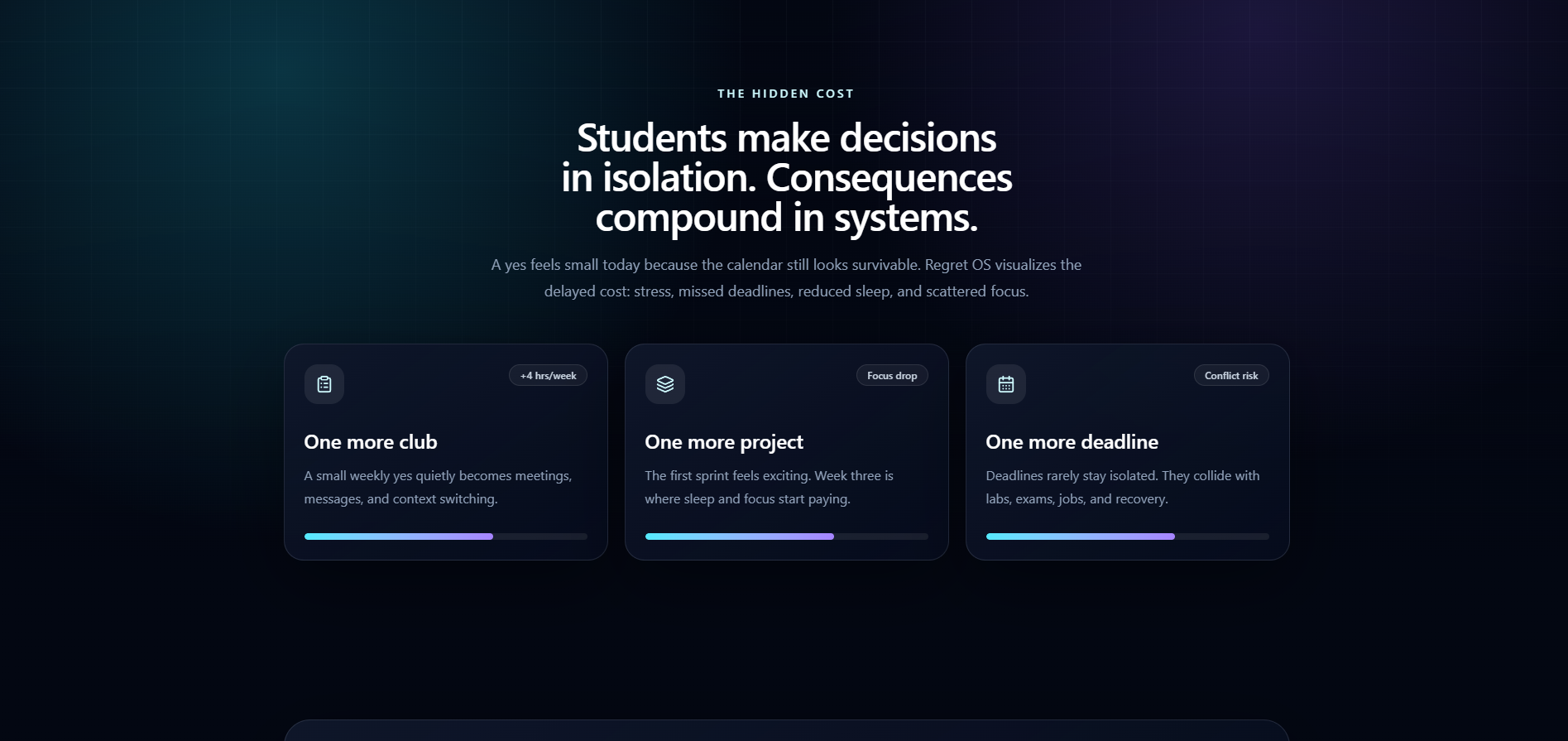
Students often say yes to one more club, one more project, one more hackathon, or one more deadline because the cost feels small in the moment. The real cost usually appears weeks later as stress, missed work, poor sleep, and regret. Regret OS was inspired by that gap between today’s decision and tomorrow’s consequences.
What it does
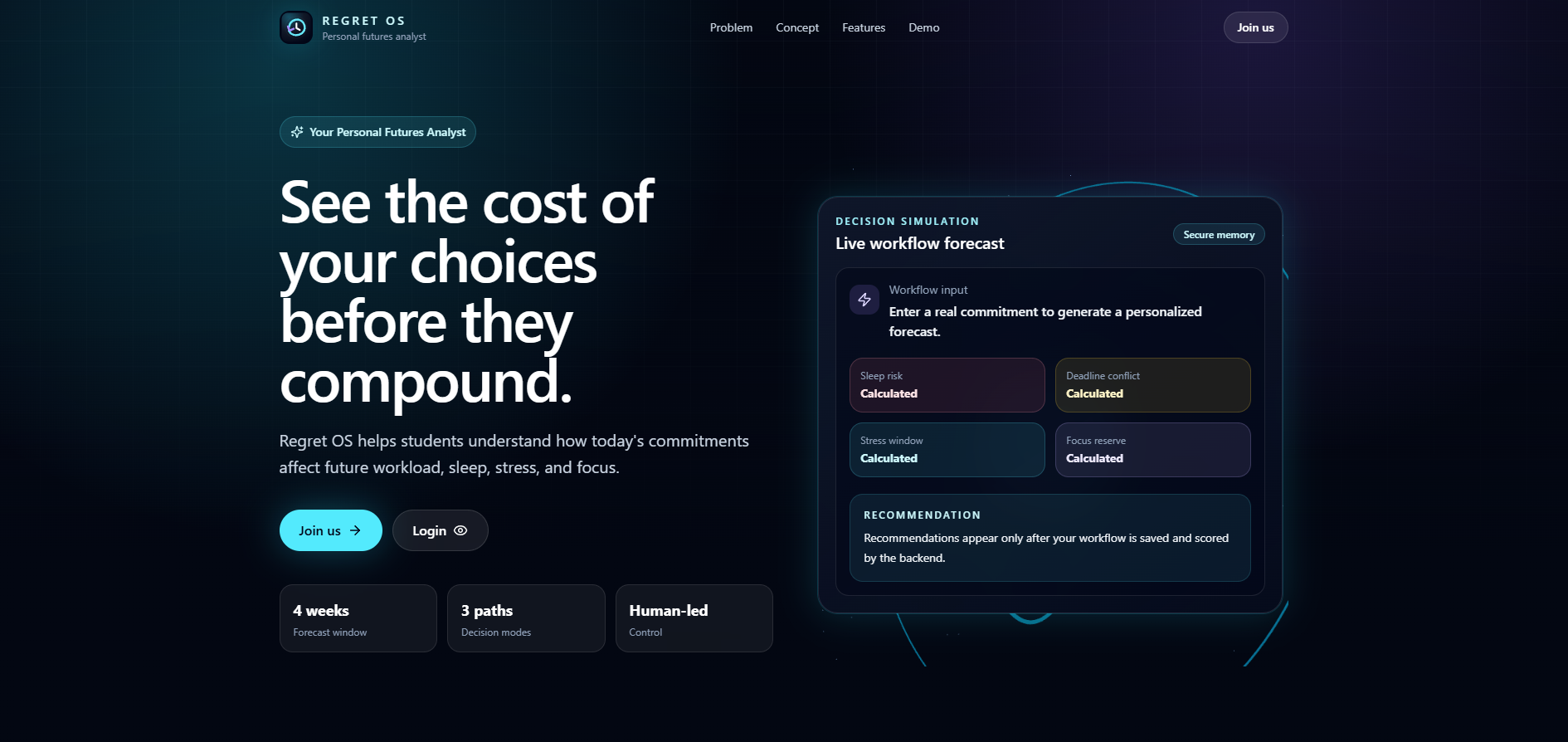
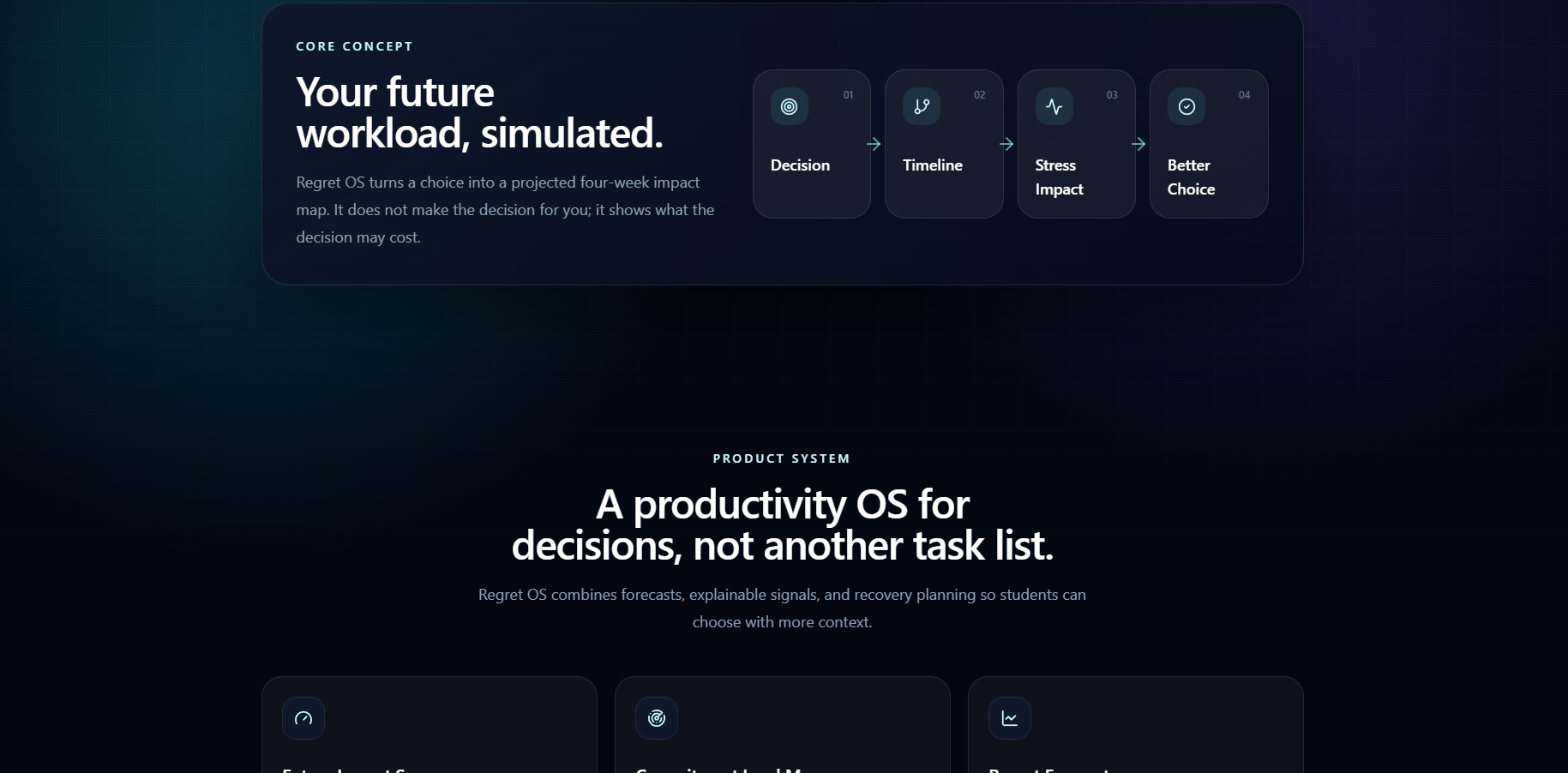
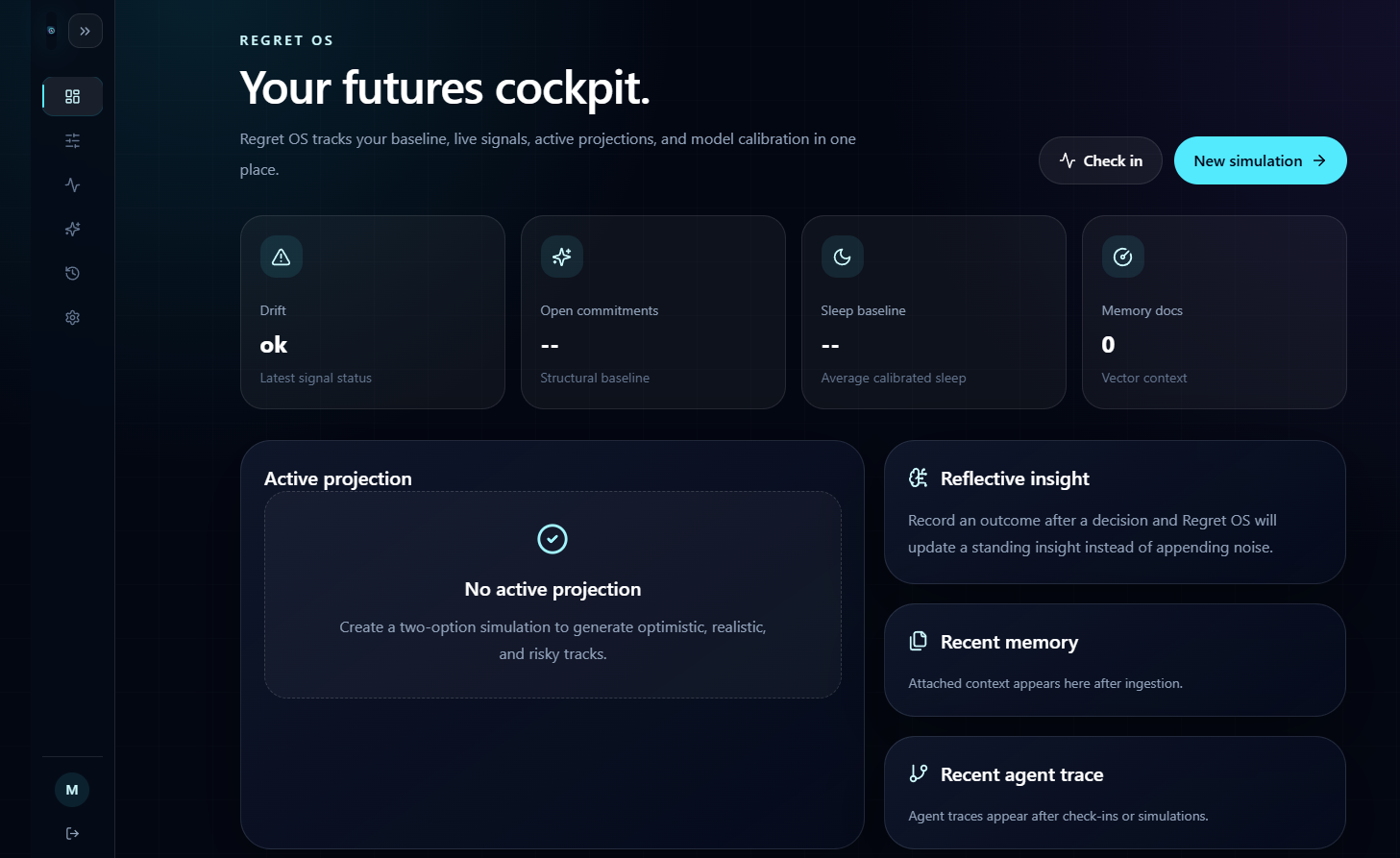
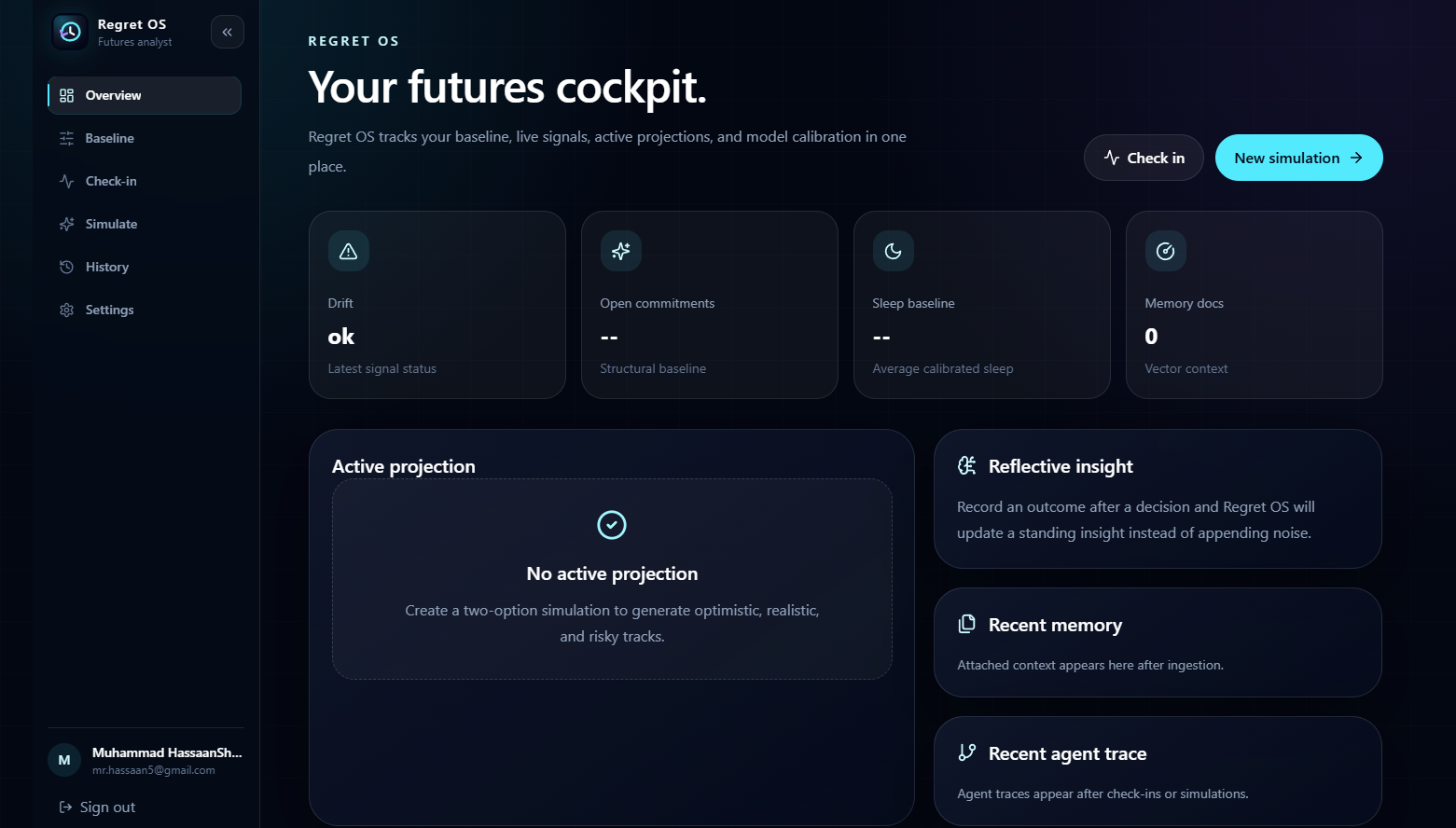
Regret OS is an AI-powered personal futures analyst for students. It helps users simulate how a decision may affect their next few weeks before they commit.
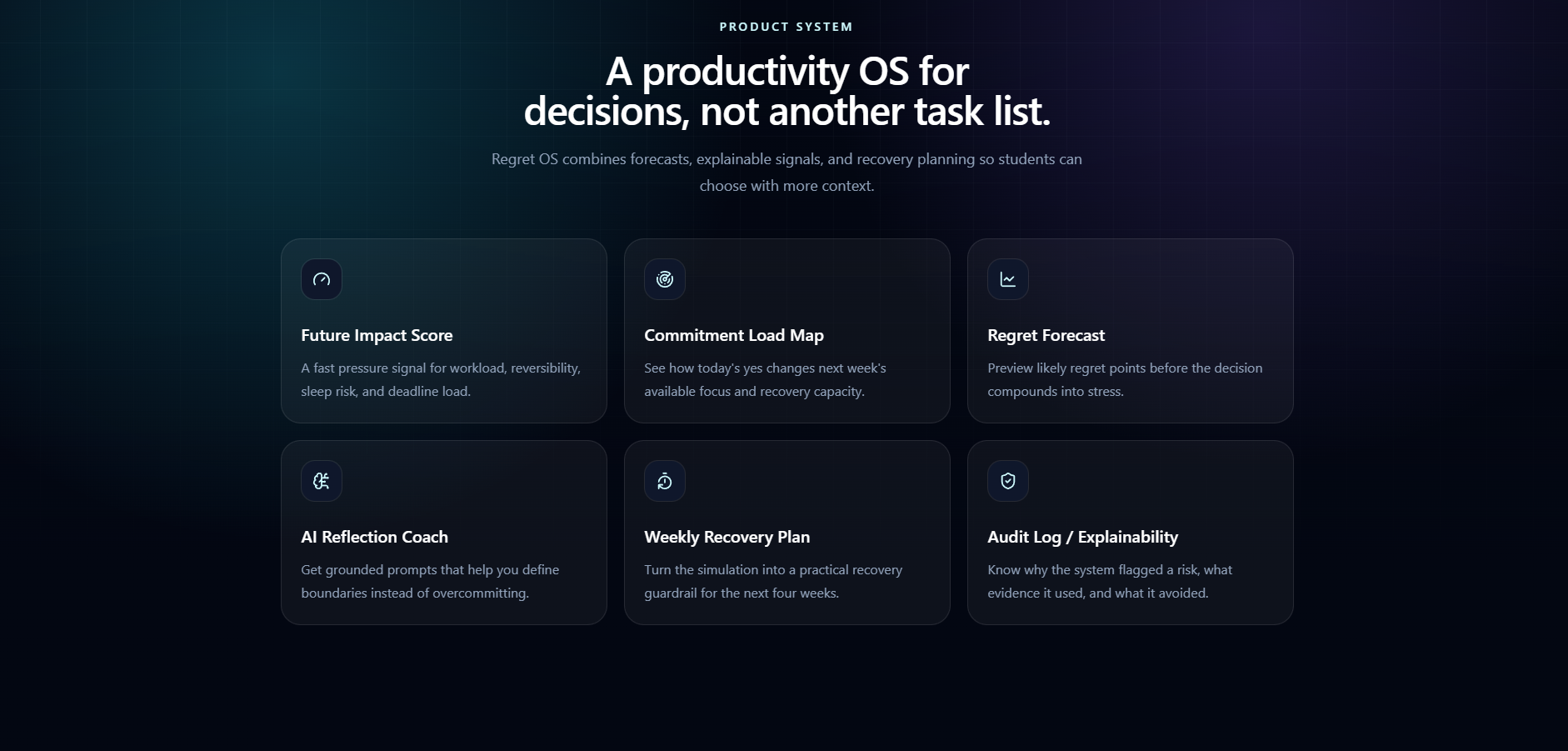
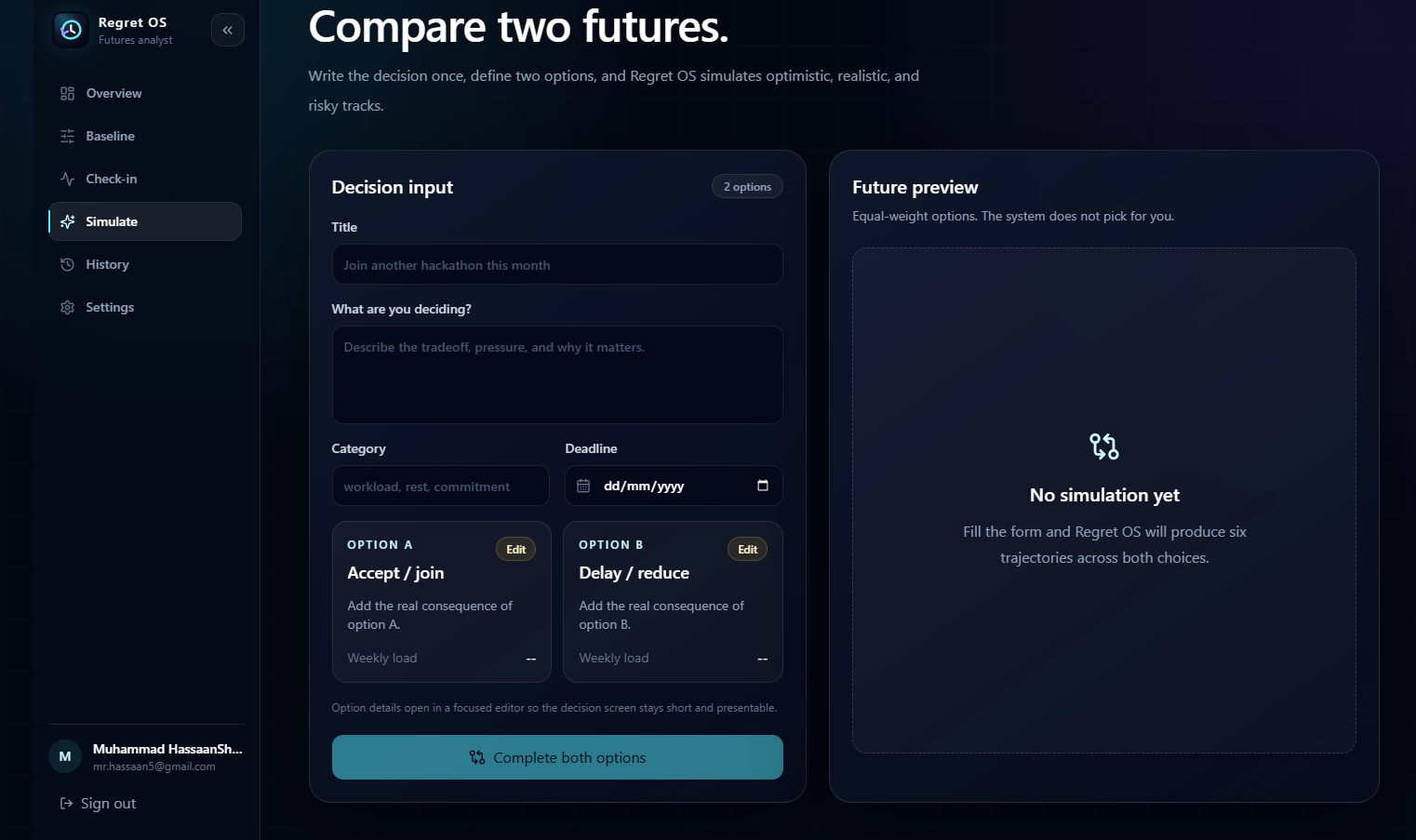
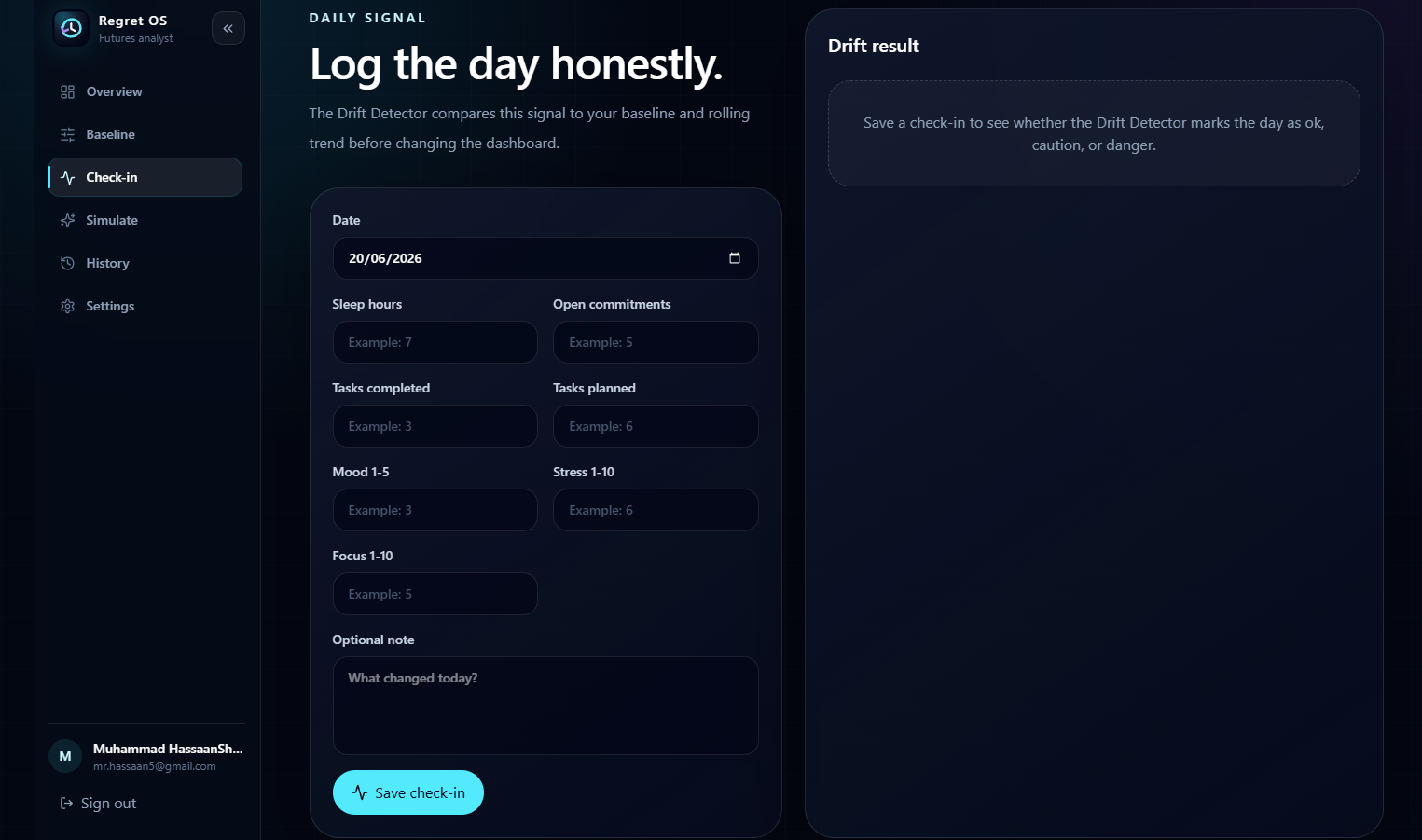
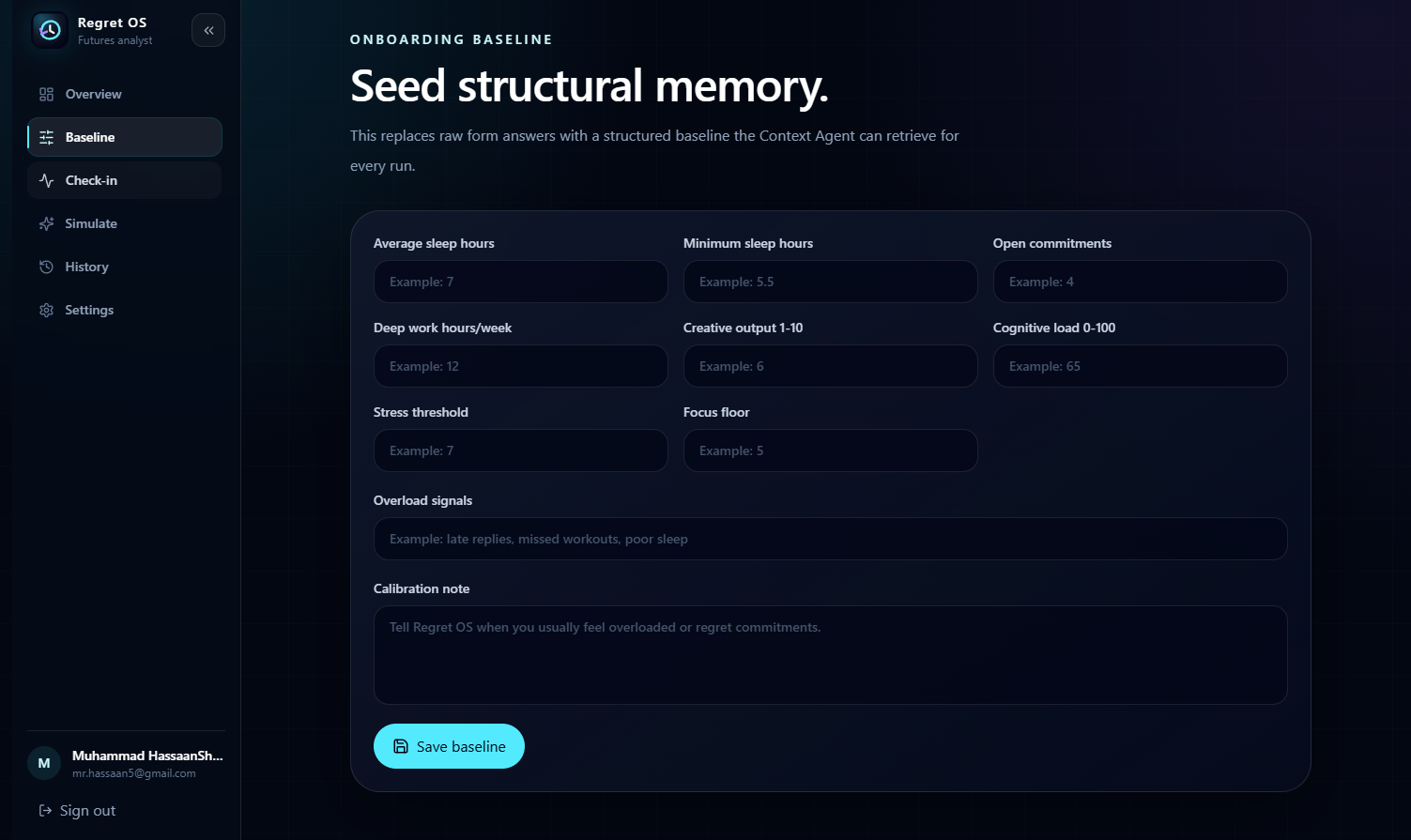
A student can create a baseline, log daily check-ins, and compare two possible choices. Regret OS then generates future trajectories across sleep, energy, commitments, deep work, stress risk, and regret windows. It does not make the decision for the user. Instead, it shows the likely tradeoffs so the student can choose with more context.
How we built it
We built Regret OS as a full-stack product with a premium dark productivity interface.
The frontend is built with Next.js, TypeScript, Tailwind CSS, and responsive dashboard layouts. The backend is built with FastAPI, SQLAlchemy, Pydantic, JWT authentication, and bcrypt password hashing. Data is stored in NeonDB Postgres.
The system includes a multi-agent architecture:
- Orchestrator Agent
- Context Agent
- Wellbeing Agent
- Drift Detector
- Simulation Agent
- Meta-Insight Agent
We also added Gemini-powered embeddings, vector-style memory retrieval, audit logs, trajectory storage, daily check-ins, outcome follow-ups, and explainable simulation traces.
Challenges we ran into
The biggest challenge was making the project more than a simple chatbot or to-do list. We wanted Regret OS to feel like a real decision-support system with memory, explainability, and user-owned outcomes.
We also ran into deployment and AI reliability challenges. Gemini’s structured output schema was too complex for one simulation flow, so we redesigned the backend to validate AI output safely and fall back to a deterministic six-track simulation engine when needed. This made the system more reliable instead of depending on a single model response.
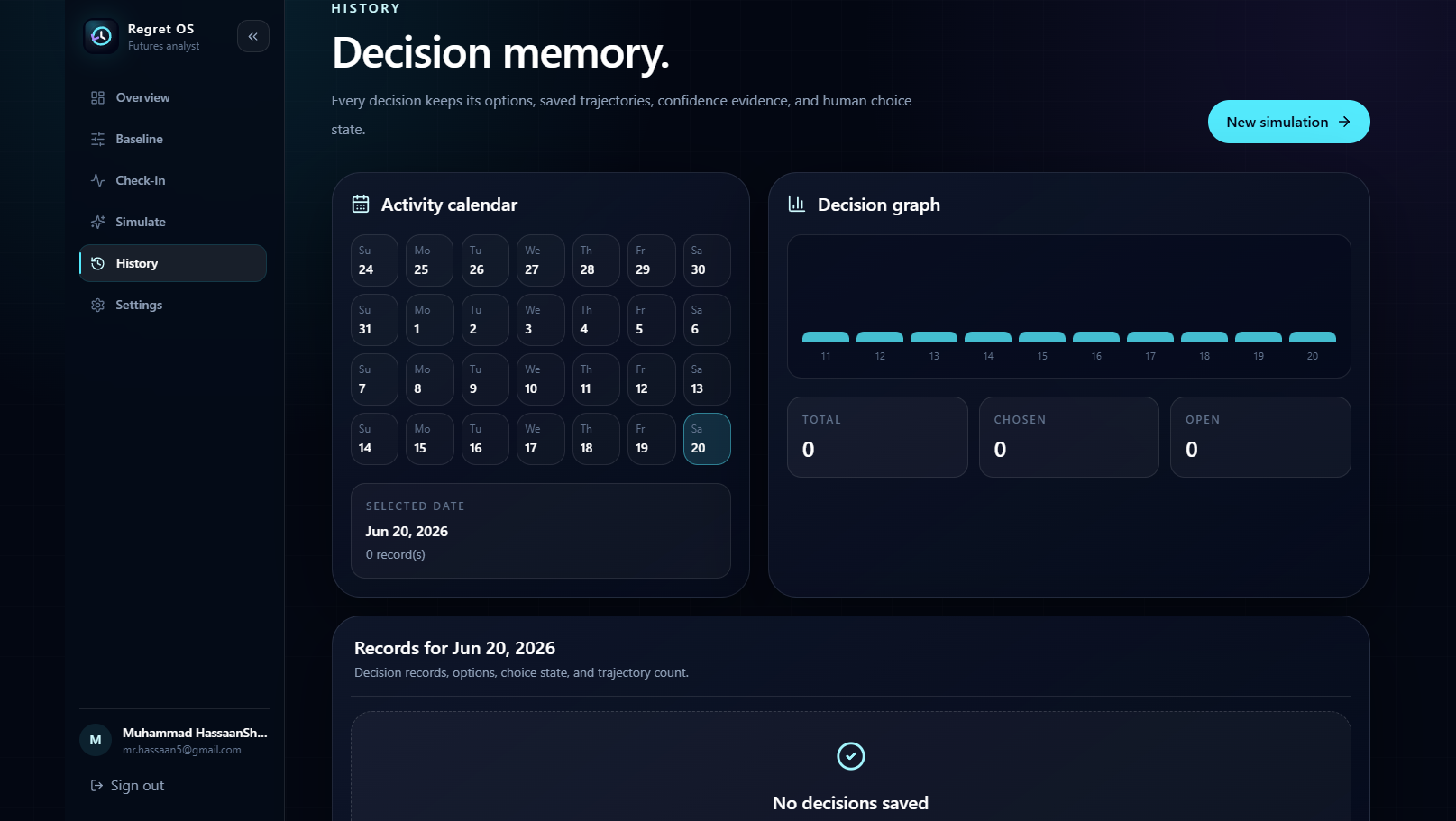
Another challenge was keeping the UI simple while the underlying system was complex. We redesigned the simulator into compact option cards, added a dashboard history/calendar view, and kept the recommendations explainable.
Accomplishments that we're proud of
We are proud that Regret OS became a real full-stack MVP instead of only a frontend prototype.
Key accomplishments include:
- Real authentication
- NeonDB-backed user data
- AI-assisted decision simulation
- Multi-agent backend architecture
- Memory and embedding layer
- Explainable audit trail
- Responsive landing page and dashboard
- Live Vercel deployment
- Human choice recording and outcome follow-up
Most importantly, the product does not tell students what to do. It helps them understand the future cost of their own choices.
What we learned
We learned that decision-support AI needs more than a good prompt. It needs memory, context, fallback logic, explainability, and respect for human agency.
We also learned that student productivity is not just about tasks. It is about commitments, recovery, timing, and the hidden compounding effects of small decisions.
Technically, we learned how to connect a Next.js frontend, FastAPI backend, NeonDB Postgres database, Gemini embeddings, authentication, and deployment into one working product system.
What's next for RegretOS
Next, we want to make Regret OS more personalized and more useful over time.
Planned improvements include:
- Stronger external Paperclip governance integration
- More advanced calendar and workload ingestion
- Better longitudinal memory
- More outcome-based model calibration
- Team and advisor views for schools
- Mobile-first check-ins
- More polished visual trajectory comparisons
- Production monitoring and analytics
Our goal is for Regret OS to become a second brain for student decisions: not just remembering what happened, but helping students understand what their future self is likely to feel.
Built With
- agenticai
- ai
- fastapi
- gemini
- geminiapi
- llm
- neon
- nextjs
- postgresql
- python
- sqlalchemy
- typescript
- vercel

Log in or sign up for Devpost to join the conversation.