Inspiration:
Sitting in traffic, stranded in our car for hours, half drowning in water in one of the biggest cities in our country, frustrated beyond belief is what brought upon the inspiration for this project. The recurring question in our minds of is this the way it’s supposed to be? is what sprung us into action to research and get to the root of the problem that causes Karachi to flood every year during the monsoons and left us motivated and almost desperate to find a solution. Climate change is a huge factor when it comes to the increasing floods that plague Pakistan every year, leaving millions stranded, thousands dead and infrastructure all but wrecked. However, the issues that face Karachi; the biggest metropolitan city and the business hub of the country, go beyond just climate change and rest deeply in the ‘land grabbing’ practices of the elite and the irresponsible urbanization that continues to damage the city. Regenerate aims to rectify these very problems that have brought Karachi to the state she finds herself in through the employment of regenerative architectural practices in order to remedy the damage done to the city and to restore the preventative drainage systems such as canals, basins and reservoirs to fortify the city against impairment from flash floods.
What it does:
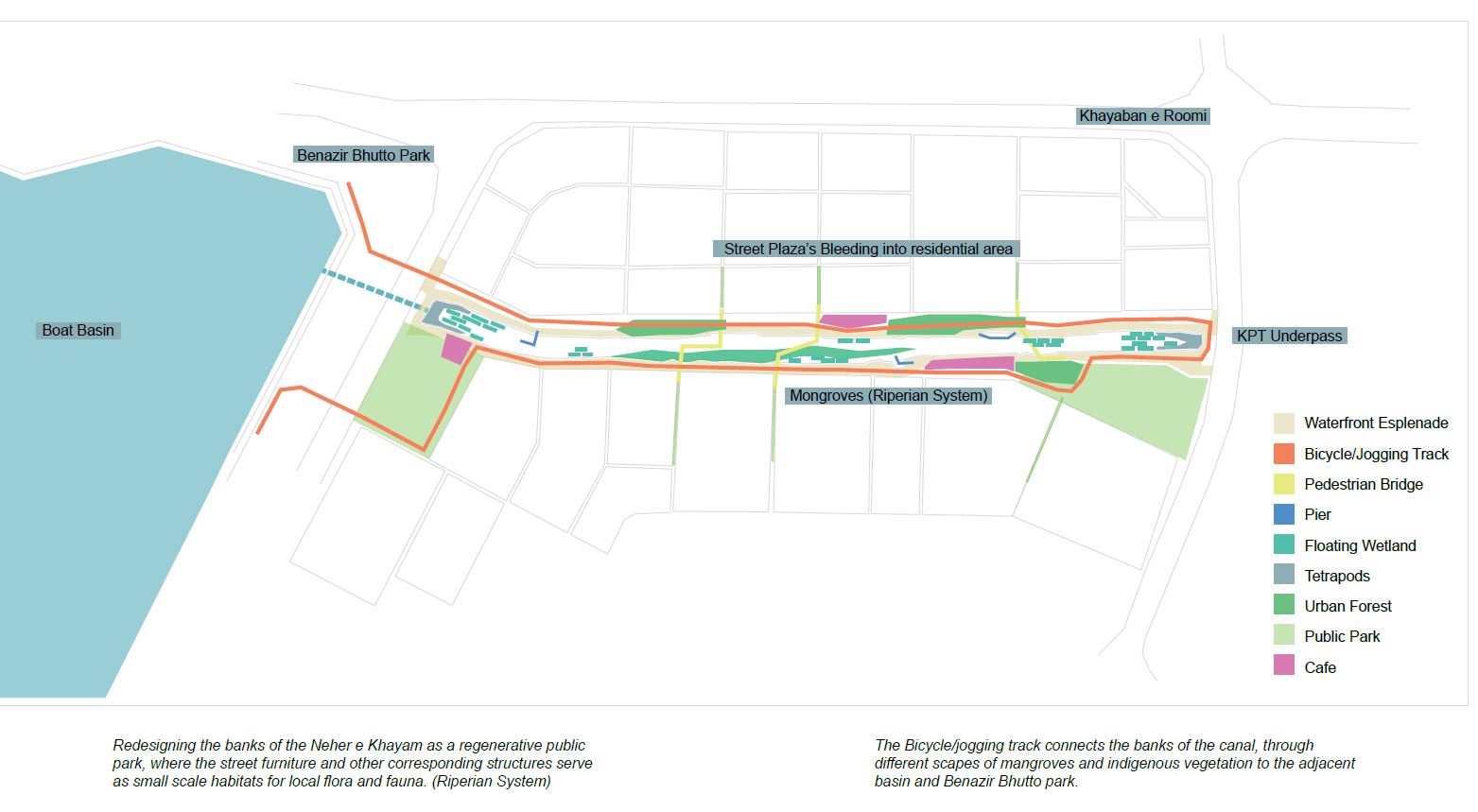
Regenerate is a solution driven project that employs regenerative architectural concepts in order to restore and reinstate drainage systems in cities like Karachi to combat the issue of flash flooding. The project highlights comprehensive steps that can be taken to revive existing drainage systems by performing in depth analyses of issues that plague them like sewage overflow and then rectifying them through sedimentation and solid waste removal in order to achieve canals that can harbor clean, fresh water. Water aeration systems would be put in place in order to ensure cleanliness and in turn curb the problem of disease spread in these areas, resulting in drainage systems that are clean and effective; thus, solving the problem of flash flooding due to heavy, unprecedented rainfalls. Furthermore, through the case study of Nehar-e-Khayyam we explore how these reinstated canals flowing with fresh clean water can become the epicenter of public spaces like parks and open-air markets built around them to bring social ecosystems back to life that had been terminated due to the filth and disease prone insects that had filled these waterways before.
How we built it:
Regenerate is a project that was brought on through hours of intensive research, site visits and in person interviews with the stakeholders and effectees of flash flooding in Karachi. Information gathering was followed by review of existing literature and research of case studies that were similar to the problem we were facing and it was then that we came upon the concept of architectural regeneration and the importance of preventative infrastructure in the face of natural disasters. After understanding that lack of maintenance and destruction of drainage systems was what caused the city and its inhabitants to suffer so dismally every year, we used the regeneration concepts we had learned about and sat down to devise steps that could be taken to reinstate drainage systems in Karachi. Through the case example of Nehar-e-Khayyam we exhibit how these steps can be applied to bring existing systems back to life in order to combat current issues.
Challenges:
A project like this is multifaceted requiring cooperation and coordination between various departments; architects, engineers, municipality and policy makers. Due to lack of structure in developing world amongst governmental institutions, the project faces a lot of hurdles especially with paperwork causing unnecessary delays. One of the other major issues is securing the funding to ensure the completion of the project. Identification of drainage areas in a metropolitan city like Karachi becomes difficult due to the influx of infrastructure around.
The lack of a formal sewerage system due to the lack of maintenance, the invert levels of sewer pipes have lost functionality. Currently sewer pipes are laid out in an ad-hoc manner, and the flow is hindered. In order to secure a way out, the storm-water drains are now used as an alternate sewerage system, which in the current context drains out into the Neher (our case study stormwater drain) to dispose waste water. As the Nehar itself is choked, it leads to urban flooding in nearby areas while stagnant water is a growth pool for diseases.
Accomplishments:
- In a city severely devoid of public spaces and greenery, Regenerate aims at providing a recreational environment for the inhabitants of the city to enjoy
- It also solves the drainage problem which aims to disrupt the city’s life every monsoon season as well as on receiving a few millimetres of rain.
- Availability of fresh water by recycling it and solving another one of city’s major problems.
What’s next:
- To replicate this in cities of different developing nations.
- Form a framework in collaboration with the government to help aid a smoother process of development.
- Find more effective ways to recycle sewage water into drinkable water.
Our Team:
Maham Naseer - A business graduate with a penchant for marketing. When I was told about this idea by a friend, I was genuinely impressed since this year my life had been directly on the receiving end of the effects of climate change, but had no idea how I could be of help. They say where there is a will, there’s a way and that’s how I ended up working on this project to make it attractive enough for investors as well as find ways to network.
Namayah Hussain - A 2021 medical school graduate, currently trying to figure out life and super interested in creative ideas capable of causing a storm. Growing up in a brown household, medicine and engineering has been the only career I have known despite having a deep love for writing. With this project I got to use that for its advocacy to truly leave a mark and make it a better place for our generations to come in.
Syed Muhammad Aqeel Abidi - A fourth year medical student interested in everything that creates a difference in the world with a special spot for hackathons. I have always tried to find out way to make people’s lives easier via available resources, whether it be through technology or old techniques. Being a medical student in a developing world, gives you a lot of insight into how to be creative with things at hand because otherwise people might be at risk. When I came across this hackathon, I tried to think of what can be done because I had been volunteering at camps in interior rural areas where the floods had wreaked havoc, the impact there had been huge. I remembered when a friend had brought this idea up and so I decided there was no better time than to start on it and address the root cause of it.
Umme Abiha Mehdi - An Architect passionate about Walkable Cities, Sustainability and Innovative Design. Growing up in a family that moved a lot and originally belonged to a terrain that was hugely impacted by the environment, climate and sustainability has been a part of me as long as I can imagine. With my major, the world truly became my oyster and I started thinking about ways to implement it. This idea has been my baby since a while so I have delved into the details, the logistics as well as the workings of it. It had always been an abstract concept in my head but now I get to have a shot at making it into a reality so nothing can be greater!
Built With
- none


