Inspiration
As a frequent online shopper, I’d repeatedly missed out on price-match refunds, forgotten return deadlines, and wasted money on unused streaming subscriptions—frustrated by how much cash slipped through the cracks. I realized there had to be a way to automate this: a tool that takes the manual work out of saving money, so busy consumers like me could keep more of what they earn.
What it does
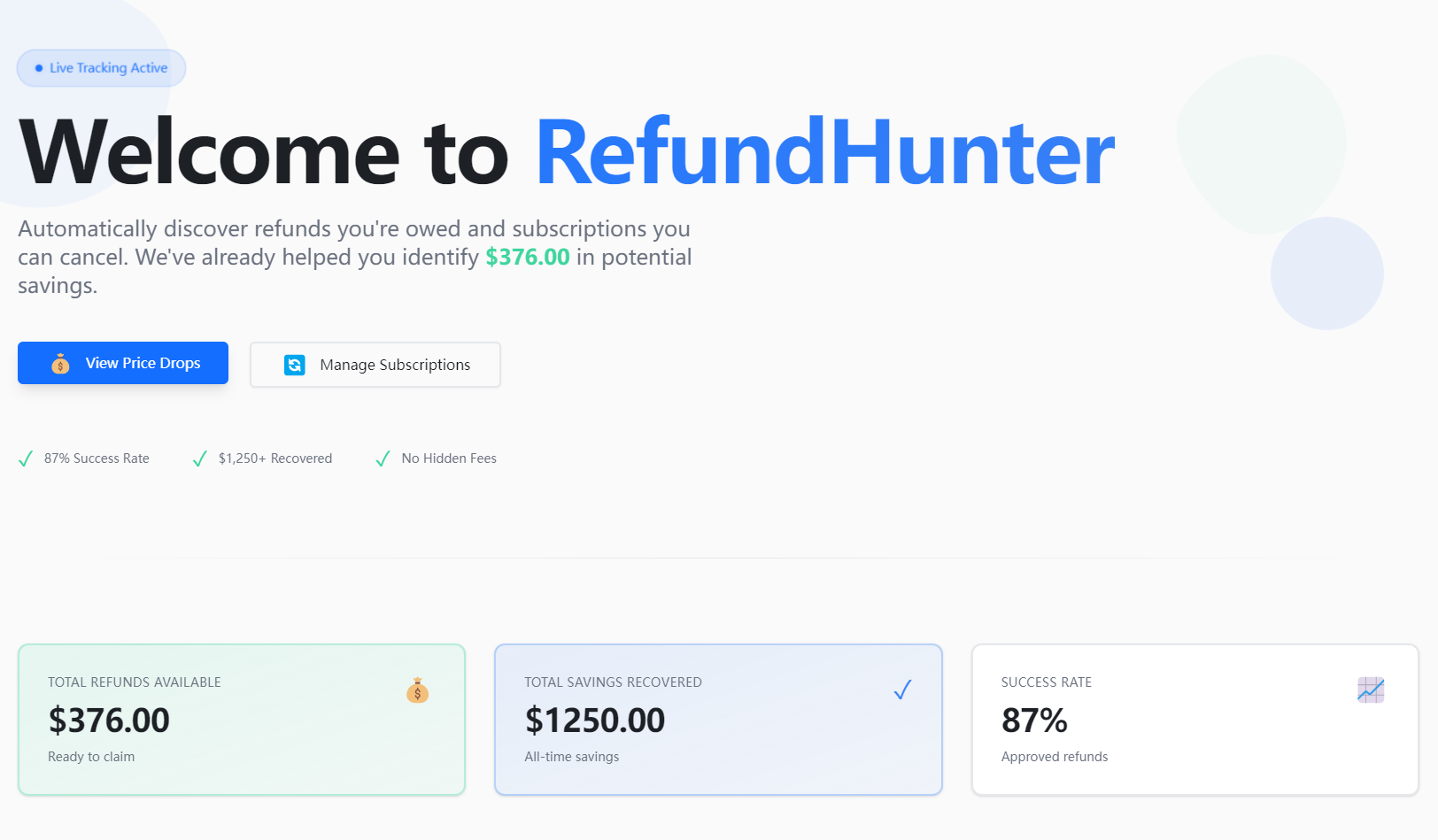
RefundHunter tracks purchases for price drops (flagging eligible refunds), monitors return windows with timely reminders, alerts users to flight fare reductions for partial refunds, and analyzes subscriptions to cut unused ones—all while tracking every refund’s progress and total savings.
How we built it
We started by mapping retailer/airline policies to define tracking rules (e.g., 5%/$10 price drop thresholds). We built a React frontend for the dashboard, used Node.js/Express for backend logic, integrated price/flight APIs for real-time data, and PostgreSQL to store purchase/subscription details. Chart.js powered price trend visualizations, and TailwindCSS ensured mobile/desktop responsiveness.
Challenges we ran into
The biggest hurdle was aligning tracking logic with 50+ retailer return/price-match policies—each had unique windows (30-90 days) and refund rules. We also struggled with inconsistent flight price data from airlines, so we built fallback checks to ensure accuracy. Additionally, balancing real-time monitoring with performance (avoiding slow load times) required optimizing API call frequency.
Accomplishments that we're proud of
We created a seamless dashboard that aggregates all savings opportunities in one place—users no longer need to check multiple platforms. We also nailed the alert logic: reminders hit at the right time (7 days/2 days before return deadlines) without being intrusive, and the subscription usage analysis correctly flags low-value services, helping users cut unnecessary costs.
What we learned
We deepened our understanding of consumer fintech UX—Western users prioritize clarity and minimal effort, so we stripped out complex steps and focused on one-click guidance. We also learned to adapt to dynamic retail/airline policies, building a flexible system that updates rules without full overhauls. Most importantly, we saw how small, automated savings add up for everyday shoppers.
What's next for this project
We plan to expand support for more European retailers/airlines, add personalized savings recommendations (e.g., "Cancel this subscription to save $120/year"), and integrate with email/purchase history tools to auto-populate tracked items. We’ll also add success rate analytics to show users how much others save with the tool, and refine the commission model to keep the app free for users.

Log in or sign up for Devpost to join the conversation.