Inspiration
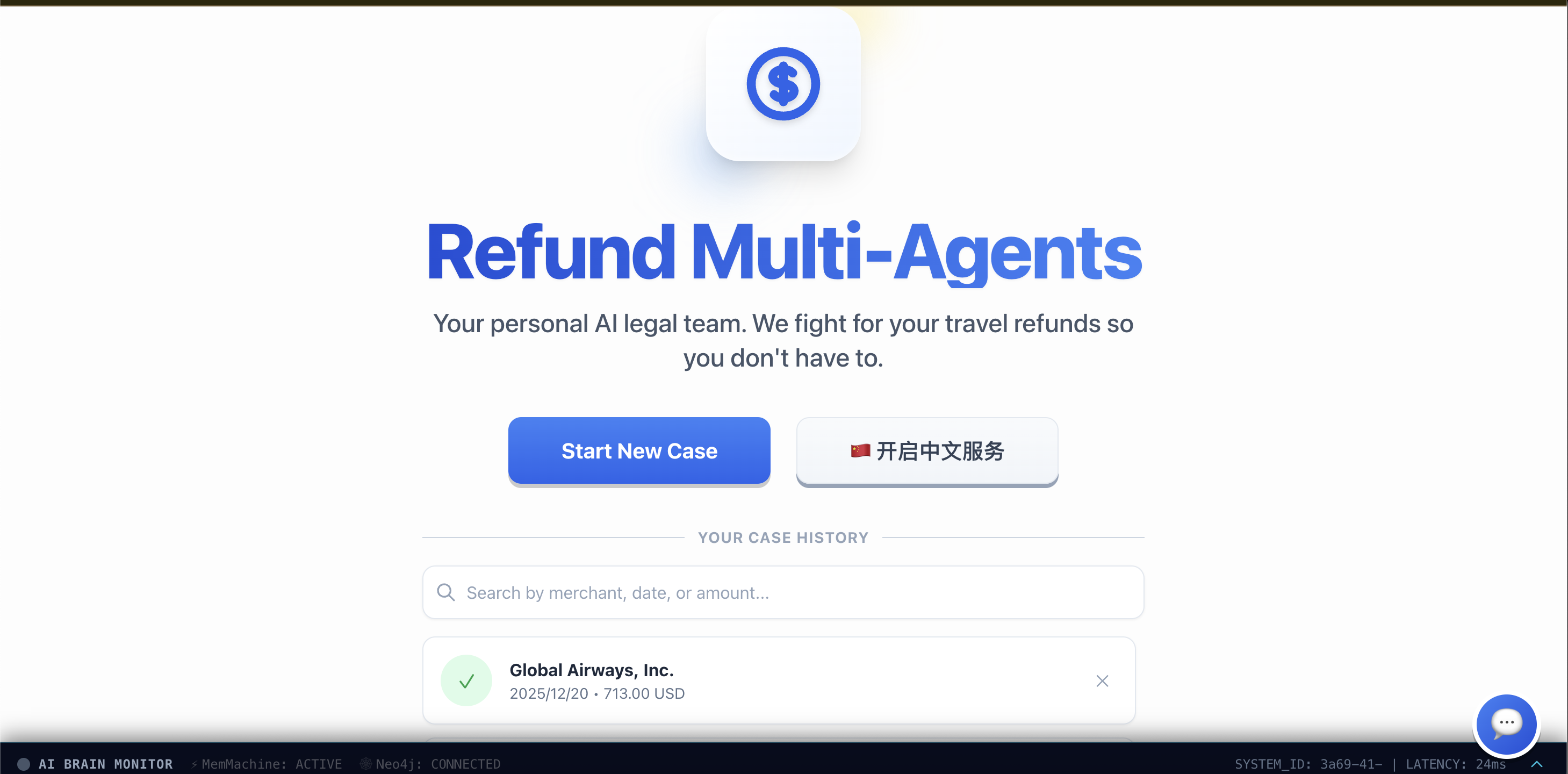
We've all been there: a cancelled flight, a terrible hotel room, or a hidden fee, followed by hours of waiting on hold only to be told "No" by a robotic customer service agent. The average consumer doesn't have the time or legal expertise to fight billion-dollar corporations. We asked: What if we could give every traveler a team of elite lawyers and negotiators in their pocket? We wanted to level the playing field by building AI agents that don't just "chat," but actually fight for you.
What it does
Refund V2.5 is an autonomous legal aid system.
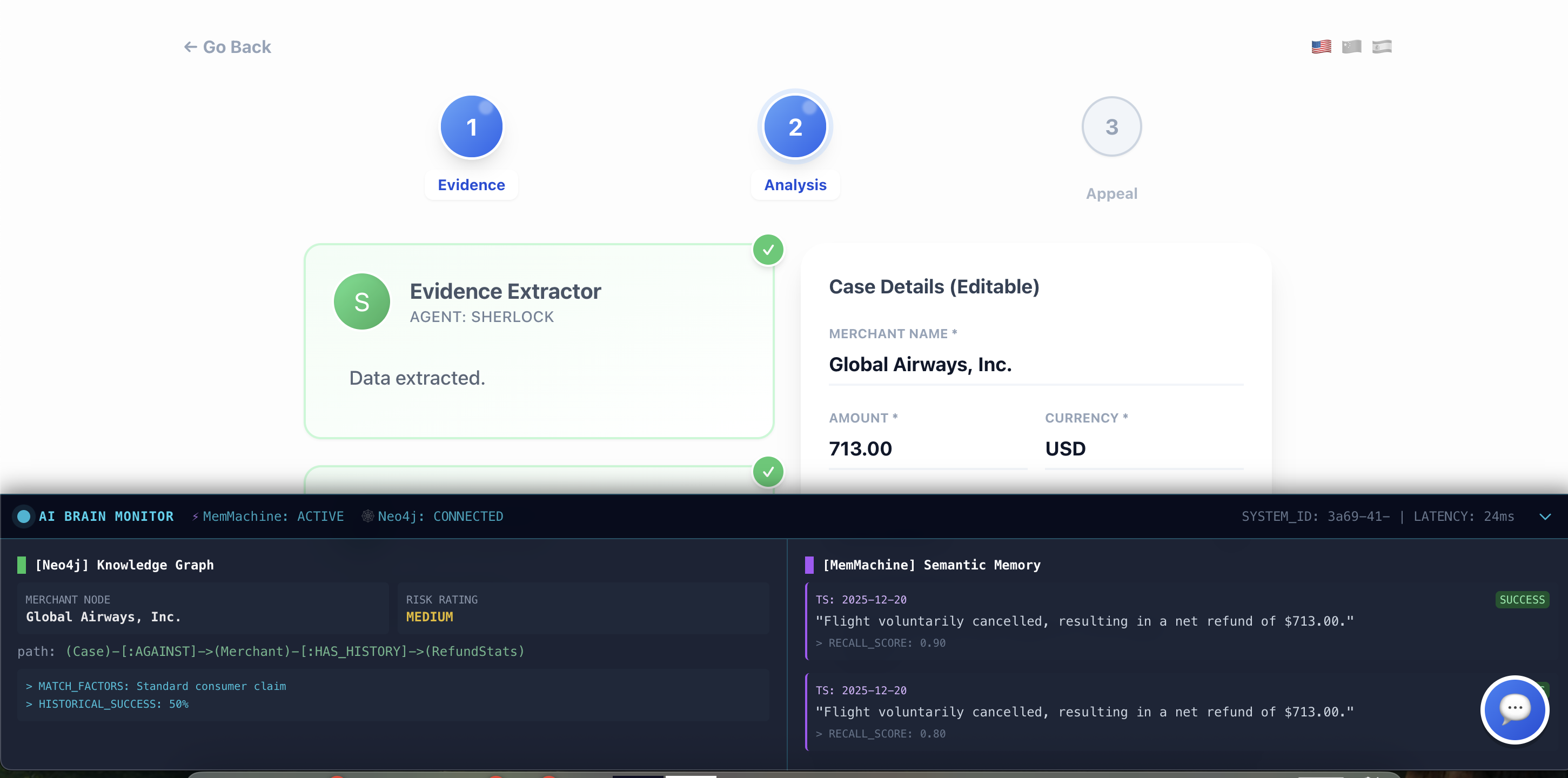
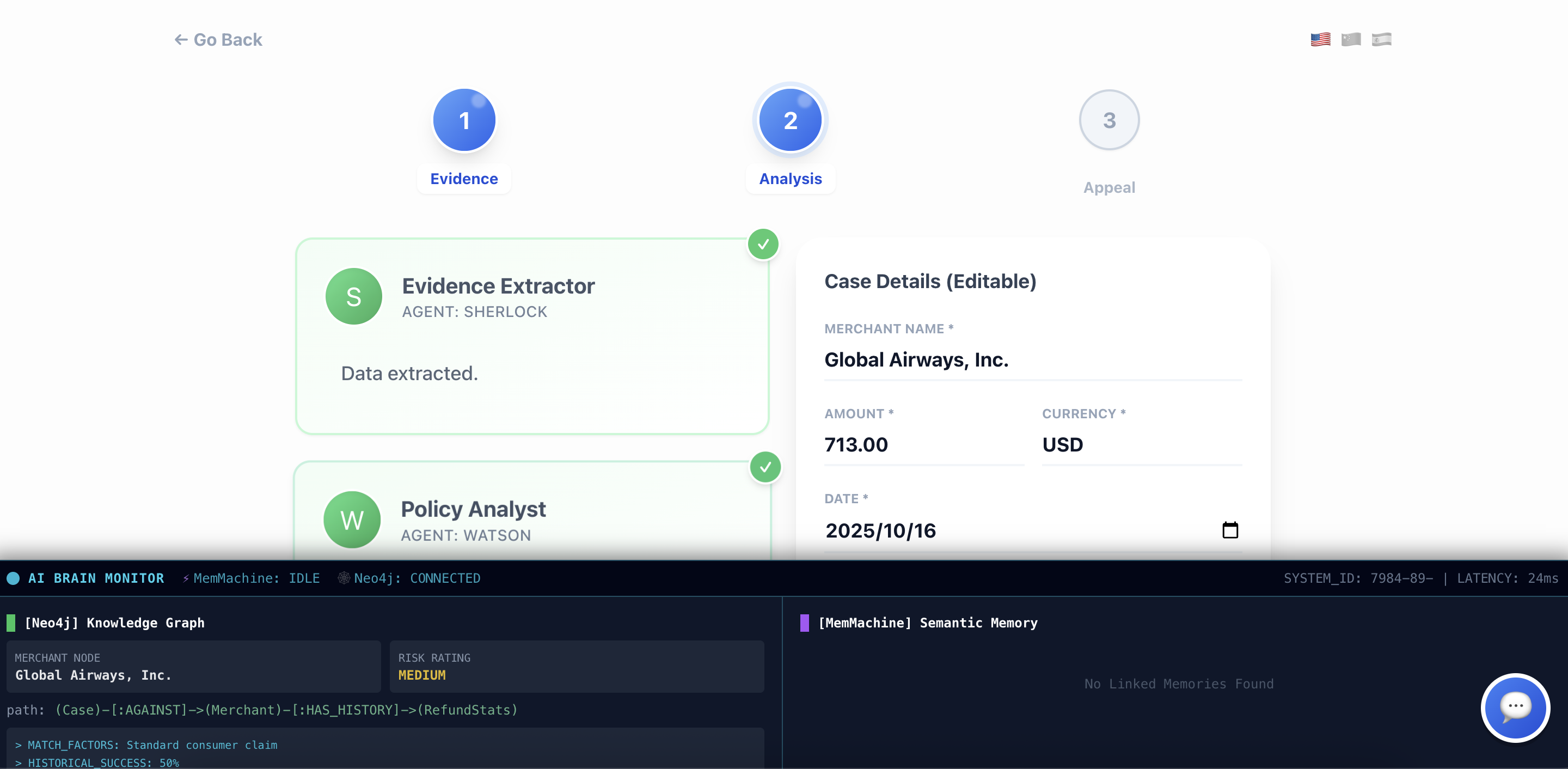
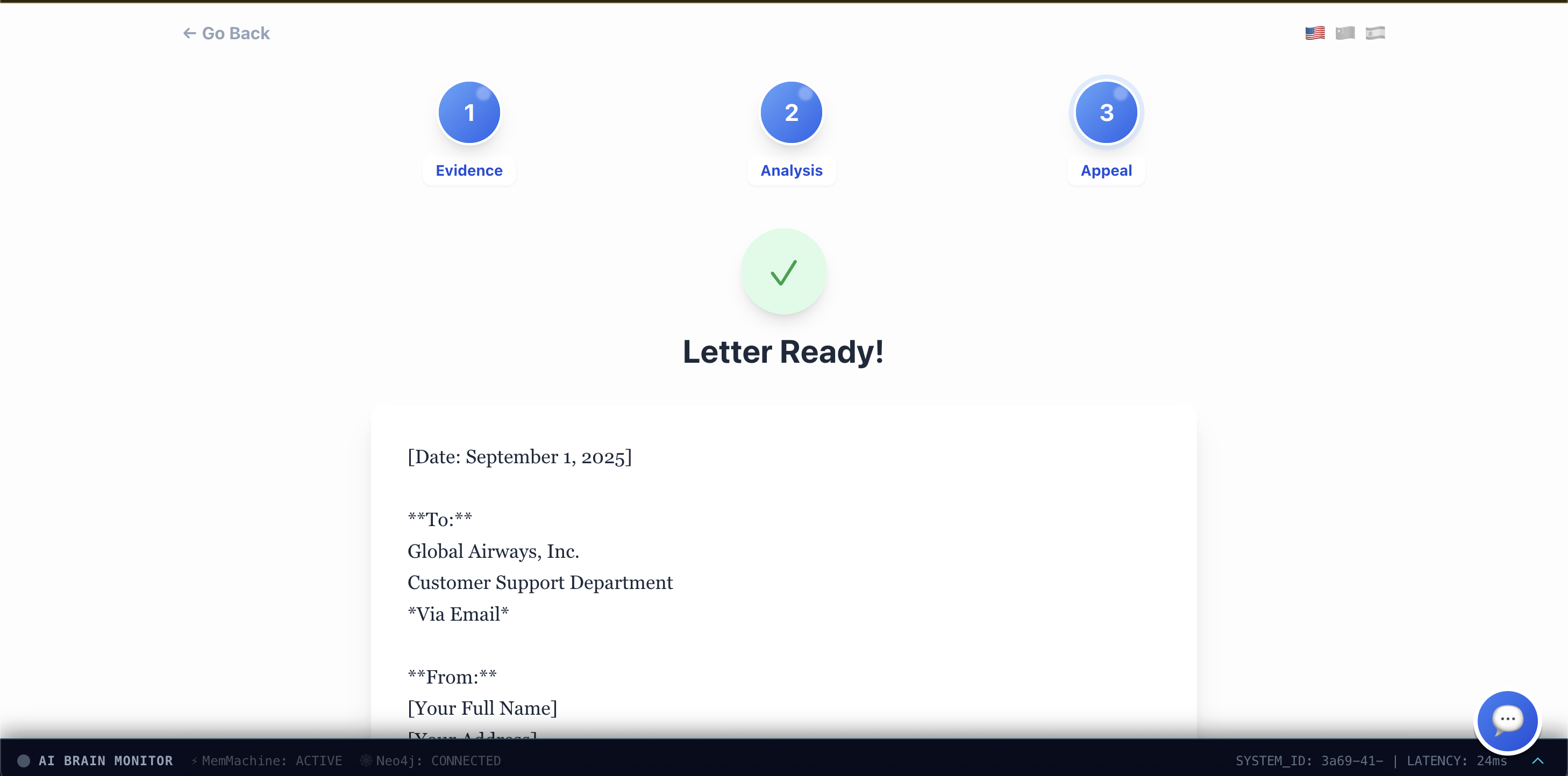
Evidence Extraction: You simply upload a photo of a receipt, a PDF ticket, or leave a voice note. The Detective Agent extracts key facts (dates, amounts, merchants). Strategic Research: The Policy Agent consults a Neo4j Knowledge Graph to check the merchant's history and cross-references MemMachine Memory to recall successful strategies from similar past cases. Action: The Legal Writer Agent drafts a professional, legally cited appeal letter tailored to the specific situation, ready to download or email. Transparency: A real-time "Brain Monitor" shows the user exactly what the AI is "thinking" and what memories it accessed.
How we built it
The Brain: We used Google Gemini (Pro & Flash) for its advanced multimodal capabilities to read documents and reason about policies. The Memory: We integrated MemVerge's MemMachine to give our agents persistent semantic memory. This allows the system to "learn" which arguments work best over time. The Context: We utilized Neo4j as a graph database to map relationships between merchants, users, and refund outcomes, providing critical context that a standard LLM lacks. The UI: Built with React & Vite, featuring a custom "Glassmorphism" design and a dedicated visualization component to show the database connections live.
Challenges we ran into
Orchestrating Agents: Coordinating three distinct agents (Extractor, Analyst, Writer) was complex. We had to ensure the output of one became the perfect input for the next without losing details. Visualizing the "Invisible": We struggled initially with how to show the value of MemMachine and Neo4j to the user. We solved this by building the collapsible "System Monitor" that lights up when the AI accesses specific memories or graph nodes. Vite Compatibility: Integrating server-side Node.js drivers (like Neo4j) into a client-side Vite application required careful configuration and environment variable handling.
Accomplishments that we're proud of
True Multi-Agent Collaboration: It's not just a wrapper around a prompt; it's a pipeline where agents share context and refine each other's work. The "Show, Don't Tell" UI: We are proud of the "System Monitor" component. It turns abstract backend data into a cool, engaging visual that proves the AI is working. Robustness: The system handles multiple languages (English, Chinese, Spanish) and multimedia inputs (images, audio) seamlessly.
What we learned
Context > Intelligence: A smarter model isn't always efficient; a model with better context (via Graph and Memory) performs significantly better at specific tasks. User Trust: Users are more likely to trust the AI's legal advice when they can see the "probability score" and the logic behind the decision.
What's next for Refund V2.5
Auto-Negotiation: Integrating a Voice Agent that can call customer support and negotiate on your behalf in real-time. Community Knowledge Graph: Allowing users to anonymously contribute their refund results to a global Neo4j database, making the "Policy Agent" smarter for everyone. Direct API Integration: Automatically filing claims via airline/hotel APIs where available.


Log in or sign up for Devpost to join the conversation.