About the Project: Refugent
🌍 Inspiration
While volunteering at Adam House, a refugee shelter, we saw firsthand the challenges asylum seekers face—long processing times, lack of clear communication, and severe housing shortages due to backlogs. Many applicants wait years for a decision, leaving them in legal and financial limbo. This experience inspired us to create an AI-powered solution that enhances efficiency, transparency, and fairness in asylum processing while ensuring compliance with immigration laws.
💡 What It Does
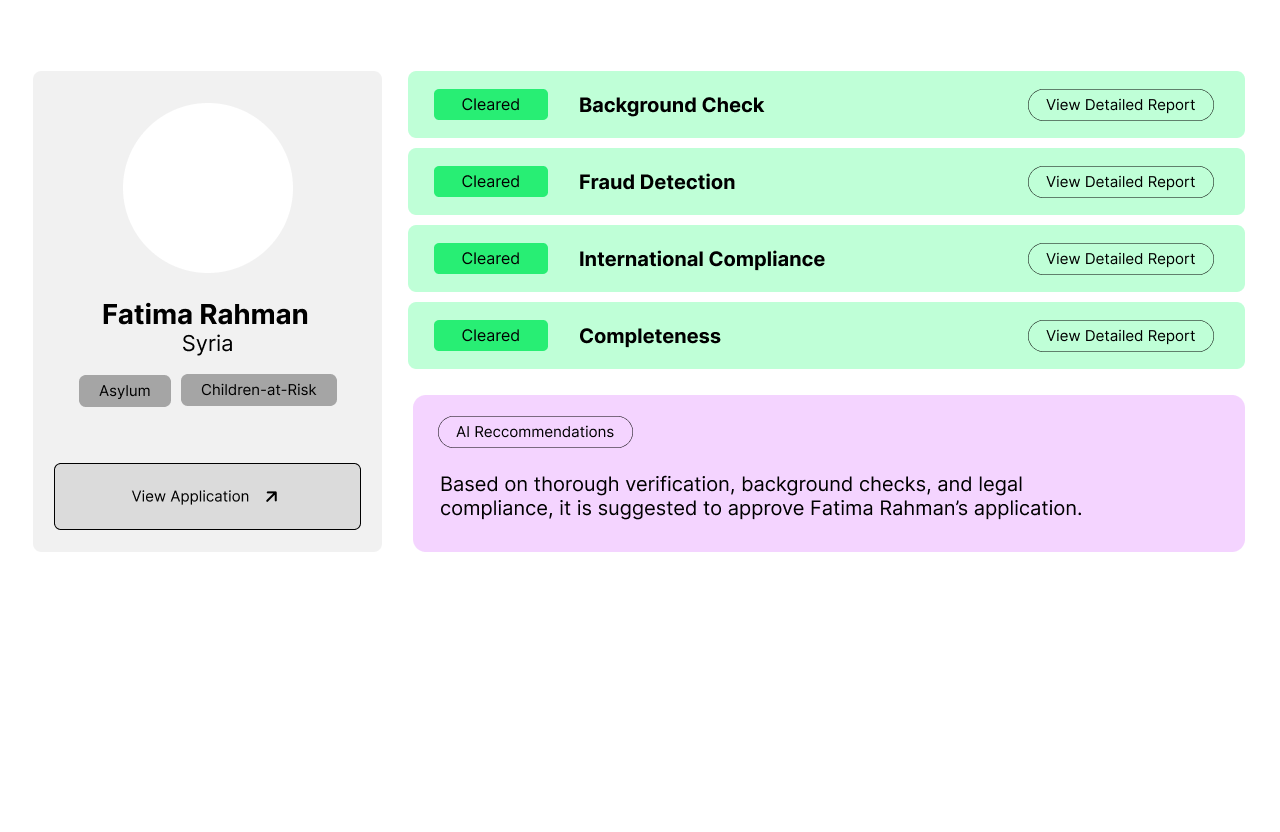
Refugent is an AI-driven asylum processing system that:
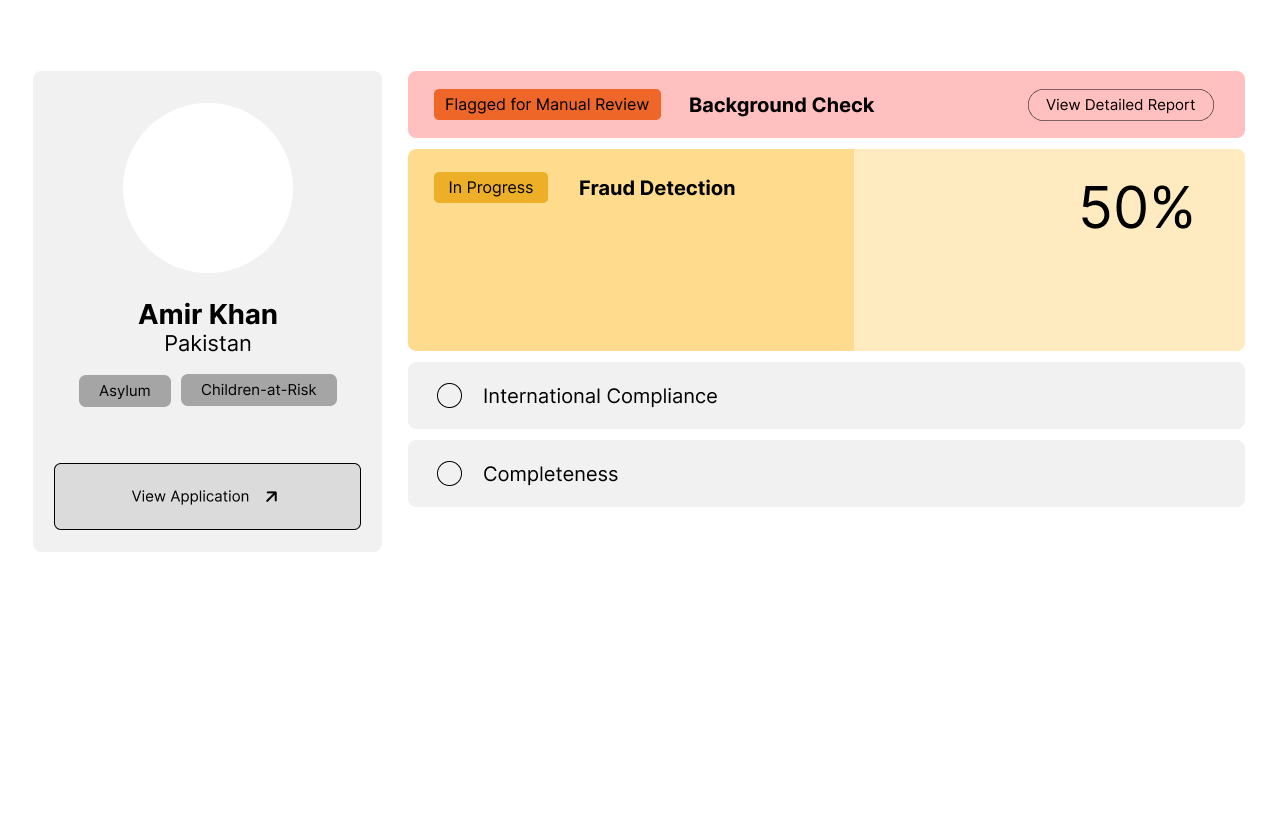
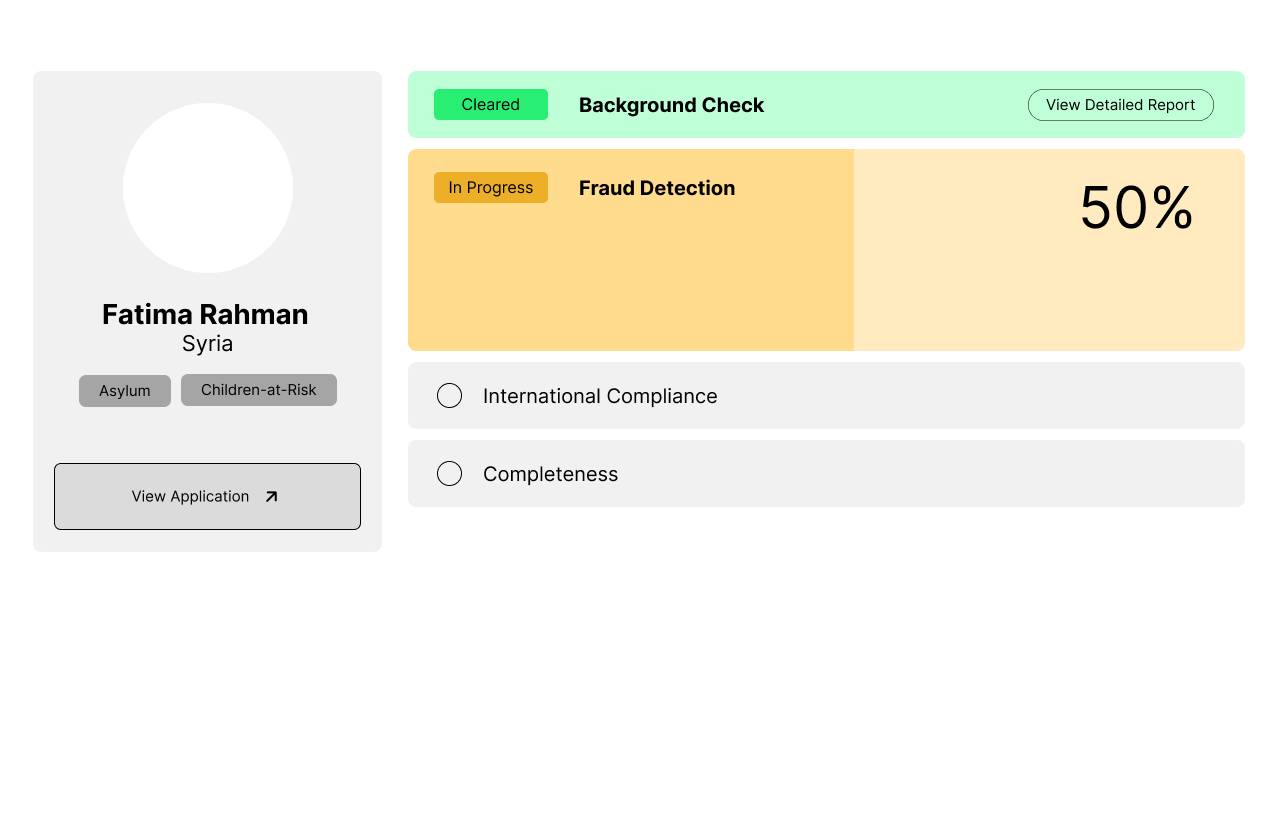
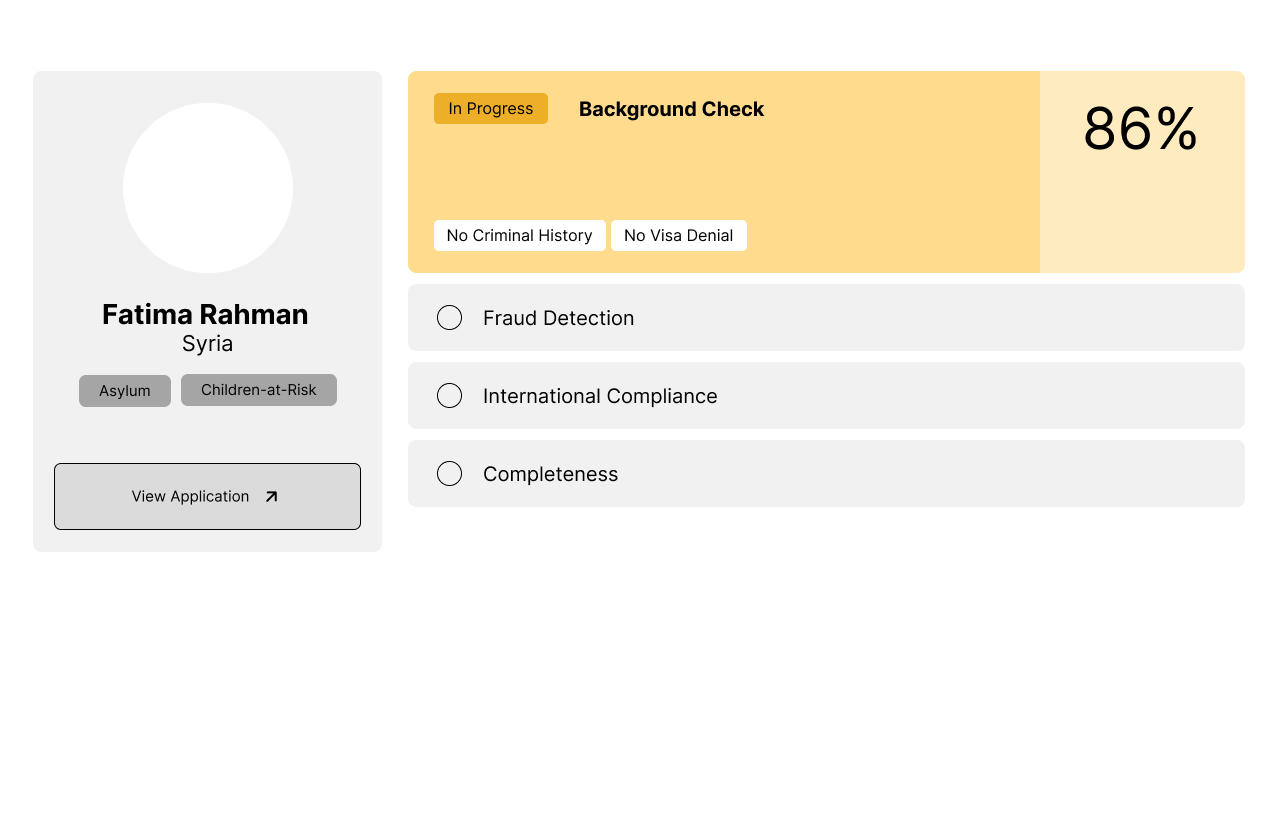
- Automates document verification to detect inconsistencies and fraud.
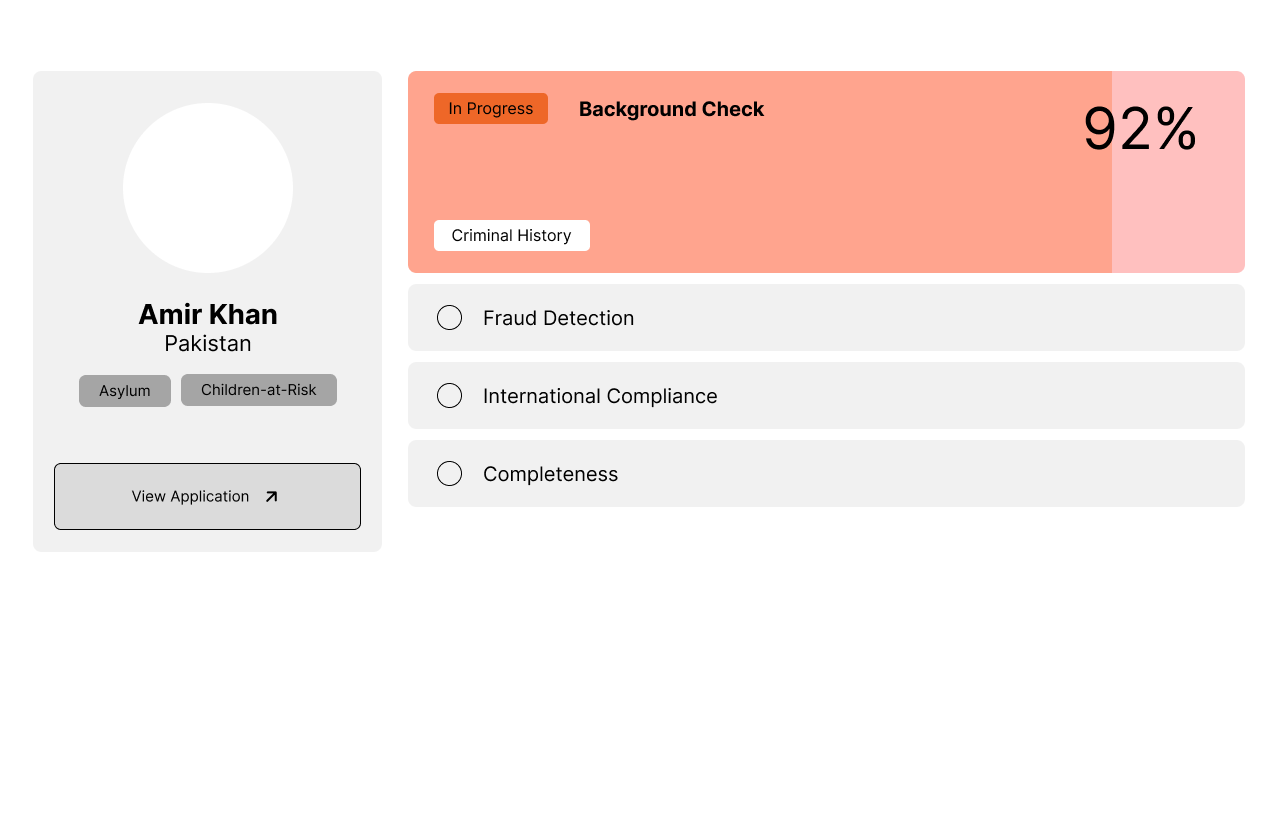
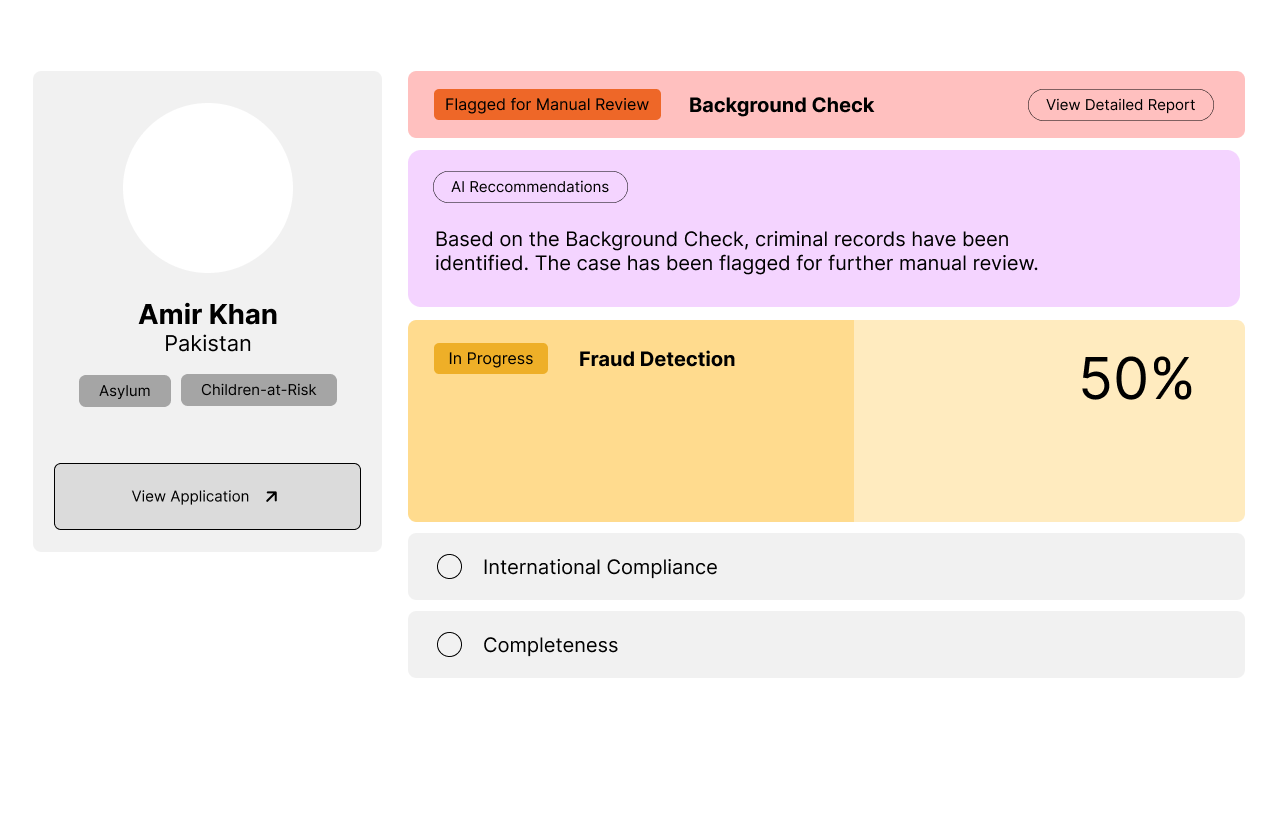
- Performs background checks to flag security risks while ensuring fairness.
- Uses AI to assess legal compliance based on past successful applications and immigration laws.
- Explains decisions with SHAP transparency models, ensuring applicants and immigration officers understand why a case is accepted or rejected.
- Suggests welfare and housing programs for accepted applicants and provides legal guidance for rejected cases.
⚙️ How We Built It
- Data Processing: AWS Textract and OpenCV for OCR-based document validation.
- Fraud Detection: Random Forest classifiers and Isolation Forest models to identify anomalies.
- Legal Compliance: Rule-based NLP (SpaCy, AWS Comprehend) to match applications to IRPA and UNHCR guidelines.
- Explainability & Fairness: SHAP for transparent AI decisions, Fairlearn for bias monitoring.
- Governance & Monitoring: Blockchain-based audit logs ensure transparency and accountability.
🚧 Challenges We Ran Into
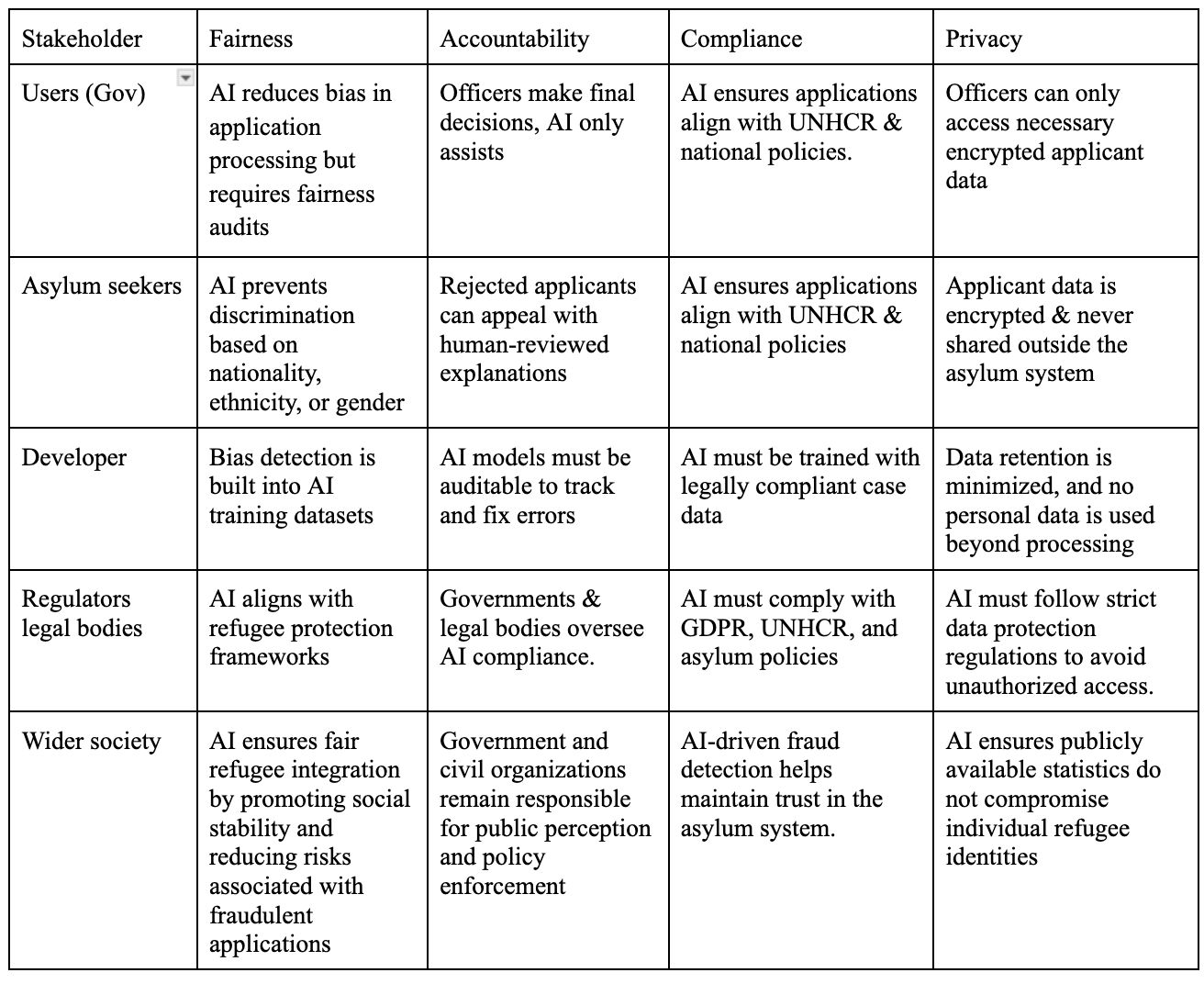
- Ensuring Fairness: Avoiding AI bias while maintaining efficiency was a major challenge, requiring adversarial debiasing and fairness audits.
- Legal Complexity: Mapping diverse immigration laws to an AI model while maintaining interpretability.
- Balancing Human & AI Decision-Making: AI speeds up processing but does not replace immigration officers, requiring a well-designed human-in-the-loop system.
🏆 Accomplishments That We're Proud Of
- Created an explainable decision-making framework using SHAP, ensuring every AI decision is justifiable.
- Designed an ethical AI-driven approach that empowers asylum seekers rather than just automating rejections.
📚 What We Learned
- AI in immigration must balance efficiency, fairness, and legal compliance to gain trust.
- Refugee crises require urgent solutions, but governments need explainable AI to ensure ethical adoption.
- Bias mitigation is crucial, and fairness metrics like Equalized Odds and Demographic Parity must be continuously monitored.
🚀 What's Next for Refugent?
- Pilot with NGOs & Immigration Offices to refine our AI model.
- Expand fairness auditing tools for real-time bias detection.
- Integrate multilingual NLP models to support a wider range of asylum seekers.
- Improve post-acceptance recommendations, ensuring refugees receive housing, employment, and legal aid efficiently.
🌍 Refugent aims to revolutionize asylum processing—faster, fairer, and transparent for all. 🚀
Built With
- figma

Log in or sign up for Devpost to join the conversation.