-
-
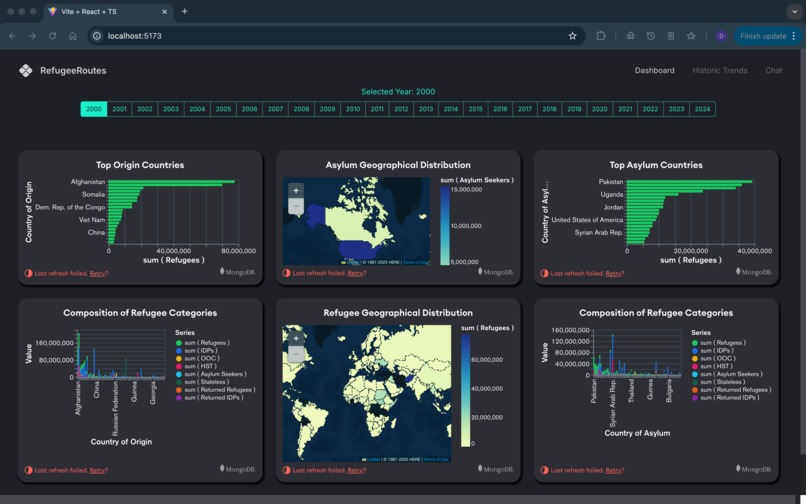
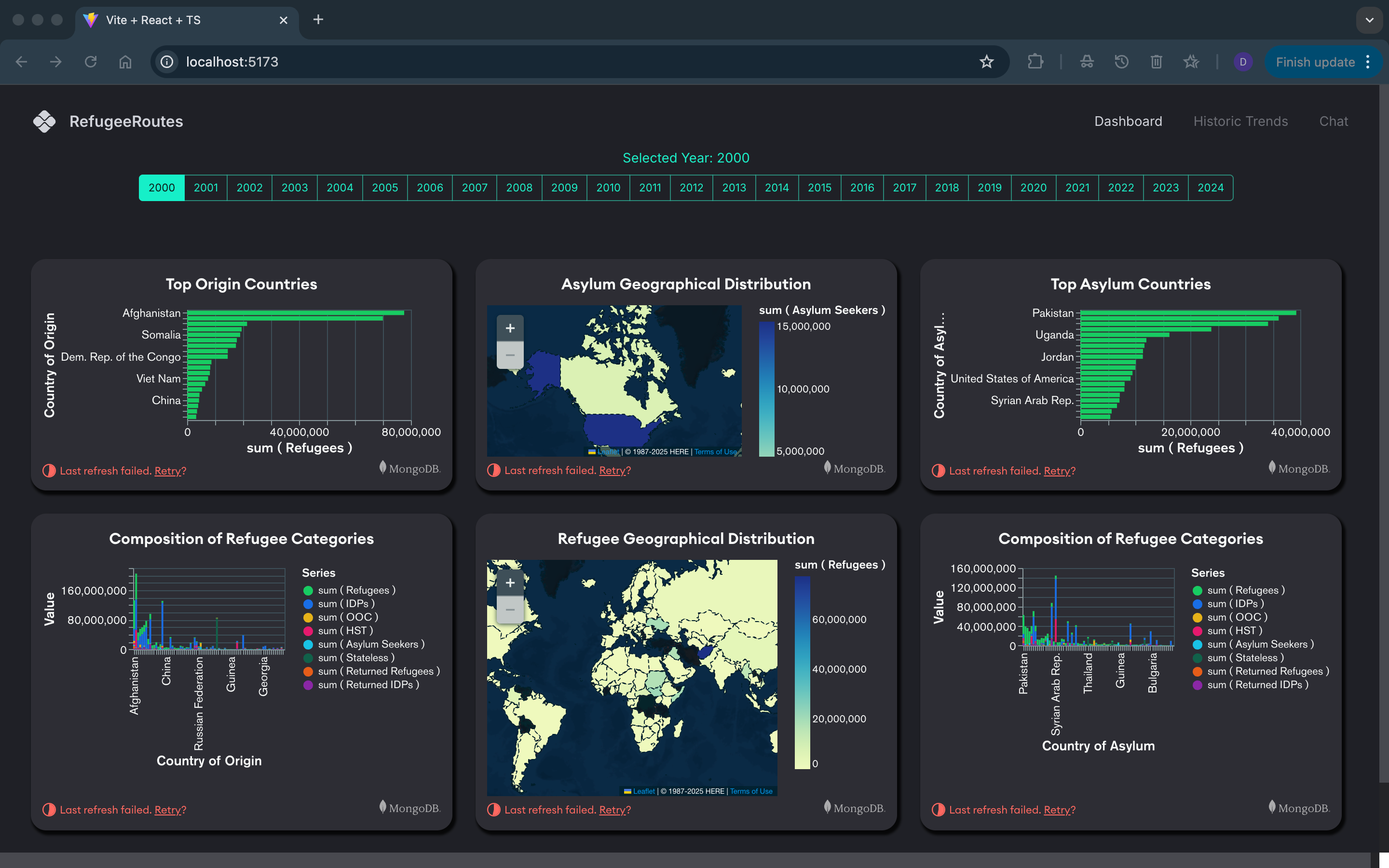
Dashboard
-
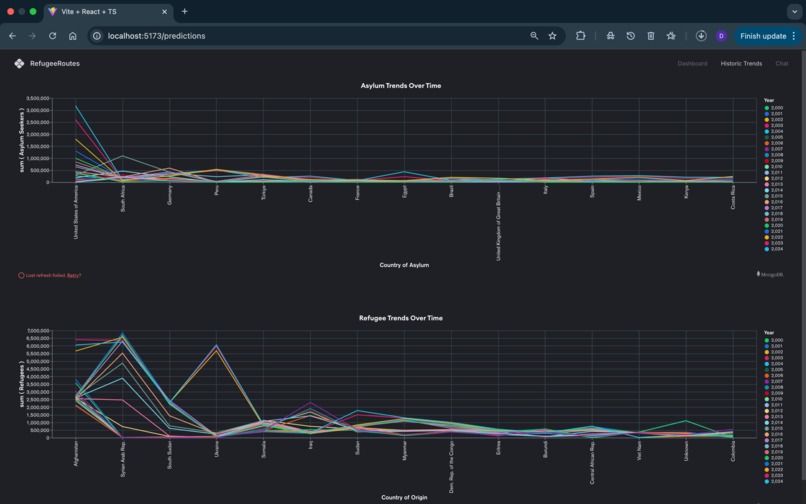
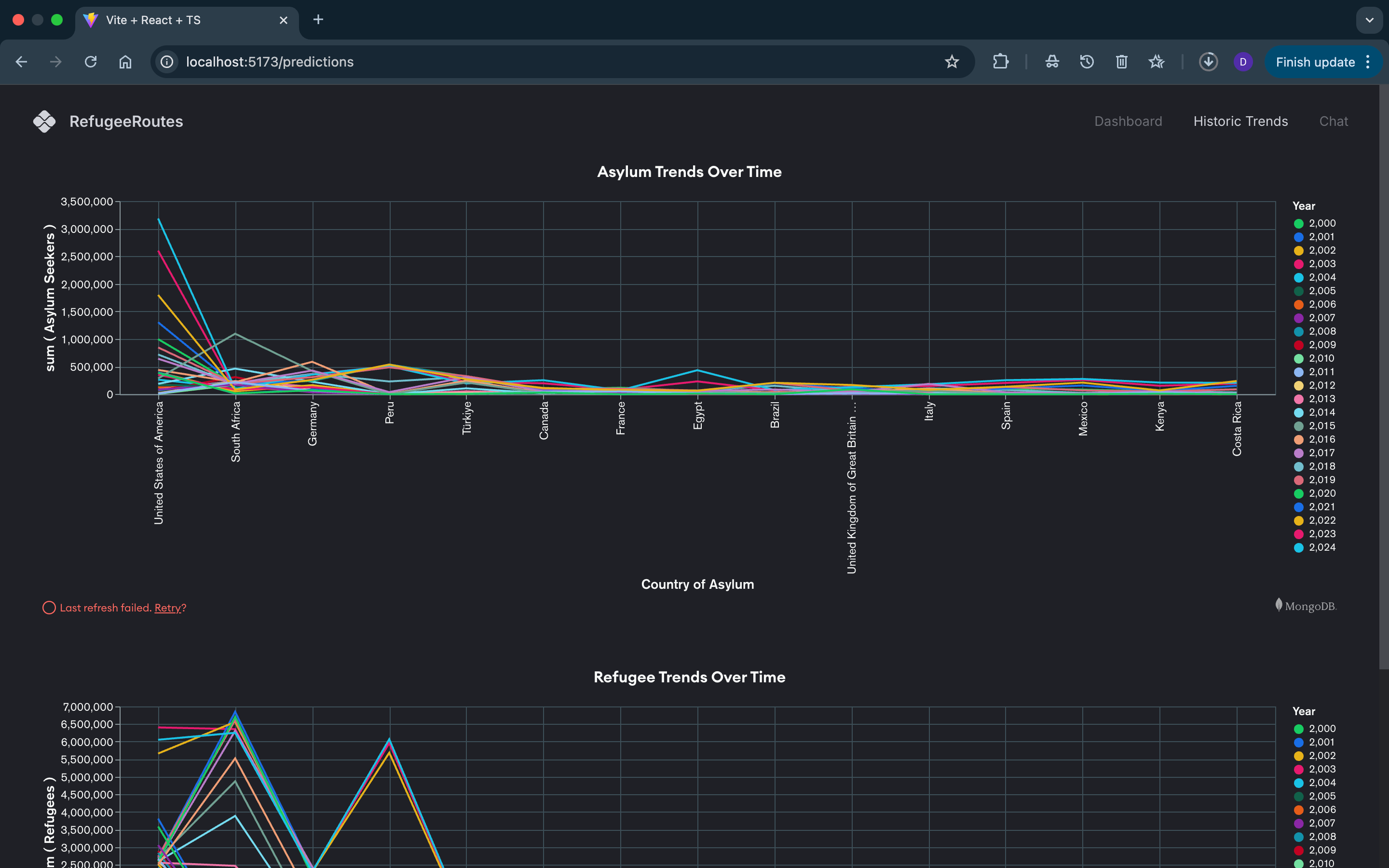
Historic Trends shown with Line Charts
-
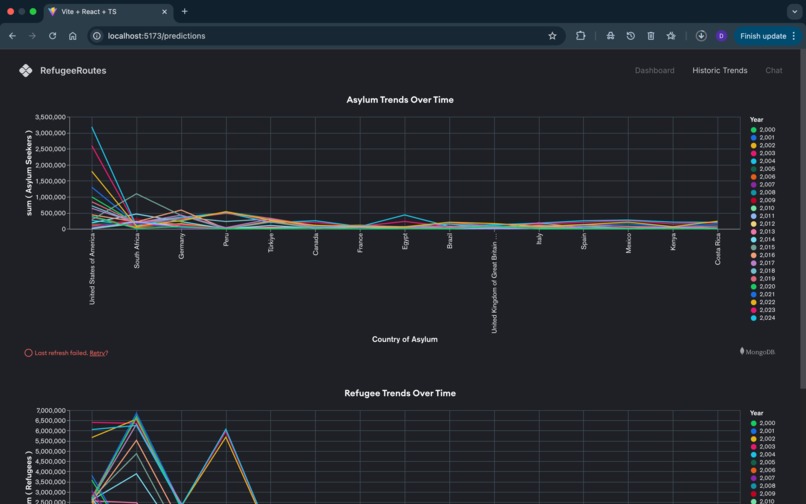
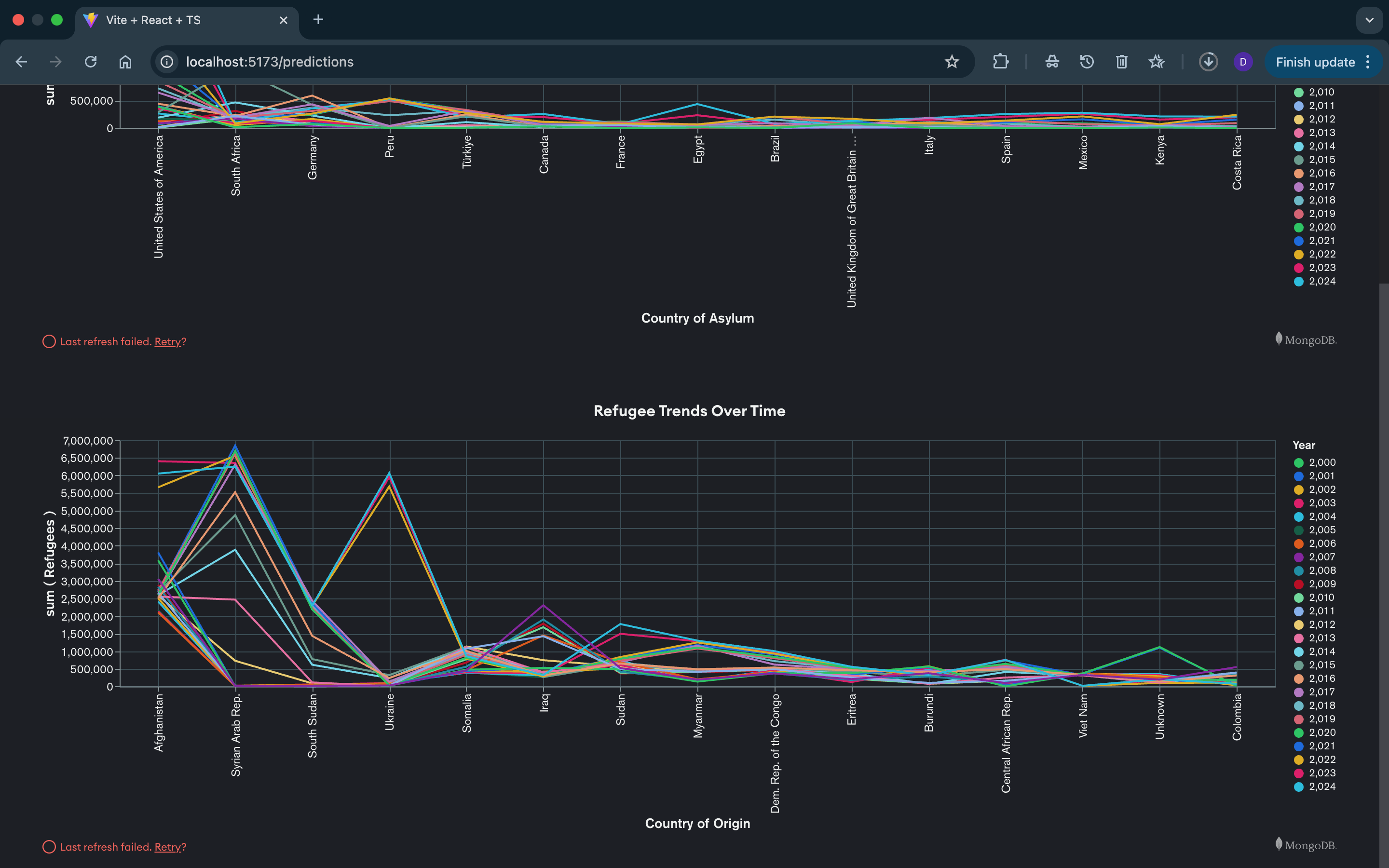
Historic Trends shown with Line Charts
-
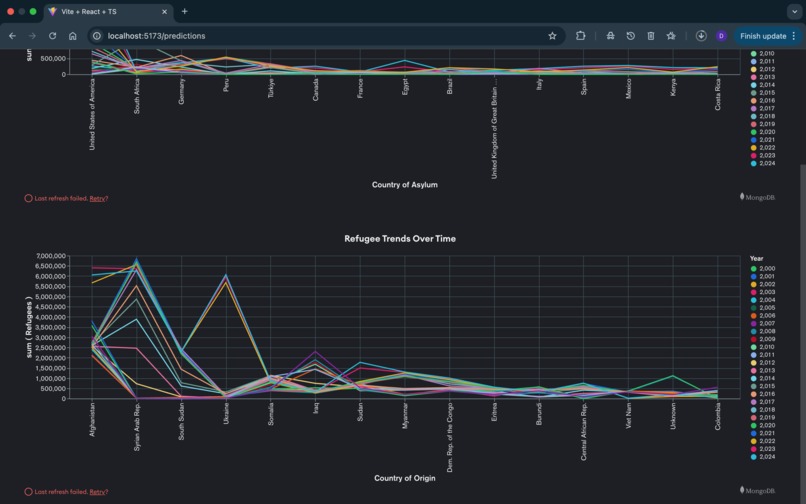
Historic Trends shown with Line Charts
-
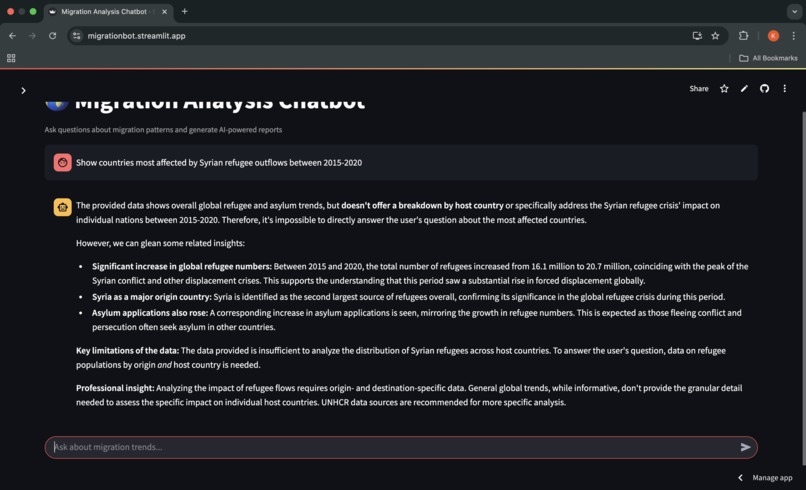
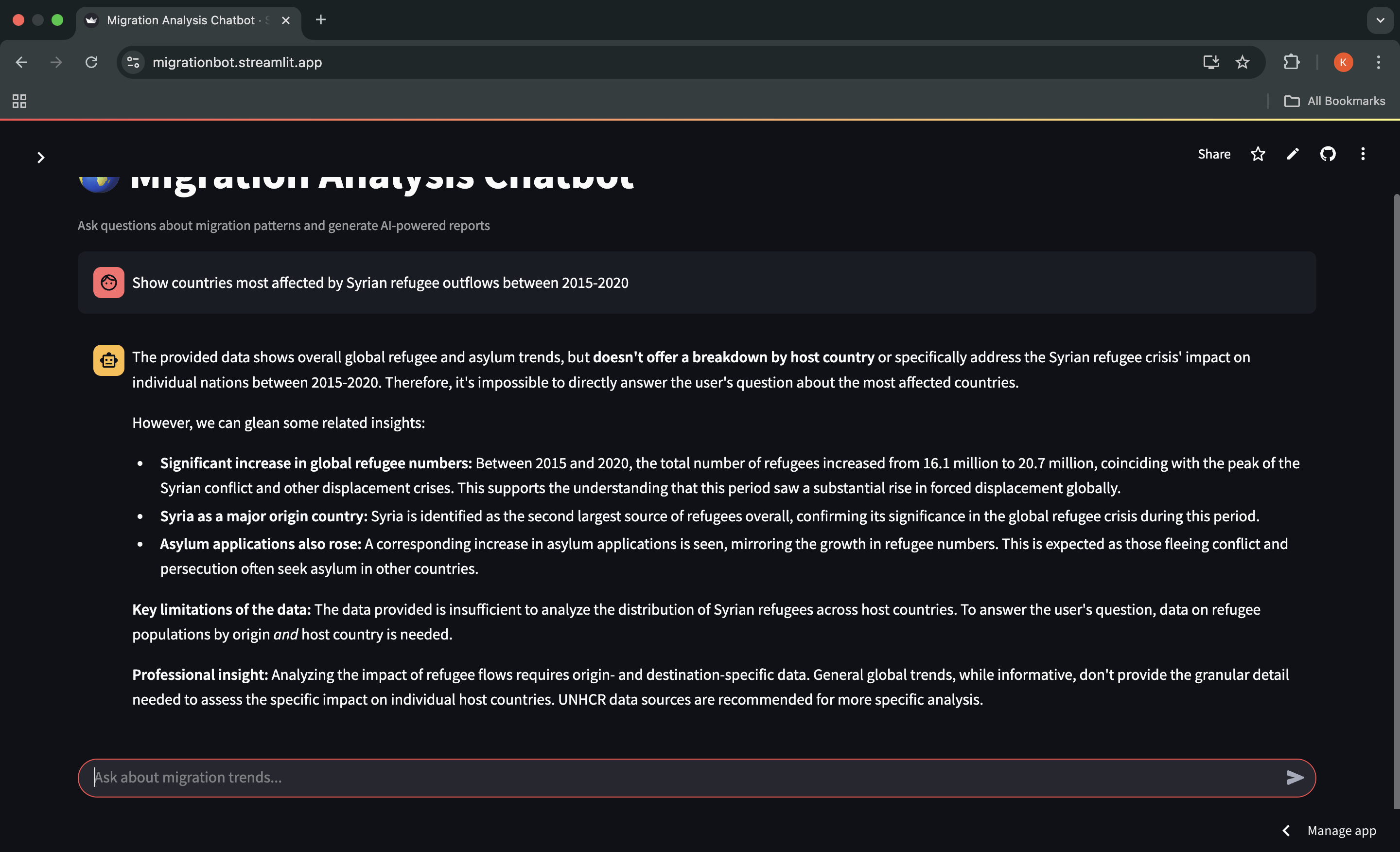
Chatbot
-
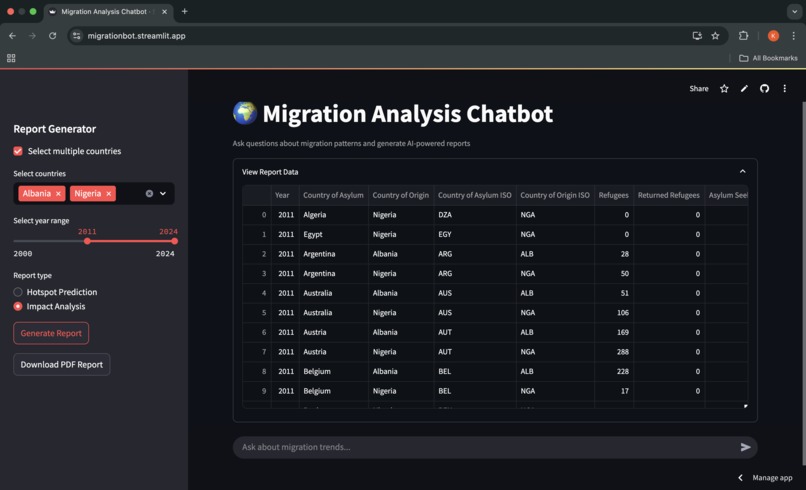
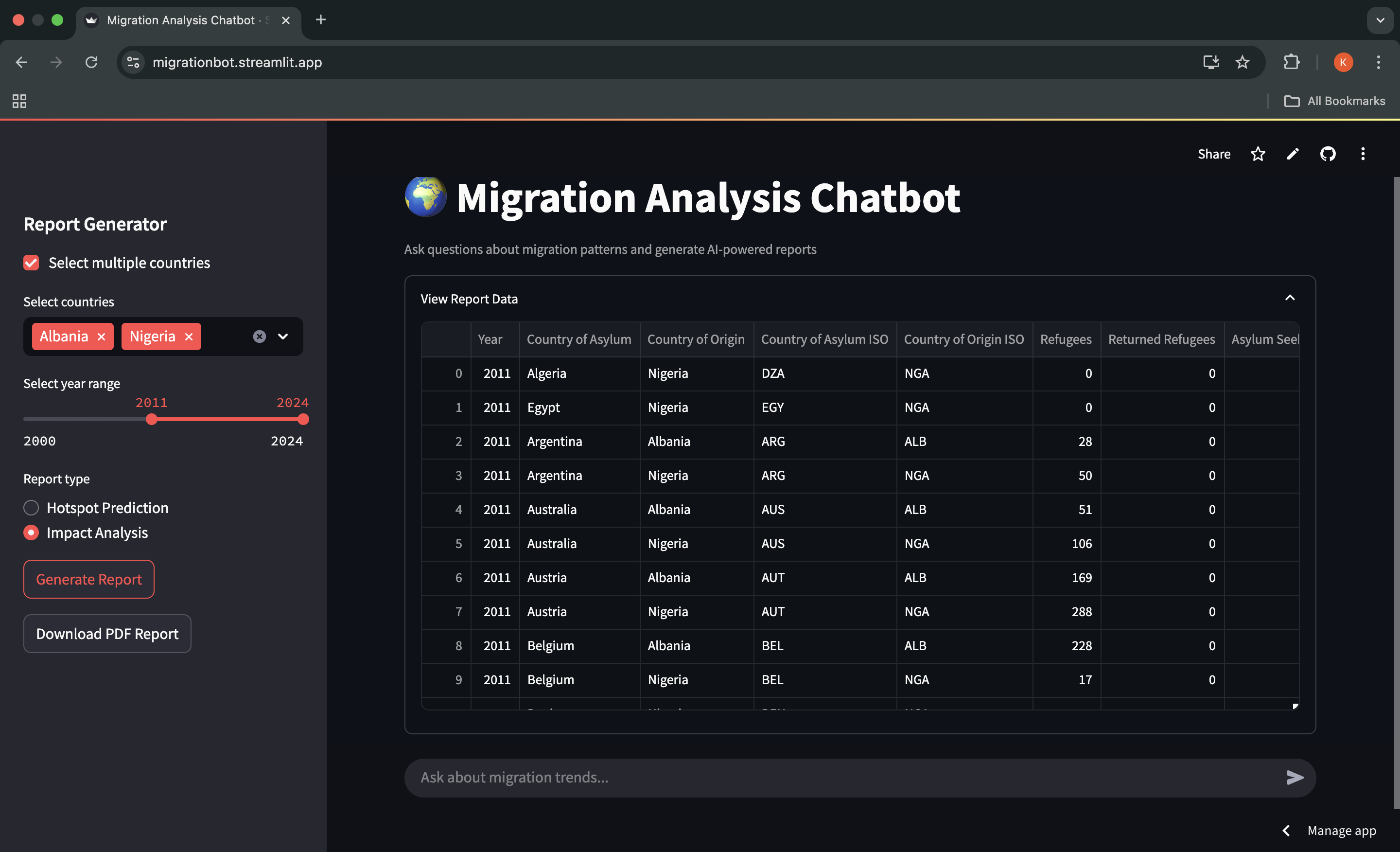
Impact Analysis
-
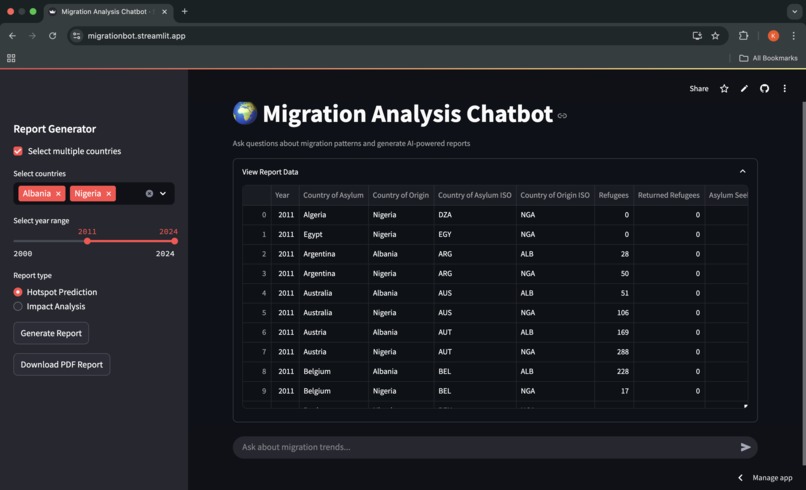
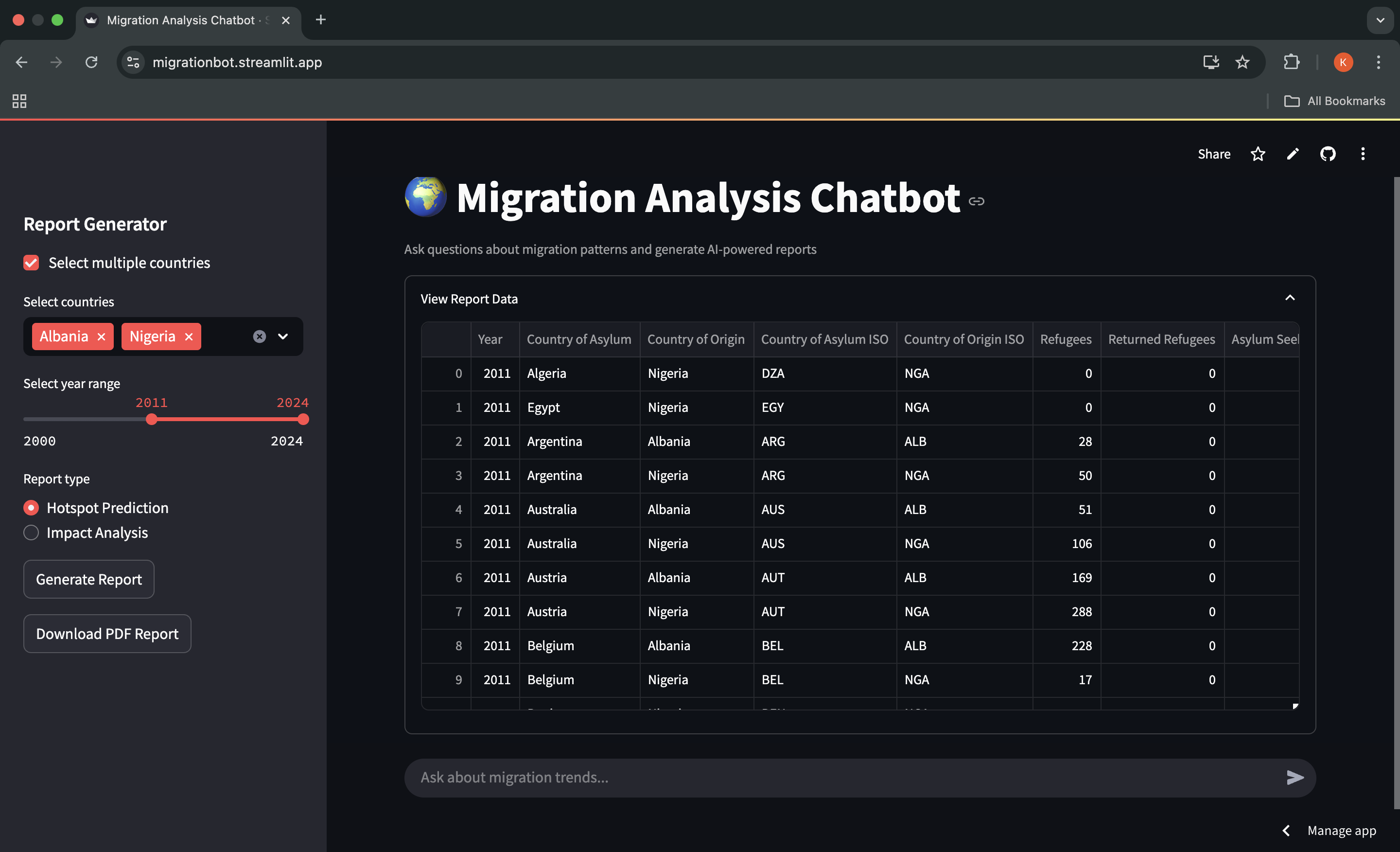
Report Generation

Inspiration
The global refugee crisis represents one of the most pressing humanitarian challenges of our time, with millions displaced annually due to conflict, climate change, and economic instability. Existing tools for analyzing migration patterns often rely on outdated datasets or lack predictive capabilities, leaving policymakers and aid organizations without real-time insights. Inspired by this gap, we developed RefugeeRoutes—an advanced analytics platform designed to transform raw migration data into actionable intelligence. By leveraging modern AI and database technologies, the system helps governments, NGOs, and researchers anticipate displacement trends, allocate resources efficiently, and develop evidence-based policies.
What it does
RefugeeRoutes serves as a comprehensive solution for migration analysis, offering interactive dashboards that visualize refugee movements across time and geography. The platform employs AI-driven pattern recognition to identify historical parallels to emerging crises, enabling users to draw insights from past events. Its automated report generation feature produces detailed PDFs containing risk assessments, policy recommendations, and economic impact projections, all tailored to specific regions or timeframes. Additionally, an integrated chatbot allows users to query the system using natural language, asking complex questions such as, "Which countries were most affected by the Syrian refugee outflow between 2015 and 2020?" or "Predict next year’s migration hotspots based on current climate disaster trends."
How we built it
We built our application using a modern, scalable architecture with a clear separation between frontend and backend. For the frontend, we chose Vite as our build tool due to its fast development server and optimized production builds, which significantly improved our development workflow. The UI was constructed using Material UI (MUI), providing a consistent and responsive design system with pre-built components that accelerated development while ensuring accessibility and mobile-friendliness. To manage complex state across the application, we implemented Redux Toolkit, which simplified state management with its opinionated setup, including Redux Thunk for async logic and Immer for immutable state updates. For database, we opted for MongoDB, a NoSQL database that provided the flexibility to store and query unstructured and semi-structured data. We used Mongoose as our ODM (Object Data Modeling) library to enforce schema validation, manage relationships, and streamline interactions with the database.
Challenges we ran into
One of the key challenges we faced was that the migration data was only available in CSV format, requiring us to convert it into JSON for seamless integration with our MongoDB database. This process was complicated by inconsistent data formats from sources like UNHCR reports, where column names, date formats, and missing values varied across different datasets. To address this, we developed a custom data parser that standardized field names, handled missing entries, and transformed CSV files into structured JSON documents before storing them in MongoDB. Another hurdle was fetching and processing this JSON data to generate dynamic charts on the frontend. We implemented Redux Toolkit Query (RTK Query) for efficient API calls and state management, ensuring that the data was cached and updated without unnecessary re-fetching. Additionally, since our team had limited familiarity with MongoDB initially, we invested time in learning its document-based structure, aggregation pipelines, and indexing strategies. These challenges ultimately strengthened our expertise in NoSQL databases and data-driven application development.
Accomplishments that we're proud of
We're proud that we built a full migration analytics platform that turns messy, real-world data into something people can actually use. Cleaning and standardizing inconsistent datasets from sources like UNHCR was a huge challenge—but we made it work. Now, that data lives in MongoDB in a format that’s easy to query and analyze. We also built a fast, efficient backend that handles millions of records in seconds. One of our biggest wins was adding vector search to help identify patterns in migration trends, giving users a way to find historical parallels with just a few clicks. Another highlight was our AI-powered report generator. Using Google Gemini, we’re able to create detailed, policy-ready reports automatically—saving organizations hours of manual work. And when NGOs told us our tool helped them act faster and more confidently, that made all the effort worth it.
What we learned
This project was a learning experience. We got hands-on with MongoDB—learning how to design schemas, run fast queries, and even do vector search. We also became better at cleaning and prepping messy data, which turned out to be a huge part of the work. Most importantly, we learned how valuable real user feedback is. Talking to people working in the field helped us make our interface simpler, clearer, and more helpful.
What's next for RefugeeRoutes
RefugeeRoutes will expand to include multilingual support for French, Arabic, and Spanish, making it accessible to a broader range of users. A mobile-optimized interface is also in development to assist field workers operating in remote locations. Long-term goals include integrating live data feeds from UNHCR and IOM APIs, enhancing the platform with satellite and weather data for early crisis detection, and establishing partnerships with government migration agencies.

Log in or sign up for Devpost to join the conversation.