-
-
-
-
-
-
-
-
-
Refugee Shield Cybersecurity Section
-
-
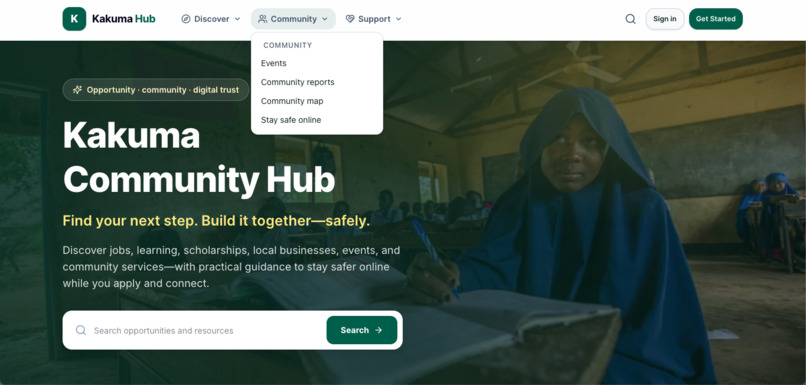
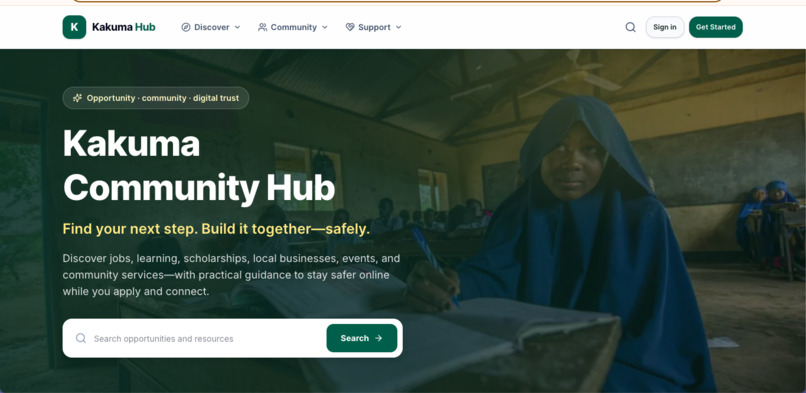
Community Hub Site
Inspiration
Refugee Shield started with people I love getting robbed of money they could not afford to lose.
My sister was scammed out of $250 in a fake DHL delivery scam. She was told an inheritance was waiting for her, and she paid the "delivery fees" to get it. Not long after, I lost $25 that was meant for my aunt's children's school books, through a rogue M-Pesa agent. It was a small amount on paper, but it was their education.
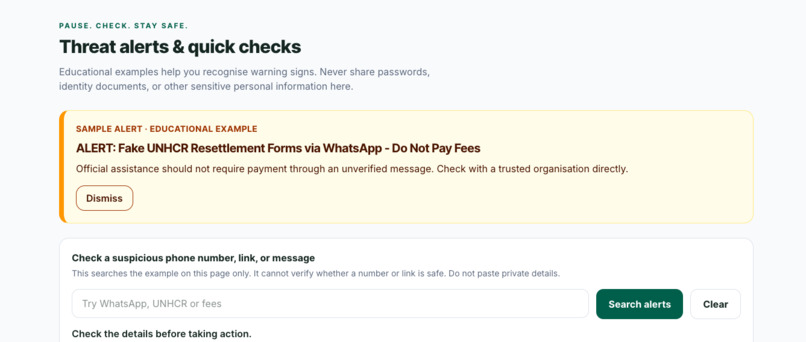
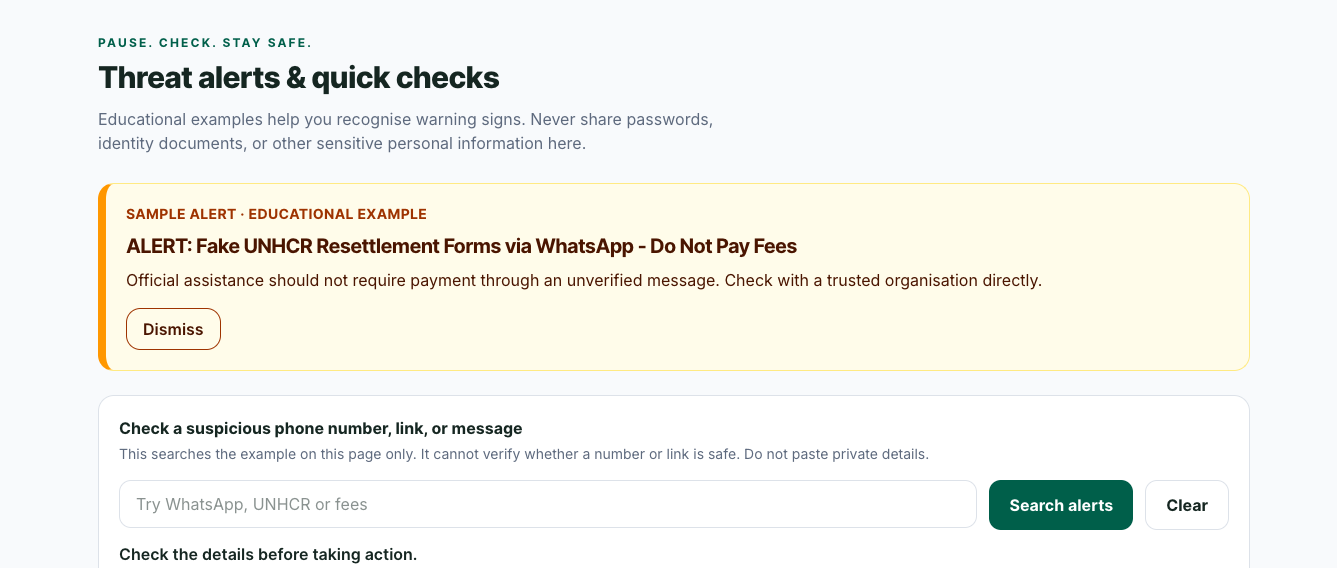
Then I started hearing it from my students at the Hol Community Library and Digital Solutions in Kakuma Refugee Camp. Many of them had lost their social media accounts after scammers promised free data in exchange for a code tied to their account. One student told me about his mother. Fake UNHCR officials posing as resettlement officers promised her a quick move to Canada for $650. She called relatives and sold some of the family's belongings to raise the money, and she paid people who had never been officers at all.
In each of these stories, the scammer was exploiting hope: hope of an inheritance, of a better future, of resettlement, of free connectivity. I teach cybersecurity awareness, and I realized awareness taught in a classroom only reaches the people in the classroom. We wanted to build something that stays in people's pockets and works where they actually live, so my teammate Chan Miabek Jak and I started building Refugee Shield.
What it does
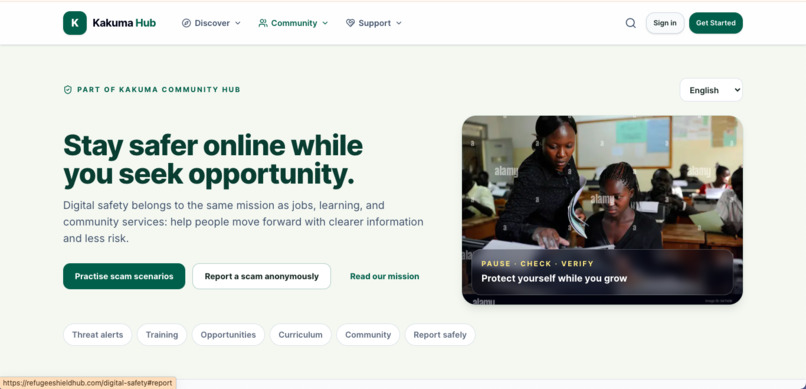
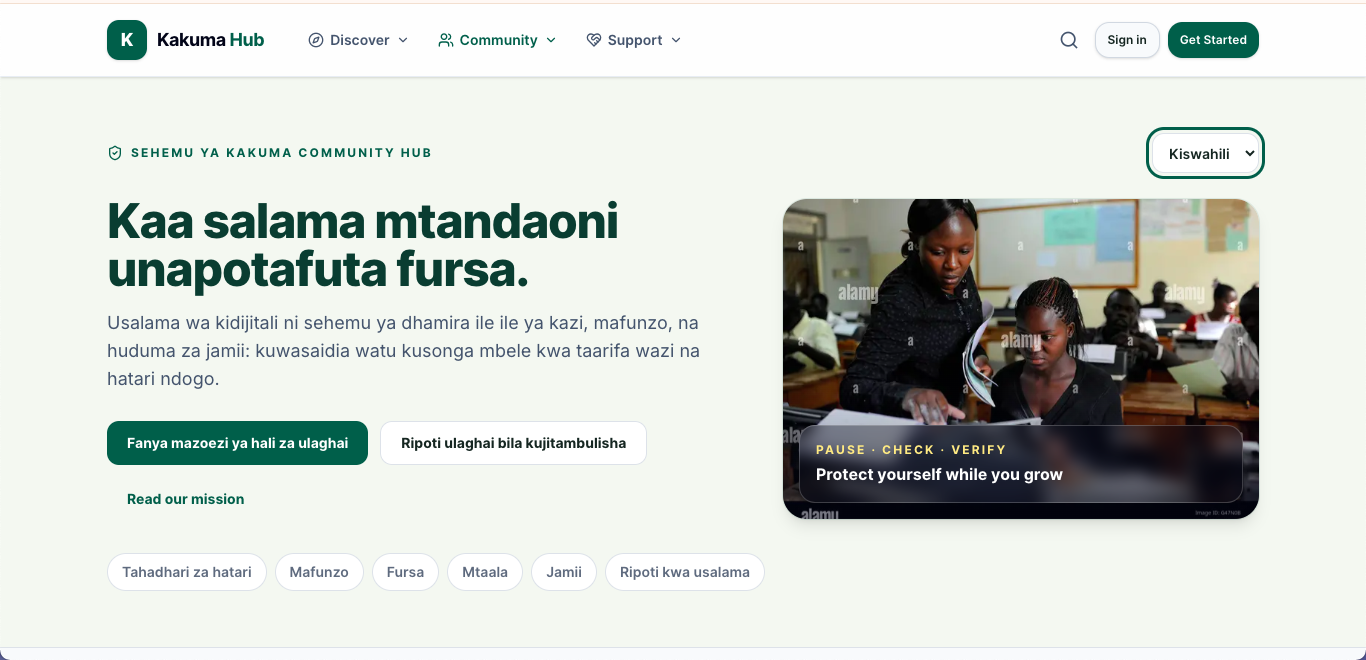
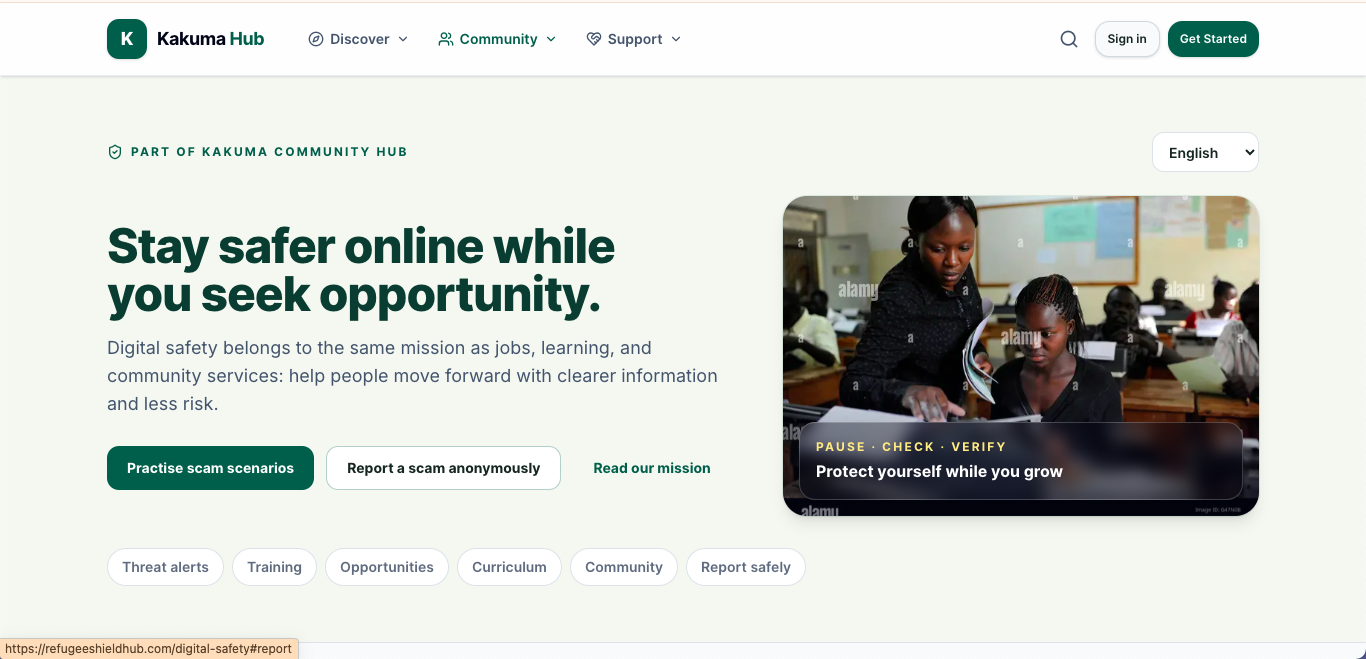
Refugee Shield is a free, multilingual, offline-first digital safety hub for refugees and other vulnerable and underserved communities. It has four core features:
- AI language simplification: Turns confusing messages, emails and offers into plain language so people can understand what they are really being asked to do.
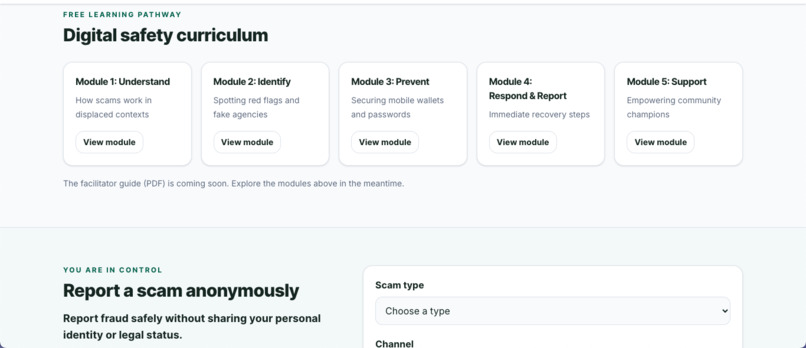
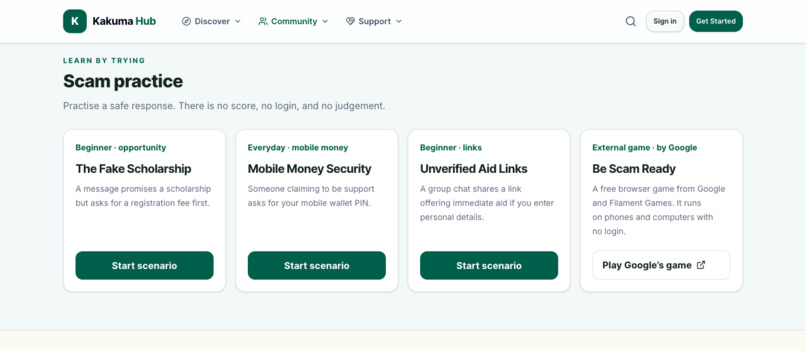
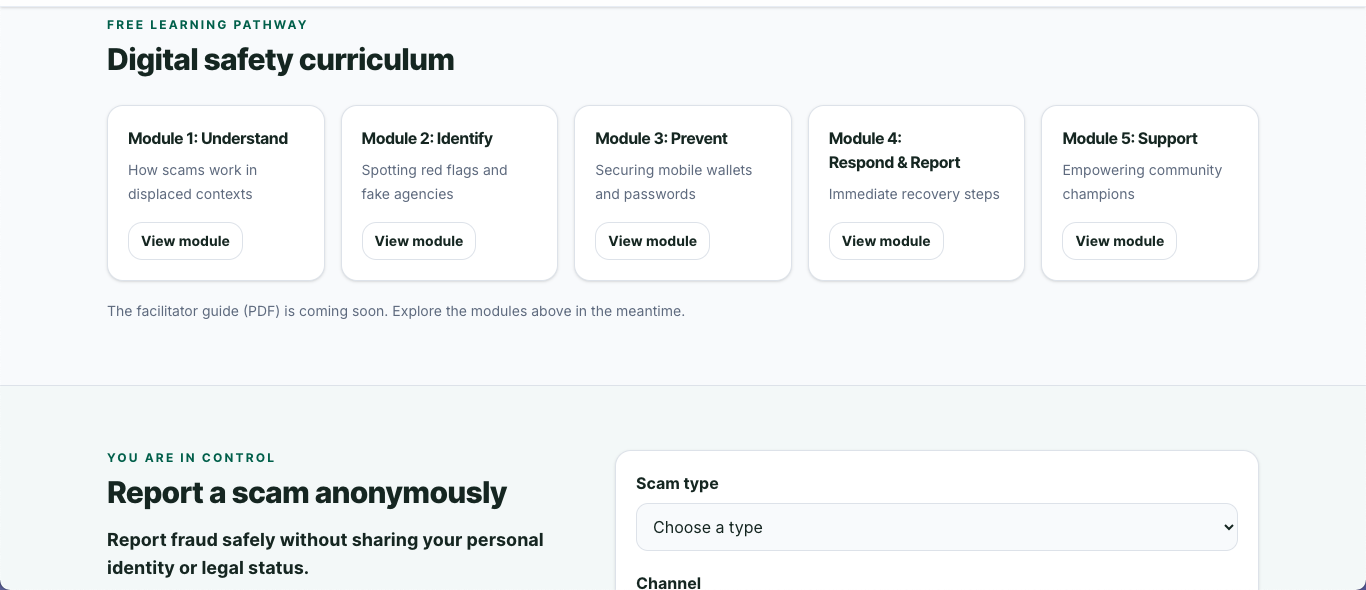
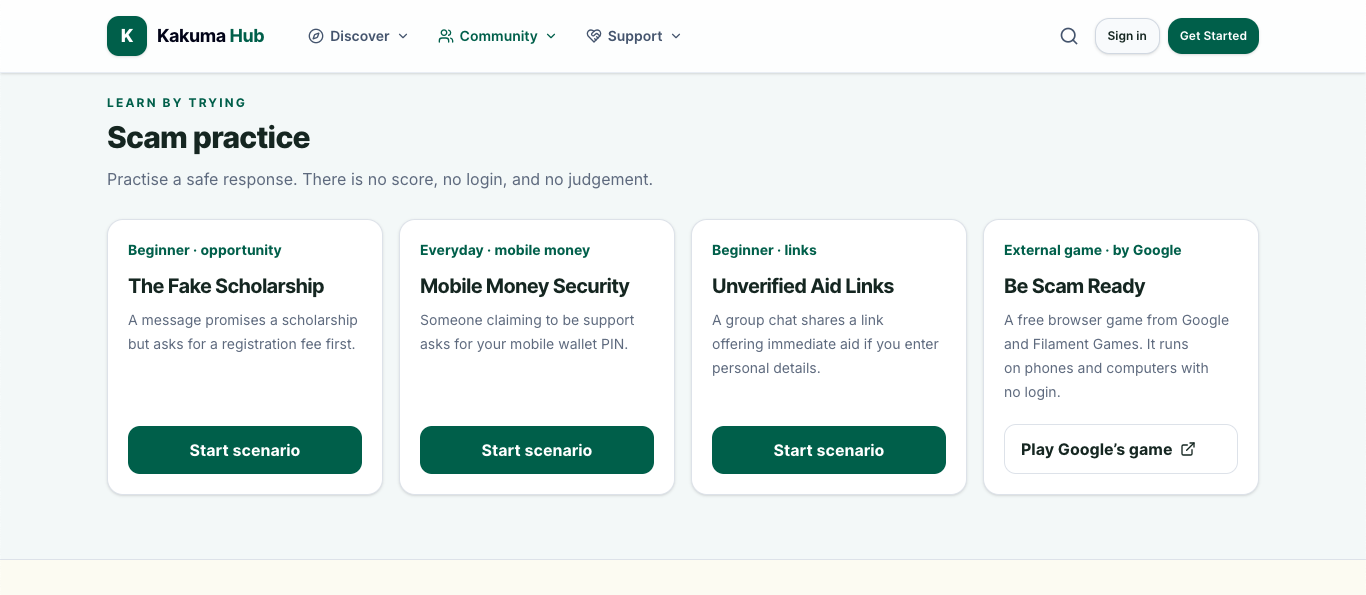
- Gamified phishing detection: Teaches people to spot scams through practice with realistic scenarios, based on the kinds of scams that actually happen in our communities.
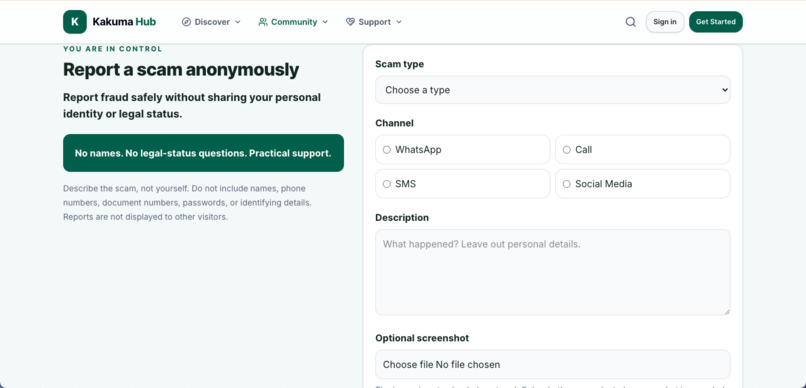
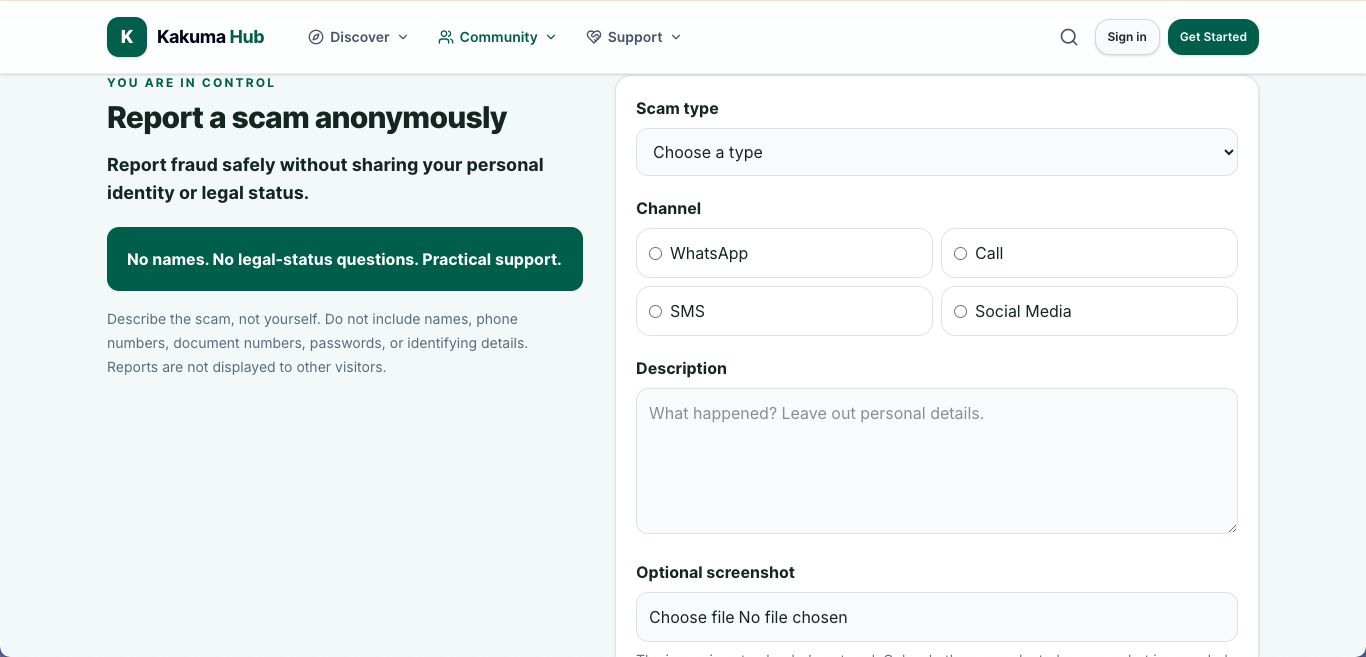
- Anonymous incident reporting: Lets people report scams and abuse without fear of exposure, so patterns can be spotted and warnings shared.
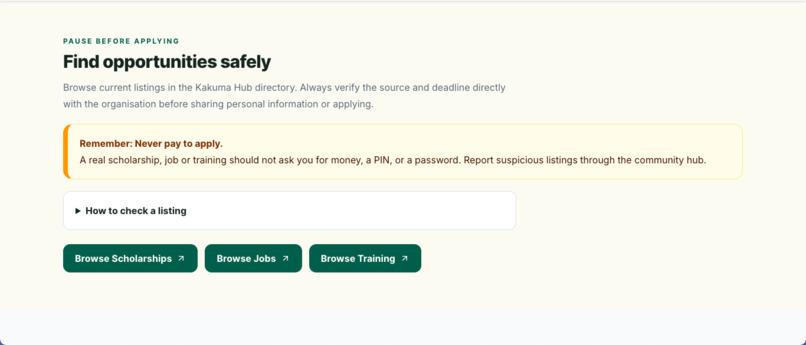
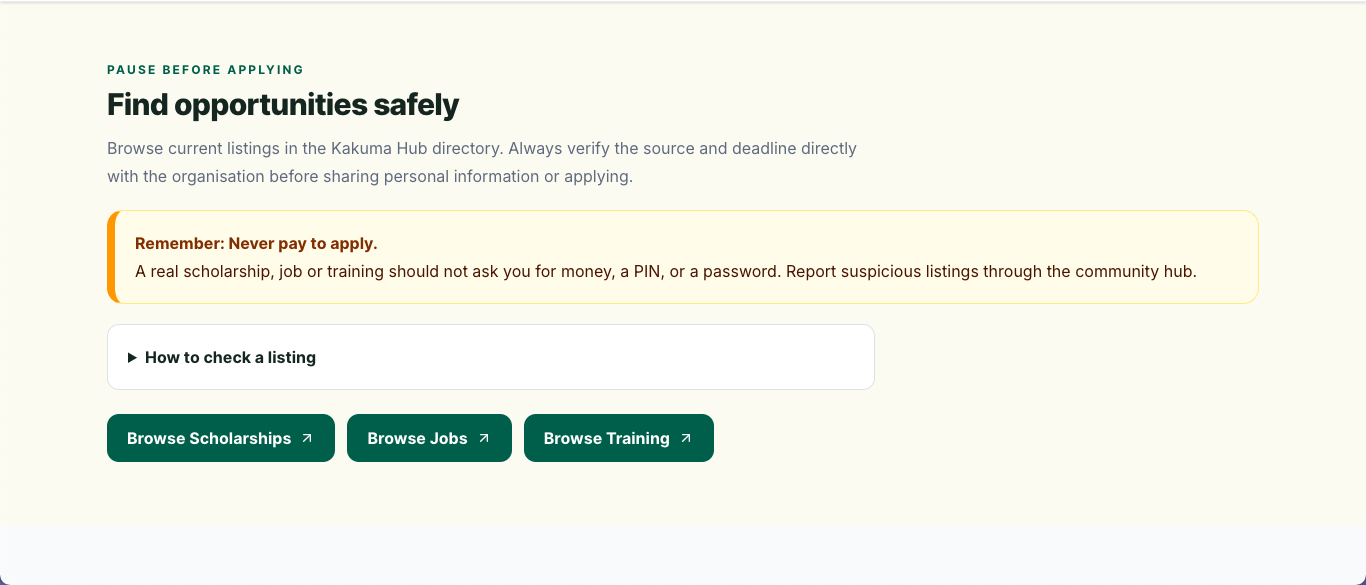
- Verified opportunities directory: A curated list of real scholarships, jobs and programs that we source and verify ourselves, so people have a trusted place to look for real hope.
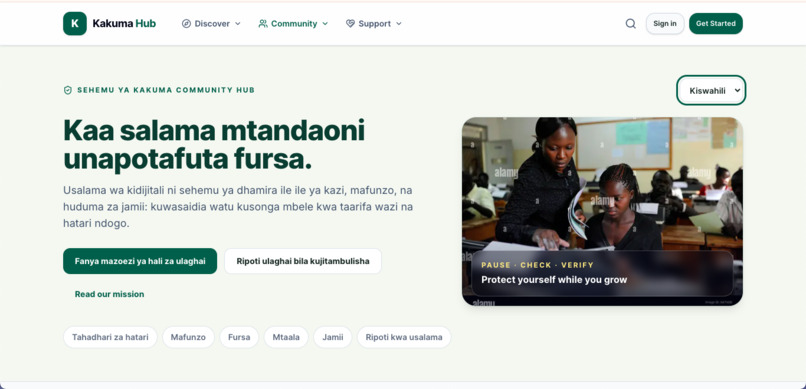
The site is available in English, Arabic and Kiswahili, the languages most widely used in Kakuma, with Dinka, Nuer and Somali planned next.
How we built it
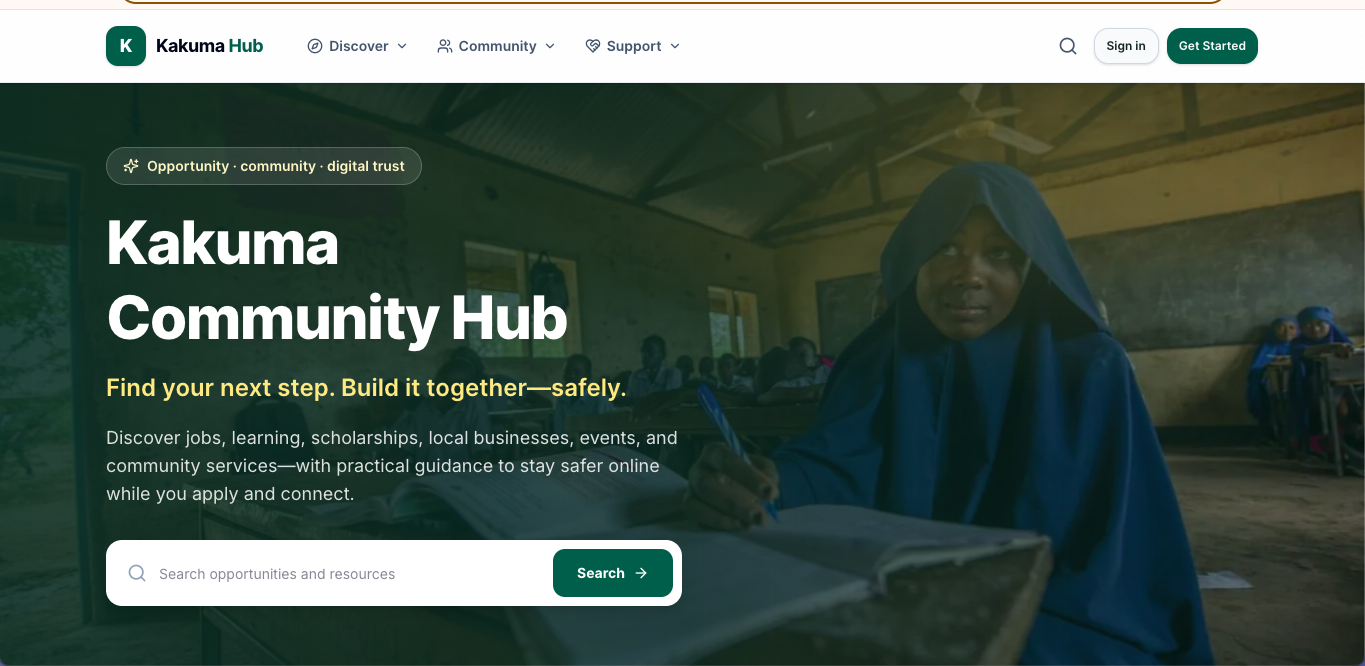
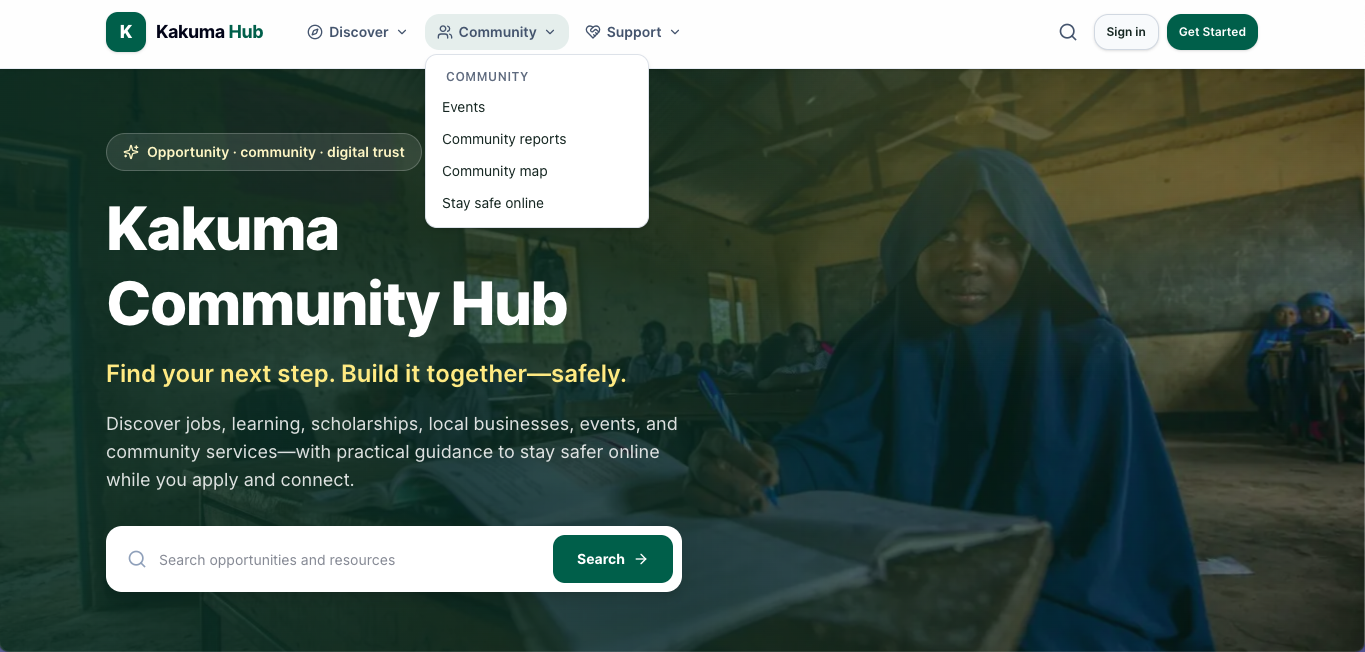
We are a team of two: Makuei Geu Makuei and Chan Miabek Jak. We started with a design prototype on Canva to test the layout and the story we wanted the site to tell, then moved to a hand-coded HTML build so it would be lightweight and load on weak connections and low-end phones. The code is hosted on GitHub, the site is deployed live, and we bought the domain refugeeshieldhub.com so it has a permanent home.
It is designed as a Progressive Web App so it can be installed on a phone and used offline, with an Android version on the roadmap. Every design decision came from one question: will this work for a student in Kakuma with a cheap phone and limited data?
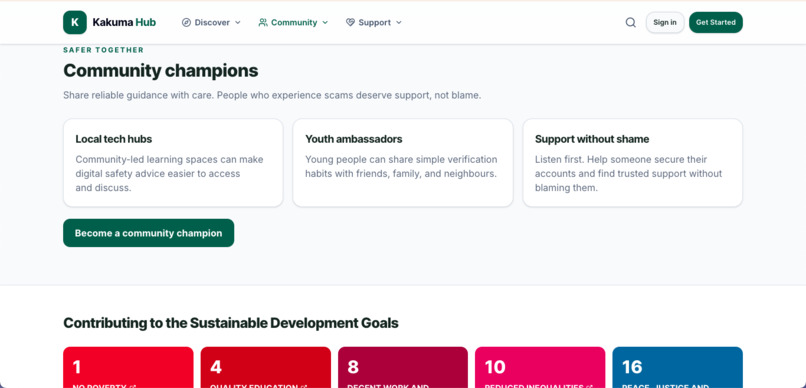
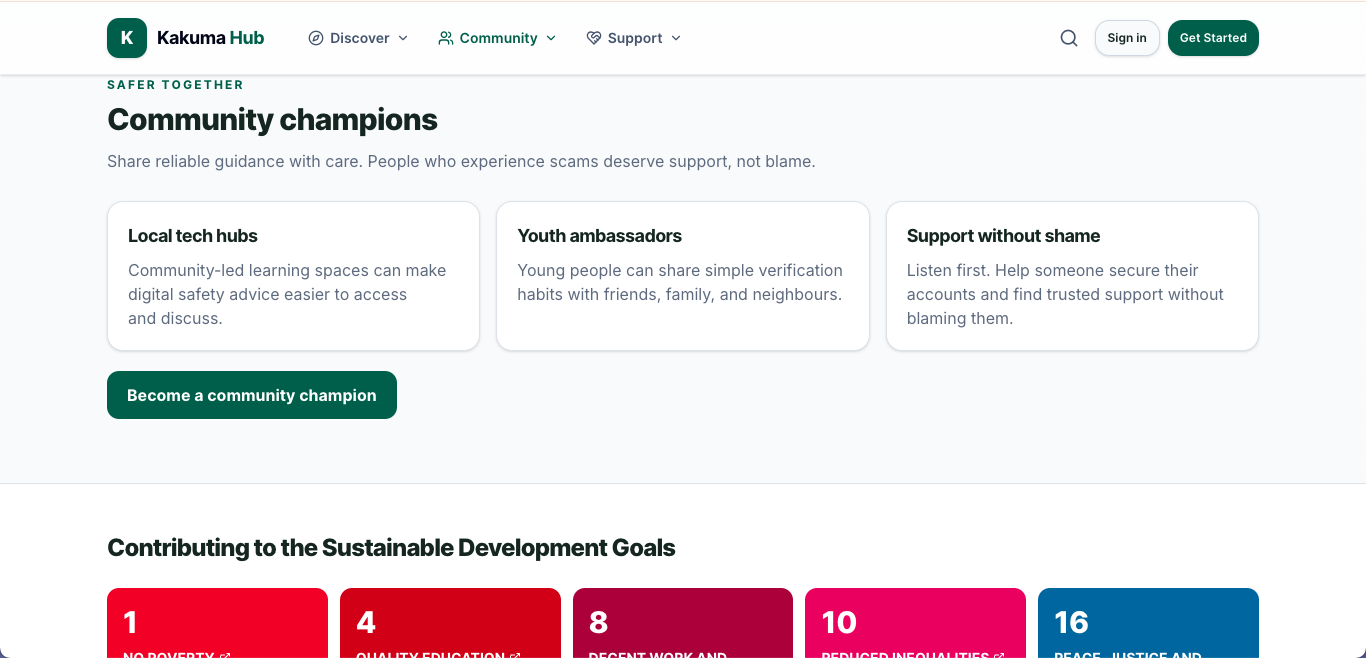
The site is aligned with five Sustainable Development Goals: SDG 1 (No Poverty), SDG 4 (Quality Education), SDG 8 (Decent Work and Economic Growth), SDG 10 (Reduced Inequalities) and SDG 16 (Peace, Justice and Strong Institutions).
Challenges we ran into
- A very small team. With only two of us, design, content, code, translation and verification all had to be shared, so we prioritized what would protect people first.
- Designing for low connectivity. Many of the people we want to reach have limited data and unreliable networks, so heavy frameworks and large assets were not an option.
- Language. Safety information is useless if people cannot understand it, so keeping the language simple, and translating it carefully, took more time than any other part.
- Trust. Refugee communities are targeted precisely because they have learned that trust can be dangerous. A safety tool has to earn trust, which is why we verify every opportunity before it is listed.
What we learned
- Technology that fails on a cheap phone with weak internet fails the people who need it most.
- Scams work because they are emotional, not because people are careless. Good security education has to respect that.
- Sustainable impact comes from listening to the community. We plan to keep improving the site based on how people actually use it and what they recommend.
- Two people with a clear purpose can build a real, live product.
What's next
- Add Dinka, Nuer and Somali.
- Release the Android version and strengthen offline support.
- Expand the verified opportunities directory.
- Pair the platform with the CyberTeenz Guide Book and school cyber hygiene programs.
- Partner with organizations such as UNHCR, Konexio Africa, Safaricom and Cybershujaa to reach displaced communities across East Africa.
Live site: refugeeshieldhub.com
Built With
- auth.js
- css
- github
- nextjs
- openai
- playwright
- prisma
- radix-ui
- react
- react-hook-form
- recharts
- tailwindcss
- tanstack-query
- typescript
- vitest
- zod
