-
-
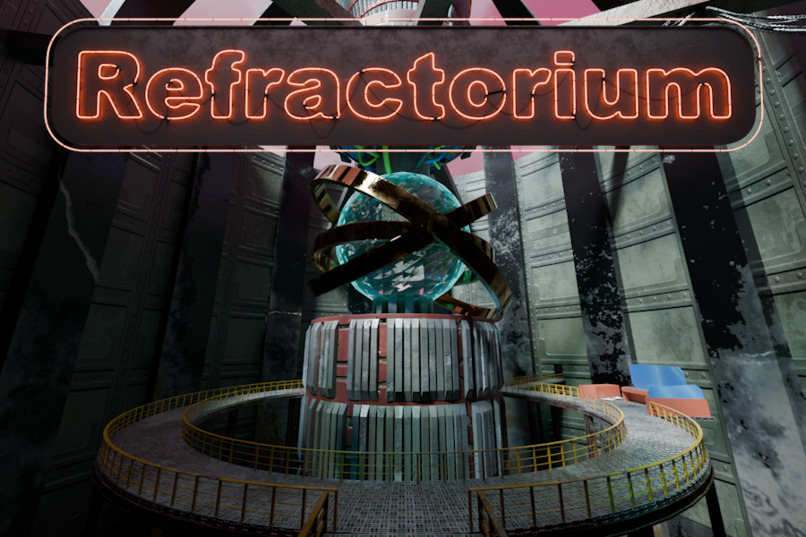
Cover
-
-
-
-
-
-
-
-
-
Inspiration
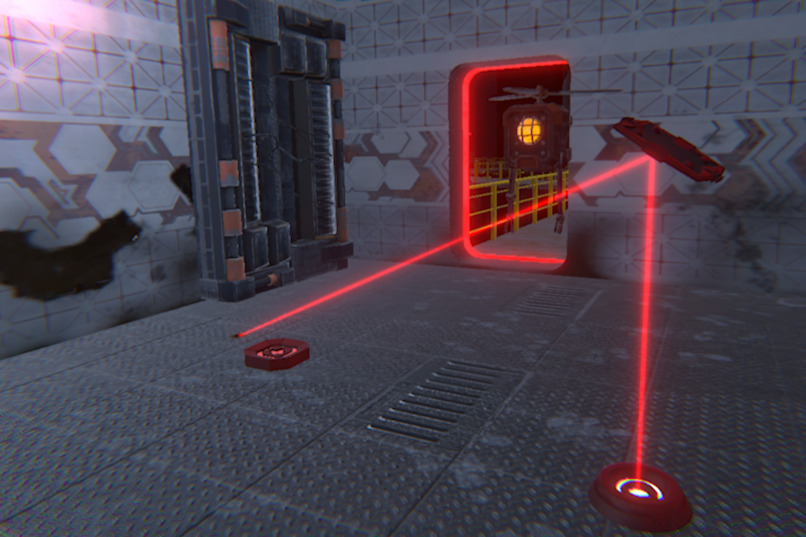
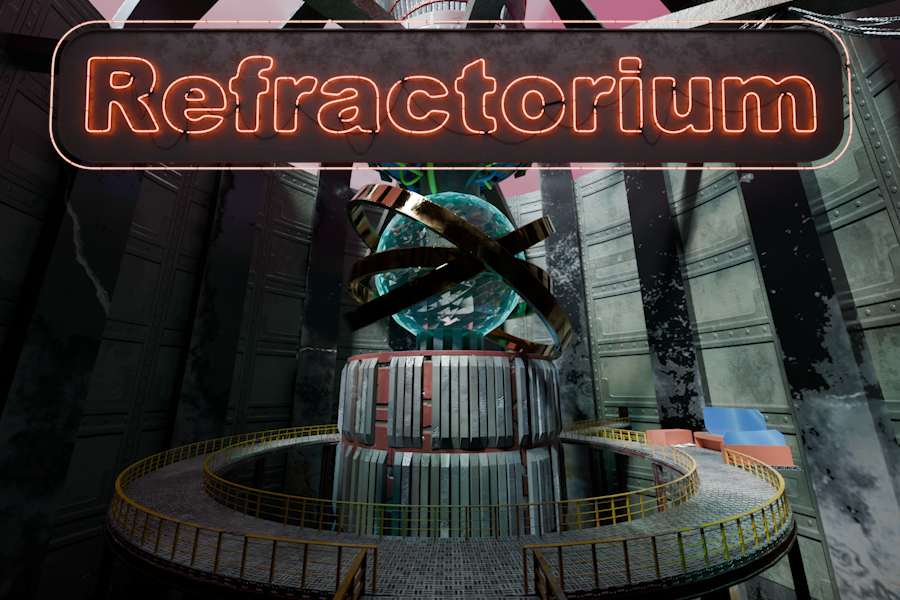
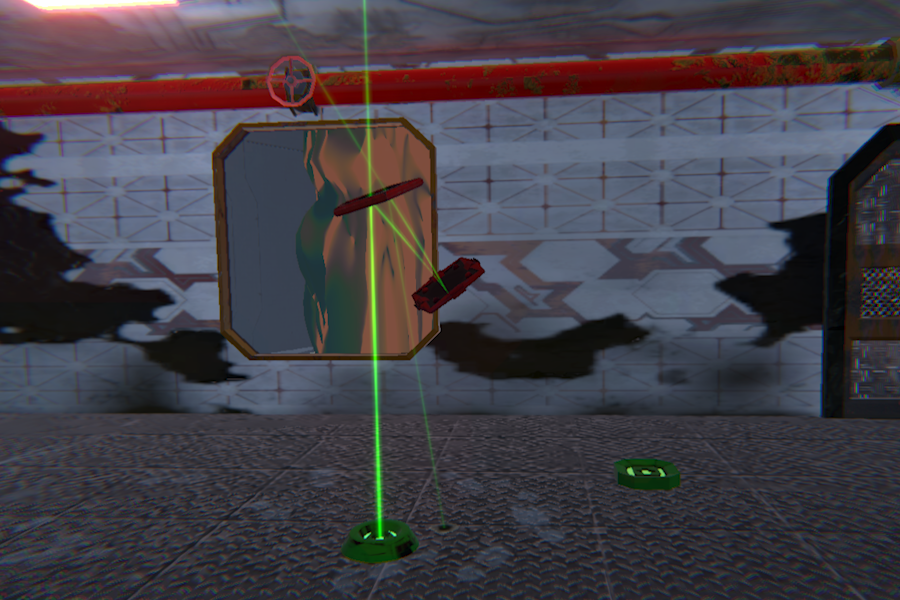
Inspiration hit last year during the Meta Quest Game Jam: the simple idea of creating an XR laser puzzle game where you manipulate mirrors to redirect light beams into receivers, inspired by a combination of Portal, The Talos Principle, and Red Matter. The key difference this year is a complete pivot in expression medium, moving from an experimental Mixed Reality prototype to a fully realized, standalone Virtual Reality game. In Mixed Reality, varying room sizes and spatial positioning created too much friction between the player and the puzzles. By migrating entirely to VR, I transformed a simple proof-of-concept into Refractorium: a cohesive vertical slice featuring a linear narrative, dystopian environments, an interactive drone companion, and a rebuilt optical engine, all designed from the ground up as a hands-first, seated-friendly VR game that requires zero controllers to enjoy.
What it does
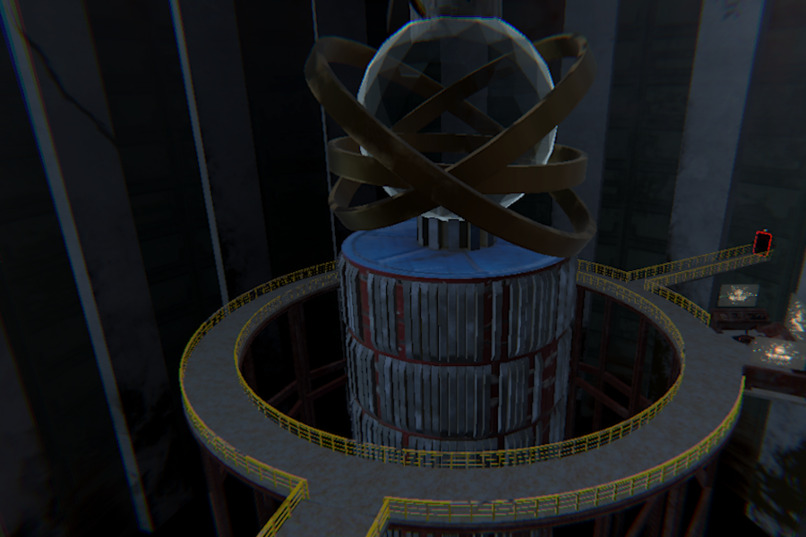
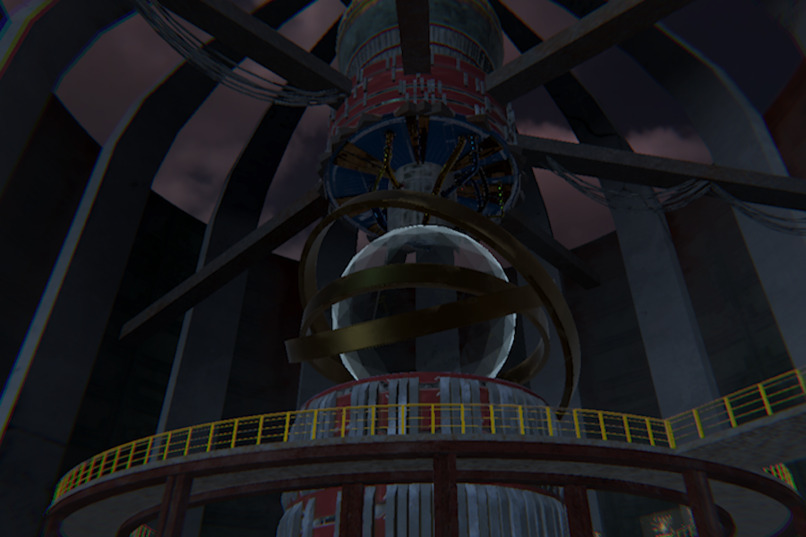
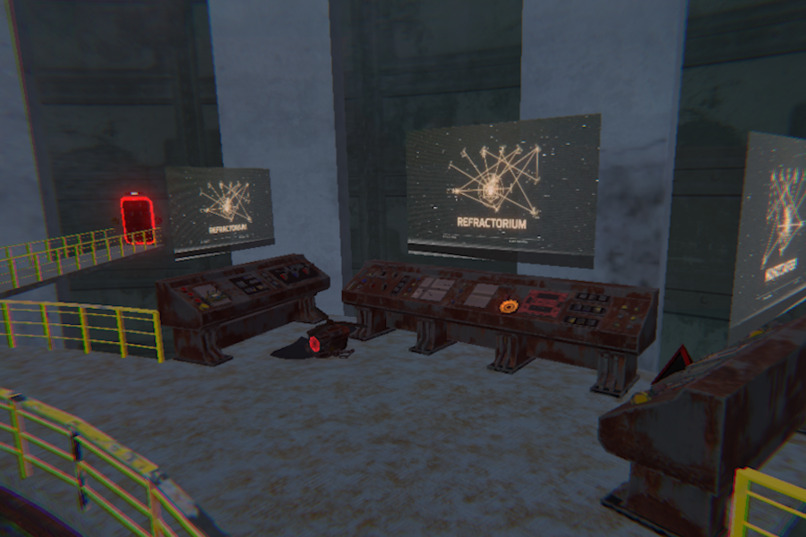
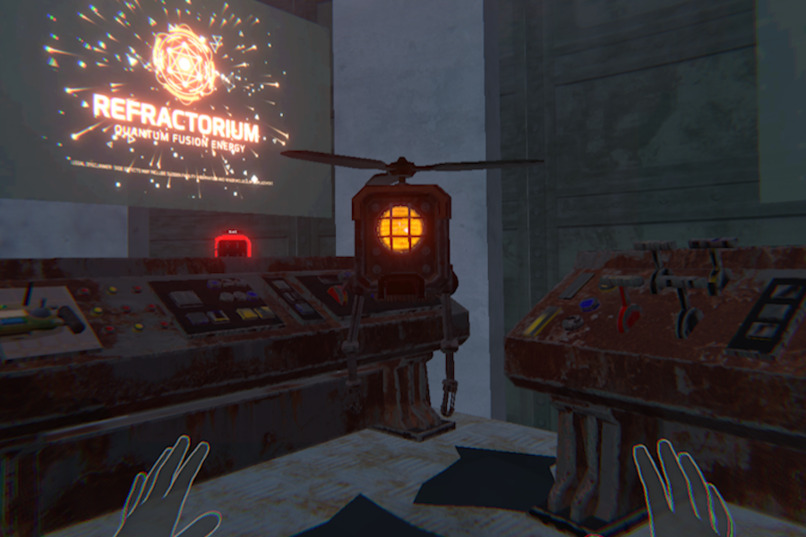
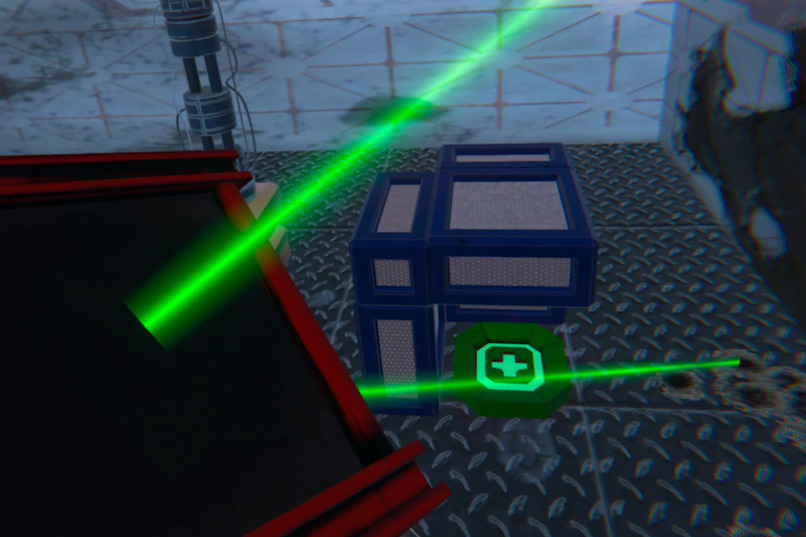
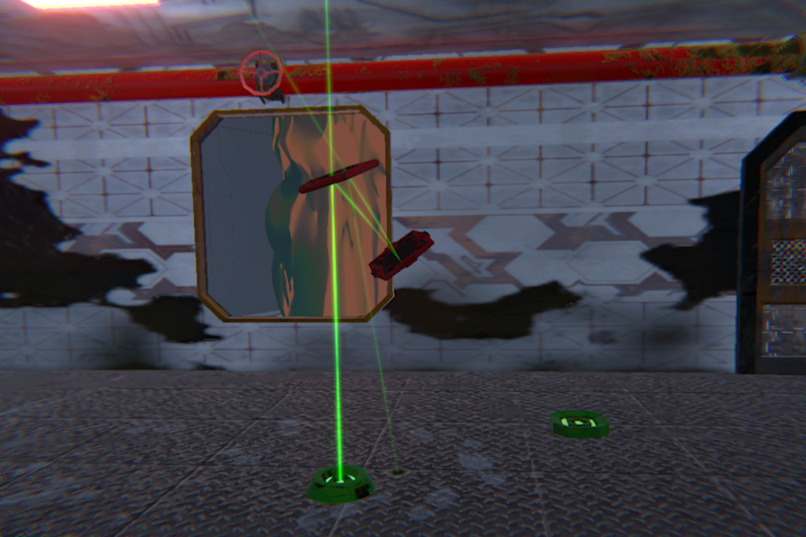
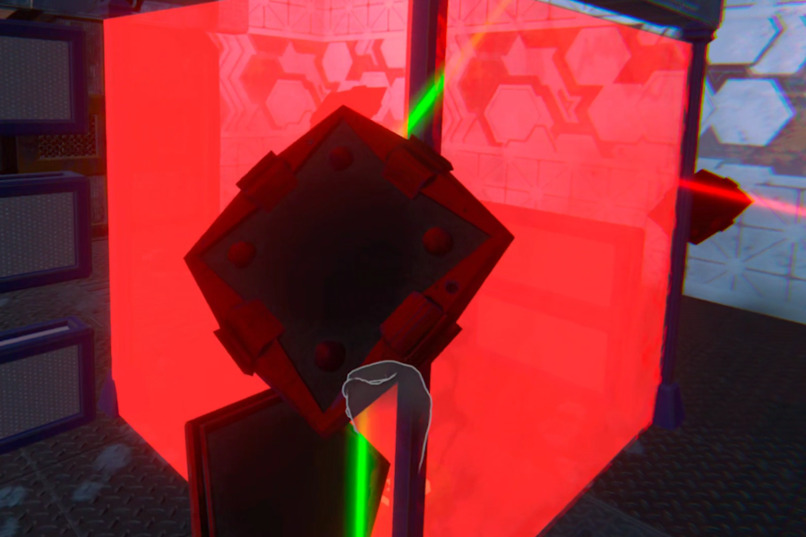
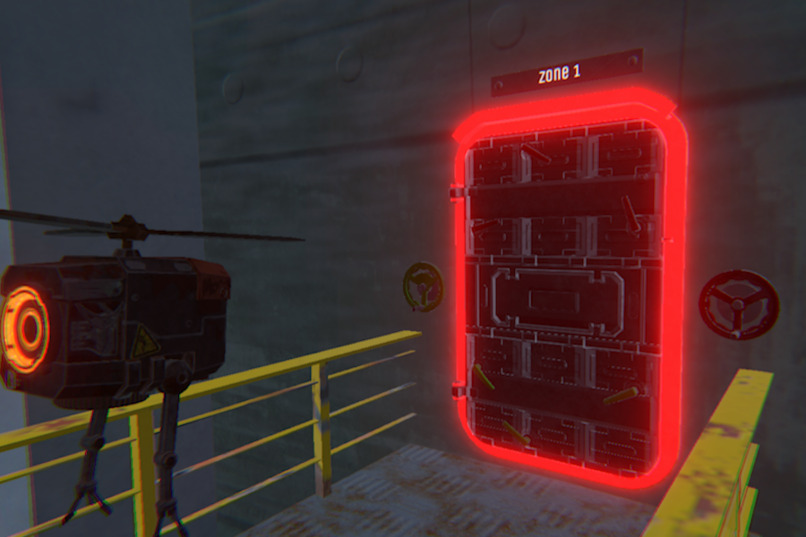
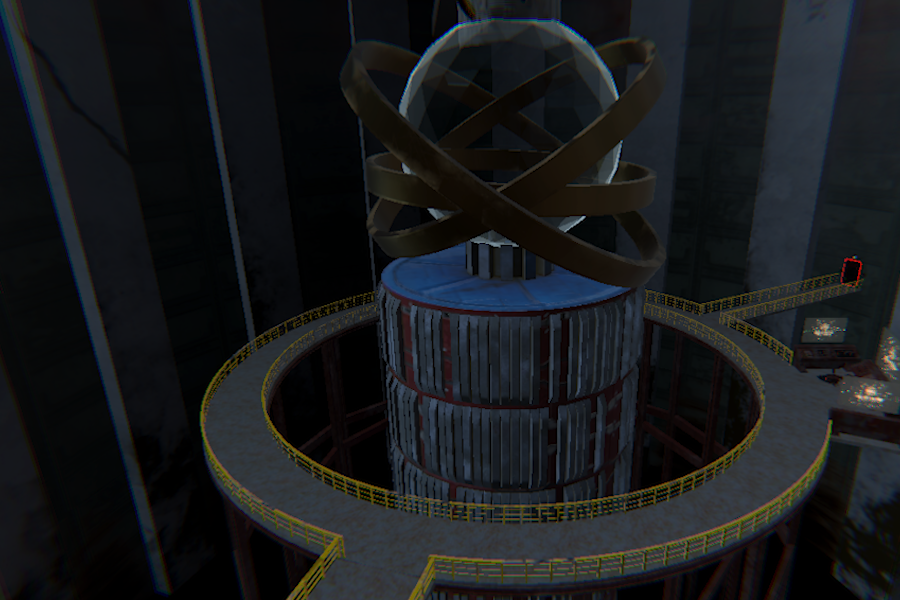
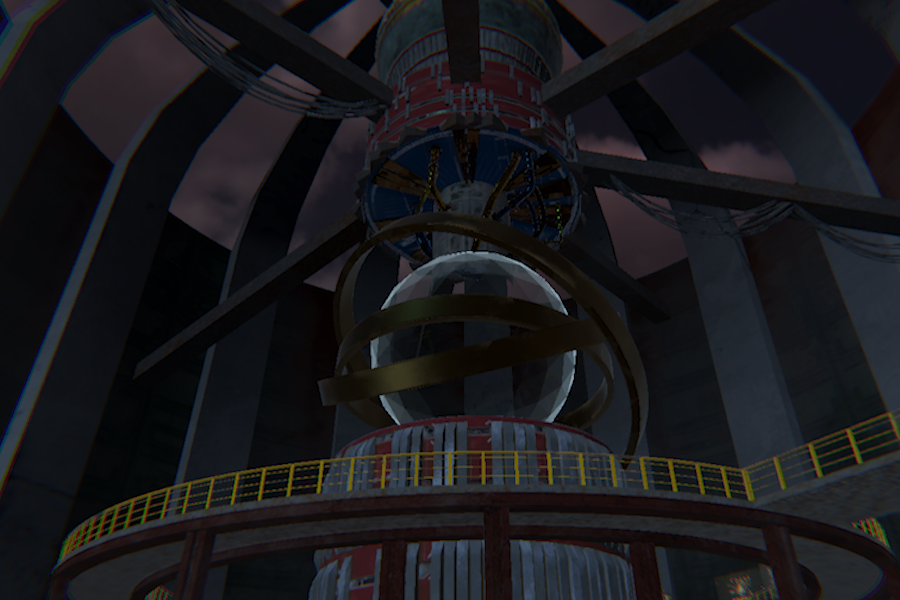
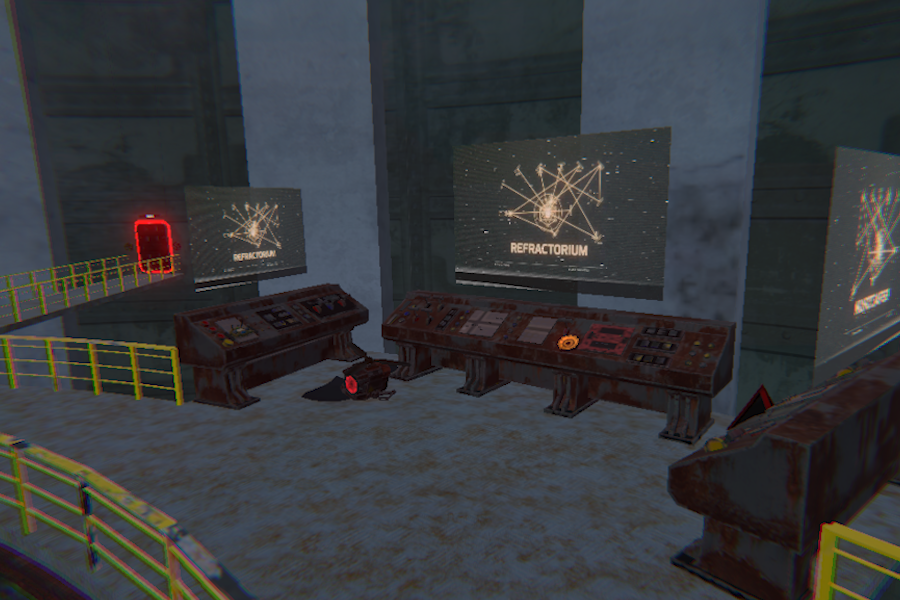
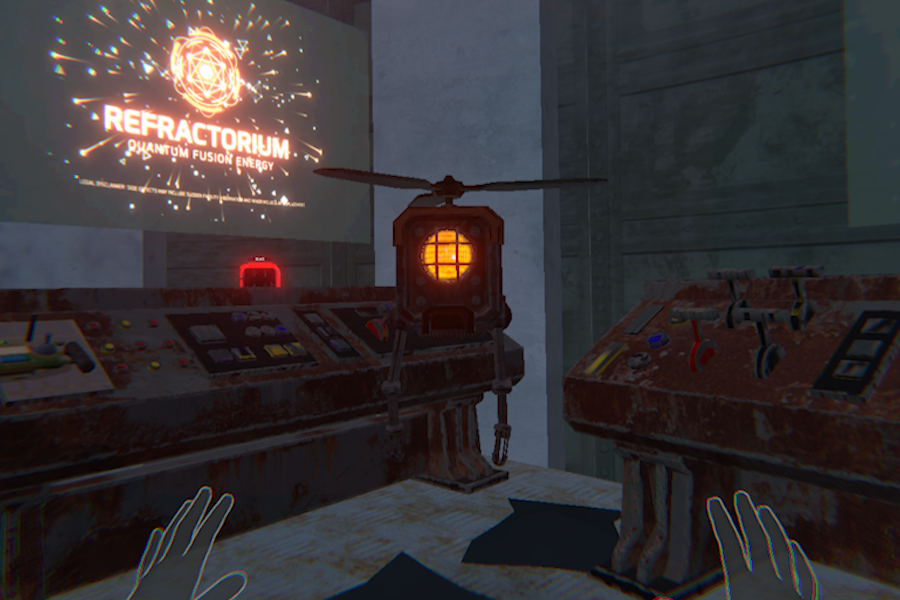
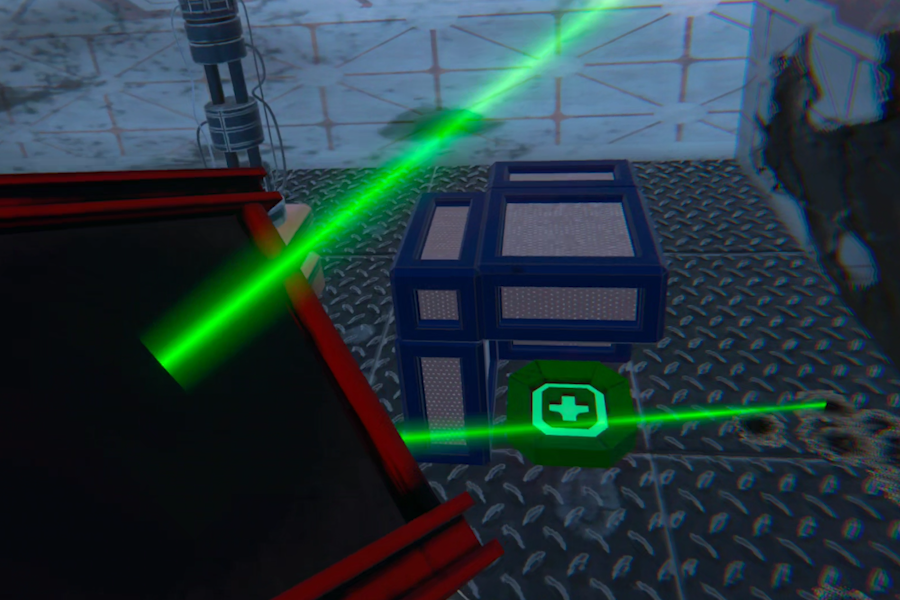
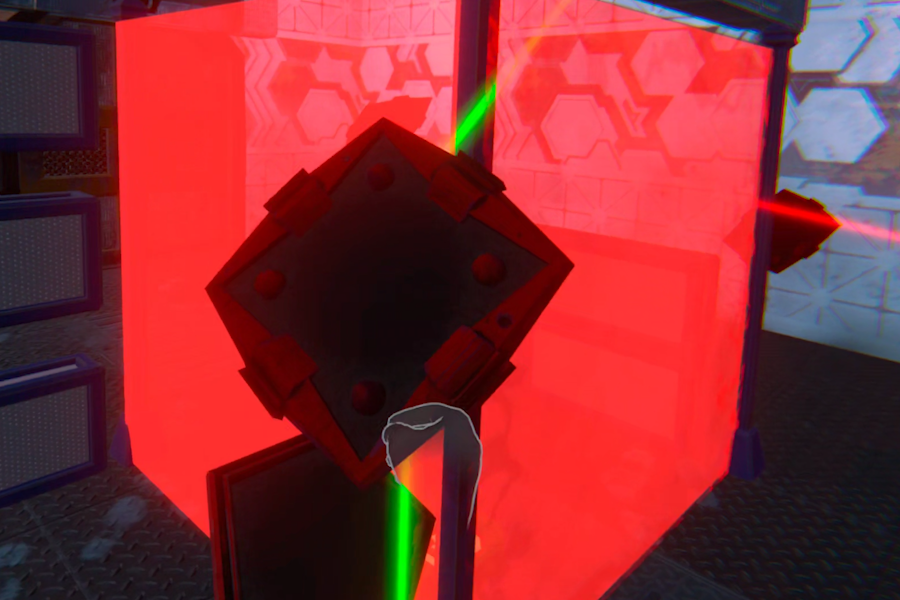
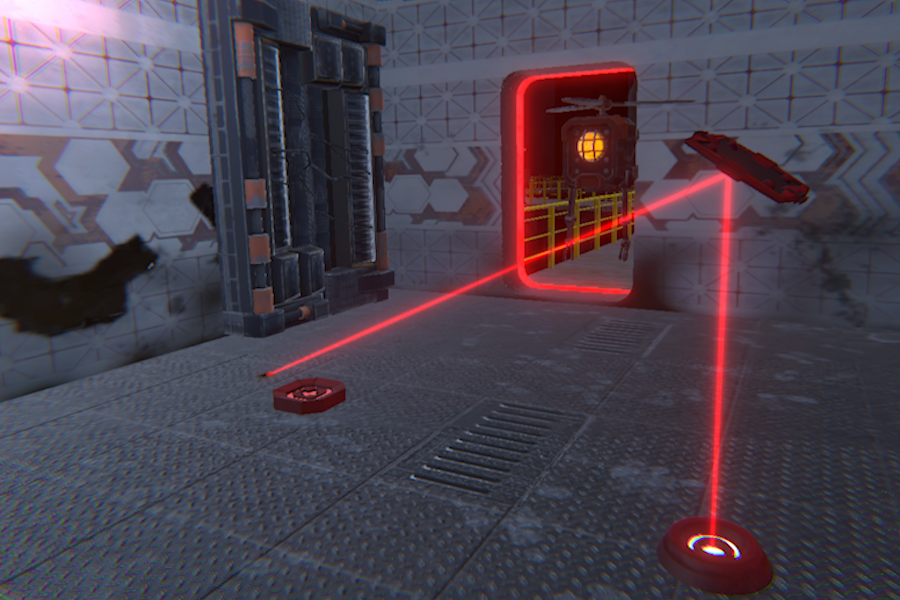
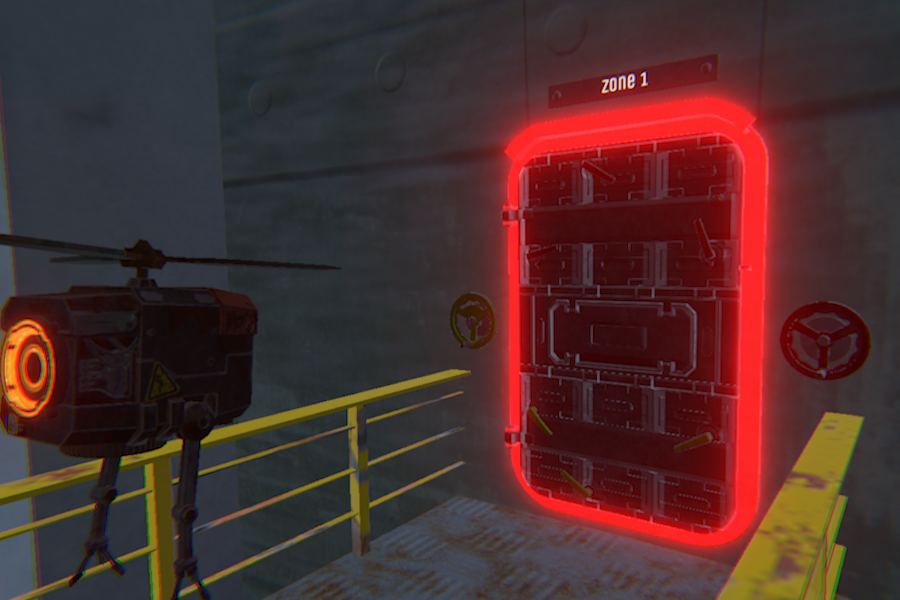
You awaken on a catwalk inside a dysfunctional, dystopian reactor facility. Guided by a sterile corporate PA system and a dormant companion drone that you physically boot up by slotting in a battery cell, your job is to traverse the reactor sectors and restore the broken optical laser grids. Using bare hands, you rotate heavy mechanical bulkhead wheels, align mirrors, and route multi-colored laser emitters through prism splitters and wavelength-filtering energy fields.
How I built it
Starting from last year’s core concept, I completely re-architected the project in Unity (URP) using the Meta XR Interaction SDK and OpenXR Hands: Additive Zone Streaming: Replaced monolithic scene reloads with a persistent master scene and seamless subscene streaming across 5 successive puzzle chambers connected by animated physical bulkhead doors and custom oriented occlusion triggers. Custom Multi-Source Optical Solver: Built a deterministic C# ray-tracing engine supporting multi-emitter wavelength mixing and ray splitting, budgeted to solve in under 0.025 ms on Quest 3 mobile CPUs. Procedural Audio & Shaders: Coded a real-time algorithmic voice synthesizer in C# that generates robotic phonemes and drives the drone’s lip-sync on the fly, alongside custom Single-Pass Instanced URP shaders for infinite reactor void depth.
Challenges I ran into
Initially, I had thought a lot about continuing this project; the idea was good, but the setting was hard to optimise for each type of physical play space. Ditching Mixed Reality brought a lot of new challenges: modelling, texturing, and animating an entire dystopian facility in Blender and Substance Painter so it felt like an actual game rather than a graybox prototype. During playtesting, two major technical hurdles emerged: Hand Micro-Tremors: Players using bare hand tracking found it frustrating to align laser reflections over long distances because natural human hand jitter caused the beam to flicker off the receiver. I solved this by engineering dual-threshold magnetic hysteresis snapping. Once a beam enters a receiver's capture radius, it magnetically locks to the optical center and requires intentional movement to break free. Quest 3 Vulkan Artifacts: Running Unity URP with 4x MSAA and Subsampled Layout triggered severe green/orange zebra striping on the Adreno 740 GPU, which I resolved by reconfiguring the Vulkan swapchain and opaque texture pipeline.
Accomplishments that I am proud of
The biggest accomplishment of them all is that I have developed a vertical slice of the upcoming game, which is more than the prototype I developed last year. I had it playtested and got a lot of useful feedback from players. Seeing players naturally wake up the drone, turn the bulkhead wheels, and solve multi-beam optical puzzles entirely with their bare hands, without controller friction, validated the entire migration to VR. Although there is a lot more to improve until it is finished and released, it is still a major leap forward in the right direction at this point, and I am very excited to finish it.
What I learned
The biggest lesson from this project was learning to design around how people actually move and play, rather than expecting them to have robotic precision. In real life, your bare hands naturally shake a little, and everyone’s room size is completely different. At first, trying to force the game into Mixed Reality and expecting players to align lasers with pinpoint accuracy just created frustration instead of fun. Migrating to pure VR and adding a subtle magnetic snap when a laser gets close to a receiver completely changed the feel of the game. I realized that in hands-first VR, players shouldn't be fighting the controls or worrying about keeping their wrists perfectly steady; the interaction should feel forgiving, natural, and tactile so they can stay focused on solving the puzzle itself.
What's next for Refractorium
The main objective is releasing a public Alpha by the 20th of February 2027. It will feature 40 playable levels, the central Reactor Hub, and a complete narrative arc that links everything together. Longer-term, I plan to introduce a co-op VR/MR sandbox mode where friends can build, share, and solve custom laser chambers together.

