
Inspiration
Institutions often unknowingly contribute to the global waste crisis because lost or discarded goods lack a structured redistribution system. This systemic failure in circular consumption means that while institutions generate a high volume of reusable goods, they lack the necessary infrastructure to redirect them. ReFound addresses this problem by enabling institutions to convert lost goods into social value through an automated redistribution system, ensuring these items find a second life in local communities instead of ending up as waste.
What It Does
ReFound is a smart donation and redistribution platform that connects donors and recipients in real time.
How it works (user perspective):
- Users scan a QR code at a ReFound bin.
- Drop off their item in under a few minutes.
- AI verifies item quality using cameras and uploaded images.
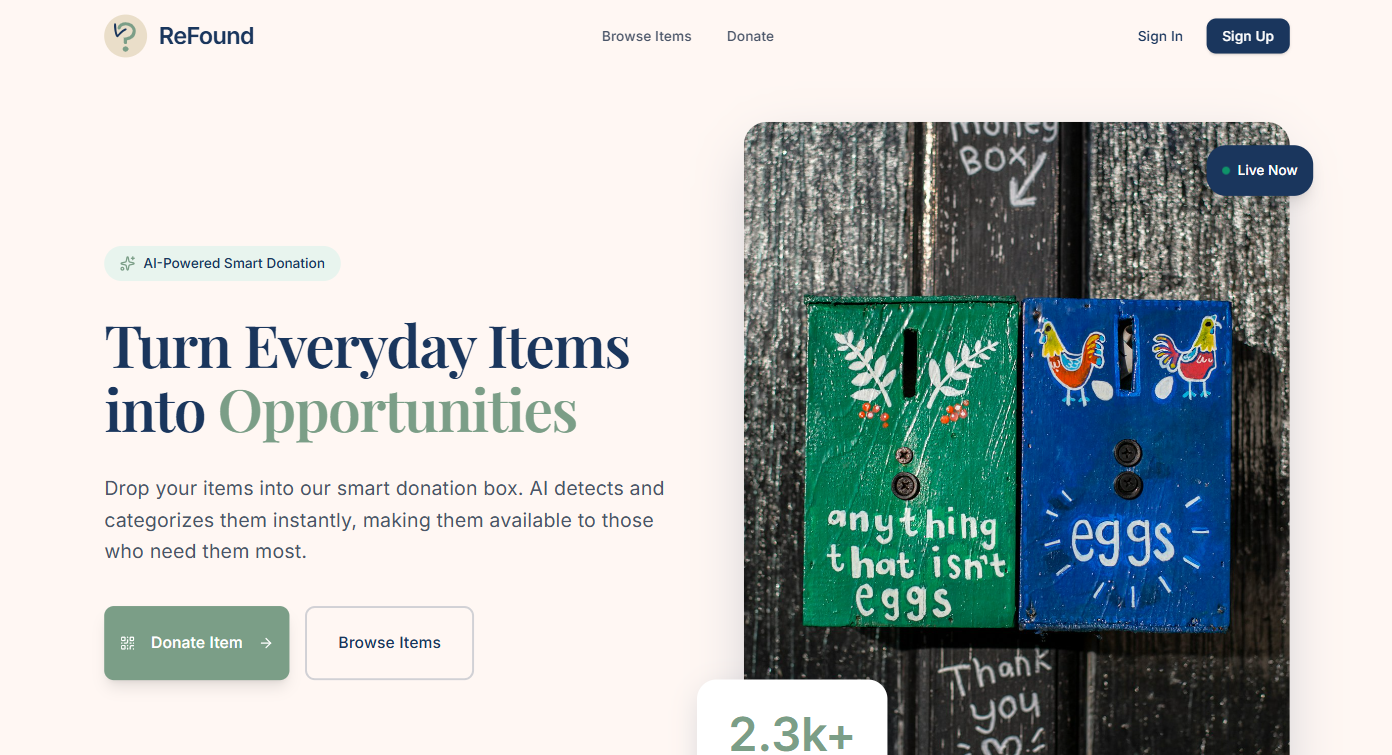
- Approved items are listed on the web platform.
- Other users browse, reserve, and schedule pickup.
How I built it
Smart Bin (Hardware Layer)
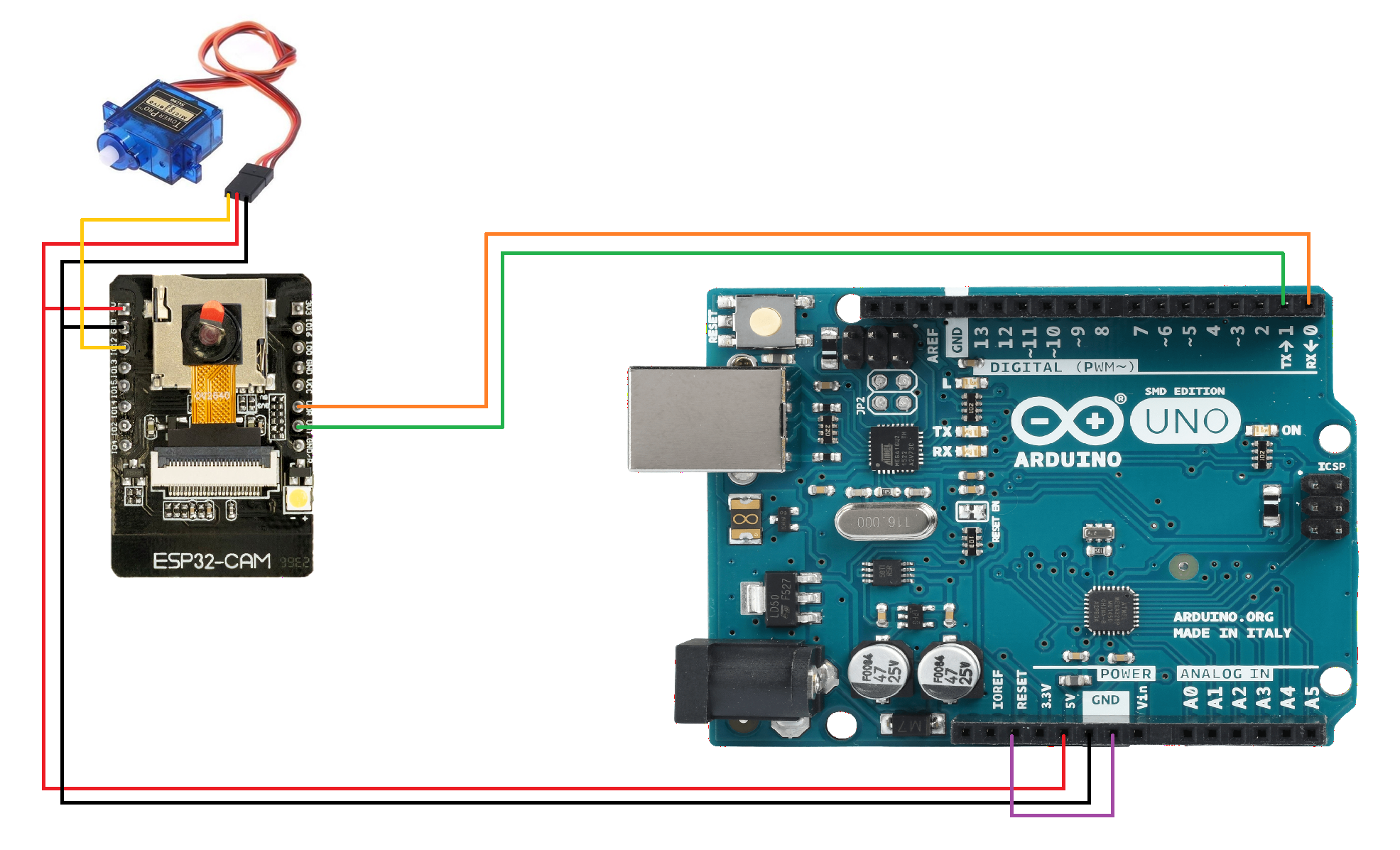
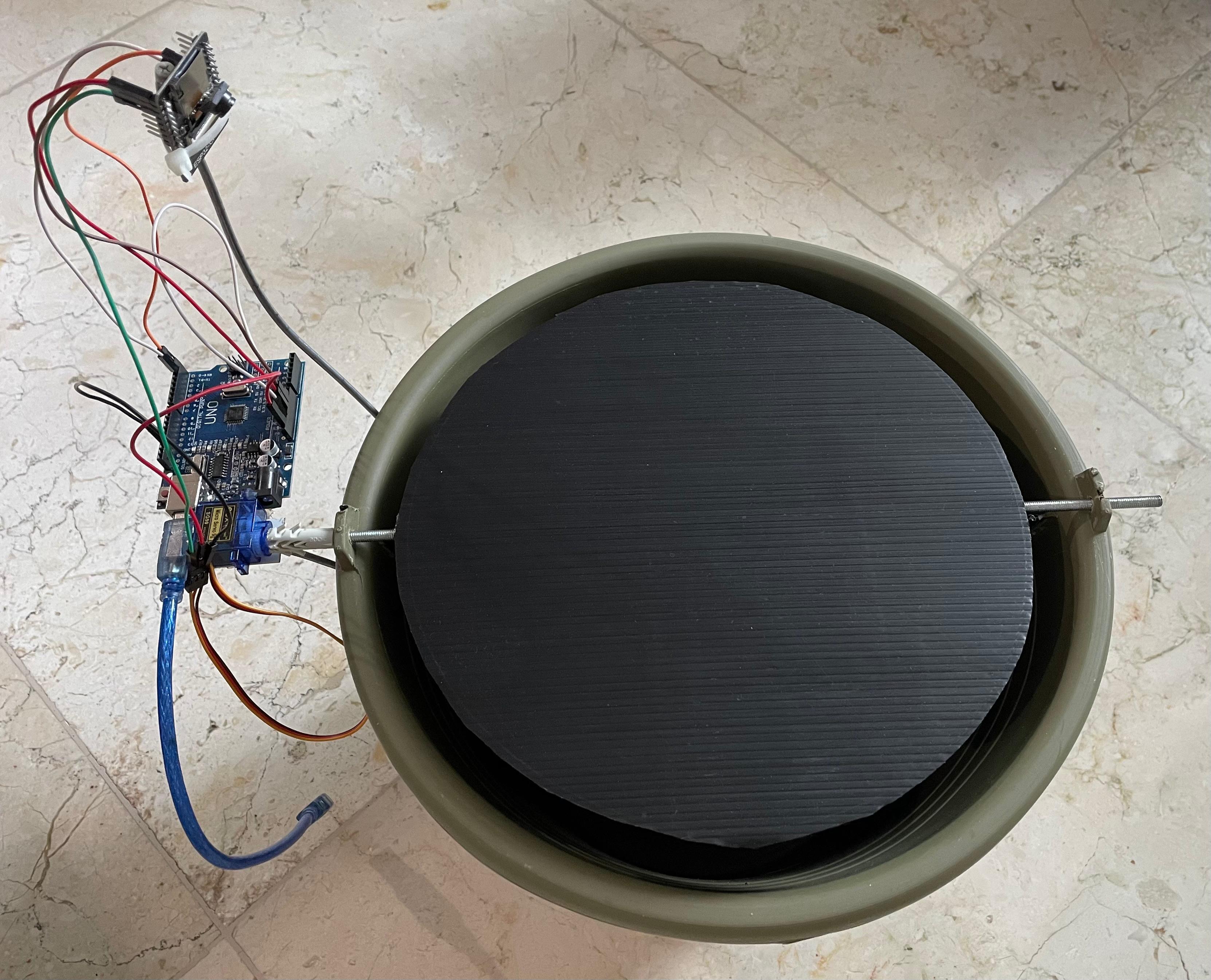
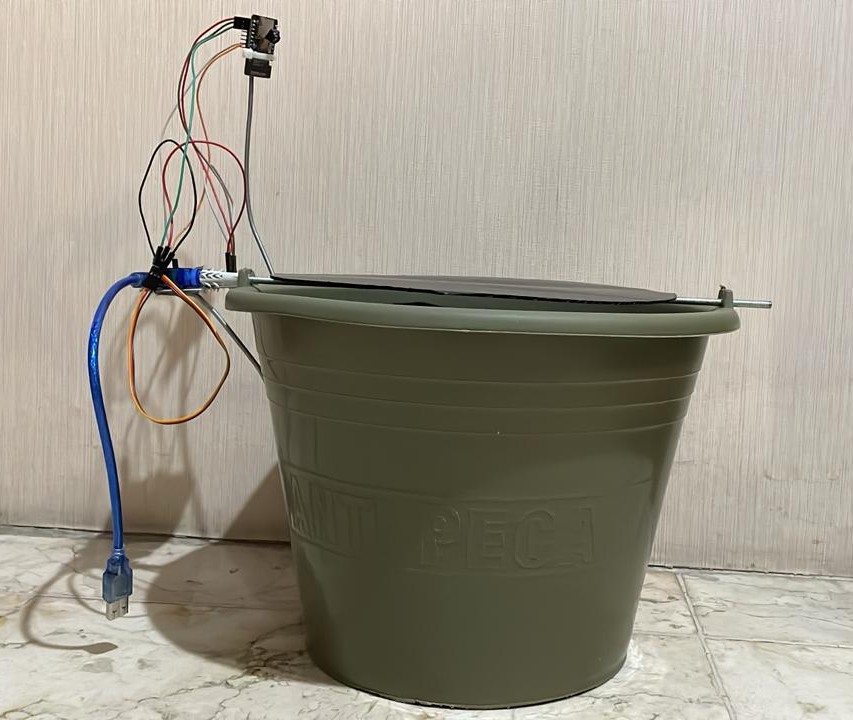
- Built using IoT devices (ESP32-CAM & Arduino) to capture and assess items at smart donation bins.
- Sends real-time data to the backend for processing.
Backend & Data Layer
- FastAPI handles API requests, WebSocket communication, and core system logic.
- MongoDB & AWS S3 serve as the primary data and image storage layers.
AI Integration
- Google Gemini Pro Vision assists with automated item recognition, category classification, and quality assessment.
Frontend Platform
- Built with Next.js, allowing users to browse verified items, reserve them, and manage their donation history.
- Google Maps API enables location-based discovery and pickup coordination.
Challenges I ran into
- System Integration: Connecting multiple technologies (IoT, Backend, AI, and Frontend) smoothly under a tight 24-hour time constraint.
- Hardware Handshaking: Troubleshooting WebSocket connections and real-time data synchronization between physical bins and the cloud.
- Production Readiness: Completing a functioning end-to-end product and a presentation pitch within a hackathon timeframe.
Accomplishments that I'm proud of
- Functional End-to-End Product: Successfully built a full-stack system that solves a tangible real-world problem.
- Impactful Innovation: Developed a real-world solution addressing sustainability and resource accessibility.
What I learned
- Cross-Domain Integration: Harmonizing technologies across different domains into one cohesive, automated system.
- Technical Resilience: Adapting quickly when facing hardware constraints and networking challenges.
- Agile Scoping: Managing time effectively by focusing on problem scoping and defining core features clearly.
What's Next for ReFound
- Enhanced IoT Optics: Upgrade the camera module to replace current low-resolution sensors for better AI accuracy.
- Scaleable Capacity: Increase the physical capacity of the bins to accommodate a larger volume of donations.
- Protective Enclosures: Design durable, weather-resistant housing for the camera and servo components.
- Advanced Security: Implement anti-vandalism measures and secure authentication for item drop-offs.
- Infrastructure Scaling: Optimize the backend to handle high-resolution data and increased concurrent user traffic.
- Public Expansion: ReFound aims to expand beyond universities into airports, transit hubs, and public stations, maximizing social impact and resource-sharing for everyone.
Built With
- amazon-web-services
- clerk
- fastapi
- google-maps
- nextjs
- render
- tailwind
- vercel


Log in or sign up for Devpost to join the conversation.