Inspiration
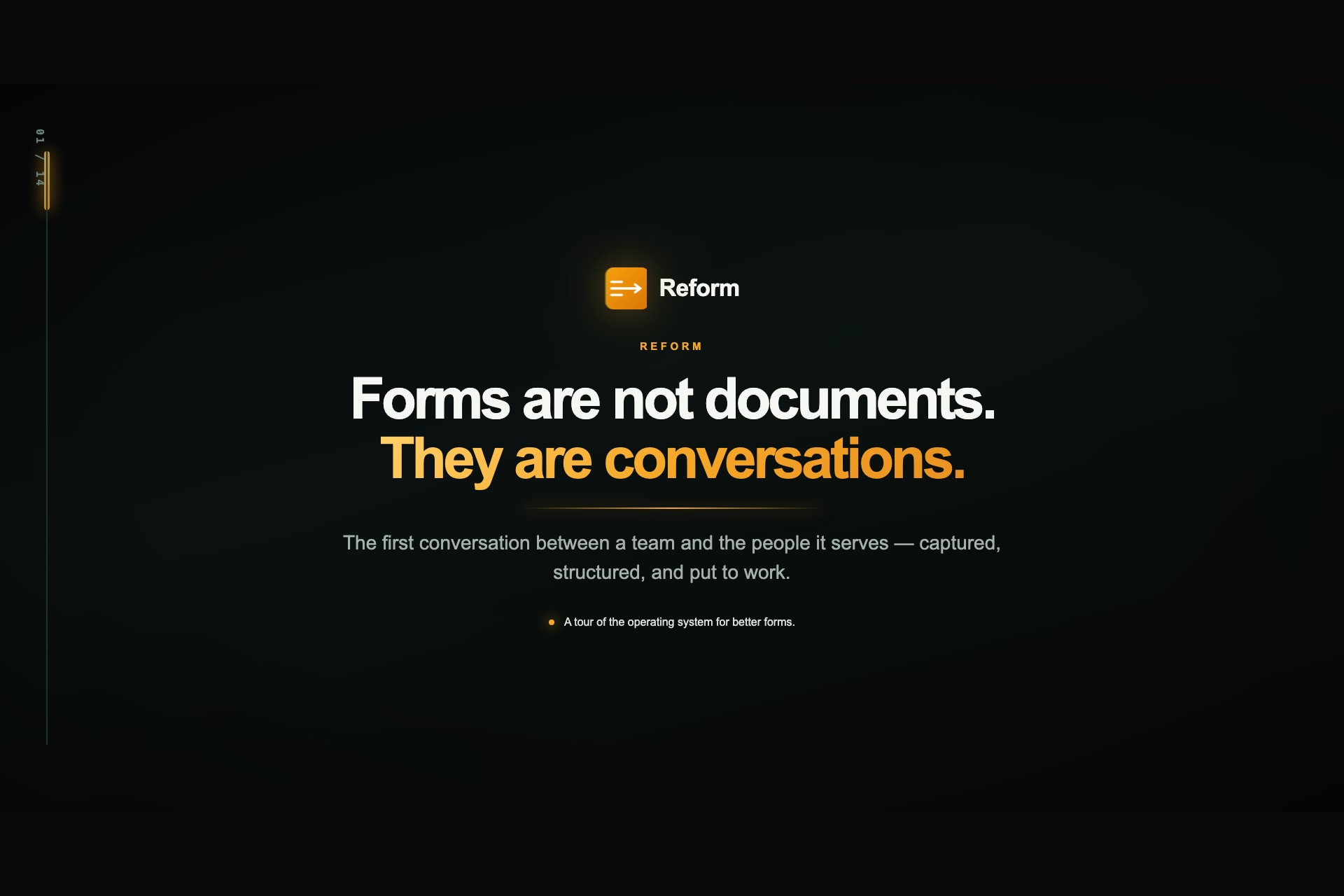
Most forms are treated like documents: a box to fill in, a button to press, and a spreadsheet nobody wants to read. But a form is really the first conversation between a team and the people it serves — and most tools end that conversation the second it starts. The form gets built in one tool, its logic lives in another, and the answers die in a third. We wanted the form to be the beginning of a workflow, not the end of a page: one place where an idea becomes a validated structure, that structure meets people however they prefer to answer, and every response turns into signal the team can act on.
What it does
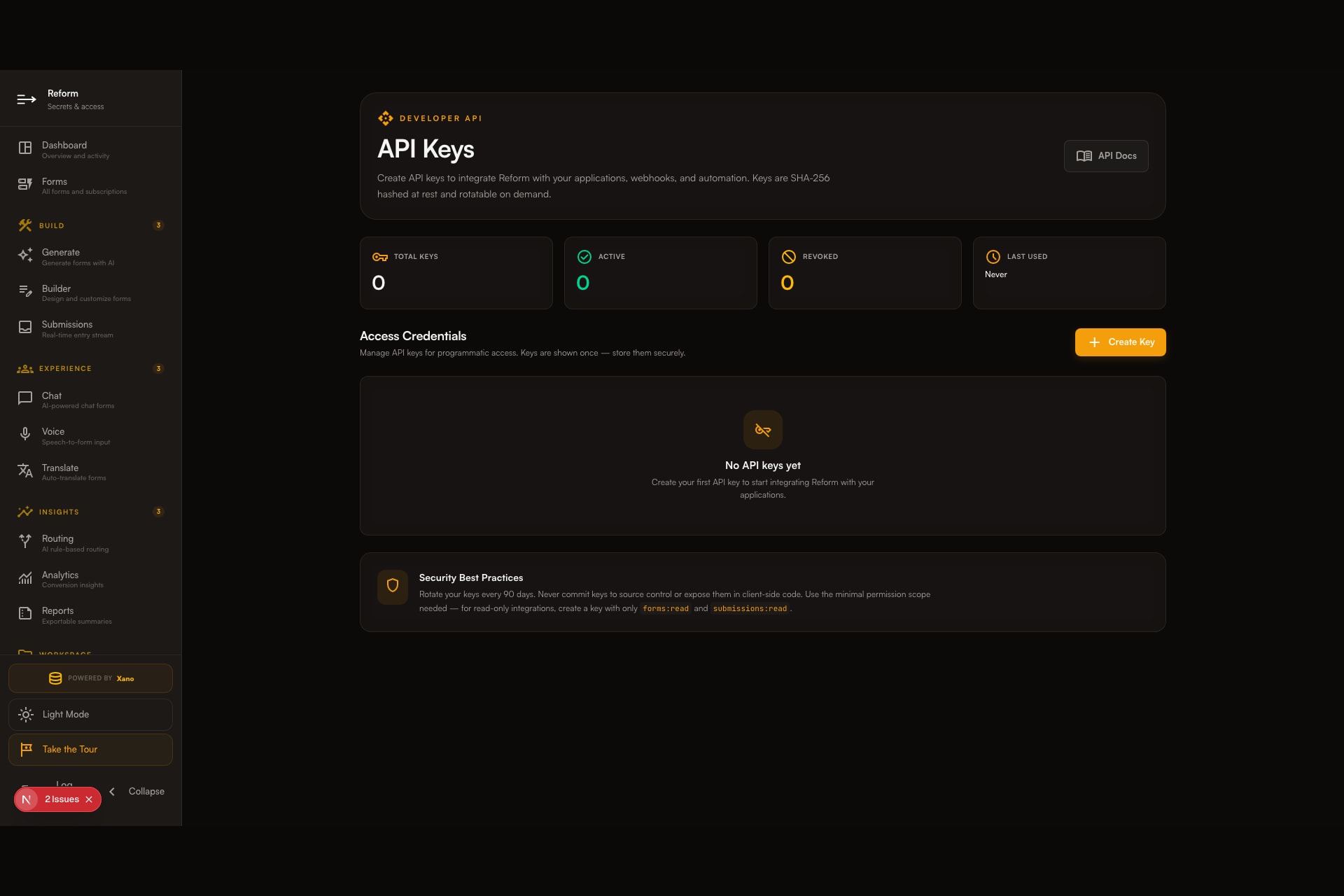
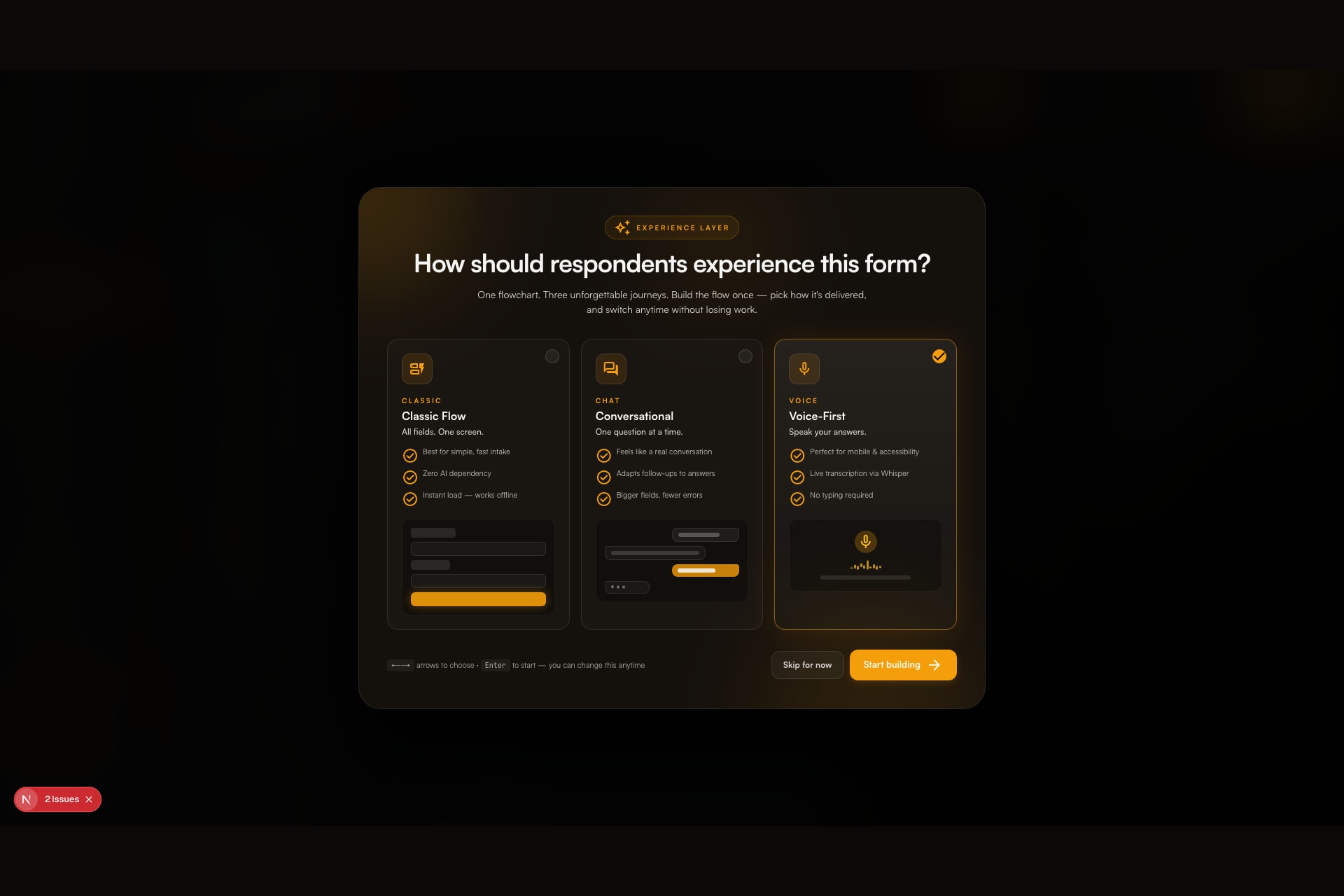
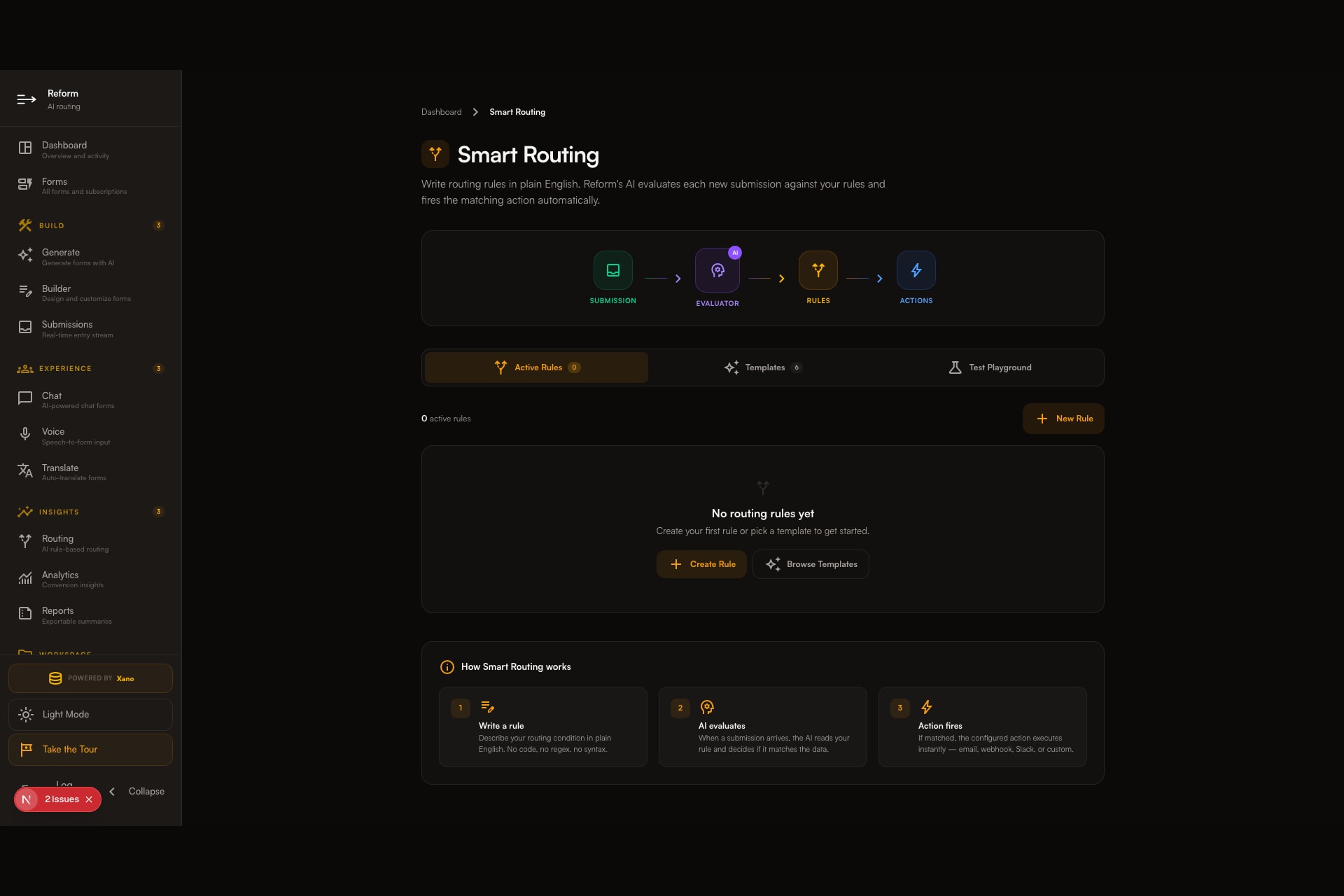
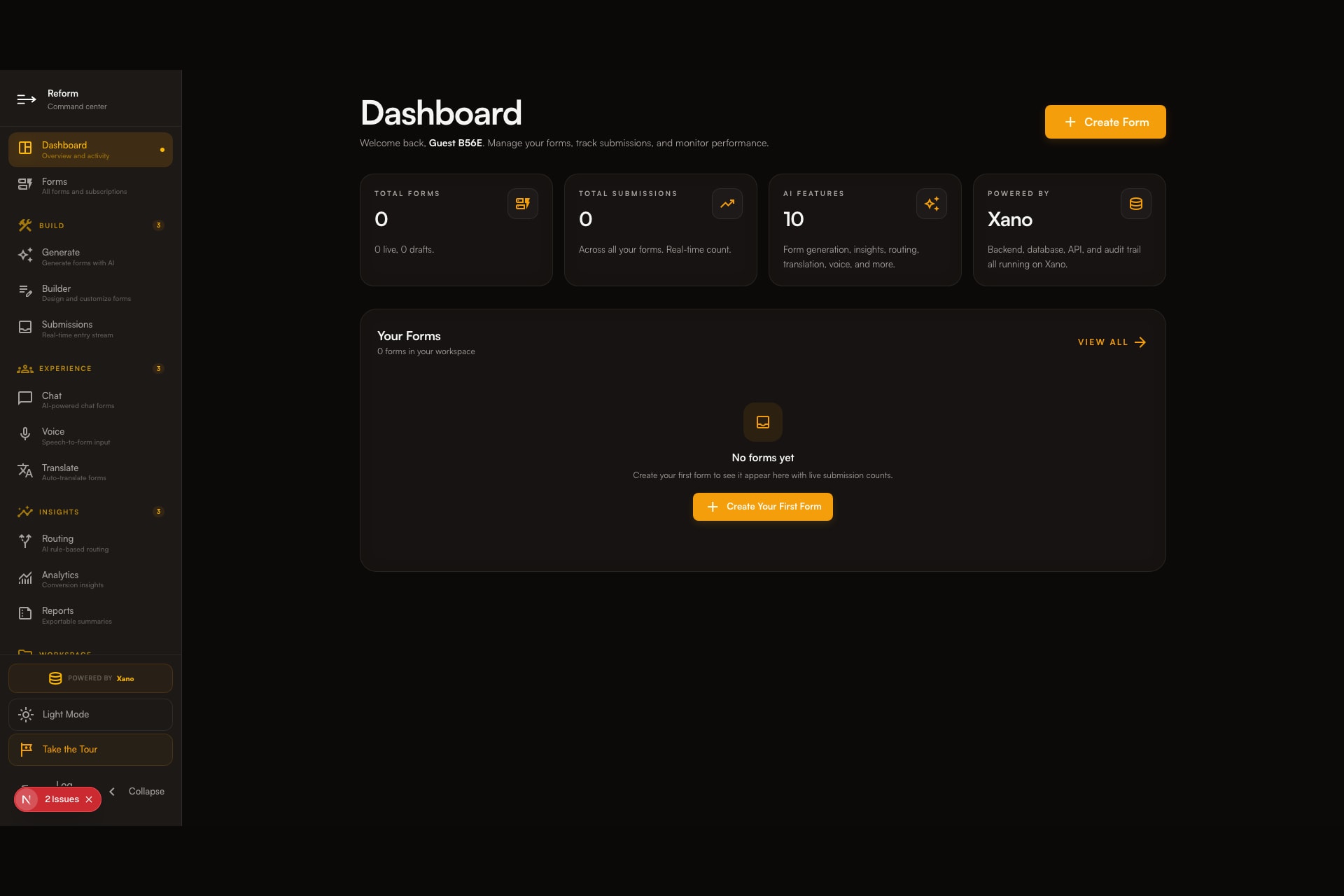
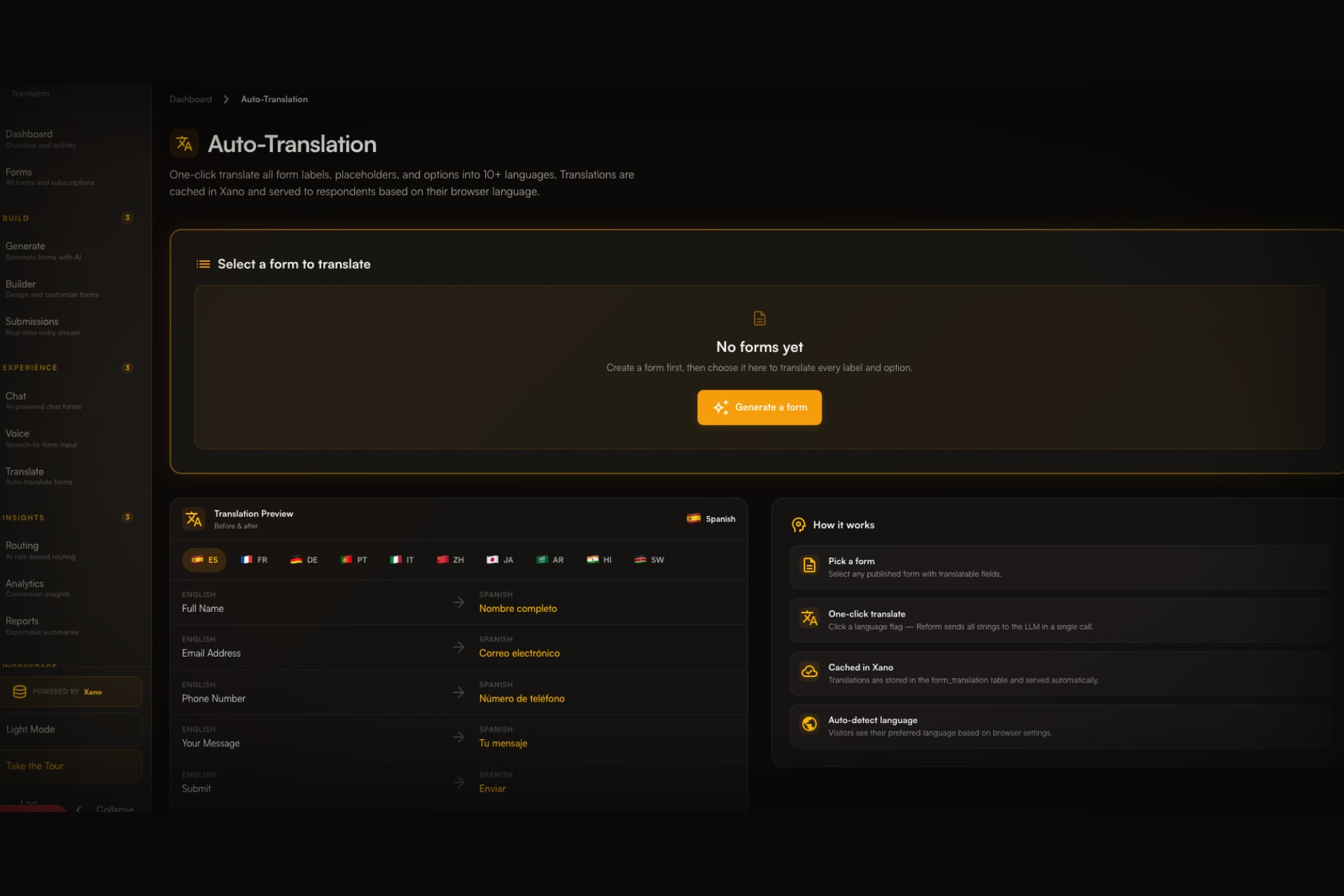
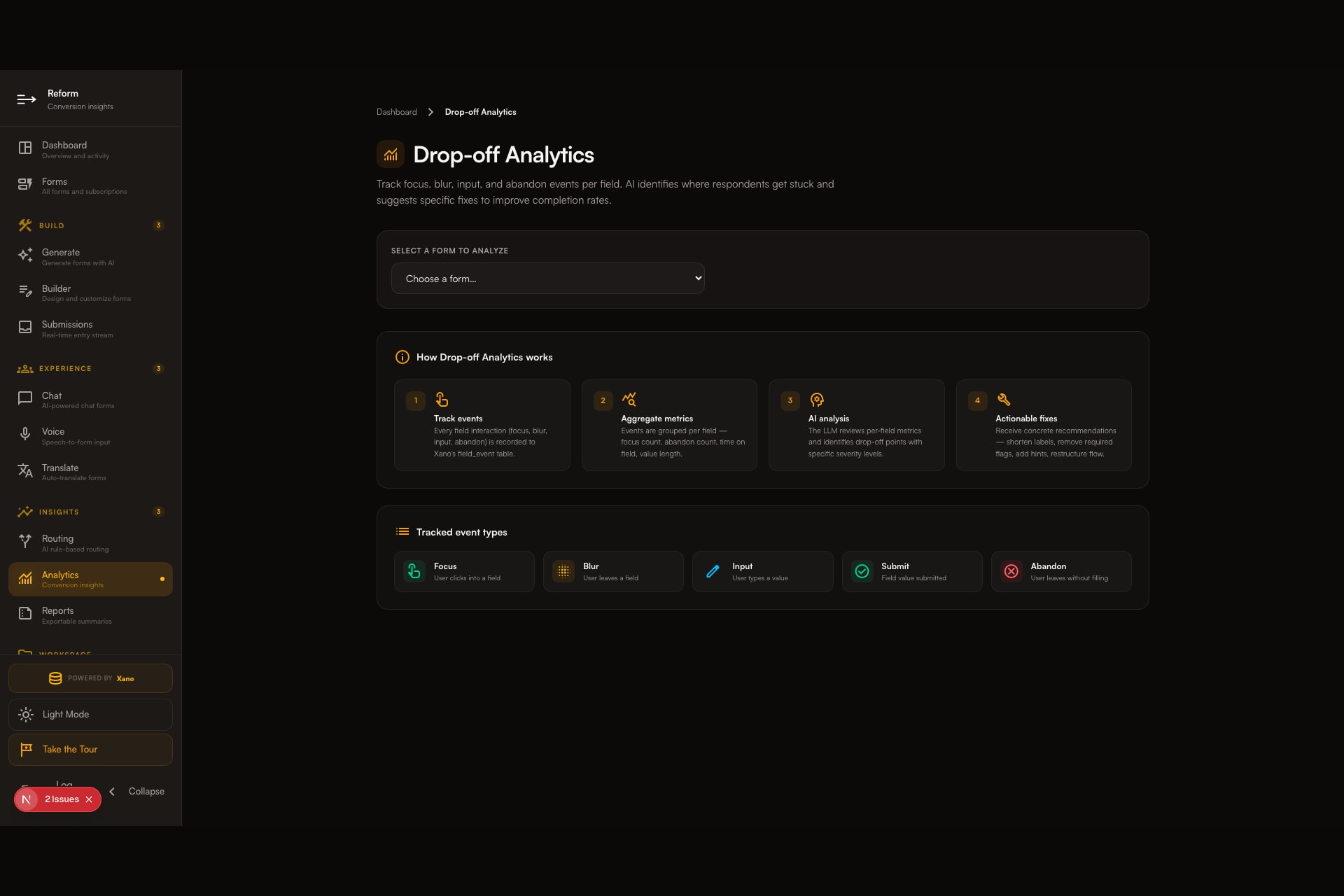
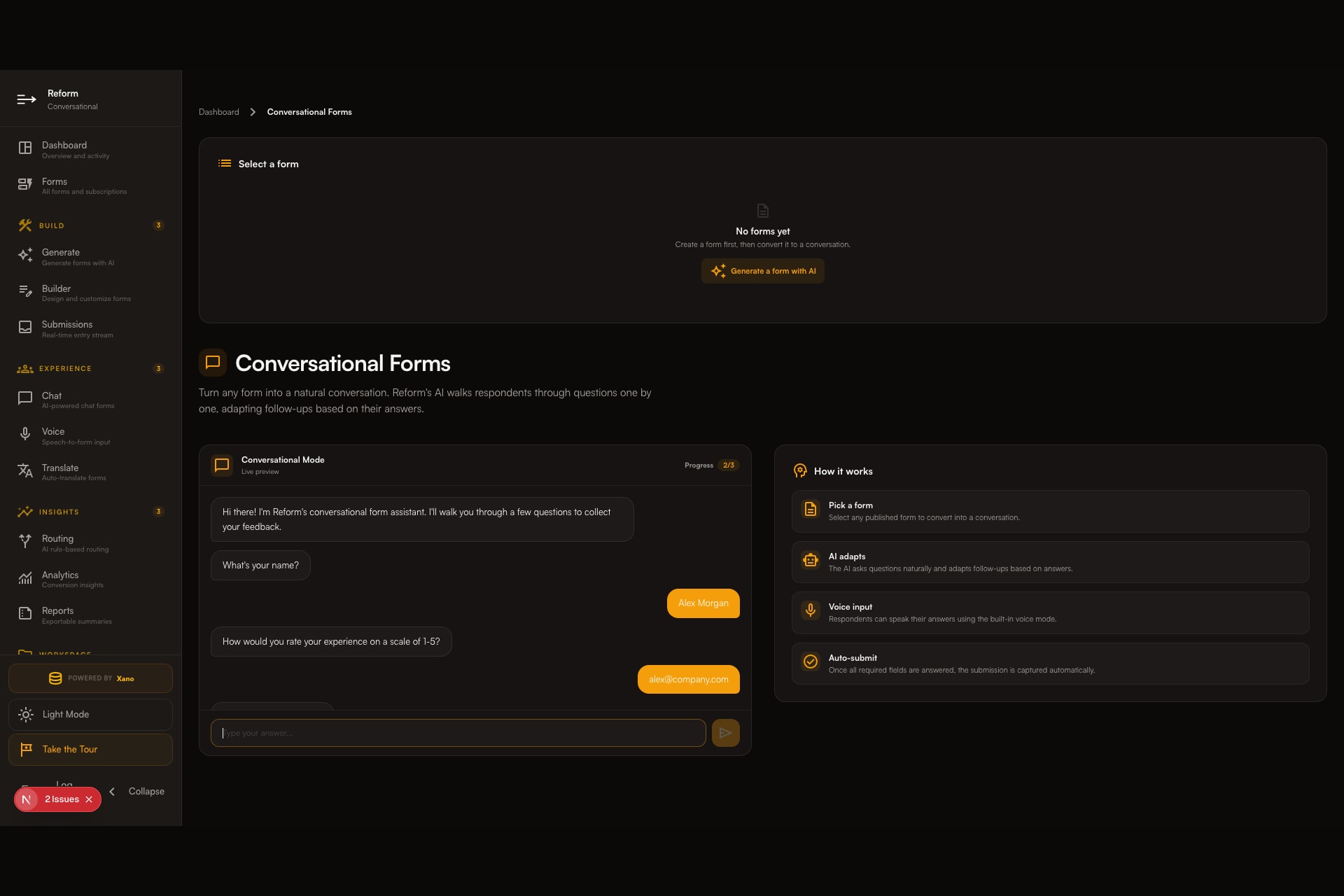
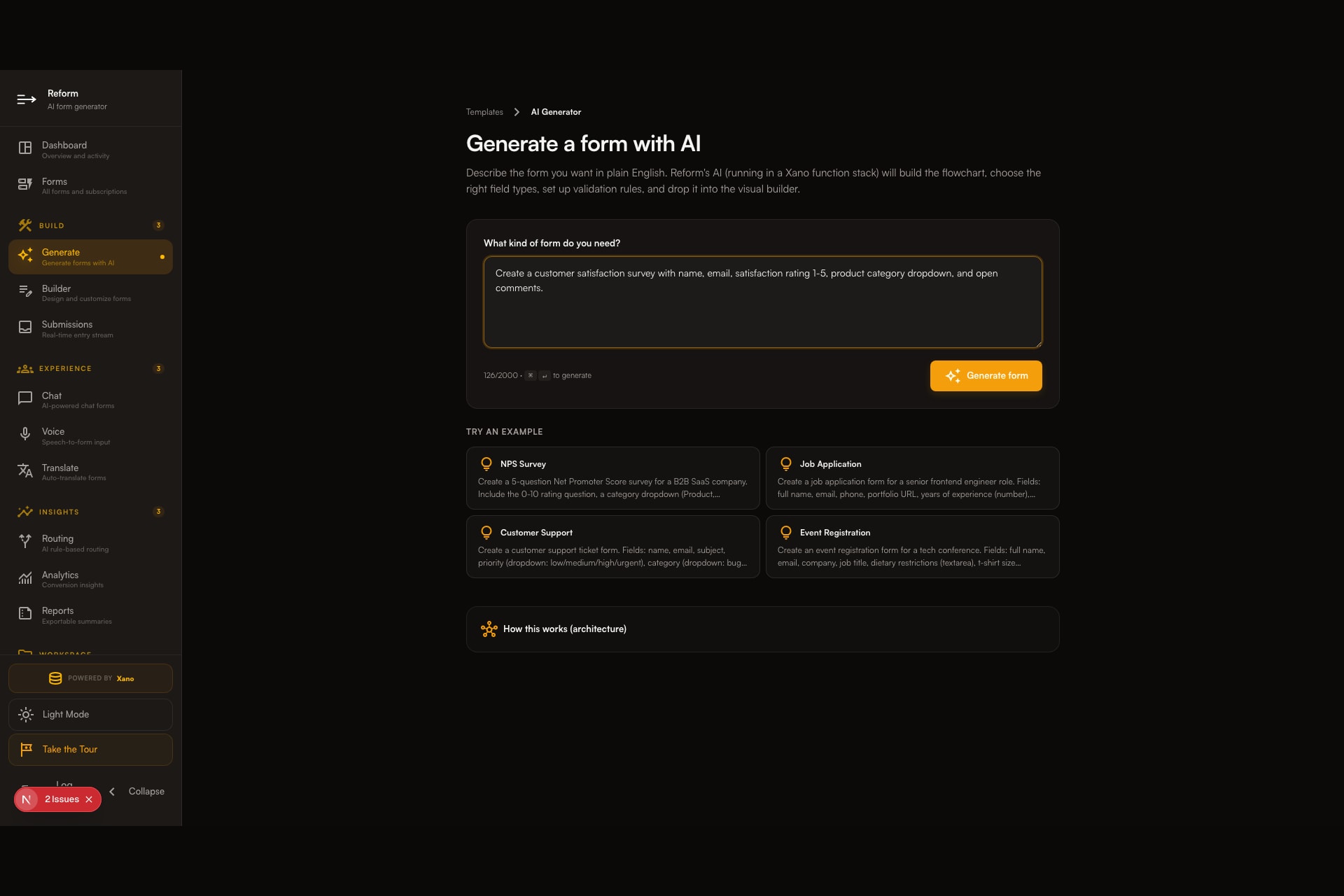
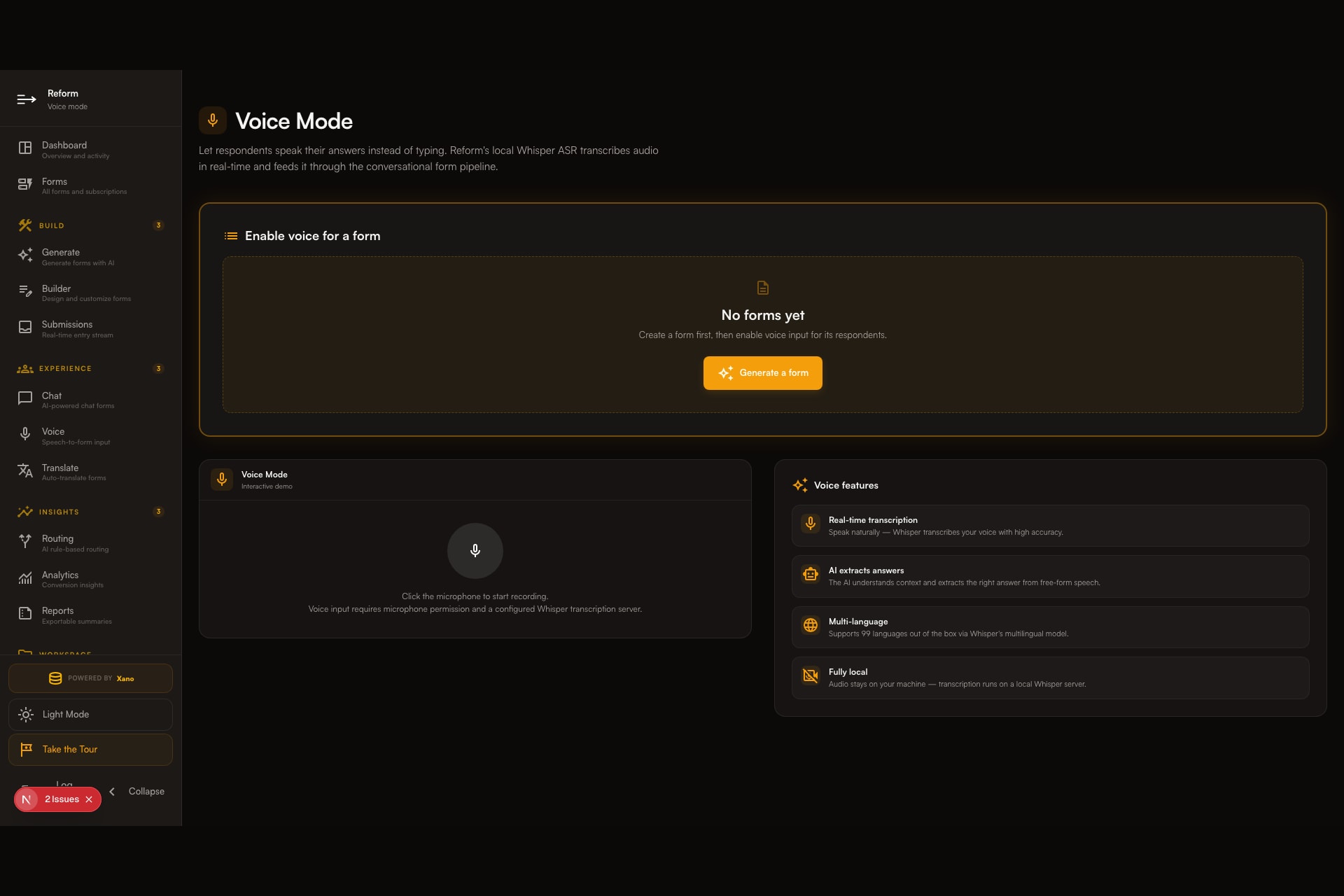
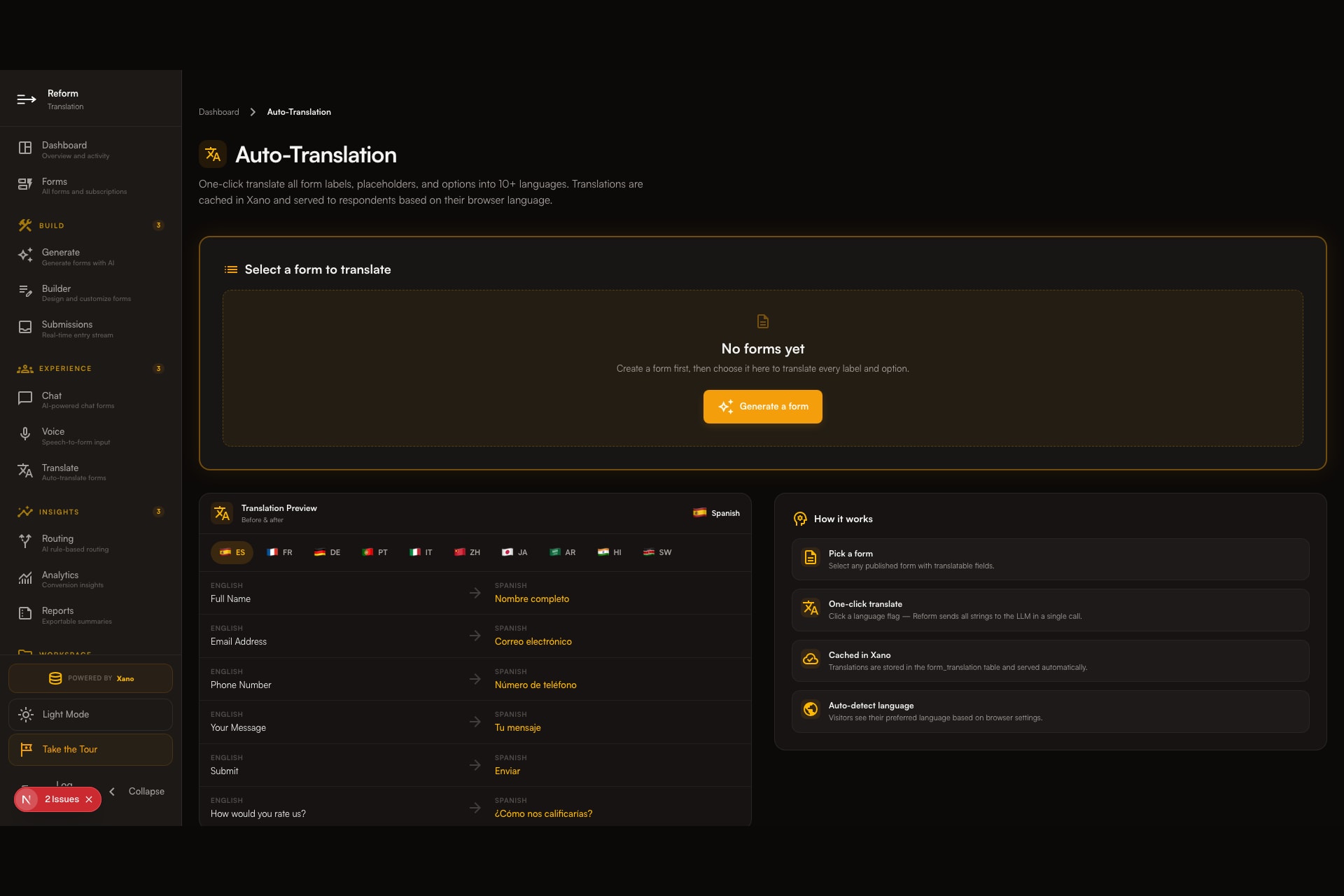
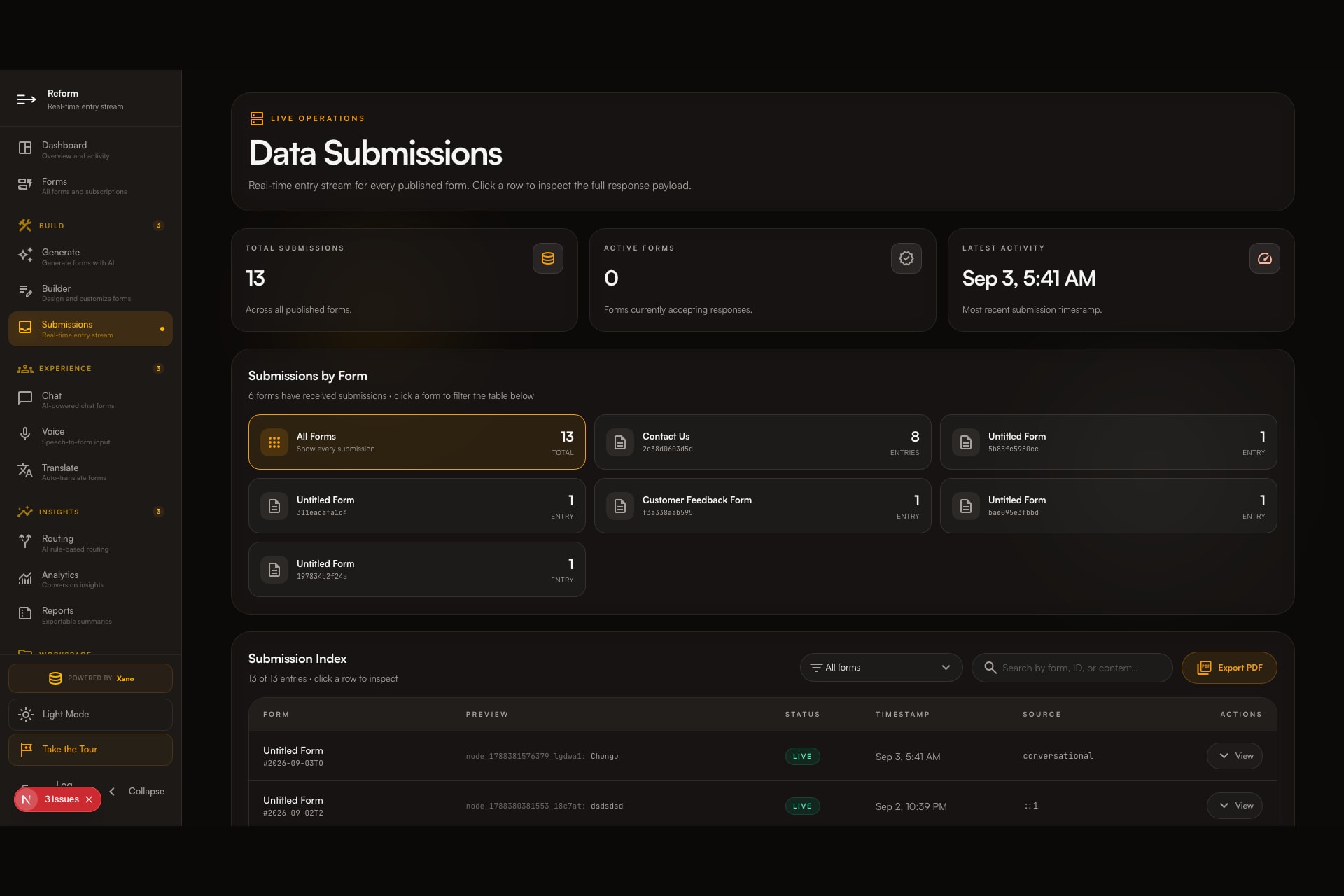
Describe it, get a form. The AI generator turns a sentence like "an NPS survey with a rating and comments" into a real structure: fields, options, validation, and a publishable flow. See the logic, not just the UI. A visual flowchart builder (5 node types, 13 field types, conditional branches) makes every decision explicit and editable — the same form config drives validation on the client and the server via a single Zod-powered engine. One flow, three journeys. Respondents can answer by typing, in a natural AI conversation, or with their voice (local Whisper transcription, 99 languages). Translation is one click and autodetects the visitor's language. Every response becomes signal. Submissions stream into a real-time dashboard; per-field event analytics (focus, abandon, drop-off) get an AI read with concrete fixes; plain-English routing rules fire email, webhook, or Slack actions. Built for developers too. Scoped, rotatable API keys (SHA-256 at rest) with a clean REST API — the whole workflow is programmable
How we built it
Product: Next.js + TypeScript + Tailwind on the front, and Xano as the backend used overall — 12 Xano tables hold every form schema, submission, translation, routing rule, and field event; six XanoScript function stacks orchestrate the AI (generation, insights, routing, audit); Xano auth, a nightly scheduled task, a REST API group, and Xano Static Hosting round out the platform. A Zod schema compiled from the form config validates identically in the browser and on the server. Voice: a local Whisper transcription server keeps audio on the respondent's machine while the AI extracts structured answers from free-form speech. The film: we produced a 3-minute cinematic demo of the real product — actual screens captured in a live browser, then cut so every scene switch lands exactly on the narration. Narration was generated with ElevenLabs and re-aligned word-by-word; the measured audio boundaries drive the visuals in two independent render pipelines (Remotion and an HTML/Puppeteer engine) that stay in sync.
Challenges we ran into
One schema, many surfaces. The same form must render as a typed page, a conversation, and a voice interaction with identical validation and submission behavior. Getting the flow graph, the generated schema, and every experience to agree took several iterations. Voice that feels natural. Transcription alone isn't enough — the AI has to know which spoken sentence answers which field, and the whole thing has to feel hands-free, not like dictation. Keeping the film honest. The demo shows the real product, so the visuals had to be pixelfaithful and the narration had to match the runtime exactly. We regenerated the voiceover, measured every word's timestamp, and re-derived all 13 scene boundaries from audio — including an imperceptible tempo correction to land precisely on 3:00 without breaking sync
Accomplishments that we're proud of
A working product, not a mockup — you can build, publish, and answer a real form end to end, and the demo film is footage of that real product. Three journeys from one flow: typed, conversational, and voice experiences sharing one schema, validation, and submission pipeline. AI that's native, not bolted on: prompt-to-form generation, drop-off analysis that names the problem and suggests the fix, and routing rules written in plain English. The film itself: real logos, real screens, and visuals locked to the narration to the millisecond.
What we learned
The quality of a form is the quality of the first conversation a team has with the people it serves — meet people where they are (voice, chat, their language) and the signal gets better. Measured beats guessed: once we derived scene cuts from word-level audio alignment, the video and the voice finally felt like one thing. Keeping validation and state in one engine (and one backend) is what makes "one platform" a real claim instead of a slogan.
What's next for Reform
A template library and team collaboration inside the flowchart builder. Routing and follow-up questions that learn from past submissions. Deeper voice: multilingual conversation, offline mode, and a mobile experience. Plugging responses into the tools teams already live in — Slack, CRM, webhooks everywhere. Turning analytics into action: when the AI spots a drop-off, Reform proposes and applies the fix.
Built With
- docker
- next.js
- typescript
- xano
- zustand

Log in or sign up for Devpost to join the conversation.