-
-

Step1: Write your name
-
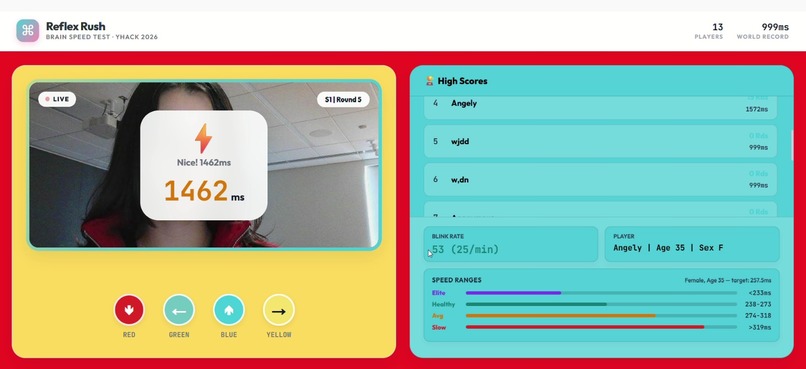
Step 2: Play the game!
-

Step 3: Get a scorecard
-
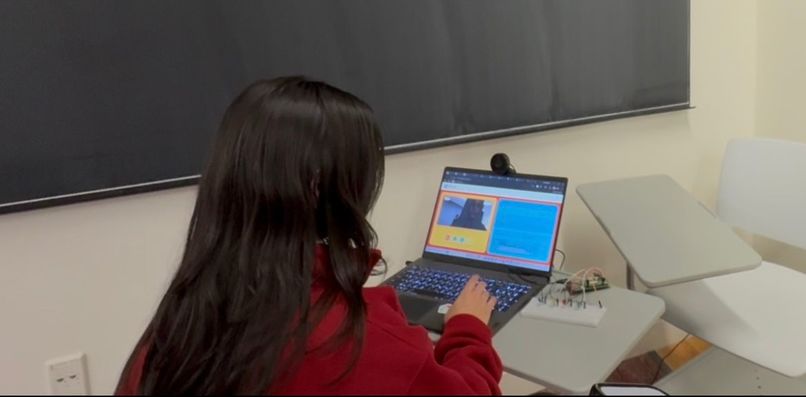
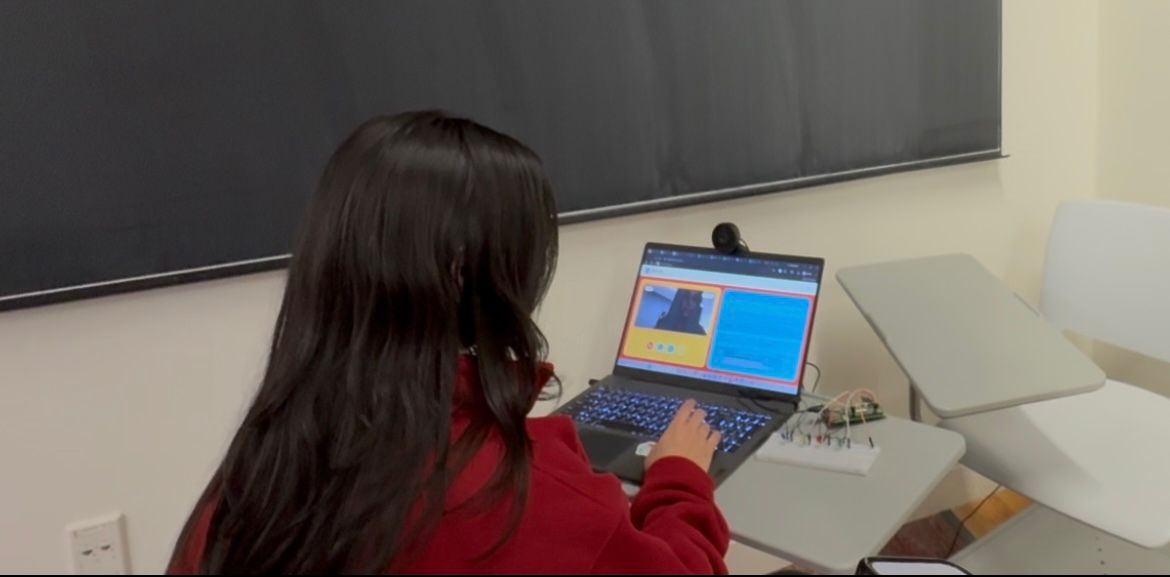
Angely playing Reflex Rush
-
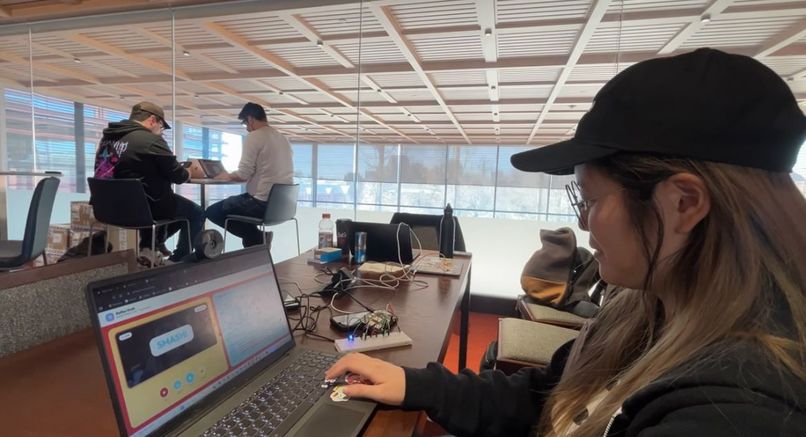
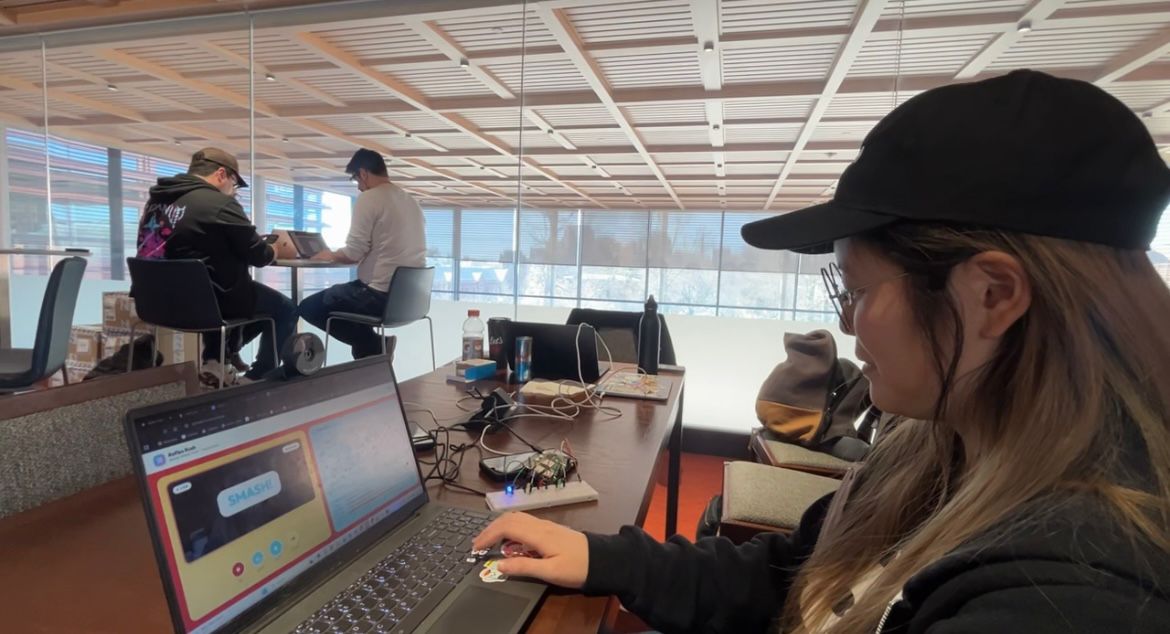
Nicole trying out Reflex Rush

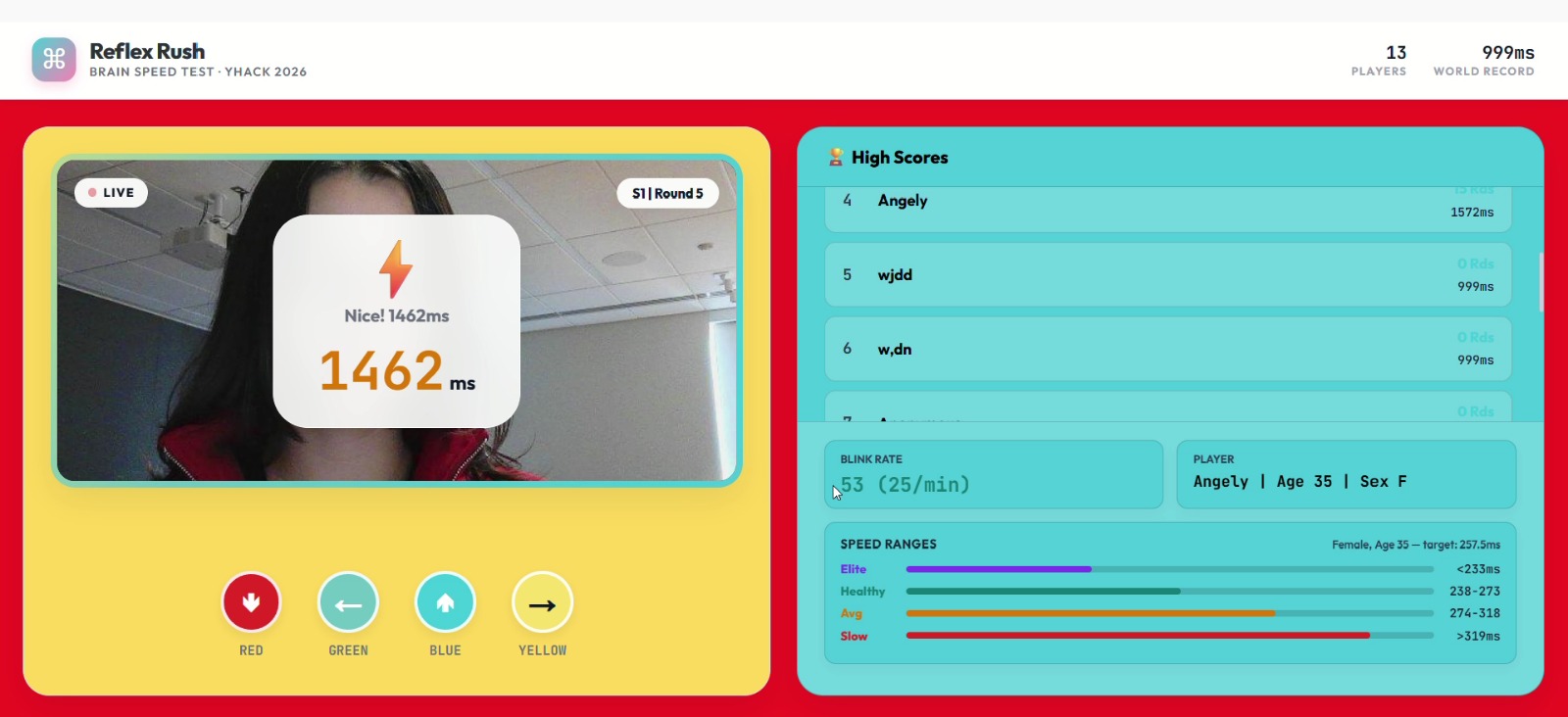

Reflex Rush
ReflexRush turns reaction time and blink rate into a neurological risk score in under 90 seconds, enabling early detection and at-home monitoring for diseases like Parkinson's.
Inspiration
My grandmother was diagnosed with Parkinson's disease three years ago. But looking back, the signs were there long before anyone caught it. Her reaction time had slowed, she blinked less, she hesitated before answering questions. By the time she saw a neurologist, she had already lost two years of the early intervention window.
That stuck with me. The diagnostic tools already exist. Neurologists literally use reaction time tasks to screen for cognitive decline. So why does the average Parkinson's diagnosis still come 2 to 3 years after symptoms begin?
Because those tools live inside clinics, behind appointments, behind insurance.
At YHack, I wanted to ask: what if the test came to you?
What It Does
Reflex Rush is a hardware and software system that runs a 4-choice color reaction time game on a Raspberry Pi. A color flashes on an LED. You smash the matching button. We record how fast you reacted down to the millisecond and score it against clinical norms for your exact age and sex.
The scoring formula:
$$\text{expected RT} = 240 + (\text{age} - 20) \times 0.5 + \delta_{\text{sex}}$$
where $\delta_{\text{sex}} = -10 \text{ ms}$ for males and $\delta_{\text{sex}} = +10 \text{ ms}$ for females (validated ages 30 to 80).
Your deviation from expected RT gets classified into four bands:
| Result | Deviation |
|---|---|
| Elite | Δ < −50 ms |
| Healthy | −50 ≤ Δ ≤ +75 ms |
| Average | +75 < Δ ≤ +175 ms |
| Concern | Δ > +175 ms |
where Δ = median RT − expected RT.
But we didn't stop at reaction time. We also passively track blink rate through a live camera feed using MediaPipe FaceMesh, computing the Eye Aspect Ratio (EAR) in real time:
$$\text{EAR} = \frac{|p_2 - p_6| + |p_3 - p_5|}{2|p_1 - p_4|}$$
A healthy blink rate is 15 to 20 per minute. Reduced blinking is one of the earliest observable signs of Parkinson's disease, and most people have no idea it's happening.
How We Built It
We wired four LEDs and buttons to a Raspberry Pi GPIO board and connected everything remotely through the Viam robotics SDK. Game logic runs on a laptop, the Pi handles the physical hardware. The browser dashboard (vanilla HTML, CSS, JS) polls the Flask API 10 times per second to keep the UI perfectly synced with physical game state.
The scoring pipeline was the hard part. We had to correctly handle three error types:
- Missed trials: RT excluded from speed average (per Jensen 2006)
- Wrong key presses: RT penalized +300 ms
- False starts: Trial restarted, not recorded
The final leaderboard score is accuracy weighted:
$$\text{score} = \frac{\text{median RT}}{\text{accuracy}}$$
So a fast but sloppy player can never beat a consistent one. Clinical validity over flashy numbers.
Challenges
Getting the clinical thresholds right was harder than expected. Our first version used simple RT norms with a 215 ms baseline. We thought we were golden. Then we tested it on players and... everyone was getting flagged as "Below Average."
Turns out, Reflex Rush is a 4 choice task. Healthy adults naturally score 280 to 380 ms on those. We had to go back to the research, re derive the bands from first principles using the validated 185 to 465 ms range, and recalibrate everything. That was a humbling moment at 3am on a Saturday.
The blink detection was its own adventure. MediaPipe FaceMesh runs 468 landmarks on a live camera feed. Getting it to run smoothly on JPEG streams without blocking the game loop required some creative async handling and a lot of head scratching.
And of course, this was a 24 hour hackathon. There was exactly one hour of sleep involved. The buzzer played the wrong tone for approximately four of those hours before we found the right GPIO pin.
What We Learned
Reaction time is not just a game mechanic. It's one of the most clinically validated measures of brain health we have. Intraindividual variability in RT—meaning how consistent you are, not just how fast—predicts cognitive decline years before any other test. We learned to take milliseconds seriously.
We also learned that hardware is humbling. Software bugs are quiet. A wrong wire is very, very loud.
What's Next for Reflex Rush
A $50 kiosk version for pharmacies and senior centers. Longitudinal tracking so users can see their brain speed trend over months. And a proper IRB approved clinical validation study because my grandmother deserved a device like this years ago, and so does everyone else.


Log in or sign up for Devpost to join the conversation.