-
-
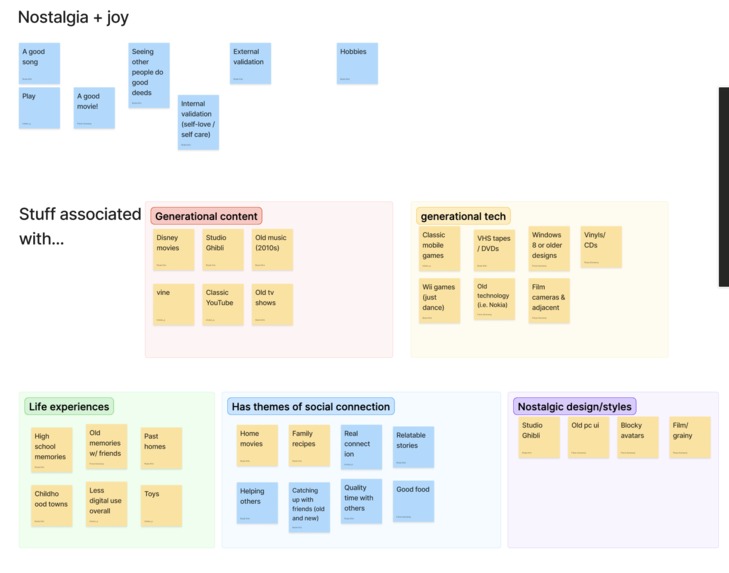
Nostalgic experiences affinity mapping
-
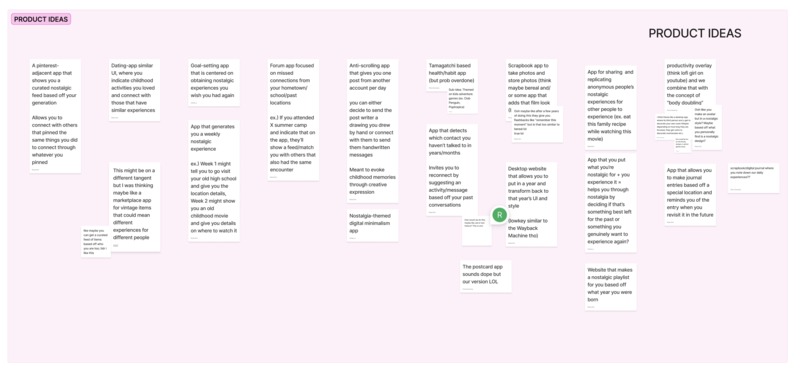
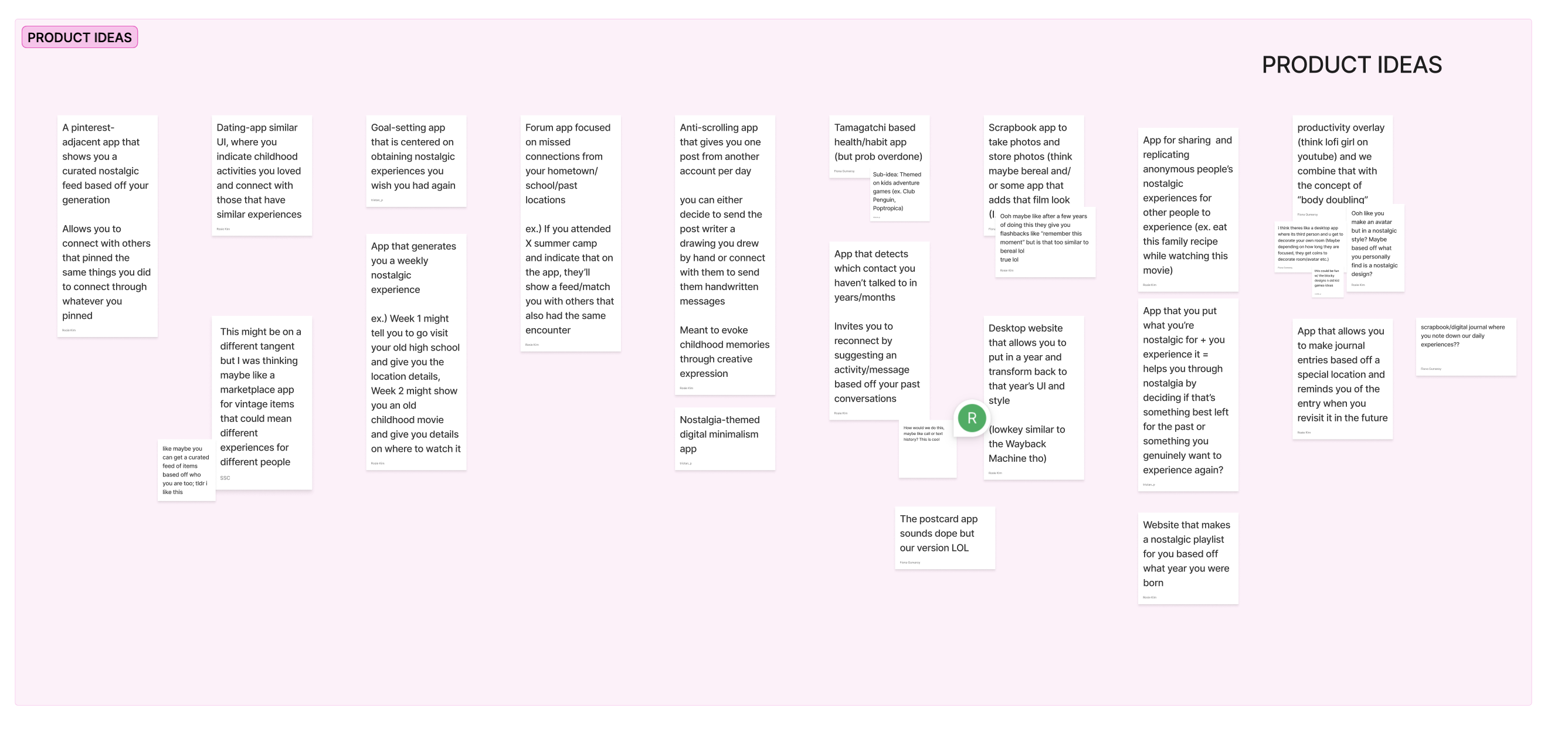
Initial project idea dump
-
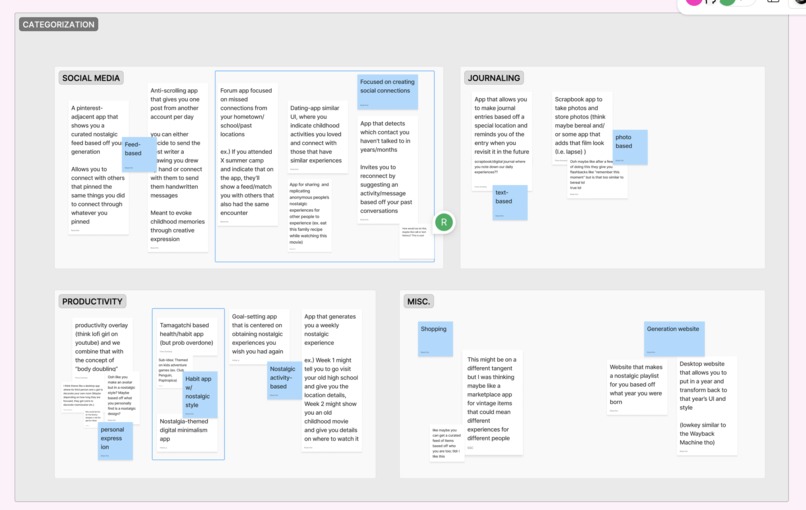
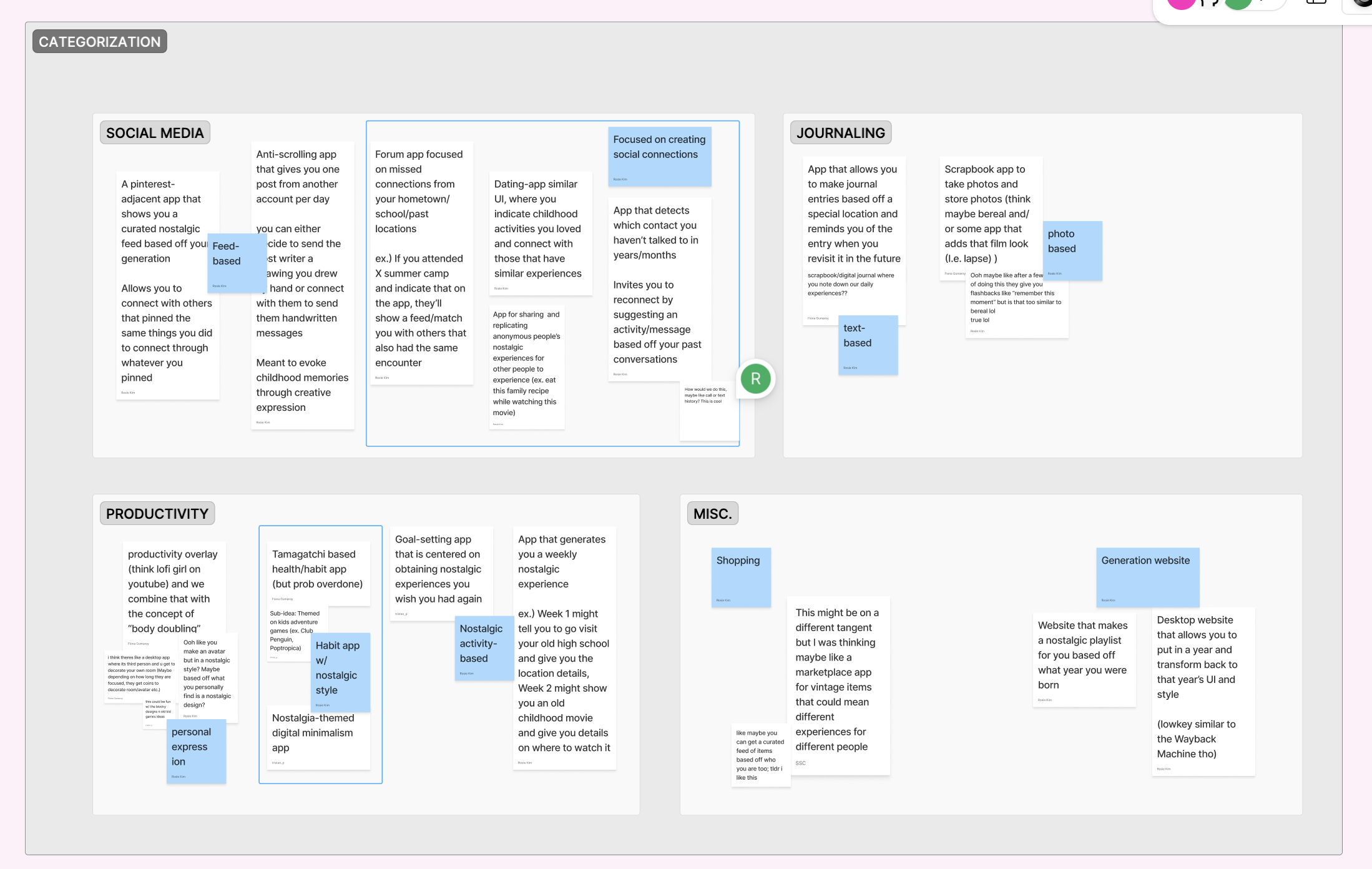
Categorized ideas
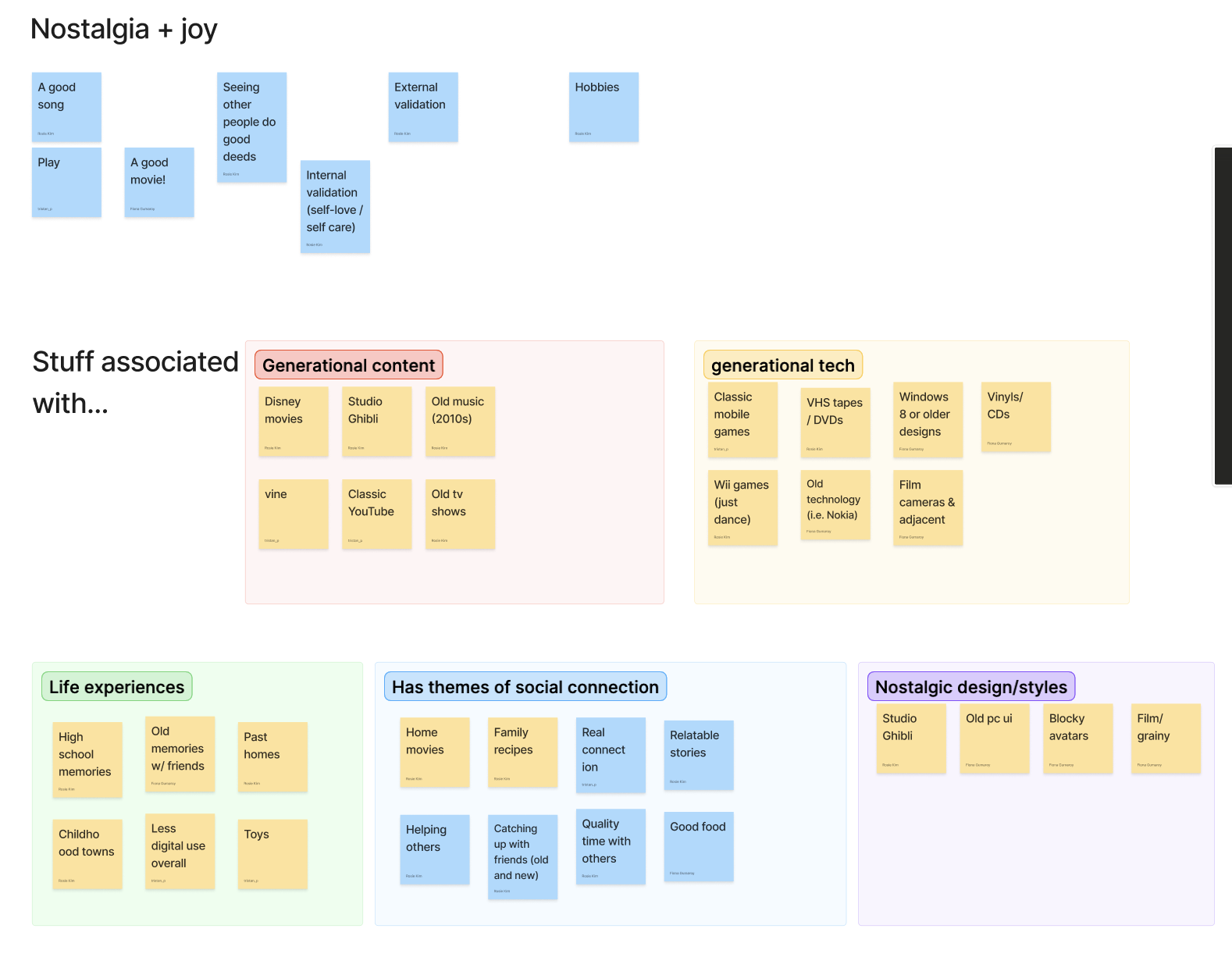
Inspiration
We started with a simple question: In a world of automation and optimization, how can we create digital experiences that feel more human and evoke nostalgia and joy? Most apps chase engagement through polish and algorithmic perfection. But nostalgia isn't polished; it's messy, sensory, and deeply social. We wanted to build something that honored that and encouraged reconnecting with old friends as well.
What it does
ReflectSun is a social app that fosters authentic connections by encouraging users to share personal nostalgic experiences and discover others who relate to them. Users are encouraged to share nostalgic experiences, such as objects, media, or foods by posting a personal photo along with short details about the nostalgic memory or topic. They can then browse other users’ posts using a dating-app-style swipe feature, swiping left or right based on whether a post feels relatable enough to engage in a conversation. Once two users are connected by a topic, they are able to share a dialogue focused on reminiscing, sharing past memories, and building community.
How we built it
We built our project primarily with Figma. After getting a basic idea of our app, we asked Figma Make to create a basic skeleton of our proposed idea. However, we only took the navbar component from it and from there, built the project from scratch and delegated pages to individual teammates.
Challenges we ran into
Surprisingly enough, our team was flowing with ideas as soon as we found out about the theme. However, this also meant that we had a lot of options, which resulted in taking more time deciding what we truly wanted to focus on. However, the survey results really directed us. Once we developed our basic idea, there was a point where we were at crossroads with two separate approaches. Thus, we took the time to brainstorm the pros and cons of each, considered our time limitations, and got outside feedback from one of the event's mentors.
Accomplishments that we're proud of
We're proud of building ReflectSun with genuine user research at its core.
We conducted a survey with 34 Gen Z respondents and used affinity mapping to identify three critical themes: the importance of authentic, imperfect content; social connection as the primary joy driver; and nostalgia as a cascading, sensory experience. These insights directly shaped every design decision.
We then built a fully interactive Figma prototype with two complete user flows: the matching experience where users discover and connect with contacts through shared nostalgia, and the post creation flow where they share authentic memories with real photos and location tagging. Every feature we designed traces back to user research. The points system rewards authentic photo-sharing because our data showed real photos were the strongest nostalgia trigger. Location tagging exists because respondents cited specific places as immersive memory triggers. The 12-hour conversation window came from mentor feedback and solves a real problem: reconnection attempts that fizzle out.
What made this process hard was ideation. We had dozens of product concepts. The hardest part was choosing what to cut. We had to kill ideas we liked because they didn't align with what users actually told us they needed. That discipline kept us focused on solving a real problem rather than building what felt trendy.
What we learned
We surveyed 43 Gen Z users about what triggers nostalgia and how they experience joy through apps. We realized that although Gen Z makes up the majority of digital users today, they were also one of the generations most craving authentic social connection:
- Old, real photos and videos were their strongest nostalgia trigger, not curated content feeds. Authentic nostalgia isn't just the objects and experiences they had, but their deep personal connections to them.
- Social apps ranked highest for joy, but the joy came from connecting with people they already knew.
- Users rejected AI-generated content as it was "too perfect," "eerily clean," and "emotionless." They valued messiness, reality, and authenticity.
- Nostalgia is social.
Ultimately, people naturally experience nostalgia as a social, imperfect, sensory process. But apps were delivering nostalgia content in a way that was impersonal, isolated, and unrelated to them.
What's next for ReflectSun
ReflectSun was built in less than 24 hours, so the possibilities of ReflectSun’s future are endless. Moving forward, we want to transition from a static archive to a living, breathing ecosystem of shared history. To accomplish this, our roadmap involves:
- UI: Creating more transitions between pages/components to make everything seem more seamless
- Video & Sound Integration: Moving beyond just images, we want to also incorporate sound to create a specific atmosphere the poster wants to emulate, deepening emotional resonance. Additionally, we want them to have the option to add videos too.
- Prompts: To keep our service engaging and have users explore nostalgia in different ways, we want to be open to pushing engaging prompts and content formats that can encourage users to engage in nostalgic conversations they may not have initially imagined beforehand.
Built With
- figma
- research
- ux

Log in or sign up for Devpost to join the conversation.