Inspiration
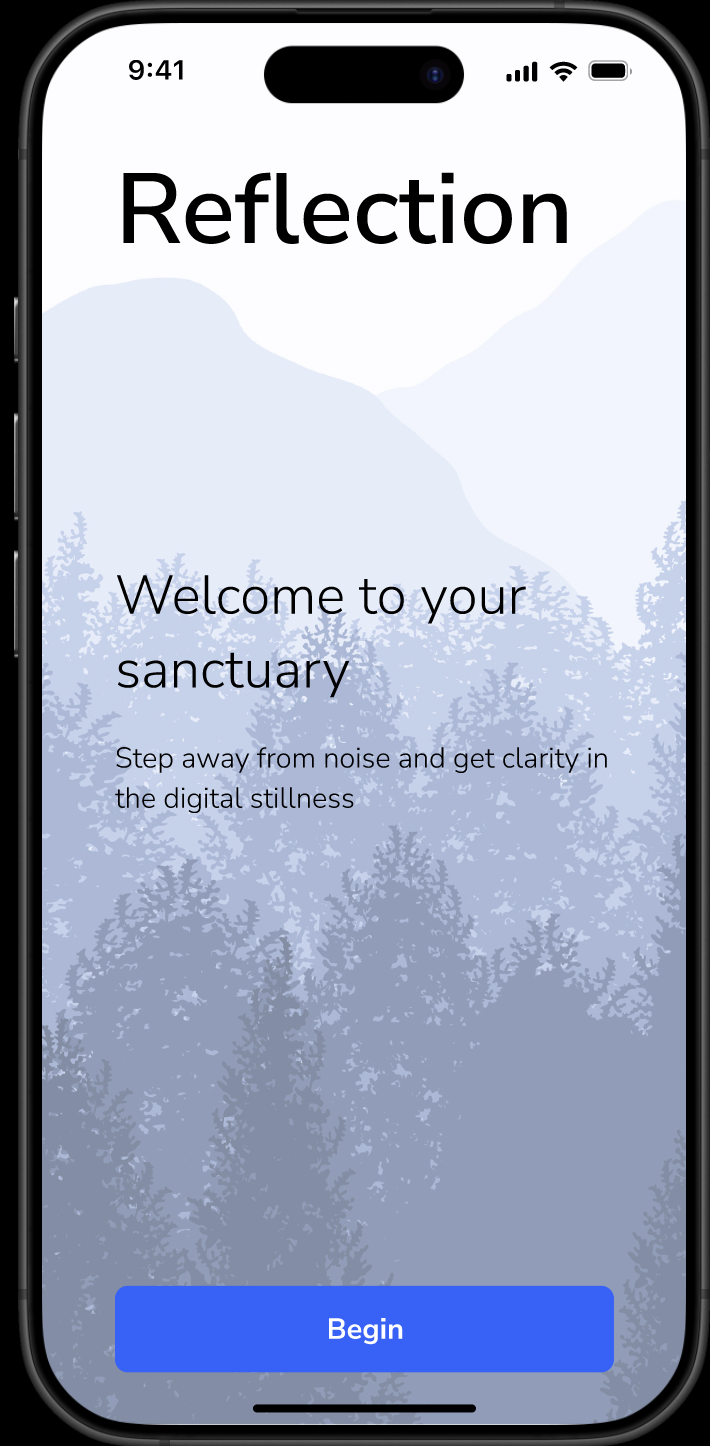
Here is the thing about standard journaling apps. They treat the human mind like a database. They optimize for fast inputs and habit streaks. The CreateSC theme challenged us to design beyond efficiency. We wanted to build a time capsule. A place that uses friction as a feature to weave memories rather than just track days. What this really means is we built a product that pushes back against the optimization mindset completely.
What it does
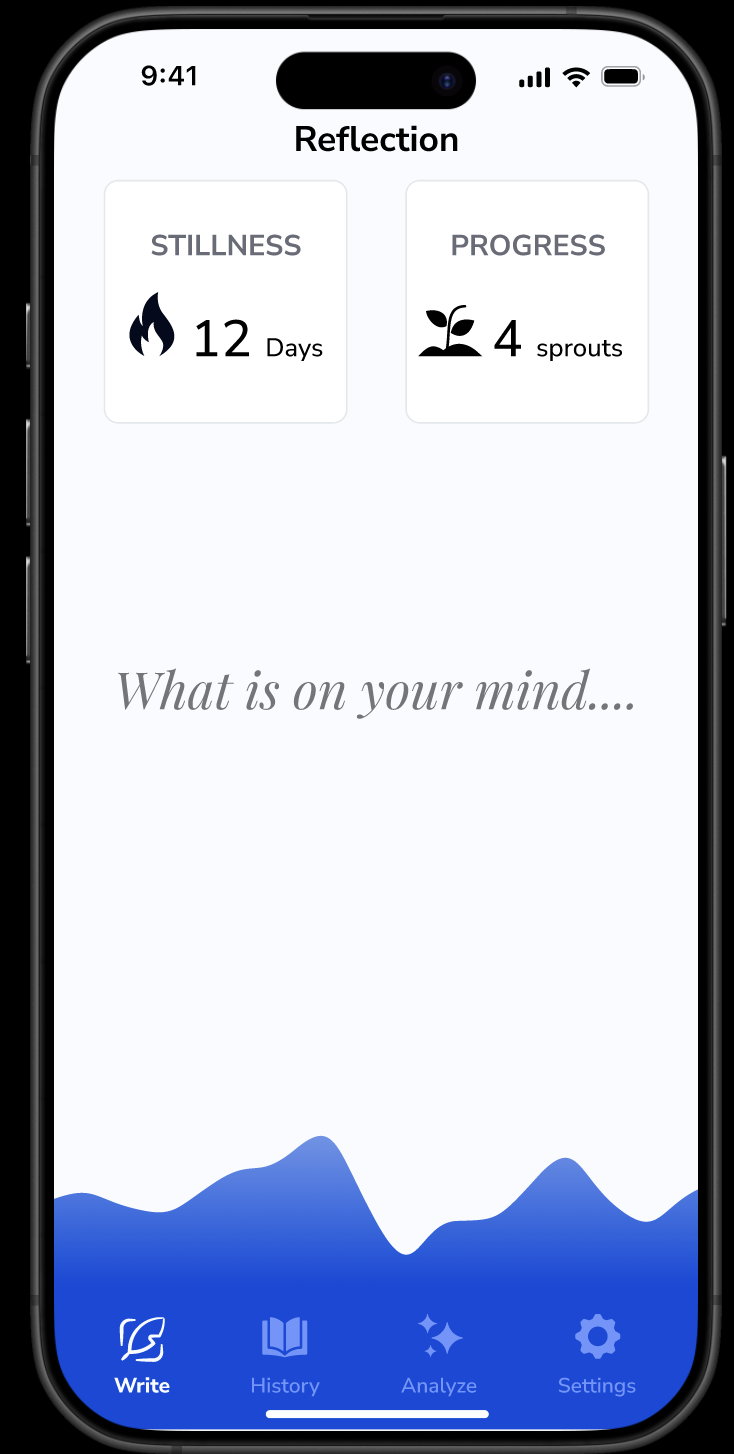
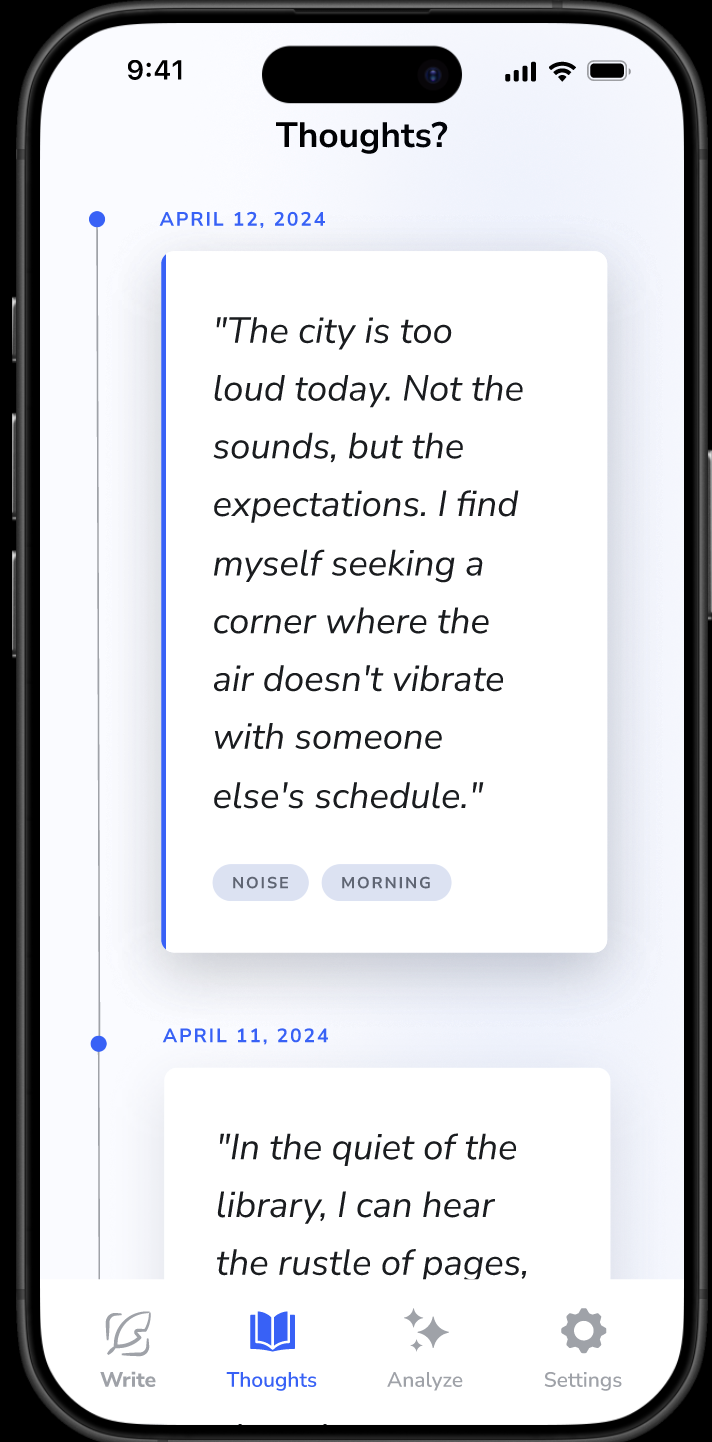
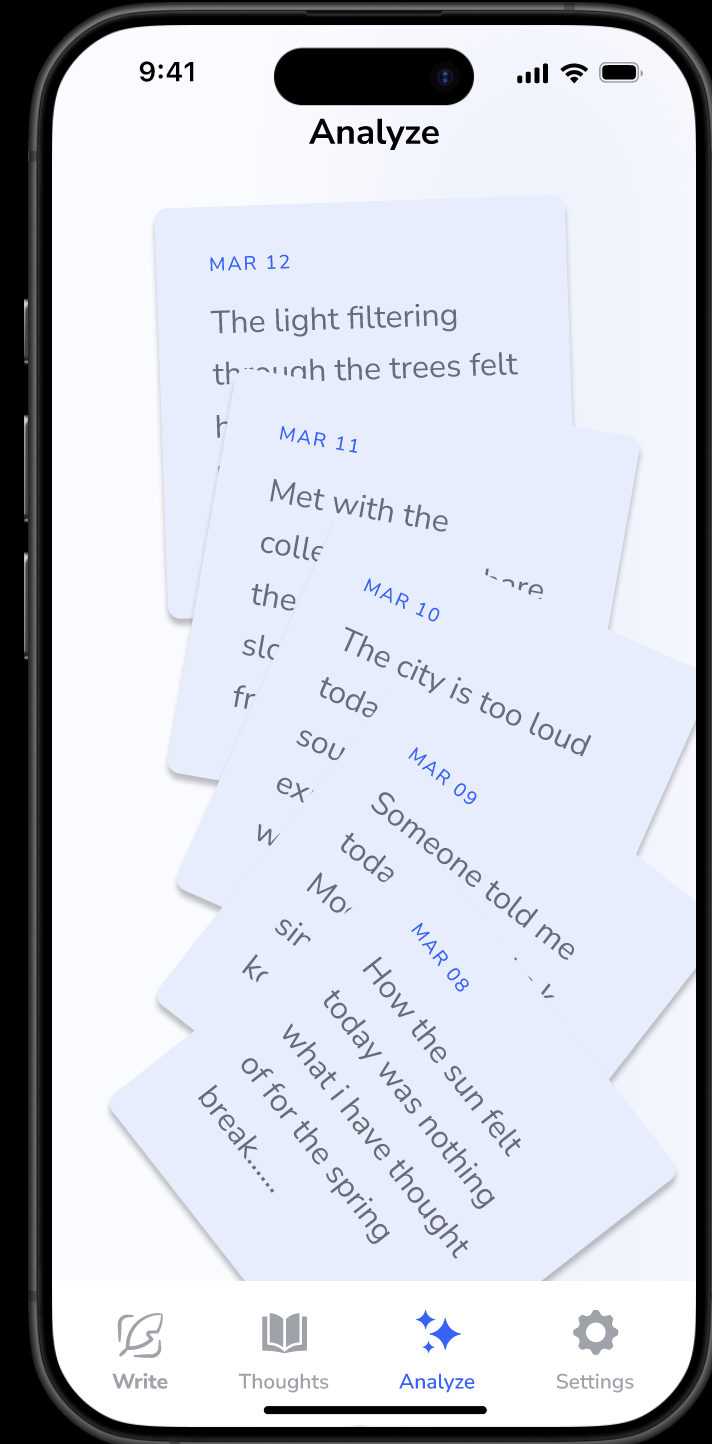
Reflection is a journaling experience that forces you to slow down. You log a single thought but the core mechanic is the return. You manually set a dial for when that thought resurfaces. Weeks later the app brings it back and asks you to build on it. It visually threads the old entry with the new one creating a spatial canvas of your state of mind over time instead of a chronological to do list.
How we built it
Let us break it down. We designed the entire experience in Figma prioritizing typographic hierarchy over heavy visual elements. We relied strictly on the Inter font family and a minimalist white and electric blue palette. The interface uses text opacity rules to establish order and gets out of the way so the user can focus entirely on the thought. We completely removed artificial intelligence from the loop to ensure the user maintains total agency over their memory.
Challenges we ran into
The hardest part was fighting our own product design instincts. Early iterations included streak counters and gamification. We realized that punishing a user for missing a day is the exact optimization mindset we were supposed to dismantle. Stripping away those standard crutches was uncomfortable. It forced us to rely entirely on the core interaction loop to provide value.
Accomplishments that we're proud of
We successfully removed efficiency from the equation without ruining the usability. The manual time dial and the spatial archive prove that introducing intentional friction can actually make a digital product feel more premium and human. We built a digital sanctuary worth returning to.
What we learned
Designing for slowness requires brutal discipline. When you strip away algorithms feeds and habit trackers every single text weight and spatial layout choice carries massive responsibility. You have to trust the core interaction loop and reject the urge to add features just for the sake of forced engagement.
What's next for Reflection
We want to refine the spatial archive canvas to allow users to manually group threaded thoughts into larger life chapters. The goal is to keep pushing against the idea that journaling needs to be a daily grind. We want to focus entirely on making the archive a quiet room for deep reflection.
Built With
- figma

Log in or sign up for Devpost to join the conversation.