ReflectAI: Inside Your Interview Brain
💡 Inspiration
Most interview preparation tools focus on what you answer — but not how you think.
While preparing for interviews, we kept running into the same uncomfortable patterns:
- Sometimes we knew the answer but couldn't articulate it clearly under pressure.
- Sometimes we responded too quickly and made avoidable mistakes.
- Sometimes we performed well in relaxed settings but fell apart when the stakes felt real.
That observation led us to a fundamental realization:
The real problem isn't just knowledge — it's thinking patterns.
We started asking a different question: What if an interview tool could study the mind behind the answer, not just the answer itself?
That question became ReflectAI — a system that doesn't just simulate interviews, but analyzes cognition, adapts in real time, and helps users improve the way they think under pressure.
🔨 What It Does
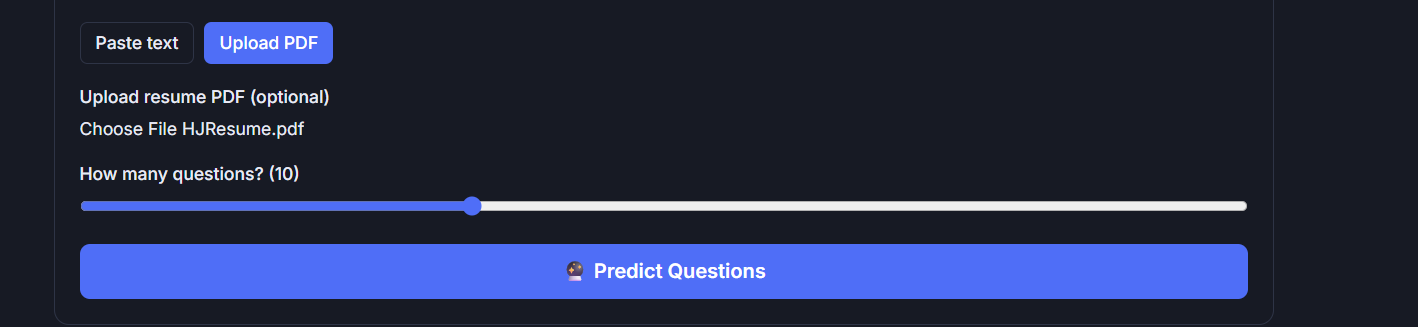
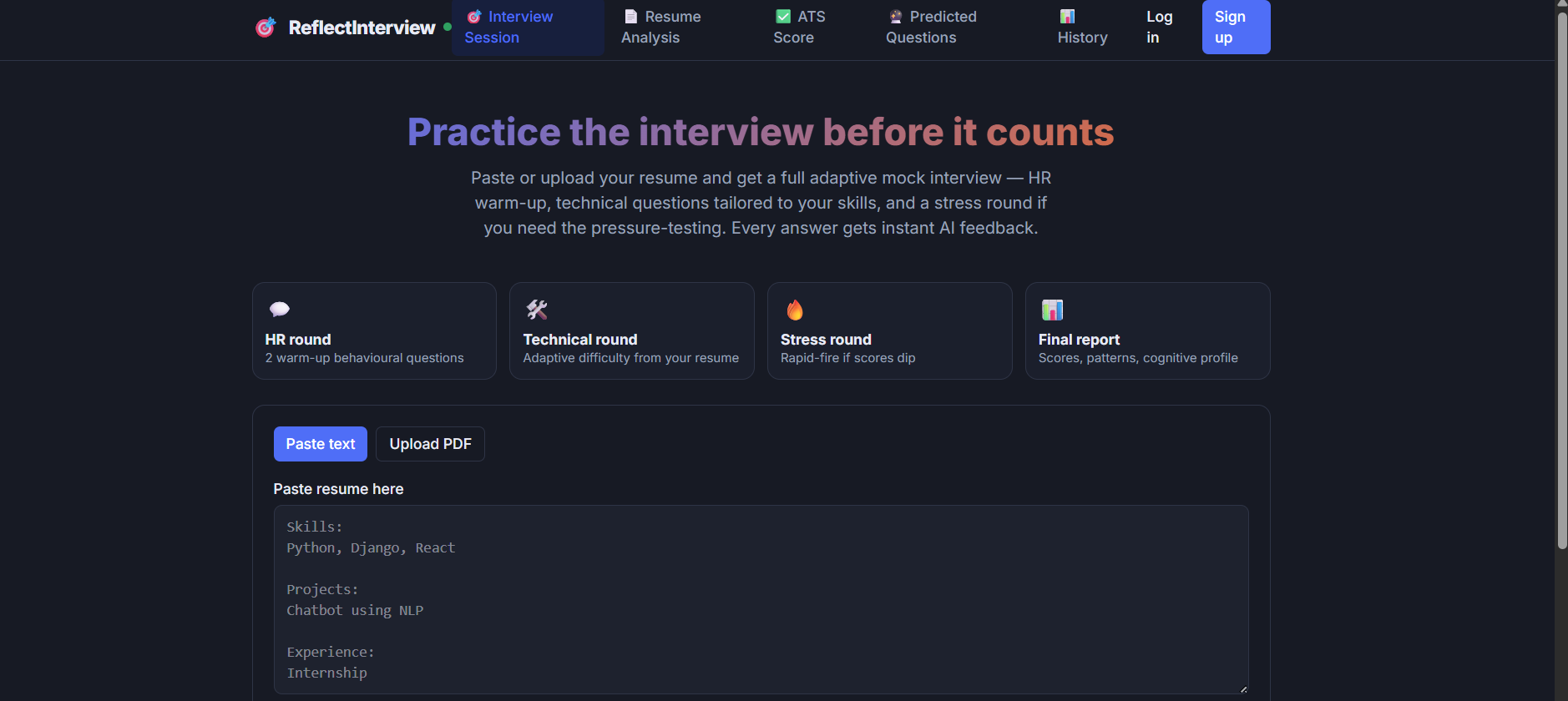
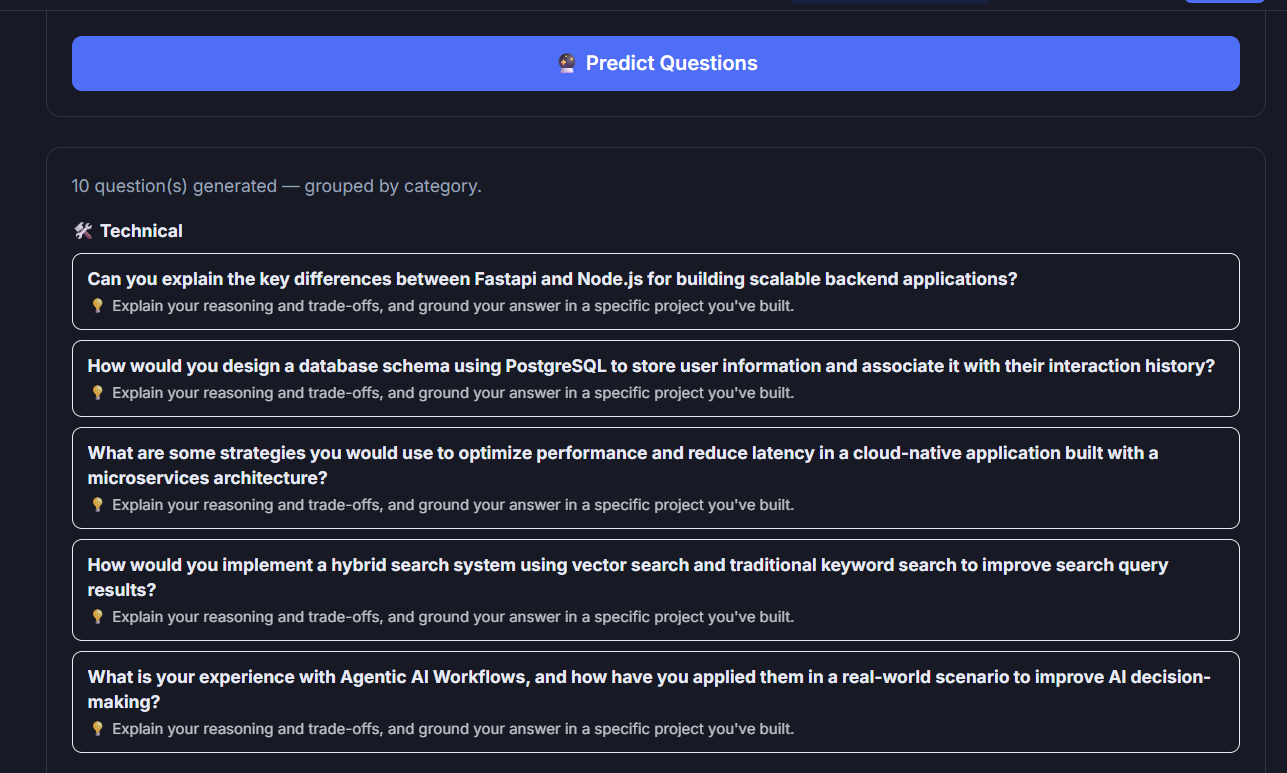
ReflectAI is an adaptive AI interview platform that goes far beyond traditional question-answering tools.
It can:
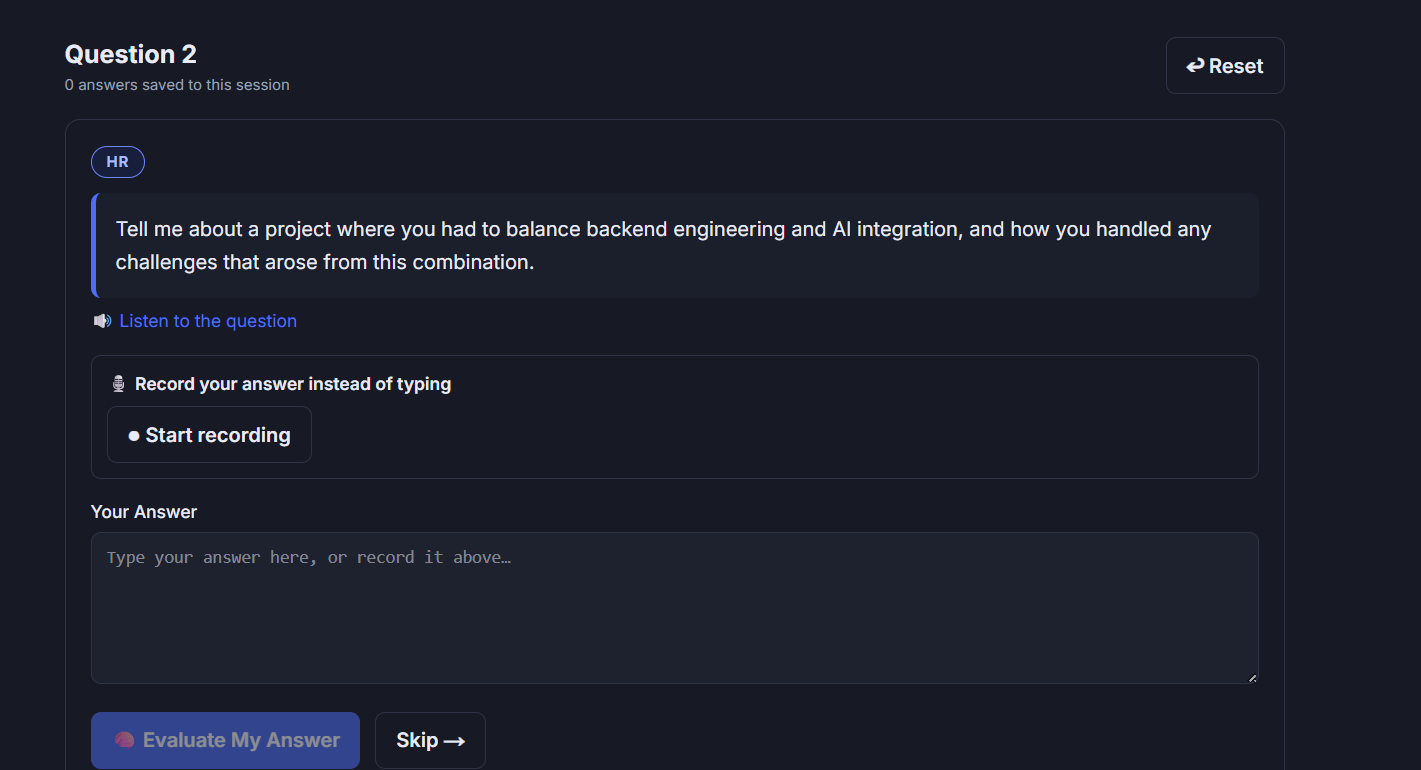
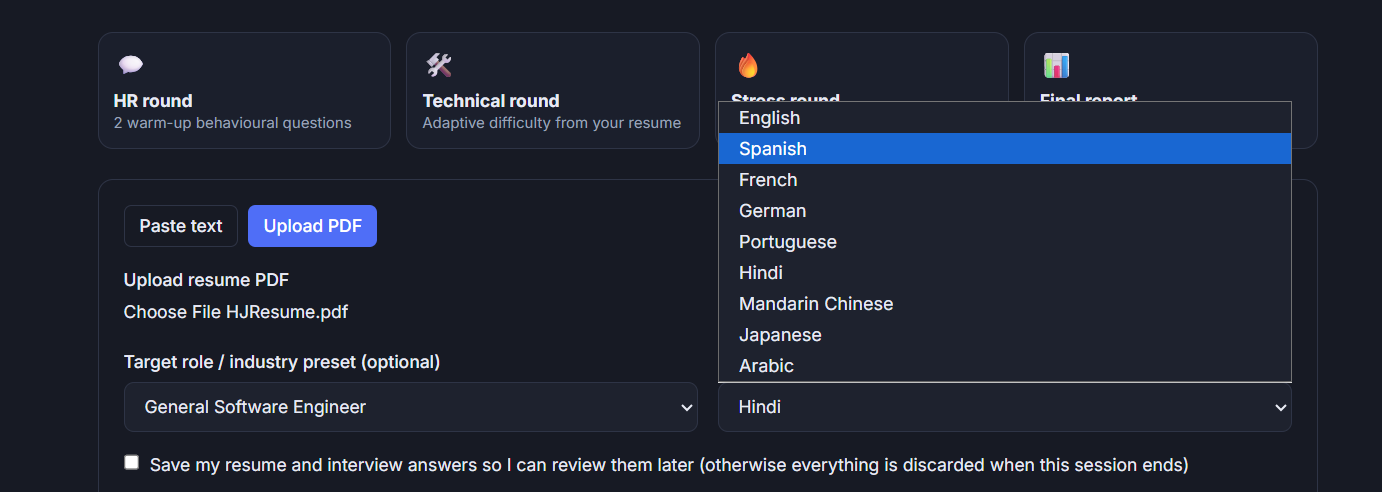
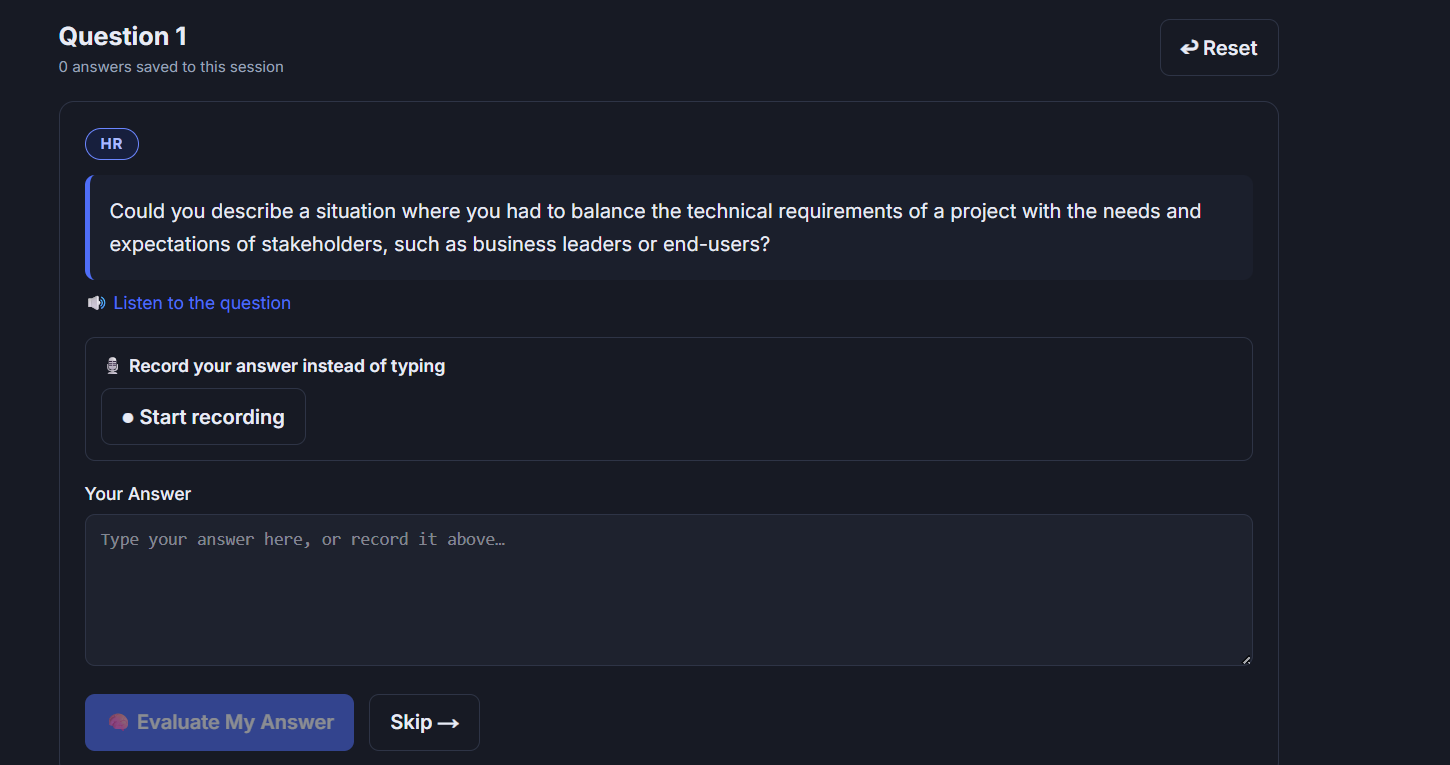
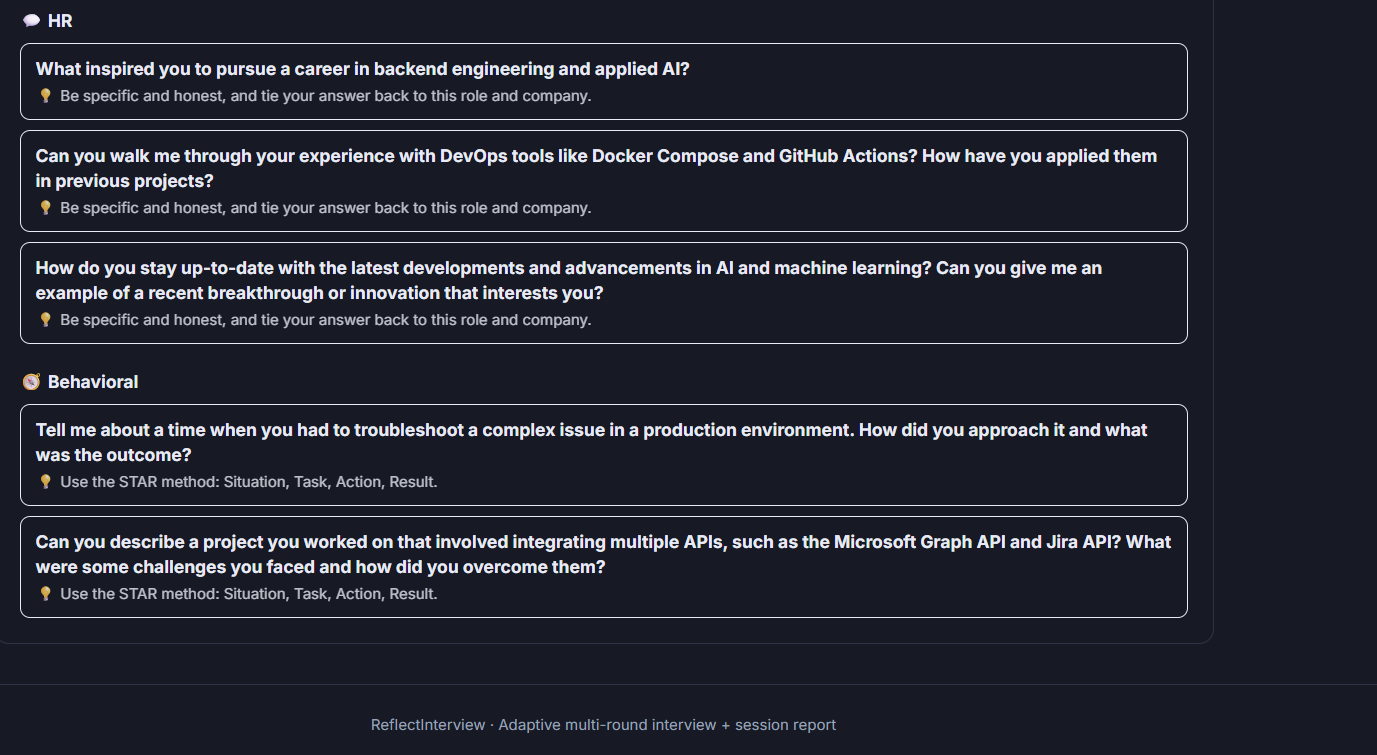
- Conduct multi-round interviews — HR, Technical, and Stress modes
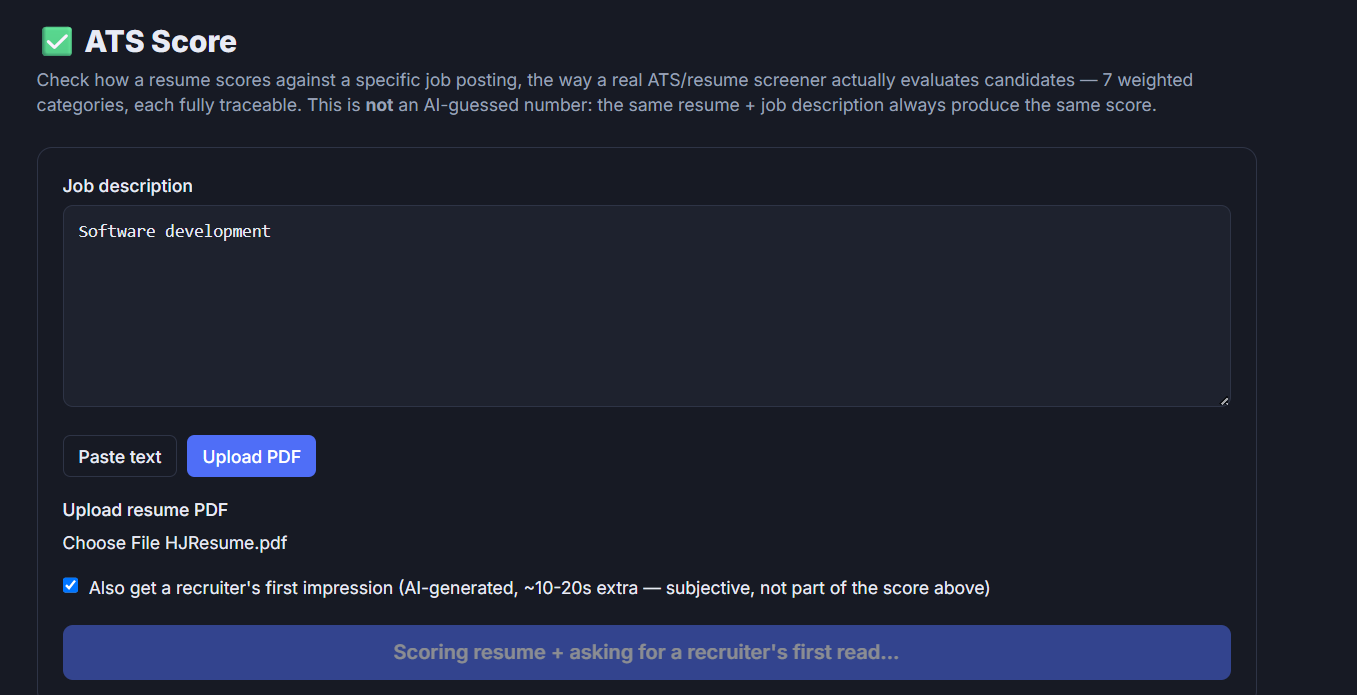
- Evaluate answers using multi-dimensional scoring
- Generate structured feedback: strengths, weaknesses, and targeted improvements
- Dynamically adapt question difficulty based on live performance signals
- Apply cognitive pressure through rapid-fire stress rounds
- Track performance across an entire session
- Analyze thinking patterns: impulsivity, clarity, and consistency
- Produce detailed interview and cognitive reports
At its core, ReflectAI plays four roles simultaneously:
| Role | Function |
|---|---|
| 🎙️ Interviewer | Asks contextually appropriate questions |
| 📊 Evaluator | Scores across multiple cognitive dimensions |
| 🧑🏫 Coach | Provides actionable improvement guidance |
| 🧠 Cognitive Analyst | Models the thinking process behind each answer |
ReflectAI doesn't just judge your answers — it studies the mind producing them.
🏗️ How We Built It
We designed ReflectAI as a modular, closed-loop intelligent system with multiple interacting layers.
Core Stack
- Backend: FastAPI
- Frontend: Streamlit
- LLM Engine: Ollama with Llama 3
System Architecture
The platform operates as a continuous adaptive feedback loop:
\( \text{User} \rightarrow \text{Question} \rightarrow \text{Answer} \rightarrow \text{Evaluation} \rightarrow \text{Cognitive Analysis} \rightarrow \text{Decision} \rightarrow \text{Next Question} \)
This loop allows the system to continuously refine interview behavior in real time, turning every session into a living, breathing conversation — not a static quiz.
Key Components
1. 🤖 Agent Layer
Three specialized AI agents handle distinct interview experiences:
- HR Interview Agent — Focuses on behavioral fit and communication
- Technical Interview Agent — Assesses domain knowledge and problem-solving
- Stress Interview Agent — Applies pressure to reveal cognitive resilience
Each agent is tuned for a different tone, complexity level, and interaction style.
2. 📐 Evaluation Engine
Responses are scored across six dimensions:
| Dimension | What It Measures |
|---|---|
| Correctness | Factual accuracy |
| Clarity | How well the idea is communicated |
| Depth | Thoroughness of reasoning |
| Communication | Language fluency and structure |
| Confidence | Assertiveness and conviction |
| Consistency | Coherence across the session |
The challenge wasn't just assigning numbers — it was generating meaningful explanations that translate scores into genuine growth.
3. ⚙️ Adaptive Engine
ReflectAI dynamically adjusts based on performance trends:
- Strong performance → harder questions, deeper follow-ups, pressure-based evaluation
- Weak performance → supportive hints, simplified progression, coaching-oriented questioning
This creates an interview experience that feels genuinely human.
4. 🧭 Decision Engine
System flow is controlled using a state-based architecture modeled after a Finite State Machine (FSM). The decision engine determines which question to ask next, when to switch interview modes, when to escalate pressure, and when to end the session — enabling precise, controlled adaptive behavior rather than a random pipeline.
5. 🧠 Cognitive Layer
The cognitive layer models user thinking patterns from latent behavioral signals. It continuously updates a dynamic user profile using:
$$\text{UserModel}{t+1} = \text{Update}(\text{UserModel}{t},\ \text{Observations})$$
The observations include:
- Hesitation patterns — pauses before answering
- Impulsive answering — speed vs. accuracy tradeoffs
- Response consistency — coherence across rounds
- Clarity under pressure — degradation in stressful conditions
- Logical flow — structure of explanations
This creates a thinking fingerprint unique to each user.
⚡ Challenges We Ran Into
Designing Meaningful Evaluation
Scoring answers numerically was relatively straightforward. The hard part was generating explanations that genuinely help users improve — not just labels, but narrative, actionable insight.
Building Adaptive Behavior
Moving from a fixed interview pipeline to a truly dynamic system required building decision logic that responds to live state, state tracking across multiple rounds, and memory-driven interaction that feels coherent over time.
Modeling Cognition
Translating internal thinking patterns — impulsivity, confidence, clarity — into measurable, observable signals was one of the deepest research challenges we faced. Human cognition resists clean definitions.
System Integration
Bringing together agents, evaluation, adaptation, memory, cognitive analysis, and feedback generation into one coherent feedback loop was the toughest engineering challenge of the project. Every component needed to communicate with every other without circular dependencies or latency bottlenecks.
🏆 Accomplishments We're Proud Of
We successfully:
- ✅ Built a closed-loop adaptive AI system from scratch
- ✅ Created a multi-agent interview platform with specialized roles
- ✅ Designed a cognitive modeling layer grounded in behavioral signals
- ✅ Enabled real-time difficulty adaptation that responds to live user performance
- ✅ Unified four AI functions — interviewer, evaluator, coach, cognitive analyst — into one coherent experience
ReflectAI doesn't just process answers. It understands the user.
📖 What We Learned
Building ReflectAI taught us things that go beyond code:
AI systems are not just models — they are systems of interaction.
The most important insight was that true intelligence emerges from the combination of state, feedback, and decision:
$$\text{Intelligence} = \text{State} + \text{Feedback} + \text{Decision}$$
A model without memory is just a calculator. A system that tracks state, adapts from feedback, and makes intentional decisions feels genuinely intelligent.
We also learned that adaptive systems feel significantly more human than static ones — and that the hardest part of building AI isn't generating output, but controlling behavior and flow.
🚀 What's Next for ReflectAI
The next phase transforms ReflectAI into a production-ready and research-grade platform.
Upcoming Features
- 📊 Interactive dashboards for cognitive insights
- 📈 Visualization of thinking patterns across sessions
- 🎙️ Voice-based interview support
- ⏱️ Real-time analytics and improvement tracking
- ☁️ Scalable cloud deployment
- 🗃️ Dataset collection for future research and model enhancement
Long-Term Vision
Our vision is ambitious but simple:
Build an AI system that doesn't just evaluate users — but helps them become better thinkers.
ReflectAI is not just an interview simulator.
It is an evolving cognitive feedback system — designed to help people improve communication, reasoning, confidence, and decision-making under pressure.
The interview is just the beginning. The mind is what we're building for.
Built With
- docker
- fastapi
- groq
- llama3
- olama
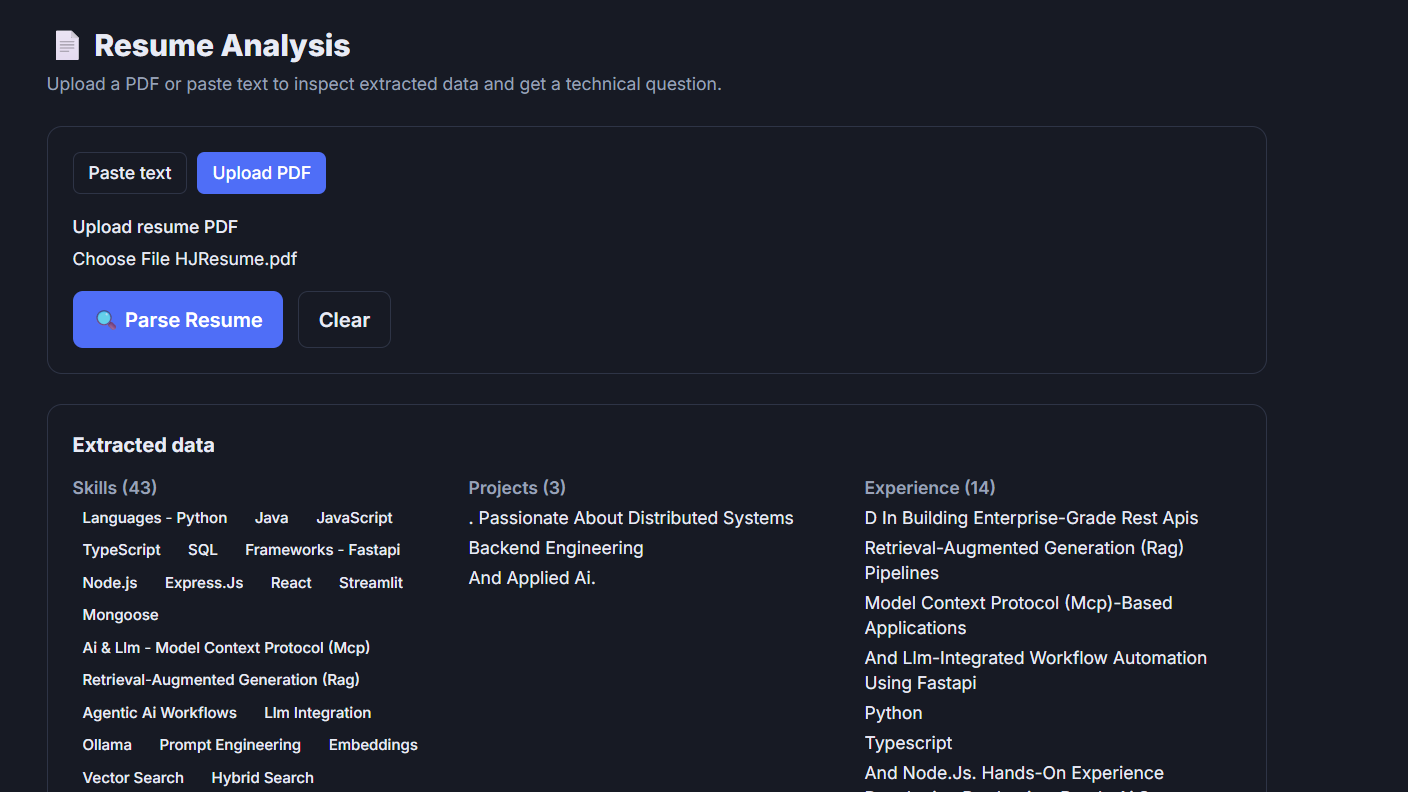
- pdfparsingtools
- postgresql
- python
- requests
- streamlit

Log in or sign up for Devpost to join the conversation.