-
-
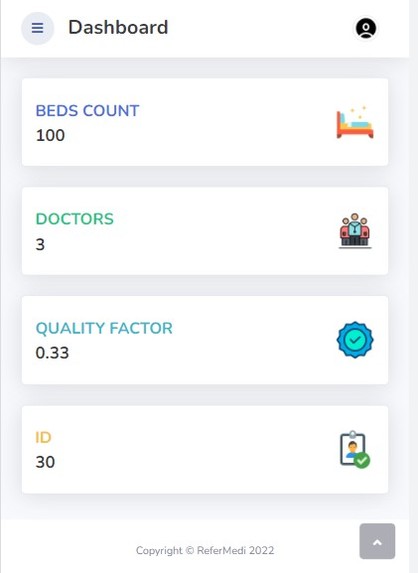
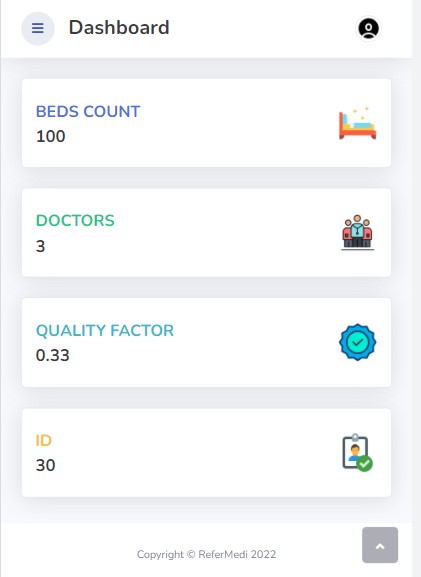
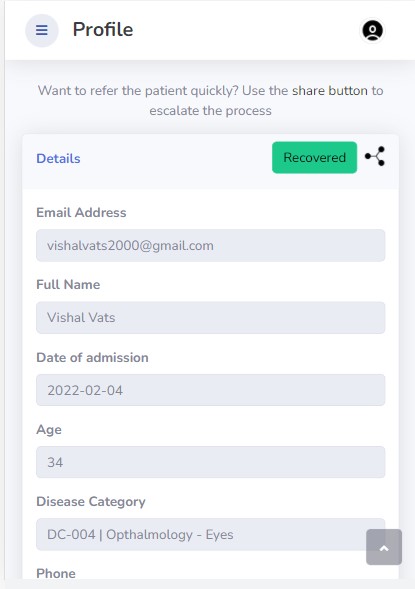
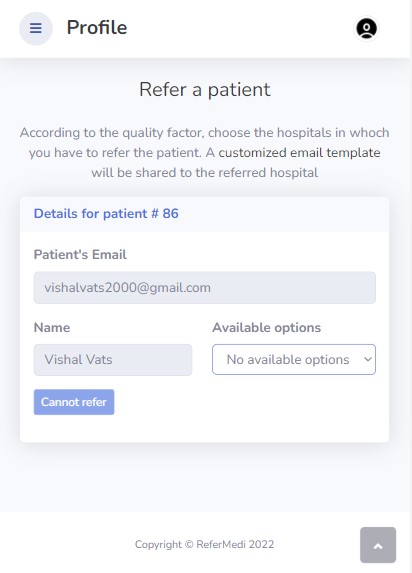
Mobile responsiveness - 2
-
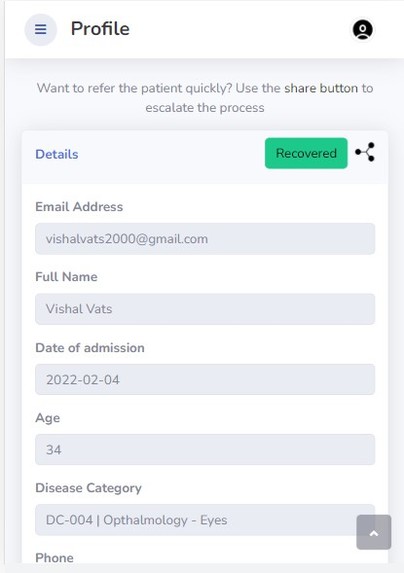
Mobile responsiveness - 3
-
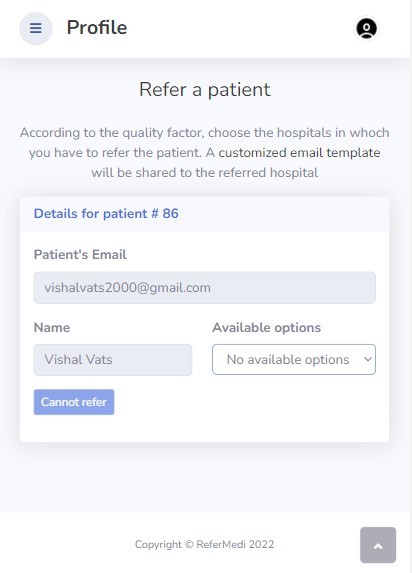
Mobile responsiveness - 1
-
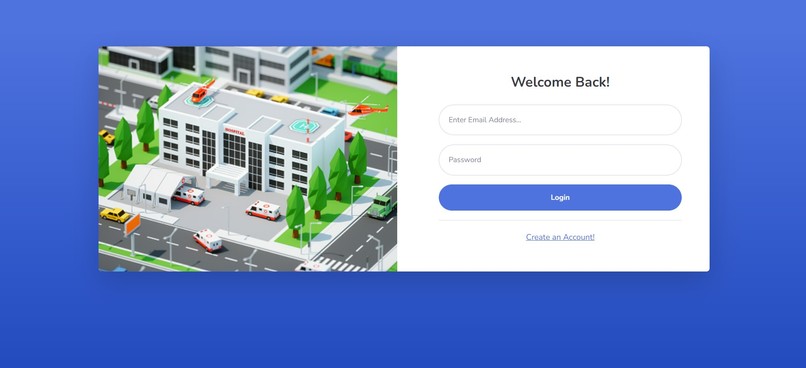
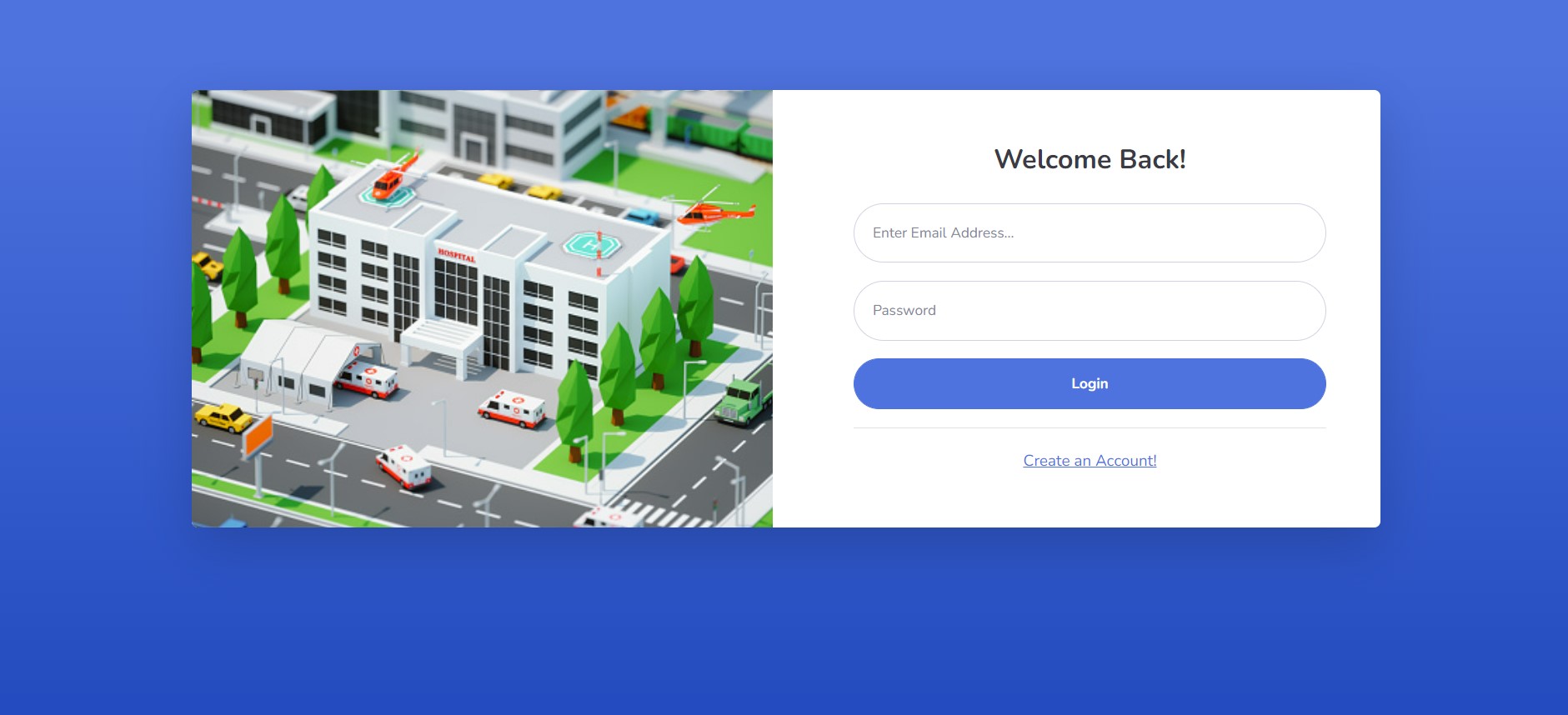
Landing page of the website
-
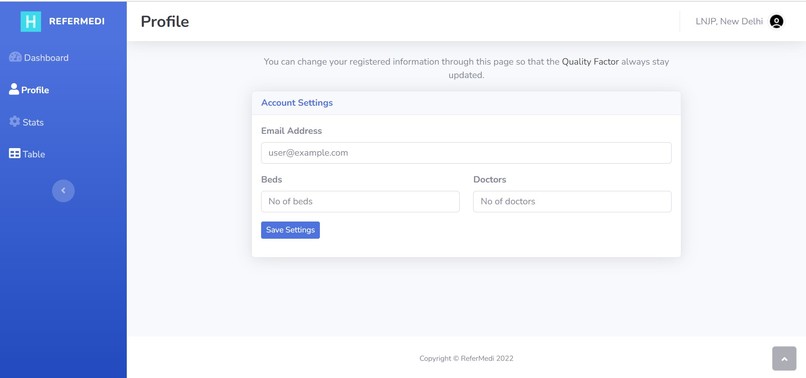
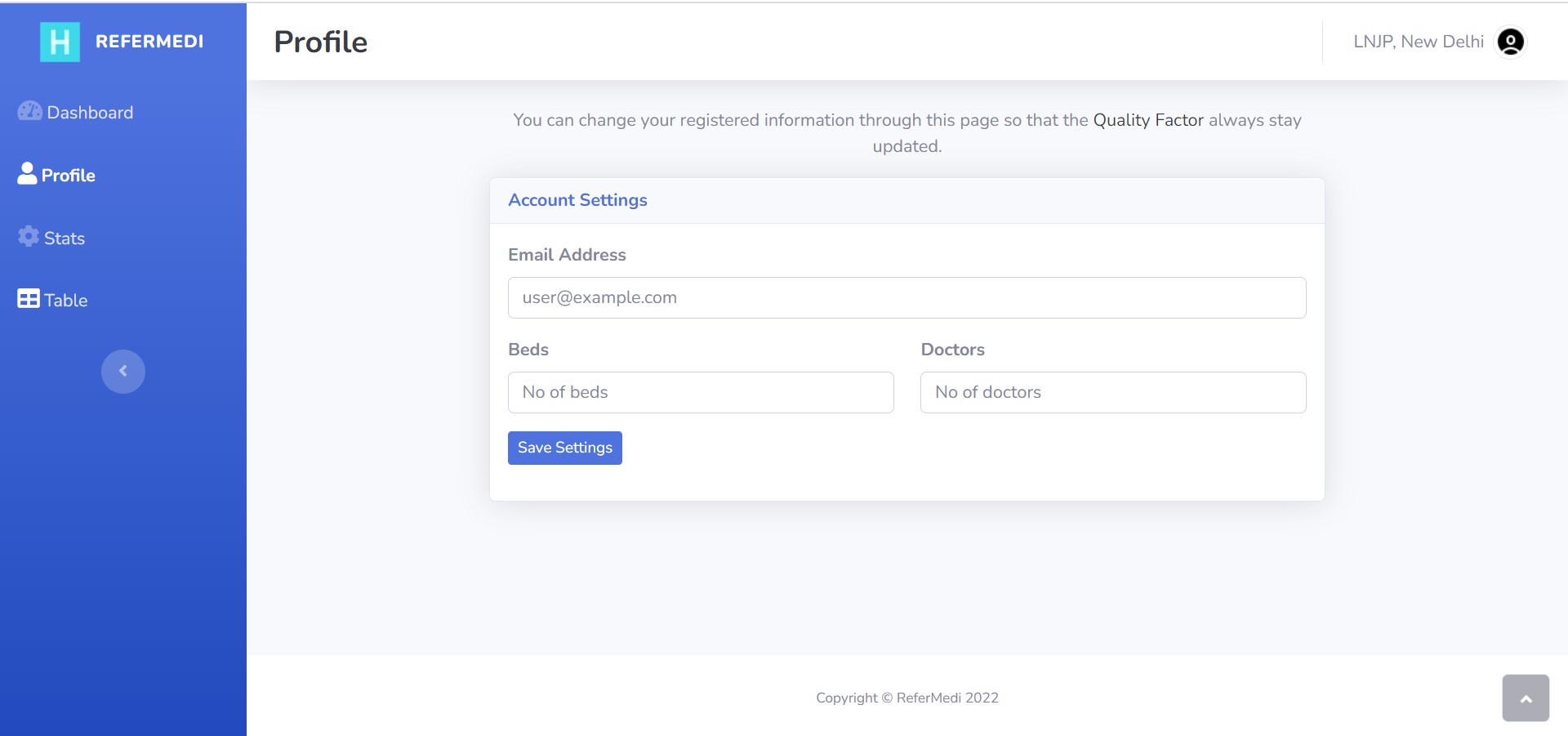
Hospital's profile editing page
-
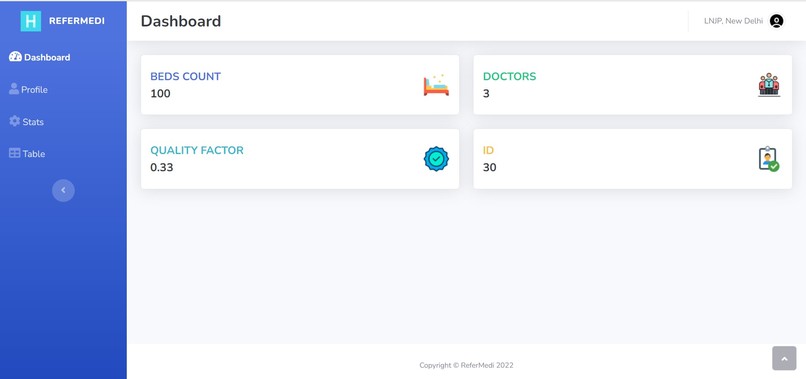
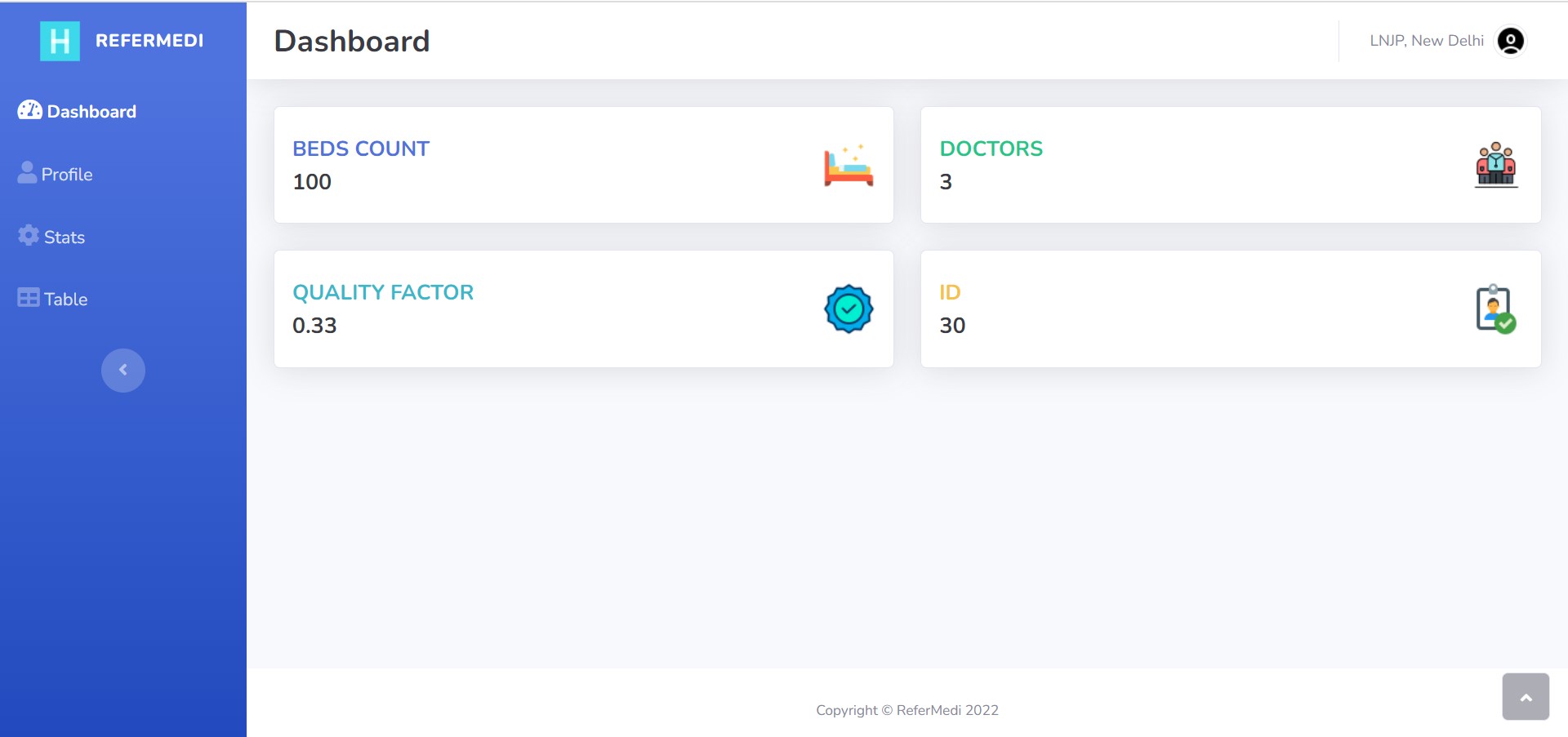
Landing page post logging in
-
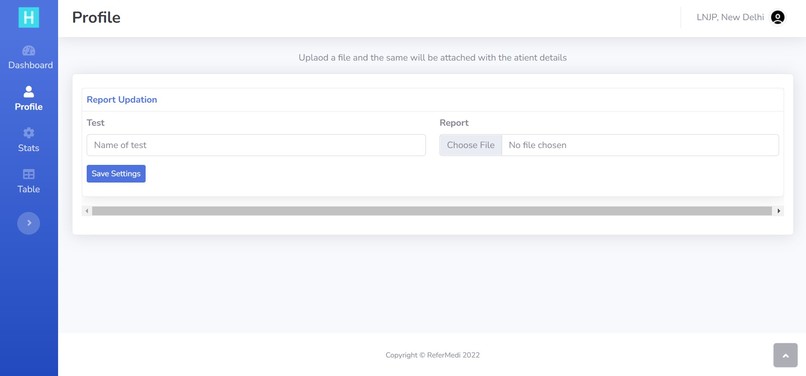
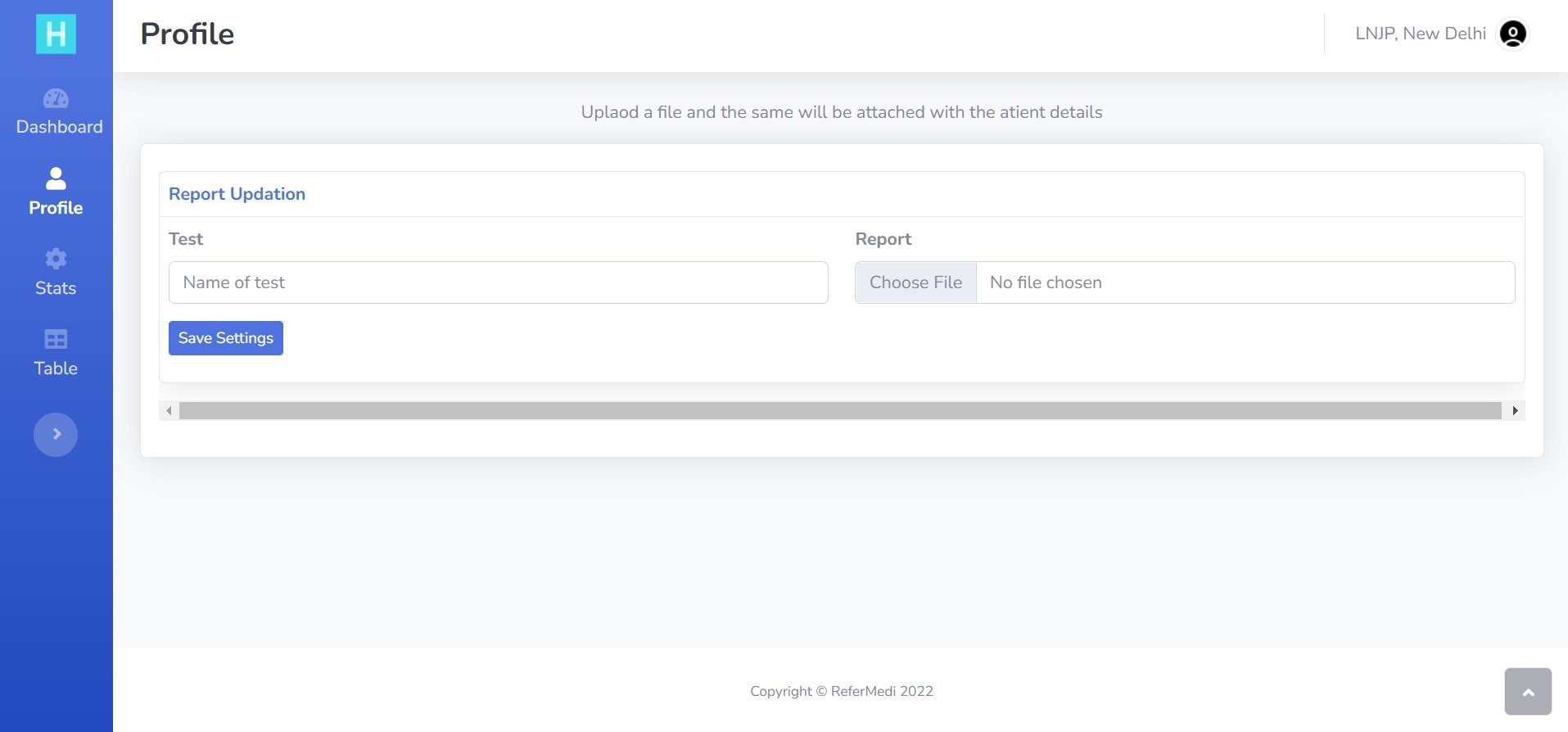
Add test reports of a patient
-
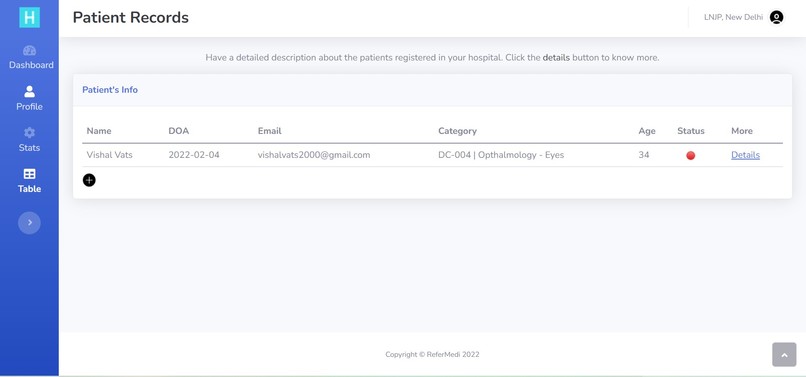
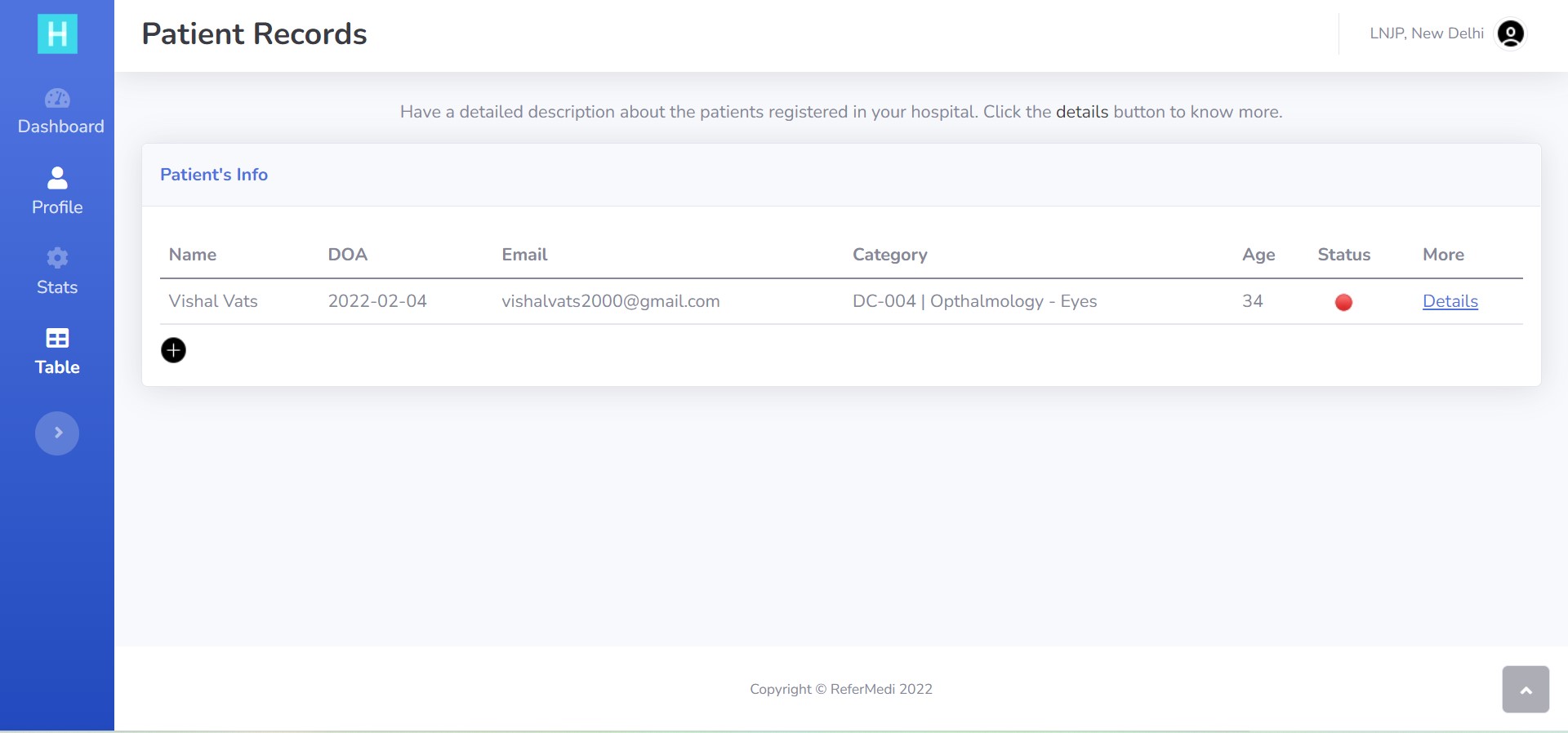
Patients table for a hospital
-
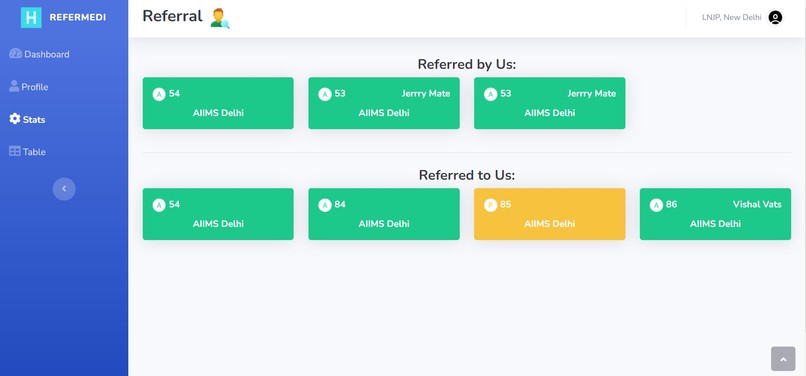
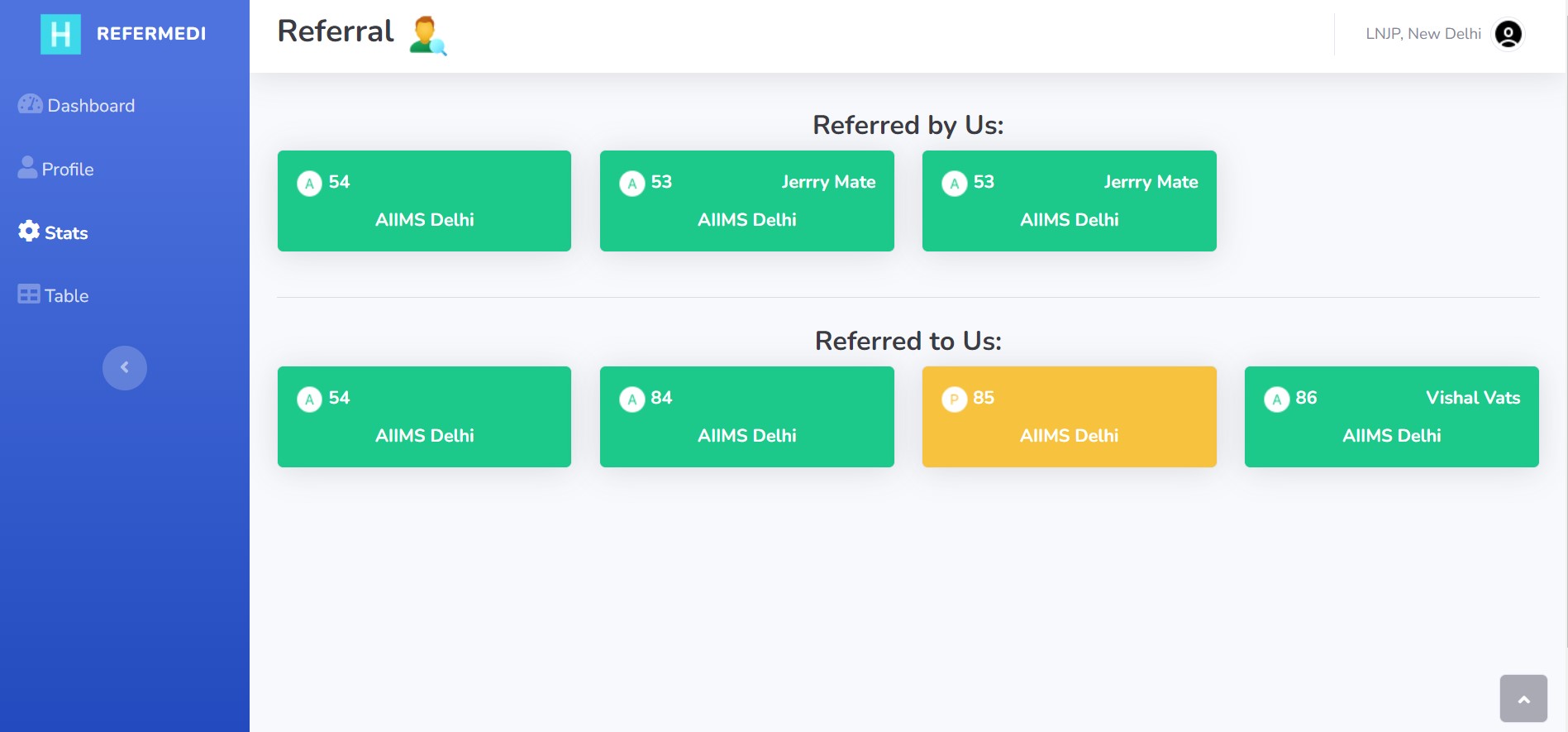
Statistics page for the referrals
-
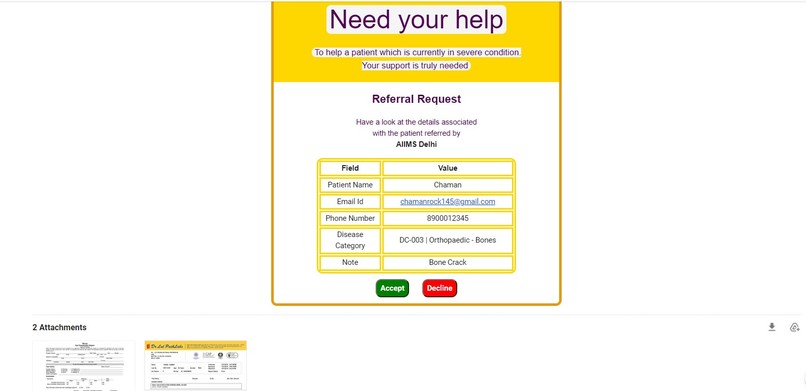
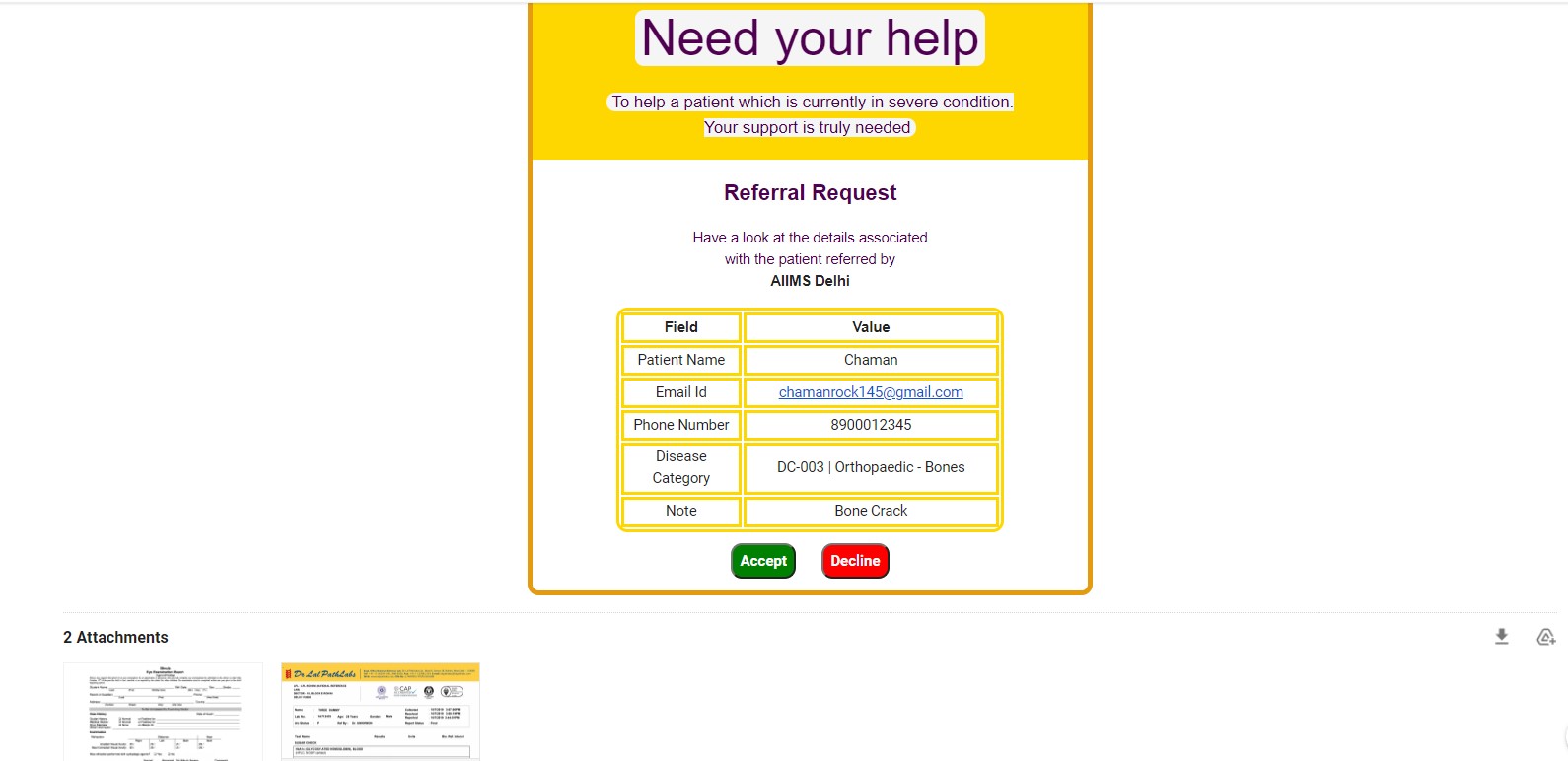
Referral email template
-
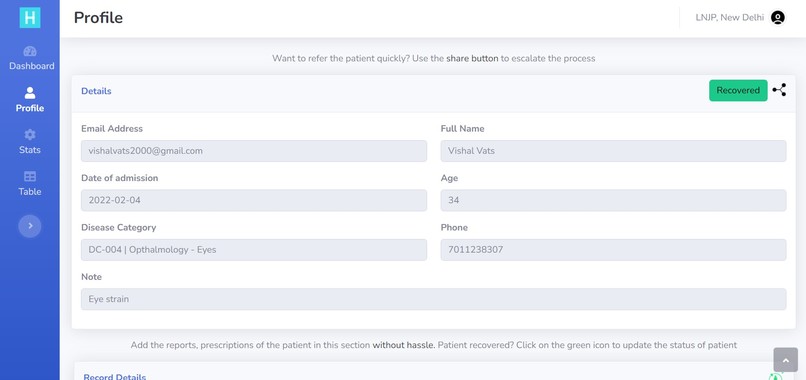
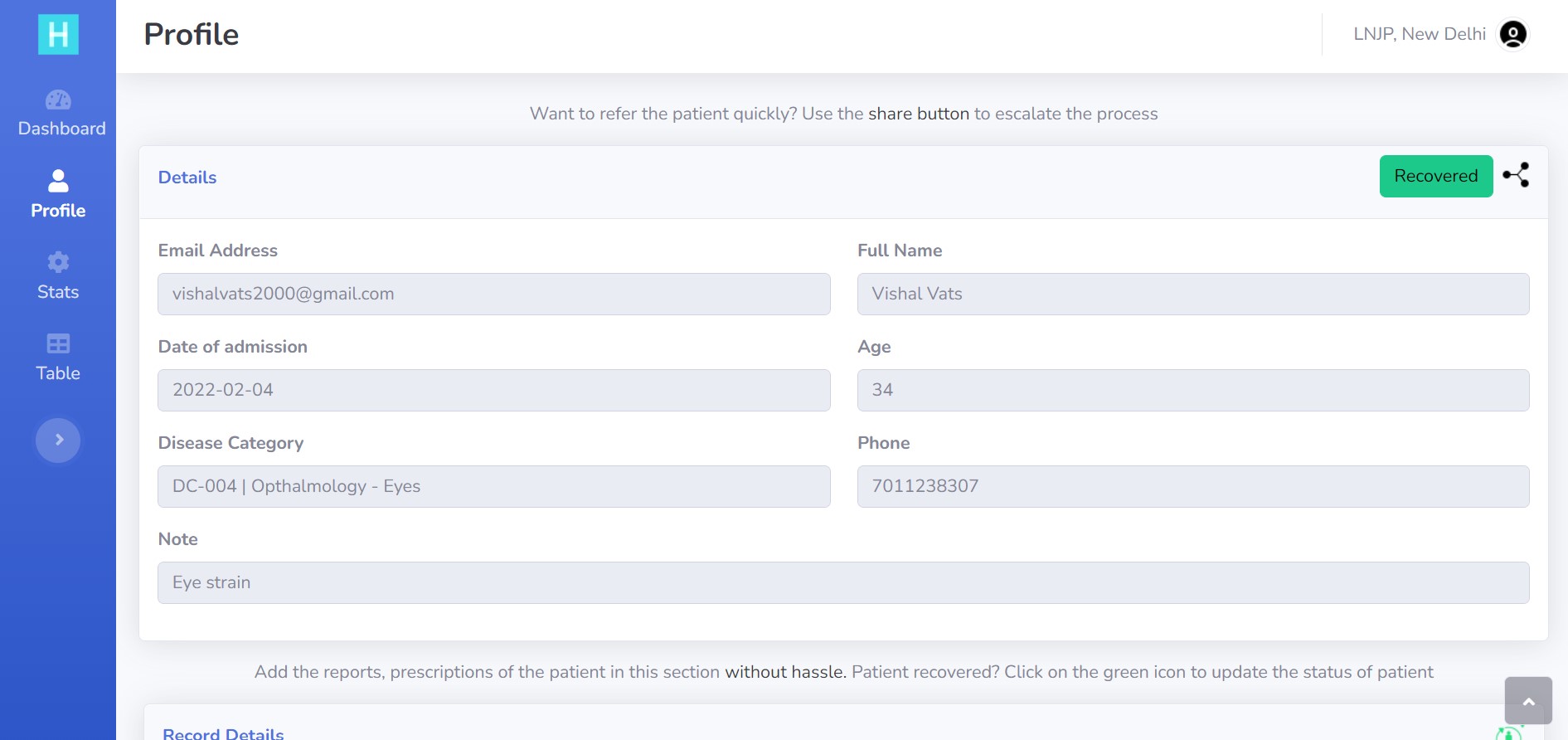
Patient's detailed information (referral is also done through here)
-
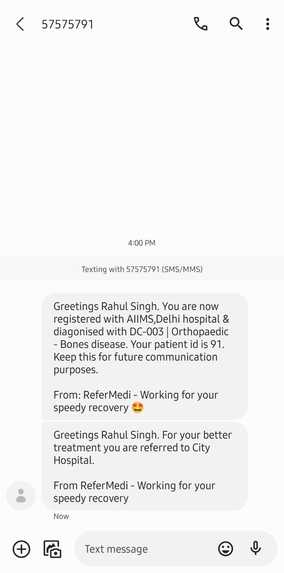
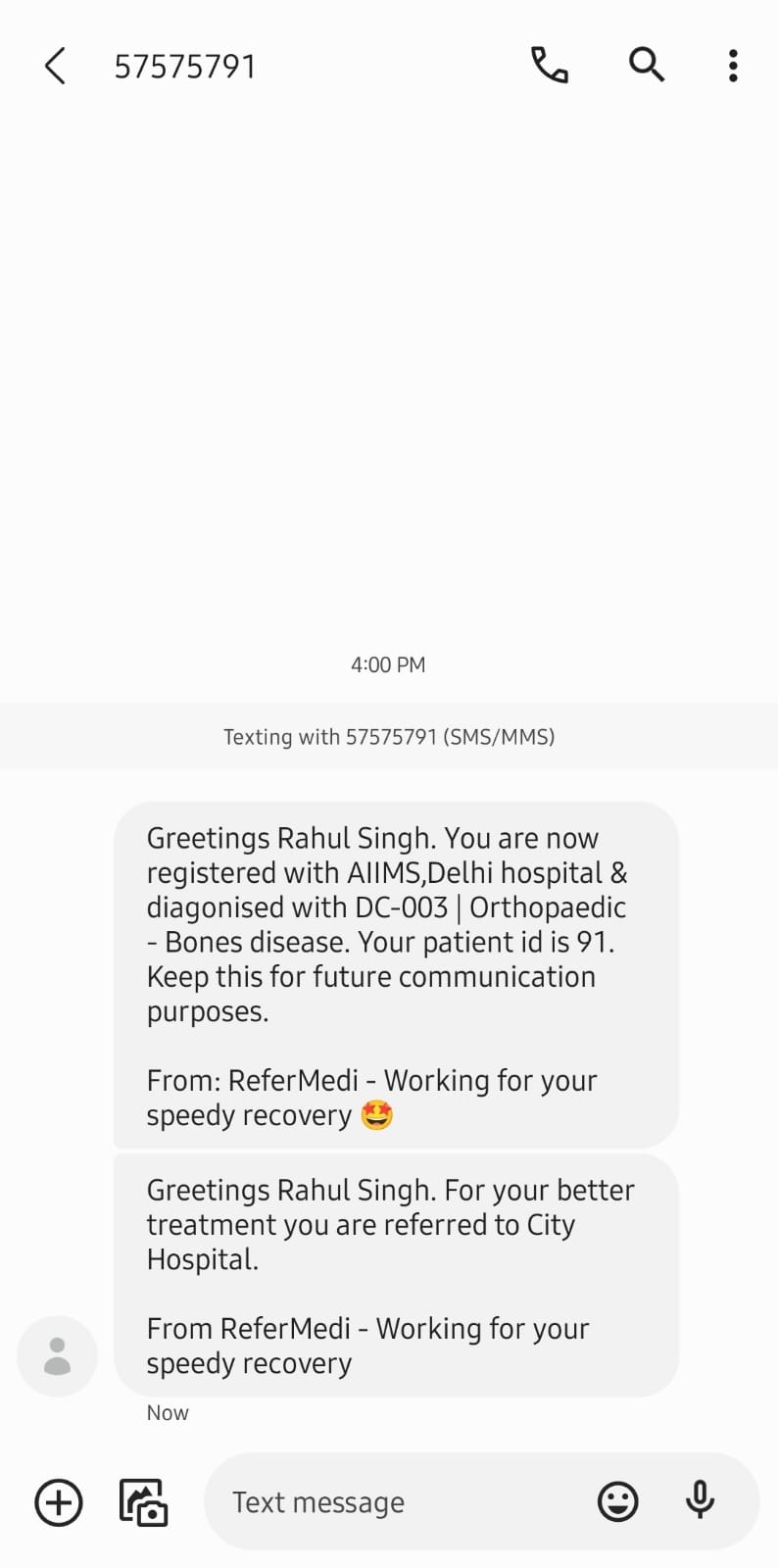
SMS's sent to every patient
Note: Due to the time constraint for the demo video, I have just briefly laid out the functionality of the project. There is a lot more than that. So, do go through the documentation to know the project's full functionalities.
Inspiration
Getting a proper health facility is a dream for all. Not all government/private hospitals have good facilities, equipment, or experienced staff to take care of the people of that city. The issue can be resolved if all the hospitals work collaboratively and ensure good facilities are provided to all.
For eg: Consider in a small town, a government hospital does not have the equipment to treat the patient, so, the hospital referred that patient to a more equipped hospital near the city. Now the patient feels helpless to go to the referred hospital and explain his/her illness, as they know must follow the same procedures as followed before in the small-town hospital. Like going through the same test, same checkups, etc.
What it does
The project has the following features:
- Patients' records are maintained on the platform, sharing while referring to other hospitals.
- Referring patients to other hospitals will be seamless.
- The hospitals have a way to connect.
- The patient will be intimated on two occasions (through Twilio API). One, when the patient is registered by a hospital, and another one, when the patient's referral request is accepted by the other hospital.
- When the hospital will make a referral request, then all the related test reports of that patient will be forwarded as an attachment along with the email. So, every hospital will be receiving the referral requests in the form of an email.
- Every hospital will be having a statistics page that will be having every referral log. The referral log can have three states which are as follows:
a. Accepted (A): If the referred patient has been accepted
b. Rejected (R): If the referred patient has been rejected
c. Pending (P): If the referral is still pending i.e. the referred-to hospital has not responded to the request
How I built it
I thought web application will be an important part of making the project accessible to every hospital because in this manner more and more hospitals can collaborate on this platform. So I used PHP, bootstrap, HTML for making a site that can prove to be an efficient solution for the above-stated problem. I have routed various actions of the user such that the hospital can have a seamless experience in using the application.
For hosting the website, I used the Hostinger service. Referral request templates have been coded from scratch and the inclusion of reports as attachments with email has elevated the project level a lot. To use the messaging service, I used the Twilio REST API and configured it using the Integromat scenarios (webhooks) so the patient will also be intimated about what is going behind the scenes. Initially, I thought of making it a hospital-only-oriented website but in the end, I included the patient in the workflow which sort of added new dimensions to the project.
Challenges I ran into
When I thought of integrating Twilio with the project, I was facing many problems like The message request was failing again and again because I was not considering spaces in the parameters for the REST API. Then I solved that by encoding %20 for spaces. The webhooks for Twilio was also a bit frustrating because I wasn't able to properly extract the URL parameters from the request and then form a message body for the SMS
Initially, there was no plan of including the statistics page for hospitals. But as I proceed further I changed a lot of routing in the app and thus used PHP to its fullest and then made three states for the request (which are looking beautiful) and pleasing to the eyes.
According to the actions, the app should have 10 separate pages because there are a lot of functionalities running. To limit the number of pages, I used the concept of routing along with parameterized GET requests so that I can use a single page for 3-4 actions. (For eg: I have used the Profiles page for adding a new patient, changing the hospital stats, adding patient reports, etc.) This thing not only helped me to enhance the UI/UX but also got involved in brainstorming and plating around sorting information along with the different route requests.
Accomplishments that I'm proud of
1️⃣Developing an app in 2 days and also the use case of this project is very high, as it is related to the healthcare industry.
2️⃣I am sure the hospitals will be having a seamless experience while referring and managing patients.
3️⃣With bare PHP and a few front-end languages I have developed an app that ensures that the users/hospitals will be having the best User Experience. There are plenty of things to play around and thus the end-user will neither be confused nor be bored after using this platform.
4️⃣From uploading reports of the patients to updating them I am proud of every bit in making this project and it rightly fulfills the purpose of why I made this.
What I learned
- Handling REST API requests
- Making and customizing email templates from scratch & integrating them with PHP.
- Sending attachments with emails through PHP.
- Configuring Twilio API and using it with webhooks made through the Integromat platform (now known as Make). 5, Making a completely responsive web app that looks great on every screen size
What's next for EasyRefer
I will be deploying some search filter functionalities for the hospitals so that a hospital can have a look at available options for referring a patient.
The best project (like this one) can slightly be enhanced over time. 🤩😁


Log in or sign up for Devpost to join the conversation.