Inspiration
Vertical short dramas are exploding on every feed — but producing one still takes a writer, a storyboard artist, a video team, and an editor. We wanted to collapse that entire pipeline into a single creative brief. Type one paragraph; get a finished reel.
What it does
ReelWeaver is an autonomous AI Showrunner. You give it a short creative brief (title, tone, logline, characters, key beats), and four specialized agents collaborate to produce a complete vertical (9:16) short drama:
- Scriptwriter — turns the brief into a structured, multi-scene screenplay.
- Storyboarder — breaks the script into shot-by-shot frames with camera and movement.
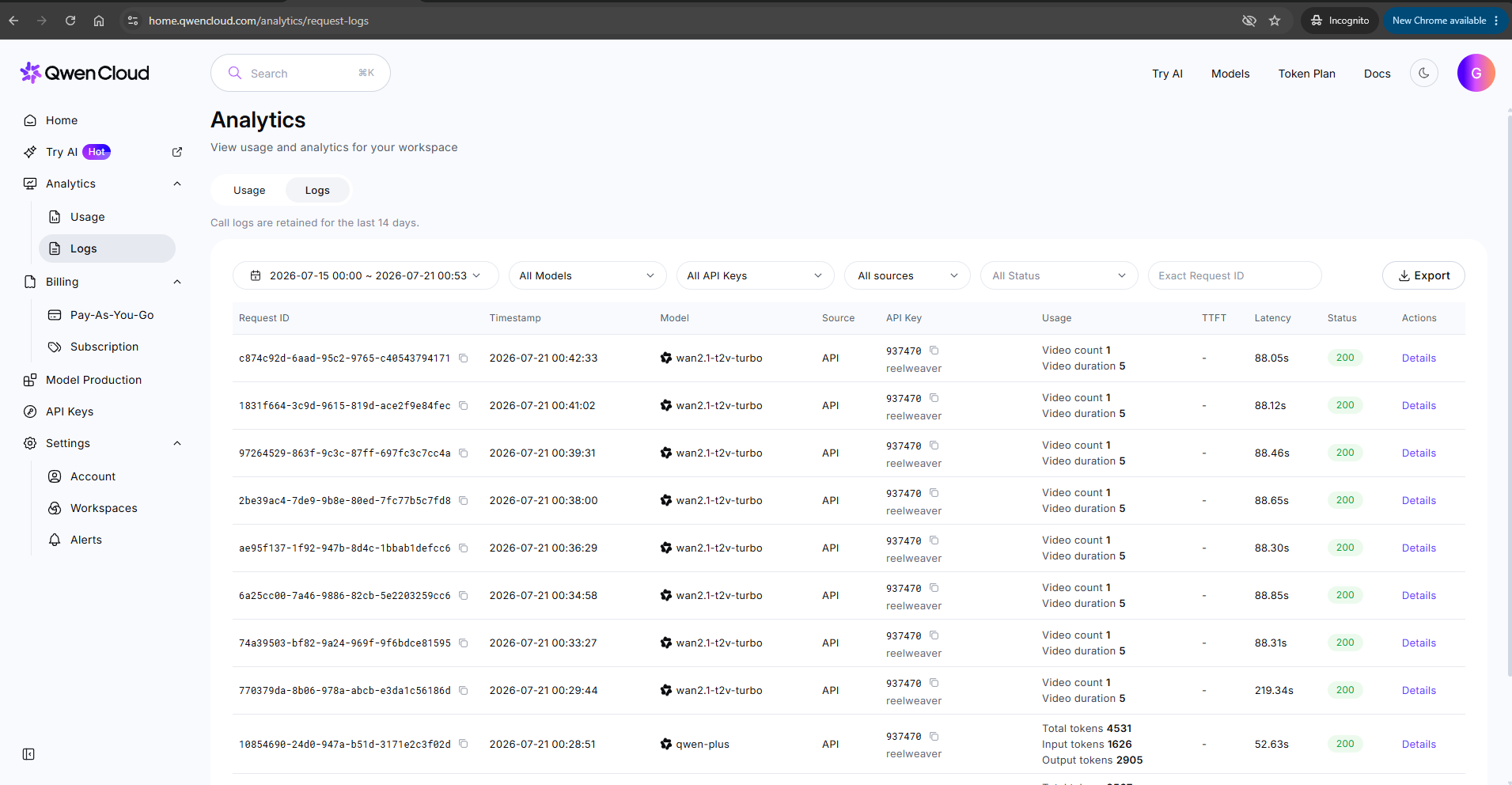
- Video Generator — renders each frame into real video clips with Wan 2.1.
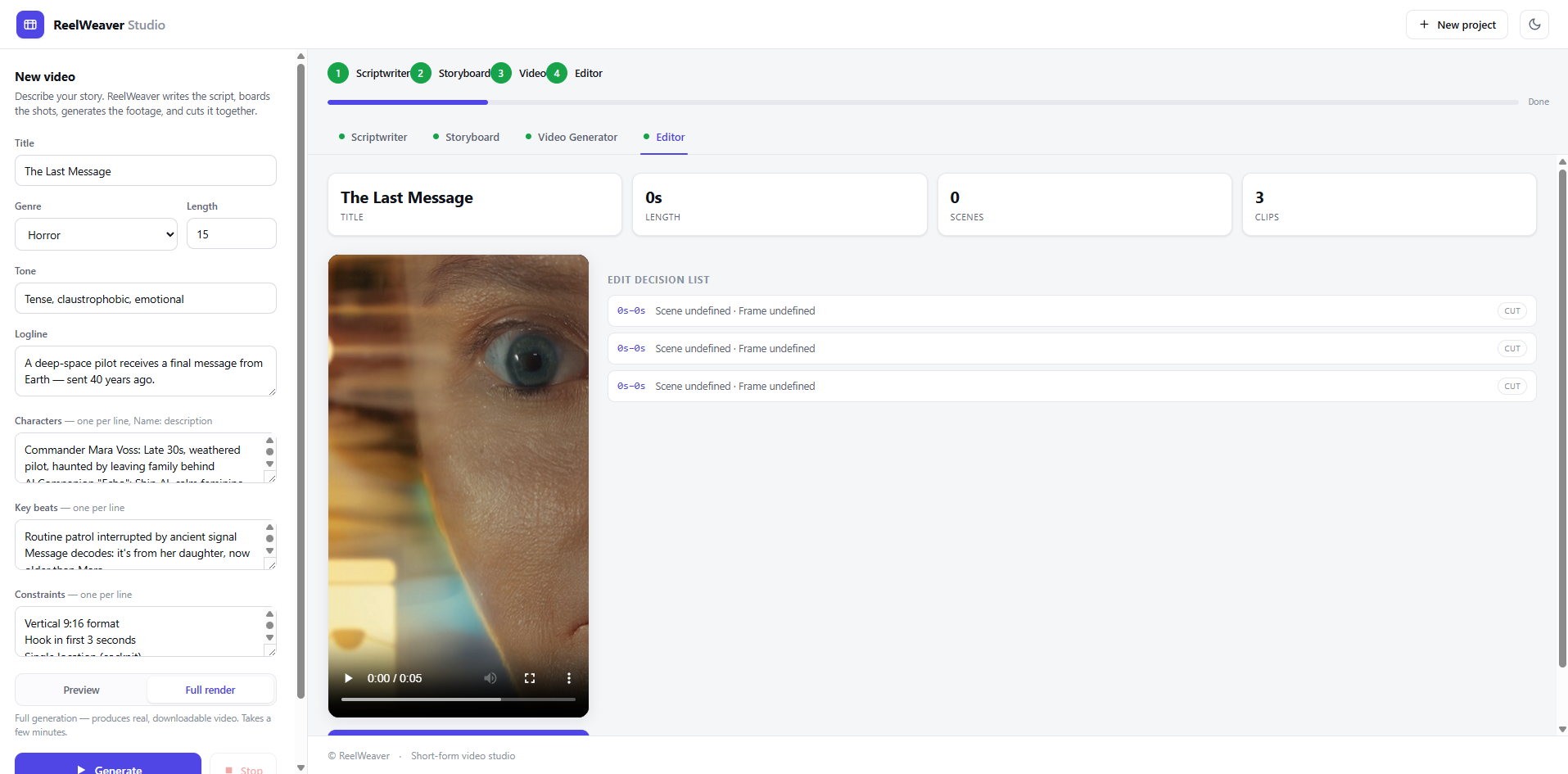
- Editor — assembles the clips into a sequence with an edit decision list.
Everything runs under a strict 30,000-token budget that the orchestrator tracks live, stage by stage. The web studio streams each agent's progress in real time and drops the results into tabs — Script, Storyboard, Video, and a Premiere-style Editor with a drag-and-drop timeline where you reorder clips, watch the cut, and download it.
How we built it
- Multi-agent orchestrator in Node.js coordinates the four agents with schema- validated (Zod) hand-offs and per-stage token budgets.
- Qwen Cloud (
qwen-plusvia DashScope's OpenAI-compatible API) powers the writing, storyboarding, and editing agents. - Wan 2.1 (
wan2.1-t2v-turbo) generates the video via DashScope's async text-to-video API (submit job → poll task → retrieve clip) — implemented dependency-free. - Web studio: a zero-dependency Node HTTP server streams the pipeline over Server-Sent Events to a single-page, professional light-themed UI with a drag-and-drop editing timeline.
- Deploy-ready for Alibaba Function Compute (900s timeouts) and Render, with OSS for video storage.
Challenges we ran into
- Wan 2.1 renders take minutes, so we built an interruptible async job/poll loop with a Stop button that cuts generation short and jumps straight to the editor.
- Keeping the whole pipeline inside a 30K-token budget while preserving character consistency across every stage.
- Making live model output robust — tolerant JSON parsing and schema normalization so a slightly-off response still validates instead of crashing the run.
Accomplishments that we're proud of
- A genuinely end-to-end brief-to-video pipeline that runs offline in Preview mode and live with real Wan 2.1 video.
- A Premiere-style editing timeline with live KPIs (length, scenes, clips) that update as you reorder or trim the cut.
What we learned
- Practical multi-agent orchestration, token budgeting, and streaming UX.
- The realities of async video-generation APIs and region-specific DashScope endpoints.
What's next for ReelWeaver
- Server-side ffmpeg stitching to export one finished MP4 matching the timeline order.
- Voiceover and music generation, transitions/trim handles, and multi-episode series.
Built With
- alibaba-cloud
- css
- dashscope
- function-compute
- html
- javascript
- node.js
- oss
- qwen
- qwen-plus
- render
- server-sent-events
- wan2.1
- zod


Log in or sign up for Devpost to join the conversation.