Inspiration
As avid consumers of short videos, we love the joy and creativity they bring to our lives. But seeing content creators struggle with uploading the same video to multiple platforms inspired us to take action. We realized creators deserve more time to focus on their craft instead of wrestling with repetitive uploads and platform logistics.
What it does
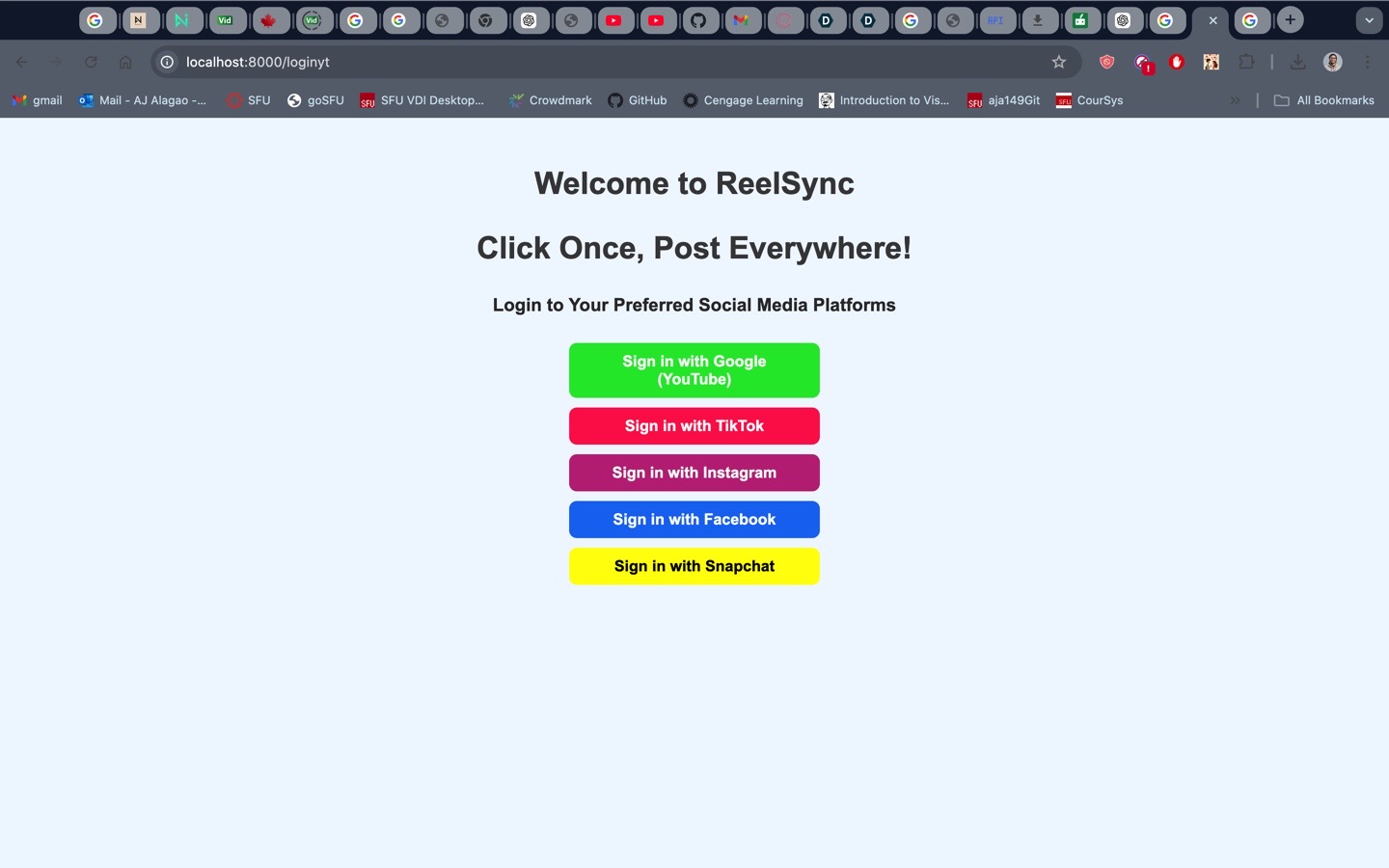
Our project simplifies the complex process of managing multiple social media accounts. Using secure OAuth2 authentication, the platform allows users to sign in to their YouTube, TikTok, Instagram, and Snapchat accounts all in one place. Once connected, the app securely stores tokens, enabling seamless access without requiring repeated logins.
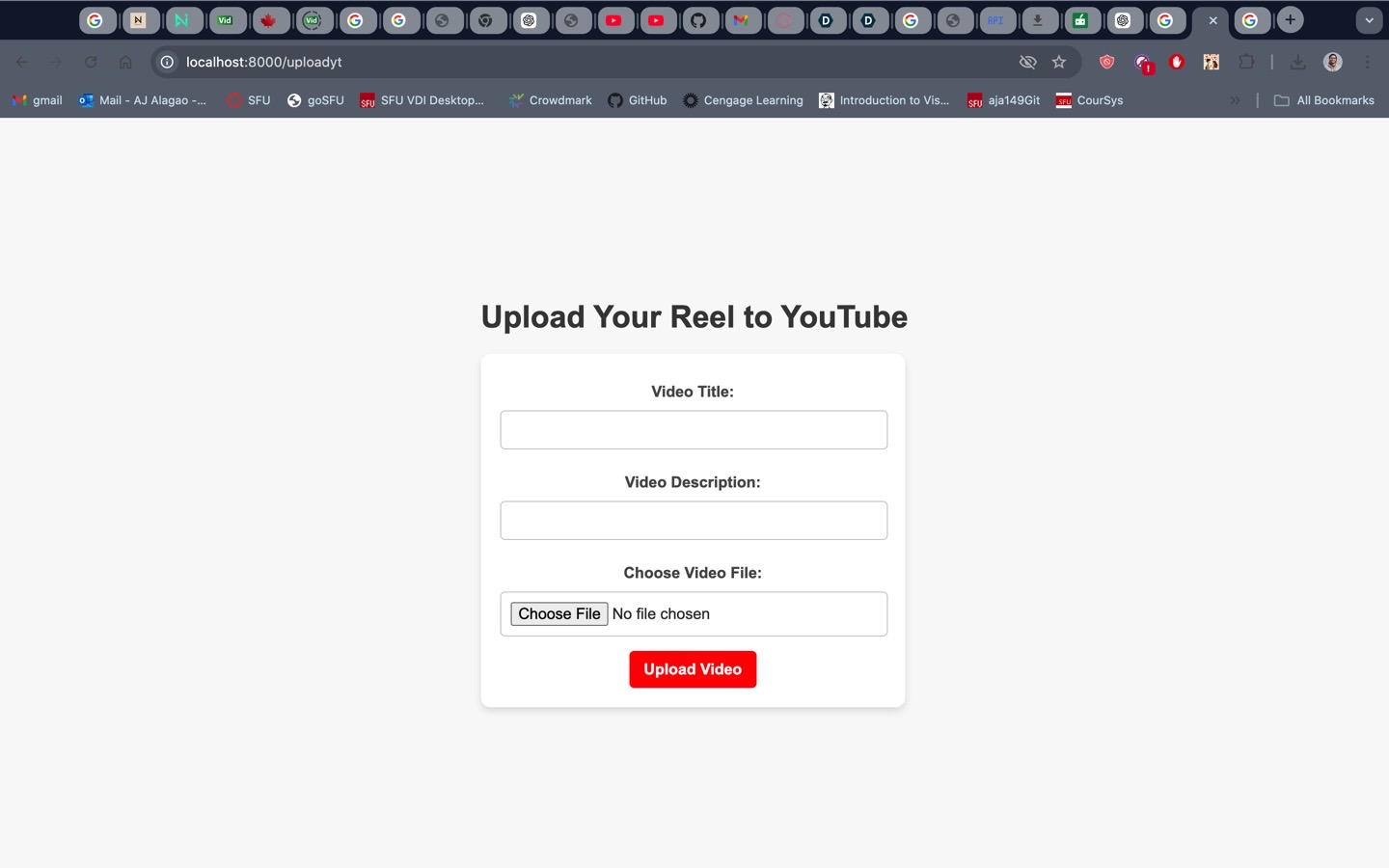
When it’s time to upload a video, users simply upload the file to our web app, select the platforms they want to post on, and click a single button. Behind the scenes, the app integrates with each platform’s API to handle everything—file formatting, metadata, captions, and even thumbnail uploads—ensuring your content fits perfectly on each platform.
This instant upload system eliminates repetitive tasks, reduces time spent switching between apps, and ensures a smooth posting experience. Creators can now focus on producing engaging content while the app takes care of the logistics. Whether you're managing one account per platform or multiple profiles for different brands, this project ensures your content reaches its audience faster, smarter, and hassle-free.
How we built it
Using FastAPI for the backend, we developed a robust, scalable system that connects to multiple platform APIs. For the front end, we prioritized simplicity and user-friendliness, creating a single-click interface that handles uploads.
Challenges we ran into
One of our biggest challenges was implementing social media account integration, a critical feature of our project. While we successfully added Google’s YouTube sign-in using OAuth2, we hit a major roadblock when trying to integrate other platforms like TikTok, Instagram, and Snapchat. These platforms required a formal review and approval process for our app to access their APIs, including permissions for posting content on users’ behalf. Given the time constraints of a hackathon, it wasn’t feasible to complete these reviews, as they often involve rigorous testing and back-and-forth communication with the platform teams. Despite our ambitious vision to enable instant posting across all platforms, we had to pivot and focus on building a functional prototype that works seamlessly with YouTube.
Accomplishments that we're proud of
We’re proud of what we accomplished, even if half finished, during this hackathon, especially our journey into understanding APIs and the logistics of being a third-party integrator for social media platforms. For many of us, this was our first deep dive into OAuth2 authentication and API integration, and it was an eye-opening experience. We learned how platforms like YouTube, TikTok, Instagram, and Snapchat grant access to their services through APIs, each with its own set of rules, documentation, and restrictions. Navigating these differences taught us not only how APIs work but also the challenges third-party developers face when building tools that interact with these platforms. From handling authentication tokens securely to understanding rate limits and permission scopes, every step was a valuable lesson.
What we learned
This experience taught us about the complexities of API integrations, particularly when working with multiple platforms, and gave us a deeper appreciation for the behind-the-scenes work that powers multi-platform tools. While we couldn’t achieve full integration during the hackathon, we laid a solid foundation for expanding our project in the future to realize its full potential. It was an ambitious goal, but the challenges only fueled our determination to build something impactful. We also gained insight into the restrictions these platforms impose to protect their users and their ecosystems. While some of these limitations were frustrating due to time constraints, they gave us a better understanding of how these platforms prioritize security and user experience. Despite the challenges, we’re proud to have successfully integrated Google’s YouTube sign-in and laid the groundwork for expanding to other platforms in the future. It’s a milestone in our journey, and the knowledge we gained will shape our next steps as developers.
What's next for ReelSync
What's next for ReelSync is focusing on expanding its capabilities and creating an even more seamless experience for content creators. Our top priority is integrating other popular social media platforms like TikTok, Instagram, and Snapchat. While these platforms require additional approval and compliance processes, we’re committed to navigating those steps to provide a truly comprehensive, multi-platform posting solution. We also aim to enhance the user experience by automating more aspects of the posting process. Features like smart scheduling, platform-specific optimization (e.g., resizing videos or adding captions tailored to each platform), and analytics dashboards are on our roadmap. These updates will not only save creators more time but also help them grow their audience with data-driven insights. Another goal is to refine the security and scalability of the platform, ensuring it can support creators with multiple accounts and large-scale campaigns effortlessly. By making the interface even more intuitive and accessible, we want to eliminate any remaining barriers for creators of all skill levels.


Log in or sign up for Devpost to join the conversation.