-
-
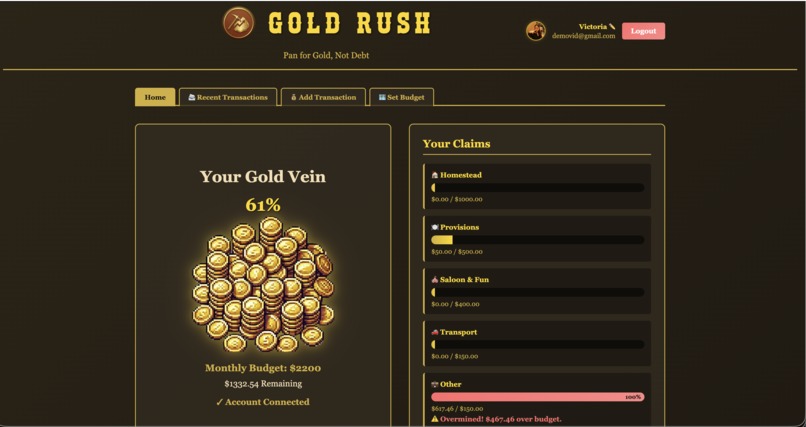
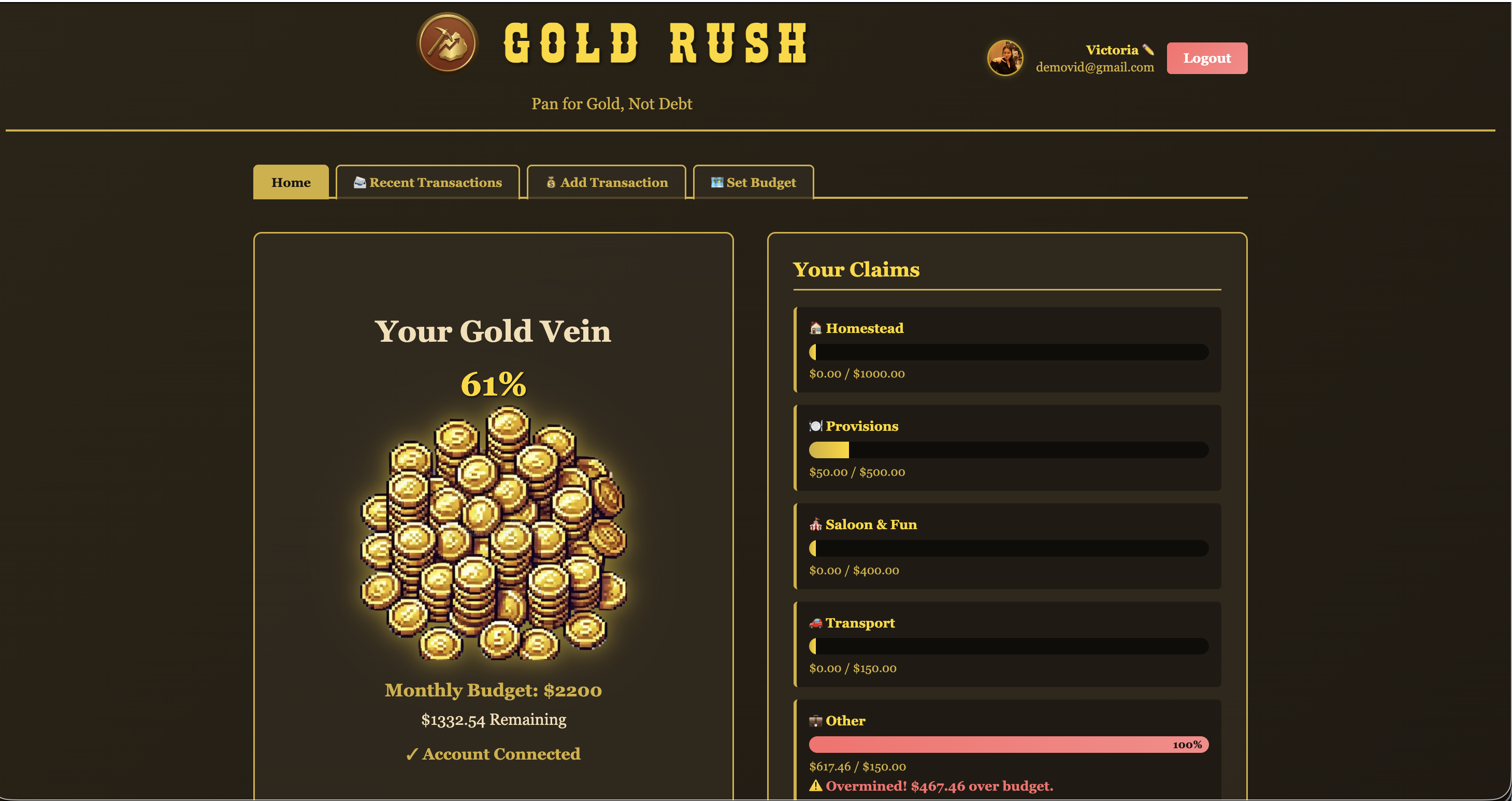
Home Page, budget break down
-
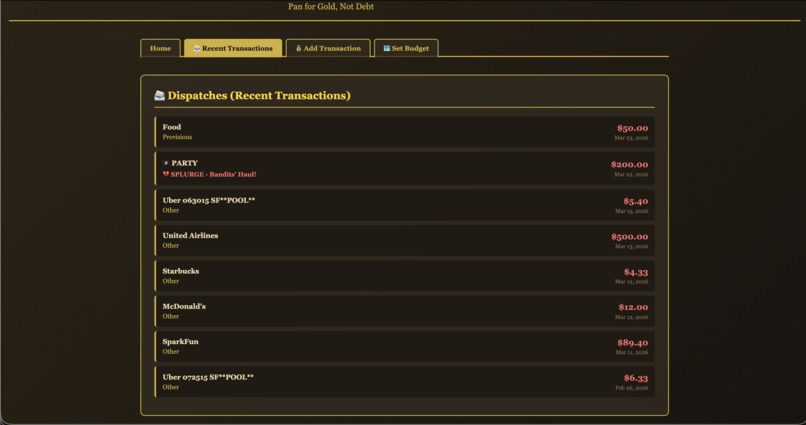
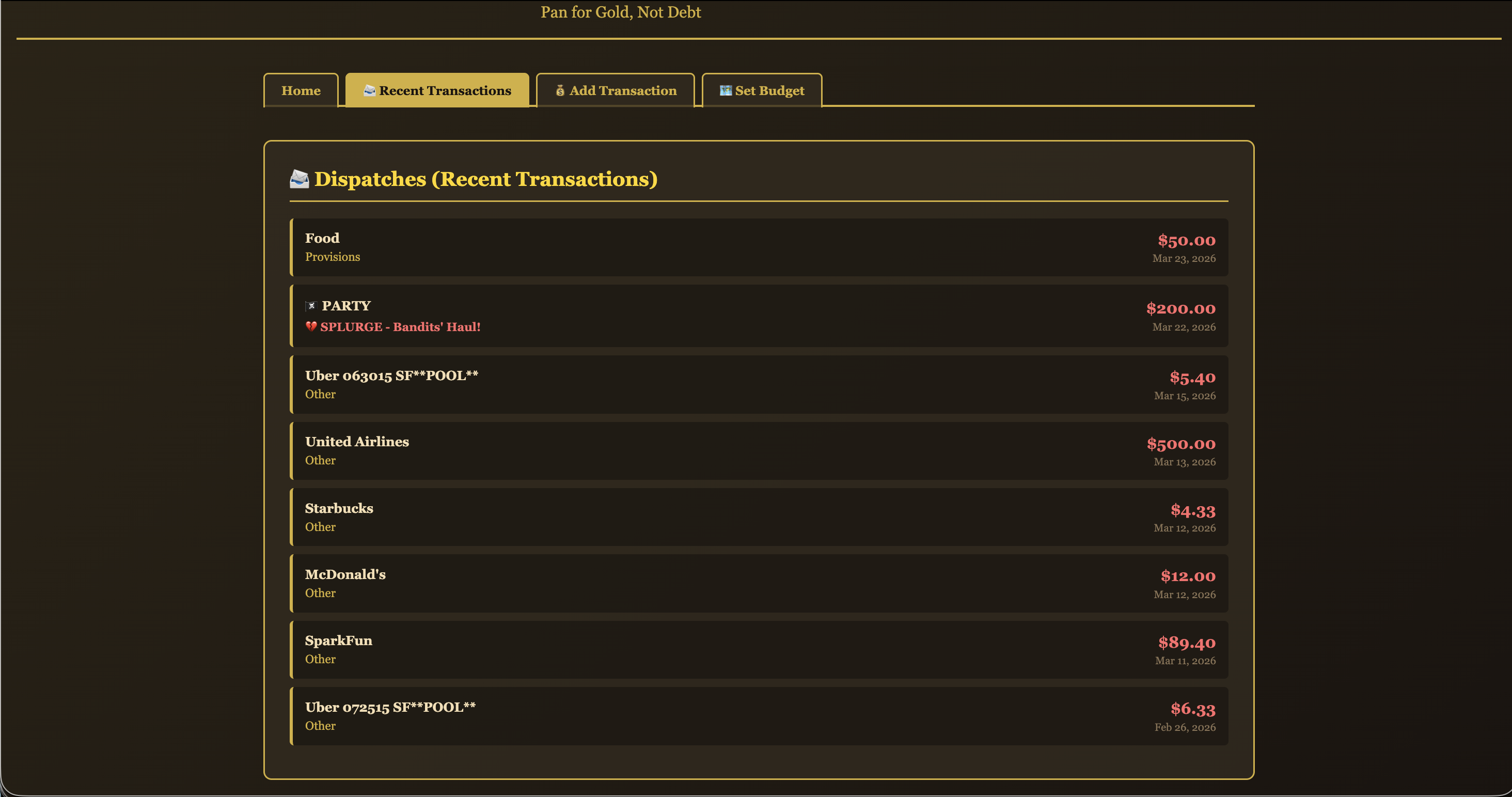
Recent Transactions by the User, including transactions pulled through user's bank account as well as manually submitted transactions as .
-
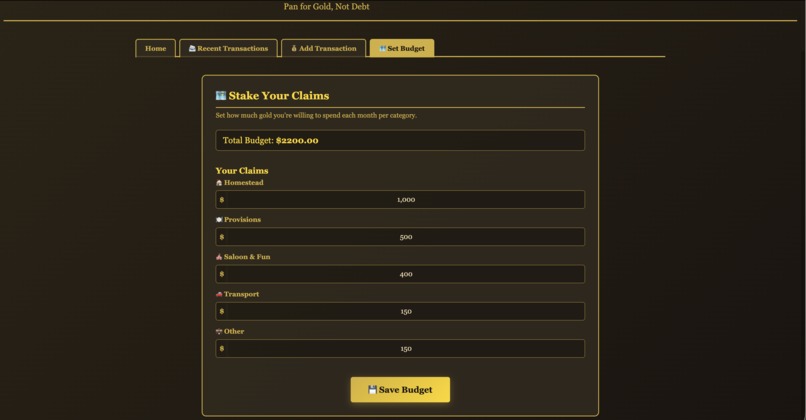
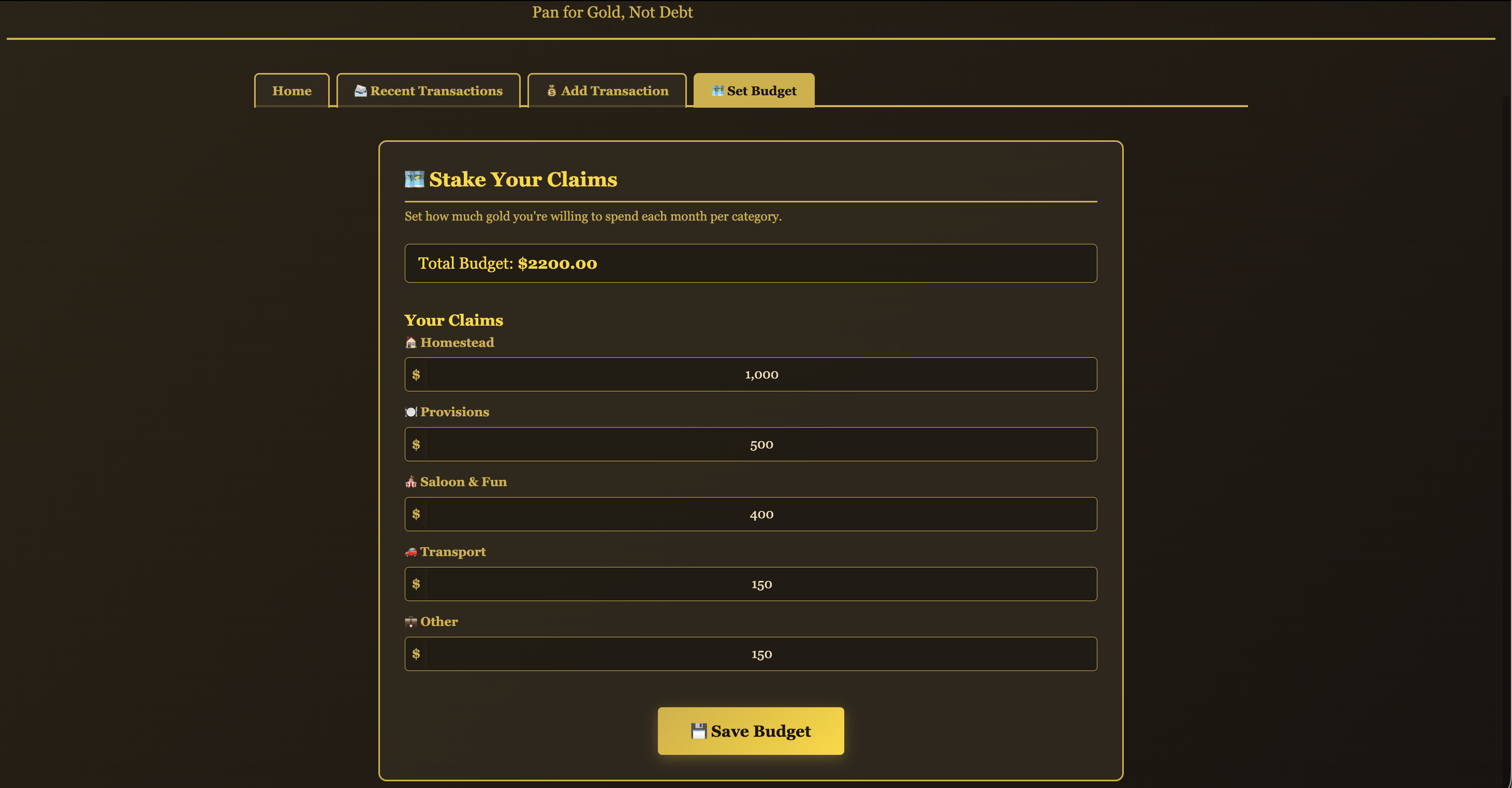
Set budget
-
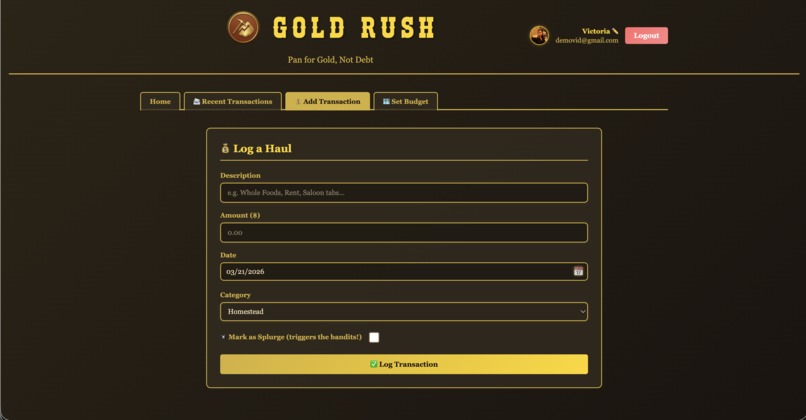
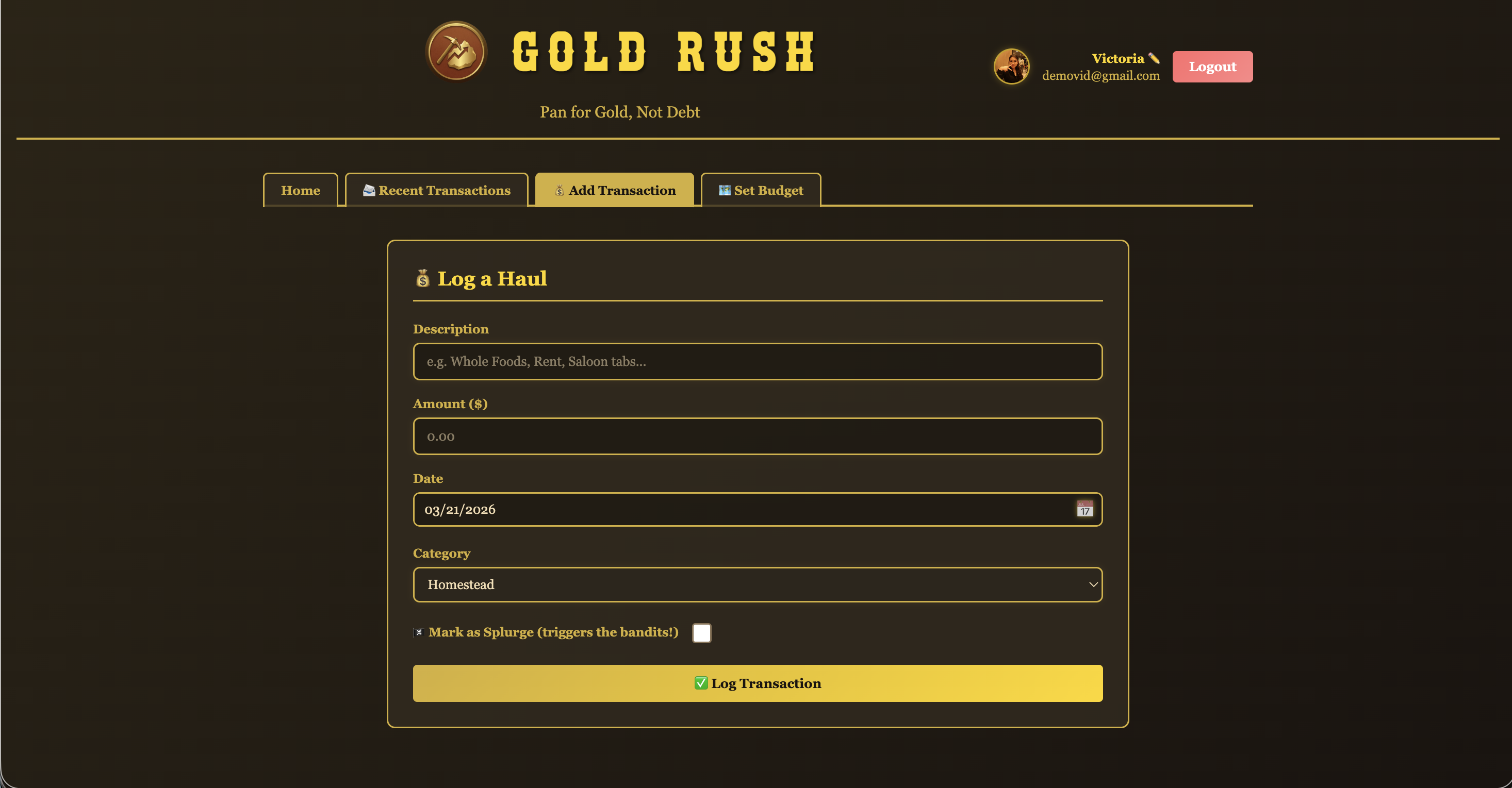
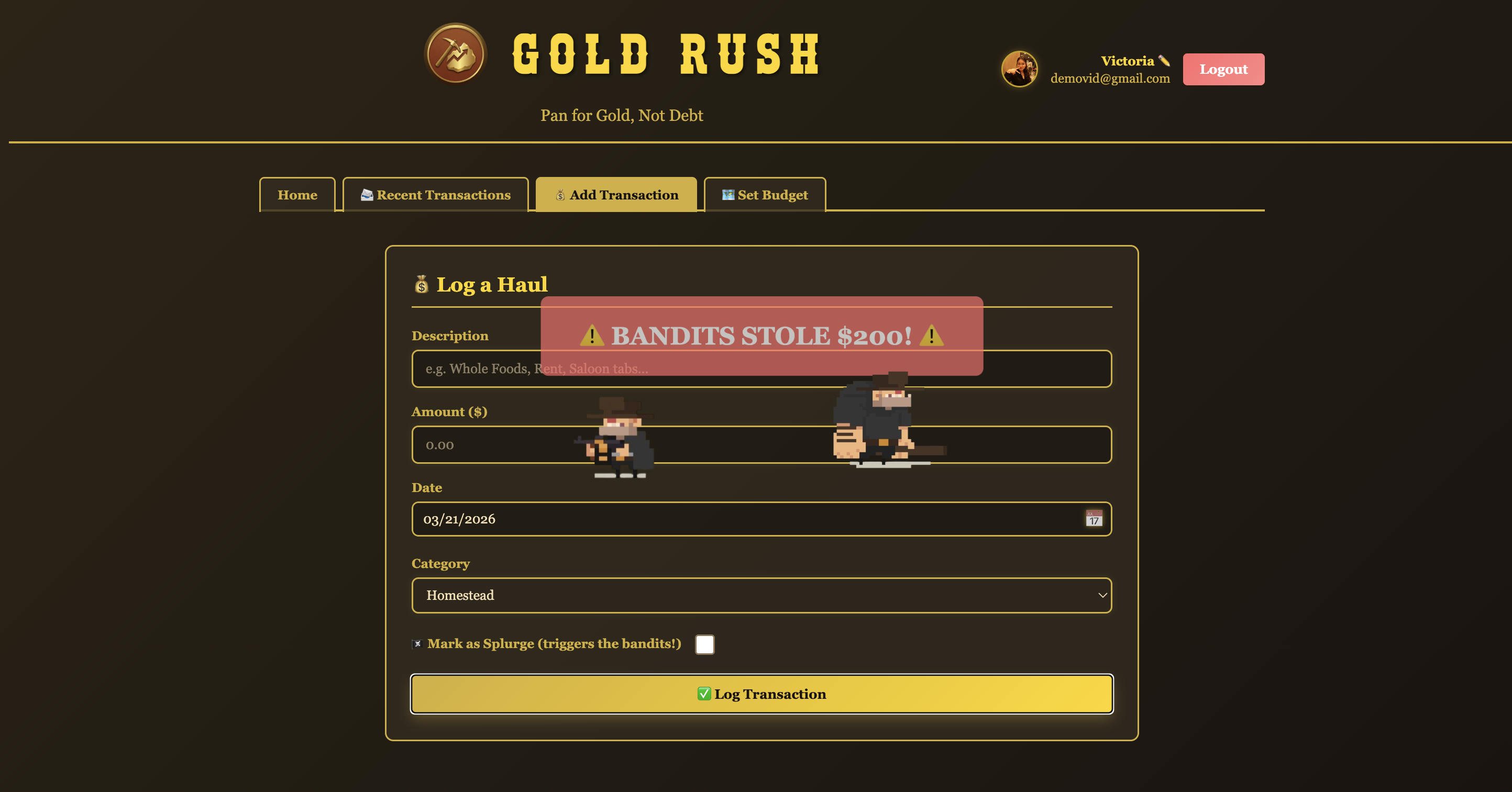
Manually insert transactions
-
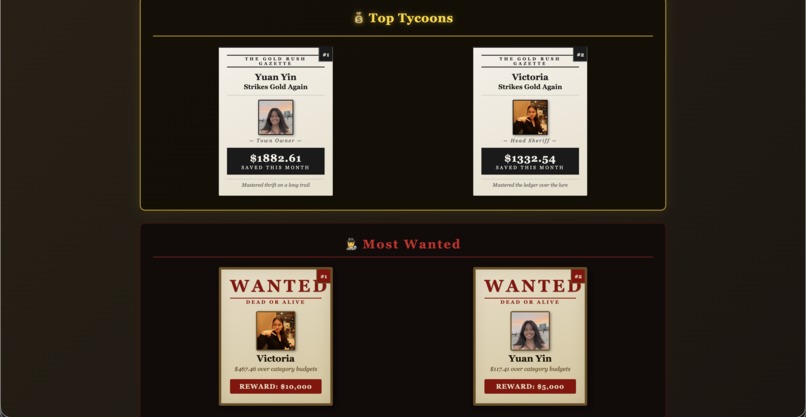
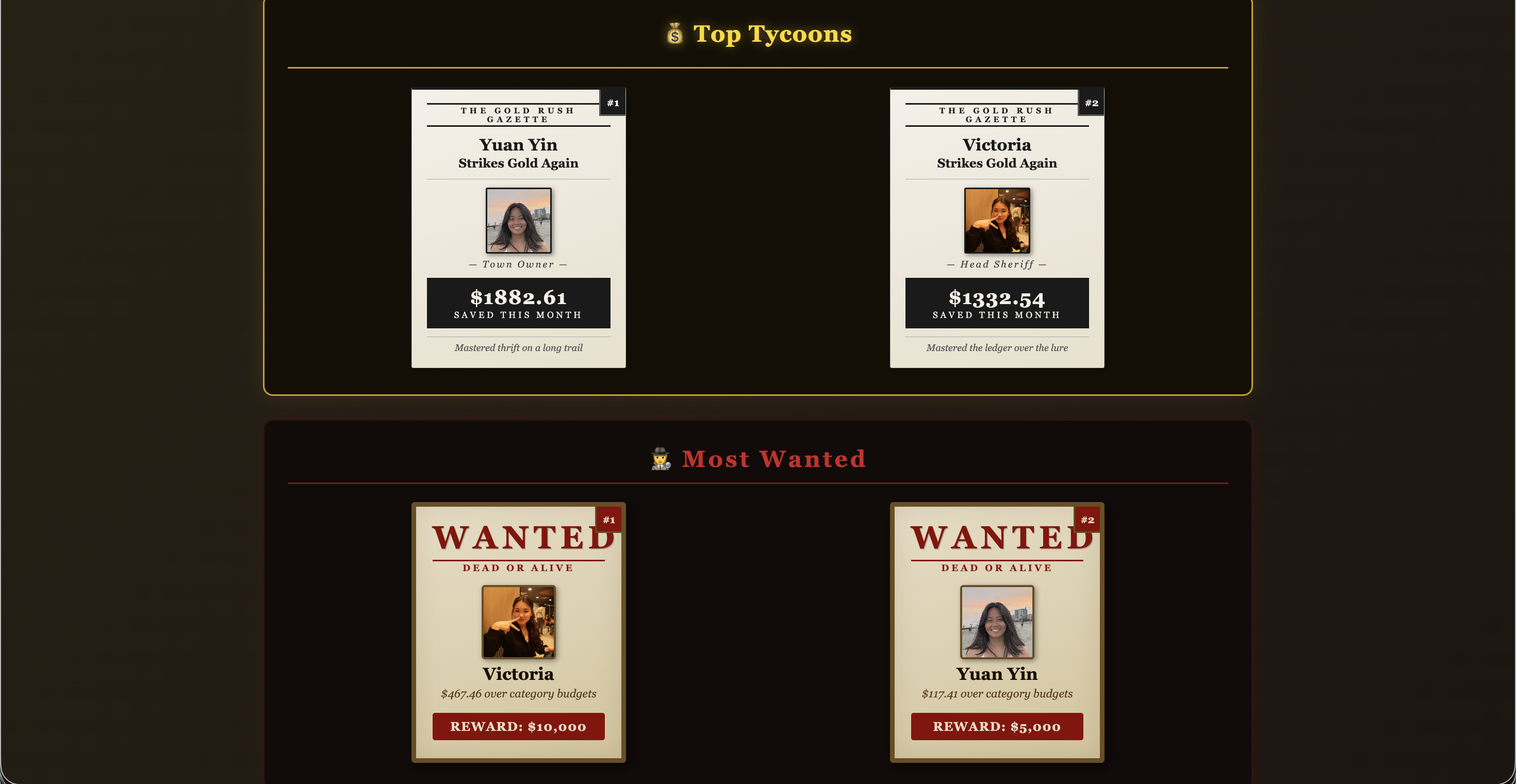
Leaderboard, shows top 2 over budget and top 2 savers
-
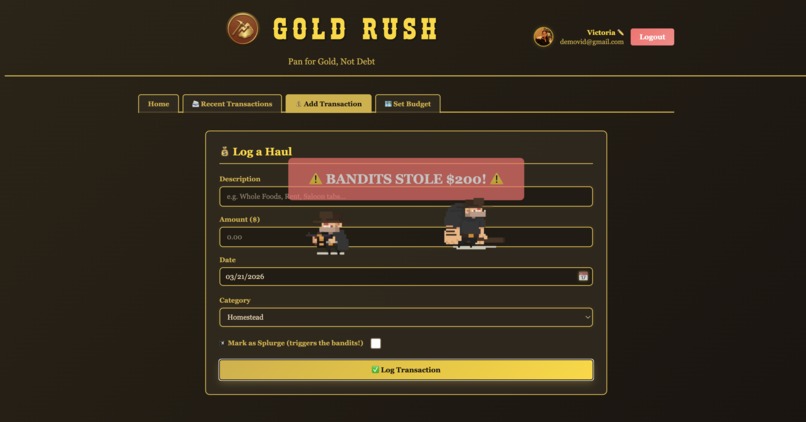
Splurge Animation
-
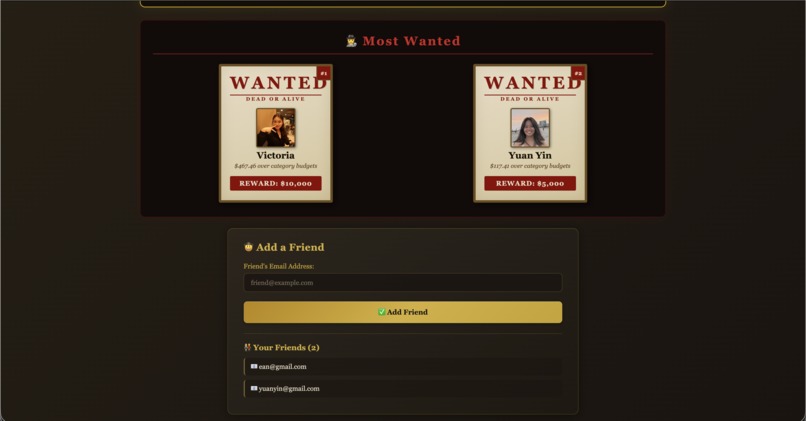
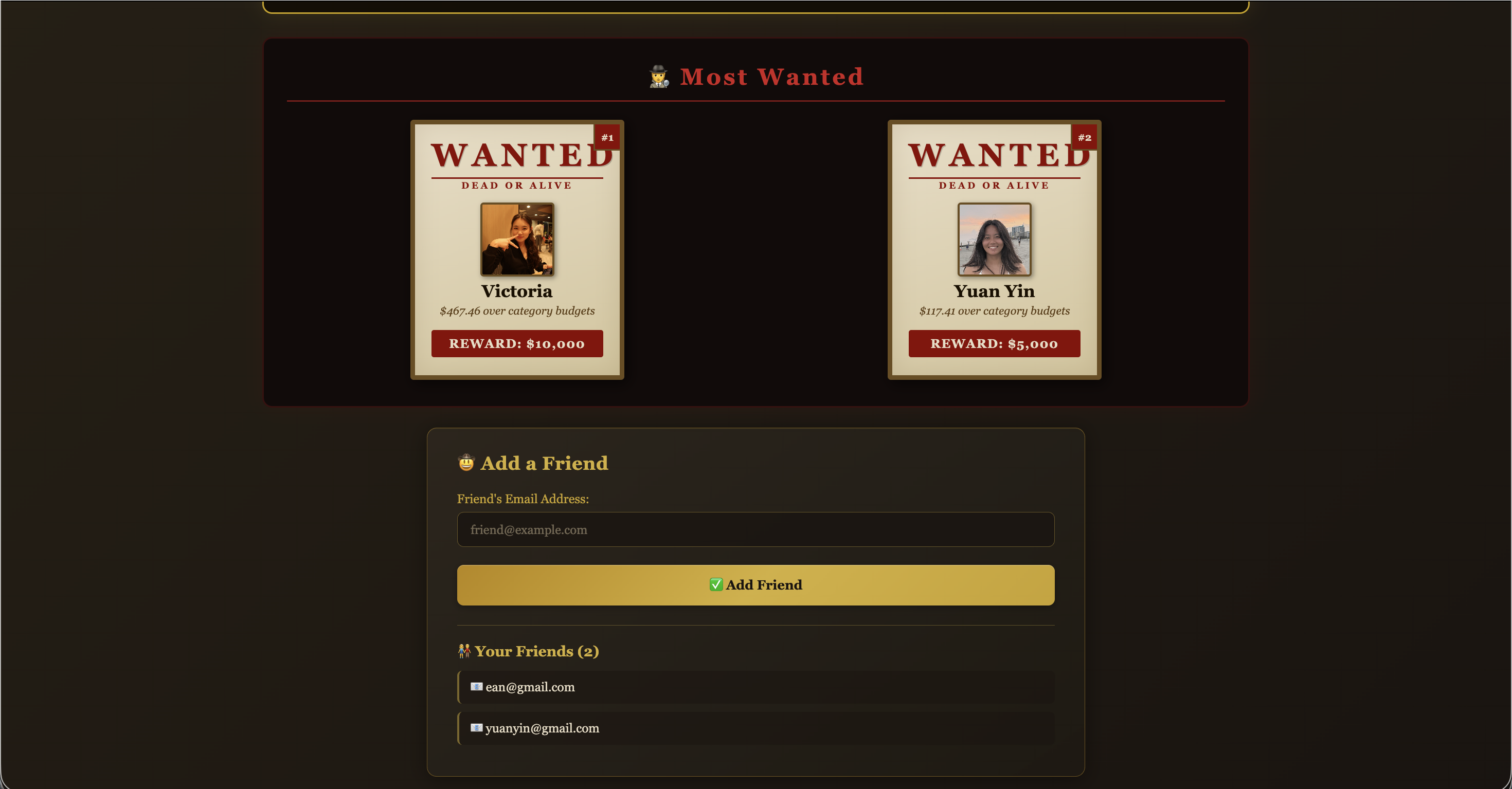
Add friends
-
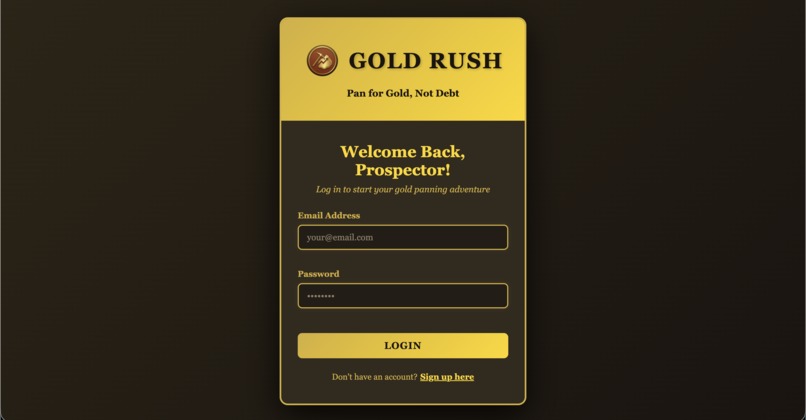
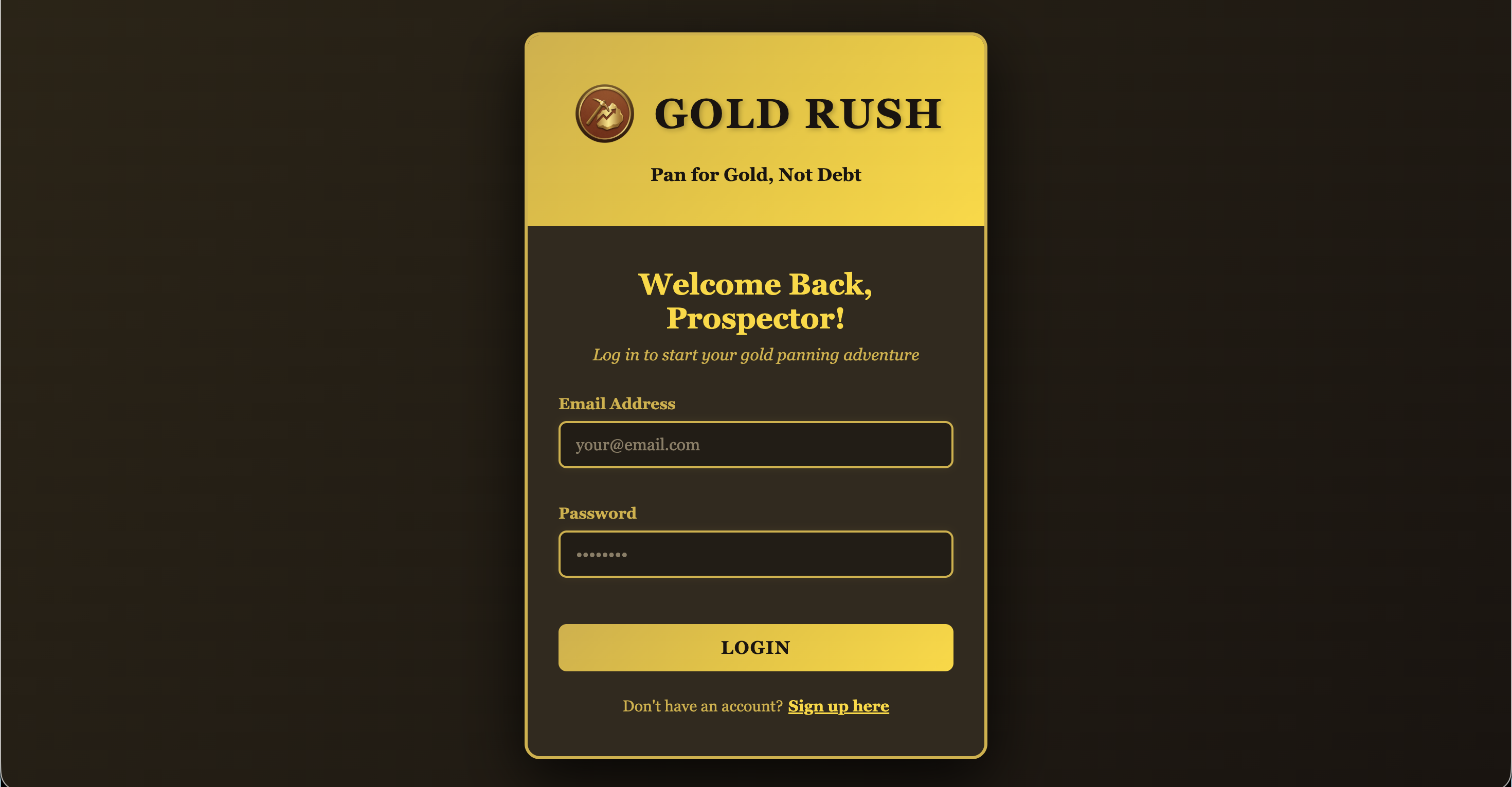
Log in
Inspiration
Between bills, social spending, and personal interests, it’s easy to lose track of where your money actually goes. Most financial tools address this with spreadsheets and graphs — effective, but rarely engaging enough to stick with.
Gold Rush takes a different approach. By combining personal budgeting with a social layer and a playful Wild West theme, it transforms a typically solitary habit into a shared experience that encourages accountability, one that's actually fun to open.
What it does
Gold Rush lets users set budgets, track spending across different categories, and see clear breakdowns of where their money is going each month. Transactions are pulled directly from users' bank accounts via the Plaid API, keeping everything up to date without manual entry.
The app's social layer is what sets it apart. Users can add friends, join a shared leaderboard, and compare spending habits in real time. The top 2 spenders over budget each month earn a "Wanted" poster while the top 2 savers are featured in the "Gold Rush Gazette" — a playful nod to the Wild West theme that builds friendly accountability into the experience. A cohesive Wild West aesthetic and custom animations run throughout, making the experience feel distinct and engaging rather than like a typical finance tool.
How we built it
We built Gold Rush using a React frontend and a Node.js backend, with Visual Studio Code as our development environment. For our database, we used Firebase for user authentication and Firestore to store and sync user data in real time, handling everything from account information to friend connections and leaderboard rankings. We also integrated the Plaid API to connect users' bank accounts and pull in transaction data directly. These tools together allowed us to build a full-stack application with live data, third-party API integration, and a dynamic social layer.
Challenges we ran into
One challenge we encountered was managing merge conflicts as multiple features were being developed in parallel. Resolving these required careful version control practices, clear communication, and alignment on coding standards to keep the codebase consistent.
The budgeting logic also proved more complex than expected, particularly the category separation and leaderboard ranking system. To mitigate this problem, we walked through the logic verbally as a team to make sure everyone was aligned before any programming, which saved us from compounding mistakes down the line.
The app also involved a lot of small details that were easy to miss individually but critical to the overall experience. We handled this by staying communicative throughout — flagging bugs in each other's sections, giving feedback openly, and being receptive when others caught issues in our own work.
Accomplishments that we're proud of
We are proud of how the design and animation elements came together throughout the app. The Wild West aesthetic feels cohesive from screen to screen, and the small details, including custom animations, themed visuals, and consistent styling, help create an experience that feels polished and fun to use rather than purely functional.
We are also especially proud of our integration with the Plaid API, which allows us to pull transactions directly from users' bank accounts in real time. Working with a production-grade financial API was a significant technical milestone for our team, and it's what gives Gold Rush the compelling feel of a professional product.
What we learned
We learned how to work with backend tools like Firebase to maintain a database for our users, as well as the Plaid API to directly pull transactions into our app. This gave us experience managing user data and syncing information across users, which allowed us to build more dynamic, real-time features. Plaid also deepened our understanding of how to integrate third-party APIs responsibly, particularly when handling sensitive financial data. Overall, this project strengthened our grasp of how frontend and backend systems interact at a production level.
What's next for Gold Rush
In the future, we plan to continue refining Gold Rush by expanding its features and improving the overall user experience. One priority is allowing users to customize their own spending categories, giving them more flexibility to tailor budgets to their lifestyle. We also plan to pursue full Plaid API production approval, which would replace our current test database with live bank transaction data.
On the technical side, we hope to integrate AI-powered transaction categorization. Currently all purchases loaded through Plaid default to "Other," and automatic sorting would make the app significantly more useful out of the box. We also look forward to adding a streak counter to reward users who stay within budget week over week, and an in-app messaging system to deepen the social experience. Together, these additions would make Gold Rush feel more complete, more personal, and more engaging for its community.


Log in or sign up for Devpost to join the conversation.