-
-
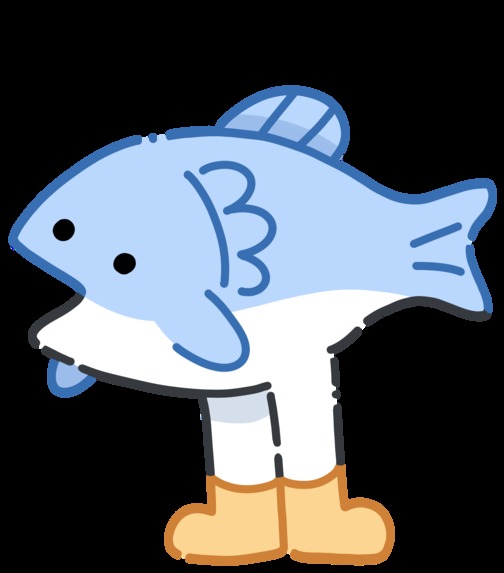
Player template
-
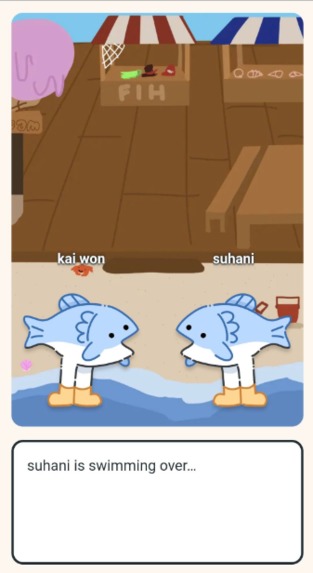
Initial Interactions
-
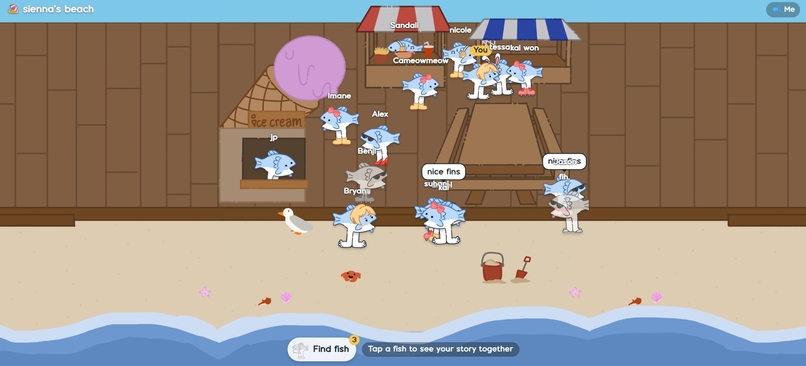
Your Beach World with All Your Friends
-
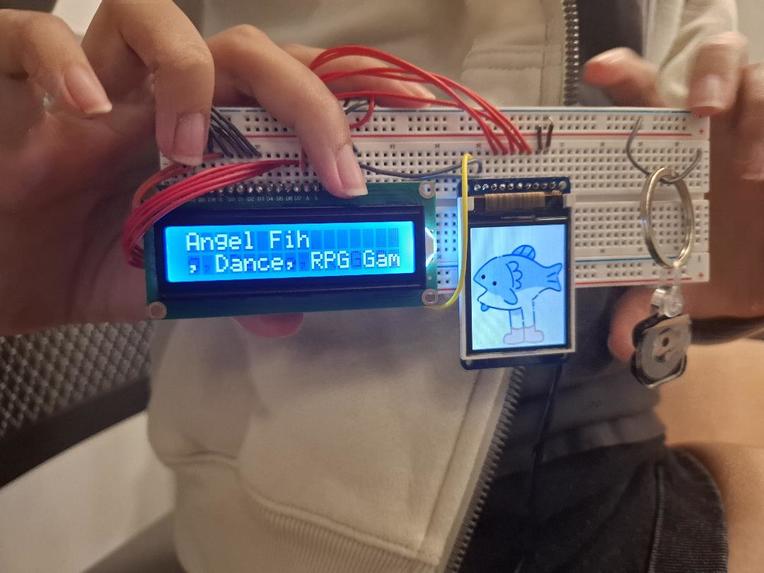
Hardware
-
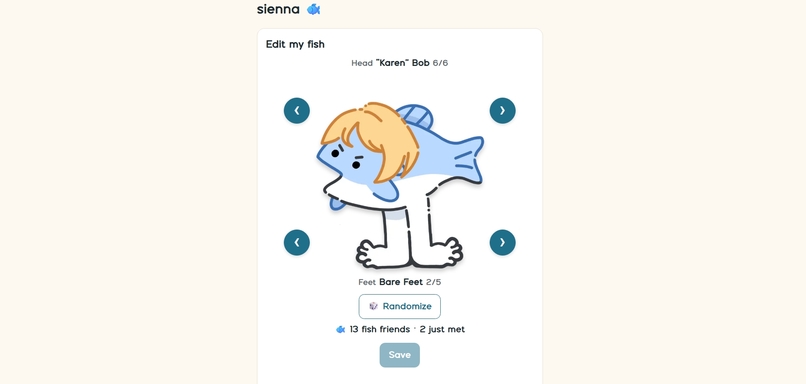
Avatar Customization
-
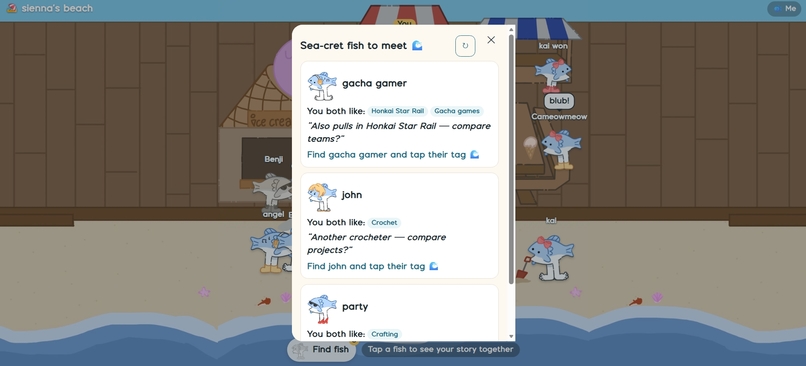
Finding Fish (Recommendations)
-
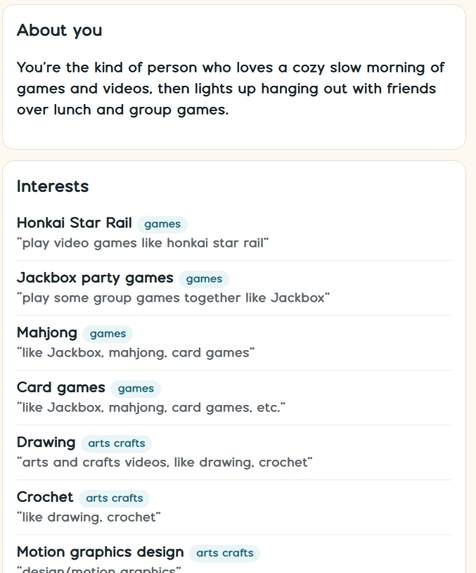
Personalized Profile from Onboarding
-
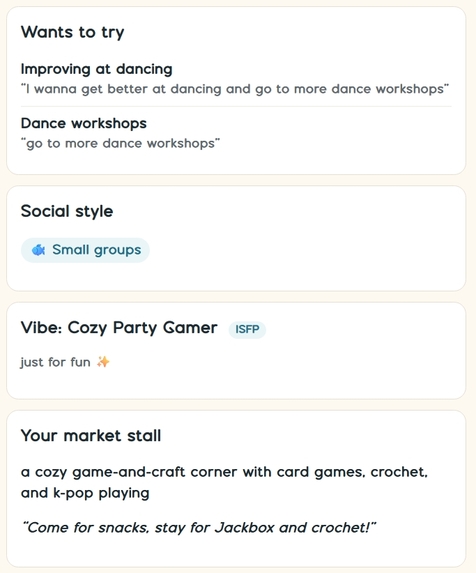
-
-
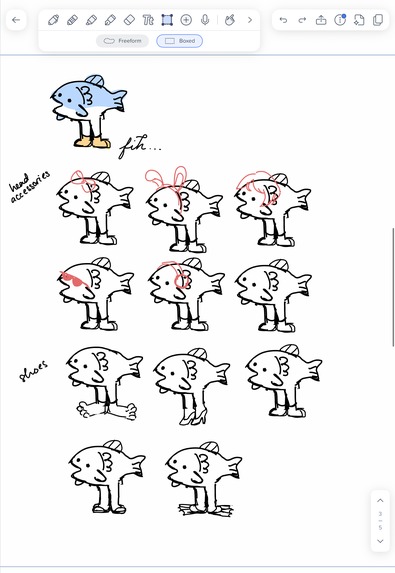
Notability Concept Art Designs
-
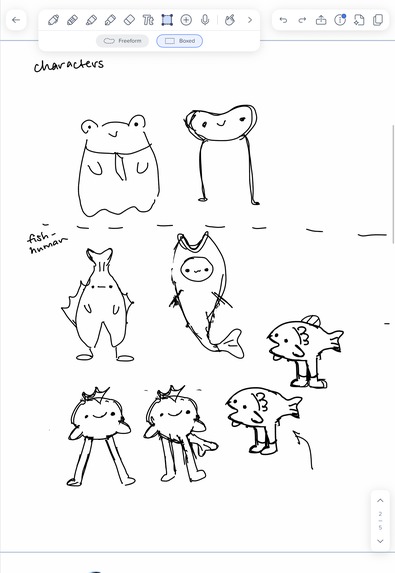
Notability Concept Art
-
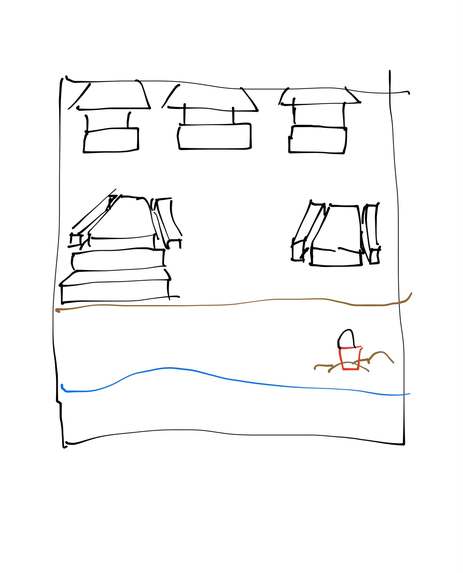
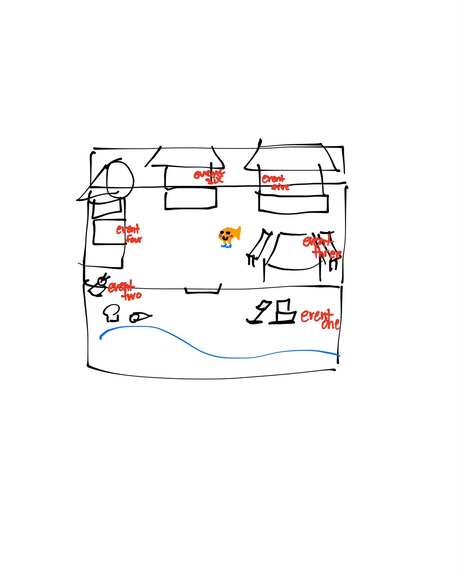
Notability World Concept Art
-
-
-
-
-
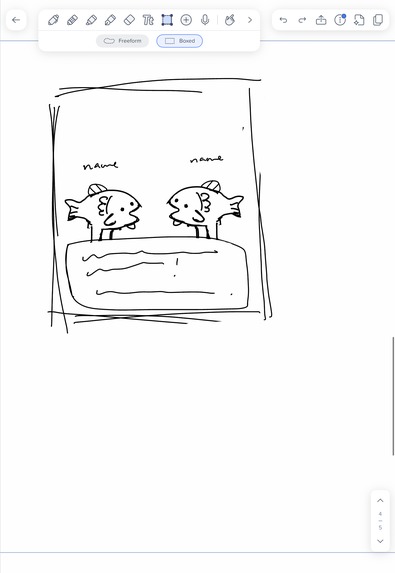
Notability Concept Art Interactions
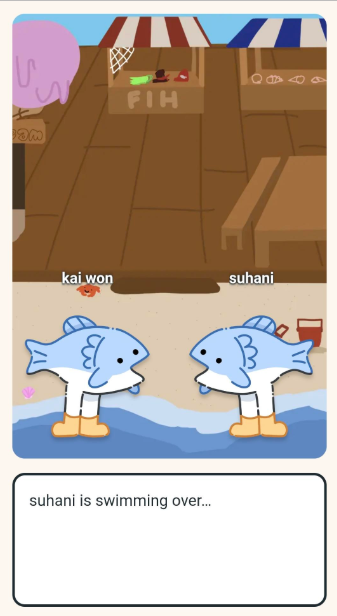
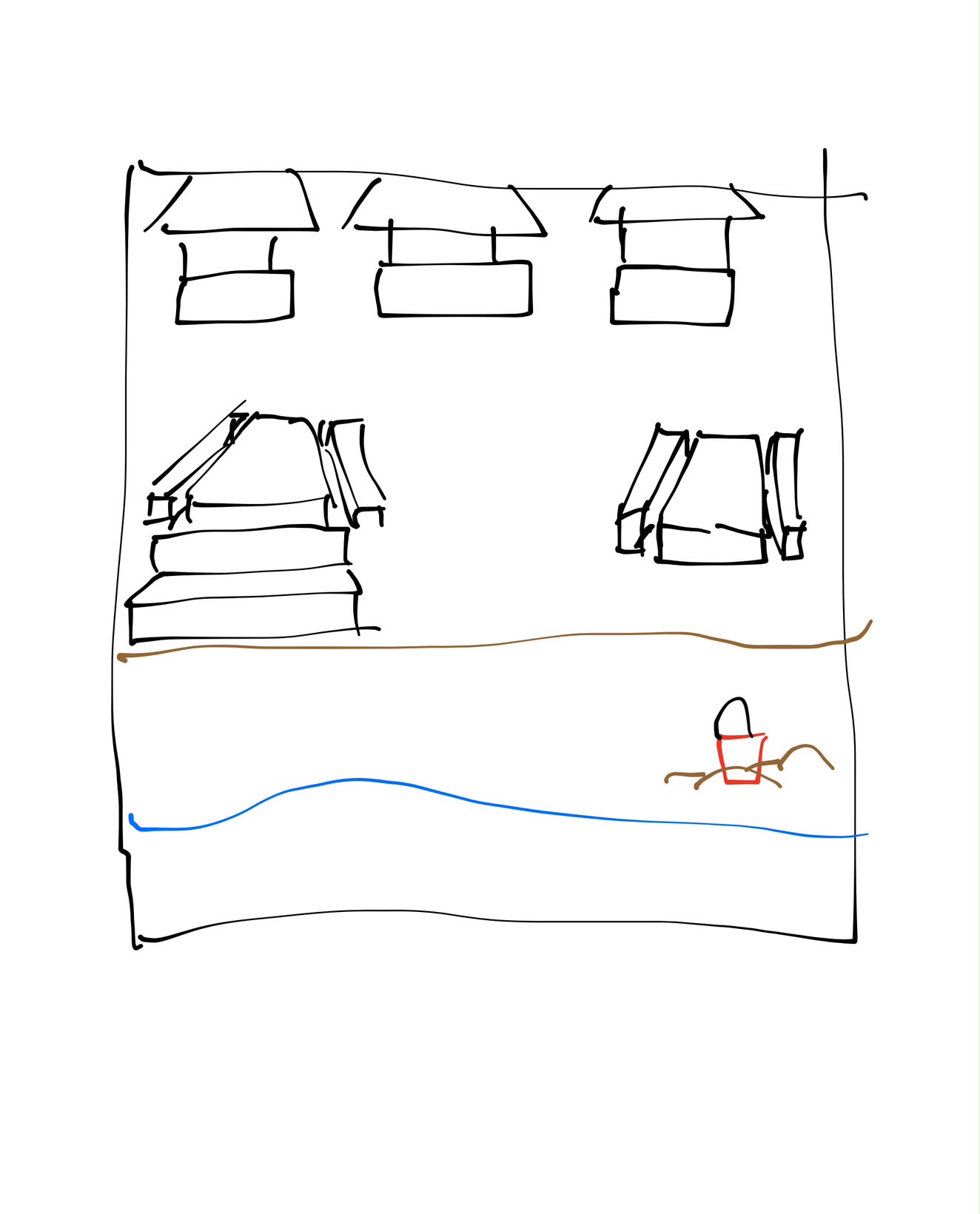
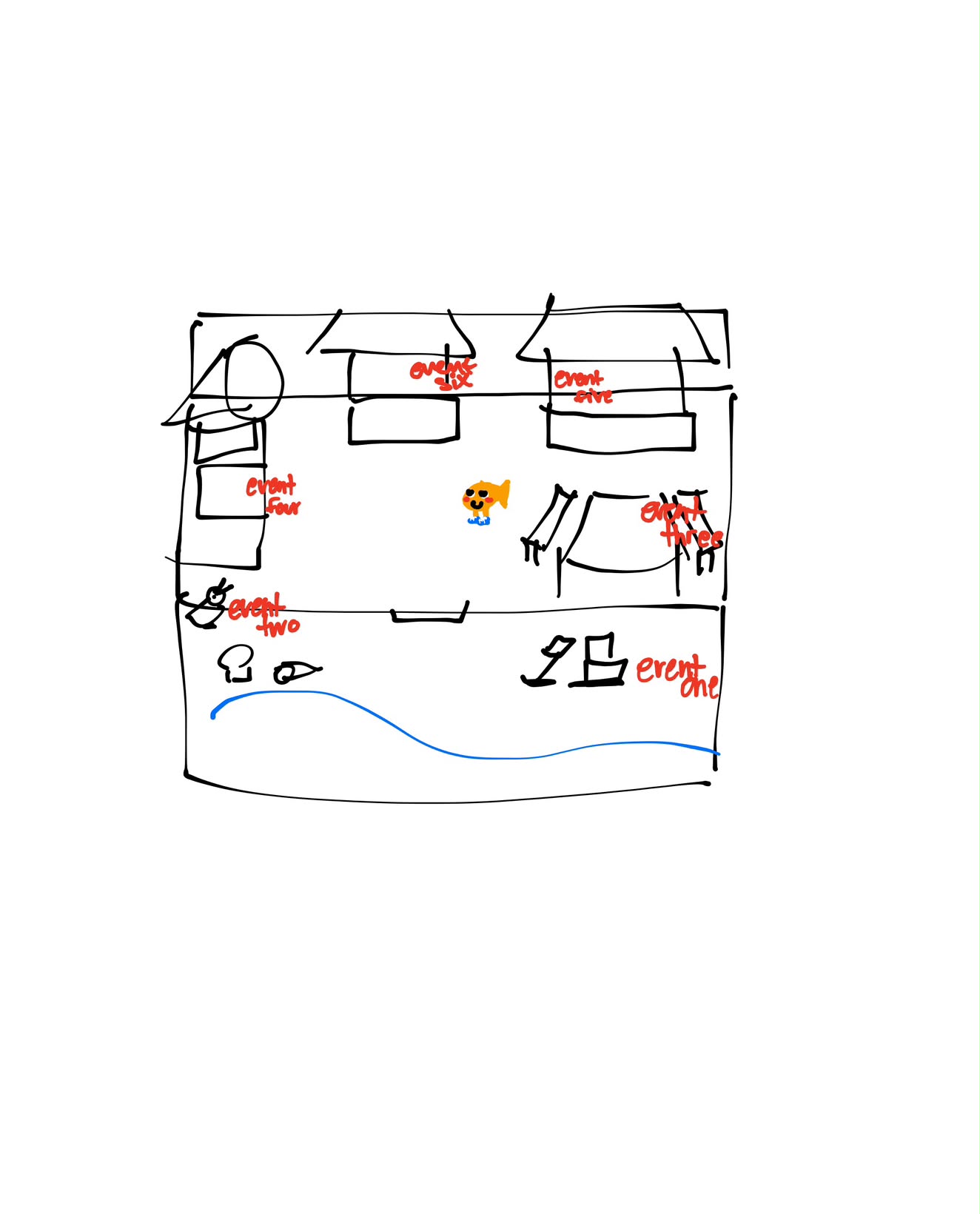
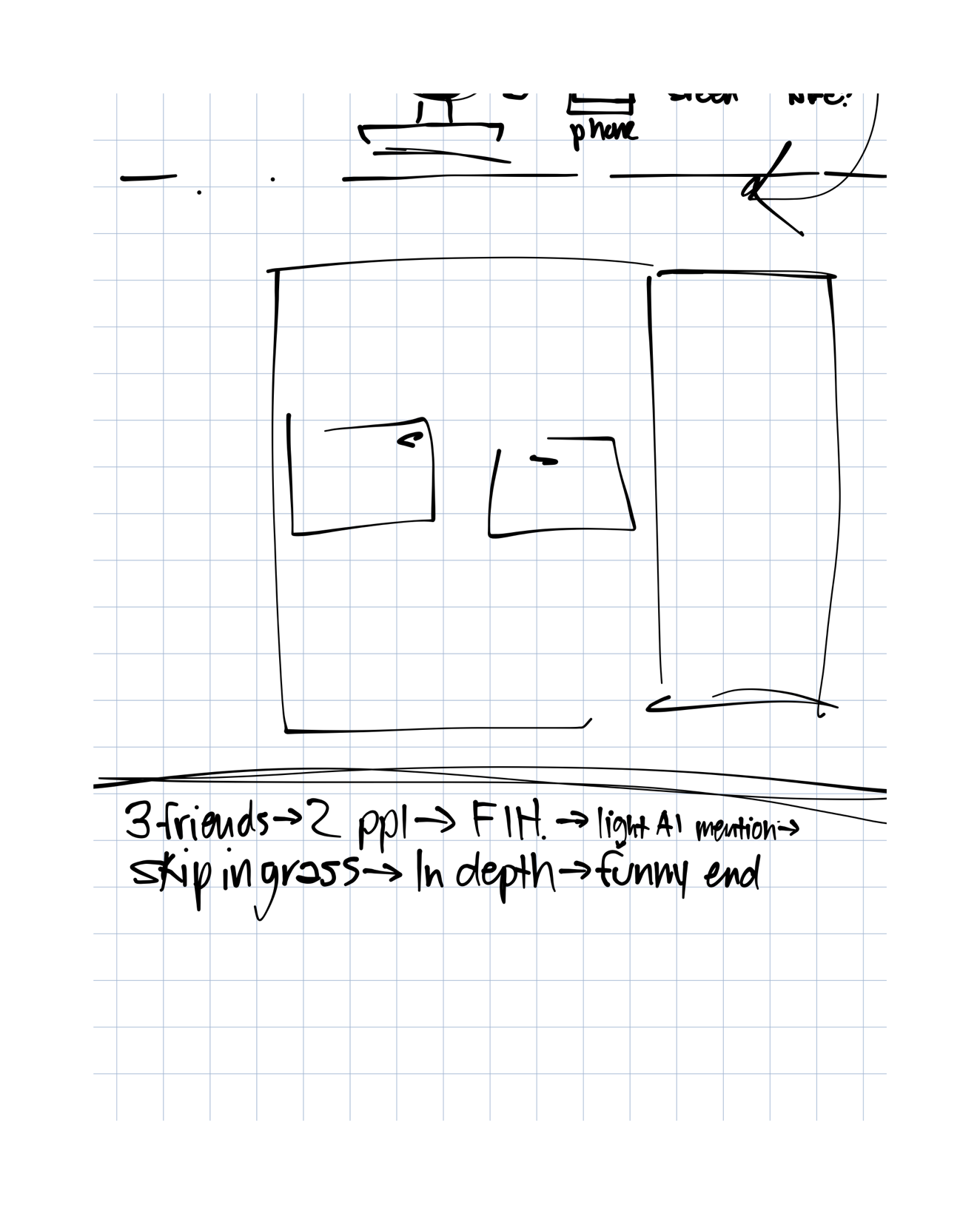
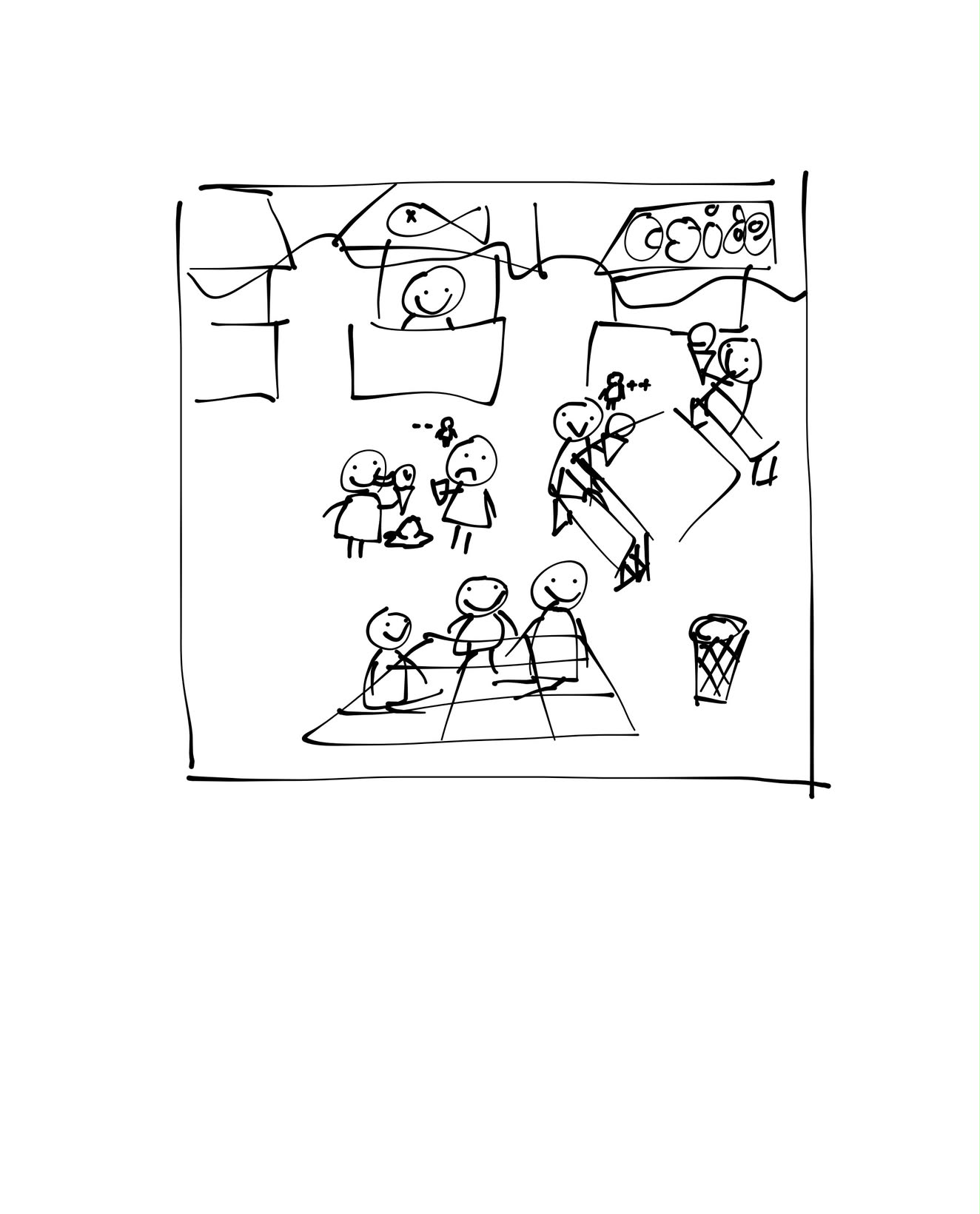
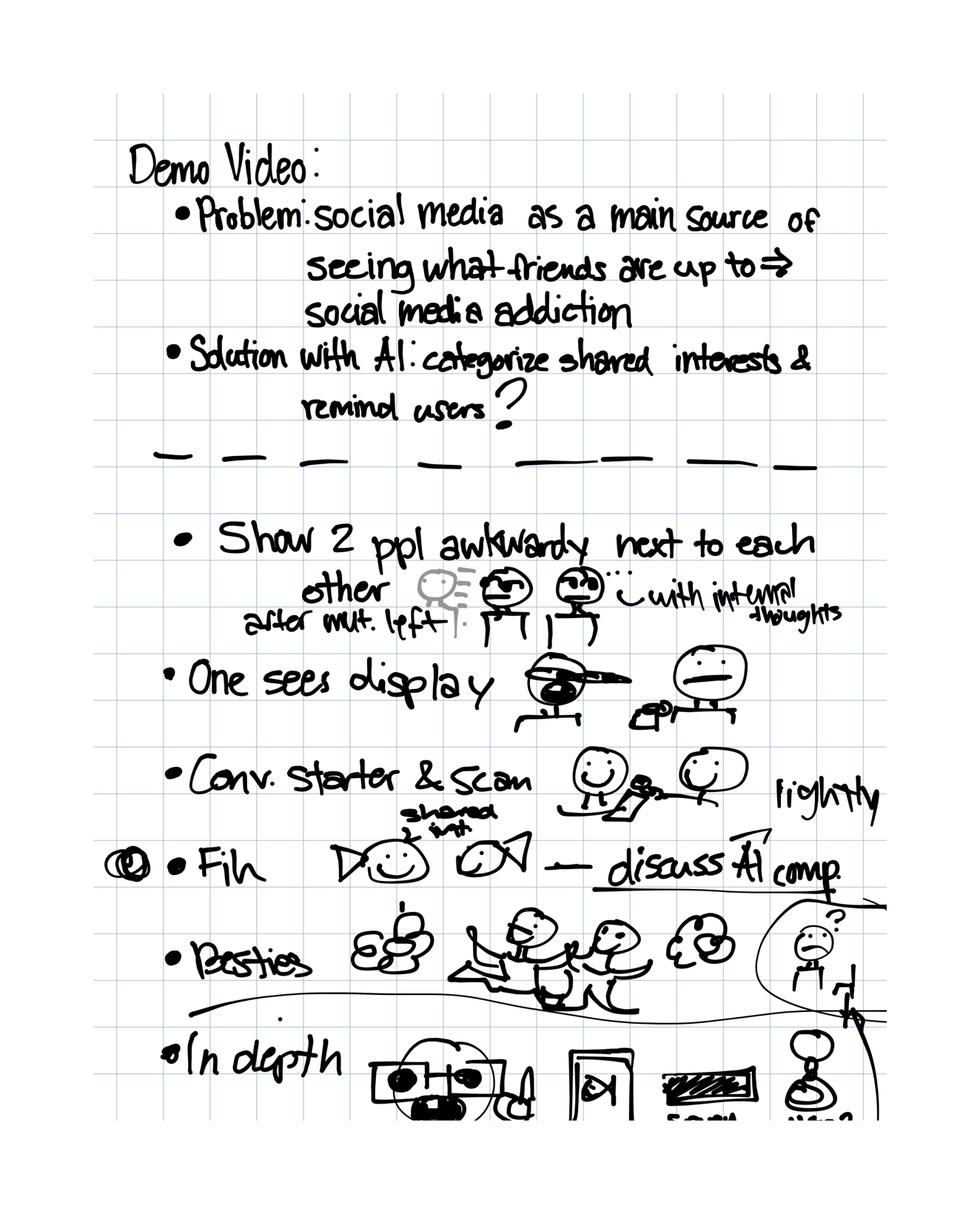
We spend hours on our phones every day trying to connect with people: liking, scrolling, sending a meme into the void and hoping something comes back. Yet somehow we still sit next to a stranger in lecture for a whole semester, never knowing they're also up at 2am doing the daily crossword. The internet is great at showing us people. It's not so great at helping us actually meet them.
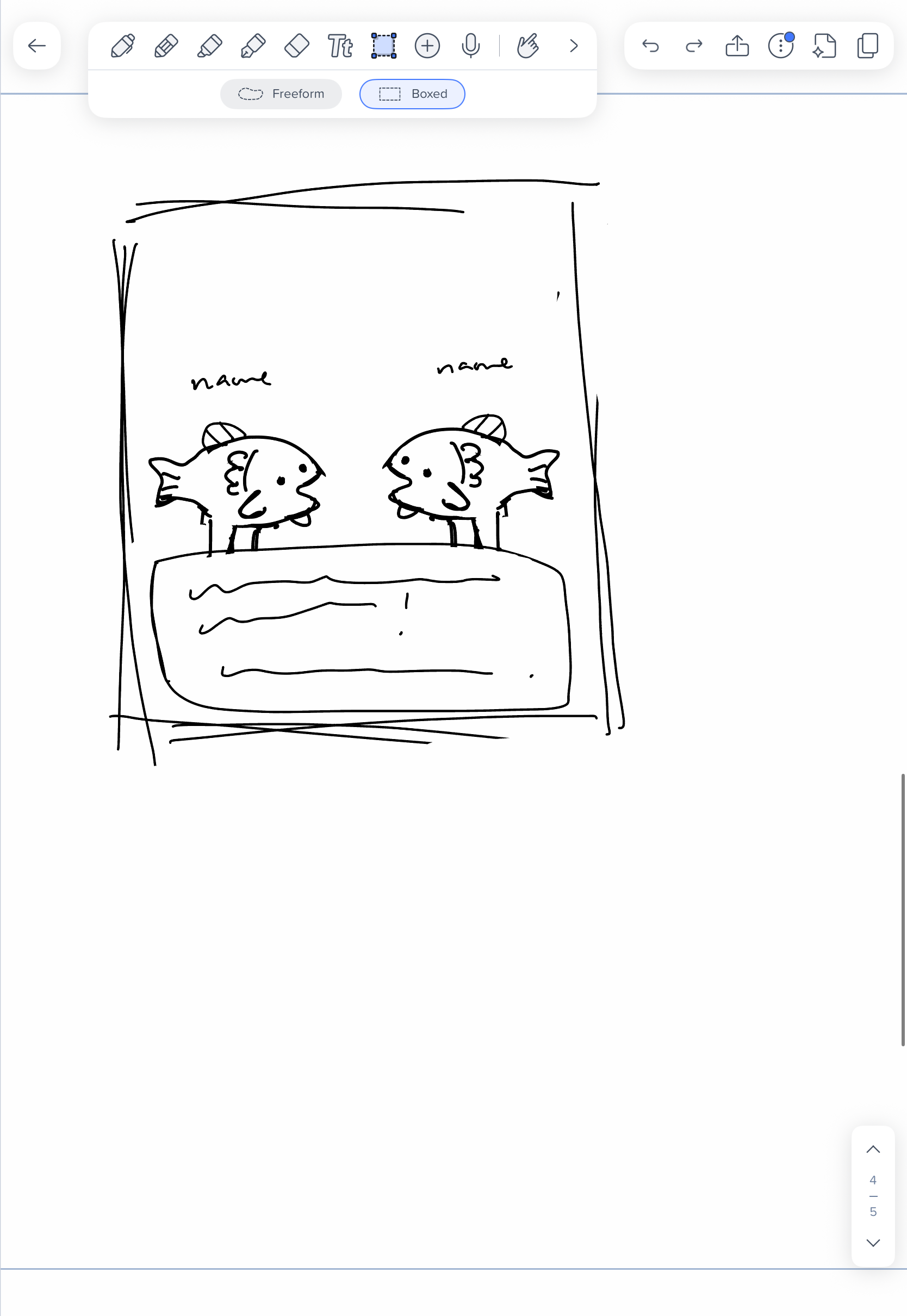
ReelFriends flips that around. Everyone becomes a little fish living on a seaside market beach that grows when you meet and connect with others in real life. Each person carries an NFC tag which taps to your phone upon meeting someone. It triggers an interaction between the two fish in a friendship cutscene where our AI reads and aligns the shared interests, transforming the conversation! Sometimes it's instant reel friends and sometimes your fish get shy and clam up...until next tide. This reinforces more real-life social interactions, meet ups, and
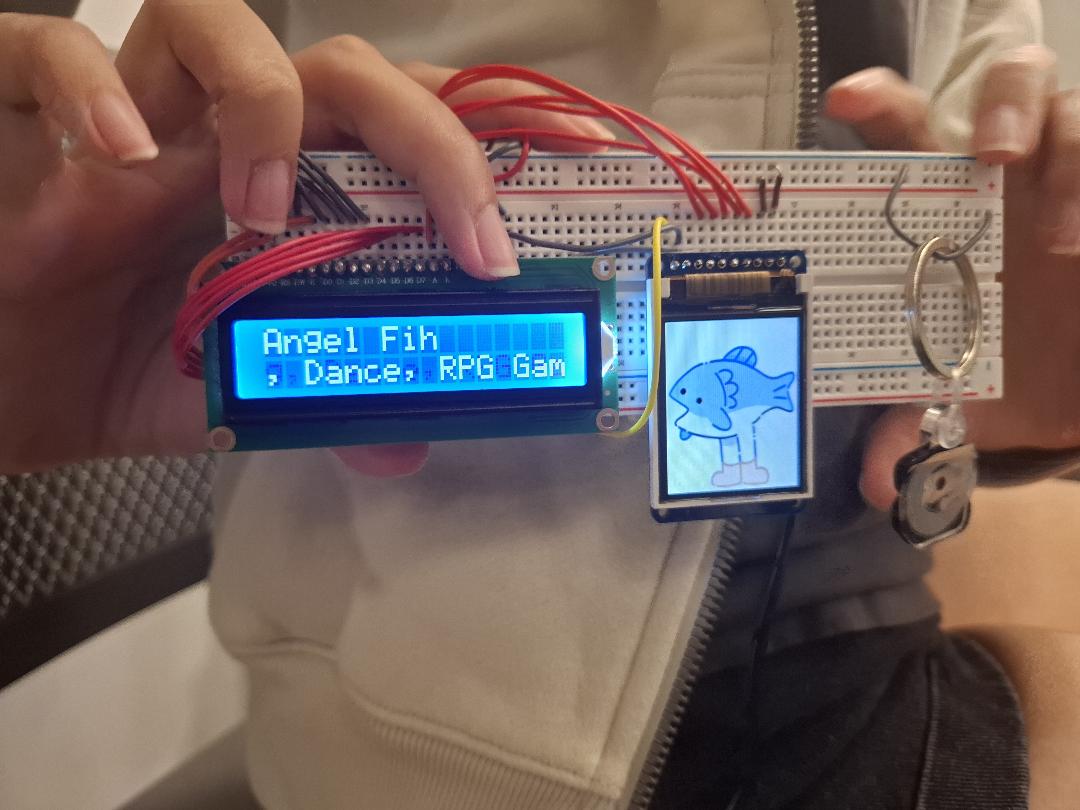
Our hardware pairs an LCD screen accessory displaying your name and interests, which pairs with the TFT screen to show your fish avatar. A wearable conversation starter that piques interest, reinforces friendships, more real-life social interactions.
Inspiration
We noticed a pattern in ourselves: we'd happily go to the esports lounge or try a new food stall, "but it's awkward to go by myself" or "weird to ask someone." ReelFriends gives you an excuse to as it connects you with others who share your interests.
Features
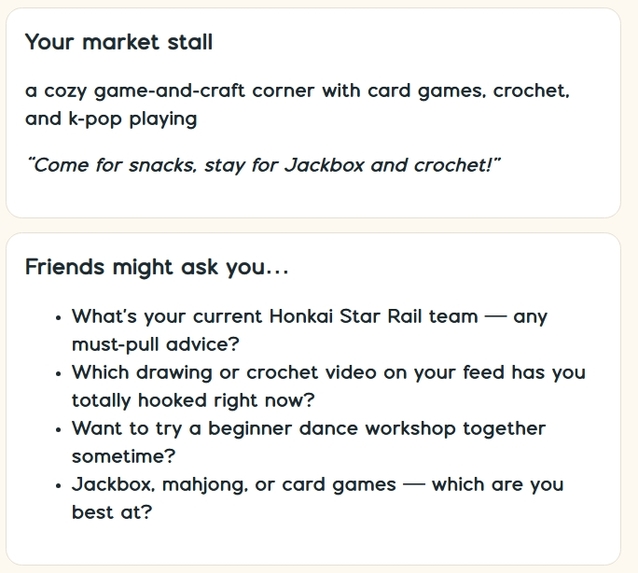
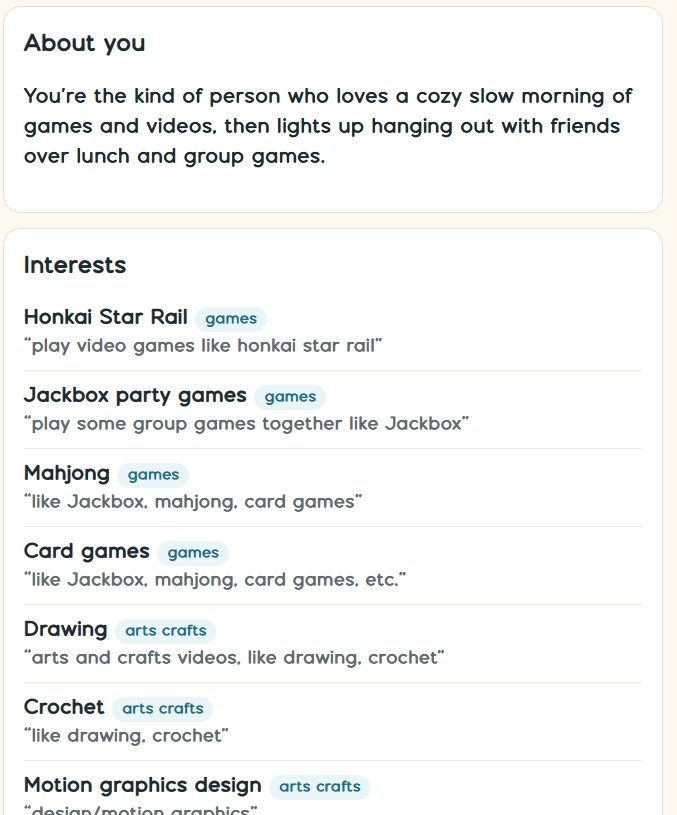
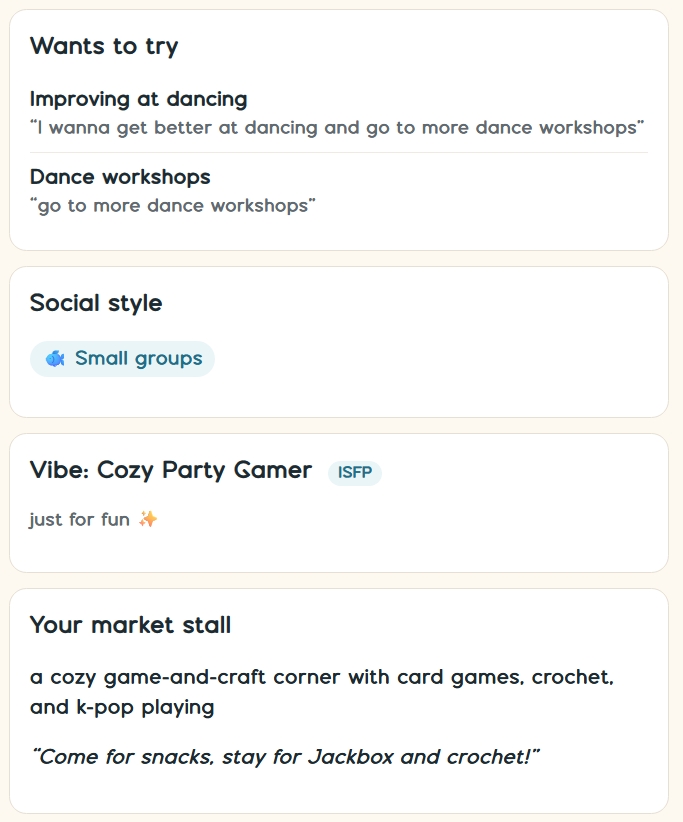
- Voice Onboarding: Answer a few playful questions (or a lighting round!) out loud, prompts about envisioning a perfectly free Saturday or what's really on your 2am feed and the AI extracts your rambling into a profile: specific interests and things you want to try, tailored by what you actually said.
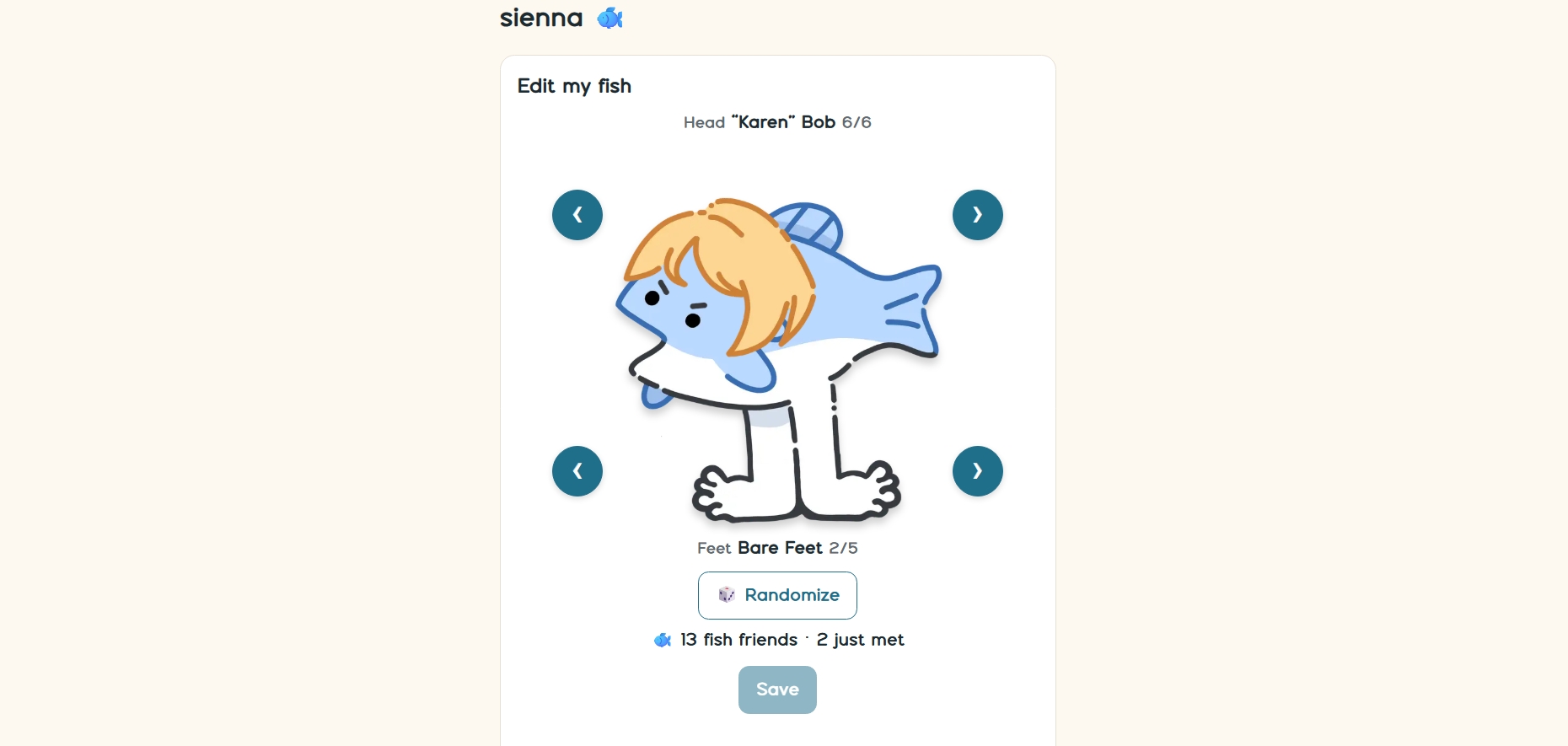
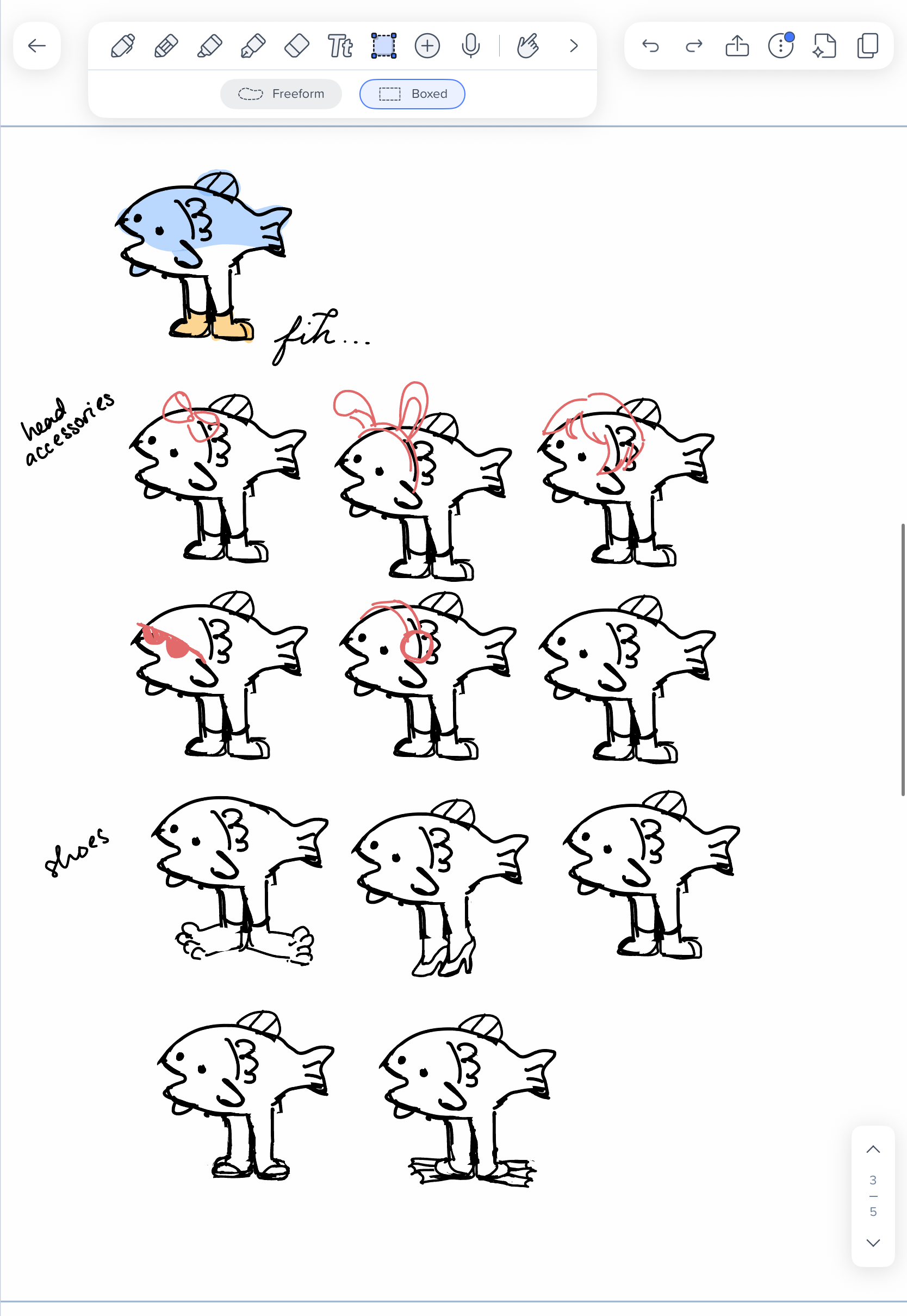
- Avatar Build: You're able to dress up your fish, immersing your avatar into the world.
- Tap Interactions: Tap a friend's NFC tag and a cutscene plays: your fish chat about what you have in common and find out if you're friends. A failed meetup can exist, but this encourages more consistency!
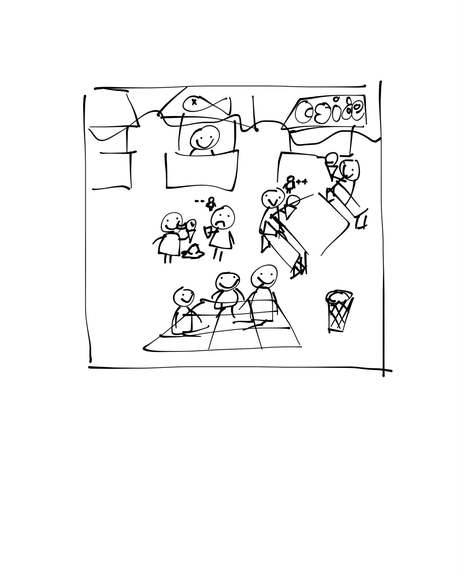
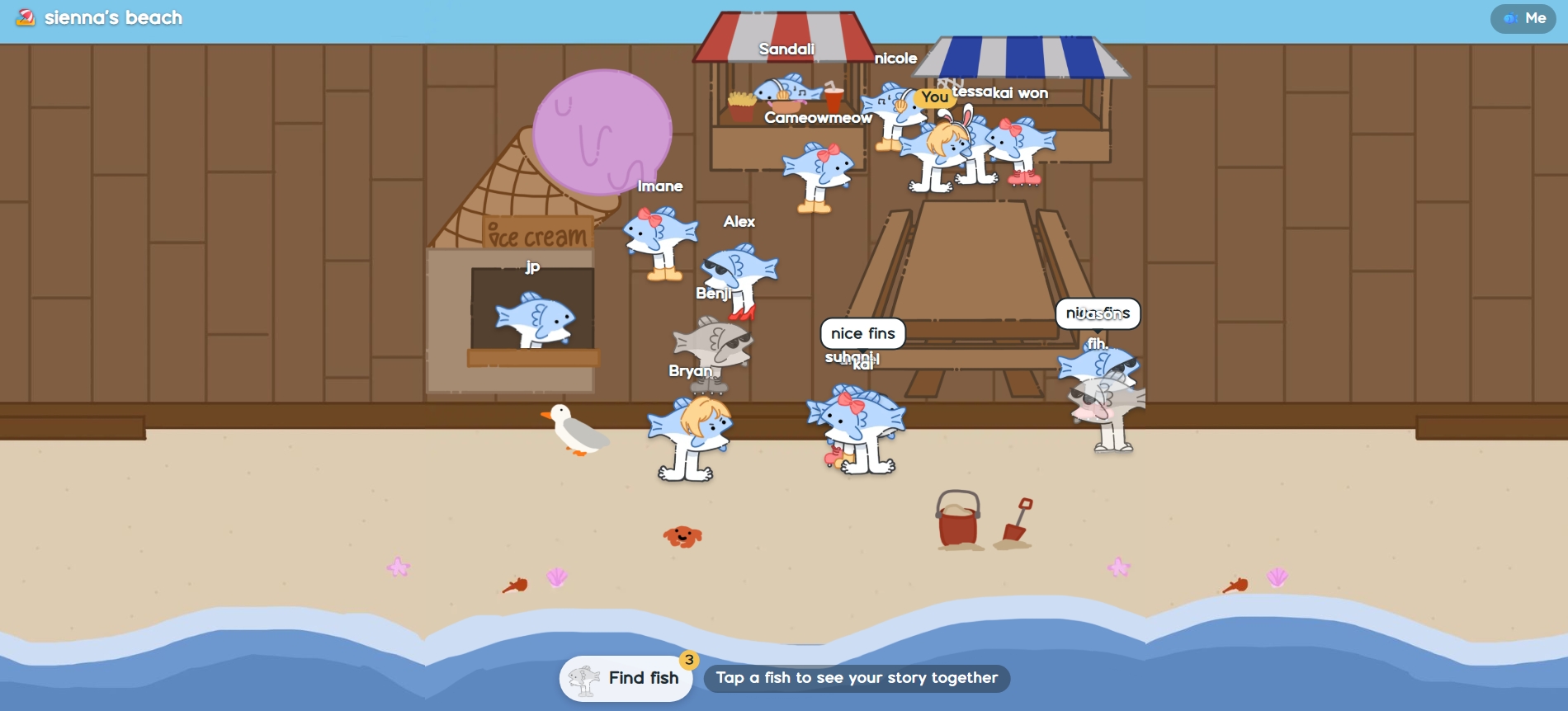
- Your space: Everyone you've met in person wanders your beach where they interact with each other and swap tiny speech bubbles from past conversations, build sandcastles together, sit at the picnic table, and feed the seagull.
- Meetups: Meeting the same friend again counts as a hangout and unlocks new scenes, so real-life time together is literally how the friendship grows.
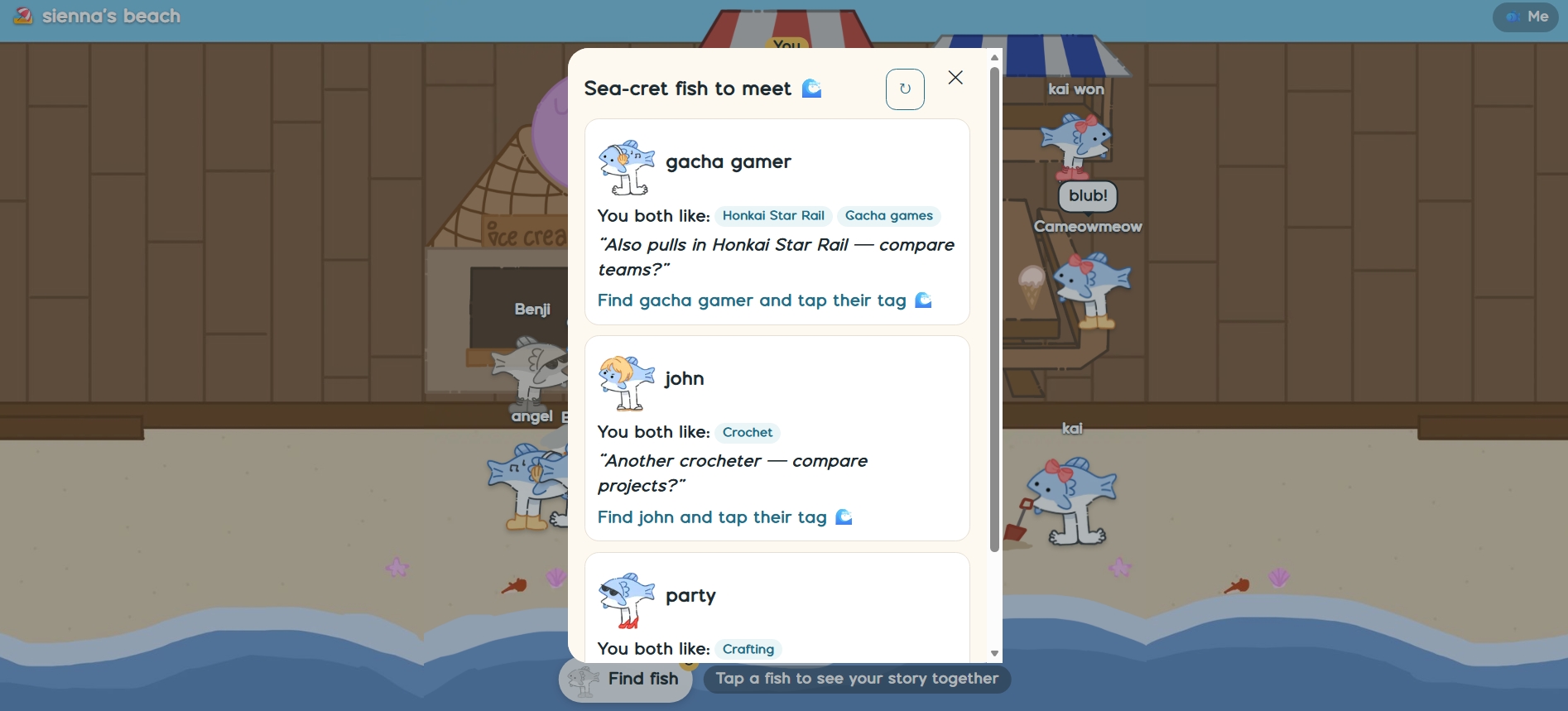
- Fish Recommendation Recommended people (opt-in only) swim in the ocean around your island with the interests you share. The only way to bring them ashore? Go find them and tap their tag.
How we built it
- Frontend: a mobile-first web app built with Next.js + TypeScript. NFC tags hold a plain URL, so tapping works on iPhone and Android with nothing to install.
- AI: Meta's Muse Spark through the Meta Model API, using structured JSON outputs (details below).
- Voice: ElevenLabs reads the onboarding questions aloud; answers are recorded in the browser and transcribed.
- Database: MongoDB Atlas for profiles, friendship pairs, meet history (every cutscene is saved exactly so it can be replayed), and cached AI results.
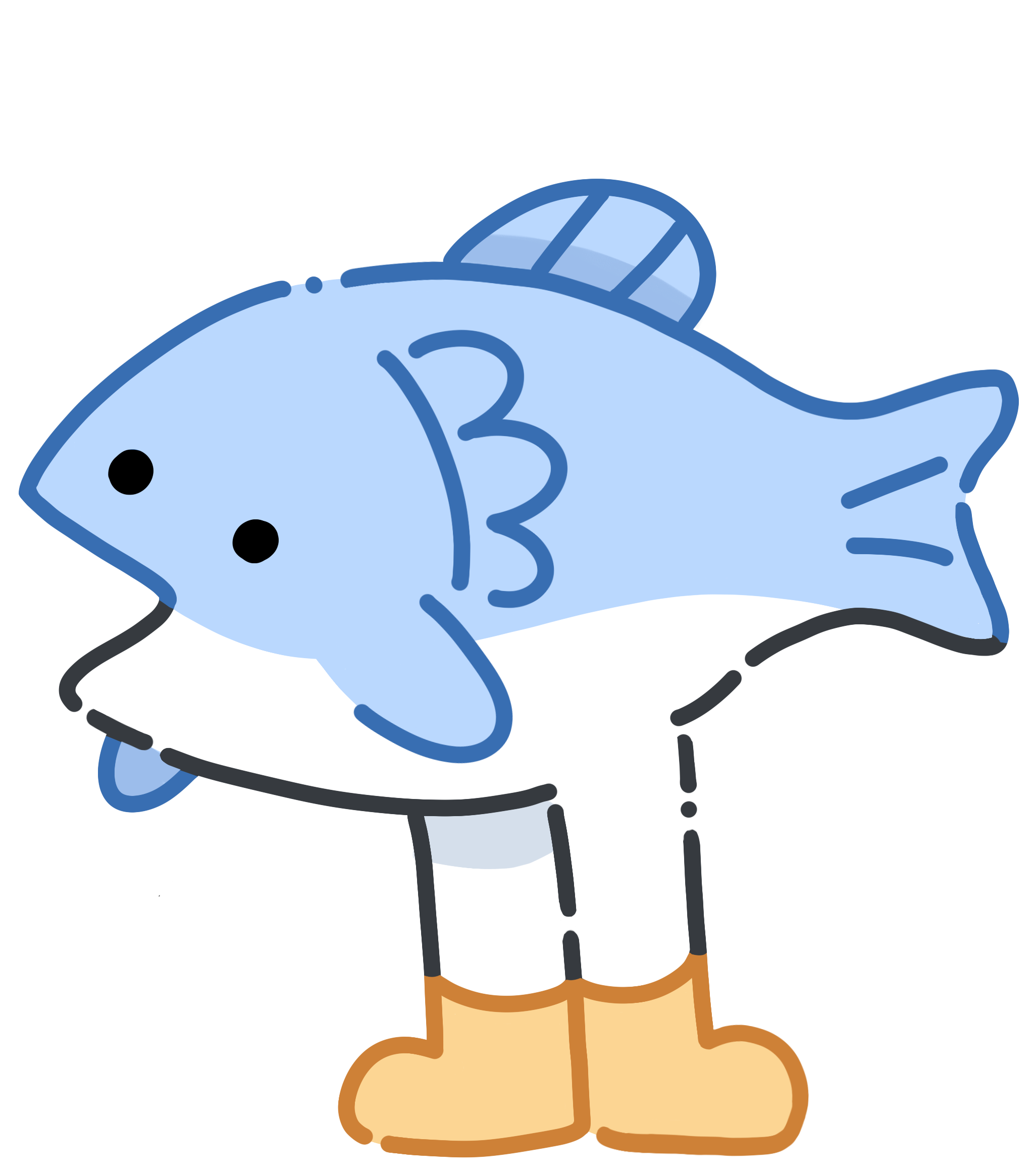
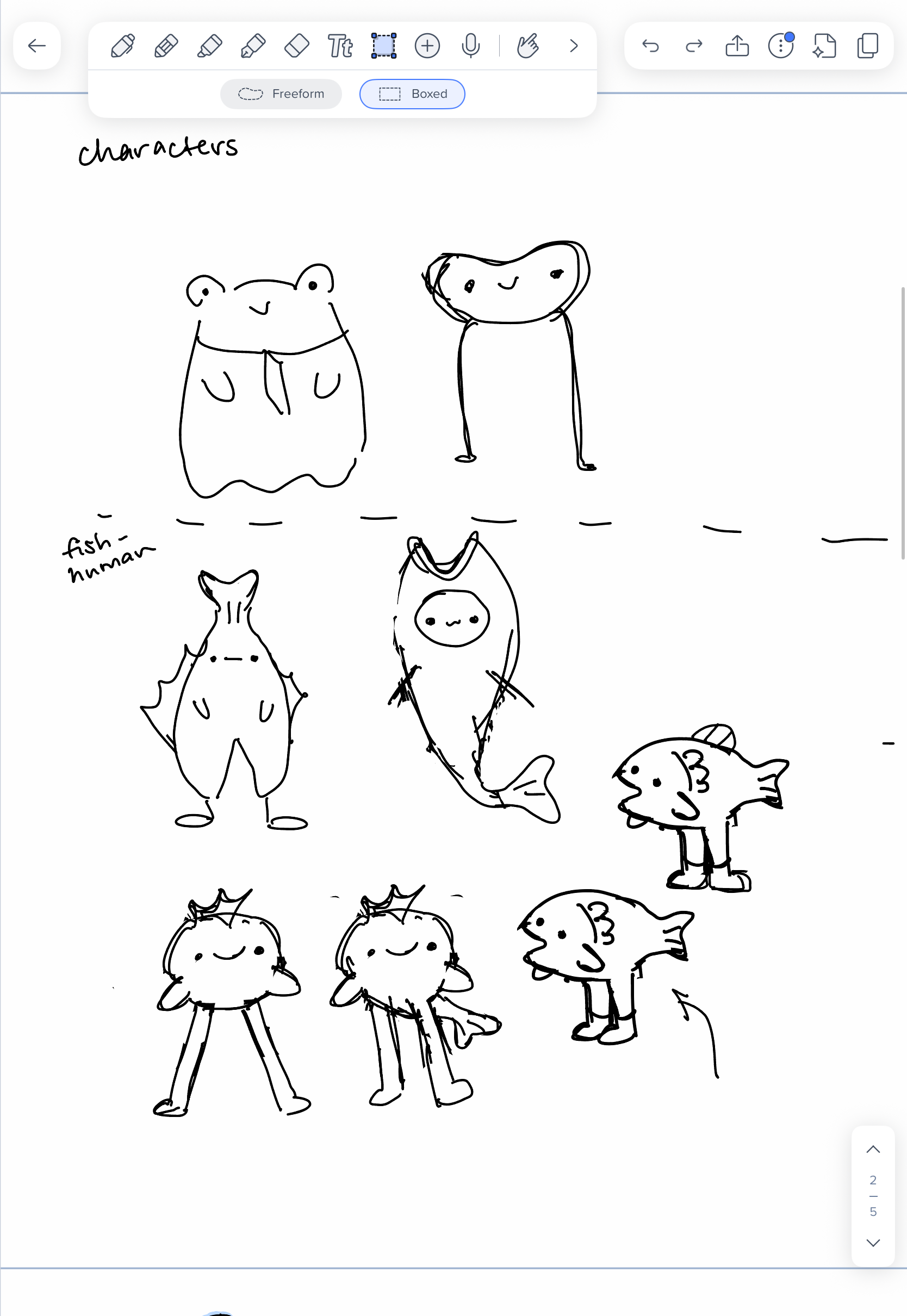
- Hub/Beach: a custom animation loop with depth sorting, so fish walk behind stalls, plus a small activity system for sandcastles, picnics and seagull snacks. All art was hand-drawn in Notability.
- Hardware: an Arduino Uno driving an LCD (name + scrolling interests) and a TFT screen (fish avatar)
Your fish, on a Muse Charm
Meta just announced Muse Charm, a Tamagotchi-like keychain with a customizable avatar that embodies your Muse AI agent. Our hardware badge is our take on that idea, applied to friendship: a little TFT screen with your fish and an LCD scrolling your interests, worn on you, powered by Muse Spark.
Charm isn't out yet, so we built our own with an Arduino. The vision: your ReelFriends fish lives on your Charm. When you meet someone and tap tags, your new friend's fish swims onto your island, and your Charm lets you know when someone nearby shares your interests. Because it's consent-first, no one shows up unless they shared their tag or opted in.
How AI powers ReelFriends
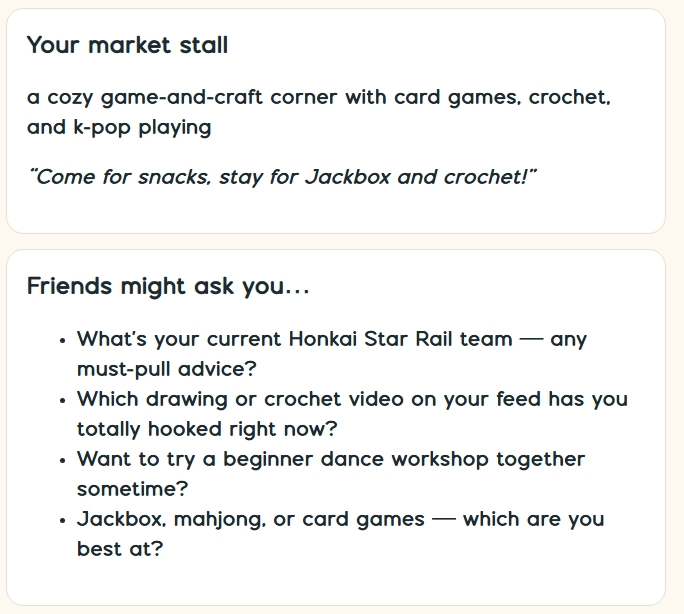
- Understanding you (onboarding): You answer out loud regardless of the filler words. Muse Spark turns that into a structured profile: specific interests, things you want to try, and how you like to hang out. Every item is backed by a quote from what you actually said, and you can edit everything before it's saved.
- Finding real common ground (meeting): When two fish meet, Muse Spark compares both profiles semantically
- Telling your story (dialogue): It writes the friendship cutscene, hangout scenes, and the tiny speech bubbles fish swap on your island, grounded in your real overlaps and in each person's own words.
- Suggesting who to meet (recommendations, opt-in): It surfaces people you haven't met who share your interests, so you go find them in person.
Tools, harnesses & models
- Muse Spark (Meta Model API): profile extraction, overlap analysis, dialogue, and recommendations, all with structured outputs
- ElevenLabs: voices for the onboarding questions
- MongoDB Atlas: profiles, friendships, saved cutscenes, and the AI cache
- Claude Code: our coding harness. We planned each feature as a written spec, and Claude Code implemented it against our existing codebase, which let a small team build onboarding, the meet cutscene, the island simulation, and customization in 36 hours.
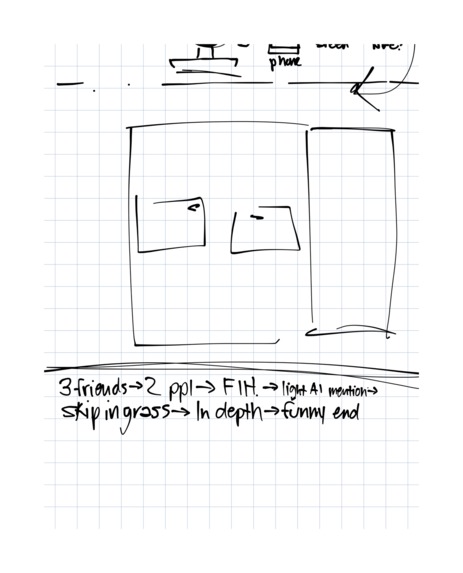
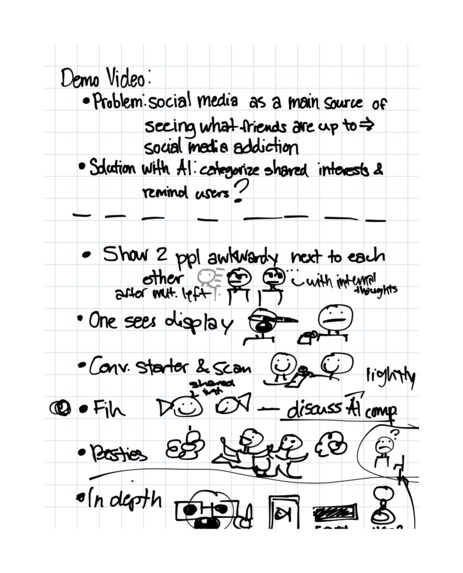
- Notability: all of our art and UI sketches
- Next.js + TypeScript deployed on Vercel
- Arduino Uno with an LCD and a TFT display screen for the hardware
Notability
Every fish, accessory, stall, seagull and sandcastle in ReelFriends was hand-drawn in Notability. We drew each fish accessory on the same canvas size as the base fish, so every hat lines up exactly as an overlay in code. That streamlined the handoff between our artists with code.
(See the Media Gallery for screenshots of our Notability canvas!)
Challenges we ran into
- The AI kept playing it safe: When it didn't know someone's social style, it labeled everyone "flexible" and "balanced." We taught it that "I don't know" is a valid answer.
- Too cozy: Early dialogue made everything "cozy," and some of it drifted into weirdly date-like territory. We rewrote our prompts to keep it friendly, public, and in each person's own words.
- $50 of AI credits for a whole hackathon: We cached every expensive result, so replays, retries and re-taps cost nothing, and we built a mock mode so we could develop the UI without spending a cent.
- Audio formats: iPhones and Android phones record audio differently, so we had to convert every recording into the one format our transcription needed.
- Testing NFC from a laptop (You can't!): We realized a tag is really just a link, so we built dev tools to "become" any user and simulate taps, and saved the real tags for the end.
- Making failure feel fun Clamming up needed to feel like a relatable moment, not a verdict. So, the AI always finds some connection, even a stretch, and every retry has better odds.
Accomplishments that we're proud of
- Watching two fish discover a real shared interest we didn't know two of our teammates had
- The two-fish sandcastle: one fish calls a friend over, they dig together, and a sandcastle appears
- An AI that never invents connections. Every "you both like…" is grounded in something real
- Combining a web app, NFC, AI and custom hardware into one experience in 36 hours
What we learned
- Hardest part of AI features is making the output trustworthy and on-tone, more than getting it to run
- Structured outputs and validation in code beat "just ask the model" every time
- Small physical things (a tag, a badge) change how people behave far more than another notification would because of familiarity with physical components to pique curiosity and interest
What's next for ReelFriends
- ReelFriends on Meta Ray-Ban Display: Port the fish view to the glasses as a web app, so your new friend's fish appears in-lens right after a tap
- More fish fashion: Feet accessories (they're coded, just not drawn yet) and more accessories for customization
- Group hangouts: Three or more fish tapping in together for bigger island events
- Island News: A weekly AI recap of who hung out, new friendships, and who you haven't seen in a while
- Campus and club hubs: Orientation groups and clubs share a beach to help newcomers find their people
- Better hardware: a smaller wireless badge that updates live when you make a new friend


Log in or sign up for Devpost to join the conversation.