-
-
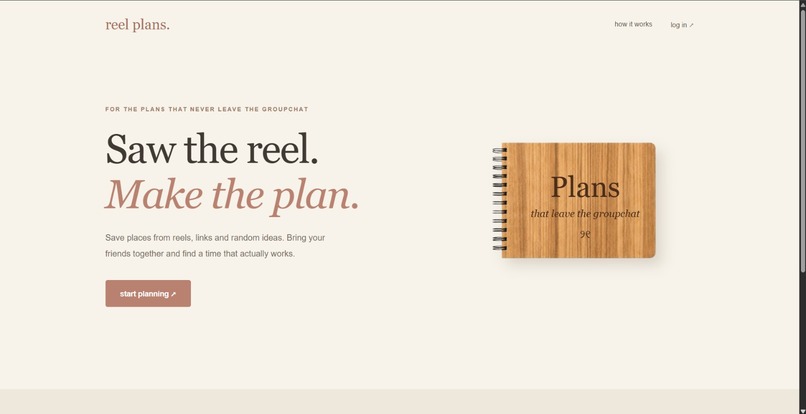
The Homepage
-
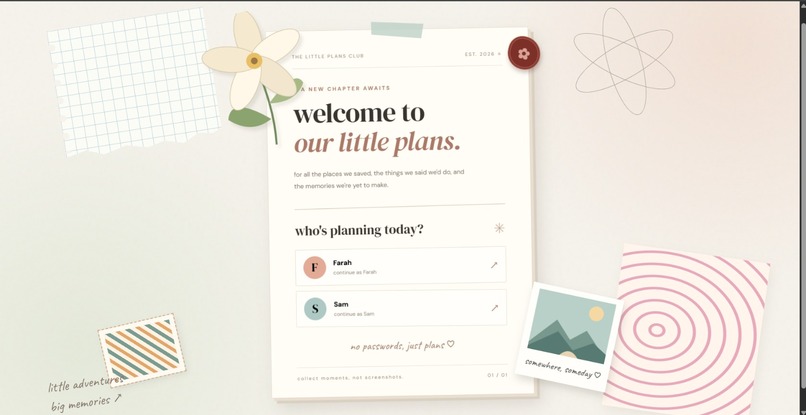
Login Page
-
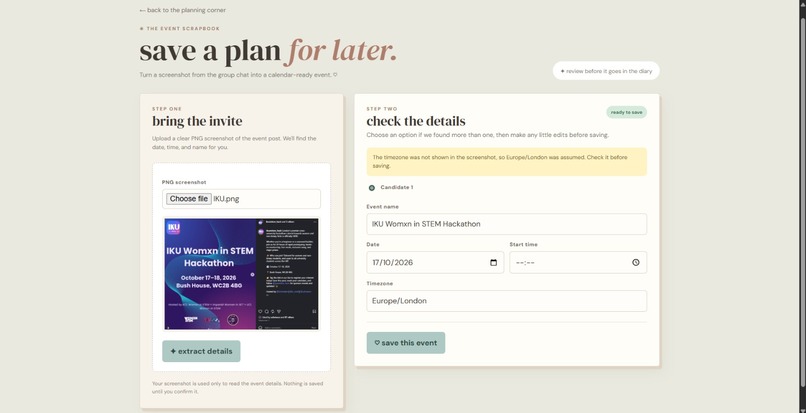
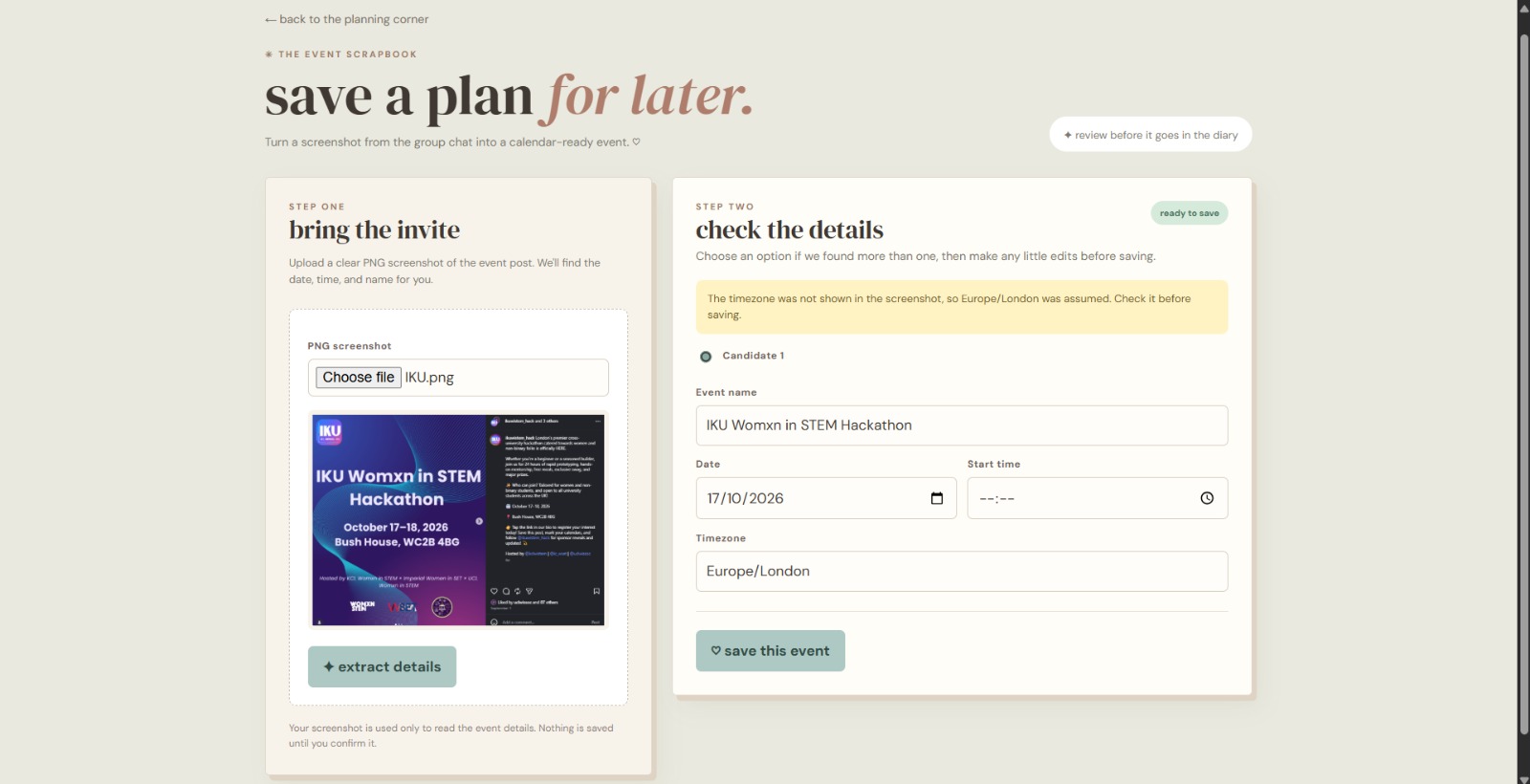
Photo Upload Page
-
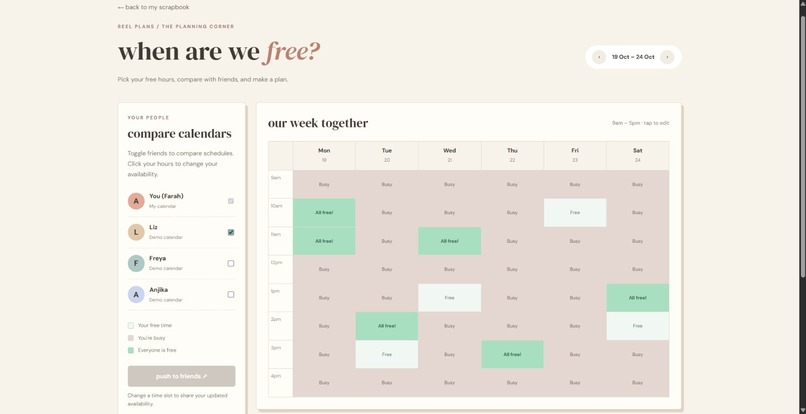
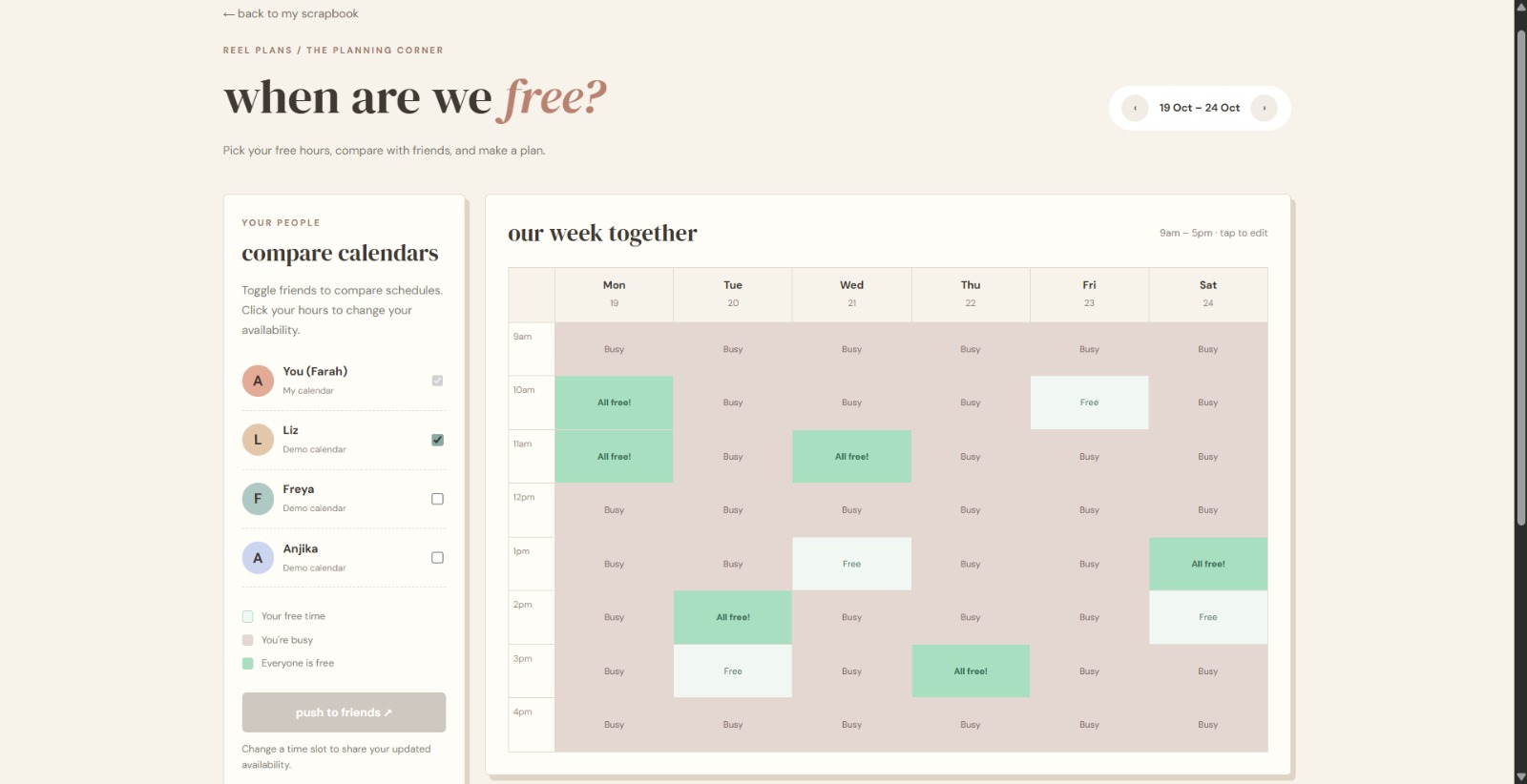
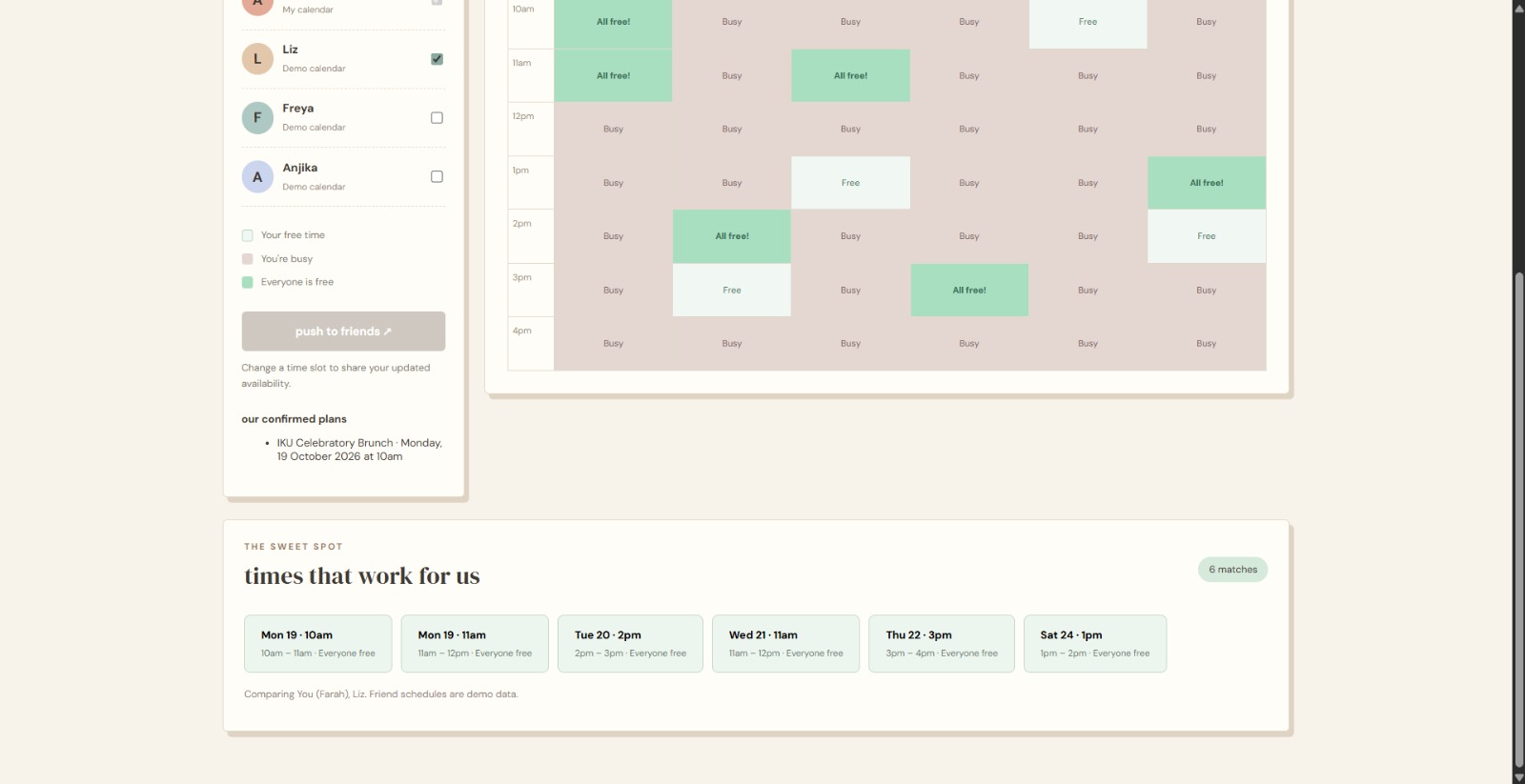
Shared Calendar Page
-
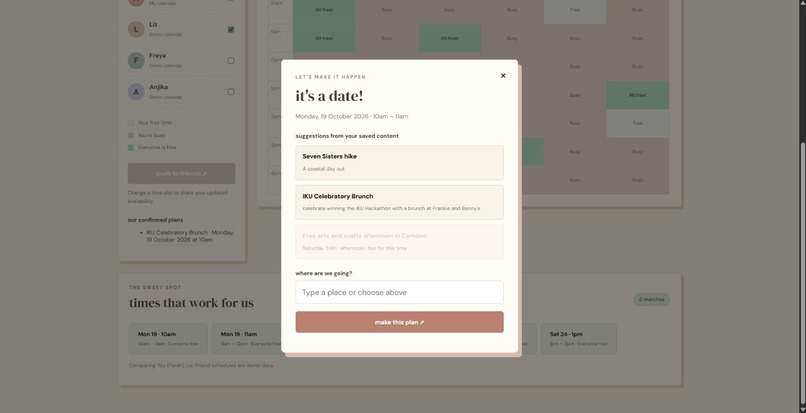
Idea Suggestions Page
-
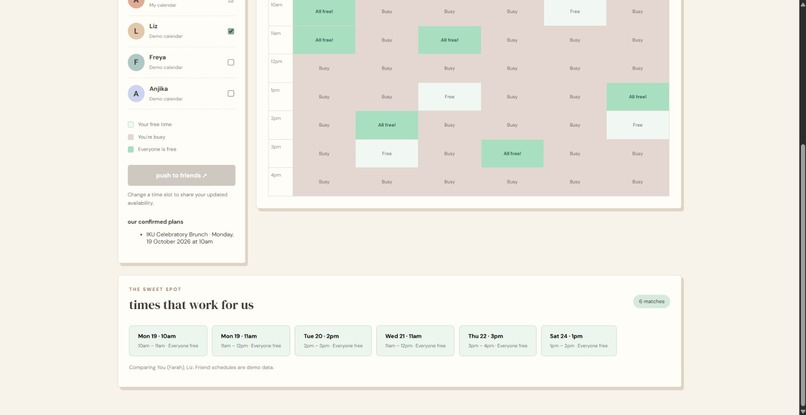
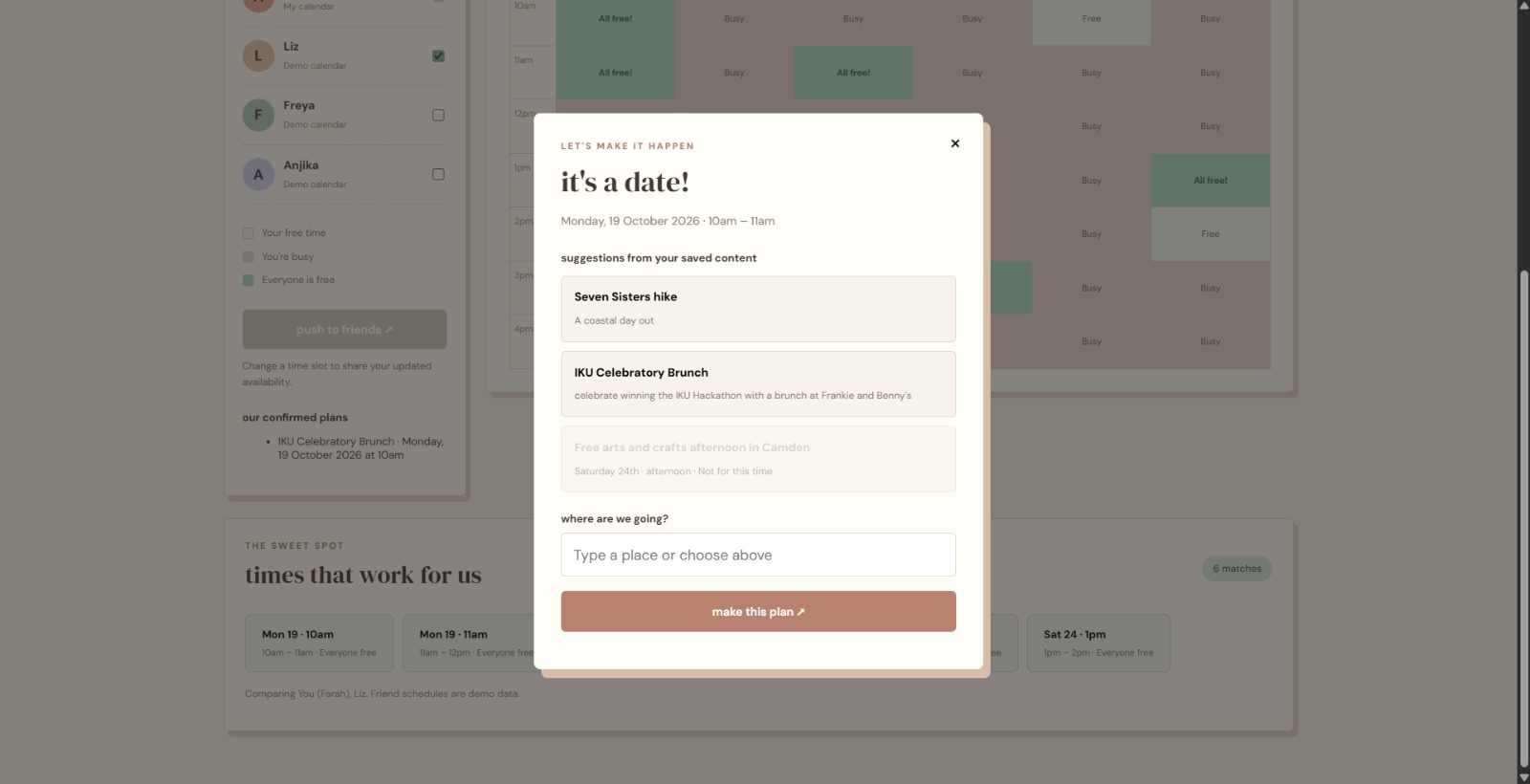
Selected Idea Displayed
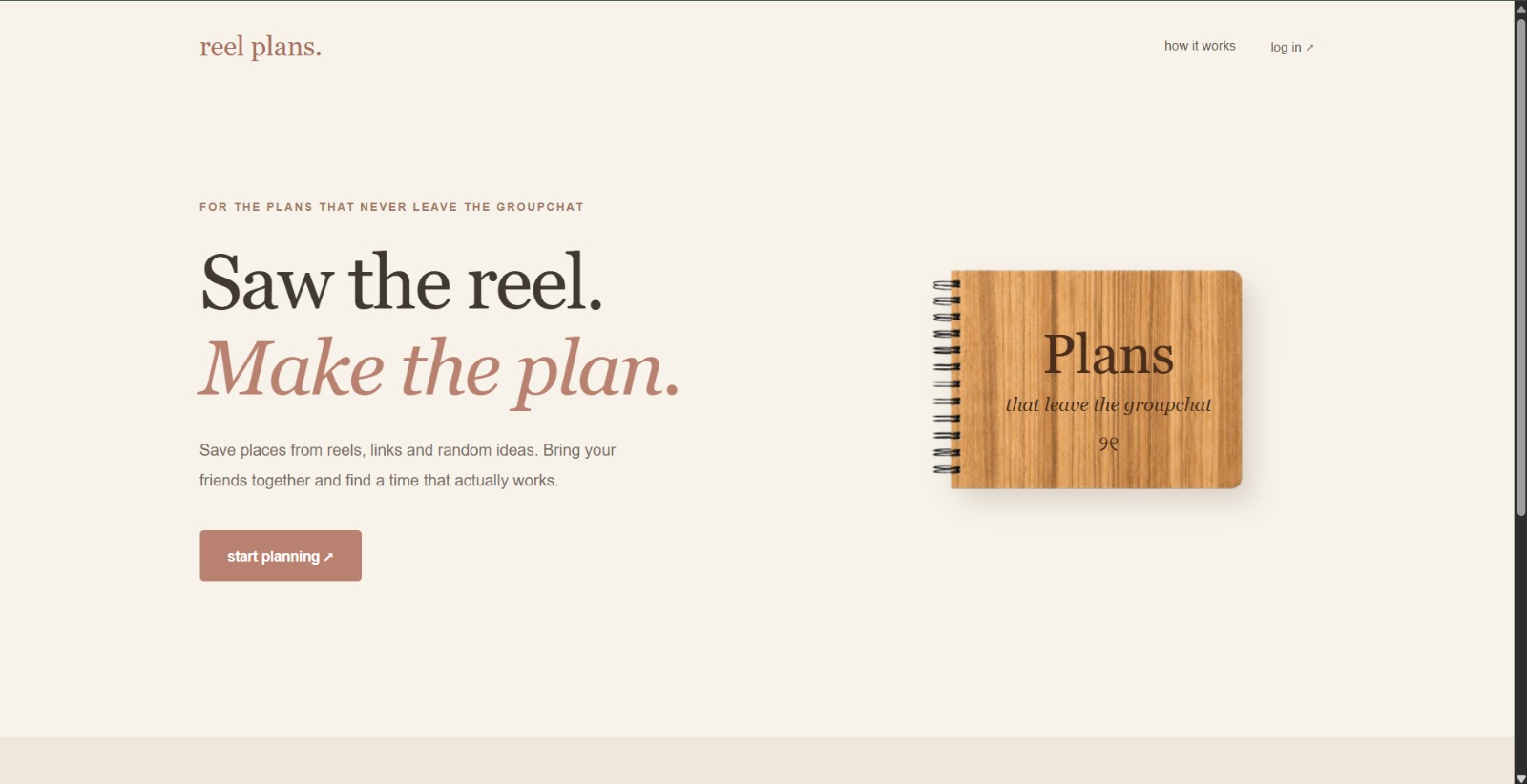
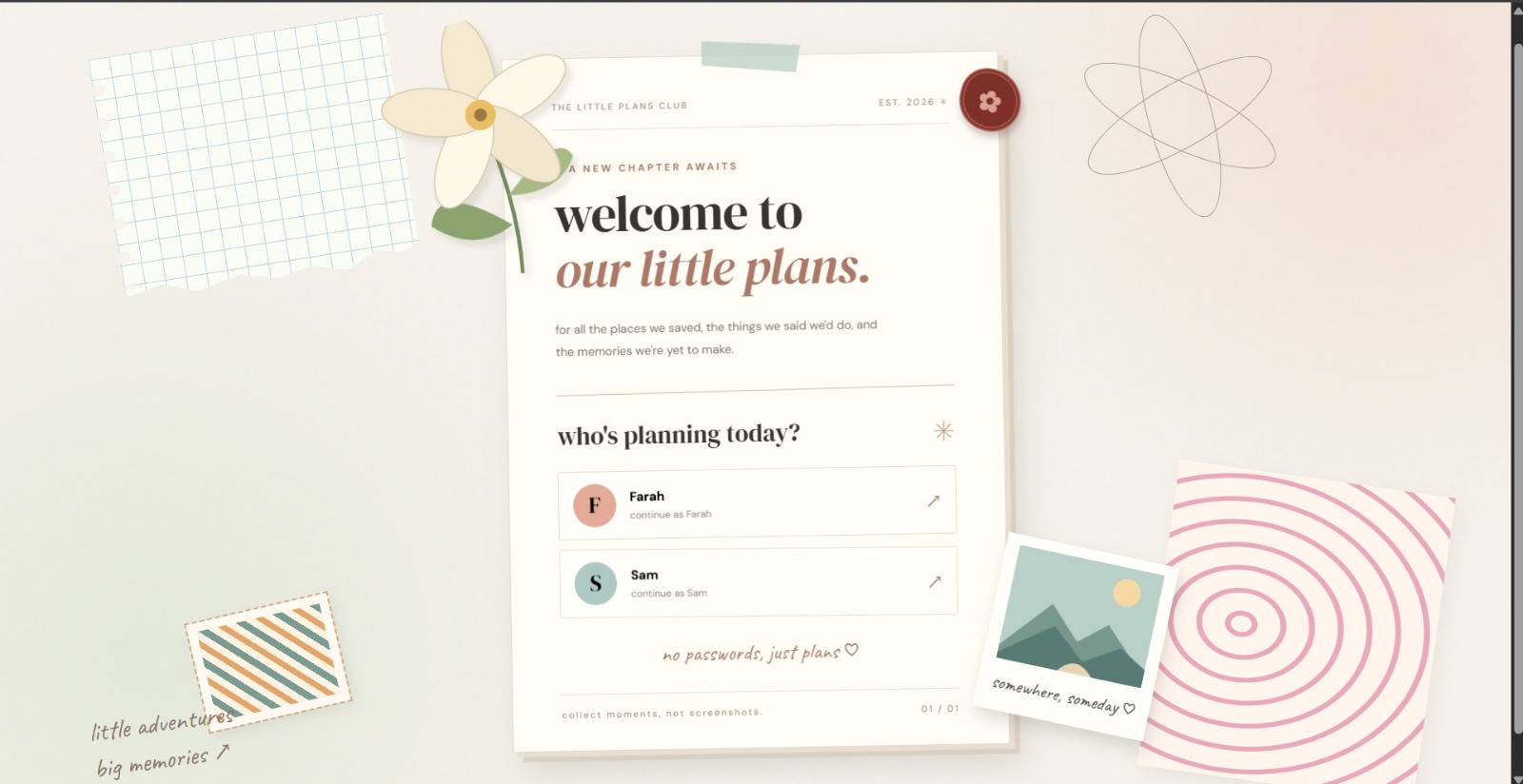
Reel Plans
Plans that leave the groupchat
Inspiration
We all save and send posts of things we'd love to do, with a quick "we should do this" to friends. Then nothing happens: the post sinks into a saved folder, the group chat moves on, and by the time everyone is free nobody remembers it.
The problem: it takes too long to turn an idea into an actual plan. Someone has to come up with an idea or try to find the post again, explain it to the group, work out when everyone is free, agree on a place and get everyone to commit. For something as everyday as meeting friends, that effort is often enough to stop it happening.
The research backs this up:
- Research commissioned by Thorpe Park found 88% of 1,000 Gen Z adults had at least one plan stalled in their messages, and 40% said spontaneous ideas never get beyond the chat.
- In a Klook survey of 2,725 travellers, more than 7 in 10 US planners spent over 10 hours organising a single group trip.
- A Talker Research survey of 2,000 women found 76% of group trips never leave the group chat, with planning taking about 19 hours over 11 days.
- Around half of planners in Taiwan and the Philippines named coordinating schedules as one of their hardest tasks.
- Another Talker Research survey of 2,000 Americans found many people are bored of the usual options: 25% of getting drinks, 21% of shopping and 20% of binge-watching.
- Mozilla's user research found people save content intending to return within days, and expect to forget if they wait too long.
Our own survey (30+ responses):
- 81% save posts of things to do and never look at them again.
- 78% send friends posts suggesting a plan that never happens.
- 91% find it hard to find times when all their friends are free.
- 84% would do more with friends if planning were easier.
Inspired by how CookingGuru turns a cooking video into a clear recipe from one pasted link, we built Reel Plans to do the same for plans: one screenshot in, a confirmed plan out, with the group's calendars doing the work in between.
What it does
You upload a screenshot of a post you've saved, the app works out what the idea is and when your whole group is free, and you pin the plan in one drag.
| Without Reel Plans | With Reel Plans |
|---|---|
| Hunt for the saved post again | Directly upload a screenshot of it to one box |
| Explain the idea to the group | Gemini reads the screenshot and works out the location, date and time |
| Ask everyone when they're free | Calendars are combined automatically |
| Go back and forth comparing calendars | Gaps where everyone is free are shown for you |
| Debate what to do | Ideas are suggested that already fit the group's free time |
| Chase everyone to confirm | Drag an idea onto a gap to pin the plan |
In the app:
- Log in, so each person has their own account.
- A scrapbook per group, so ideas and plans stay with the right people.
- Add a post by screenshot. Upload a screenshot of a social media post and it's saved to the group's scrapbook as a clipping. 75% of our respondents find things to do through social media, so we start from the posts people already have. One screenshot replaces hours of searching and messaging, which fits Wise's focus on convenience.
- A saved database. Tiger Data stores each saved post and each user's data.
- Screenshot reading. Gemini reads the screenshot and pulls out the location, date and time.
- Calendars combined. Each friend is a folder with their busy times cut out, so the shared free gaps show through. 91% of our respondents said finding a time when everyone is free is hard, and 63% said it takes a long time to agree on what to do.
- Tear-offs. The app only suggests ideas from the group's saved posts that fit those gaps. 72% struggle to come up with things to do, 78% end up doing the same few things, and 66% find it hard to choose a place that works for everyone, so ideas come from posts they already saved and loved.
- Notifications. Reminders to nudge the group to meet up, and once someone has put together a time and place, they can send it straight to their friends. 81% forget saved or shared ideas by the time they're free, and 94% said they'd be more likely to follow through on a plan that came with a suggested time and place.
- Speed. Organising a group outing normally takes hours: the Klook and Talker Research surveys found planners spent over 10 hours, or about 19 hours across 11 days, on a group trip. In Reel Plans it takes 6 clicks from uploaded screenshot to pinned plan, which fits Wise's focus on speed.
- Free and transparent. Reel Plans is free for users, with no hidden costs, and anything sponsored is always clearly labelled, in line with Wise's values of transparency and fair pricing.
- Accessible. A colour-blind-friendly colour scheme means every friend's layer can be told apart, which fits Wise's focus on accessibility.
How we built it
- Mind maps. We each mapped where we'd personally felt friction when organising things with friends.
- Shared times. We looked at how hard it is to find slots that work for a large group with different timetables, as we'd seen in transition mentoring.
- The missing ingredient: ideas. We realised that everyone has reels, saves and shares they never use, and no ideas for what to actually do.
- Mapping the app. We drew a mind map of every page the app would need.
- Front end. Anjika built it in HTML, CSS and JavaScript. She used ChatGPT and our inspiration references to generate mock-ups of the login screens and pages.
- Back end research. At the same time, Farah worked out how to connect the Tiger Data database to the Gemini API so the app could read information from Instagram reels. This was tricky because a reel link doesn't come with any audio or video, so our first plan was for the server to download both using yt-dlp before Gemini read them.
- Accounts. Farah set up her Gemini API and Tiger Data accounts and claimed free credits on both.
- Planning with Copilot. She gave GitHub Copilot the plan for the app and asked it to find gaps or missing information. It asked a series of questions that helped her fill in things she hadn't considered.
- Writing the code. She then asked Copilot to write the code and entered all keys and pins privately.
- Testing the back end. Because the front end wasn't finished, she asked Copilot to review the code and tested the back end with Gemini.
- Merging front and back end. When we joined the two together, Tiger Data stopped authenticating.
- Changing the input. We changed the app so that instead of pasting a link, users upload a screenshot of the post, which Gemini can read directly. Screenshots work with far more sites than a direct share would, because some platforms are hard to share from directly.
- Fixing the database. We solved the Tiger Data authentication issue by talking to peers who'd had similar problems. We reset the database password to an automatically generated one and added it to the connection string between the username and the
@. - Matching the search page. The search page was originally built with a minimal UI, so we copied the UI theme over from the other pages to make it fit the same theme.
- Connecting to Flask. We then took the HTML pages and connected them to the Flask app.
Challenges we ran into
- Keeping our API key private. Our repo has to be public, and we didn't want to publish anyone's personal key. We researched it and attended the Gemini workshop, where we learned to keep the key in a
.envfile that isn't committed to GitHub. - Reading reels from a link. We tried to get Gemini to extract the details straight from an Instagram link, but Instagram suspects it's a bot and doesn't like it. The workaround, similar to how CookingGuru does it, would be to approach it from three directions (the captions, the transcript and the video itself), which would take too long to set up. Along the way we found that screenshots might work better, since they work with more sites, so we switched to screenshot uploads.
- Reconnecting to Tiger Data. After changing the front end, the database connection failed. We tried using Copilot to fix it but it couldn't, so we asked peers who'd hit similar problems. The fix was to reset the password in Tiger Data, choose the automatically generated one, and add it to the connection string between the username and the
@. - Making the design creative and authentic. Our first designs were basic, and ChatGPT's theme ideas were monotonous. We wanted a Pinterest-inspired notebook and scrapbook feel, so we spent more time iterating and brainstorming.
- Adding stickers. Arranging them so that the scrapbook matched our vision took lots of iterating.
- Learning as beginners. Most of us have limited programming experience, so connecting a database, an AI API and image reading was a steep learning curve.
Accomplishments that we're proud of
- A strong survey turnout: over 30 responses, giving us real evidence for the problem.
- Getting the API and the database working together.
- A visual design we're proud of, which matches our vision of a scrapbook theme.
- Accessibility built in from the start, with a colour-blind-friendly scheme.
- A working project built by a team that's mostly new to coding.
What we learned
- How to keep API keys safe in a public repository.
- How to use Tiger Data. We used it to store each saved post and user's data, and it was easy to use and log in to, though authentication caused us difficulties.
- AI image tools weren't good enough for the visuals we wanted, so we spent more time iterating and brainstorming ourselves, and learned that the creative direction has to come from us.
- AI is great for speed but needs human design direction to keep the creative vision intact.
- How to scope and build a full project in 24 hours as beginners, and how to make time for sleep.
- What our survey told us: finding a time when everyone is free was the biggest pain point (91%), and 94% said they'd be more likely to follow through on a plan that came with a suggested time and place, which is exactly what Reel Plans gives them.
What's next for Reel Plans
- Adding direct sharing too. Screenshots work with more sites, so we'd keep them, but we'd also add the option to share straight from the social media app to our site, and have the app run through the captions, transcribe the video and pull out the details itself. An installed web app can receive shares on Android, but Safari doesn't support that, so iPhone would need a native app with a share extension.
- Making it a full app. We'd like to build a proper app, but plenty of people have deleted social media apps and only use them on the web so they're not addicted, so we'd keep the web version as an option.
- Reminders and invites. Expand notifications so the app can nudge the group to meet up and send out a finished time and place.
- More calendars and platforms, such as Outlook.
- An AI agent (inspired by the incident.io track) that updates plans when someone's availability changes, and suggests a similar event if a friend can't make one.
- A sustainable business model. A clearly labelled sponsored list from venues and brands, kept separate from the group's own suggestions. Always free for users.
- Group photos in each scrapbook.
- Stubs: after the event, the plan becomes a ticket stub in the group's collection. 81% of our respondents said they'd enjoy keeping a record of what they've done with friends.

Log in or sign up for Devpost to join the conversation.