-
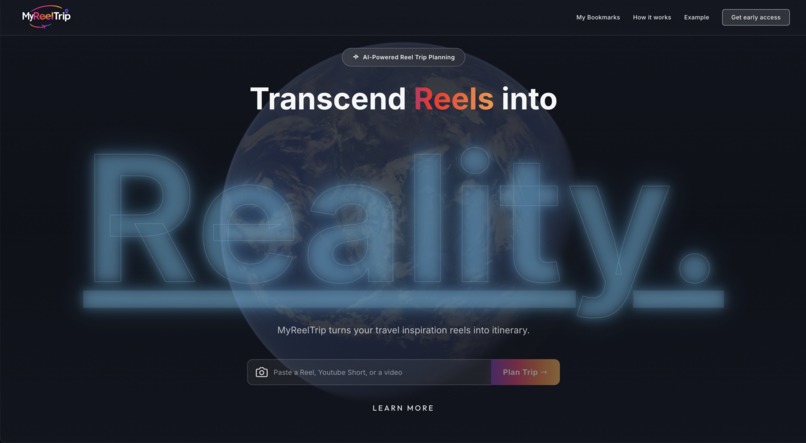
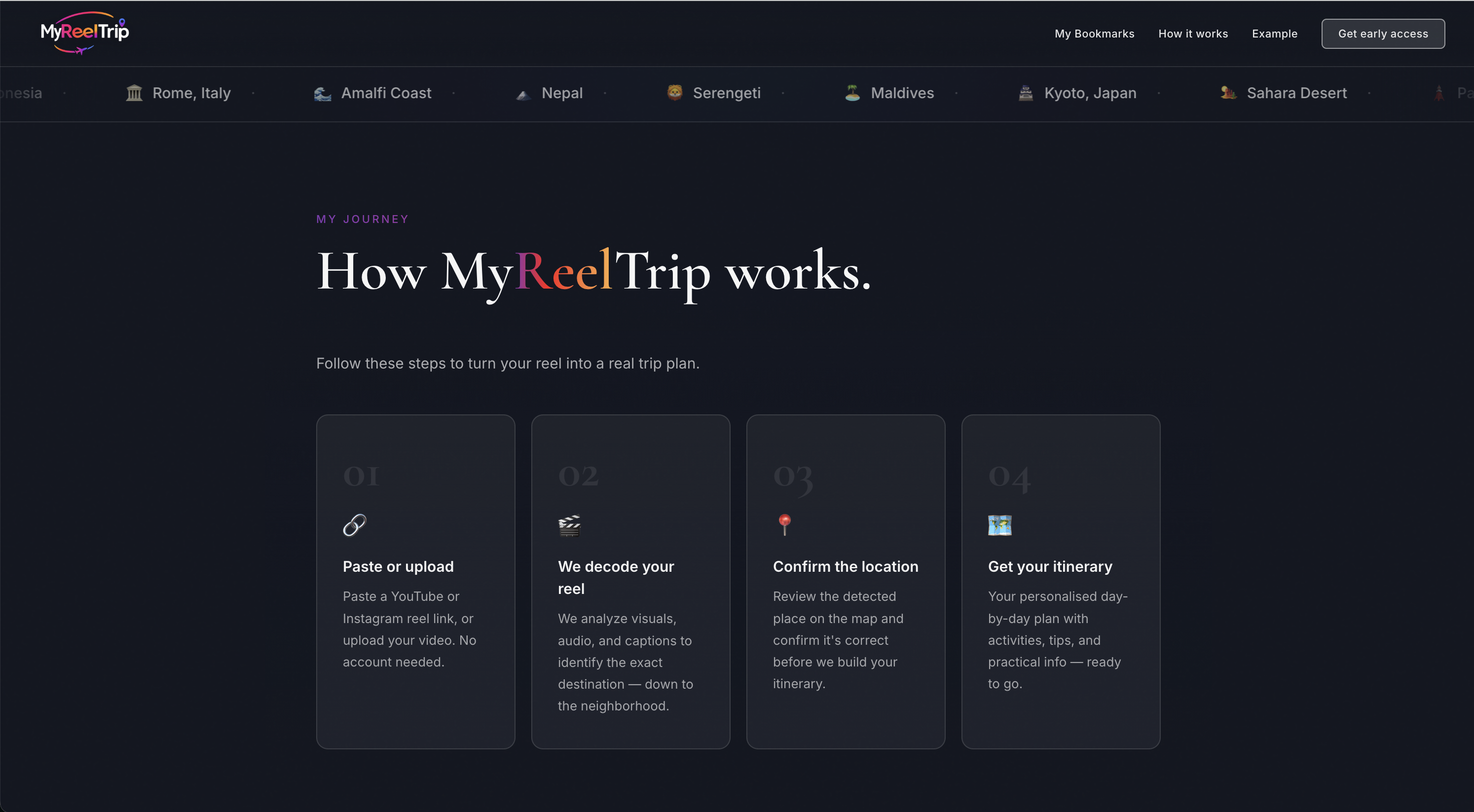
Onboard
-
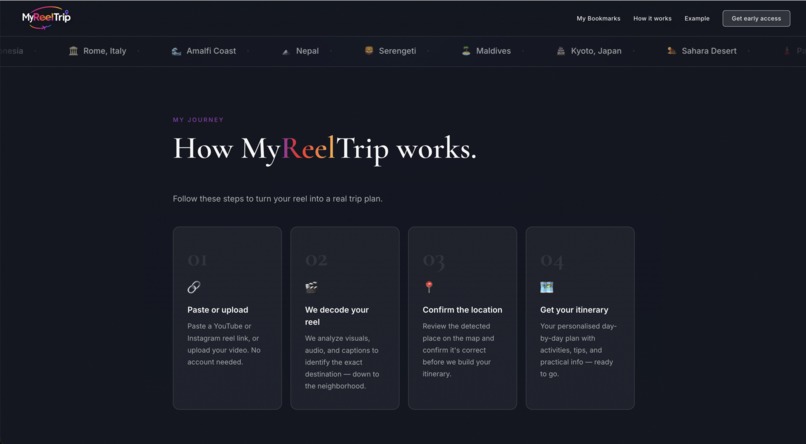
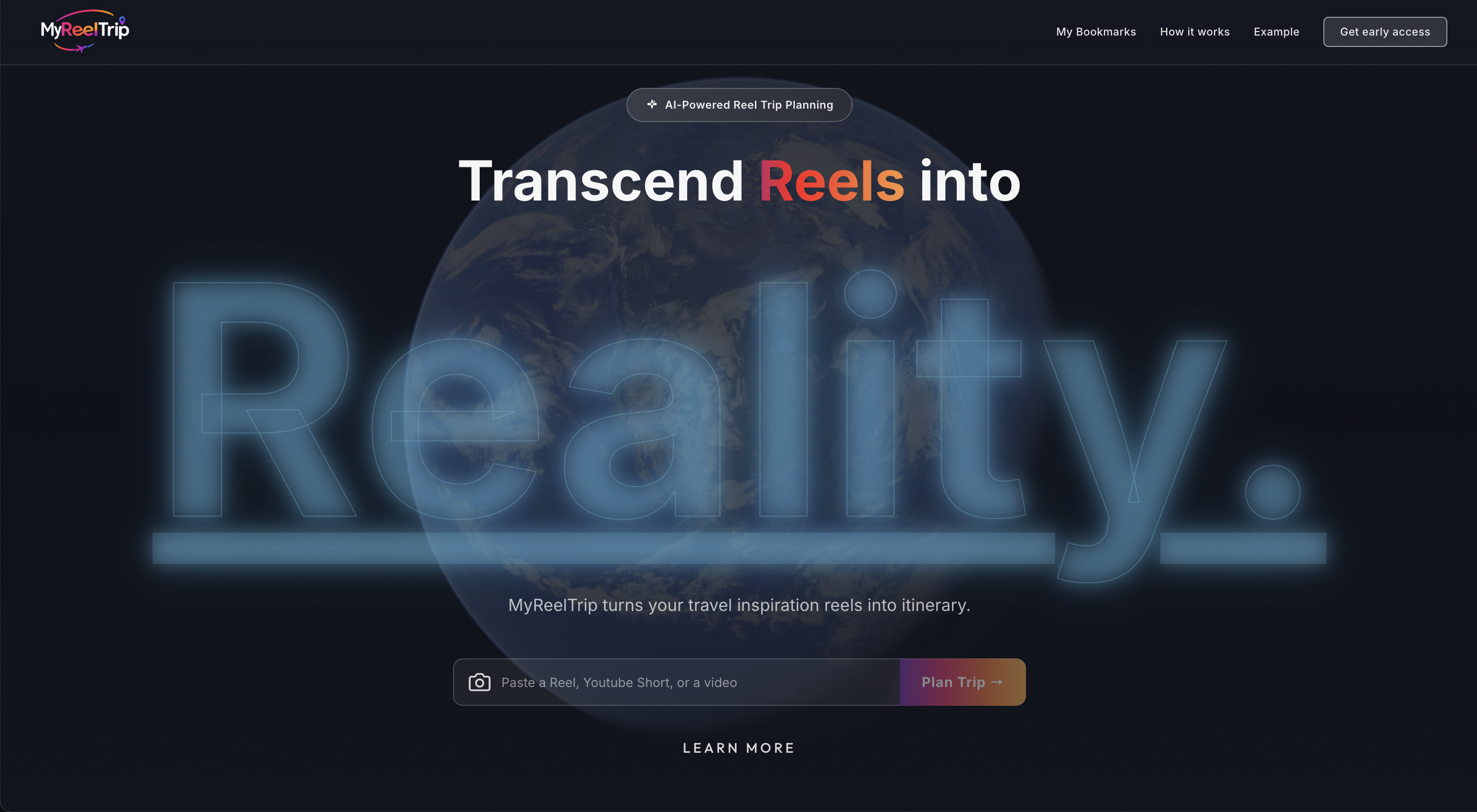
Mainpage
-
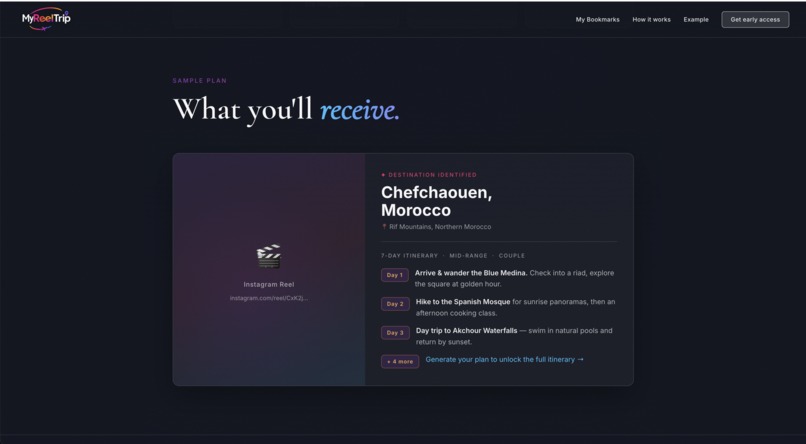
Mainpage
-
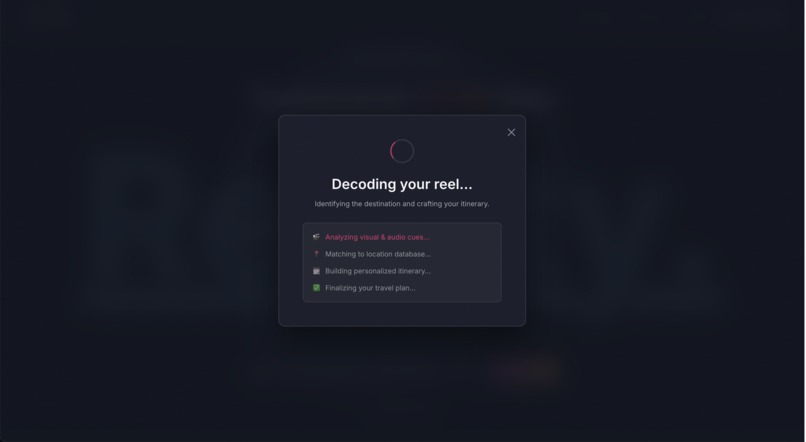
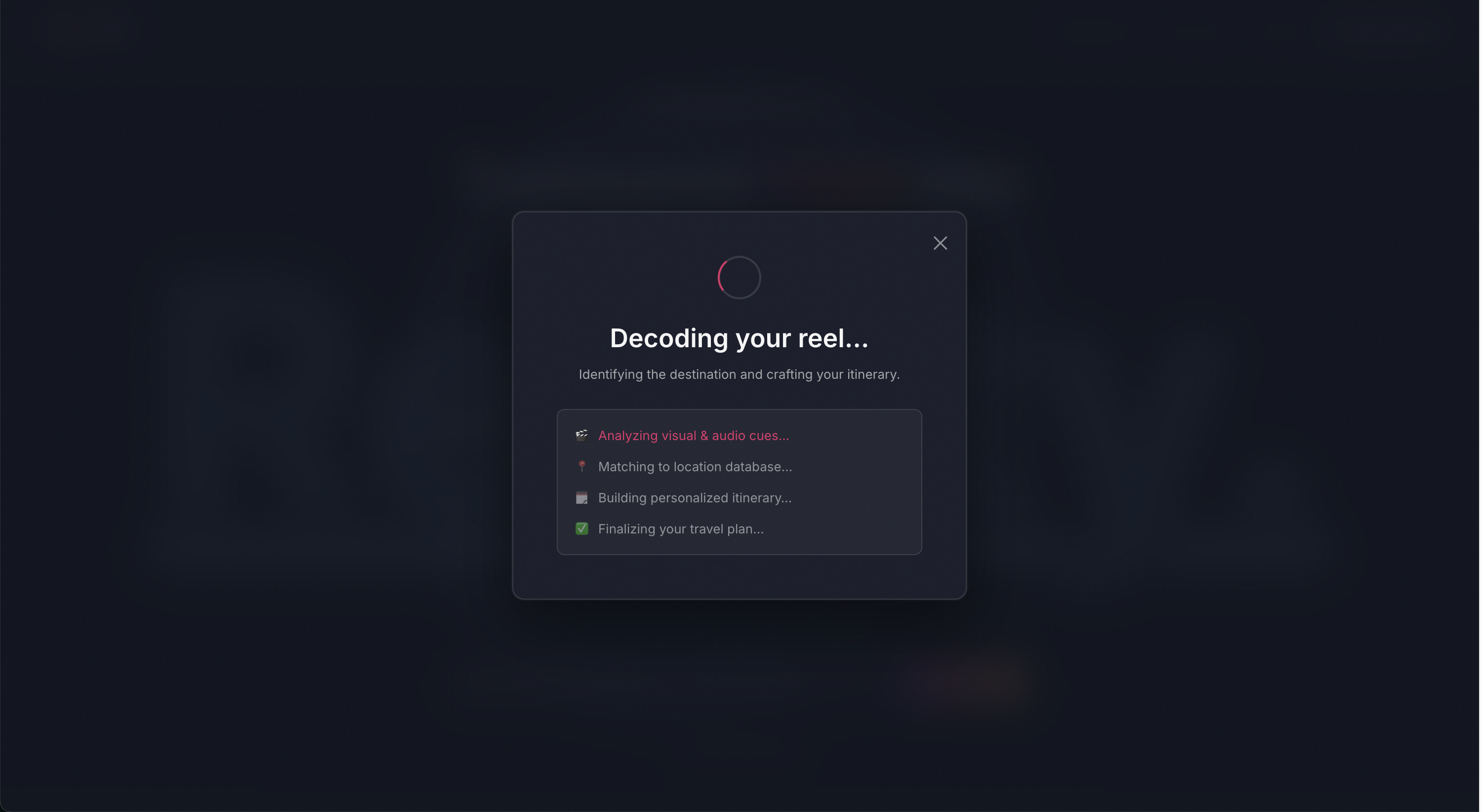
Loading Page
-
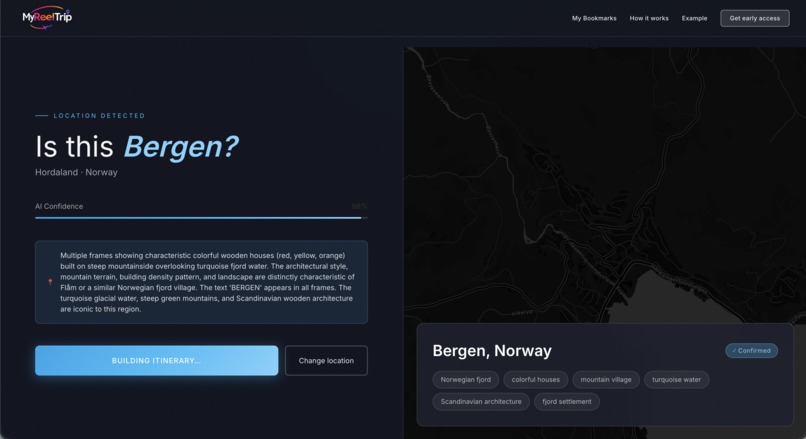
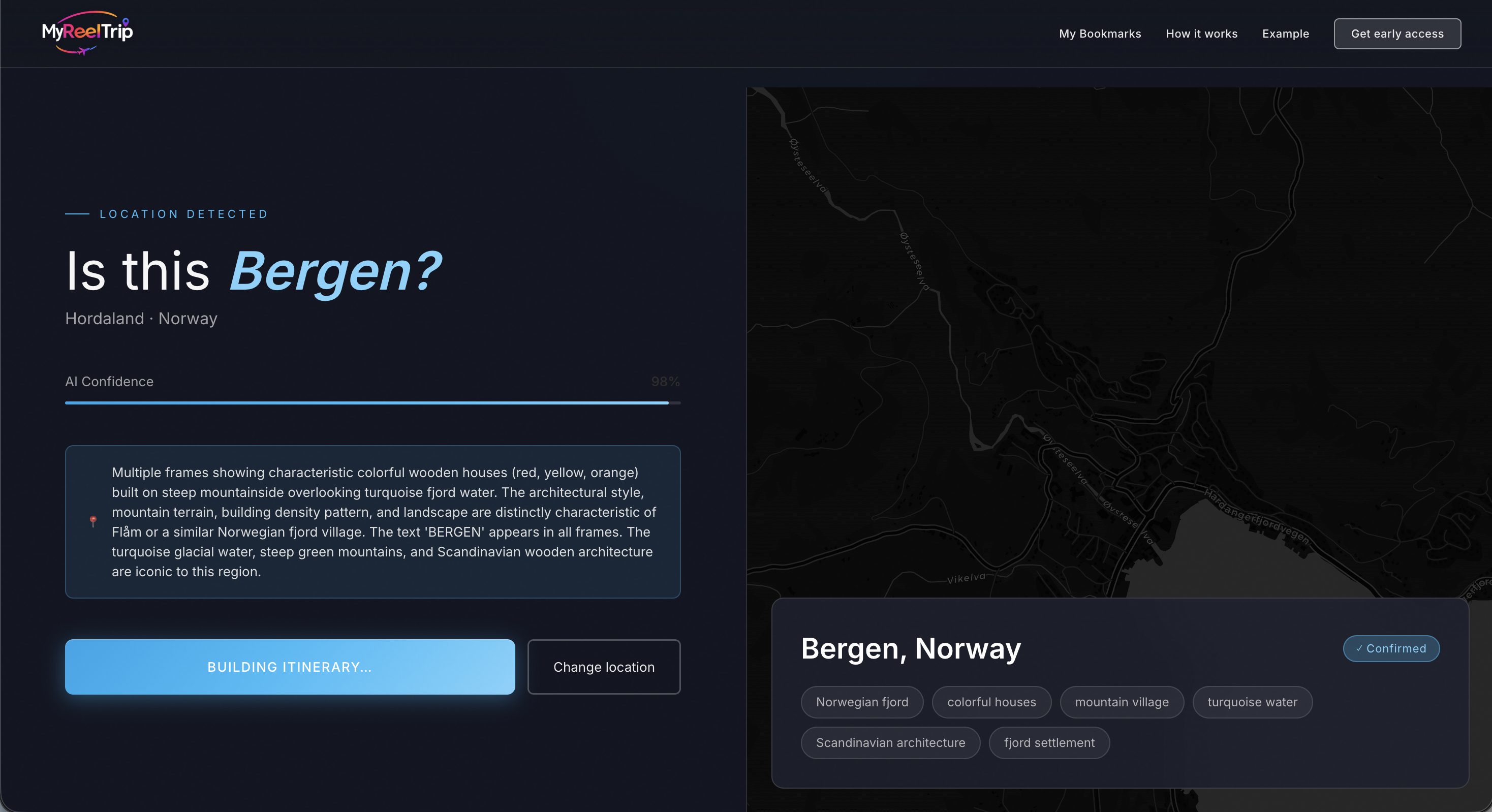
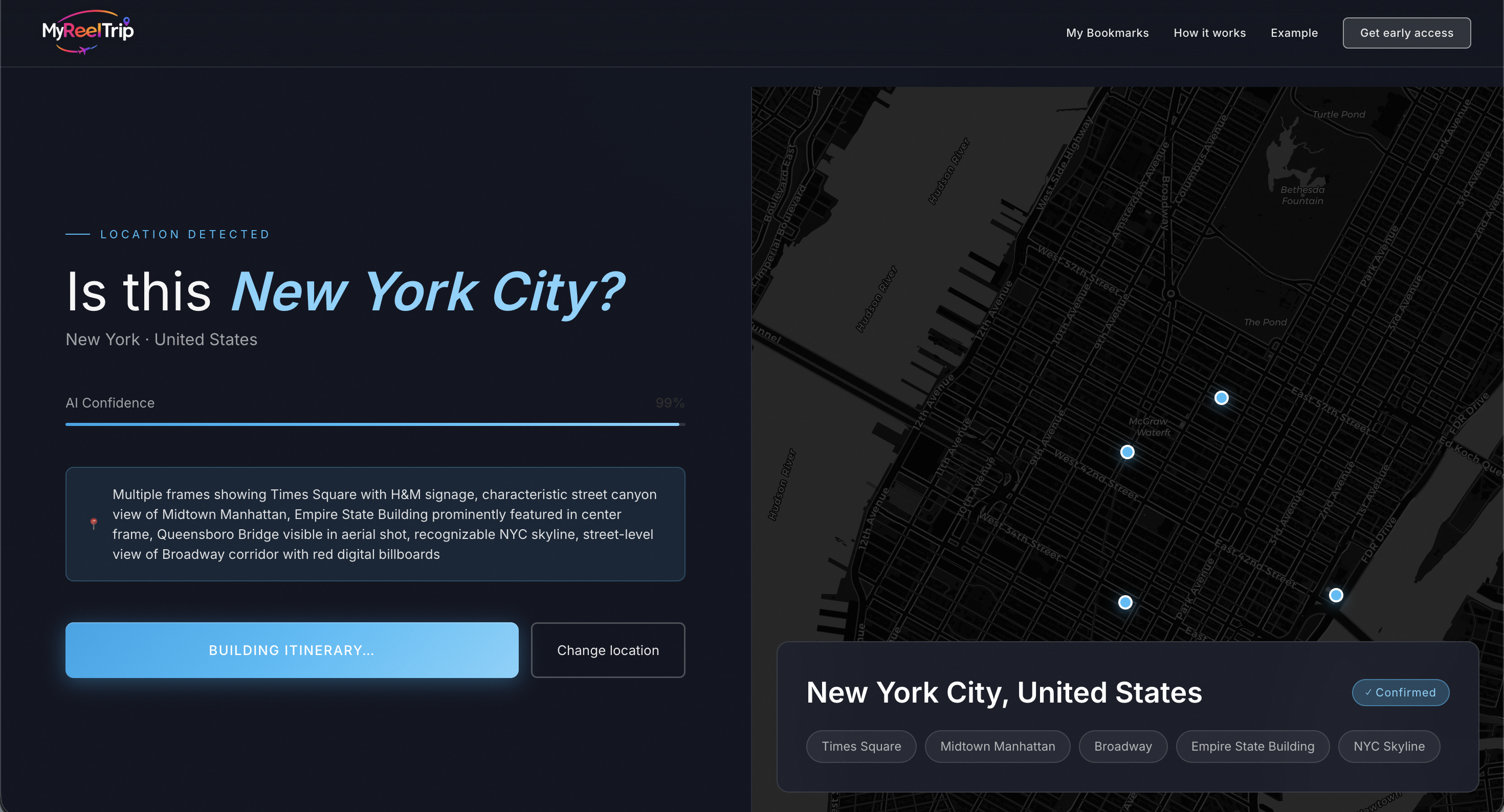
Location Detected Page
-
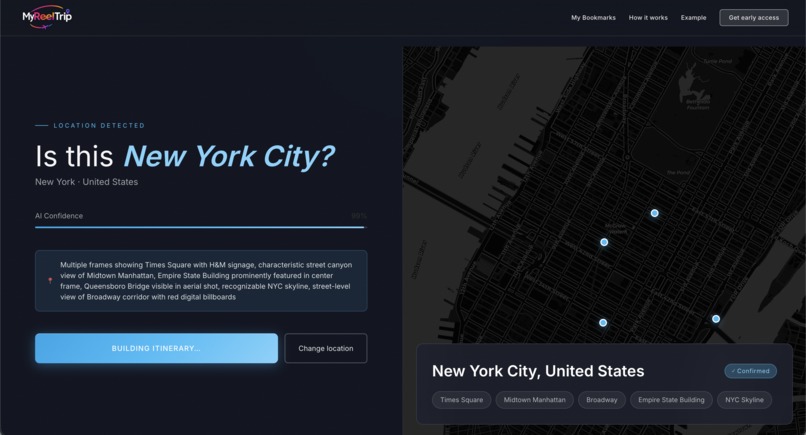
Location Detected Page
-
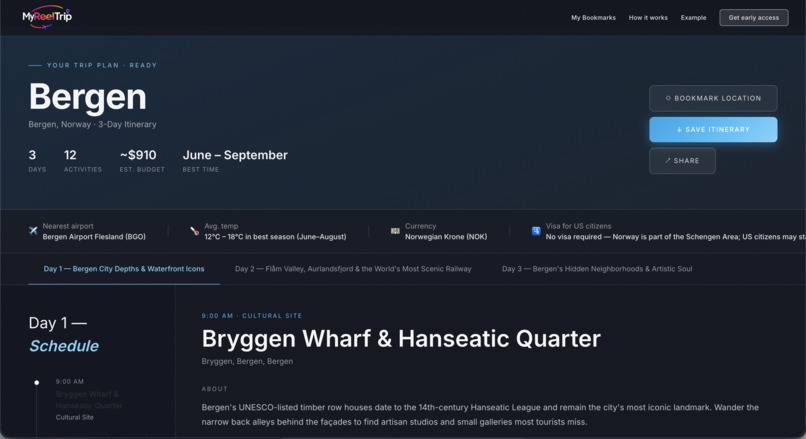
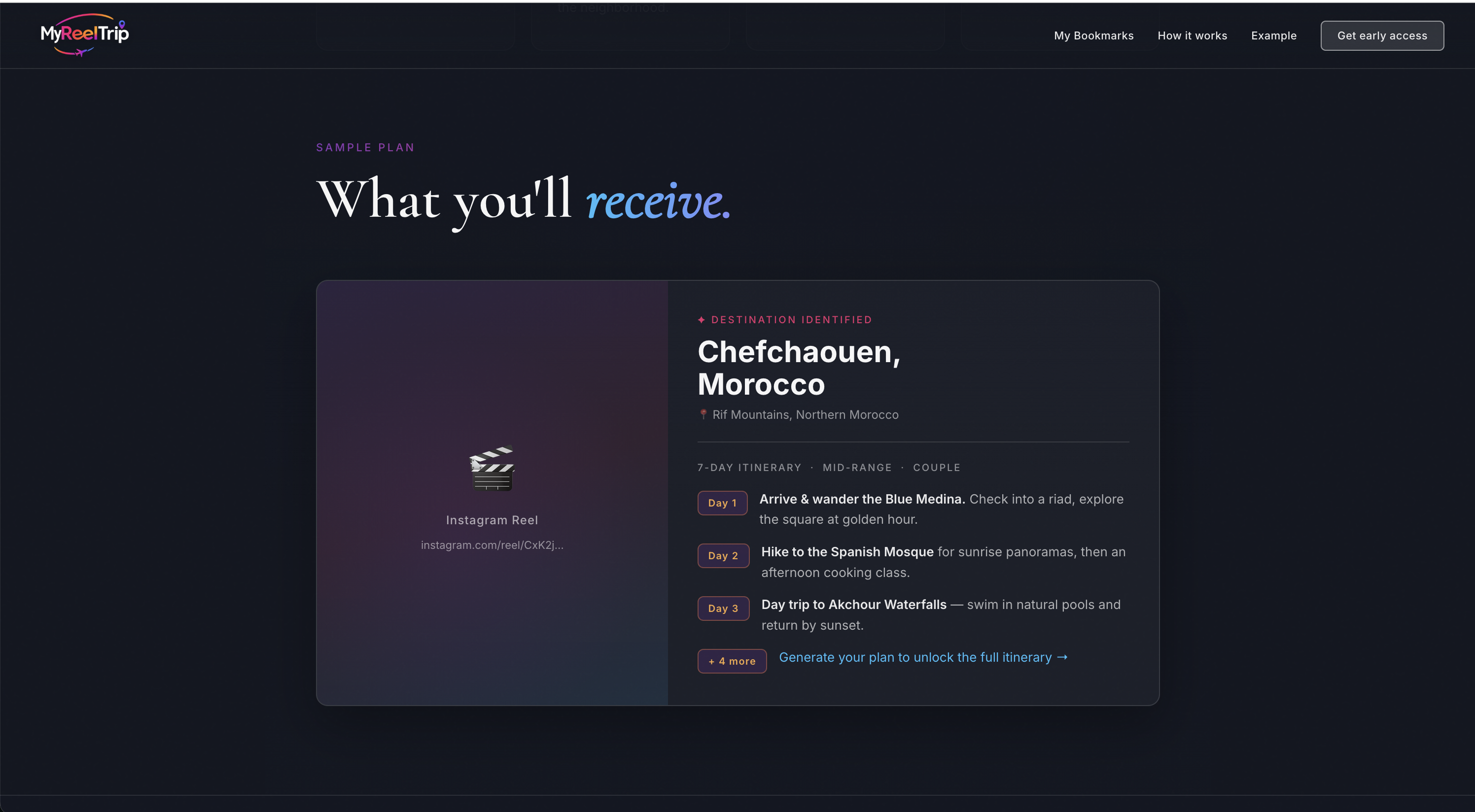
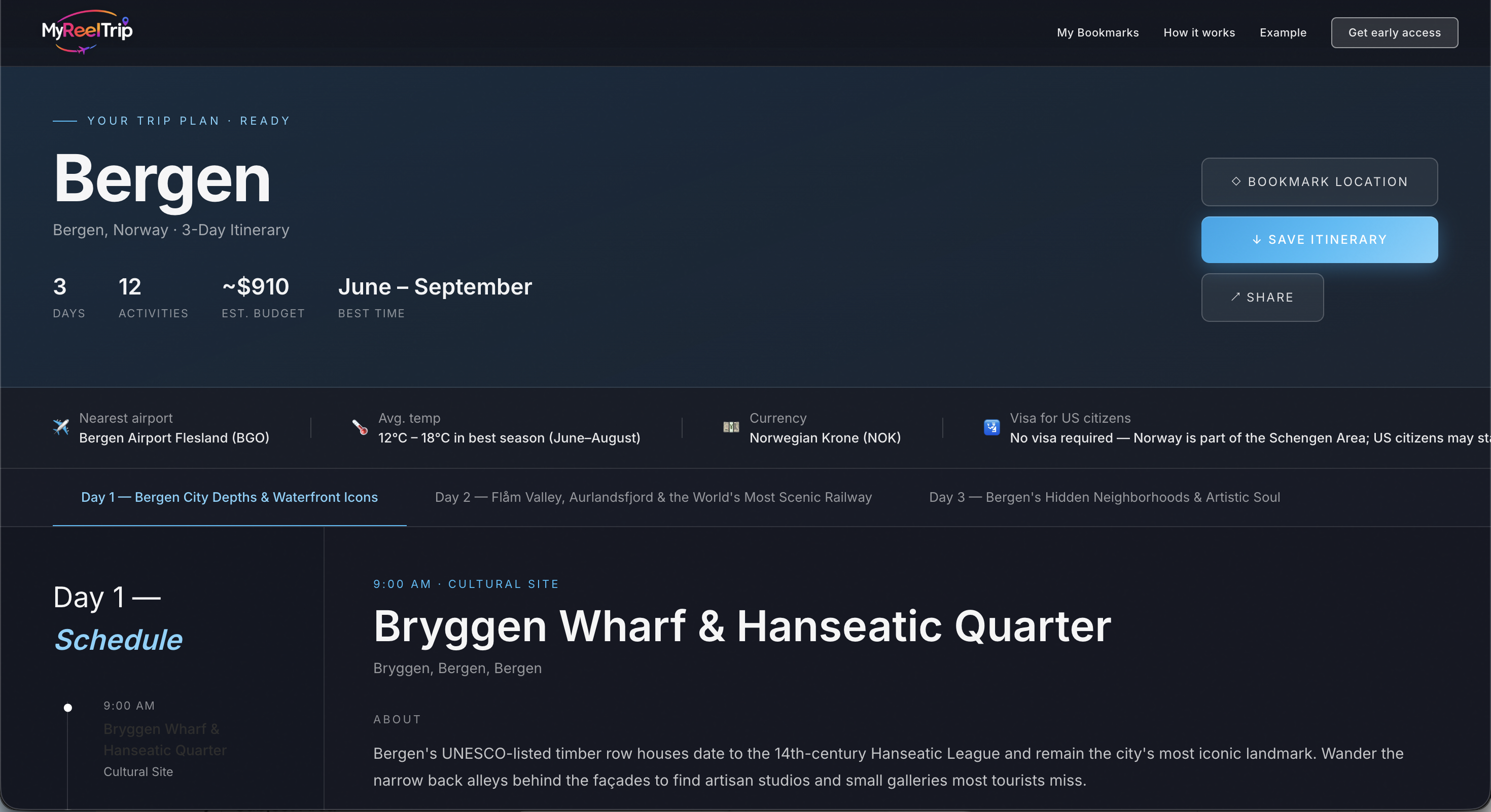
Trip plan Page
-
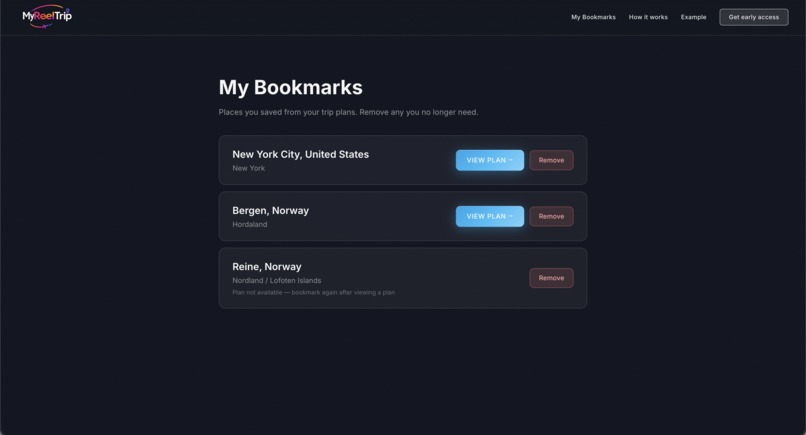
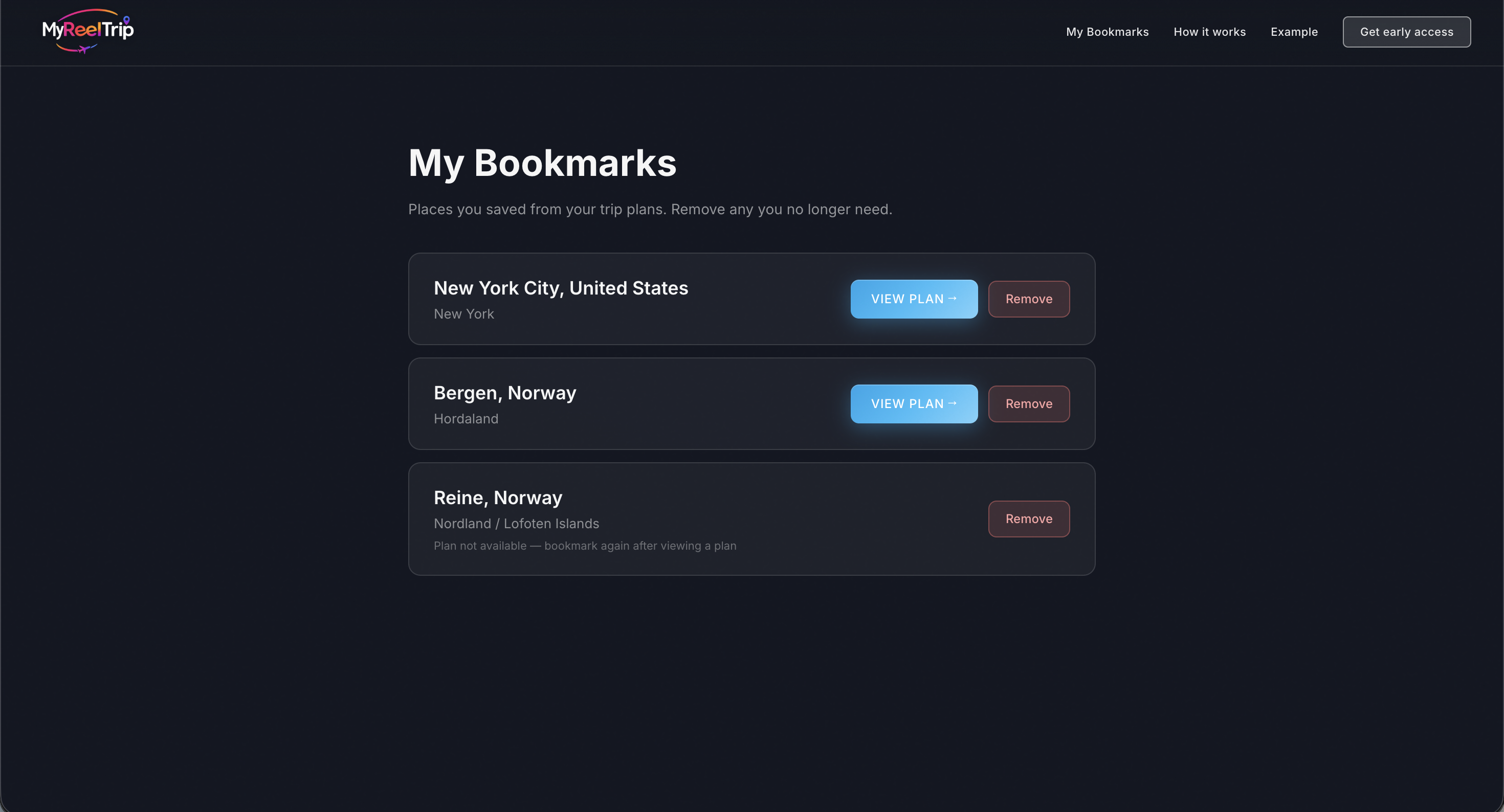
Bookmark Page
Inspiration
We’ve all been there: scrolling through Instagram or TikTok, seeing a breathtaking hidden waterfall or a cozy Parisian café, and thinking, "I need to go there." But the trail usually ends at the comment section, buried under hundreds of "Where is this?" queries.
MyReelTrip was born from the desire to bridge that gap—to turn Reels into Reality. We wanted to create a "Shazam for Travel" that doesn't just name the place but hands you the keys to get there.
What it does
MyReelTrip transforms any travel reel into a complete, ready-to-follow trip plan.
- Upload a video or paste a link.
- Our AI extracts frames and identifies the exact locations and visible landmarks.
- It then generates a detailed, day-by-day itinerary with practical travel tips. The results are presented in an intuitive multi-screen experience featuring:
- An interactive map
- A clear timeline
- Curated travel extras In short, MyReelTrip turns short-form travel content into a structured, actionable adventure.
How we built it
MyReelTrip is built with a Python (FastAPI) backend and a React (Vite) frontend, connected through a simple job-based pipeline.
When a user submits a reel (URL or file), the frontend sends it to our FastAPI server, which immediately creates a background job and returns a job ID. The frontend then polls the server every 2 seconds to track progress.
On the backend, the pipeline runs in three main stages:
- Video processing We use yt-dlp to download only the first 10 seconds of the reel (for speed), then OpenCV to extract and compress key frames.
- Location detection (Claude Haiku) A subset of frames is sent to Claude Haiku (vision model) to detect the exact city, country, visible landmarks, coordinates, and tags. The model is constrained to return strict JSON and only include places explicitly visible in the video.
- Itinerary generation (Claude Sonnet) Using the detected location (and visible places), we prompt Claude Sonnet to generate a structured 3-day itinerary with activities, budget breakdown, transport tips, packing list, and practical travel info — all in a strict JSON schema.
On the frontend: Leaflet renders an interactive map with detected locations. The itinerary is displayed in a multi-screen flow (loading → map → full plan). jsPDF generates a styled, downloadable PDF entirely in the browser. Bookmarks are saved in localStorage so users can reopen plans instantly without re-running the AI pipeline. The result is a fast, structured system that turns short travel reels into fully actionable trip plans using optimized video processing and a two-model AI architecture.
Challenges we ran into
Since this was our first hackathon, one of our biggest challenges was learning how to turn an idea into a fully working product under intense time pressure. At the beginning, the process felt overwhelming, and we explored many different concepts before narrowing our focus to one that was both technically feasible and meaningful. Once we committed to MyReelTrip, we became more confident and intentional about working efficiently by dividing roles based on our strengths while still collaborating closely. This helped us move quickly, reduce overlap, and grow individually while building a cohesive product together.
Accomplishments that we're proud of
We’re especially proud that, in our very first hackathon, we turned an idea into a fully working product! MyReelTrip isn’t just a concept — it’s a complete system with a backend pipeline, AI-powered location detection and itinerary generation, an interactive map interface, PDF export, and bookmarking. Transforming our vision into a functional, end-to-end application within such a short timeframe was a huge milestone for us.
What we learned
Through building MyReelTrip, we learned how to turn an idea into a real, end-to-end product under time pressure. We gained hands-on experience connecting a FastAPI backend with a React frontend, managing asynchronous job pipelines, and integrating multiple AI models into a structured workflow. Beyond the technical skills, we learned the importance of scoping realistically, dividing roles efficiently, communicating clearly, and iterating quickly. Most importantly, we learned that building something impactful requires both strong execution and strong teamwork.
What's next for MyReelTrip
Next, we want to make MyReelTrip more interactive and personalized — not just a generator, but a travel planning companion.
One major feature we plan to add is an AI chat function inside the bookmark section. Instead of viewing a static itinerary, users would be able to open a saved trip and ask follow-up questions like:
- “Can you make this more budget-friendly?”
- “Add more local food spots.”
- “Shorten this to 2 days.”
- “Plan this for winter instead of summer.”
The chat would understand the existing saved itinerary and modify it dynamically, allowing users to refine and reorganize their travel plans without starting over.
We also want to improve collaboration features, such as shared trip planning, editable timelines, and preference-based customization (budget level, travel style, food preferences, pace). Over time, MyReelTrip could evolve into a smart travel workspace where reels become just the starting point — and users can continuously shape their trip into something uniquely theirs.
Built With
- anthropicapi
- claudesonnet
- cloudhaiku
- fastapi
- javascript
- jspdf
- leaflet.js
- opencv
- python
- react
- uvicorn
- vite
- yt-dlp


Log in or sign up for Devpost to join the conversation.