Inspiration
“I don’t have the time to finish a chart out there. I get about 15 min with a patient that I have to access and treat out there while gowning up and doing checks between patients. Sometimes our internet goes out because we're in the parking lot so it takes more time. Then if we test someone it requires more PPE and prep. So not necessarily charting but same expectations (as the inside hospital) in a less comfortable environment”
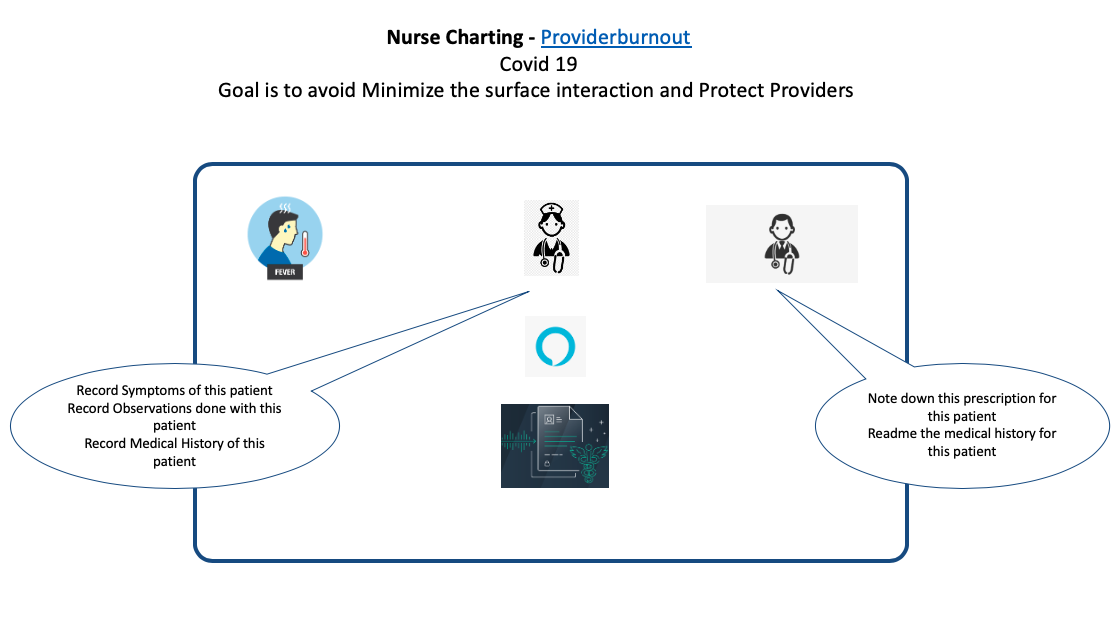
So, looking for a contactless way to trigger the "drive through" workflow start...
Two areas have been priortized: triggering the flow and what makes the most sense for voice interaction in this context. sounds like Alexa is out, but Lex/Polly/Connect are OK. question about whether Sumerian is enough of a head start or adds too much complexity to get something working today
What it does
People-less clinics / McDonalds drive-through type set up or unused places due to social distancing — like national parks
The backend would be things like adding in NLP or databases. The Lex API give you a transcription of everything the user said, so you could fork that to an NLP service like Comprehend and/or any database
I think a dashboard of patient queuing or something could help for the ops part — would have to figure out the integration at some point into existing systems but maybe web browser-based temporary fix for charge nurses to monitor
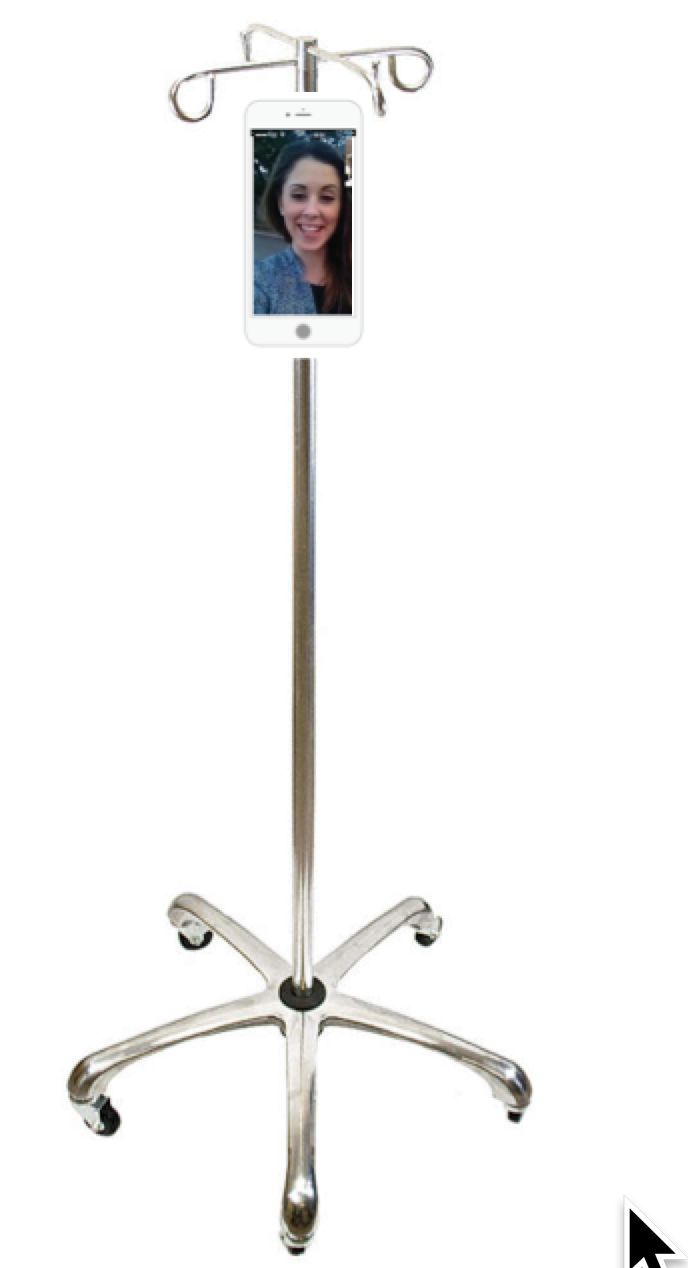
Timestamps and routing — and then the patient experience component is the lady chatting with some basic screening logic
Administrators can judge their system performance by looking at the average number of customers waiting (in line or in the system), average time customers wait in line, system utilization (percentage of capacity utilized), implied costs of a given level of capacity and its related waiting line, and the probability that arrival will have to wait for service. The utility of these analyses is the ability to improve patient satisfaction scores by reducing wait times and improving system utilization.
Queuing models help to analyze wait times using mathematical approaches (need help here). These analyses help weigh the costs of providing a given level of service capacity against the wait times for patients. Administrators must design services with the right capacity to ensure that staff is being utilized and patients are not waiting for extended periods of time. Both arrival and wait times are random. In order to analyze the optimal capacity, I would look at system utilization, an average number of customers waiting for service and average number of Customers in the system (waiting or being served). From that, we would be able to derive the arrival rate and service rate. Currently, the design of parking lot testing is unstable and operating at high system utilization levels. Patients may balk and renege as a result of this less than the optimal capacity for each acuity level (increasing risk of exposed). And staff are overwhelmed as a result of inefficiently triaging high risk patients.
... so they could just keep their airpods in their ears, call a phone number, say something like "I am treating a new patient" and then the system basically captures everything that was said AND has some smarts to it to extract medical terminology and build some type of data relationships
How I built it
So far... Jared created a quick Connect example 1 832-648-7553
Challenges I ran into
Getting an interaction model in Alexa or Lex to be able to capture this use case
The tricky part is capturing the audio, or rather, knowing when to start and stop audio capture
Accomplishments that I'm proud of
So if you wanted to set up a Lex agent (which is almost the same thing as Alexa, minus the echo speakers and such) you could have as inputs an app of some sort (where the user could talk to it or type things), a phone number or even SMS
The telephony part is handled through the Connect service, and the SMS bit is handled by the service called Pinpoint
What I learned
Could you use MVP about using telephony? As in people dial in a real phone number and essentially have an Alexa-like experience
Considered using a voice assistant as the primary interface with a visual complement. Like an Echo Dot that is good at voice interaction and a companion screen that gets commands from whatever backend the Alexa skill is interfacing
Lex and Polly are HIPPA eligible, meaning there is a shared model for both provider (AWS) and developer to ensure HIPPA is being met
What's next for Reducing Provider Burnout
so a little screen has you talk to an Alexa-like thing that asks you questions, and depending on what you say, tells you what 'lane' to get into
you have certain lanes for likely cases, other ones are staffed by psychologists who try to get people to calm down
maybe a React front-end or something... that calls Lex to figure out what the user says
It could be React via an Amplify thing, Lex and a bunch of Lambdas
We could use Sumerian
So, a contactless device using Sumerian could help free up some staff and predictions of arrival patterns could help ration resources is my hypothesis.
It would be doing the intake assessment
Upon drive-up or I guess like the ordering window if we are still using the chick fil a model
Doesn’t have to be Sumerian but I think the thought was to reduce contact or need to use a touch screen
And also reduce the need for a call center

Log in or sign up for Devpost to join the conversation.