-
-
WORKFLOW
-

Title Page

Reducing Barriers and Improving Safety to Opioid Access with KNIME By: Brandon San, PharmD & MBA Candidate, Oregon Health & Science University Alneeda San, Public Health BS Candidate, University of Washington
Opioids are a class of drugs that work by binding to opioid receptors in the brain and body. These receptors are responsible for transmitting pain signals to the brain. When opioids bind to these receptors, they block the pain signals, which can provide relief from pain.
Opioids can be used to treat a variety of medical conditions, including acute pain, chronic pain, and cancer pain. They can also be used to treat coughs and diarrhea.
However, opioids can also be addictive. This means that people who use opioids for a long time can become dependent on them and may have difficulty stopping using them. Opioid addiction can be a serious problem, and it can lead to overdose and death.
Morphine milligram equivalents (MME) is a unit of measurement used to compare the relative potency of different opioid medications. MME is calculated by multiplying the dose of an opioid by its morphine equivalent factor. The morphine equivalent factor is a number that indicates how much of an opioid is equivalent to a milligram of morphine.
MME is used to help doctors and patients make informed decisions about opioid prescribing. The Centers for Disease Control and Prevention (CDC) recommends that the daily dose of opioids for chronic pain should not exceed 90 MME.
The importance of Opioid Monitoring
Opioid monitoring is the process of tracking a patient's use of opioid medications. This can be done through a variety of methods, including prescription drug monitoring programs (PDMPs), electronic health records (EHRs), and patient self-reporting.
Opioid monitoring is important for a number of reasons. First, it can help to identify patients who are at risk for overdose. Second, it can help to prevent doctor shopping, which is when a patient goes to multiple doctors to get multiple prescriptions for opioids. Third, it can help to track the effectiveness of opioid treatment and identify patients who may need to have their dosage adjusted. Opioid monitoring is an important tool for preventing opioid overdose and misuse. By tracking patients' use of opioid medications, healthcare providers can identify patients who are at risk and take steps to prevent harm.
The use of KNIME in Opioid Calculations We utilized a free data analytics program called KNIME which allowed us to create a Morphine Milligrams Equivalence (MME) calculator based on the Centers for Disease Control and Prevention (CDC) clinical practice guidelines for prescribing opioids for pain. The MME/day calculation is often a gauge of the overdose potential of the amount of opioid that is given at a particular time. The importance of this calculation is the total daily dosage of opioids helps identify patients who may benefit from closer monitoring, reduction or tapering of opioids, prescribing of naloxone, or other measures to reduce risk of overdose. The goal of developing the Opioid Calculations in addition to providing the insurance criteria allows providers to streamline the process of patients obtaining their opioid medications safely. This reduces the back and forth barriers between payers waiting to receive chart notes from providers in order to approve the prior authorization and improve patient care.
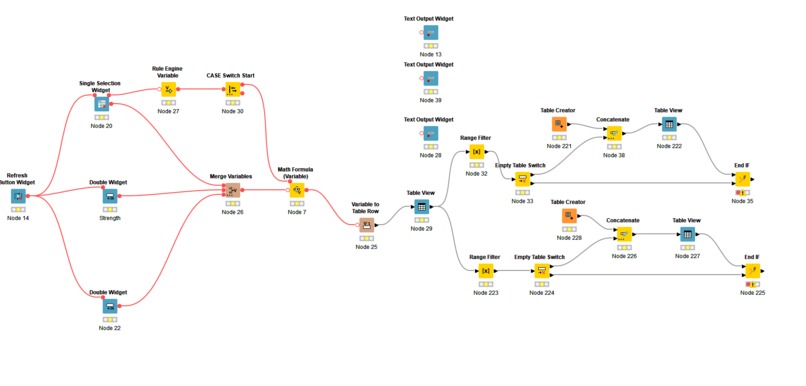
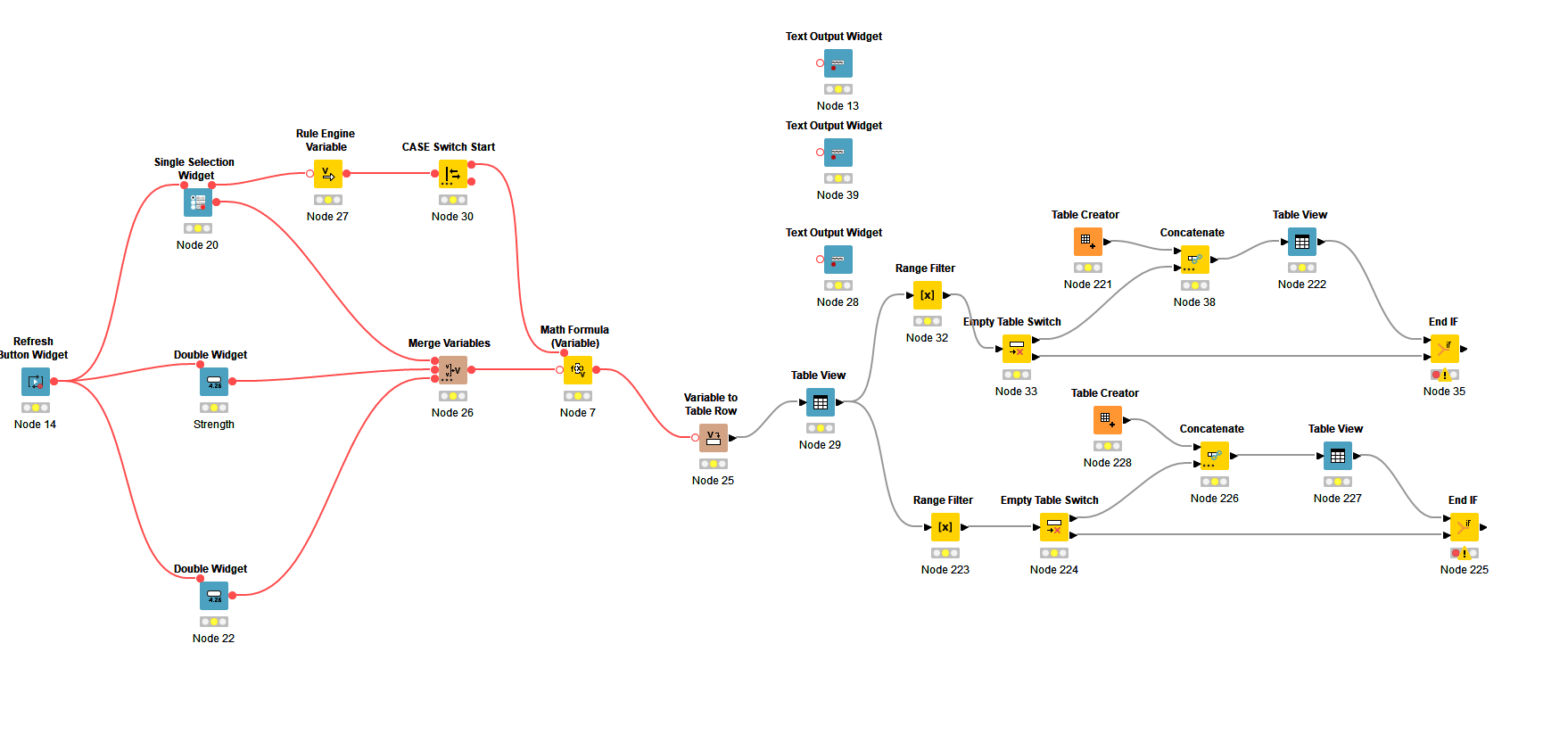
KNIME Workflow Our workflow consists of one main section
The provider selects the medication, strength, frequency, and once the medication is selected it is run through the rule engine variable where the conversion factor are associated with the correct opioid to produce the Morphine Milligram equivalent calculation. Then a table is curated to show the MME value. There are two range filters that are dictated by the MME value. If the MME value is greater than 90 then an error message will be displayed conveying that it exceeds 90 which is not favored and against the CDC guidelines for opioids. If the MME is lower than 90, then insurance information will be displayed on the screen. At this moment, we did an example Managed Care Organization and will display the criteria in order for the patient to receive the medication. The provider is able to match the insurance of the patient that they have on file with the information showcase accordingly. This will allow the provider to fulfill the requirements of the prior authorization or step therapy and be informed before the patient leaves the office and the patient is able to go to the pharmacy and pick up the prescription
Built With
- csv
- excel
- healthcare
- knime

Log in or sign up for Devpost to join the conversation.