-
-
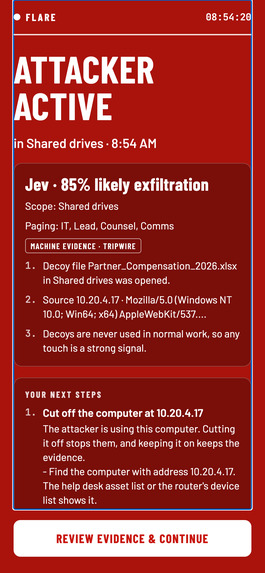
Alarm
-
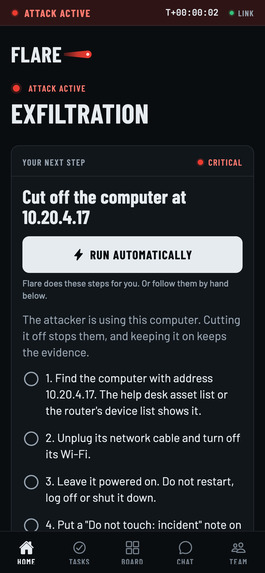
Actionable Steps
-
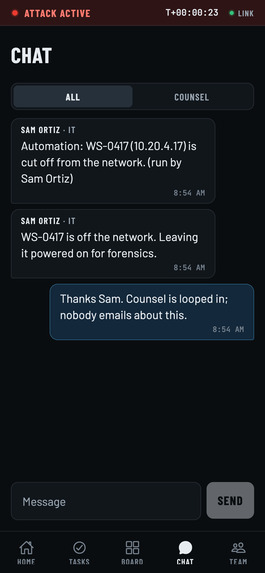
Chat-Room
-
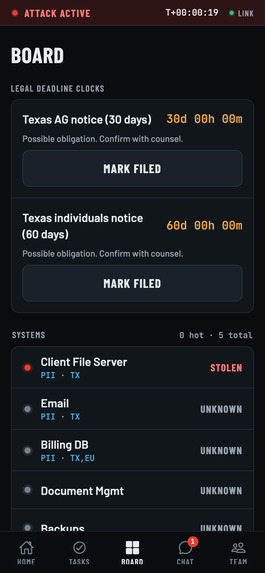
Board-Status
-
Audit
Inspiration
During a cyber attack, the attacker often controls the tools the response team would normally use: email, Slack or Teams, SSO, ticketing. People fall back to personal group texts, nobody remembers the runbook, and the important steps get missed. Most incident "dashboards" just show alerts and leave a stressed person to work out what to do next. We wanted something that keeps working when everything else is compromised, and that tells each person exactly what to do.
What it does
Flare is an out-of-band emergency channel for cyber incident response. It runs on responders' personal phones over cellular data, completely outside the company network.
- Tripwires catch the attacker. Decoy files, fake logins and fake API keys report any touch to Flare.
- Jev, our triage engine, decides what's happening. Jev is deterministic and rule-based, not an AI model. It scores the hit and names the likely attack (ransomware, data theft or credential theft). Then it either opens the incident or asks a lead to confirm.
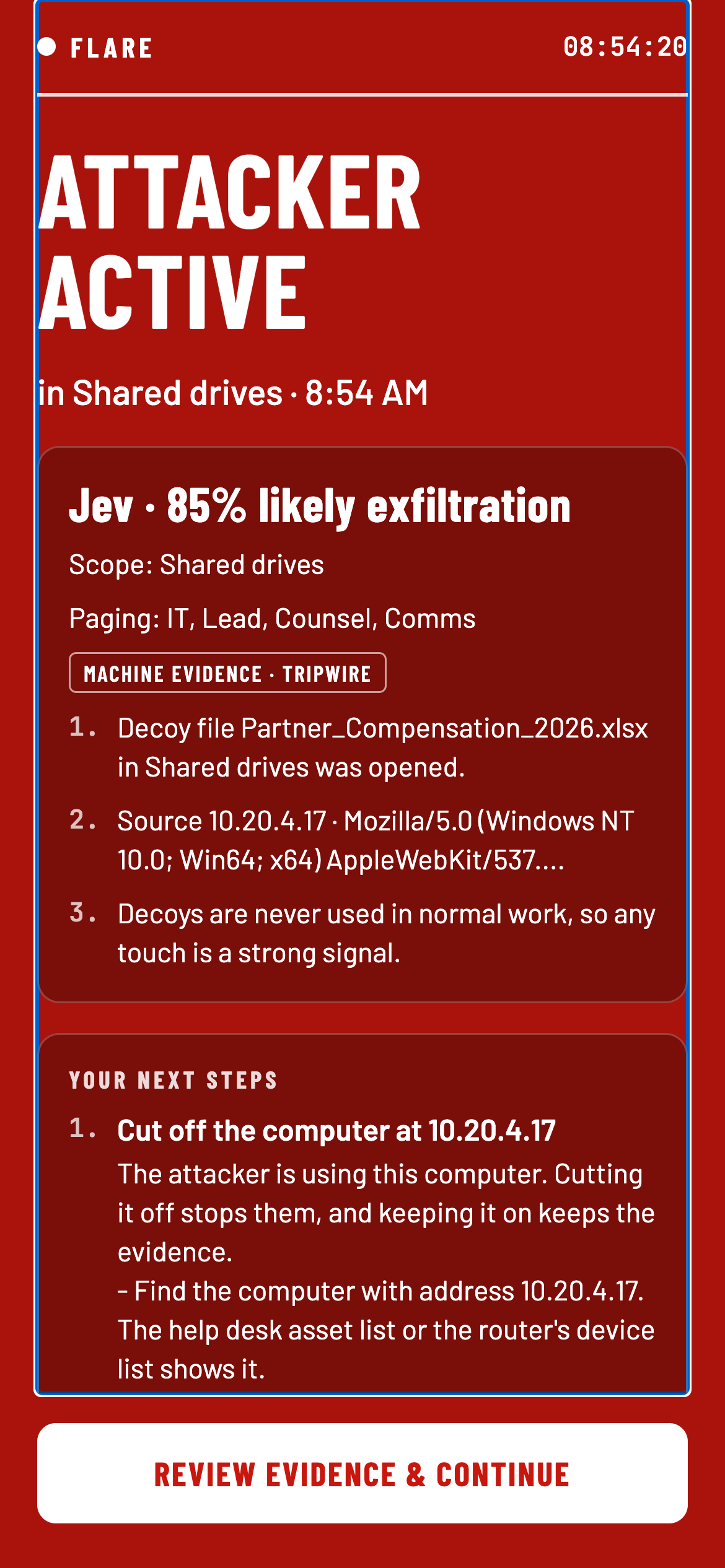
- Everyone gets alerted at once. A full-screen alarm hits every enrolled responder's phone with a notification.
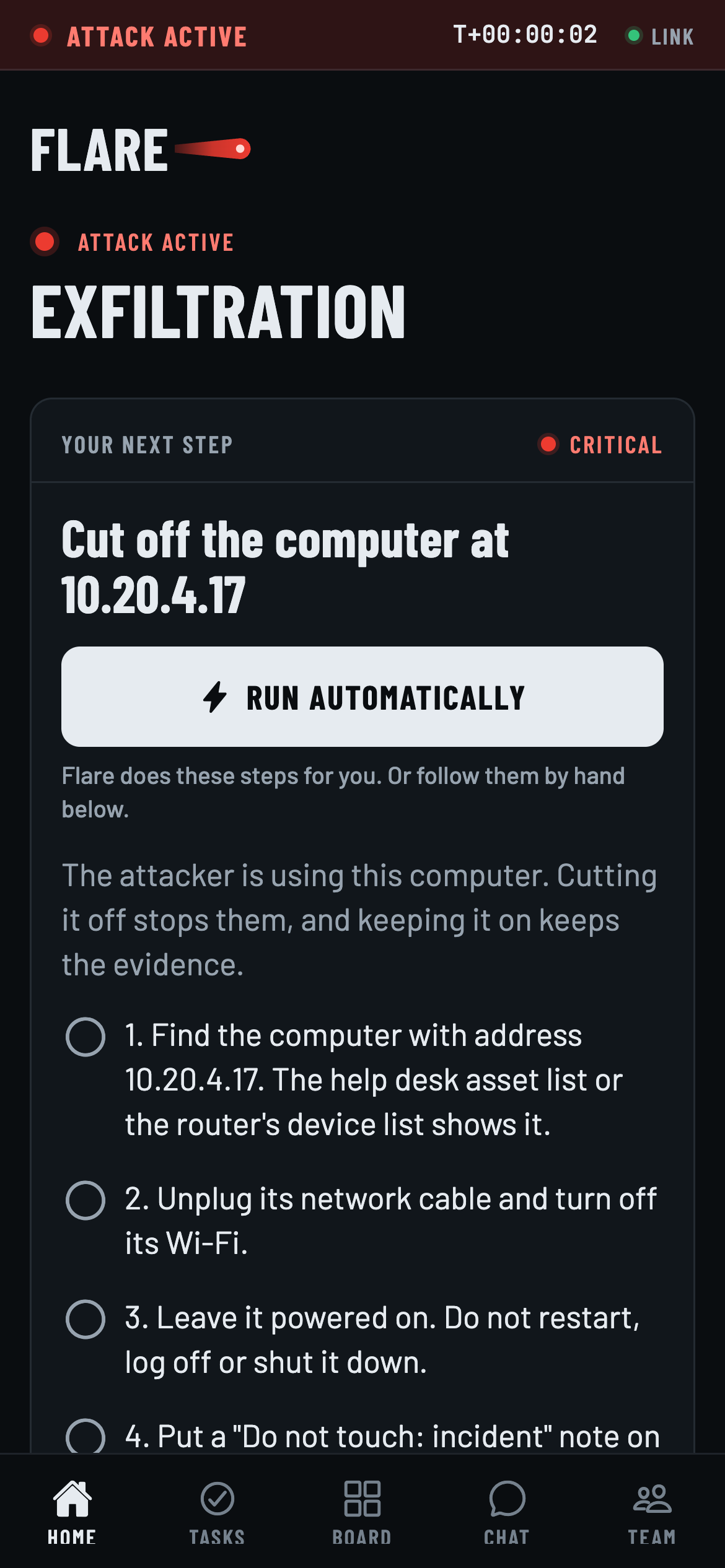
- Each person sees their next step, not a dashboard. Steps are written for their role and filled in with the real evidence: the IP address, file, system and time. Each step has a plain checklist, and IT can tap Run automatically to carry it out.
- The rest of the response lives in one place:
- live check-ins
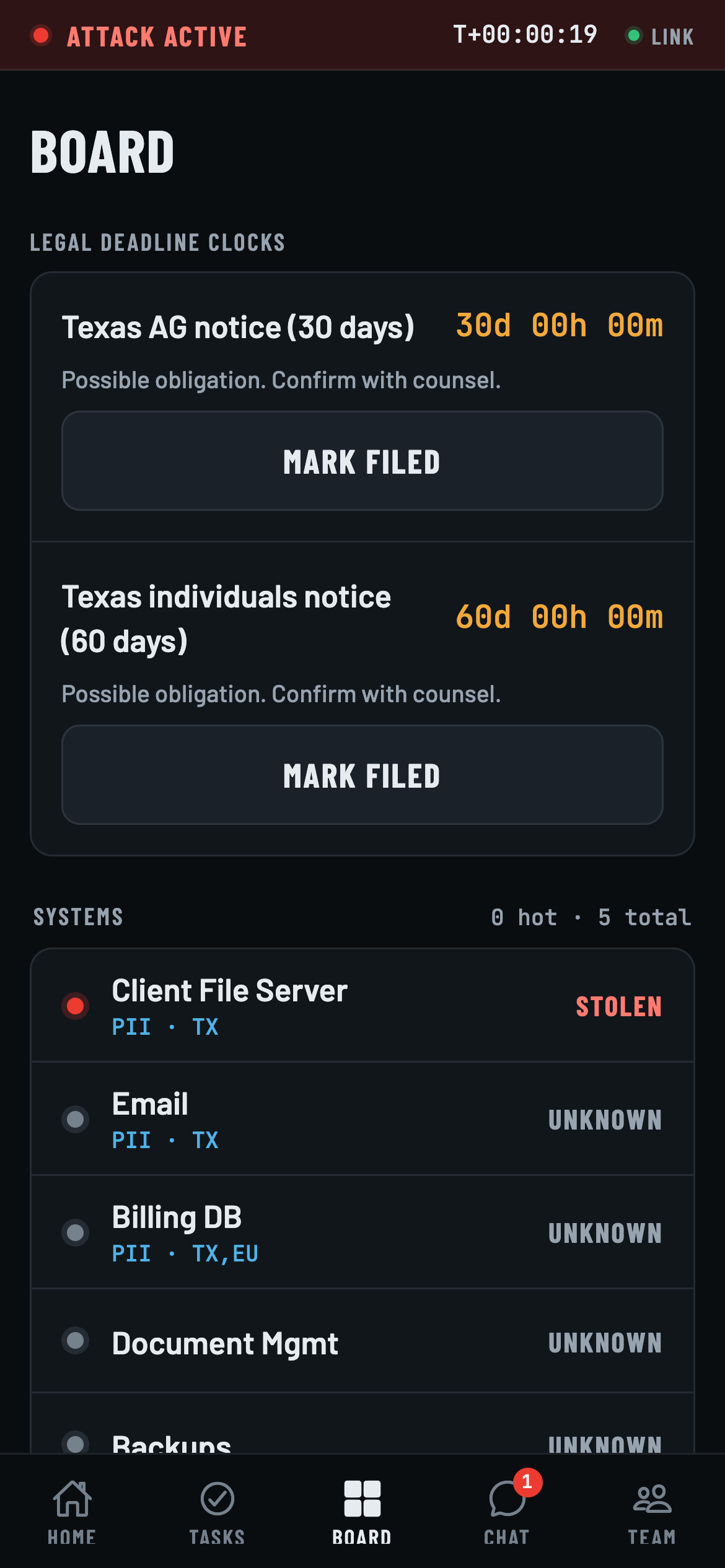
- a scope board showing each system as attacker active, locked, stolen or contained
- legal deadline clocks
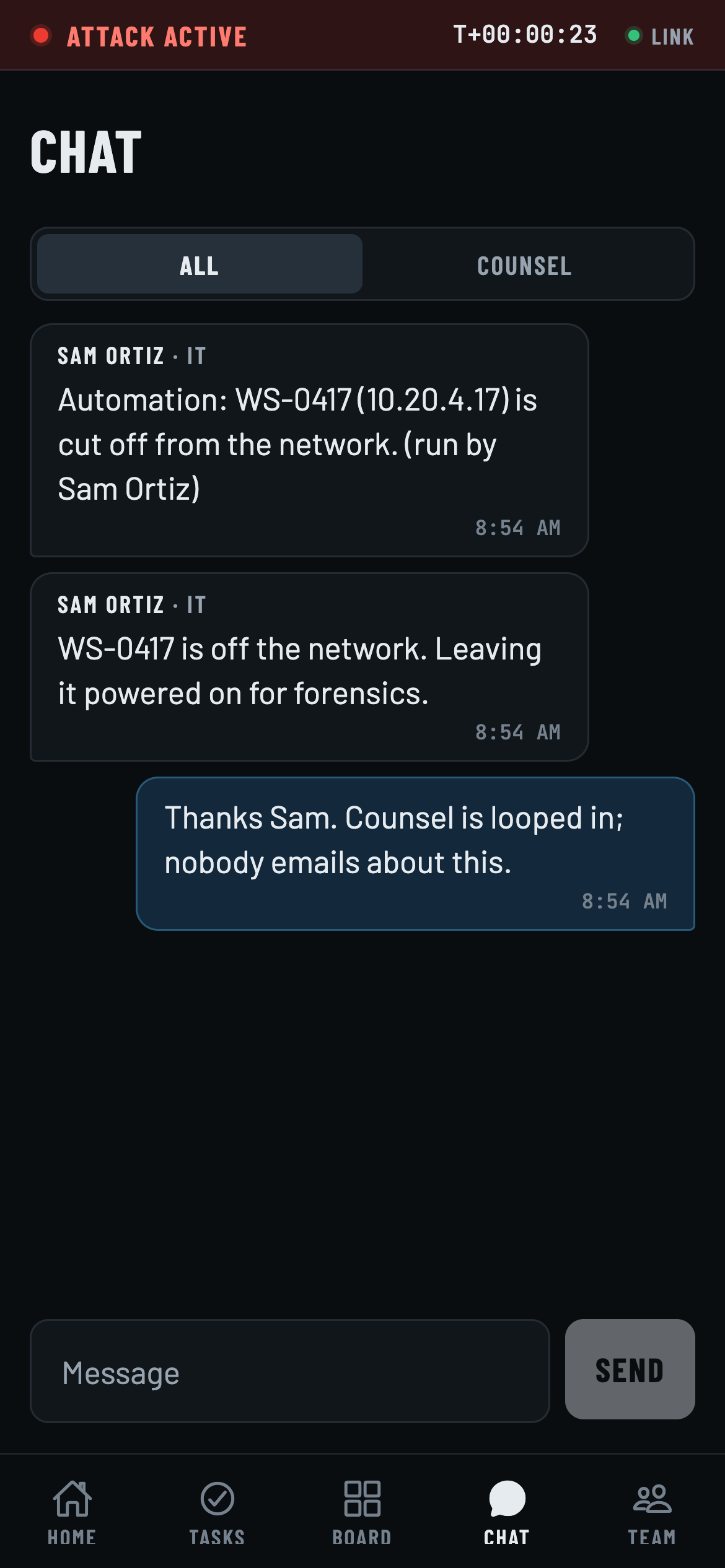
- team chat
- a private counsel channel
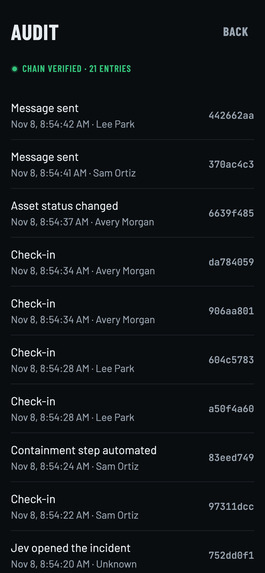
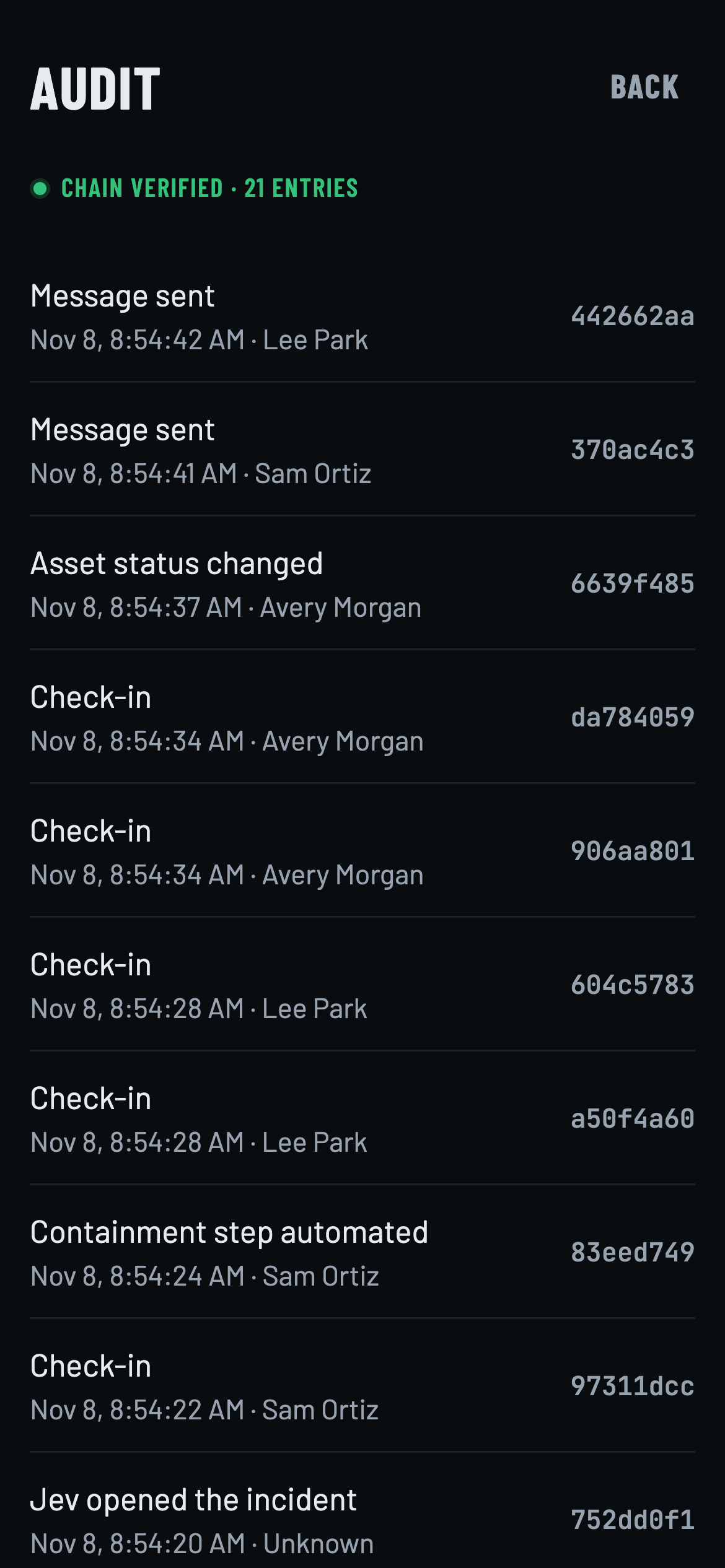
- a tamper-evident audit log
How we built it
- App: Expo (React Native) in TypeScript, running on iOS, Android and web.
- Backend: a SpacetimeDB module hosted on Maincloud, so every phone sees every change in real time.
- Security:
- Members join only by scanning an in-person QR invite.
- Each phone creates its own Ed25519 key.
- Sensitive actions are signed.
- Every action is written to a hash-chained audit log.
- Jev: plain TypeScript rules that score evidence, plan the steps for each role and attach automations.
- Tripwires: a small Node relay that reports decoy hits to SpacetimeDB.
Challenges we ran into
- Getting SpacetimeDB to run on React Native. The default compressed connection crashed on phones, so we turned compression off.
- Push notifications in Expo Go. Remote push doesn't work in Expo Go on Android, so we added an in-app alarm that works everywhere.
- Visibility rules. We kept the base tables private and exposed data only through views, so each role sees only what it should.
- Demoing several people at once. We gave each browser tab its own identity so one laptop can play the whole team side by side.
- Keeping triage explainable. We chose a rule engine over AI so the same evidence always gives the same answer.
Accomplishments that we're proud of
- A full tabletop run works end to end: tripwire hit, Jev triage, alarm, role steps, one-tap containment, board update and audit entry.
- Every step cites the evidence behind it.
- It's simple enough to use under stress with no training.
- It keeps working even if every company system is down or compromised.
What we learned
- Under stress, people need one clear next action, not more data.
- Deterministic triage beats "smart" triage when you have to explain decisions to auditors and lawyers.
- Running out-of-band changes everything about identity: you can't lean on company SSO, so trust has to start in person.
What's next for Flare
- Real integrations behind each automation: EDR isolation, directory account lockout, firewall rules, SIEM log export, backups.
- Playbooks for more attack types beyond ransomware.
- Real background push through dedicated app builds.
- Hardware-backed signing keys on the phone.
- Exportable incident reports for counsel and regulators.
Built With
- node.js
- react
- spacetimedb
- typescript
- vitest
