Inspiration
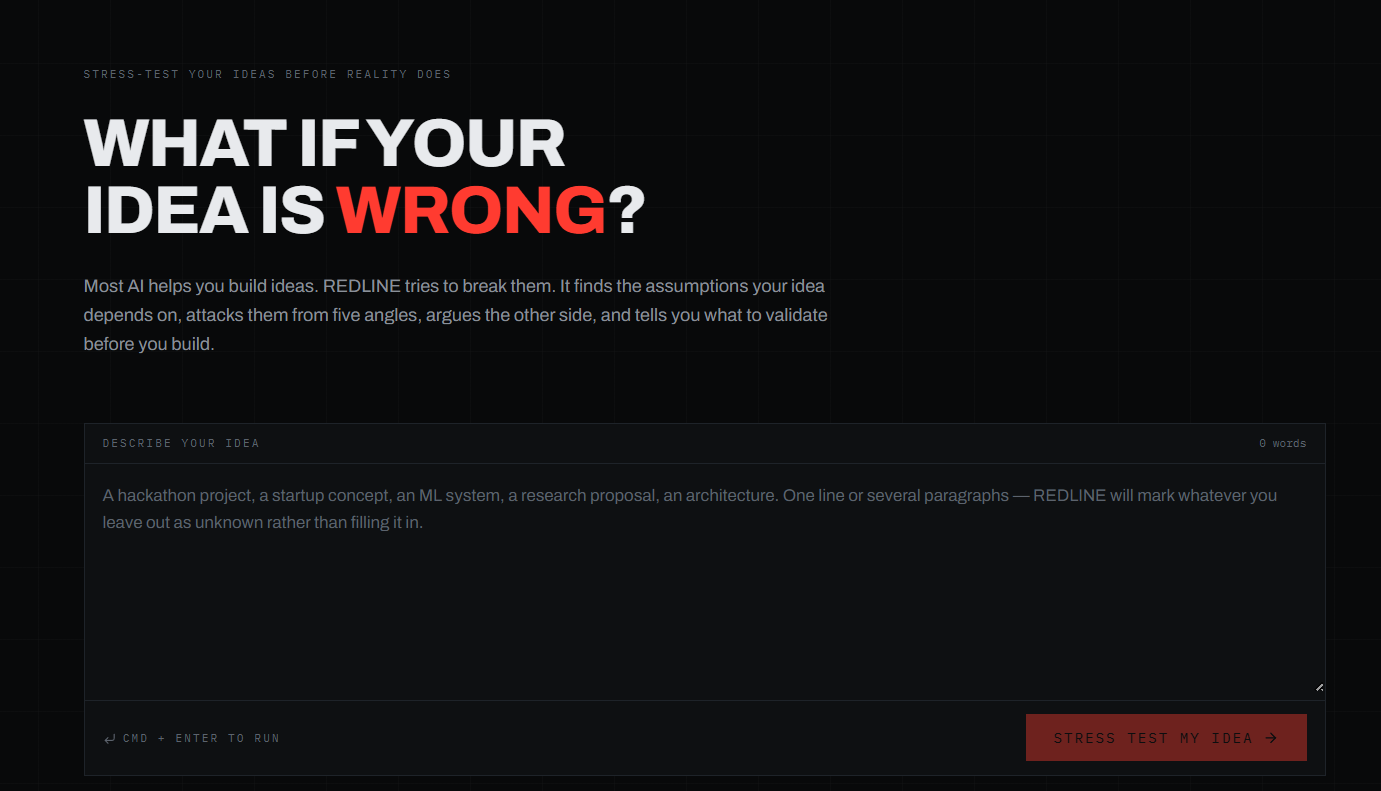
Most AI assistants are designed to be helpful, so when you present an idea, they tend to suggest improvements instead of questioning whether the idea should exist in the first place. We wanted to build an AI system that asks a harder question: what could make this idea fail before you spend months building it?
What it does
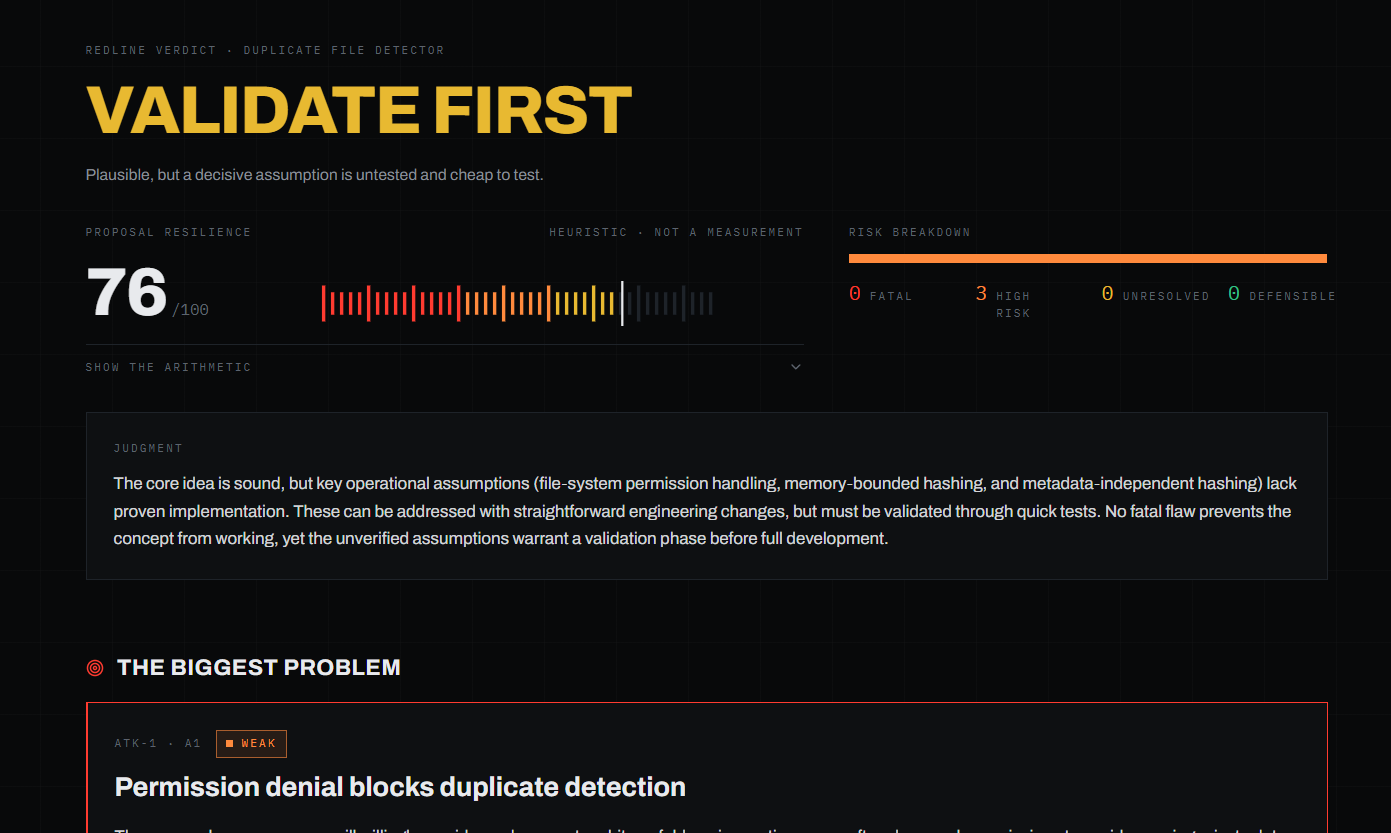
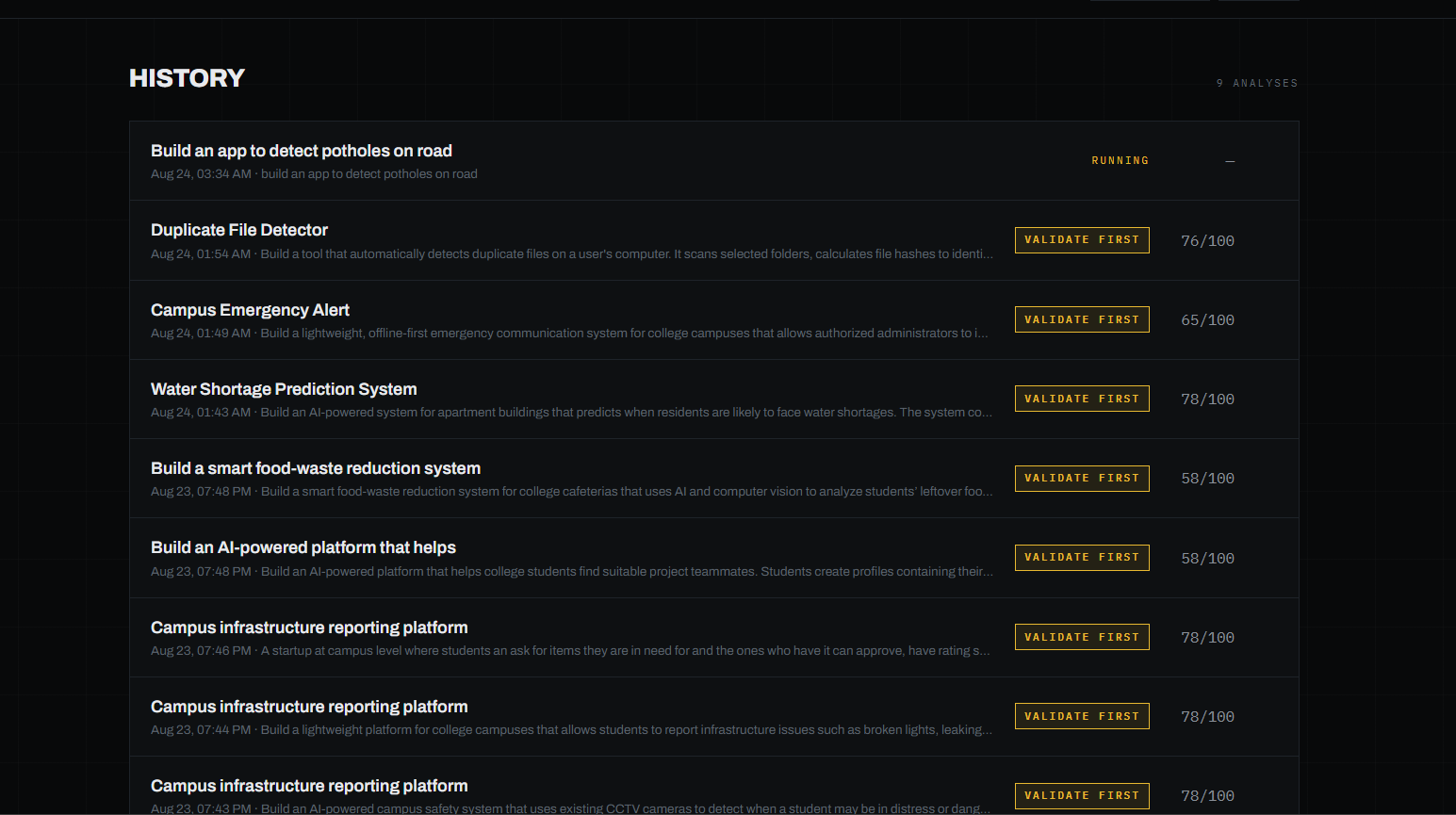
REDLINE stress-tests startup ideas, research proposals, hackathon projects, and system designs. It extracts the assumptions an idea depends on, identifies the most critical ones, and attacks them from five perspectives: technical/scientific, adoption, simpler alternatives, evidence, and novelty. It then defends and judges the attacks and recommends the cheapest experiment that could validate or kill the idea.
How we built it
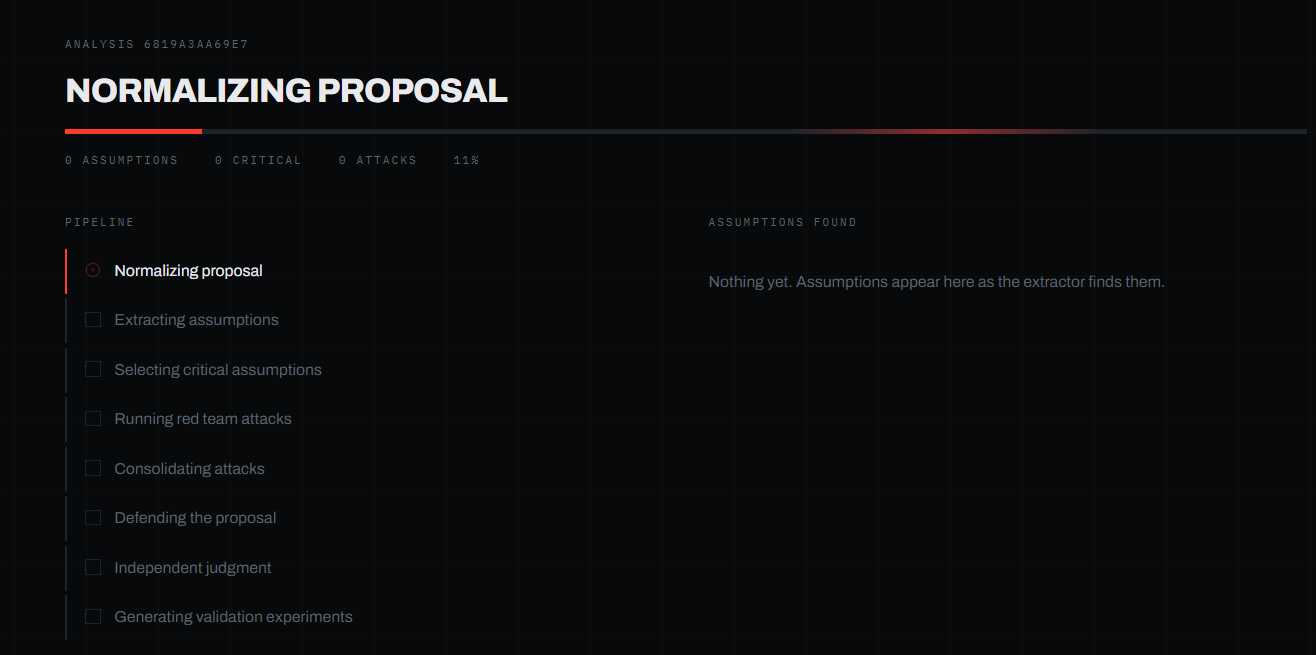
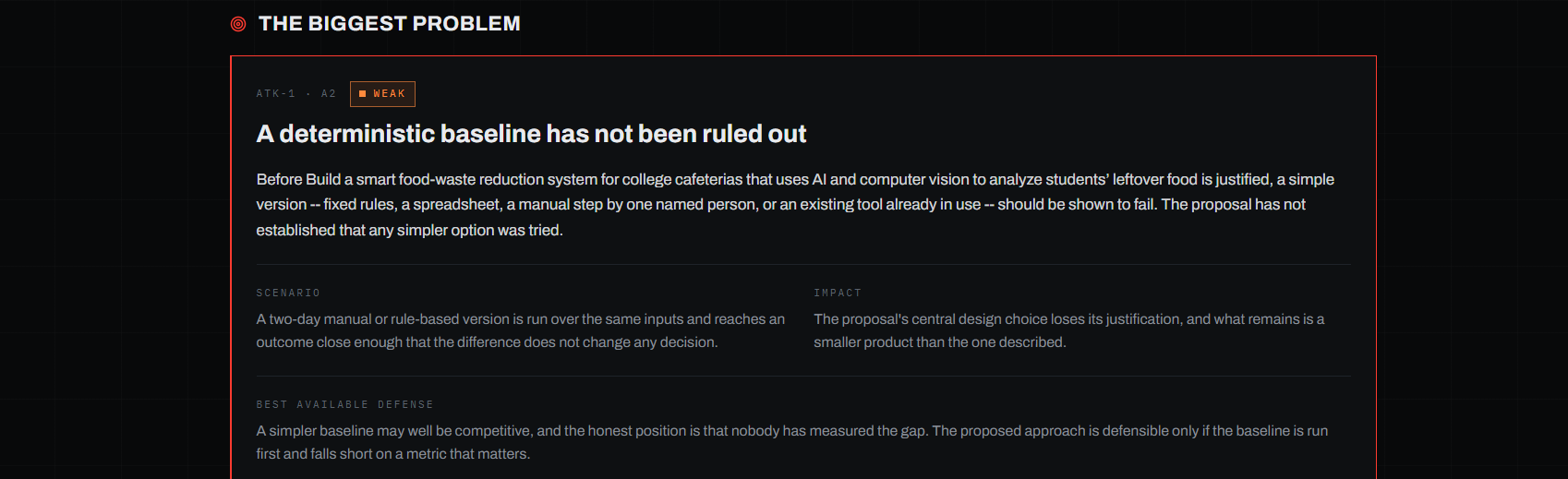
We built REDLINE as a structured multi-stage pipeline using React, TypeScript, Vite, Tailwind, FastAPI, Python, Pydantic, and SQLite. The LLM layer uses a provider abstraction supporting multiple providers and local models. Each stage consumes validated structured output from the previous stage rather than relying on free-form conversation. A key part of the system is the specificity gate, which rejects generic criticism and requires every attack to contain a concrete argument, failure mechanism, scenario, and impact.
Challenges we ran into
The biggest challenge was preventing AI-generated criticism from becoming generic. We solved this by introducing structured outputs, independent attackers, consolidation rules, a defense stage, and mechanical validation. We also had to account for weaker local models, which can fail the specificity gate more frequently.
Accomplishments that we're proud of
We built a complete end-to-end adversarial analysis pipeline rather than a single prompt pretending to be a critical reviewer. REDLINE has 142 tests, supports multiple LLM providers, includes mock/offline mode, and produces transparent, reproducible scoring. We're especially proud that the system can identify a problem that is more fundamental than the obvious technical question and recommend a cheap experiment to test it first.
What we learned
We learned that effective AI reasoning is not simply about making more model calls. The architecture around those calls matters: separating assumptions from opinions, forcing specificity, preserving disagreement, and independently judging defenses can produce much more useful analysis. We also learned to treat AI outputs as hypotheses rather than facts, especially when external evidence is unavailable.
What's next for RedLine
The next step is making REDLINE more grounded in reality by adding external evidence such as web research, literature, and market data. We also want to improve reviewer independence by comparing analyses across different model providers and continue improving the quality of the experiments and verdicts.
Built With
- ai-agents
- anthropic
- fastapi
- framer-motion
- gemini
- groq
- llm
- multi-agent-systems
- ollama
- openai
- openrouter
- pydantic
- python
- react
- rest-api
- sqlalchemy
- sqlite
- tailwind-css
- typescript
- uvicorn
- vite


Log in or sign up for Devpost to join the conversation.