Redline — Our Journey to Instant AI-Powered Damage Assessment
Inspiration
The inspiration for Redline began with a simple but frustrating observation:
vehicle insurance claims take 7–14 days to process, even for minor damage. One of our teammates family members was recently in an accident and this inspired us to want to make the process easier for them as well.
- Customers wait weeks without clarity
- Adjusters manually inspect claims, leading to inconsistencies
- The U.S. insurance industry loses \$29–35 billion annually to fraud
- Overcharging and slow resolution erode trust
We asked ourselves:
Why does a process that could be automated still rely on slow, manual inspection?
That question sparked Redline.
What We Learned
Building Redline taught us valuable lessons:
- Manual inspection is slow, inconsistent, and vulnerable to fraud
- Object detection and damage classification require fine-grained annotation
- End-to-end claim assessment involves perception, retrieval, reasoning, and user experience design
We also deepened our understanding of computer vision and pricing models, including:
- Bounding-box localization
- Severity scoring heuristics
- Repair cost estimation functions
How We Built It
Redline combines multiple AI components into one seamless workflow.
Tech Stack: Python React GroqLLM opencv YOLOv8
1. AI-Powered Instant Damage Assessment
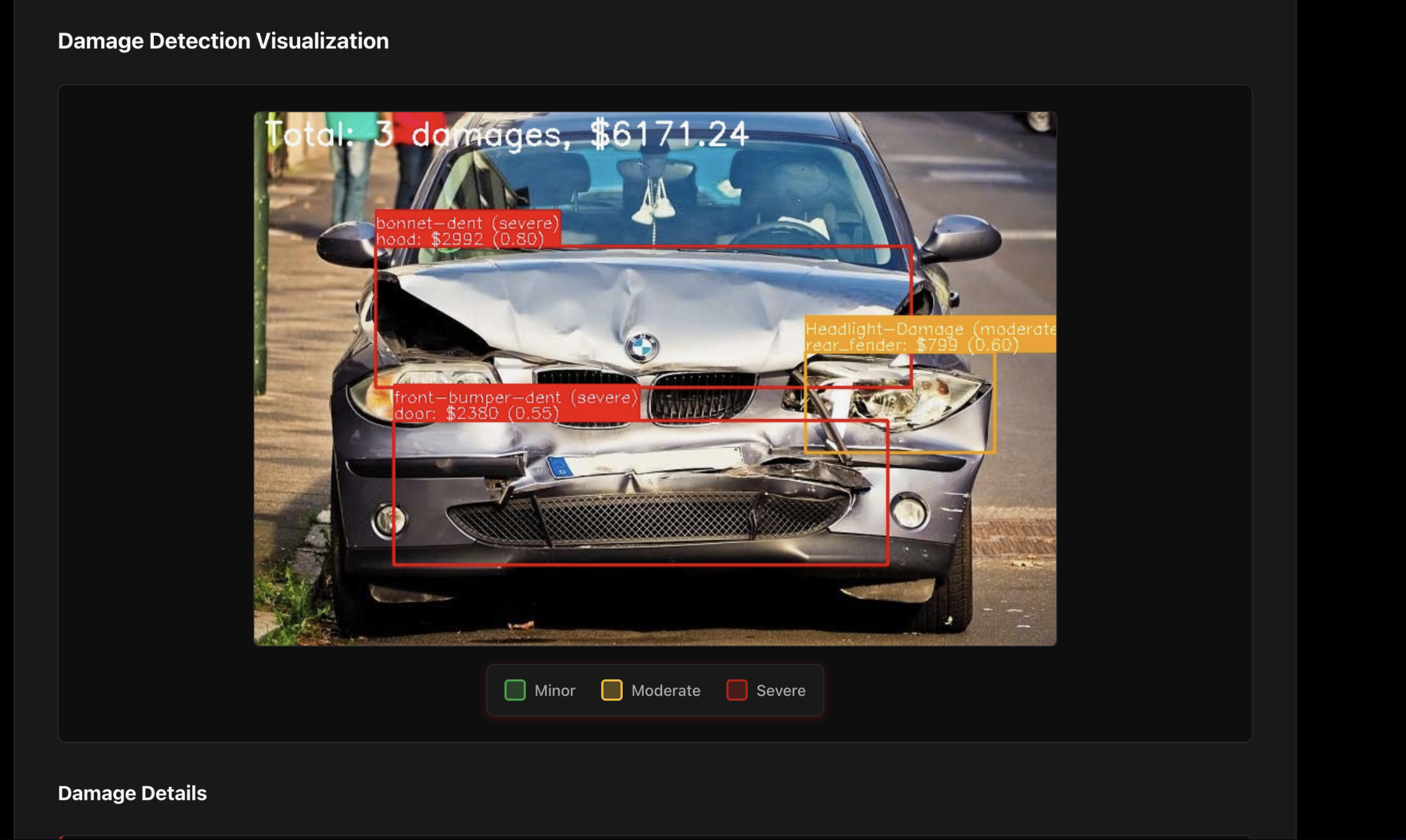
We built a computer vision pipeline that detects:
- Damage type
- Severity
- Affected components
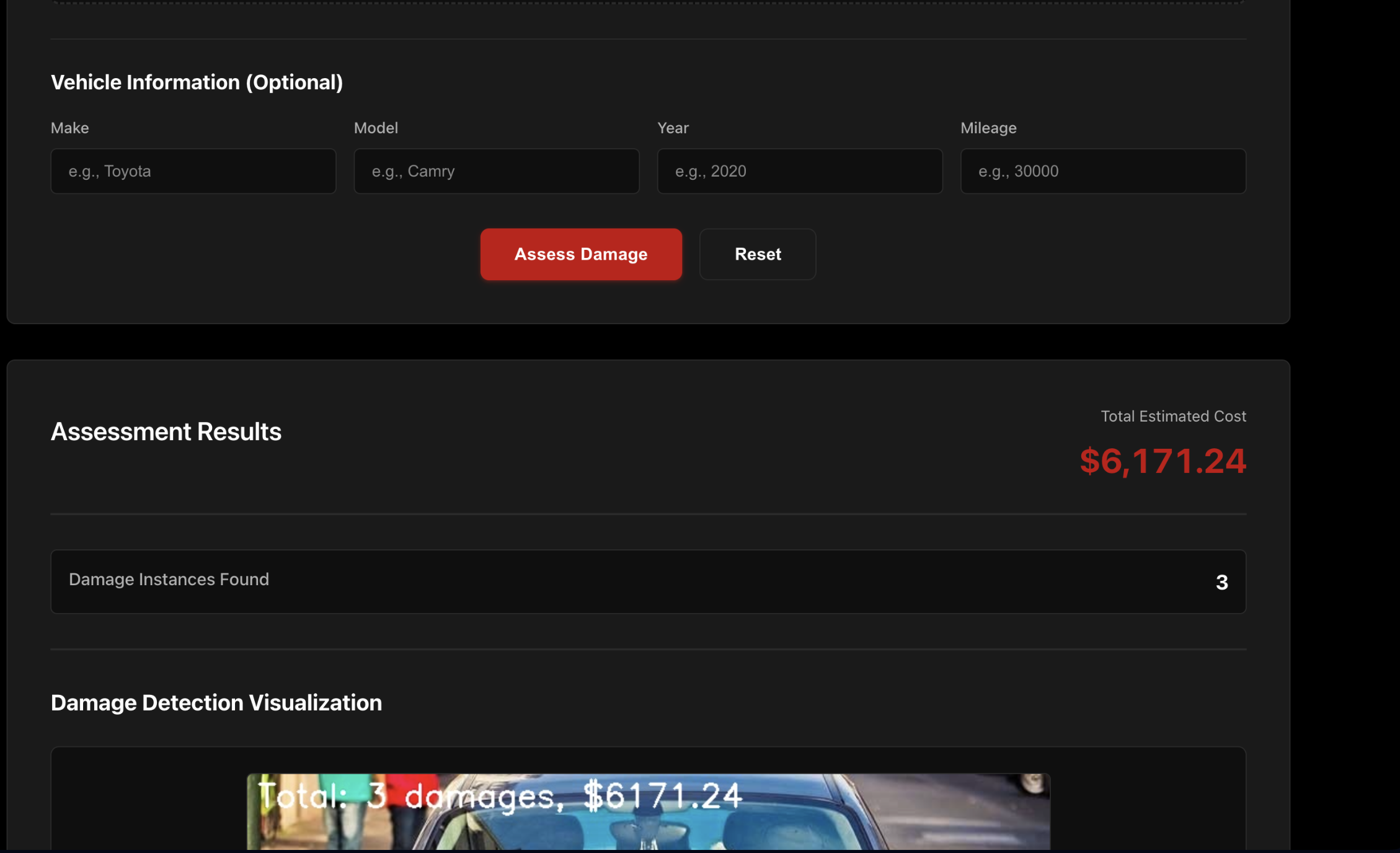
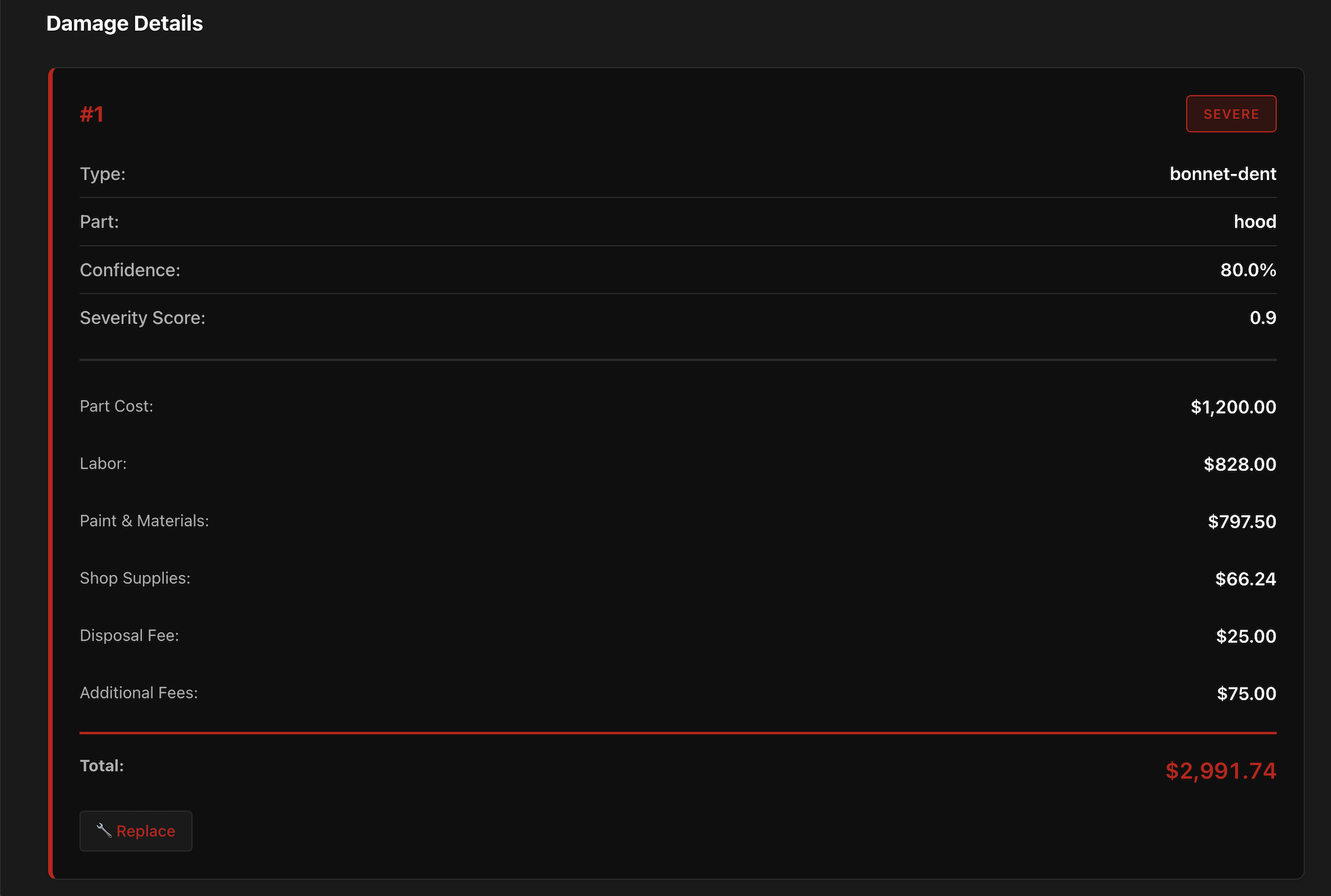
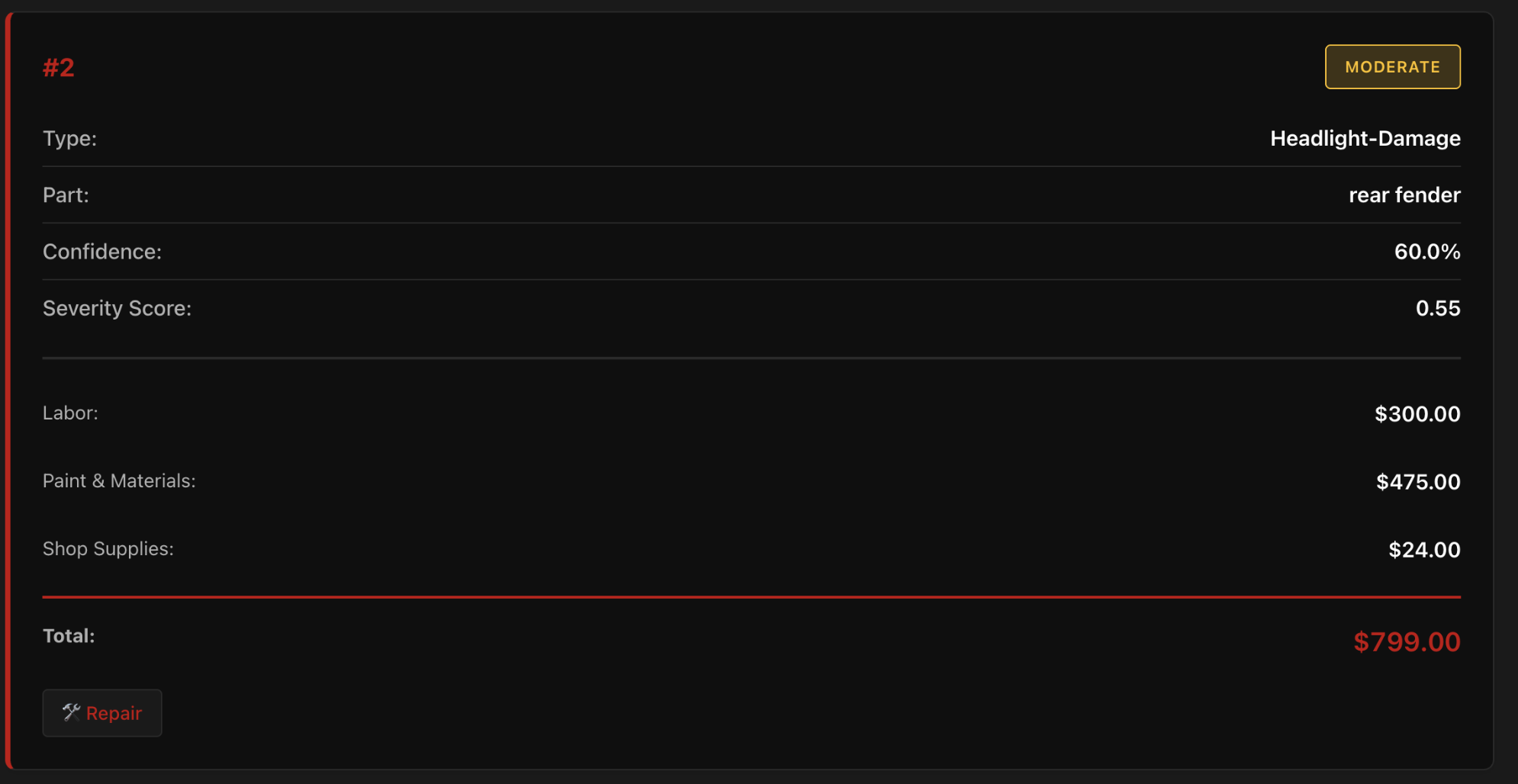
- Estimated repair costs
All computed within seconds, not weeks.
2. How It Works
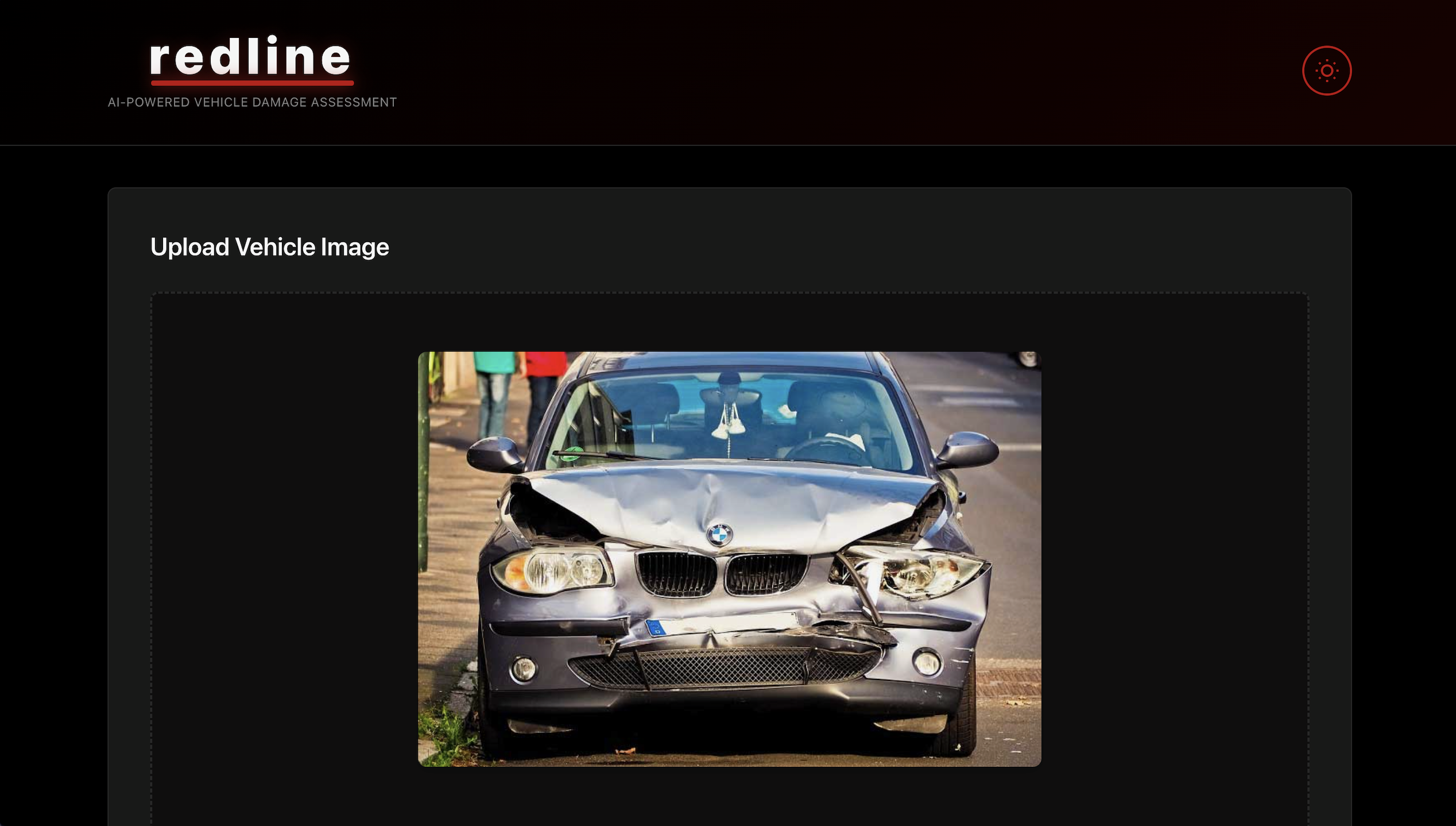
- Customer uploads an image
- AI analyzes damage, identifying severity, location, and expected cost
- An instant report is generated, ready for users or adjusters
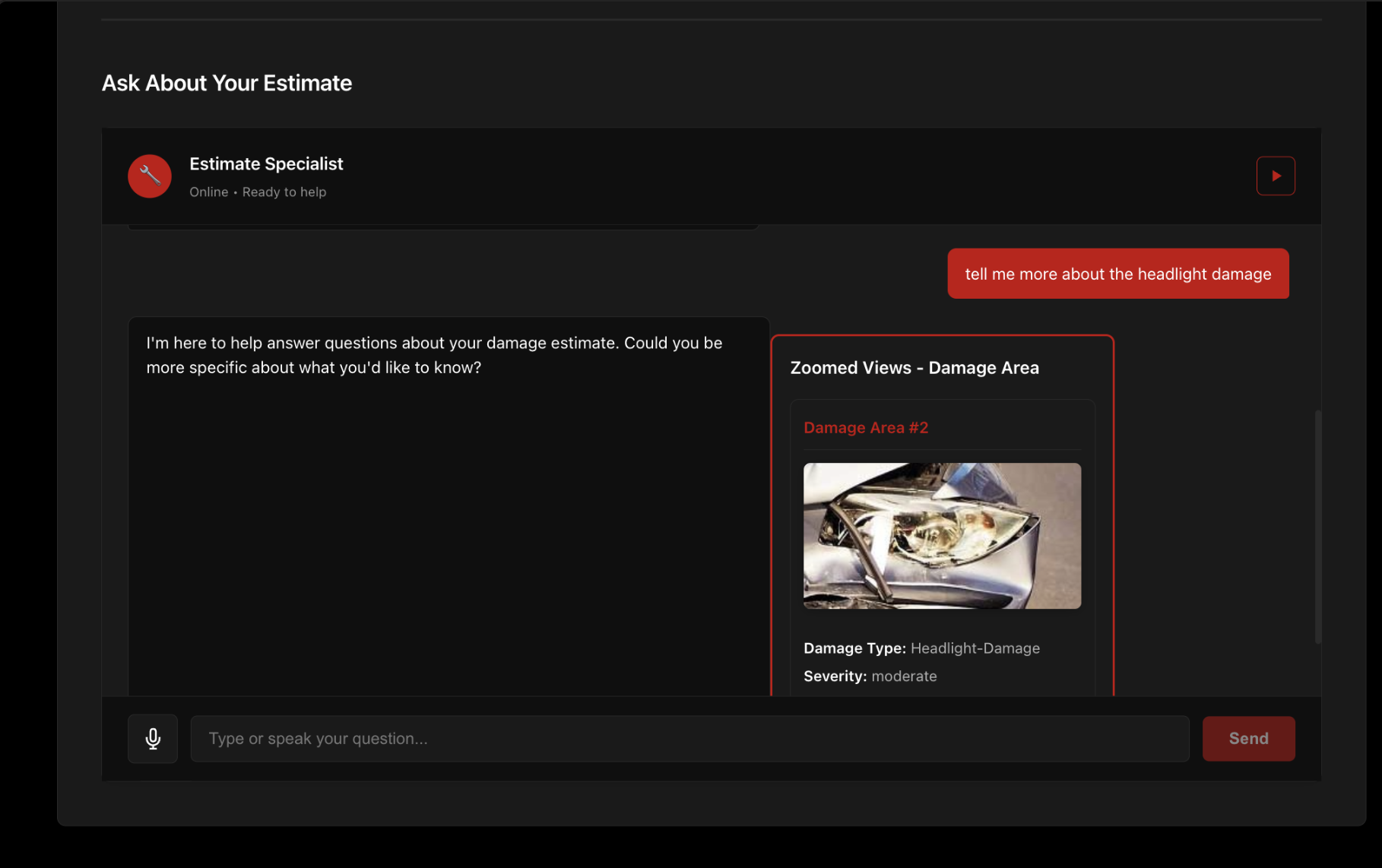
- Consult with our chatbot and ask questions about your estimation
Challenges We Faced
Some challenges we faced were:
- Training the model required a powerful GPU, which we delegated to cloud GPU's on Google Colab
- When creating the voice detection, we had some struggles while trying to switch between multimodal inputs (text/voice), but we were able to get it to work using conditional switching logic
- Creating the cost estimation layer was quite tricky because of the various factors we had to take into account while calculating the estimate
The journey taught us not just how to build an AI product—
but how to rethink an entire industry workflow.


Log in or sign up for Devpost to join the conversation.