Inspiration
Homes, shops, offices and warehouses all install security cameras, but nobody can tell where those cameras fail. Owners see a camera on the wall and assume the space is covered. Intruders look for the gaps. We built RedHouse to find those gaps before a real intruder does.
What it does
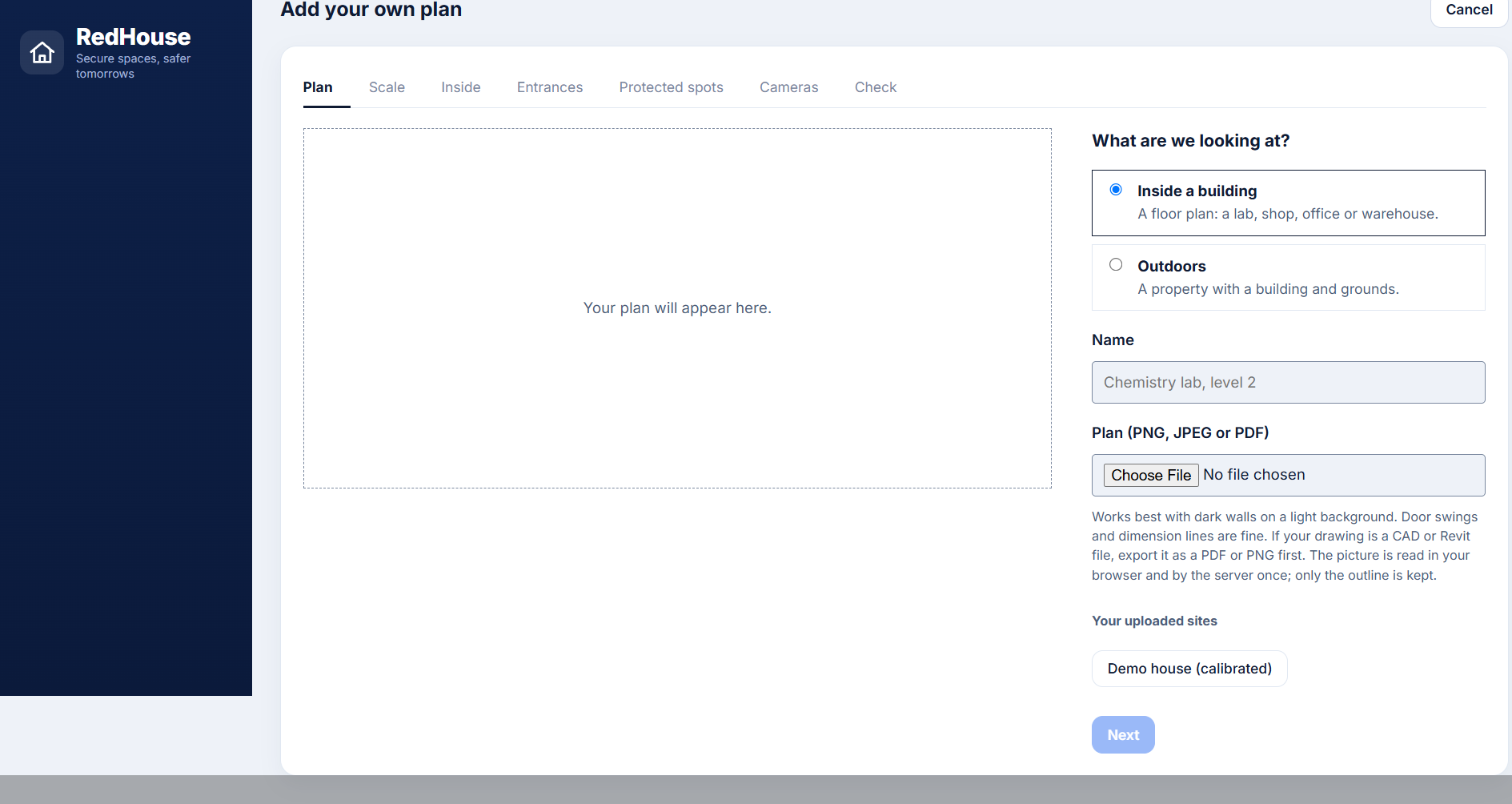
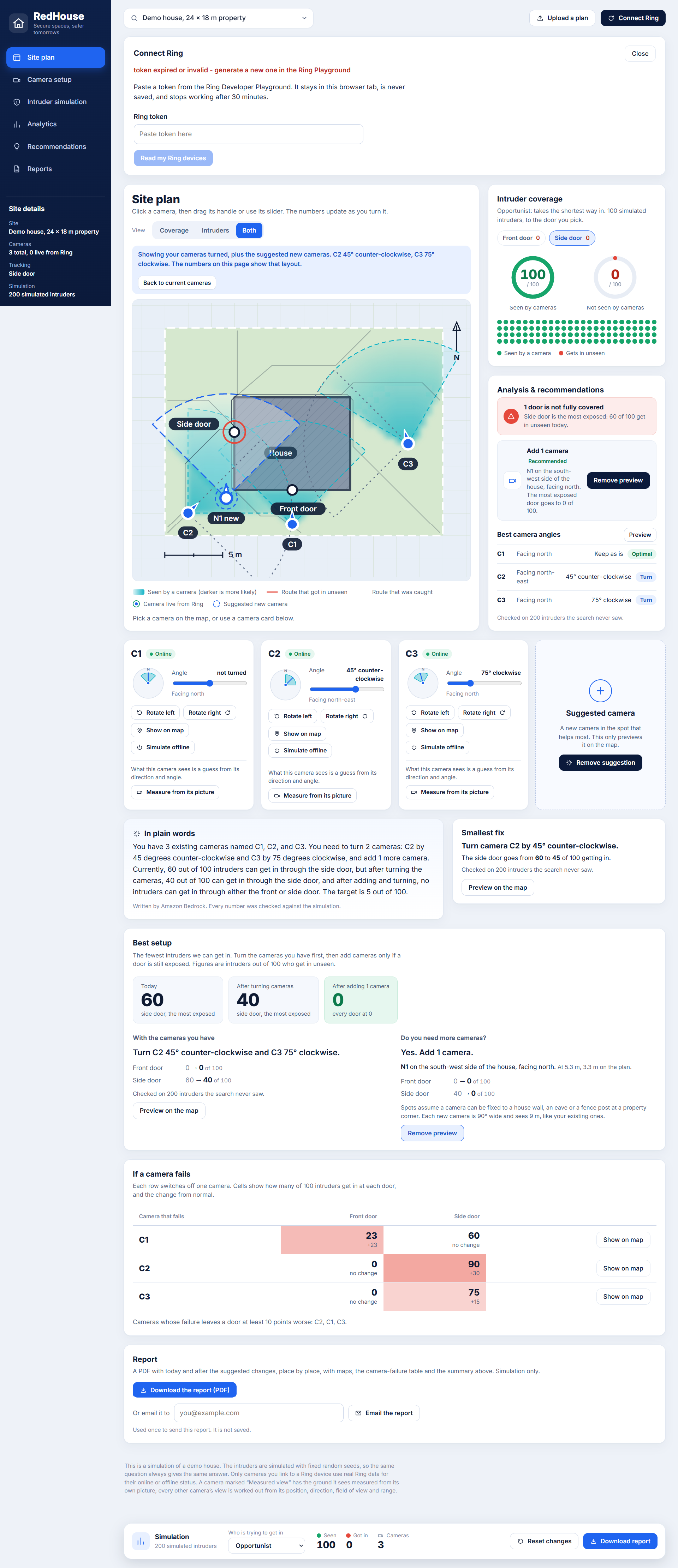
RedHouse is a red-team digital twin for camera setups. You load a floor plan with your camera positions. An adversarial intruder then plans the stealthiest route from an entry point to a target room, avoiding camera coverage. The result is a map of blind spots and a detection score.
A defender agent tests camera moves and rotations and recommends the best fixes, with before and after coverage ([X]% to [Y]%).
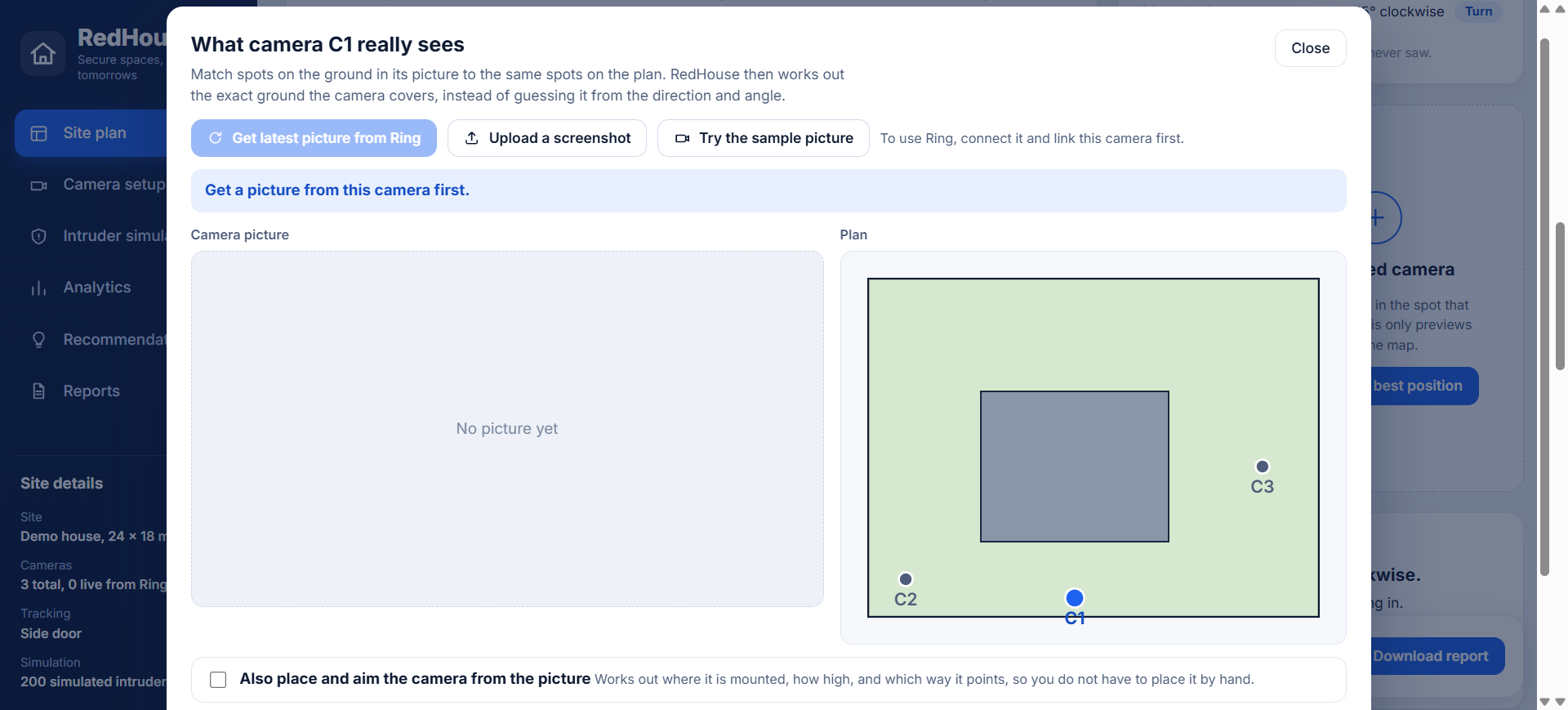
A real Ring device links to a camera on the plan through the Ring Partner API. RedHouse polls Ring every 30 seconds, and Ring data checks the twin's predictions against reality. Amazon Bedrock turns the results into a plain-language security report for owners and managers.
How we built it
- Simulation engine (Python): field-of-view and line-of-sight coverage, A*-style stealth pathfinding that penalizes visible cells, and a defender that searches for better camera placements.
- Frontend (React + Vite): floor plan view, simulation playback, and a Connect Ring panel.
- Ring Partner API: token-based device discovery, linking a Ring device to camera C2, and polling for device status.
- AWS: Amazon Bedrock with Amazon Nova 2 Lite generates the written report from the simulation results.
Challenges we ran into
- Ring access tokens expire after about 4 hours, so we built the connection flow to handle re-linking.
- The Ring Developer Playground is a simulator, so a real-hardware motion feed is limited. We designed the calibration loop around the data the API does return.
- Our first-choice Bedrock model wasn't available on our account, so we switched to Nova 2 Lite.
Accomplishments we're proud of
- A full loop that attacks, fixes and verifies against real Ring data.
- An intruder that actually exploits coverage gaps, and a defender that closes them.
What we learned
Geometry and pathfinding belong in deterministic code, and the LLM works best at explaining the results. We also learned how Ring's OAuth tokens and device discovery work.
What's next
- Calibrate camera field of view automatically from Ring snapshots and motion events.
- Support multi-floor buildings and multiple live Ring cameras.
- Let owners test "what if I move this camera" scenarios interactively.
Built With
- amazon-bedrock
- amazon-nova
- amazon-web-services
- github
- javascript
- ngrok
- python
- react
- ring-partner-api
- vite

Log in or sign up for Devpost to join the conversation.