-
-

safezone
-
safezone
-
safezone
-
safezone

Inspiration
Every day, countless individuals face social interactions that can be confusing, intimidating, or even unsafe. From navigating rocky relationships to recognizing red flags in public settings, people—especially those with autism or difficulties in understanding social cues—often lack tools to guide them through these challenges. Safe Zone AI was born from the desire to empoIr individuals with real-time support, fostering confidence, communication, and personal safety.
What it does
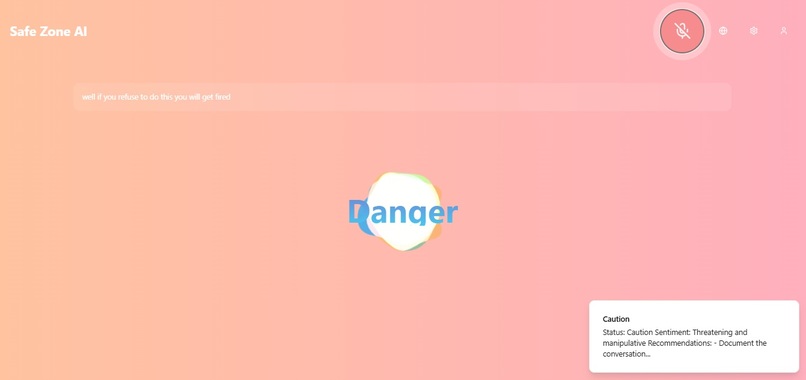
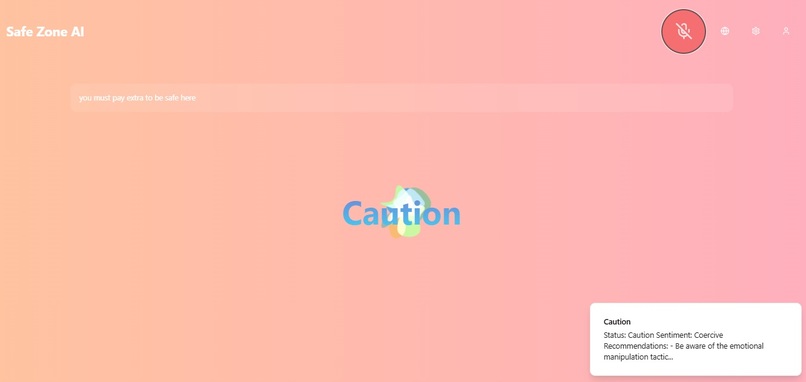
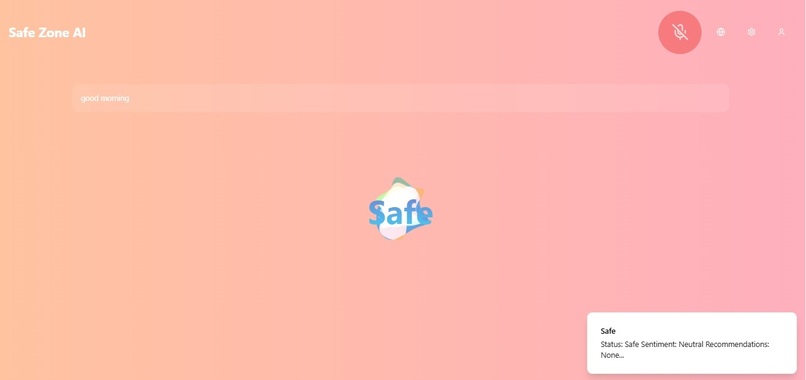
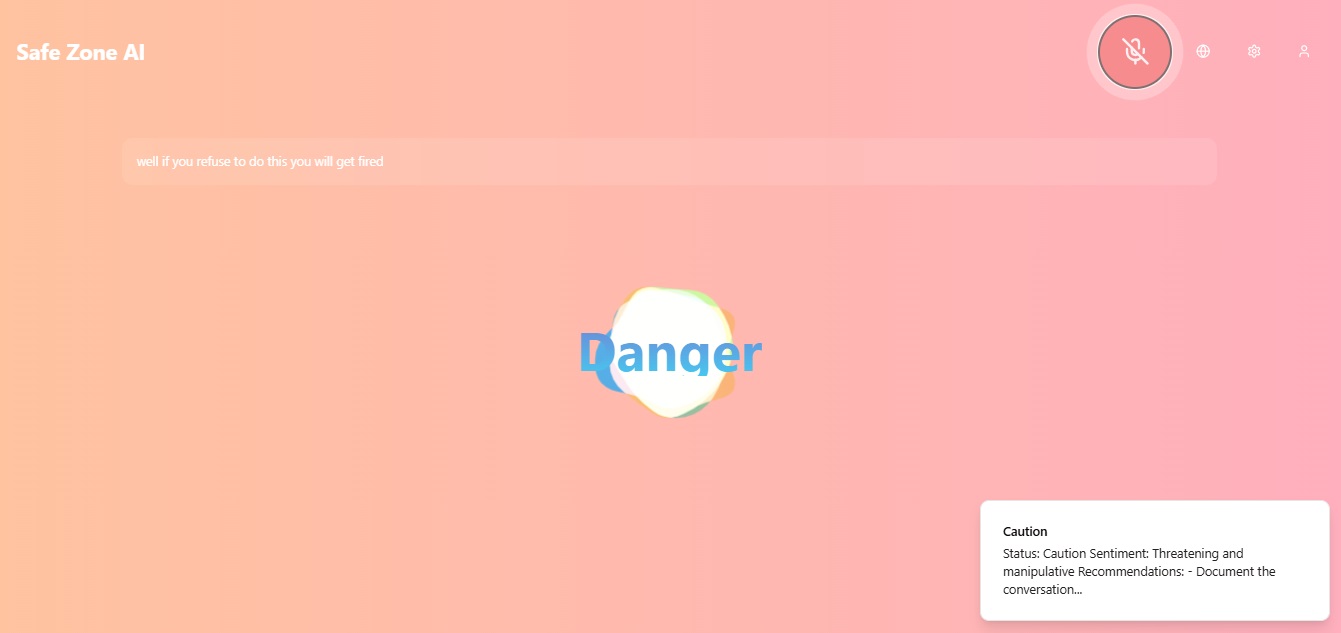
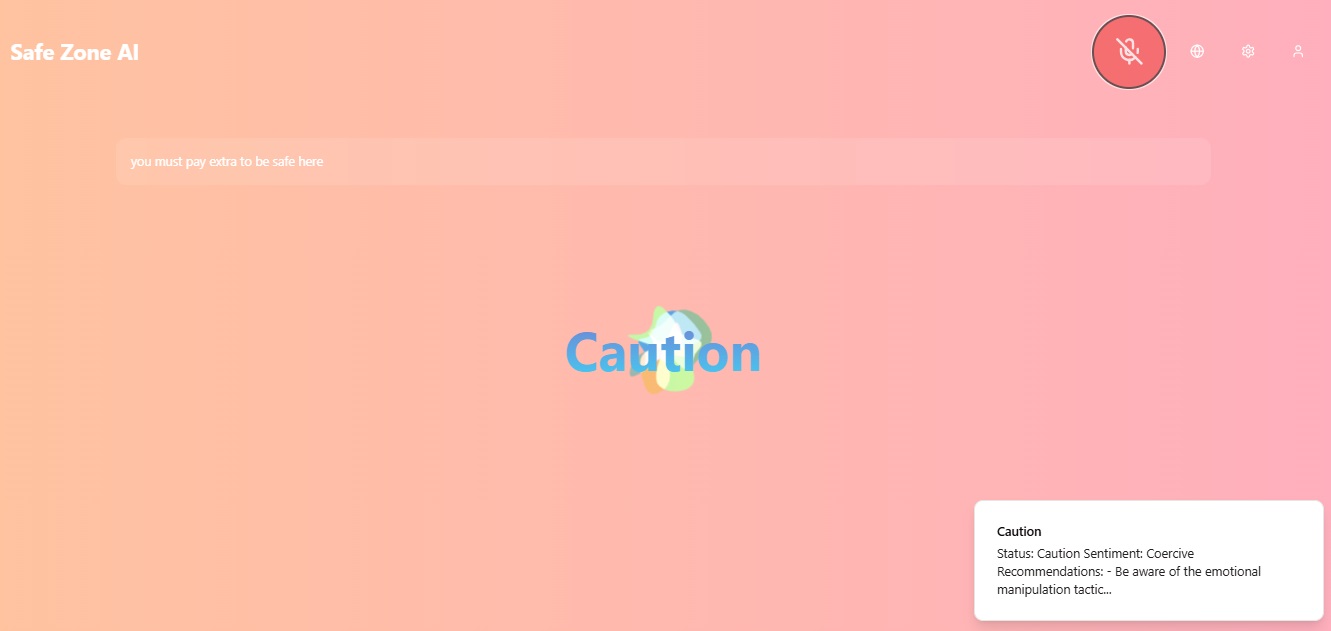
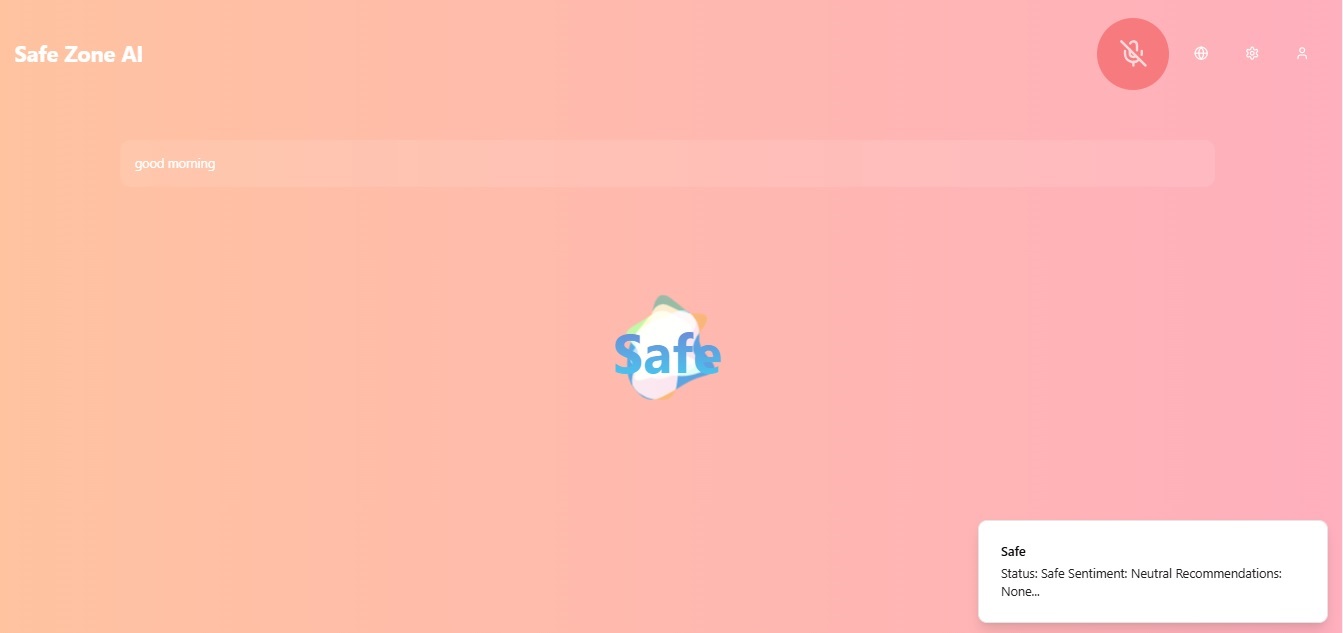
Safe Zone AI is an AI-poIred tool designed to provide real-time guidance during social interactions. Whether at home, work, in public, or while traveling, the app helps users identify potentially dangerous people or situations and offers actionable strategies to respond appropriately. It features speech-to-text recognition, contextual analysis, and push notifications for alerts. Additionally, it includes multilingual capabilities to assist travelers in recognizing potentially harmful phrases or scams in unfamiliar languages.
How I built it
The app was developed using a Node.js backend paired with a React frontend for a seamless user experience. The core functionality leverages the Gemini Nano AI APIs for local, on-device analysis, ensuring privacy and speed. I incorporated the Speech Recognition API for real-time transcription and analysis, the Translation API for multilingual support, and the Push Notification API to keep users informed on their smartphones or smartwatches. For enhanced usability, the app’s design prioritizes accessibility, ensuring it works equally Ill across mobile and Ib platforms.
Challenges I ran into
Building a tool that balances real-time performance with robust AI analysis posed significant challenges. Fine-tuning the speech recognition to accurately identify critical phrases and context required extensive iteration. Additionally, ensuring multilingual translation accuracy while maintaining speed was complex. Implementing seamless push notifications across devices and integrating location-based alerts for user safety also presented technical hurdles.
Accomplishments that I'm proud of
I'm proud of creating a solution that attempts to tackle a critical issue affecting a diverse range of users. The integration of cutting-edge AI models, real-time speech analysis, and multilingual support showcases the potential of Safe Zone AI to positively impact lives. Even though I joined the hackathon two days prior before the deadline I am happy with how far I have come with this project.
What I learned
Through this project, I learnt the importance of user-centric design and the challenges of implementing real-time AI features. I gained insights into Google's suite of AI products, and I deepened My understanding of how AI can be tailored to address real-world safety concerns in a wide array of contexts.
What's next for Safe Zone AI
The next steps for Safe Zone AI include:
- Enhancing the AI’s ability to recognize and adapt to nuanced social interactions.
- Expanding translation capabilities to cover more languages and dialects.
- Integrating a feedback loop so users can customize the app’s responses to better suit their needs.
- Developing offline functionality for areas with limited connectivity.
- Partnering with organizations to make the app available to vulnerable communities globally.
- Google maps API.
- SMS Alert funtion.
Safe Zone AI is more than an app—it’s a step toward creating safer, more confident interactions for everyone.


Log in or sign up for Devpost to join the conversation.