Inspiration
Access to rapid, automated hematological screening is unevenly distributed worldwide. Traditional manual counting of red blood cells (RBCs) under a microscope is time-consuming, tedious, and highly subjective. We wanted to leverage computer vision to bridge this gap, creating an automated screening tool that can flag potential cases of anemia in seconds to help practitioners prioritize high-risk patients.
What it does
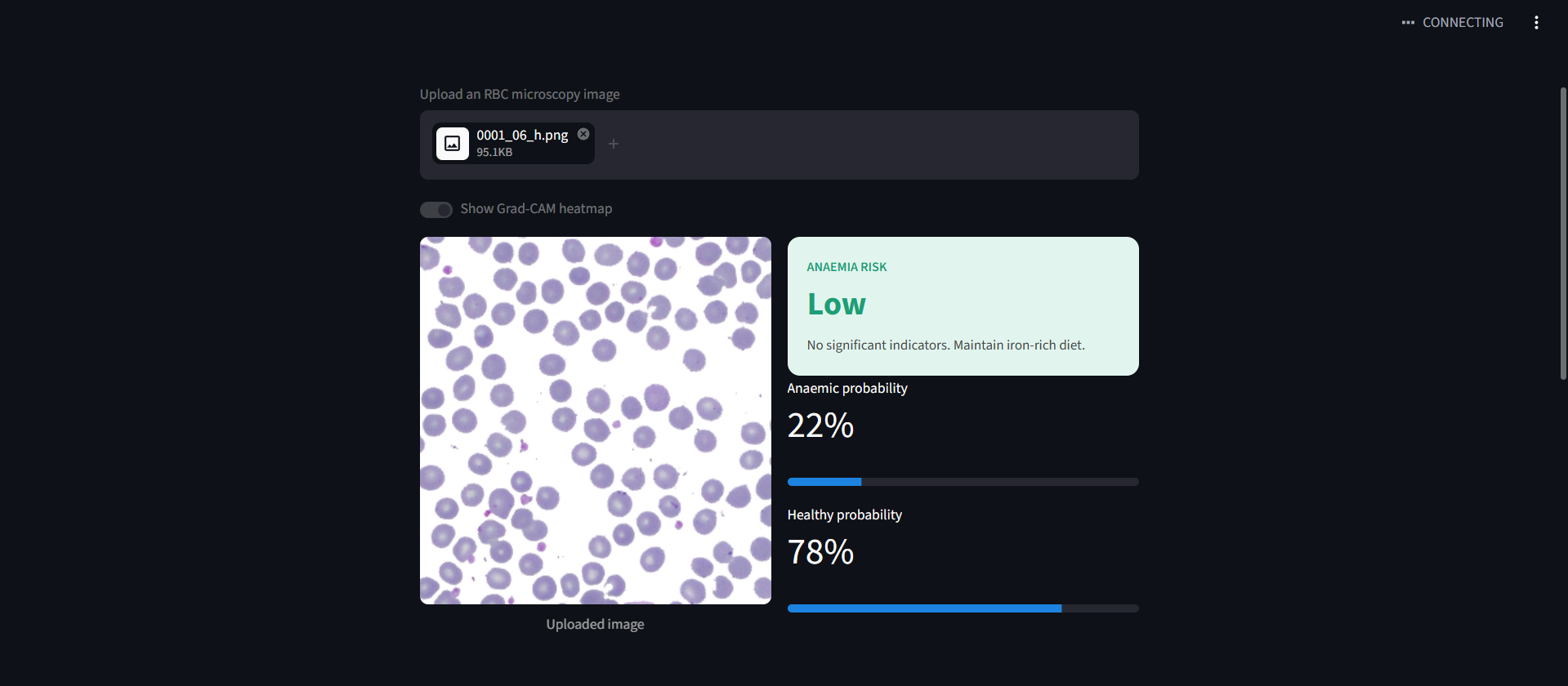
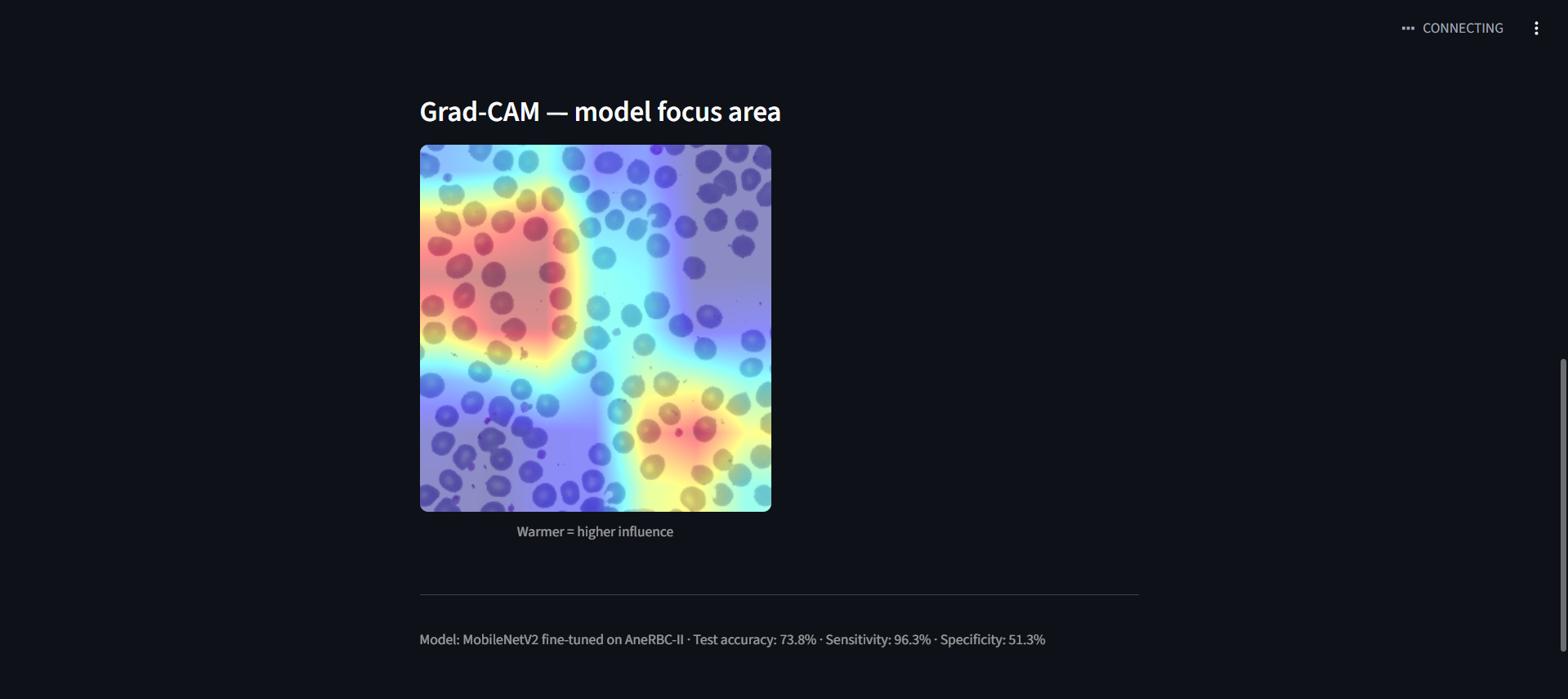
RedFlag AI is a rapid screening pipeline that analyzes blood smear microscopy images and instantly classifies them into three risk tiers: Low, Mid, or High risk. To ensure the model isn't a black box, it automatically overlays a visual heatmap explaining exactly which structural anomalies or cell boundaries influenced its medical decision.
How we built it
- Preprocessing & Augmentation of data
- Stage 1 and Stage 2 Training for MobileNetV2 deep learning algorithm
- Interface for users
Challenges we ran into
The Specificity Bottleneck: Early iterations hit high accuracy but a dangerously low specificity (51.3%), meaning the model was overly aggressive in flagging healthy cells as abnormal. Meticulously tuning decision boundaries was required to stabilize predictions.Environment Rigidness: Standard Python document layout packages threw persistent pathing constraints during documentation assembly. We overcame this by writing custom, responsive HTML layouts and compiling them directly through high-grade paged print utilities.
Accomplishments that we're proud of
Engineered a working cross-platform screening prototype from scratch in a limited development window. Achieved an excellent clinical Sensitivity score of 96.3%, successfully ensuring that true anemic profiles are reliably caught by the algorithm. Successfully extracted deep model gradients using Grad-CAM to produce human-interpretable heatmaps for medical accountability.
What we learned
Prioritizing Safety over Balance: Medical data is inherently unbalanced. We learned to combat this by implementing a custom WeightedCrossEntropyLoss function, applying a 2x times cost penalty multiplier on False Negatives. This mathematically forced the network to prioritize patient safety.
What's next for RedFlagAI
We want to expand the network's capabilities beyond cell classification by integrating an upstream object detection layer.

Log in or sign up for Devpost to join the conversation.