-
-
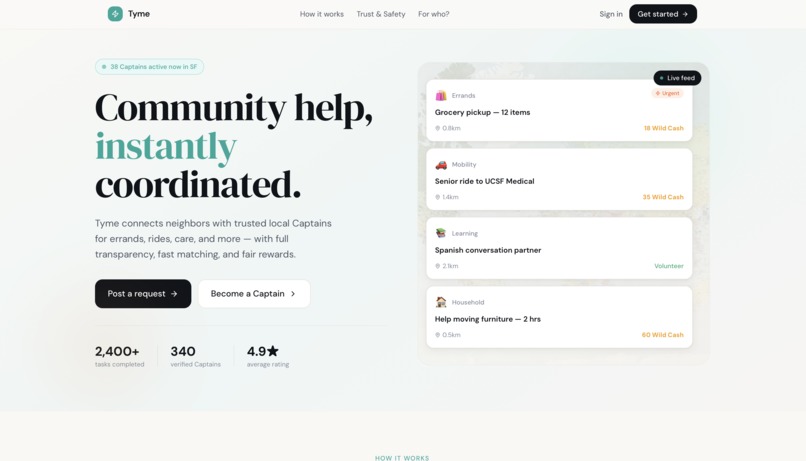
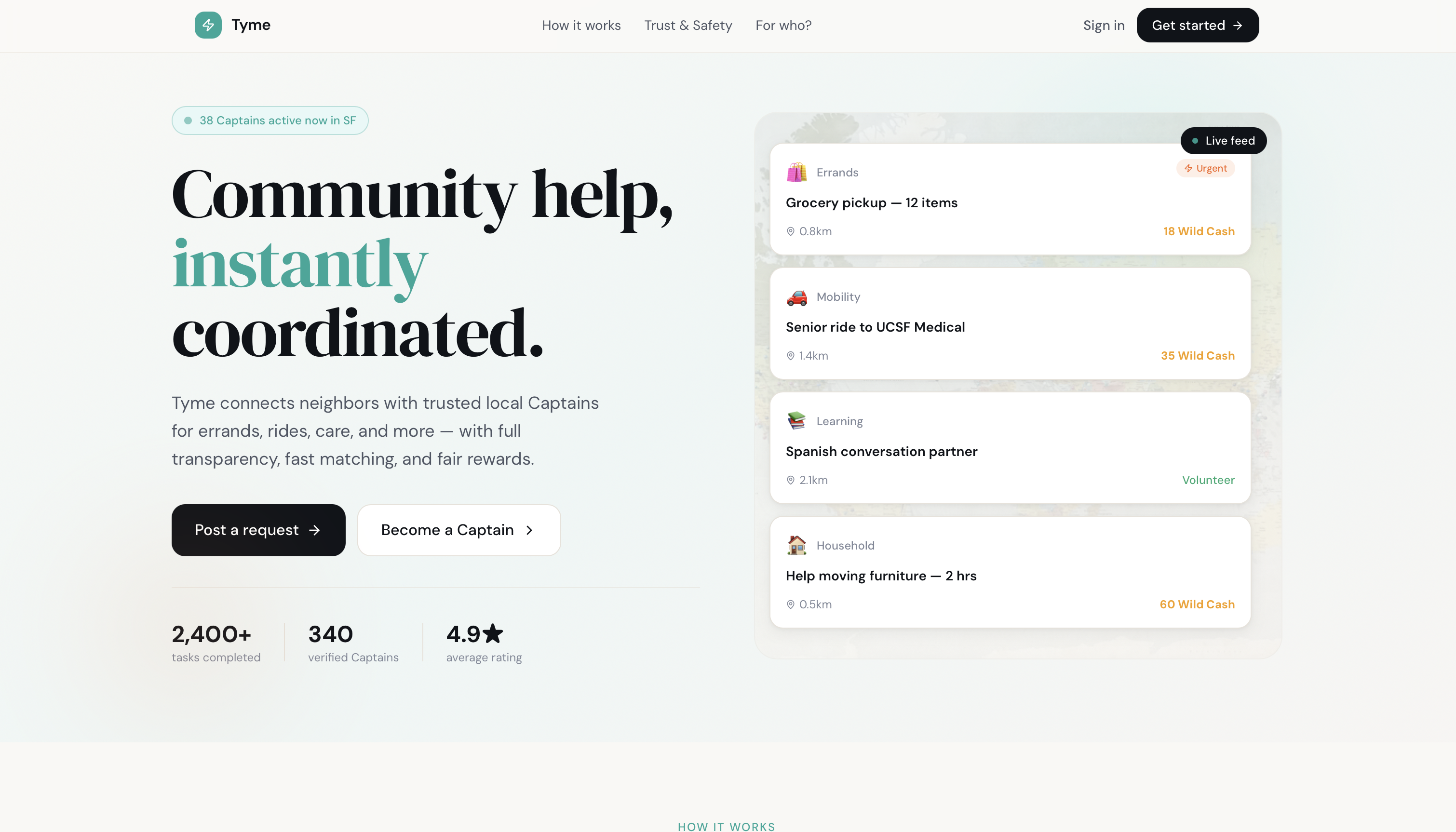
Landing Page
-
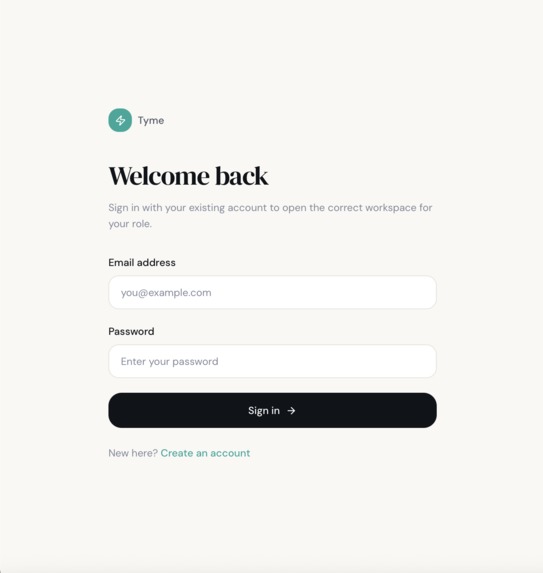
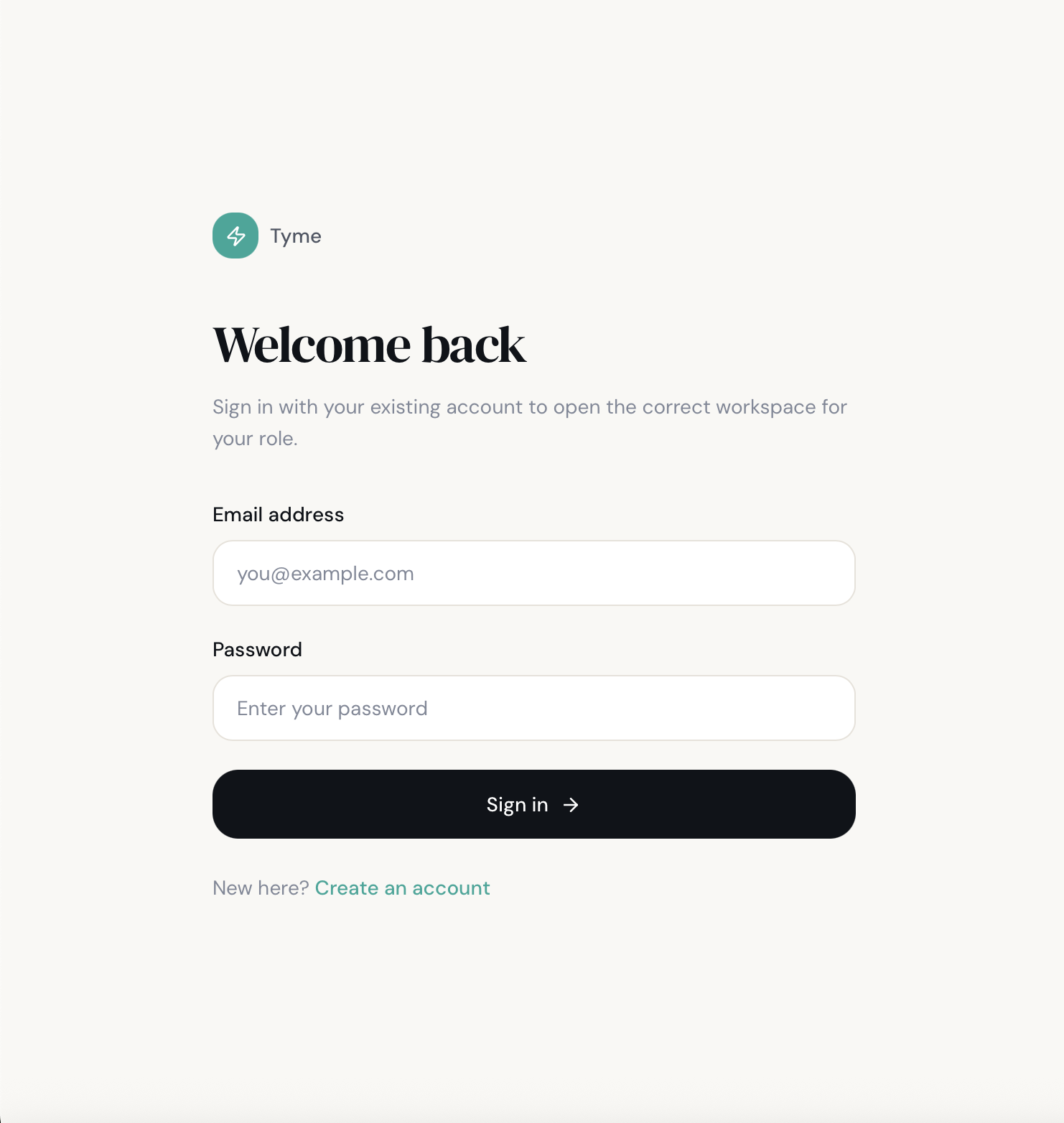
Login Page
-
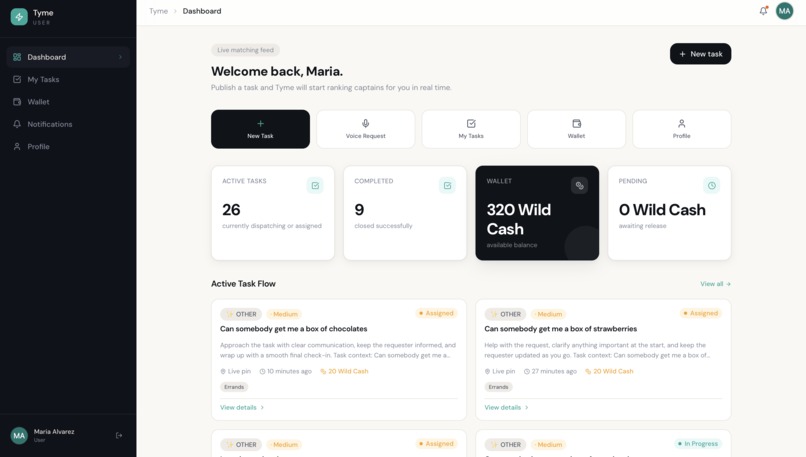
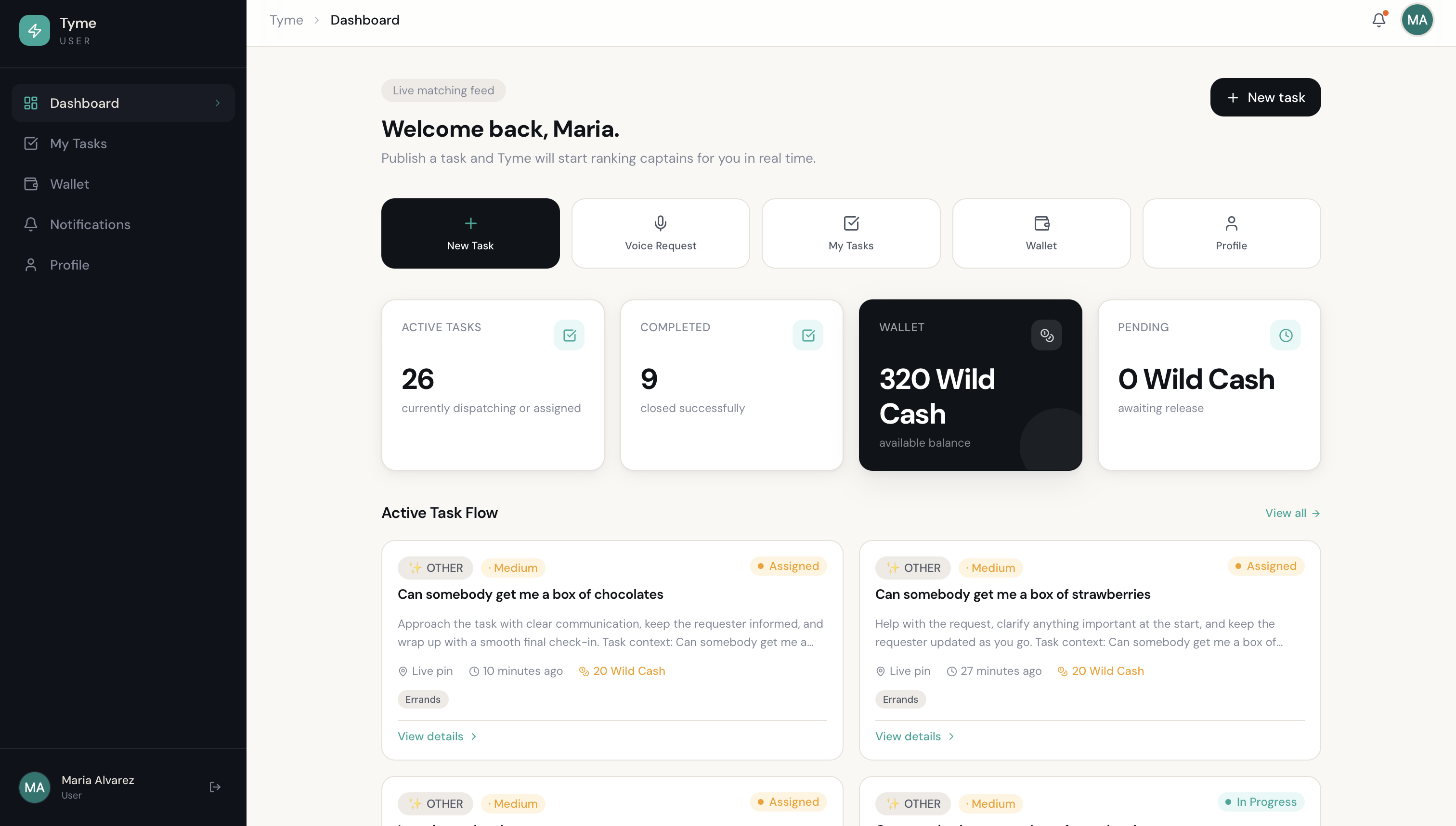
User Dashboard
-
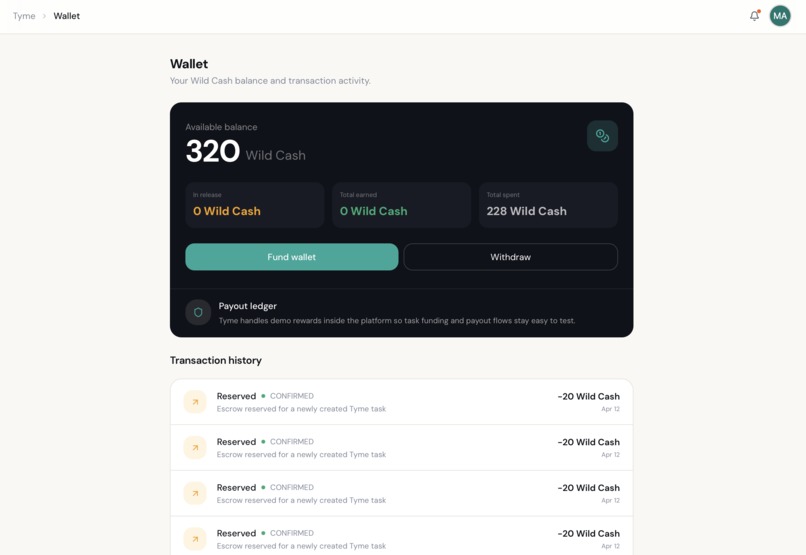
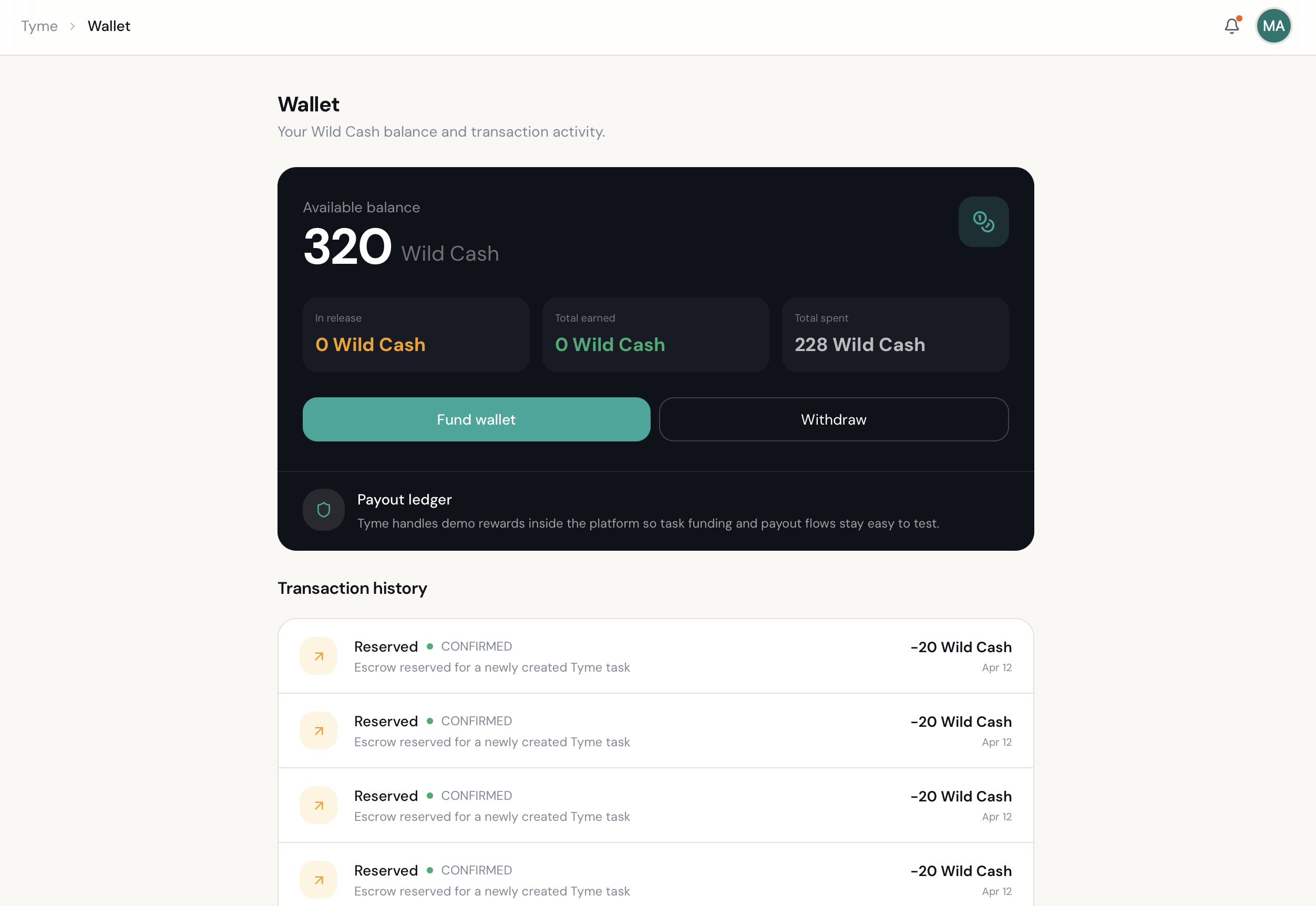
User Wallet
-
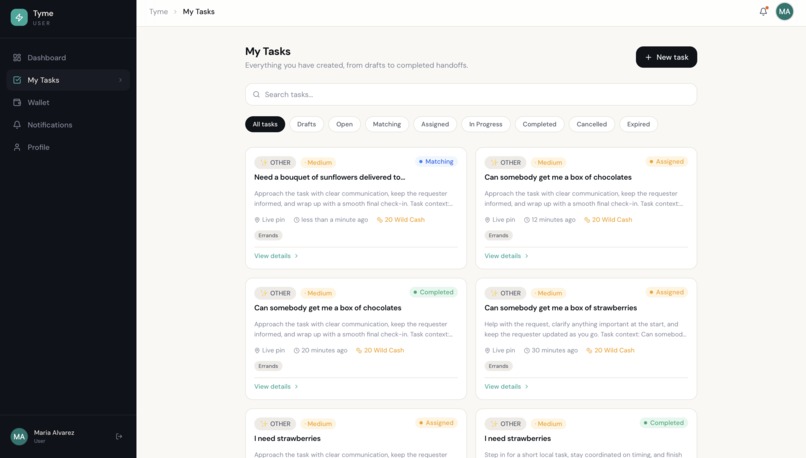
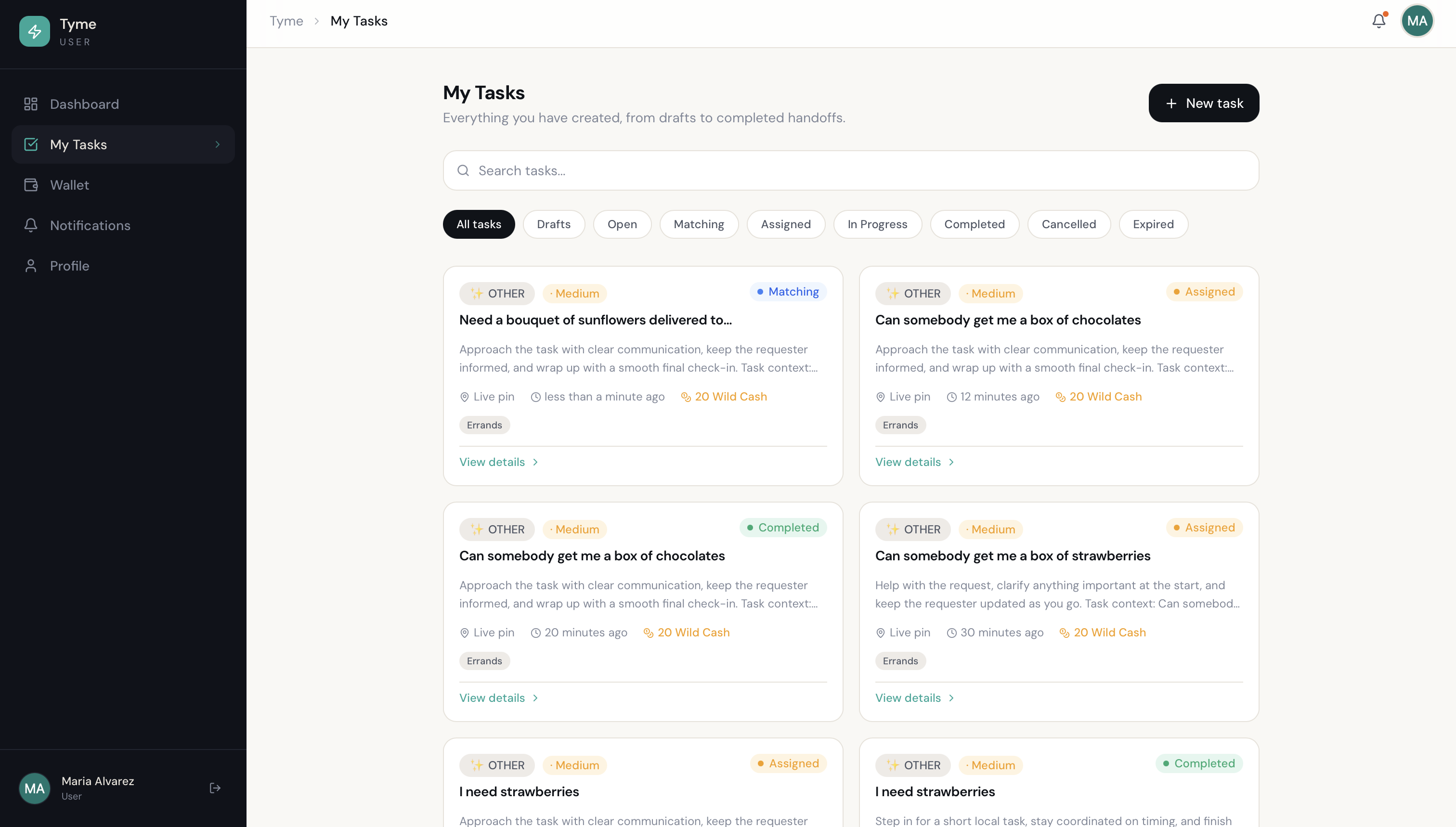
My tasks
-
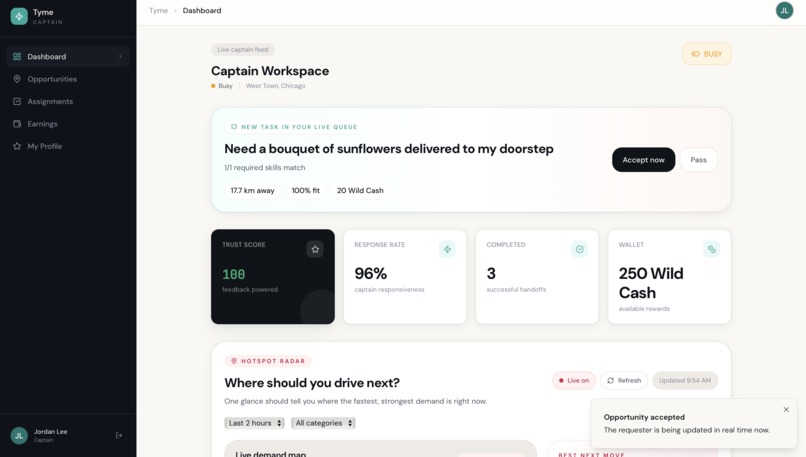
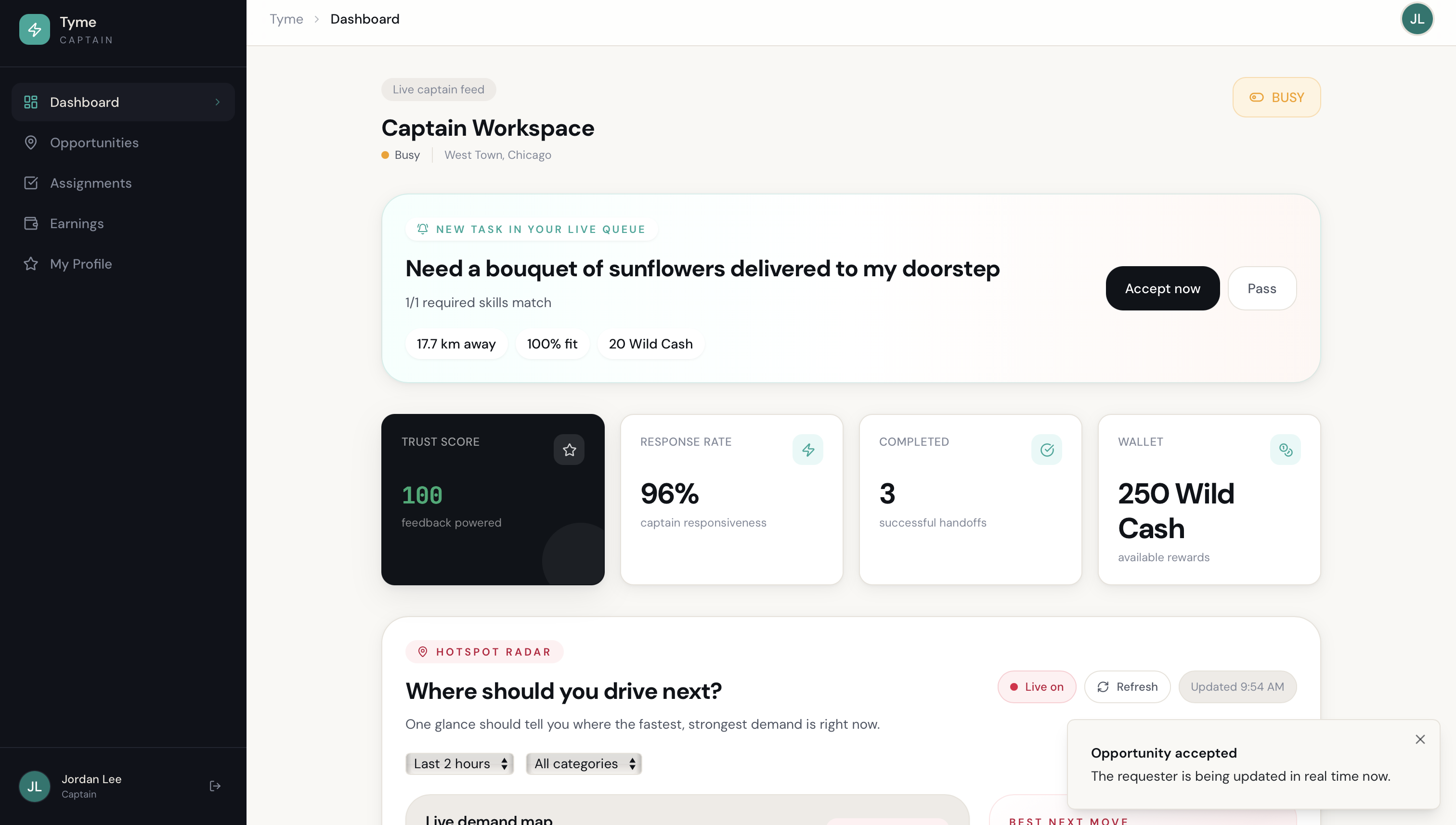
Captain Workspace
-
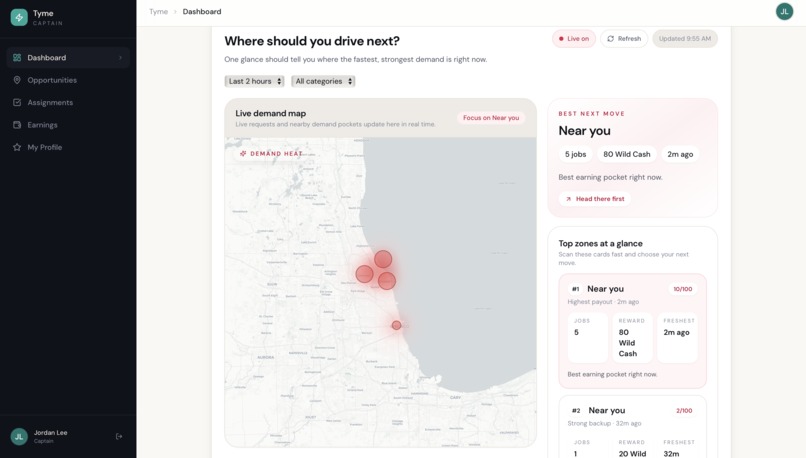
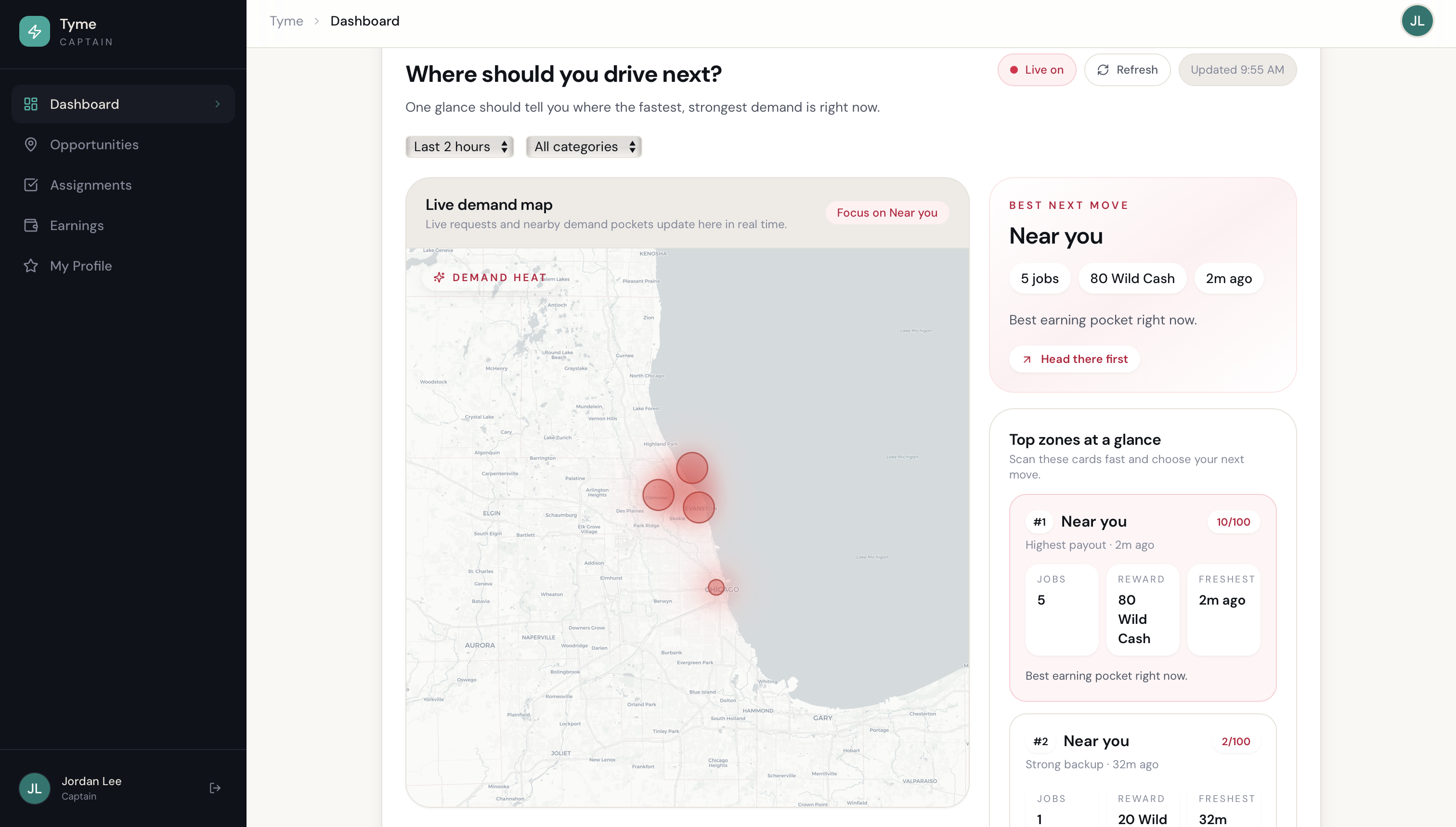
User Heatmap
-
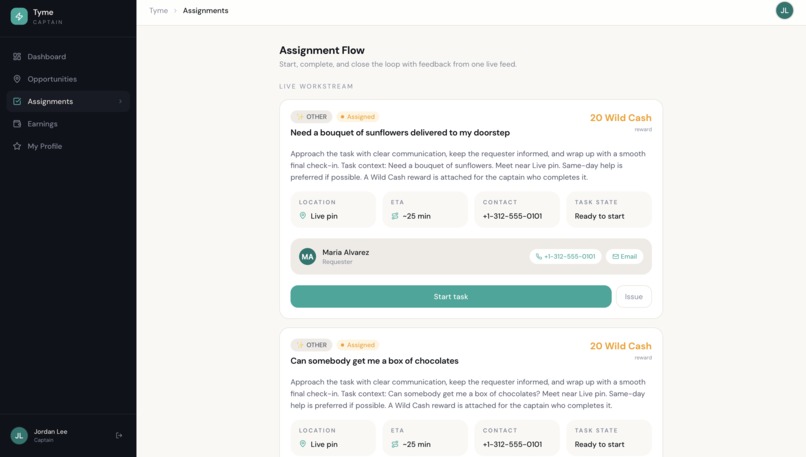
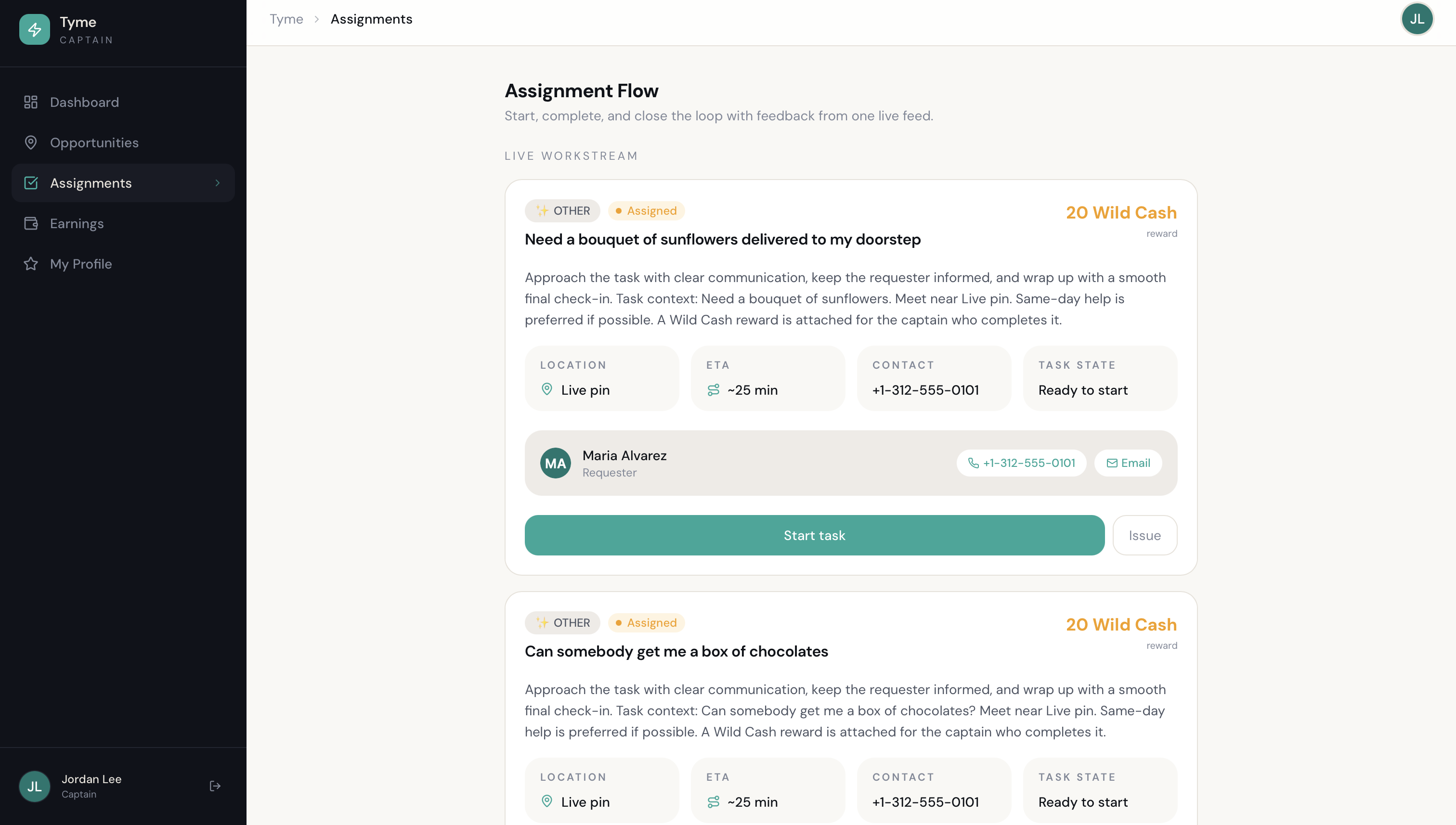
Assignments
-
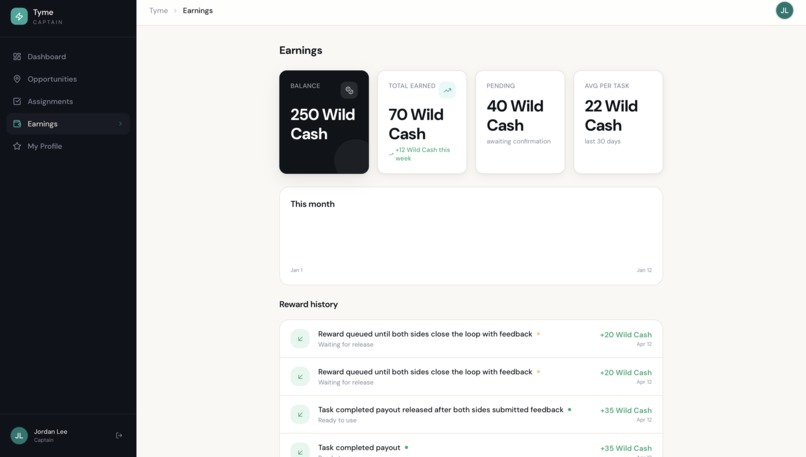
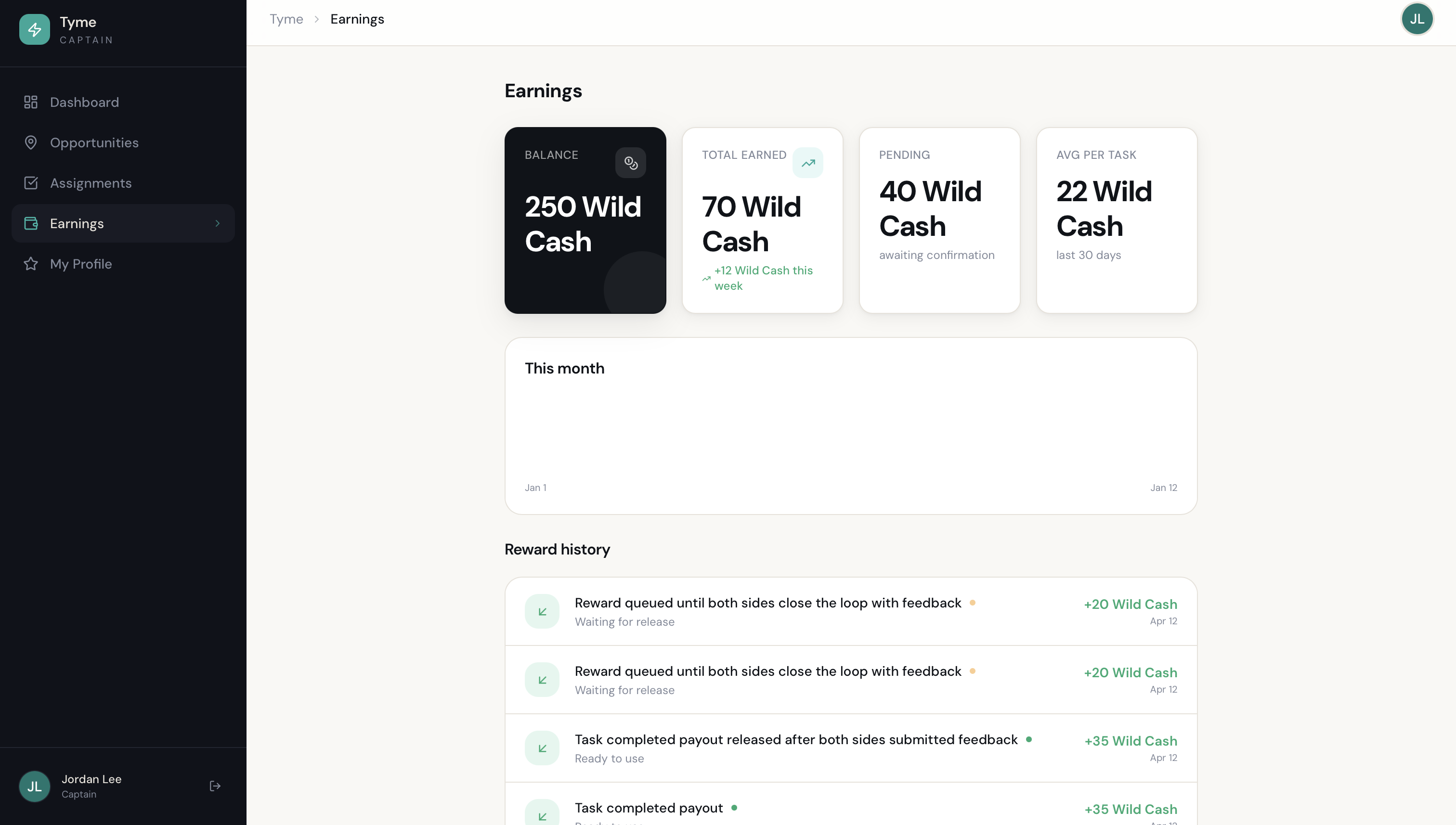
Captain Earning
-
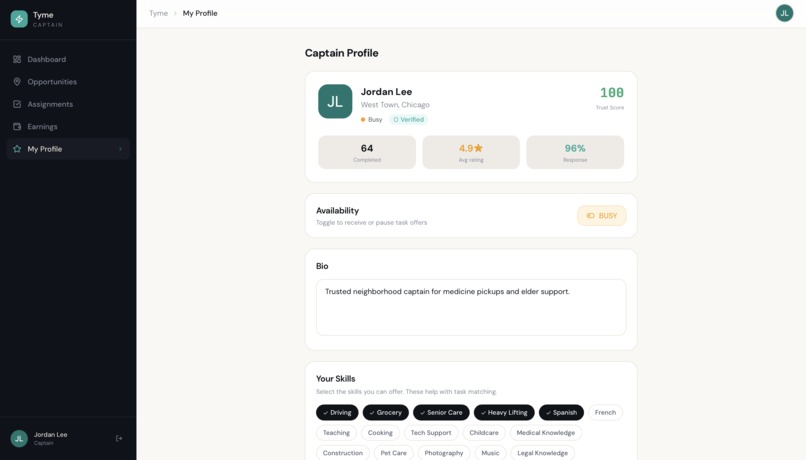
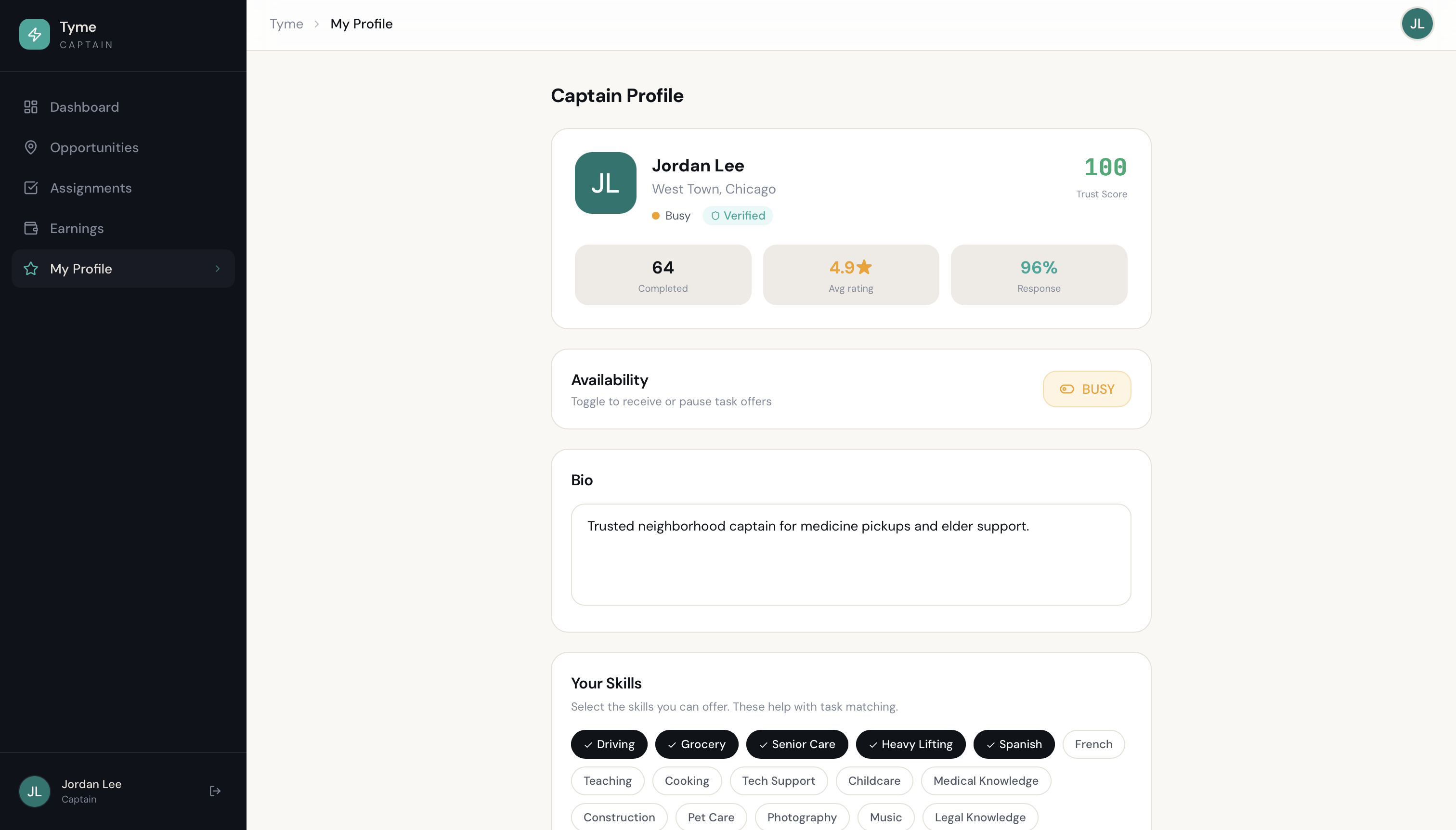
Captain Profile
Inspiration
We were inspired by a very simple but important problem: a lot of people need small, urgent, everyday help, but there is no lightweight system that makes asking for that help feel immediate, trusted, and organized. We wanted to build something that feels as fast and intuitive as booking a ride, but for local assistance.
Tyme came from that idea. We imagined a platform where someone can quickly create a task, nearby trusted captains can see it in real time, and both sides can track the workflow from request to completion. We were especially motivated by situations like medicine pickup, mobility support, errands, and other time-sensitive tasks where speed, clarity, and trust matter.
What it does
Tyme is a real-time local help platform.
Users can create a task either manually or with voice input. The platform helps structure that request, suggest skills, classify it into the right category, and prepare it for matching. Once the task is submitted, captains nearby are ranked and shown the opportunity in real time.
Captains can accept or pass on incoming tasks, view live opportunities around them, track active assignments, and complete work through a dedicated workflow. Users can see when their task is live, when it has been picked up, and when it is completed.
At the end of the workflow, both sides can leave feedback, which improves trust and helps the system make better recommendations over time. We also built a demo wallet and reward flow using Wild Cash to simulate incentives and payouts in the platform.
How we built it
We built Tyme as a full-stack web application with a role-based architecture for users, captains, and admins.
On the frontend, we created a custom multi-page product experience with dashboards, task creation, captain opportunity feeds, live assignment views, wallet screens, and admin flows. We focused heavily on making the UX feel polished, responsive, and real-time rather than like a static prototype.
On the backend, we implemented authentication, task creation, captain matching, assignment management, feedback handling, wallet flows, and API routes that connect the full user journey. We used a relational database structure to support users, tasks, offers, assignments, ratings, wallets, and transactions.
We also integrated AI-assisted task support so the platform can help clean up user intent, infer task details, suggest categories and skills, and make task creation easier. Voice input was added as another entry point so users can speak naturally instead of filling every field manually.
Finally, we deployed the system so the experience works as a live product rather than only as a local demo.
Challenges we ran into
One of the biggest challenges was making the workflow feel truly live. It was not enough to create isolated screens; the hard part was making sure the user, captain, and backend were all synchronized as tasks moved from creation to matching to assignment to completion.
Another challenge was balancing AI assistance with reliability. We wanted AI to help users create better tasks, but we also learned that the experience has to stay stable even when AI output is imperfect. That meant designing strong fallback behavior and making sure the app still felt smooth and useful.
We also spent a lot of time on deployment, environment setup, real-time updates, and making the UI feel intentional instead of generic. Building something that looks polished is one challenge. Making it work end to end with auth, data, and live state changes is a very different one.
Accomplishments that we're proud of
We are proud that Tyme is not just a concept deck or a mockup. It has a real end-to-end workflow.
A user can create a task, captains can receive and respond to it, assignments can move through live states, both sides can leave feedback, and the platform tracks rewards and trust signals across the system. We are also proud of the role-based experience, because users, captains, and admins each have a meaningful interface designed for their specific workflow.
We are especially proud of how much product polish we were able to add under hackathon time pressure. The project combines live task coordination, AI-assisted task creation, mapping, captain ranking, feedback loops, and a working deployed experience in one cohesive system.
What we learned
We learned that building a real product experience requires much more than connecting screens. State synchronization, deployment, trust, and workflow clarity matter just as much as features.
We also learned that AI works best when it assists the user instead of trying to take over the entire experience. The strongest use of AI in our project was helping structure messy human input into something the platform could act on more effectively.
On the engineering side, we learned a lot about designing full-stack systems under pressure: handling real-time updates, role-based auth, database-driven workflows, API design, deployment pipelines, and UI decisions that directly affect usability.
What's next for Tyme
Next, we want to make Tyme even more production-ready.
Our biggest next step is upgrading the live matching system from frequent refreshes to a stronger real-time architecture with sockets or event streaming, so the captain and user experience feels even more instant. We also want to improve trust and safety features, including stronger captain verification, notification systems, and clearer issue escalation flows.
On the AI side, we want to make the assist layer smarter at understanding spoken requests, extracting intent, and recommending better matches without adding friction. We also want to improve location handling, route-aware ETA estimates, and richer demand intelligence on the captain side.
Longer term, we see Tyme becoming a practical platform for real local coordination, where urgent everyday help can be requested, matched, tracked, and completed with the same confidence people expect from the best real-time consumer apps.
Built With
- browserstack
- bycrypt
- css
- elevenlab
- framer
- gemini
- javascript
- jose
- leaflet.js
- lucide
- neon
- next.js
- node.js
- postgresql
- prisma
- radix
- react
- react-native
- tailwind
- vercel
- vite

Log in or sign up for Devpost to join the conversation.