-
-
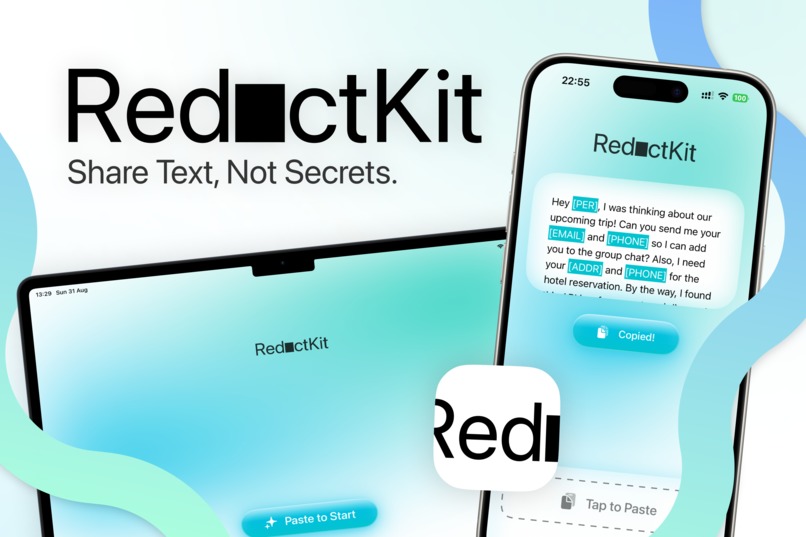
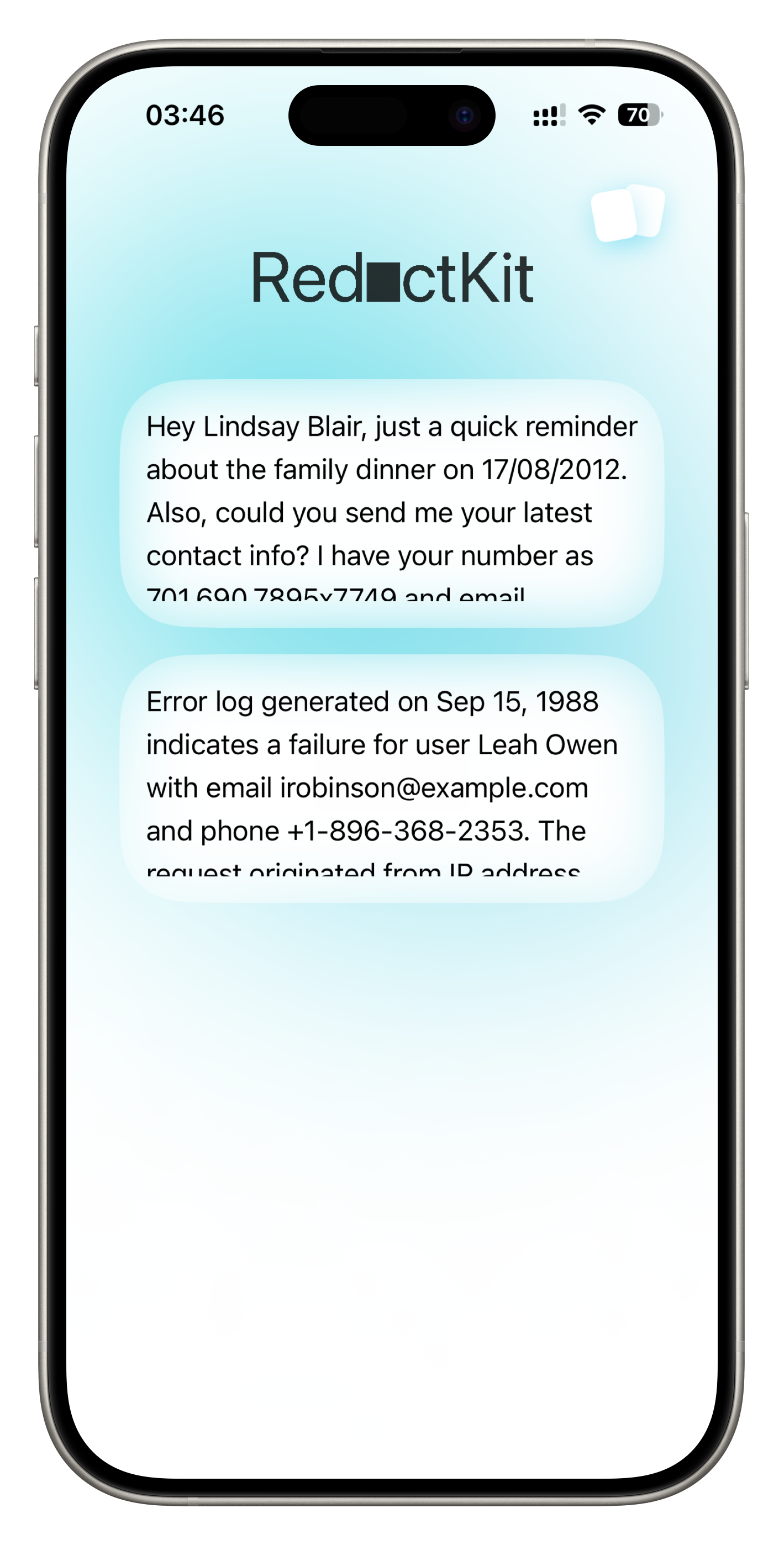
Thumbnail
-
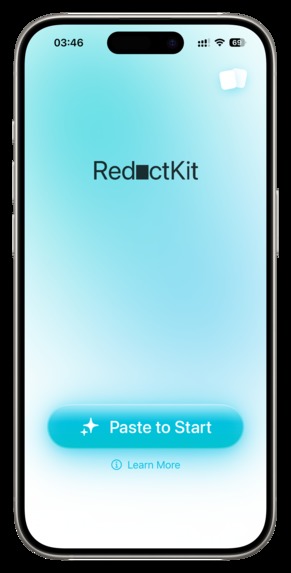
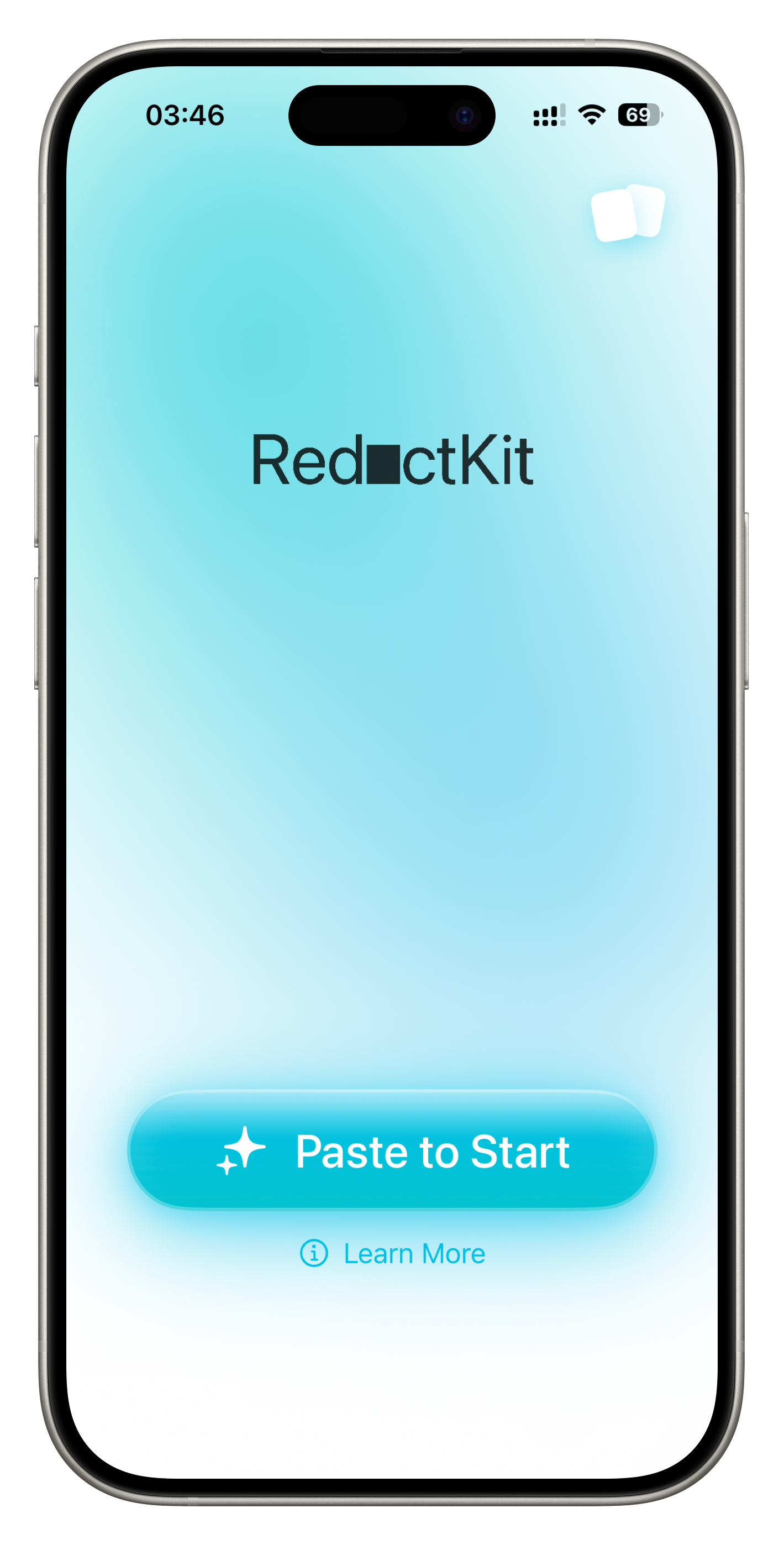
Home Screen
-
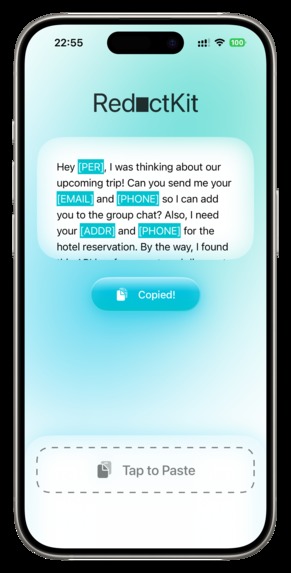
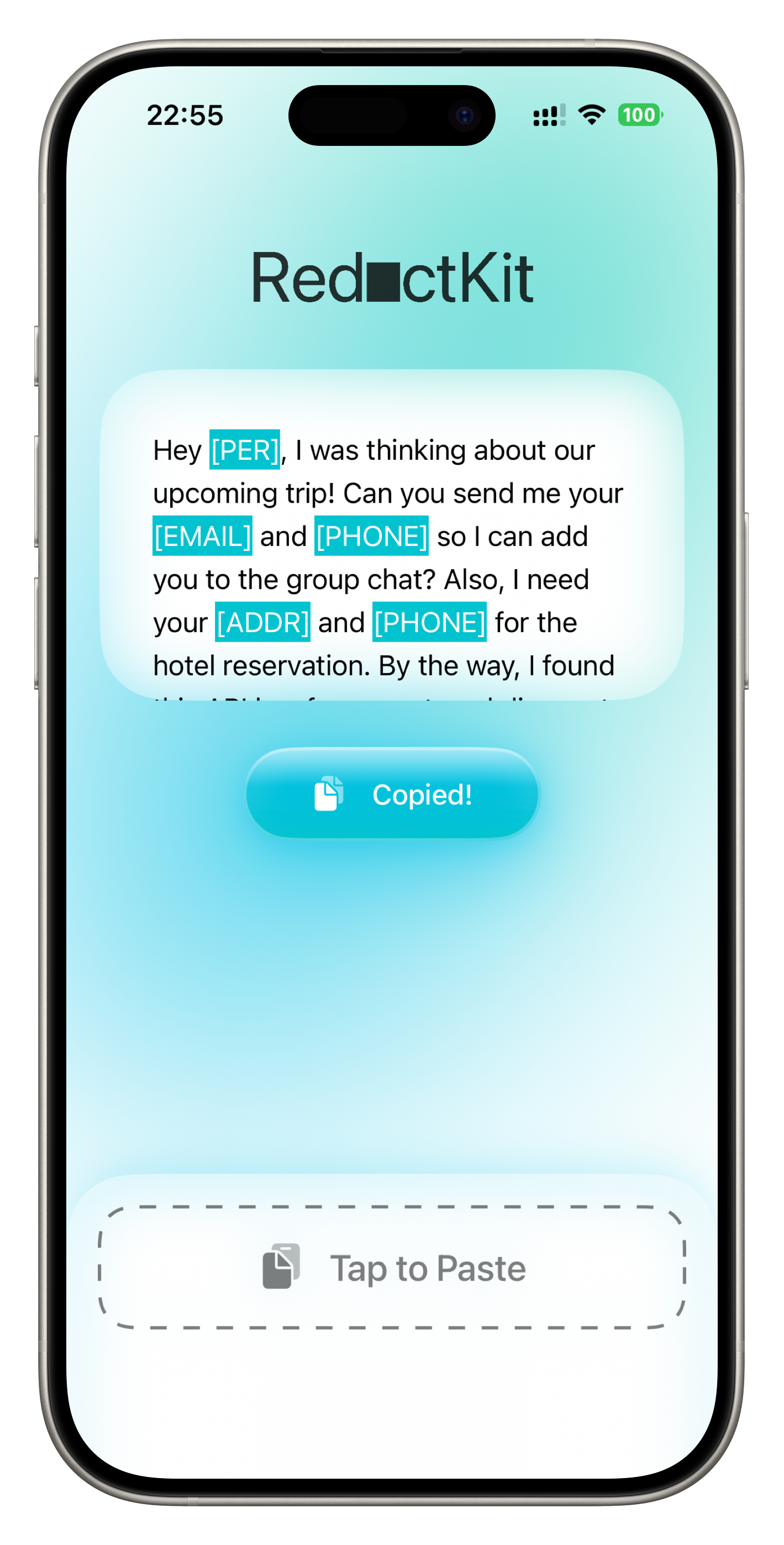
Redacting Text
-
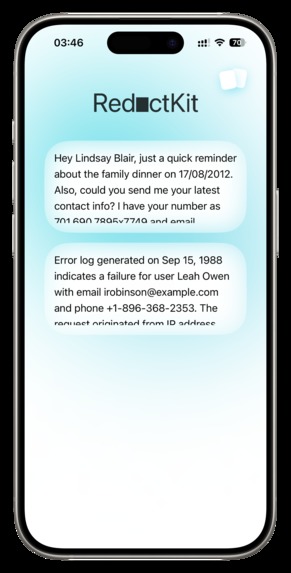
History Page
-
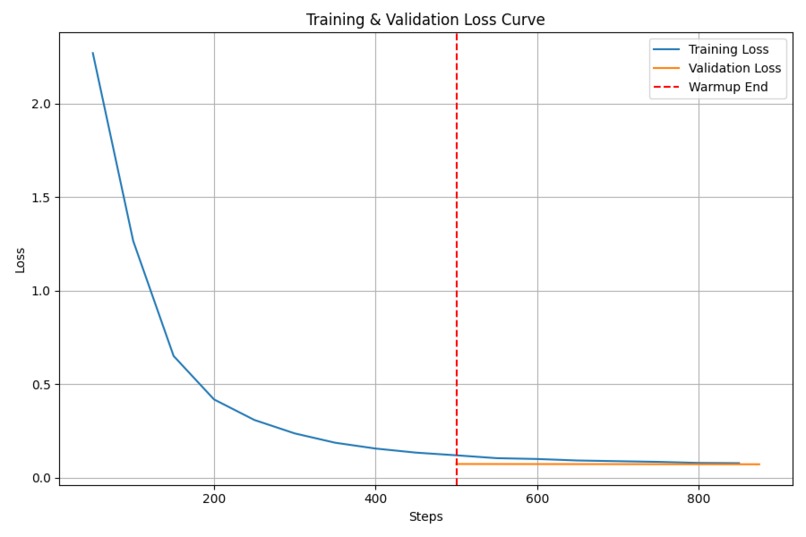
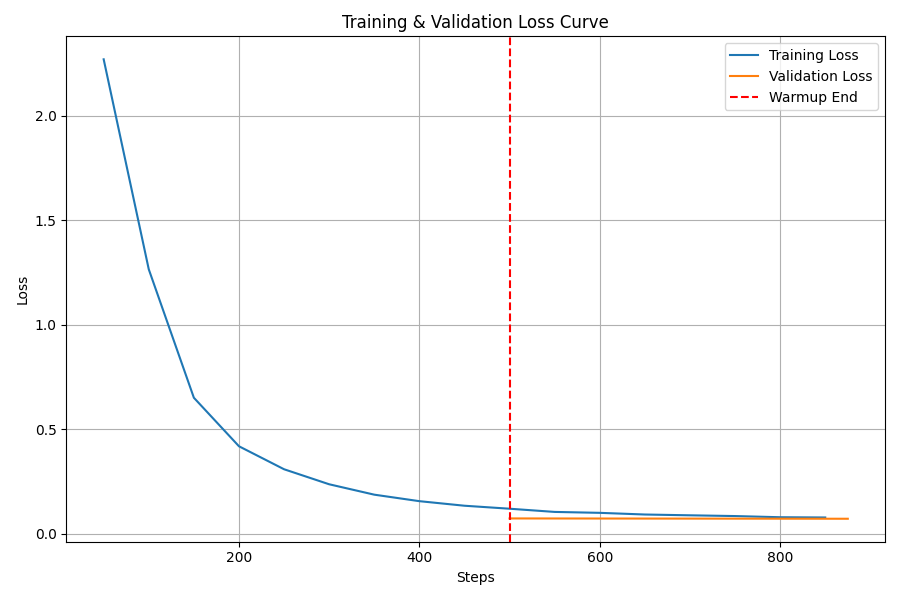
Training and Validation Loss Curve
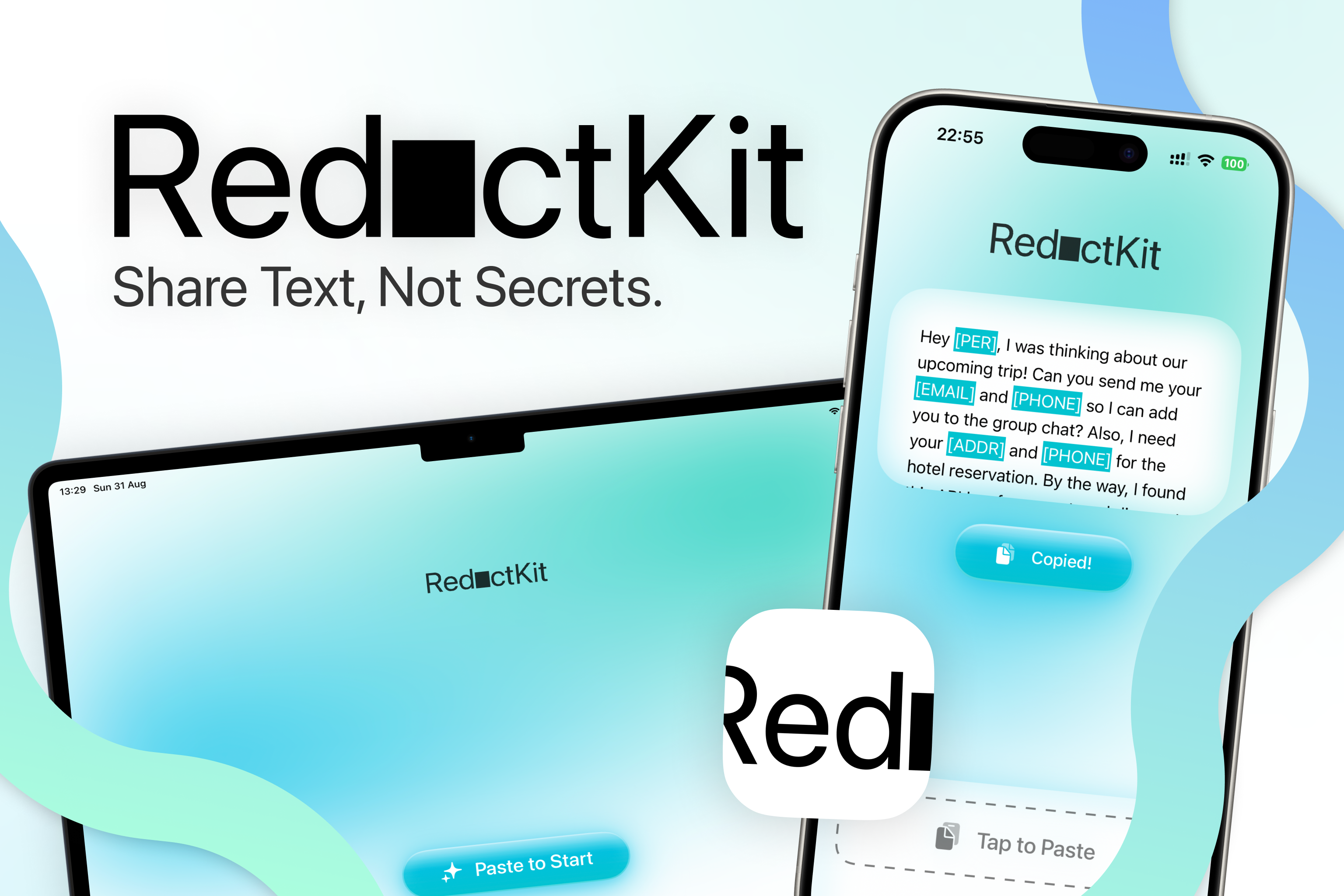
RedactKit - Share Text, Not Secrets
Share personal info without exposing sensitive data - chat safely with AI using locally-masked text, get your original secrets back when copying responses.
- Event: TikTok TechJam 2025 Hackathon
- Track: #7 - Privacy Meets AI: Building a Safer Digital Future
- Team Kopibara: Supachod Trakansirorut, Phanuphat Srisukhawasu
- Repositories: Swift | Python
Problem Statement
In today’s digital interactions, users often share sensitive personal information, known as Personally Identifiable Information (PII), with AI assistants, inadvertently exposing themselves to potential privacy risks.
RedactKit addresses this critical concern by providing a robust solution that detects and redacts PII locally on the user’s device, ensuring that no sensitive data is transmitted to external AI services. This approach upholds user privacy without compromising the functionality and benefits of AI assistance.
Project Overview
RedactKit is composed of two integrated components working in synergy:
- Python Machine Learning Pipeline: This component is responsible for training bespoke models specifically tuned to identify various types of PII. By leveraging lightweight machine learning models, it produces highly accurate detection models ready for deployment.
- iOS SwiftUI Application: This user-facing app applies the trained model to perform real-time PII detection and redaction directly on the device. It provides a seamless and interactive interface for users, ensuring sensitive data is masked immediately as text is entered or shared. Currently support iOS, iPadOS, macOS, and VisionOS!
RedactKit uses a combination of Named Entity Recognition (NER) and machine learning algorithms to identify multiple PII categories with outstanding precision, achieving an F1 score of over 95% on test datasets.
Core Feature: Intelligent Restoration ✨
RedactKit also includes a unique functionality that allows previously redacted PII to be injected back into the chatbot’s responses when users copy text. This ensures that while the PII is protected during interaction and transmission, it can be restored in final output if required for subsequent use, maintaining both privacy and convenience.
Supported PII Types
| Type | Examples | Detection Method |
|---|---|---|
| Person Names | John Doe, Sarah Smith | NER-based recognition |
| Email Addresses | [email protected] | Regex combined with NER |
| Phone Numbers | (555) 123-4567, +1-800-555-0199 | Regex combined with NER |
| Physical Addresses | 123 Main St, Anytown, CA 90210 | NER-based recognition |
| Social Security Numbers | 123-45-6789 | Regex combined with NER |
| Credit Card Numbers | 4111-1111-1111-1111 | Regex combined with NER |
| Dates | 01/15/1990, Jan 15, 1990 | Regex combined with NER |
| API Keys | sk-xxxx, AKIAxxxx | Regex-based validation |
Future of RedactKit
During this hackathon, we explored multiple ideas and use cases for RedactKit. Due to time constraints, some features remain as future improvements. Upcoming versions of RedactKit will focus on:
- Cross-platform support – Extending compatibility to Android (via Kotlin), iPadOS, and macOS with customized UIs for different use cases.
- Internationalization – Adding multilingual support beyond English.
- Expanded PII coverage – Moving beyond common PII types to include items such as passport numbers and flight details.
- Additional file formats – Supporting images and videos using OCR and object detection to identify and redact PII directly within visual content.
Development Matters
APIs Utilized
Employed OpenAI API to generate over 3,000 synthetic PII data samples (with placeholder), enhancing the diversity and quality of training data for the detection models, before injecting fake PII with Faker.
Assets
- Visual Components: Includes a professionally designed logo, app icons tailored for iOS, and SwiftUI interface components built with accessibility and an inclusive color palette in mind.
- Machine Learning Assets: CoreML model packaged as
PIIDetectionModel.mlpackage, NeuroBERT-Mini tokenizer for token handling, plus curated training datasets and model checkpoints.
Libraries and Frameworks
Python / Machine Learning
Faker~=37.6.0
openai~=1.102.0
evaluate~=0.4.5
datasets~=4.0.0
transformers~=4.56.0
coremltools~=8.3.0
numpy~=2.3.2
torch~=2.8.0
matplotlib~=3.10.6
iOS / Swift
- SwiftUI for declarative UI development
- CoreML for on-device ML inference
- Natural Language framework for text processing
- SwiftData for data persistence
- Foundation for core functionalities
Architecture
Machine Learning Pipeline
- Data Generation: Synthetic PII training datasets are created using a combination of OpenAI-generated samples and Faker library templates.
- Model Training: Fine-tuning the NeuroBERT-Mini model on the generated PII datasets to achieve optimal detection performance.
- Model Conversion: Transforming the trained PyTorch model into CoreML format for efficient on-device deployment.
- Validation: Model rigorously tested to deliver an F1 score of 99%, indicating near-perfect detection accuracy.
iOS Application
- Model Integration: The CoreML model is embedded within the app, enabling seamless real-time PII inference without network dependency.
- Text Processing: Implements tokenization and analysis in real-time to detect and redact PII as users interact with the app.
- User Interface: Built with SwiftUI to provide a smooth user experience enhanced by appealing animations.
- Data Persistence: Utilizes SwiftData to securely manage user data within the app environment.
Resources
- Swift Repository: github.com/Spchdt/RedactKit
- Python Repository: github.com/oadultradeepfield/redactkit-on-device-model
- Training Data: Google Drive Link
- CoreML Model Package: Located as
PIIDetectionModel.mlpackagewithin the Python repository


Log in or sign up for Devpost to join the conversation.