Inspiration
Throughout the HSC, we experienced constant pressure to have our practice responses marked, often receiving feedback on essays late into the night or even early morning. The delay between completing a response and receiving meaningful feedback made it difficult to iterate quickly. Ideally, students should be able to attempt multiple questions in rapid succession, learning and improving in real time rather than waiting days for guidance.
What it does
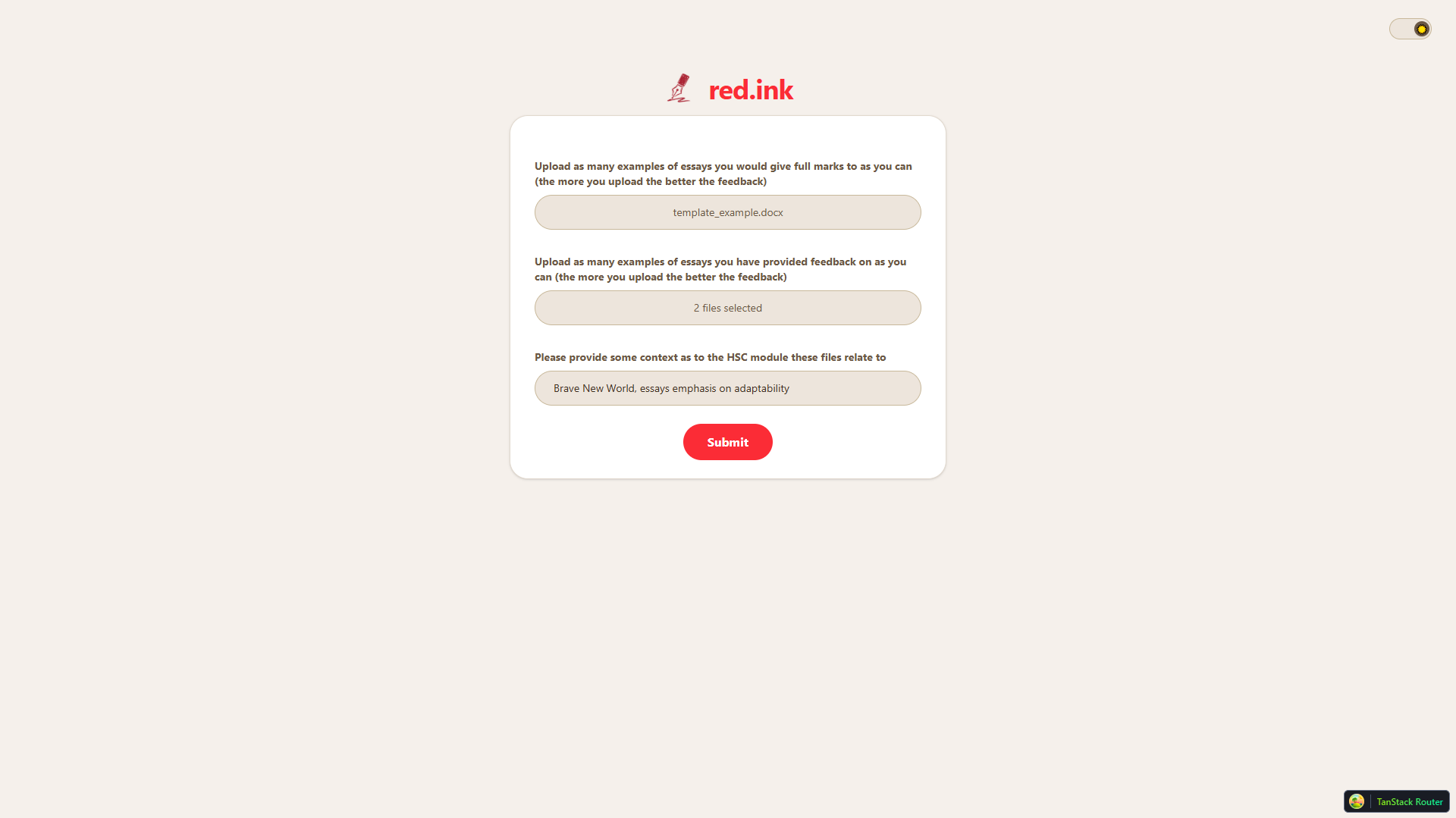
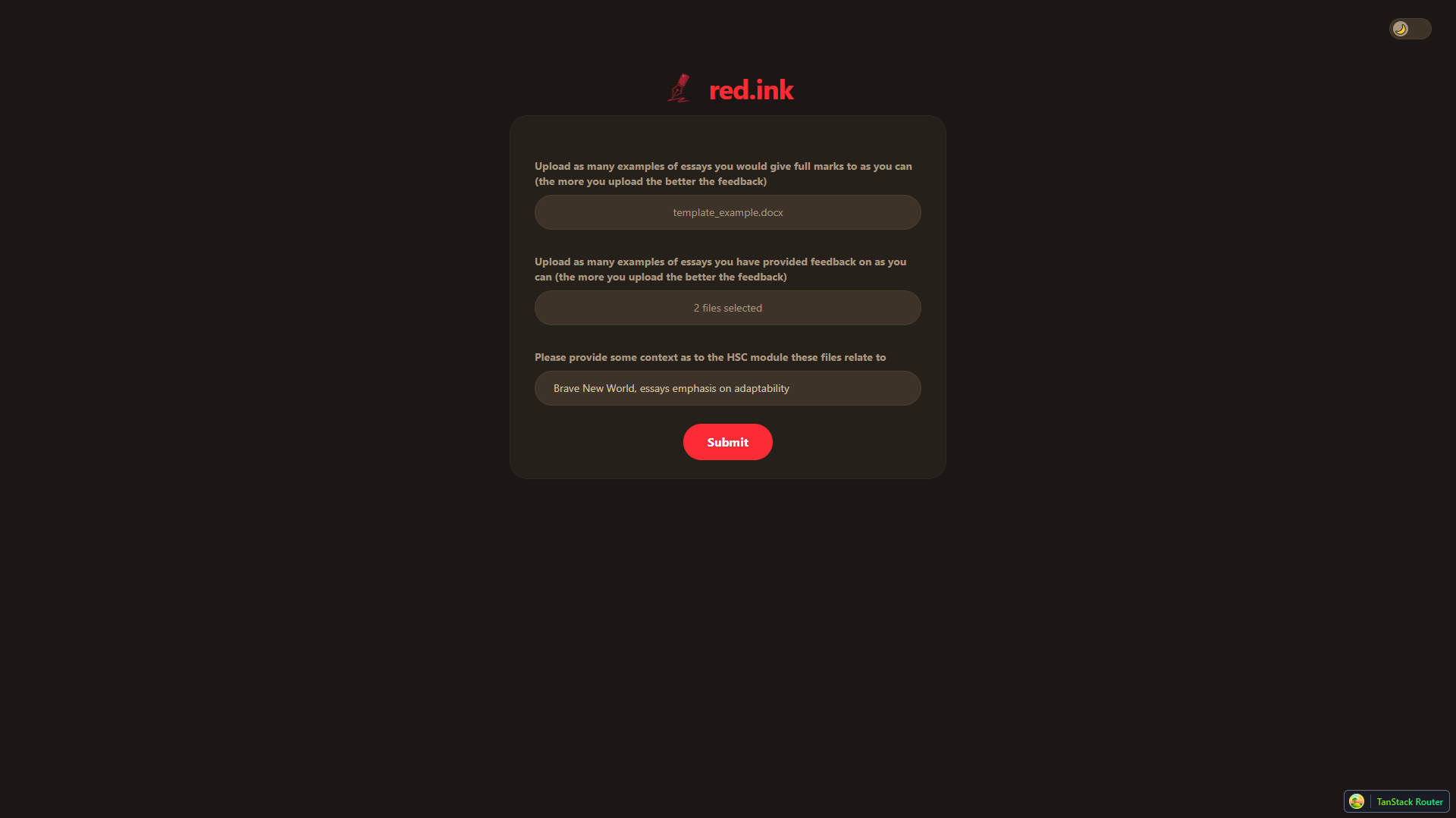
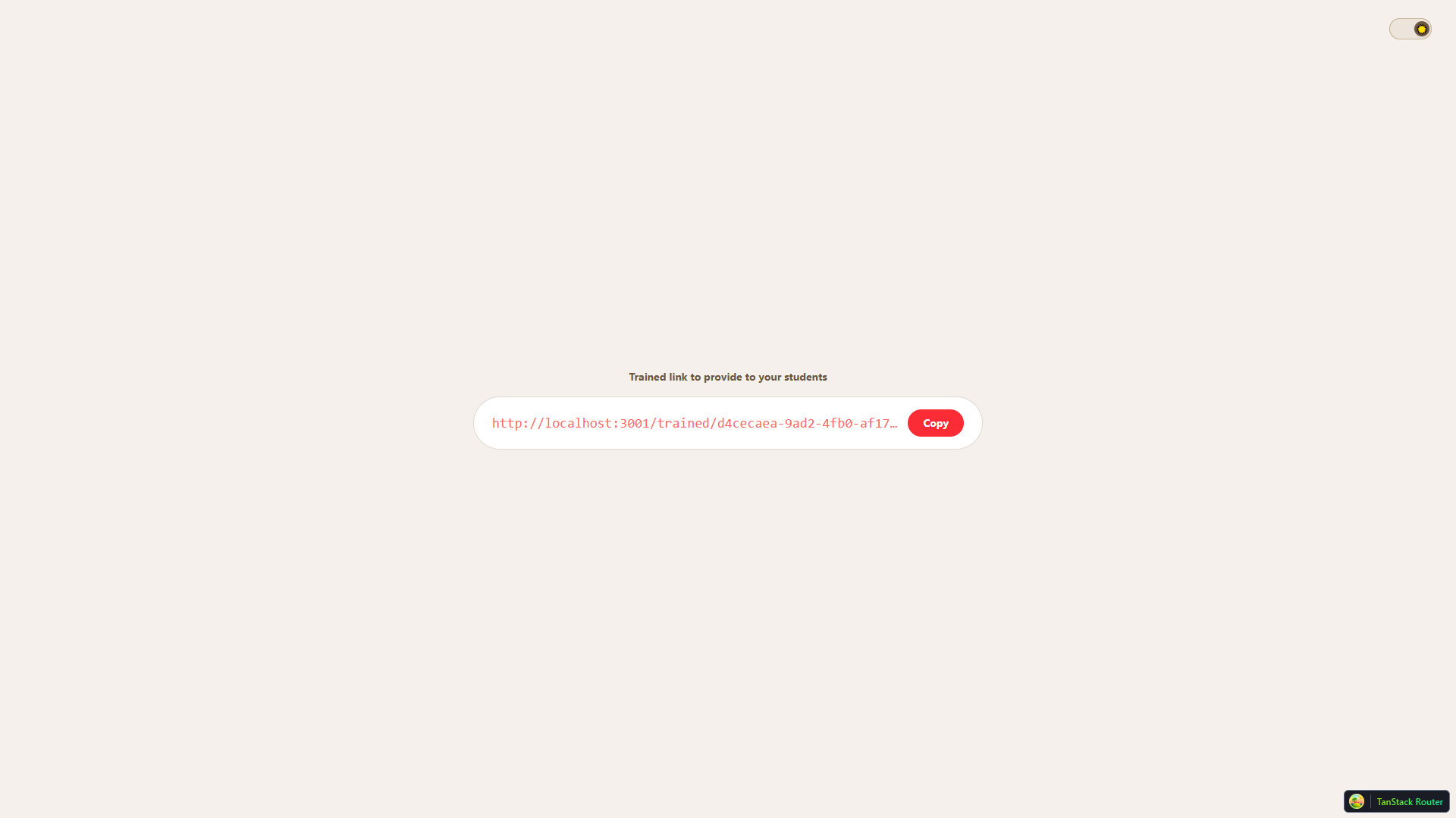
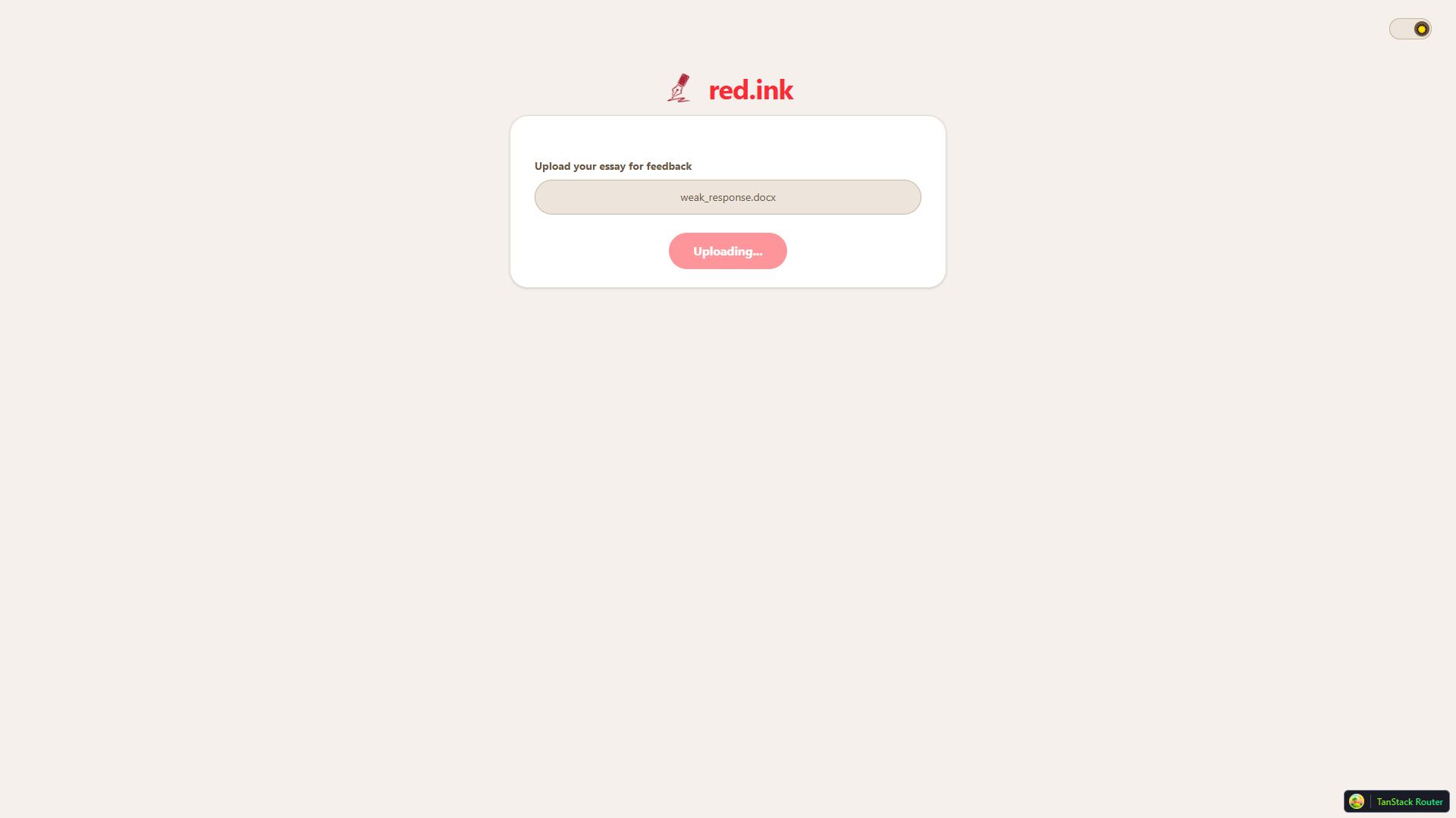
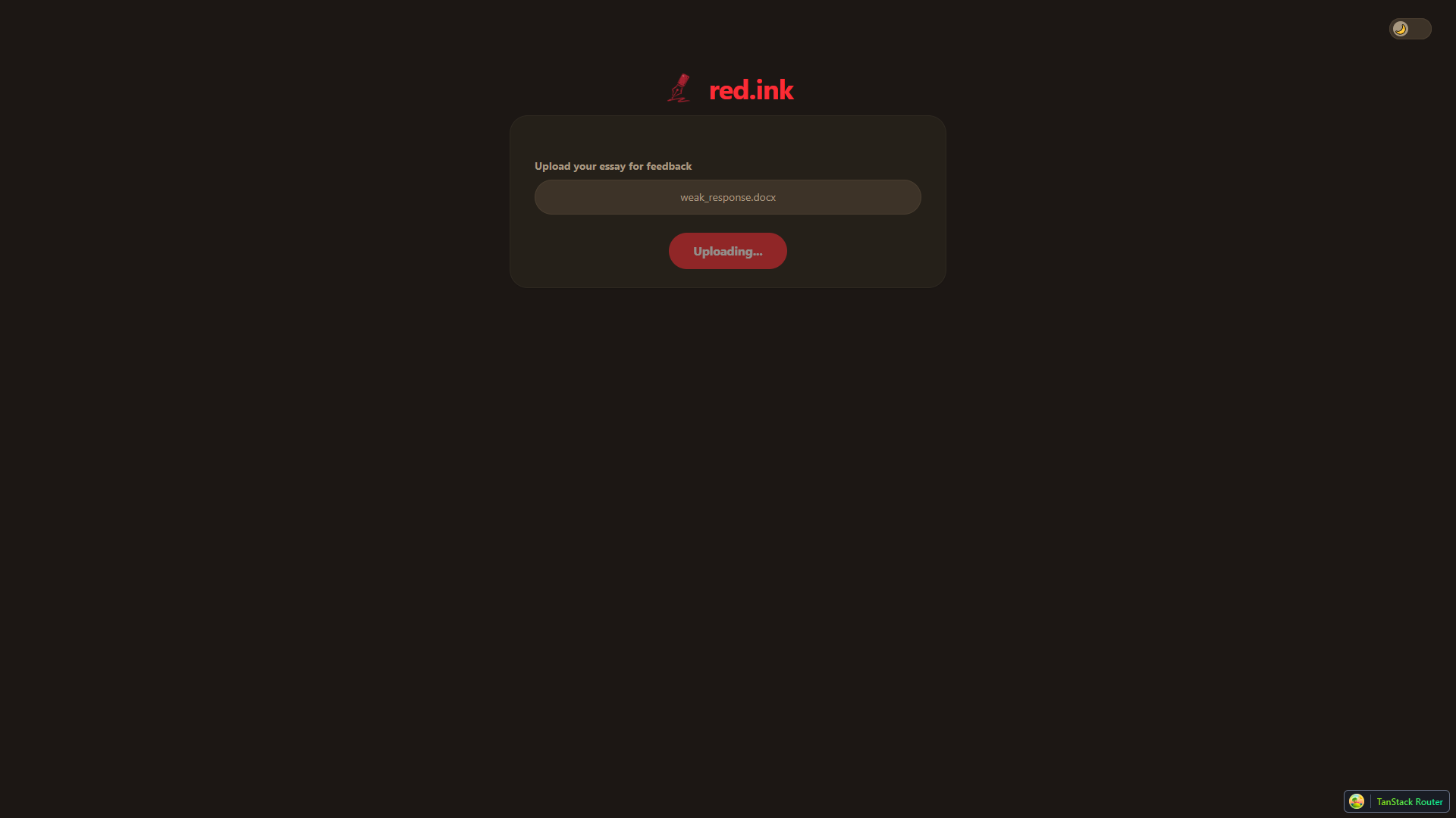
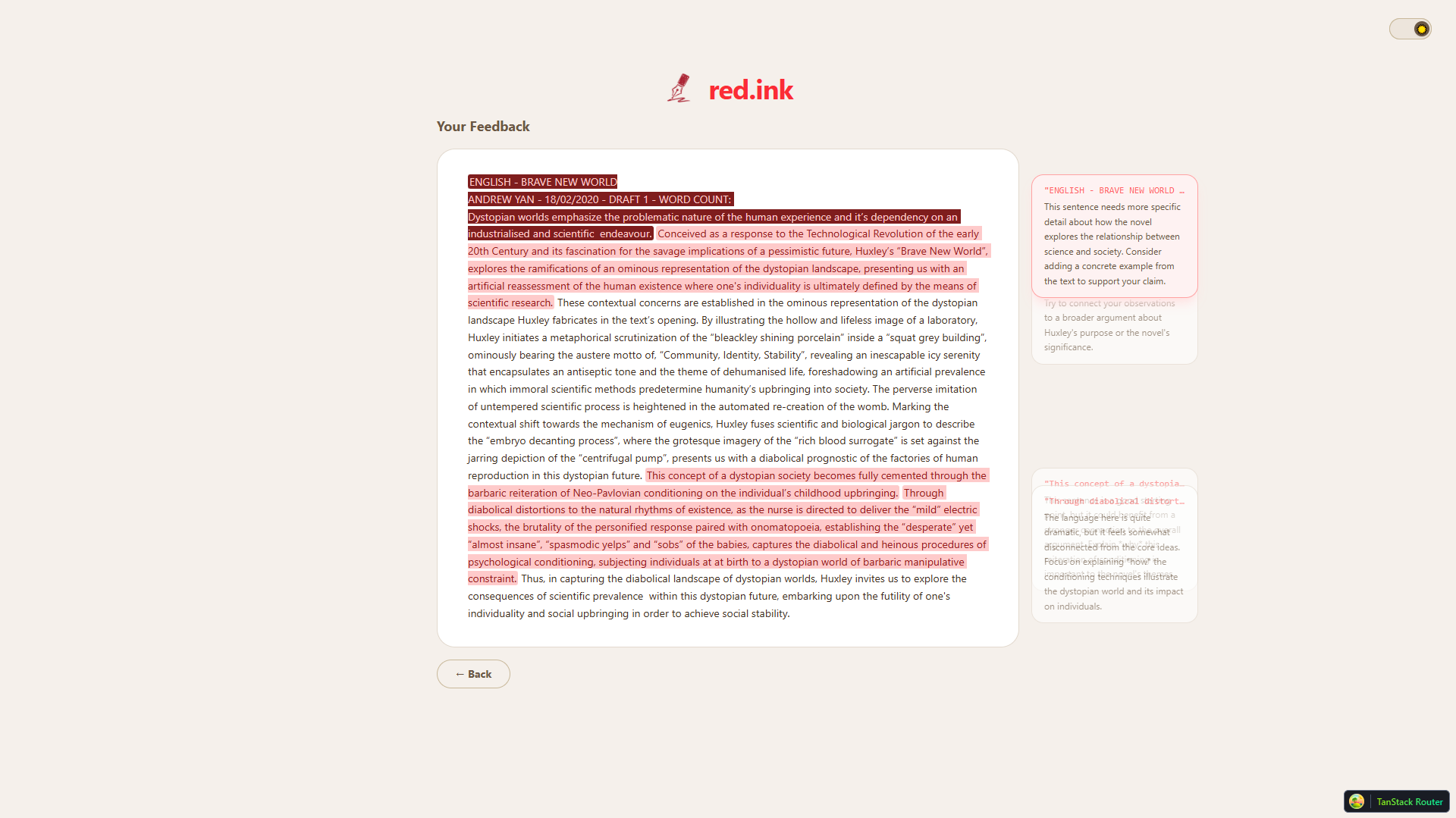
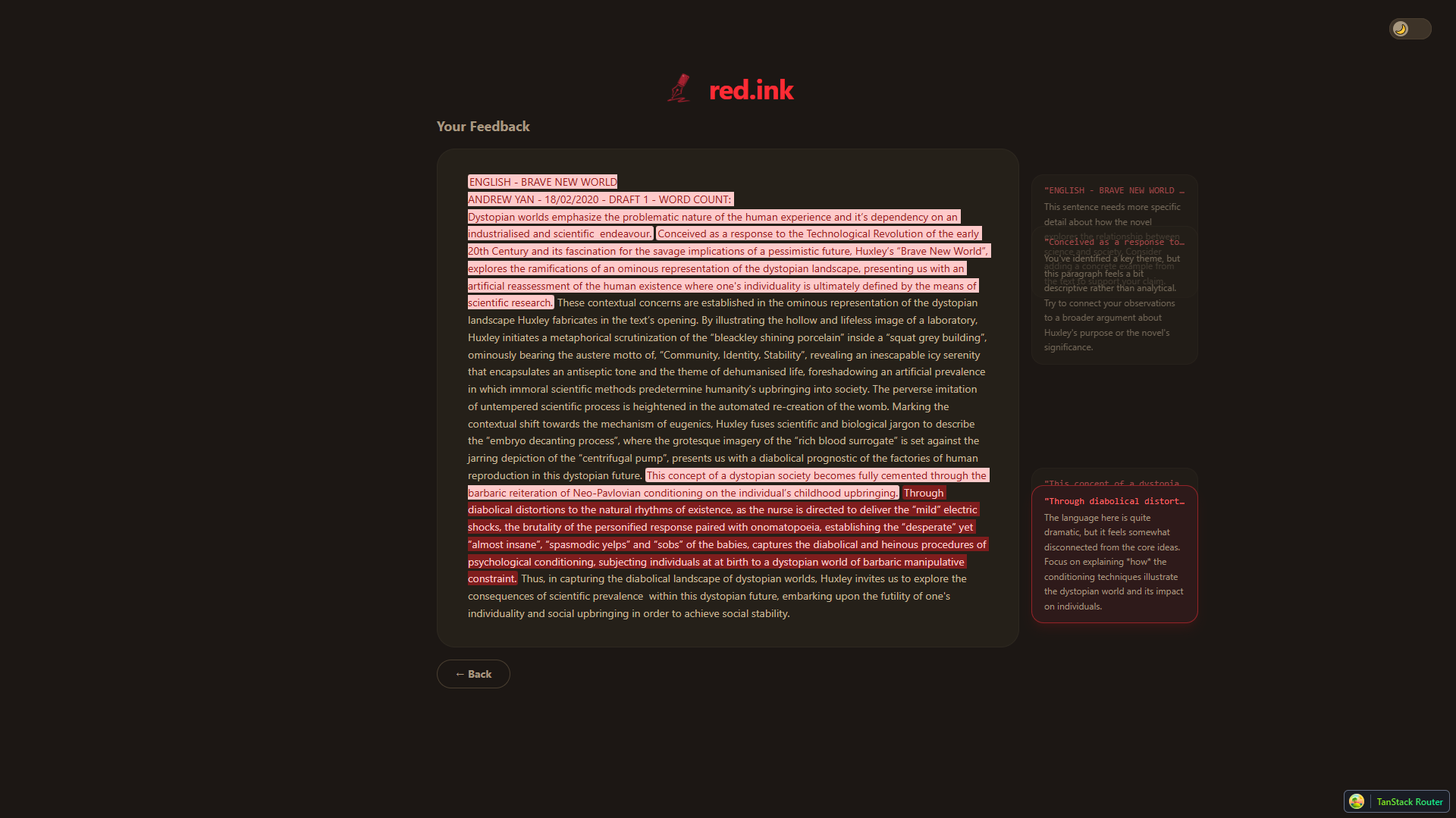
To address this, we built red.ink an application that enables teachers to upload previously marked essays containing their own comments and feedback. Our system then learns from this data to provide students with instant, personalised feedback that reflects the unique style and expectations of their teacher. Rather than optimising responses to match generic exemplar answers, red.ink focuses on replicating the nuanced feedback students would receive in their own classroom.
How we built it
We developed a full-stack web application using TanStack Router, React (v19), and SuperTokens on the frontend, with FastAPI, Ollama, and FAISS powering the backend.
Teachers upload previously marked essays, which the system analyses to identify patterns in feedback effectively building a profile of how each teacher evaluates student work. When a student submits an essay, the system compares it against these learned patterns, identifies areas for improvement, and generates inline comments that mirror the teacher’s feedback style. Importantly, these suggestions are grounded in real examples rather than generic AI outputs.
Challenges we ran into
- Designing a machine learning pipeline that not only classifies text effectively, but also generates meaningful labels to guide downstream AI responses, proved highly complex.
- Building an intuitive user interface for a non-technical audience (teachers and students) required careful consideration of design, language, and usability.
- Ideation was a significant challenge. The project evolved considerably over the course of the hackathon, and balancing feedback while refining our direction was both difficult and time-consuming.
Accomplishments that we’re proud of
We are particularly proud of delivering a working prototype within the limited timeframe. With a small team of two developers and one business-focused member, we tackled a wide range of unfamiliar challenges from parsing .docx files to integrating machine learning and large language model components into a cohesive system.
What we learned
One of our biggest takeaways was the importance of early ideation. Although hackathon themes were released in advance, we only began seriously defining our idea shortly before the event. Establishing a clear direction and “north star” earlier would have allowed us to better plan our architecture and make more deliberate technical decisions, rather than defaulting to familiar tools under time pressure.
What’s next for red.ink
red.ink has strong potential for real-world impact. While securing funding in the edtech space can be challenging, our solution is relatively low-cost to deploy, making direct partnerships with schools a viable path forward. Through early outreach, we have already connected with a school interested in piloting the platform, and we are excited about the opportunity to test and refine red.ink in a real classroom environment.
Built With
- faiss
- javascript
- node.js
- ollama
- python
- python-docx
- supertokens
- tailwind
- tanstack
- ts
- typescript


Log in or sign up for Devpost to join the conversation.