-
-
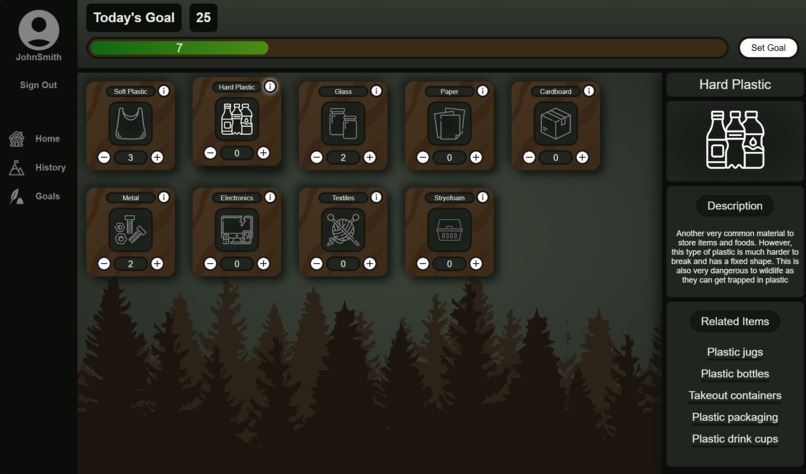
Home Page
-
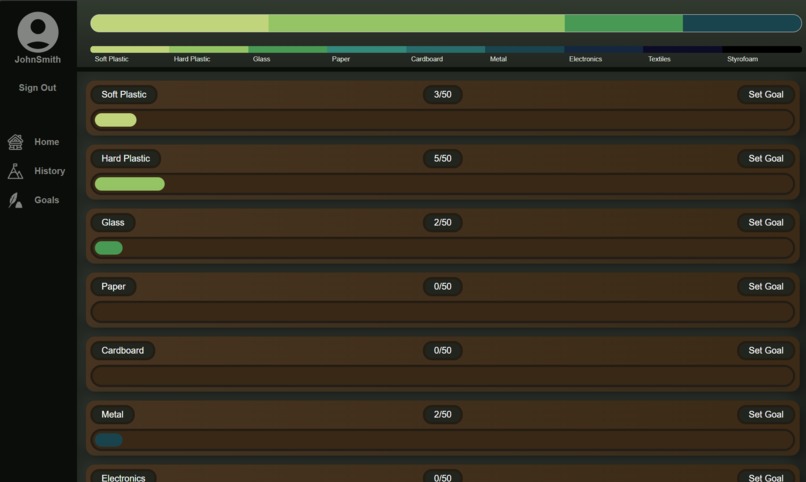
History Page
-
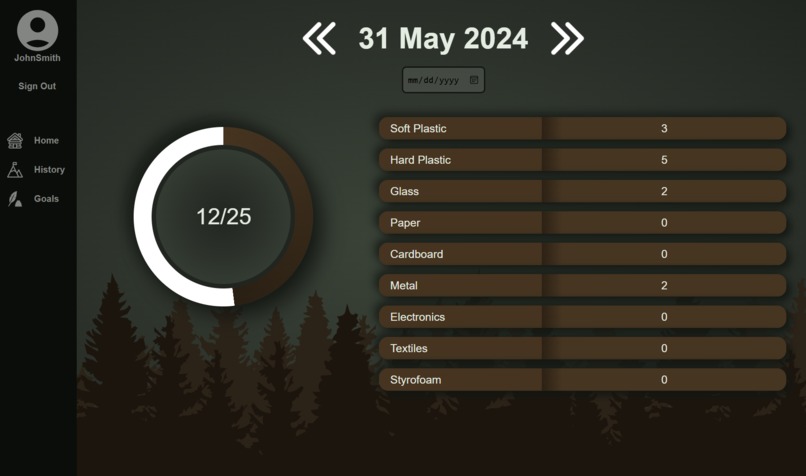
Goals Page
Inspiration
We were inspired to create a recycling tracker after understanding the immense effect our garbage has on the environment. Recycling plays a major role in our journey to a more sustainable future through the reduction of greenhouse gas emissions and reducing waste. Recycling starts with consumers, so we decided to create a web app that encourages people to recycle.
What it does
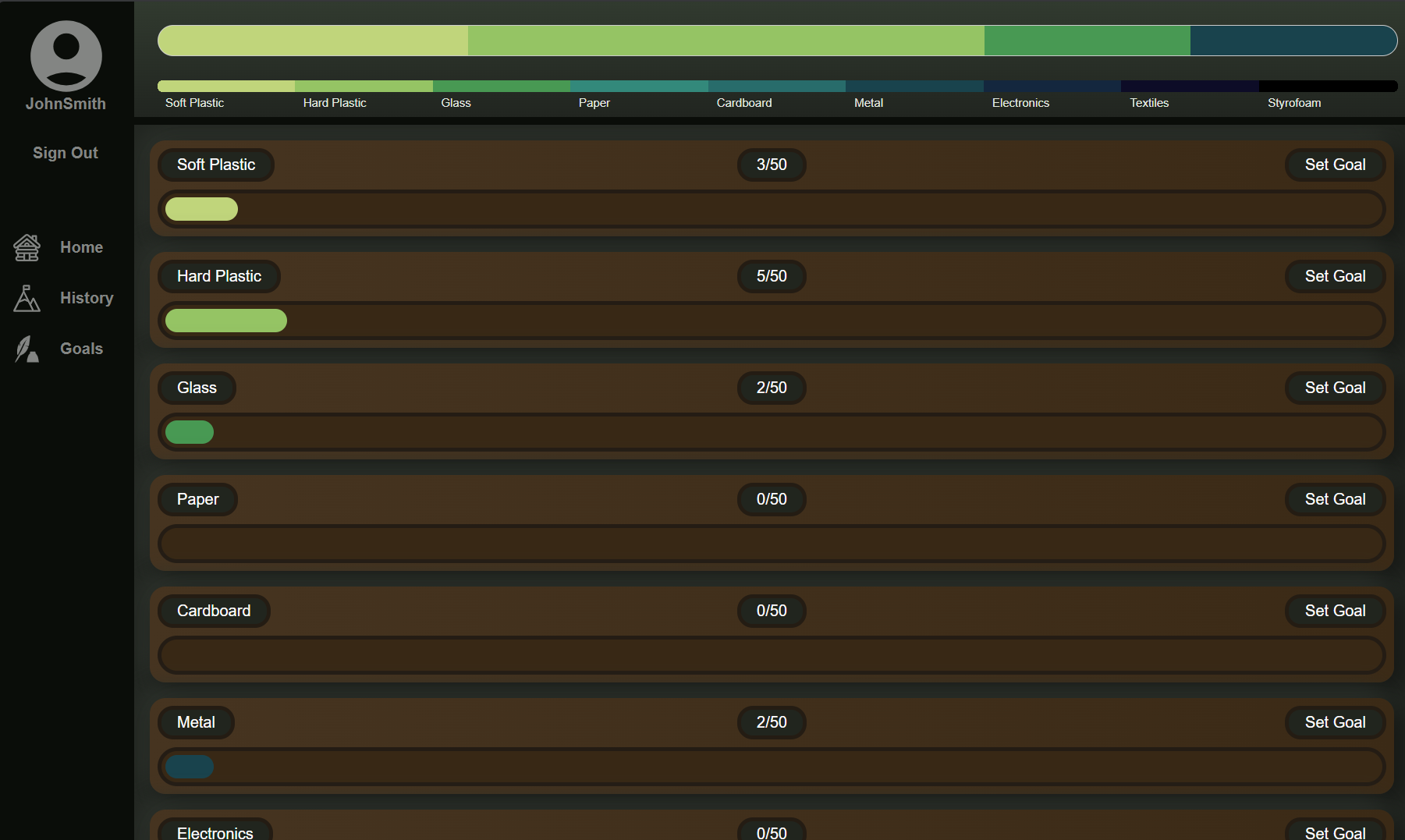
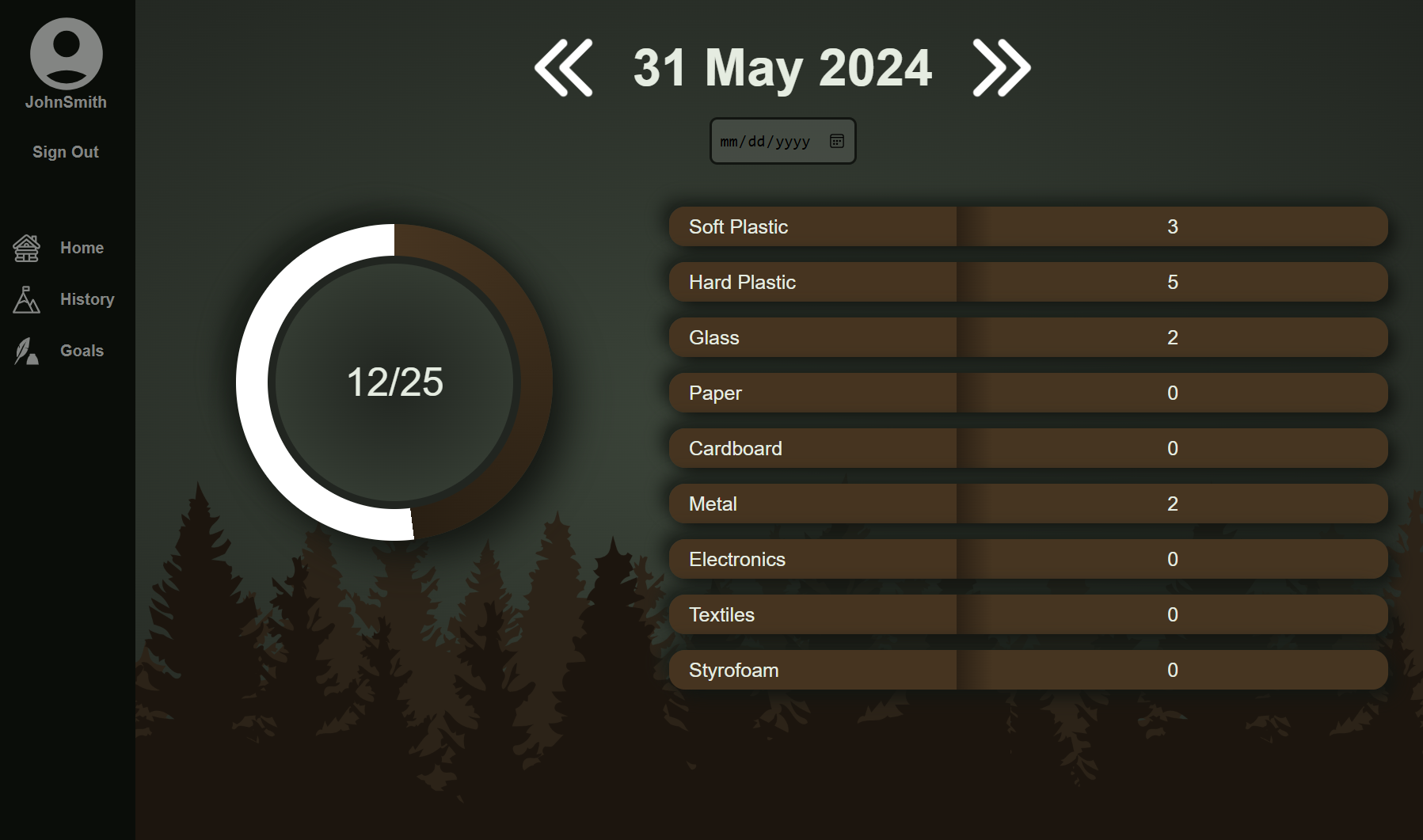
Our website allows users to set goals for how much they want to recycle every day. The site keeps track of how much they have recycled and provides stats on how much they have recycled. The site also contains useful information on items, their impact on the environment, and how they should be responsibly disposed of.
How we built it
The website is built with flask and hosted on Vercel. The frontend is built using HTML, CSS and Javascript. Data is stored on a PostgresSQL database also hosted on Vercel.
Challenges we ran into
We ran into difficulty connecting the backend to frontend using API endpoints. This was a new experience for all of us so it took time to figure out. Compatibility issues also meant that we needed to change SQL databases twice, switching from mySQL to SQLite, then finally to PostgresSQL
Accomplishments that we're proud of
We are proud of our ability to communicate and coordinate the project effectively despite being far from one another. We are also proud of our success integrating the frontend with the database, considering that none of us had ever worked with frontend development or SQL databases.
What we learned
We learned a lot about frontend development with HTML, CSS, and Javascript. We also learned how to implement API endpoints through Flask and also work with several SQL databases. We also learned that we cannot always rely on tools being fully compatible with one another (SQLite and Vercel).
What's next for Recycling Tracker
We have several plans for our project moving forward. Including but not limited to:
- email compatibility for better login
- password compatibility
- seeing history of recycling over a range of days instead of just than one


Log in or sign up for Devpost to join the conversation.