-
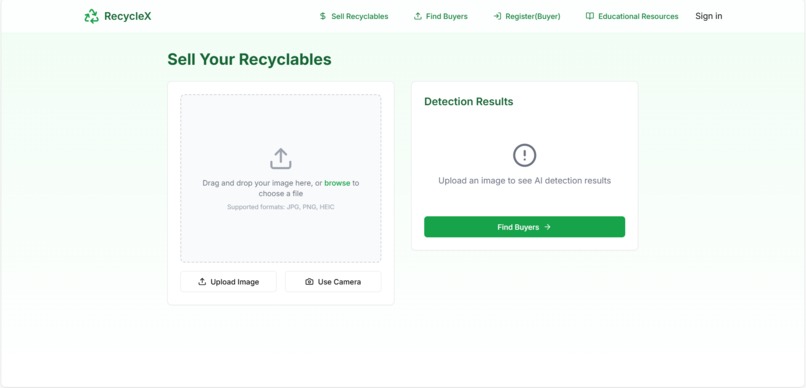
Homepage
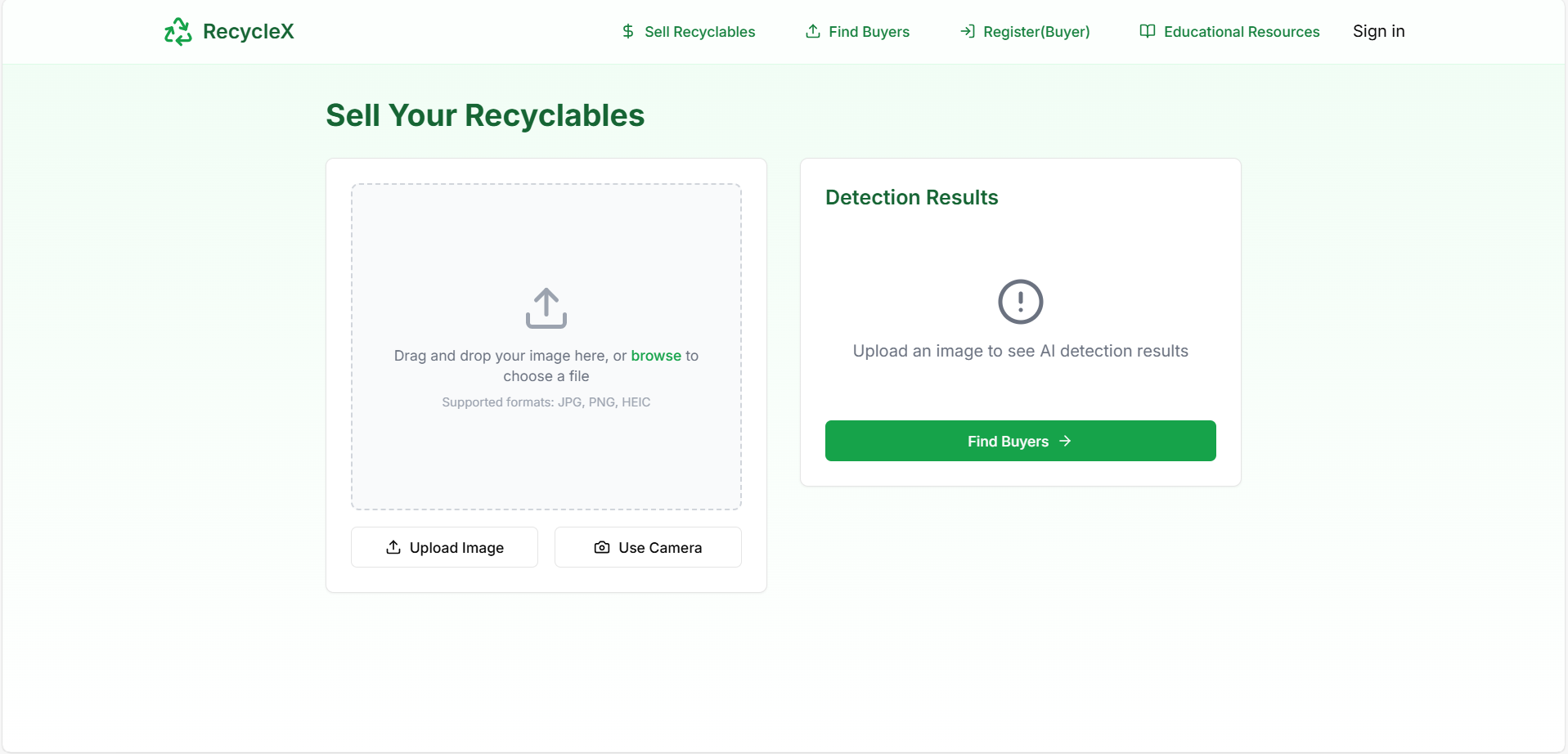
Inspiration
With increasing waste pollution and a lack of structured recycling systems, we wanted to create a platform that encourages sustainable waste management. Many recyclable items end up in landfills due to a lack of awareness and accessibility to proper recycling channels. Our goal was to bridge this gap by providing an AI-powered marketplace where users can identify recyclable materials and connect with buyers.
What it does
RecycleX is an education-first web application that helps users:
- Identify recyclable items using computer vision.
- Provide insights into material sustainability, estimated market value, and carbon emissions saved.
- Connect sellers of recyclable materials to nearby buyers.
- Offer learning resources to promote better recycling habits.
How we built it
- Frontend: Built with Next.js and TypeScript for a fast and scalable user experience.
- Backend: Utilizes Next.js API routes, Prisma ORM, and a PostgreSQL database hosted on NeonDB.
- AI Integration: Gemini AI for material classification and analysis, providing sustainability scores, market demand, and carbon footprint savings.
- Authentication: Implemented using Clerk for secure and seamless user management.
- Geolocation Services: Uses OpenCage API to auto-fill user locations and match them with the nearest buyers.
Challenges we ran into
- AI Accuracy: Ensuring the model correctly identifies materials and provides accurate sustainability insights.
- Buyer-Seller Matching: Implementing a matching algorithm that efficiently connects sellers with nearby buyers based on material type and location.
- Geolocation Limitations: Handling permissions and accuracy issues with location services.
- Scalability: Structuring the database and API endpoints to handle a growing number of users and transactions.
Accomplishments that we're proud of
- Successfully integrating Gemini AI to analyze uploaded images and generate structured data.
- Implementing a real-time marketplace for recyclable materials.
- Providing users with a clear environmental impact by estimating carbon emissions saved.
- Ensuring a smooth and intuitive user experience with Next.js and Clerk authentication.
What we learned
- Optimizing AI models for real-world recycling applications.
- Efficiently using geolocation services to enhance user experience.
- Implementing best practices for matching buyers and sellers in a marketplace model.
- The importance of user education in making recycling a sustainable habit.
What's next for RecycleX
- Expand Material Recognition: Improve AI accuracy by training on a larger dataset.
- Enhanced Buyer-Seller Matching: Implement a recommendation engine to suggest the best buyers based on price, proximity, and demand.
- Gamification & Rewards: Introduce incentives for users to recycle more by tracking their contributions and rewarding them.
- Mobile App Version: Expand accessibility by developing a mobile app for on-the-go recycling.
- Integration with Local Recycling Centers: Partner with recycling centers to offer pick-up services and better price estimates.
Built With
- nextjs
- prisma
- typescript

Log in or sign up for Devpost to join the conversation.