-
-
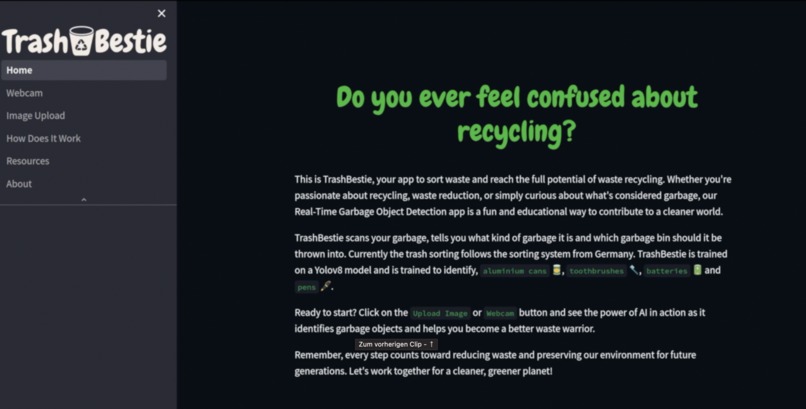
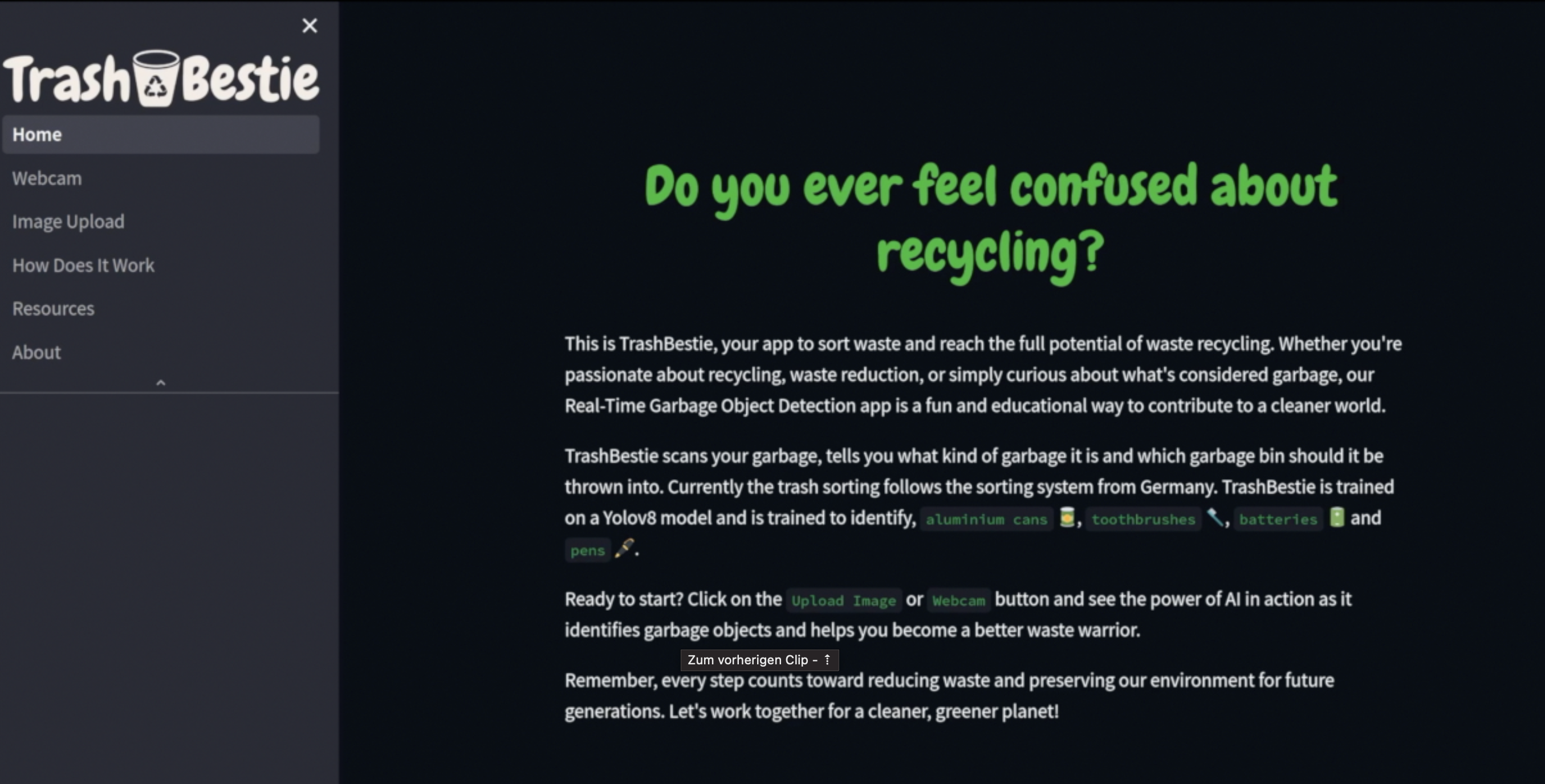
Homepage
-
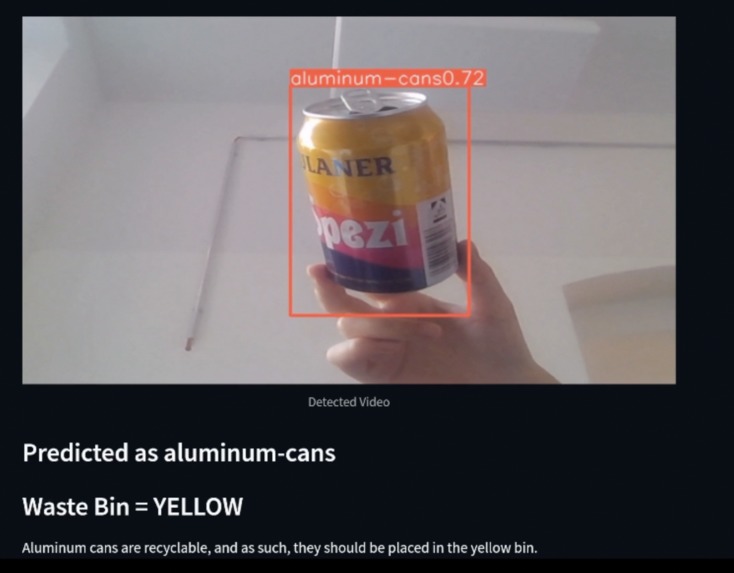
Webcam Object Detection
-
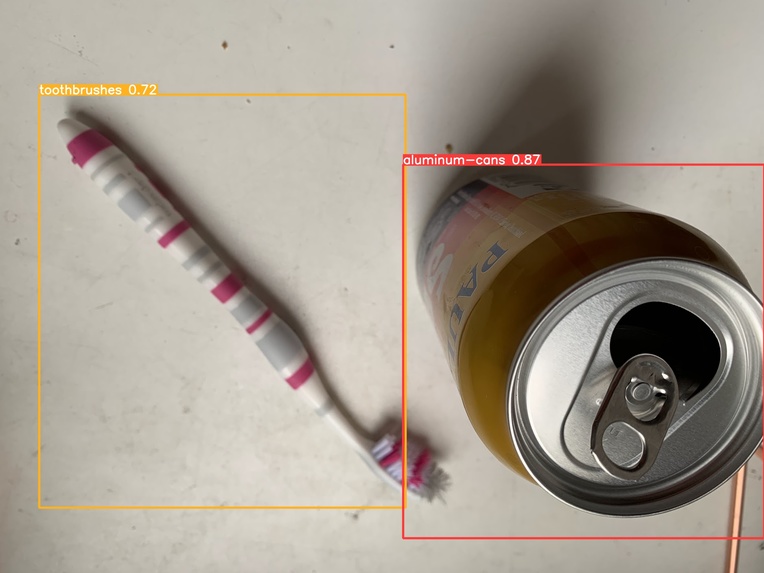
Image Detection
Inspiration
We envision a world where waste is no longer seen as a problem, but as an opportunity for positive change. Proper waste sorting is vital for preserving the environment, conserving resources, and reducing pollution. By using deep learning, we're driven to empower individuals to make waste disposal decisions effortlessly. Our goal is to bridge the gap between intention and action, enabling everyone to contribute to a greener, more sustainable future. Through our app, we aim to inspire a collective movement towards responsible waste management, fostering a cleaner planet for generations to come.
What it does
Our waste sorting app operates as your helping companion.
Here's how it works:
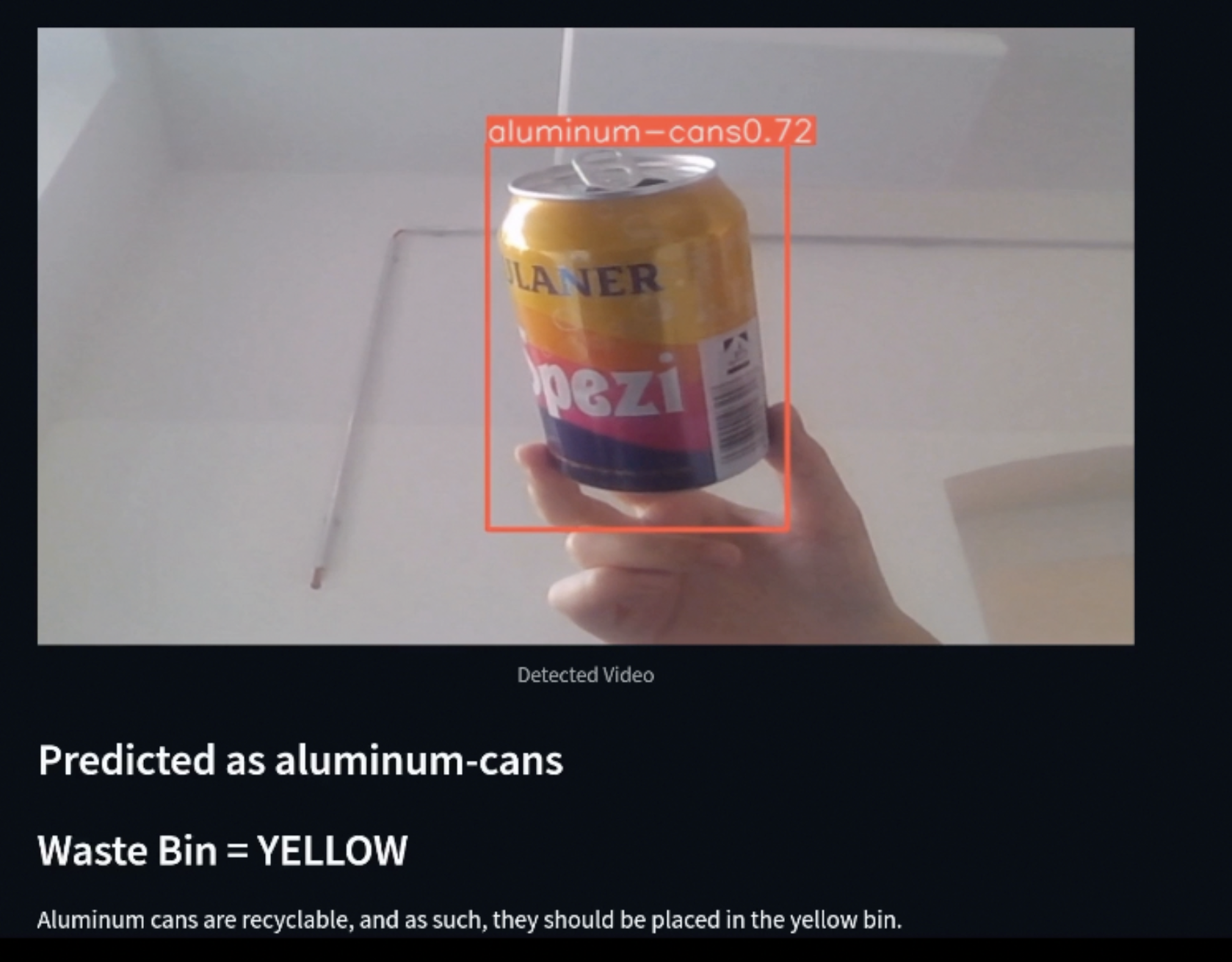
1. Detect object with your camera: Detect the waste item you're unsure how to dispose of with your device camera.
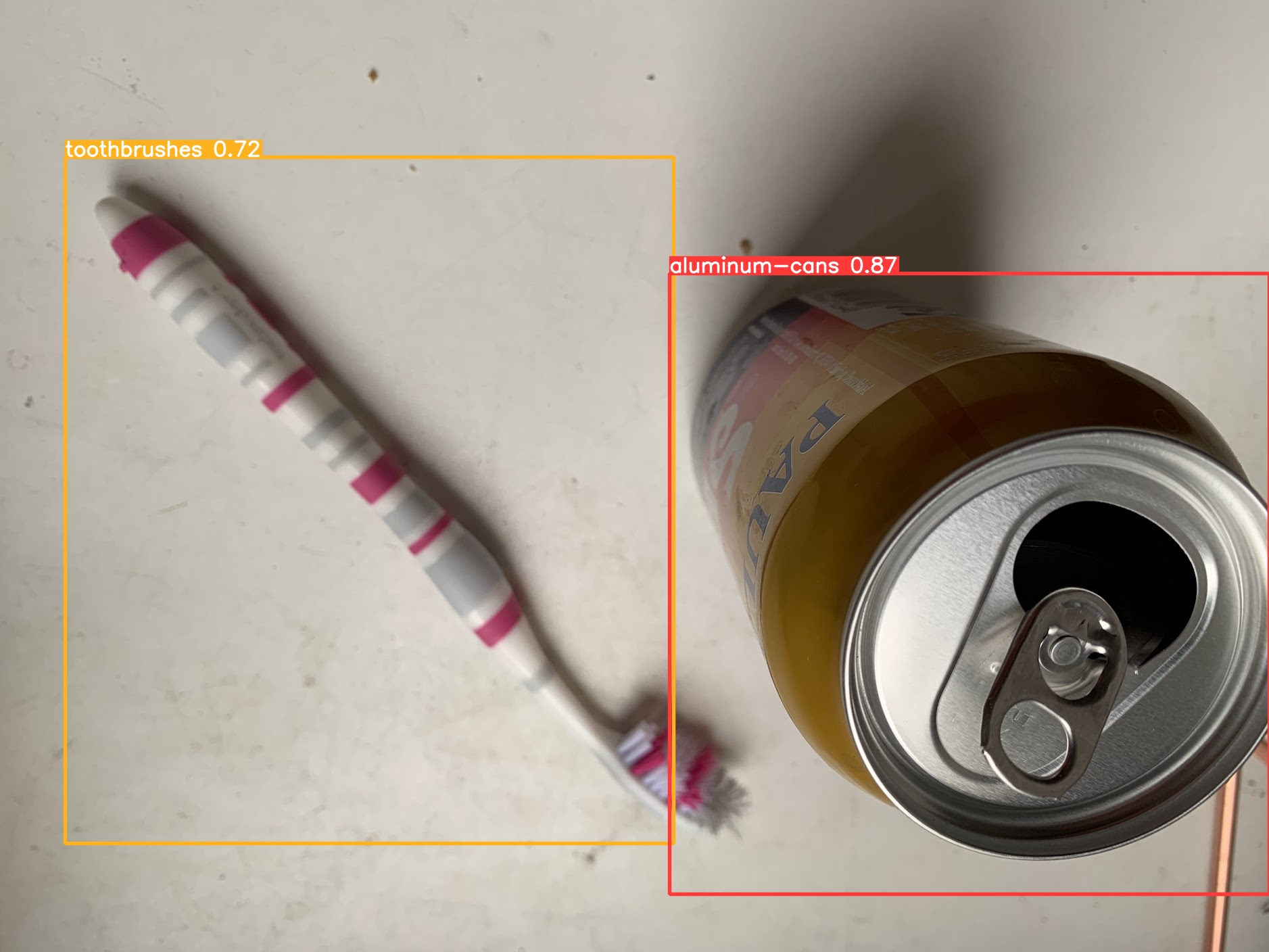
2. Instant Recognition: YOLOv8's advanced image recognition technology swiftly analyzes the photo and identifies the type of waste.
3. Educational Insights: Beyond recommendations, the app offers educational insights, helping you understand why a certain disposal method is suggested. This promotes long-term learning and conscious waste habits.
4. Accessible and User-Friendly: Designed for everyone, our app prioritizes user-friendliness, making eco-conscious waste sorting accessible to everyone with an android device.
How we built it
Labeling and Annotation: Images are labeled and annotated using a tool like Roboflow. Annotations involve marking objects and assigning corresponding labels, creating a dataset for training.
Export Dataset: The labeled dataset is exported, preparing it for use in training the object detection model.
Training with YOLOv8: The YOLOv8 model is trained using the exported dataset. This involves fine-tuning the model's parameters to improve its object detection accuracy.
Use weights for Streamlit deployment : After training, the model's weights are copied into the Streamlit folder for deployment in combination with YOLOv8 . The weights file is in .pt format and is usually named “best.pt”.
Streamlit Deployment: The YOLOv8 model is integrated into the Streamlit application using the weights file . This enables efficient and accurate object detection on Streamlit. The app is based on a repository in GitHub for object detection and tracking with YOLOv8 and Streamlit.
In summary, the application's development involves labeling data, training a YOLOv8 model, copying the weights , and deploying it using Streamlit in combination with YOLOv8 for object detection.
Challenges we ran into
- Limited access in Roboflow because of free version
- Labeling issues with “Marked Null” in Roboflow
- Data acquiring process both with external sources and own pictures
- Deployment with Streamlit in case of style for image and webcam sections
- Improving accuracy scores by adding images to the dataset and combining it to the existing ones.
- Adding automatic explanations for the garbage type to the Streamlit app after predictions
Accomplishments that we're proud of
We built an app from scratch, demonstrating our technical abilities. The final product is a polished, user-ready application, highlighting our focus on practical results. We efficiently adopted new technologies like Roboflow, YOLOv8, and Streamlit, expanding our skill set. Our team's effective communication facilitated smooth collaboration and a productive work dynamic. In short, our project reflects technical proficiency, adaptability, and cohesive teamwork.
What we learned
Our project journey yielded valuable insights: diversifying our dataset improved deployment accuracy, GitHub taught us conflict resolution for better collaboration, crafting 3-minute videos honed planning and communication, and small team dynamics emphasized effective teamwork. These lessons enhanced our skills and prepared us for future challenges.
What's next for TrashBestie
Initially designed for Germany, we recognize that waste sorting systems differ across regions. To address this, we plan to incorporate a feature allowing users to select their specific location, tailoring waste sorting recommendations accordingly. This approach ensures adaptability and relevance for users worldwide.
Regarding scalability and further advancements:
Enhanced Accessibility: Our strategy encompasses evolving beyond Streamlit users. We want to develop and deploy TrashBestie as both an iOS and Android mobile application.
Deep Learning: We intend to enrich the app's capabilities by expanding its image database, incorporating more classes for enhanced accuracy and versatility.
Machine Learning: Our vision includes implementing refined preprocessing techniques, augmenting the app's efficiency and precision.
Image Segmentation: We recognize the significance of nuanced distinctions, such as identifying between clean and soiled cardboard or discerning yogurt cups with or without lids. This refinement remains a focal point in our developmental pipeline.
Model Diversity: Exploring a variety of models and algorithms aligns with our commitment to continually elevate the app's performance and precision.
As our app evolves, scalability remains at the forefront, enabling us to meet the growing demands of users while adapting to evolving waste sorting practices globally.
Built With
- google-drive
- python
- roboflow
- streamlit
- yolov8


Log in or sign up for Devpost to join the conversation.