-
-
Results
Inspiration
As three moms, we’ve all experienced the same frustrating moment: standing over the trash can, trying to figure out if a yogurt cup or greasy pizza box goes in recycling, compost, or the trash. We care deeply about teaching our kids to protect the planet, but the rules are confusing, inconsistent, and often buried on hard-to-navigate city websites. We built RecycleGuide because we wanted something simple, clear, and accessible—so everyone, from busy parents to office teams, can make the right choice in seconds and feel good about it.
What it does
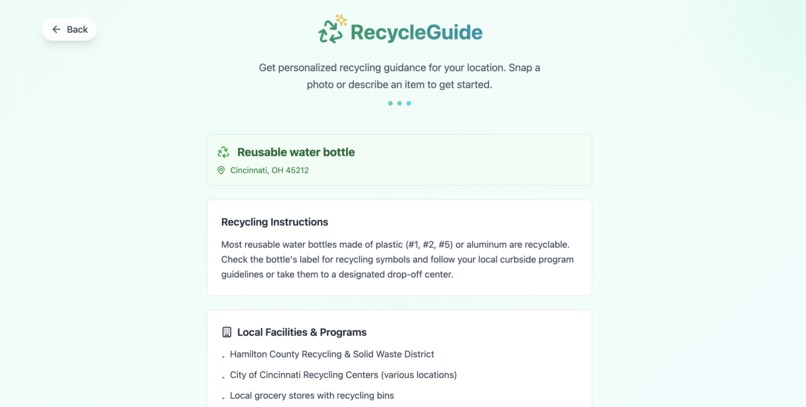
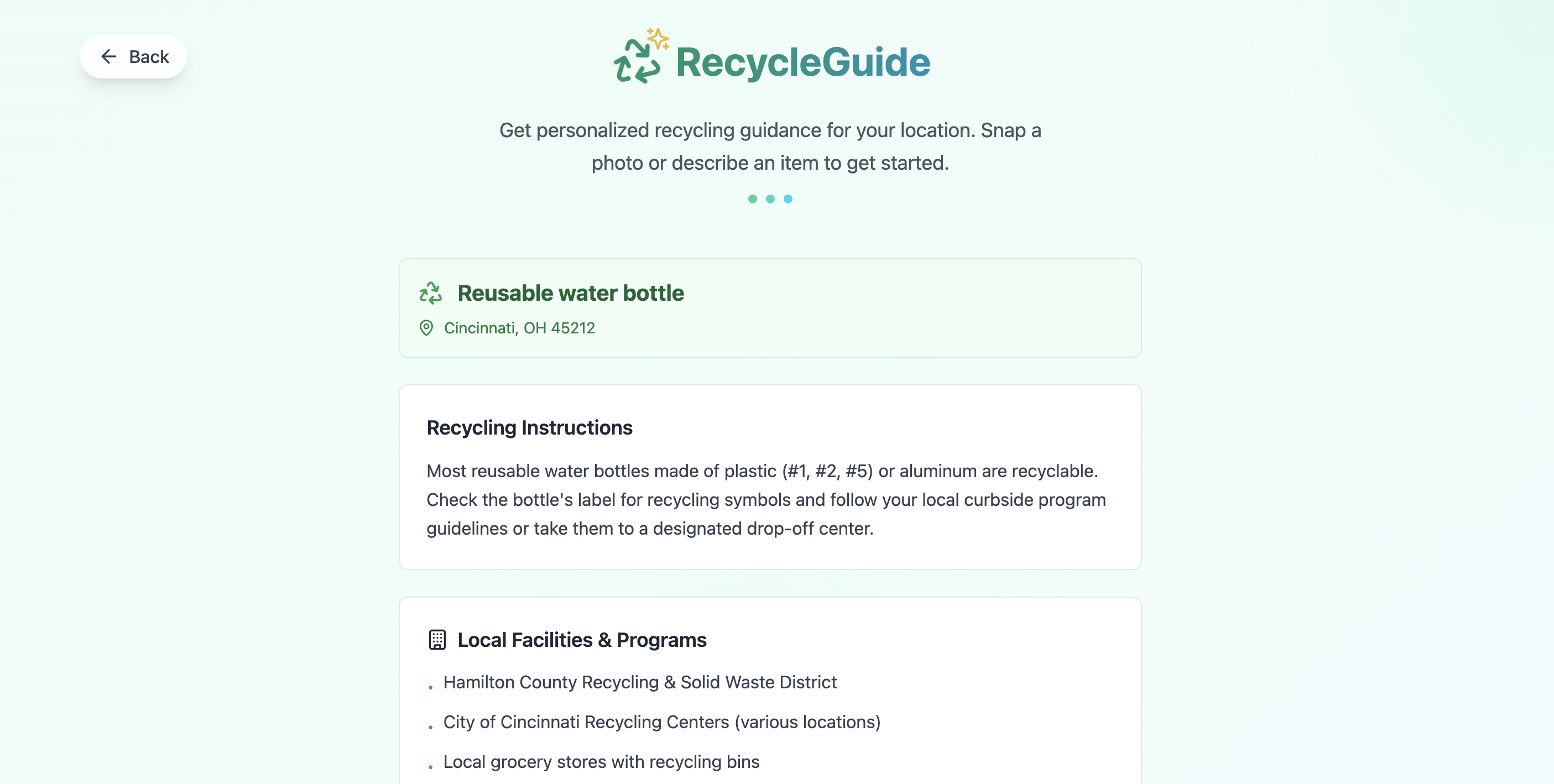
The RecycleGuide is an intelligent, user-friendly web app that provides real-time, location-specific guidance on how to dispose of or recycle items. Users can upload a photo or type the name of an item (like “pizza box” or “tea bag”) to instantly receive clear instructions tailored to their local recycling and composting guidelines. Beyond simple answers, it offers tips, clarifications, and suggestions for reuse or donation options when items can’t go in household bins.
How we built it
We designed the RecycleGuide with an AI-powered decision engine to explain waste rules and exceptions. The MVP combines: Image recognition to identify common household waste. Natural language processing to interpret text queries. Location-based customization that pulls in city-specific disposal instructions. A user-friendly web interface where people can search, upload, and receive guidance in seconds.
Challenges we ran into
Ensuring recommendations were both accurate and easy to understand, especially for users unfamiliar with recycling terminology. Balancing the simplicity of the user experience with the depth of guidance and resources.
Accomplishments that we're proud of
Built a working prototype that combines AI recognition with hyper-local rules. Created a clean, intuitive interface that makes it easy for anyone to get disposal guidance in seconds. Laid the groundwork from which we can expand the platform into gameification and engagement features, marketplace and social integrations, connecting people and businesses who can reuse or repurpose materials.
What we learned
People genuinely want to do the right thing, but clarity and convenience are the missing pieces. Even simple-seeming waste categories can be surprisingly complex once you start mapping local rules. While some tools exist, they aren't user friendly and require extensive searching and definition on the user's part. Increasing sustainability requires building tools that support behavioral change (convenience is key) as well as awareness and education.
What's next for RecycleGuide
Integrate sustainability tips and educational modules, helping users learn what happens to their waste and how to make better choices. Introduce gamification features such as badges, community leaderboards, and “Best in Town” awards to encourage positive habits. Collaborate with local governments and utilities to distribute the tool to residents, align messaging, and improve compliance with recycling programs.
Built With
- bolt.new
- gemini
- google-cloud


Log in or sign up for Devpost to join the conversation.